
Reviewed · SAMURAI EXPERIENCES
Samurai Armor & Sword experience with phot near Osaka Castle
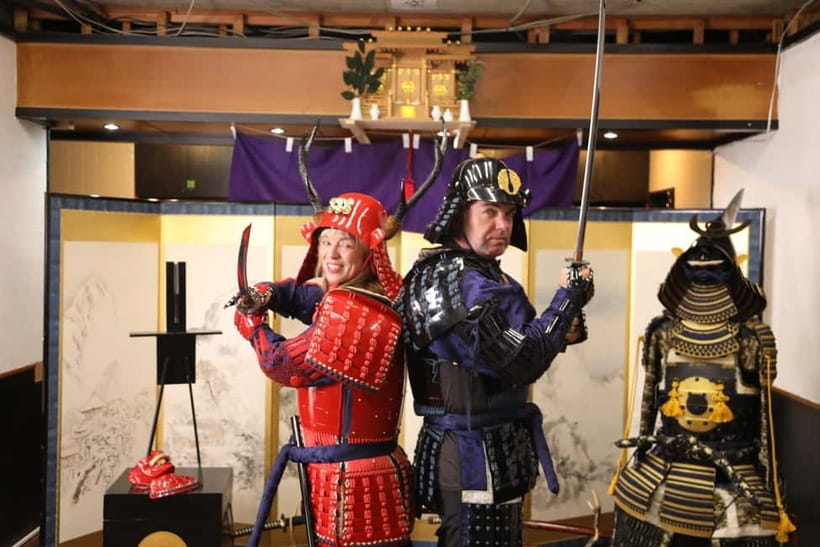
The sharpest part of this Osaka experience is not the costume photo. It is the chance to learn how a samurai handled a sword, from the careful bow before the shrine to drawing, cutting, wiping, and resheathing the blade. You begin in samurai clothing, then work toward a supervised cut with a real sword.
I like the clear lesson structure and the private-group format. I also like that the session covers manners and movement, not just a quick dress-up. The main caution is practical: the address is in Joto-ku, and Apple Maps reportedly places it incorrectly, so use Google Maps and arrive early.
Key points to know before booking
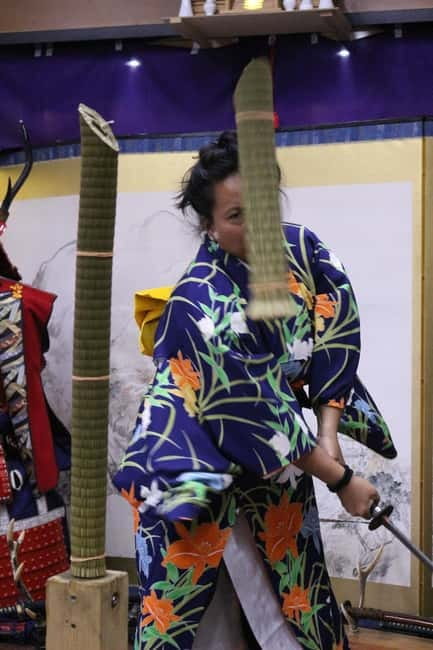
- Real sword cutting: You make a supervised cut with a genuine samurai sword after practicing with an iai training sword.
- A full 90-minute lesson: The session covers clothing, shrine etiquette, sword manners, kata, armor, and photographs.
- Private group setting: You receive direct instruction in English or Japanese rather than joining a large public class.
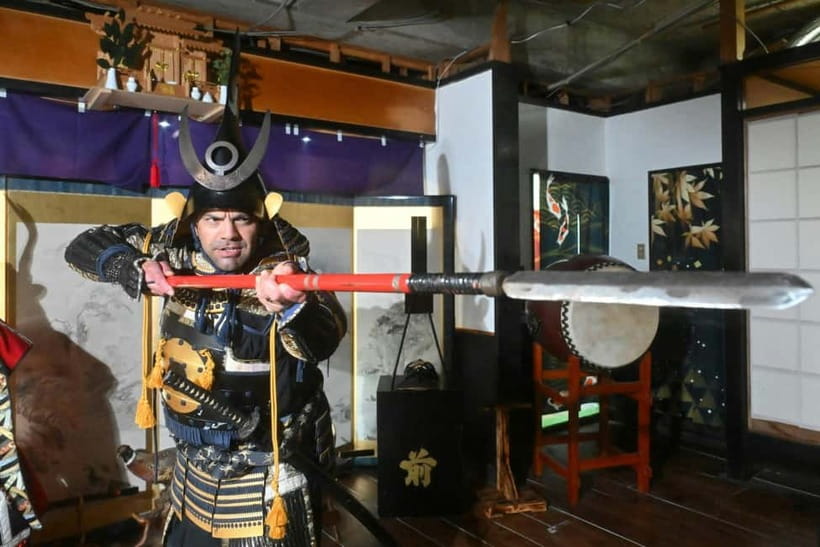
- Indoor armor and helmet: The armor is worn inside and photographed as a keepsake.
- Arrive 30 minutes early: Changing clothes and receiving instructions happen before the reserved start time.
- Good value for a hands-on activity: At $106 per person, the price includes clothing, armor, instruction, tax, tips, and emailed photographs.
From Osaka Castle sightseeing to a samurai dojo
This experience fits nicely after a visit to Osaka Castle, especially if you want something more active than another museum or observation deck. The activity is presented as the only samurai experience near Osaka Castle where you can wear armor and practice with a sword, but you should still check the map carefully because the actual venue is Bushi no Homare at Excellence Takayama 1F, 2-3-19 Shiginonishi, Joto-ku, Osaka-shi.
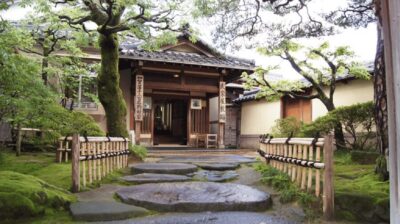
The wooden sign reading Honor of the Samurai is the key landmark. Look for the rack of activity pamphlets outside the store. Kimonos and hakama may also be hanging nearby, which can make the entrance easier to spot.
The meeting point is not a hotel pickup location. You arrange your own transportation, and no station or hotel transfer is included. I would allow extra time, use Google Maps rather than Apple Maps, and arrive 30 minutes before your booked time. That early arrival matters because you need to change clothes before the lesson begins.
More Castle Tours in Osaka
- Osaka Castle: Museum and Tower Entry Ticket
★ 4.5 · 2,380 reviews - Ultimate Osaka Walking Tour: Castle, Dotonbori & Hidden Gems
★ 5.0 · 862 reviews - Osaka Castle Walking Tour and Castle Tower Admission
★ 5.0 · 561 reviews
Changing into dogi and hakama
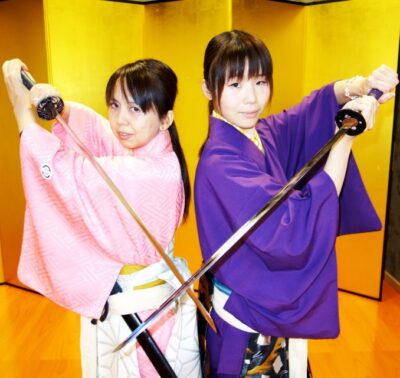
Your first job is to change into a samurai outfit made up of a dogi and hakama. This is more useful than simply putting on a jacket for a photo because the clothing sets up the movement lesson that follows.
The outfit gives the session a clear sense of ceremony, but it also comes with practical limits. You should bring a T-shirt, and you will want clothing that is easy to change out of. The experience does not list transportation, meals, or personal expenses as included, so plan for a straightforward activity rather than a full-day package.
The private-group format is a real advantage here. You can focus on the instructor’s directions without trying to follow a demonstration from the back of a crowded room. It also makes the activity easier to enjoy with a friend or family member, provided everyone meets the age and participation rules.
Bowing before the shrine
The lesson begins and ends with a bow before a shrine in the dojo. The shrine is connected to the ancient god of war, and the bow frames the activity as training rather than a theatrical sword show.
That detail gives the session more weight. You are not simply handed a blade and told to swing. You are introduced to a code of conduct built around respect, care, and self-control. For a short activity, this opening ceremony helps explain why samurai manners matter as much as the weapon itself.
The instructors speak English and Japanese. An English-speaking instructor is the default, while interpreters in Italian, Spanish, French, Chinese, Thai, and Indonesian may be possible if staff schedules allow. You should ask before booking if you need one of those languages, since availability is limited.
What the sword lesson teaches
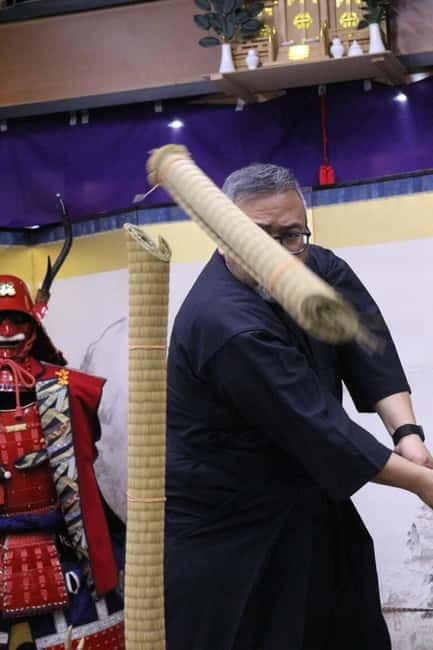
The explanation of the sword covers both technique and responsibility. The session describes how boys from samurai families learned with wooden swords from an early age, then were permitted to wear a serious sword at around age 15. The point is not simply that the weapon was powerful. Carrying it signaled self-respect and responsibility.
The lesson also explains how closely a samurai’s daily life was tied to the sword. The sword remained close at meals and during sleep, ready to be drawn if needed. That background makes the next exercise, walking with a sword at your waist, much easier to understand.
You practice placing the sword in the belt with the cutting edge facing upward. You also practice walking on the left side of the road so two sheaths would not strike each other. The sword mouth, called the koiguchi, remains ready for a quick draw.
These details are small, but they are the kind of details I value in a cultural activity. They give purpose to the gestures. You begin to see that samurai training involved posture, spacing, and controlled movement long before a blade reached its target.
More Samurai Experiences in Osaka
- Samurai Training Experience KENDO in Osaka
★ 5.0 · 515 reviews - OSAKA NIGHT FUSION Japanese Taiko Kabuki Samurai Dance Show
★ 4.8 · 155 reviews - Osaka: Samurai Training Experience KENDO in Osaka
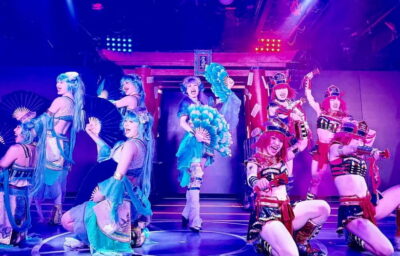
★ 5.0 · 111 reviews - Osaka: A Modern Samurai, Kabuki, Taiko, & Dance Show
★ 4.5 · 66 reviews
Iai practice: draw, cut, clean, and resheath
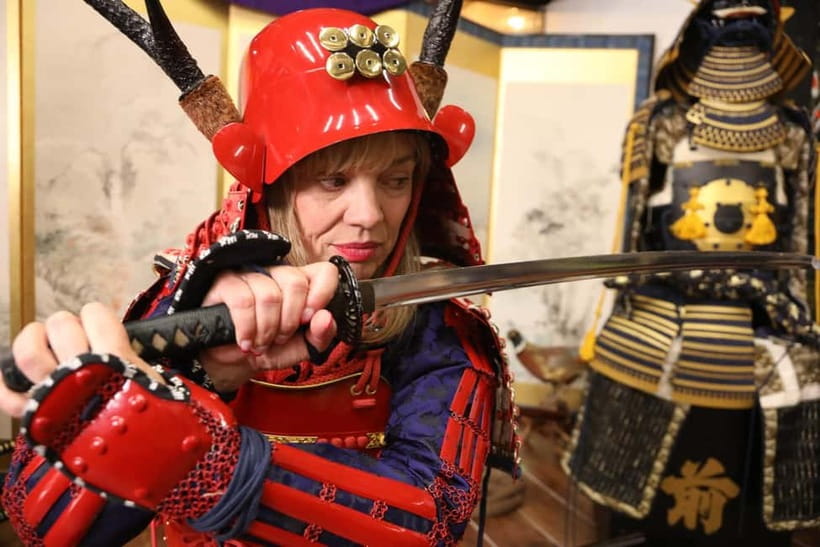
Before using a real sword, you practice with an iai training sword. The instructor teaches the basic movements from a standing position and explains the terms used for the sequence:
- Battou means drawing the sword from its scabbard for a cut.
- Chiburui is the symbolic action of removing blood from the blade after cutting.
- Nottou is returning the sword to its scabbard.
The sequence is deliberate. You are not encouraged to rely on arm strength or swing wildly. Instead, the instruction asks you to use the weight of the sword and keep the movement controlled.
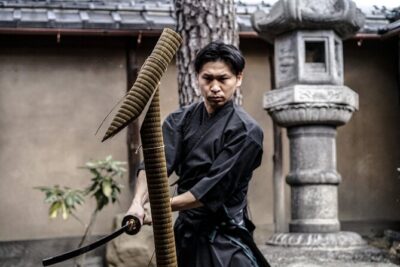
You may hear a distinctive hi-nari sound when the sword is swung correctly. This gives you a simple physical sign that your motion is closer to the intended technique. It also shows why a real sword lesson needs supervision. The purpose is not speed. It is accuracy, balance, and safe handling.
The instructor then works through basic stances, kata, and sword swings. Since the group is private, you should have room to ask questions and correct your position. The session is still only 90 minutes, so do not expect a full martial arts course. Think of it as a focused introduction to samurai sword etiquette and movement.
The real samurai sword cutting session
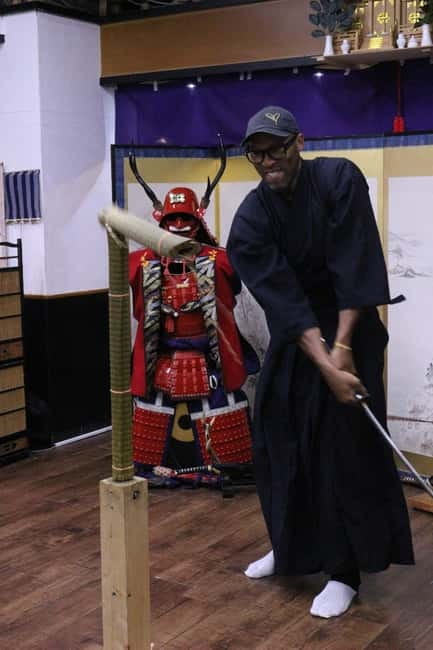
The most unusual part of the activity is the chance to try cutting with a real samurai sword. This comes after the explanation and practice, not at the start, which is exactly how the lesson should be structured.
You will be wearing the samurai clothing and working under a certified professional instructor. The activity presents the Japanese sword as an exceptionally effective blade, so the safety side matters. Listen closely, follow the instructor’s pace, and treat the sword as a serious weapon rather than a prop.
This section is likely to be the main reason you book. Many costume experiences stop at posing with a replica. Here, you learn a sequence first and then attempt a cut with a genuine blade. That makes the price easier to understand, especially when you add the private instruction and the armor session.
Still, the real sword portion may not suit everyone. Children under 10 are not accepted, and the activity also excludes babies, people over 80, and people with altitude sickness. The rules are unusually specific, so check them before booking rather than assuming this is a casual family photo stop.
Armor, helmet, and the final portrait
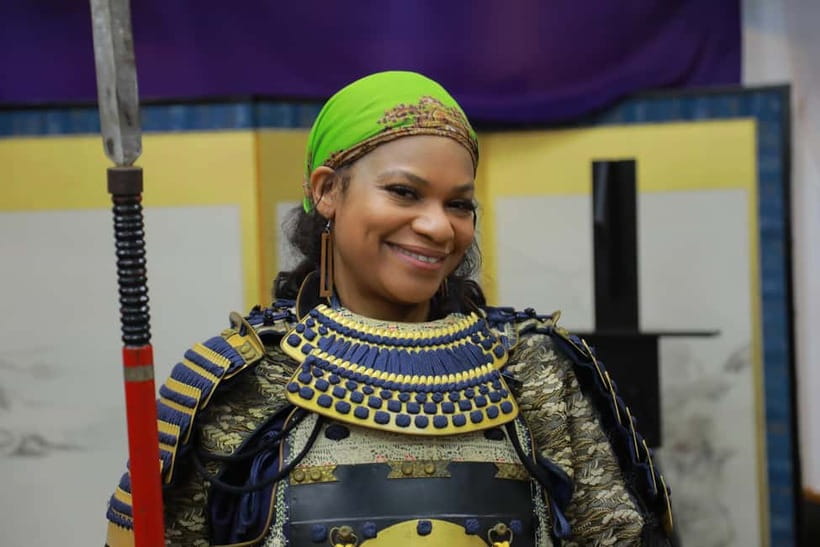
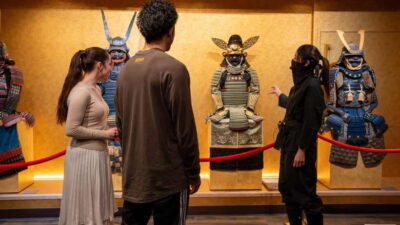
After the sword work, you put on samurai armor and a helmet indoors. The armor represents what a samurai would wear before battle, when appearance, dignity, and readiness mattered.
The armor is part of the experience, not just a display item. You get to feel the difference between ordinary clothing and ceremonial battle equipment, then pose for a commemorative photograph. The session includes photo shooting, with the image data sent to a designated email address.
That email delivery is a useful inclusion. You do not need to purchase a separate photo package simply to receive a record of the activity. The available information does not promise a video, however. Movie shooting is a paid option, so ask about that separately if moving footage matters to you.
The armor is worn indoors, which keeps the activity practical but means this is not a walking parade through Osaka. You will not be touring Osaka Castle in armor. The appeal is the controlled setting, where the instructor can help with the outfit and photograph you safely.
What $106 buys you
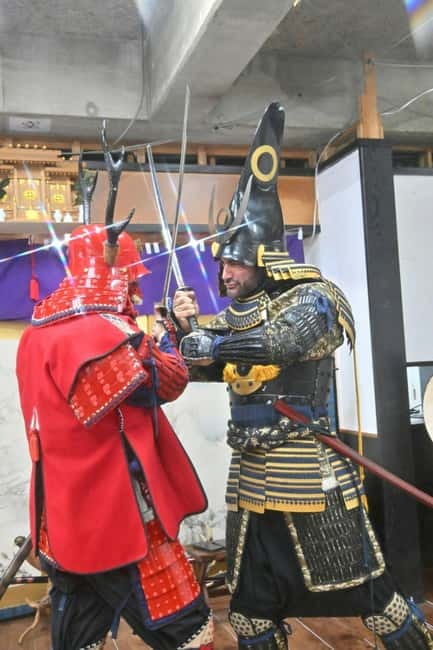
At $106 per person, this is not a budget attraction. The value depends on what you want from Osaka.
If you only want a costume portrait, the price may feel high. If you want a structured lesson with a certified instructor, sword manners, basic kata, real blade cutting, indoor armor, and emailed photographs, the cost is easier to justify. Clothing, tax, and tips are included, so you are not adding several small charges at the end.
The private-group format also changes the calculation. You are paying for attention rather than a seat in a large demonstration. The supplied rating of 4.6 from 16 reviews reflects strong overall approval, and the most consistent praise focuses on clear instruction, friendly staff, safety, and the quality of the photographs.
There is one serious booking concern. At least one reservation was canceled twice because of overbooking, including once on the morning of the activity. That is not a reason to dismiss the experience, but it is a reason to avoid placing it on the most important day of your Osaka trip. Book early, watch for confirmation messages, and keep a backup plan.
Who will enjoy this most
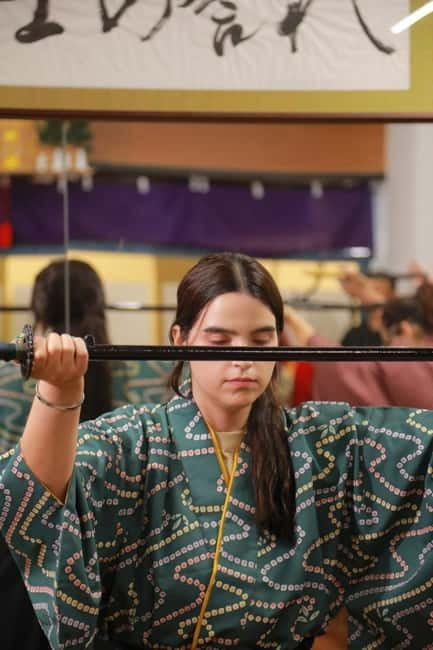
I would choose this for adults, older children who meet the minimum age, couples, friends, and solo visitors who want an active cultural lesson. It works especially well if you have already seen Osaka Castle and want to explore the samurai idea through movement rather than another historical display.
It is also a good match for anyone who likes clear instruction. The activity is not built around improvising or pretending to be a movie warrior. You learn how to bow, carry the sword, walk with it, draw it, swing it, symbolically clean it, and resheath it.
You should think twice if you dislike changing clothes, formal gestures, or close attention to safety instructions. The session also may not be right for a party group, bachelor or bachelorette celebration, or anyone hoping to bring a stroller. Pets are not allowed, although assistance dogs are permitted.
Practical booking advice for Osaka
Use the name Bushi no Homare, also described as Samurai Honor, when checking the location. Google Maps is the reliable choice here because the Apple Maps address is reported to be wrong.
Arrive 30 minutes early. That gives you time to find the wooden sign, change clothes, and receive instructions without rushing. Bring a T-shirt, and avoid bringing food or alcohol into the activity. Drugs, party groups, baby carriages, and pets are not permitted.
The default languages are English and Japanese. If you need Italian, Spanish, French, Chinese, Thai, or Indonesian interpretation, contact the provider before reserving and wait for confirmation that staff are available.
The experience lasts 90 minutes, but you should allow additional time for getting there and changing. It is not a hotel pickup tour, so you are responsible for transportation. Free cancellation is available up to 24 hours before the activity, and the reserve-now, pay-later option can help if your Osaka schedule is still shifting.
Should you book this samurai experience?
Book it if you want more than a souvenir photo. The strongest parts are the careful sword manners, the practice with an iai sword, the supervised real-blade cutting, and the chance to wear armor and receive photographs afterward.
I would not make it the only reason to visit Osaka Castle, and I would avoid scheduling it on a day when a cancellation would ruin your plans. But for a private 90-minute activity with direct instruction, genuine cultural context, and several hands-on stages, it offers a distinctive break from sightseeing.
The best approach is simple: confirm the date, check Google Maps, arrive early, and treat the sword lesson seriously. If that sounds appealing, $106 buys a memorable introduction to samurai discipline rather than a quick costume change.
FAQ
Where does the samurai armor and sword experience take place?
It takes place at Bushi no Homare, also called Samurai Honor, at Excellence Takayama 1F, 2-3-19 Shiginonishi, Joto-ku, Osaka-shi, Osaka 536-0014.
What landmark should I look for?
Look for a wooden sign reading Honor of the Samurai. A rack with Samurai Honor activity pamphlets may be outside, and kimonos and hakama may be hanging nearby.
How early should I arrive?
Arrive 30 minutes before your reserved start time for instructions and changing clothes.
How long does the activity last?
The experience lasts 90 minutes.
Is the activity private?
Yes. It is offered as a private-group experience.
What languages are available?
The instructors speak English and Japanese. Interpreters in Italian, Spanish, French, Chinese, Thai, and Indonesian may be available if staff schedules permit, but you must ask before booking.
Is real armor included?
Yes. You can wear samurai armor and a helmet indoors as part of the experience.
Are photographs included?
Yes. The activity includes photo shooting, and the data is sent to a designated email address.
What is the cancellation policy?
You can cancel up to 24 hours in advance for a full refund. You can also reserve now and pay later.
Just added around Osaka
- Exclusive Sushi Making Experience with a Master Chef – Osaka Area★ 5.0 · 25 reviews
- Private Home-Style Cooking Class in Osaka with Local Mom Yoshiko★ 5.0 · 46 reviews
- Hidden Osaka – Yukaku Red Light Tour & Culinary Adventure★ 4.8 · 96 reviews
- Osaka: Walking Tour and Top Highlights★ 4.8 · 104 reviews
- Osaka: Private Ceramic Painting Workshop★ 5.0 · 13 reviews
- Pickleball in Osaka, Kobe & Kyoto with Locals!★ 4.7 · 80 reviews
- Eat Like a Local in Osaka – Private Custom Street Food Tour★ 4.3 · 33 reviews
- Osaka:SUMO BEATS SHOWCASE: Taiko Drum and Wagyu burger!★ 4.2 · 37 reviews
Samurai Experiences, compared.
Browse the lists this tour appears in