
Reviewed · SAMURAI EXPERIENCES
Osaka: Private Samurai Experience – Train with Sword Master
A former school headmaster, Tatsuya Watanabe leads this private samurai training in a temple area normally closed to the public. You begin at Minoh Station, then enter the quiet grounds of Ryuan-ji or Saiko-ji for a guided visit, a sword performance, and hands-on practice. I like the rare access to the temple and the way the program links sword movements with focus, posture, and self-control. I also like that the guide can translate the lesson instead of leaving you to guess what the master means.
The main thing to consider is that this is not a stage show dressed up as martial arts. You will spend real time repeating basic movements, and the training may feel less flashy than an action film. The listed duration is three hours, though the booking information also displays 270 minutes, so confirm the exact timing before you go.
Key points at a glance
- Private temple training ground: Practice in a restricted area of Ryuan-ji or Saiko-ji, away from the usual public route.
- Sword master Tatsuya Watanabe: Learn from the headmaster of Suishin-ryu, a classical sword tradition.
- A performance before practice: Watch Watanabe demonstrate control, precision, and the mental side of sword work.
- More than sword swings: The session covers stance, striking, cutting, fluid movement, and the discipline behind the art.
- Helpful language support: English, Japanese, and French guides are available, with guides such as Benoit, Aimu, and Claire assisting past groups.
- A strong value for a private experience: At $158 per person, the cost pays for personal instruction, restricted temple access, guiding, and cultural context rather than a quick photo opportunity.
Meeting Watanabe at a quiet Osaka temple
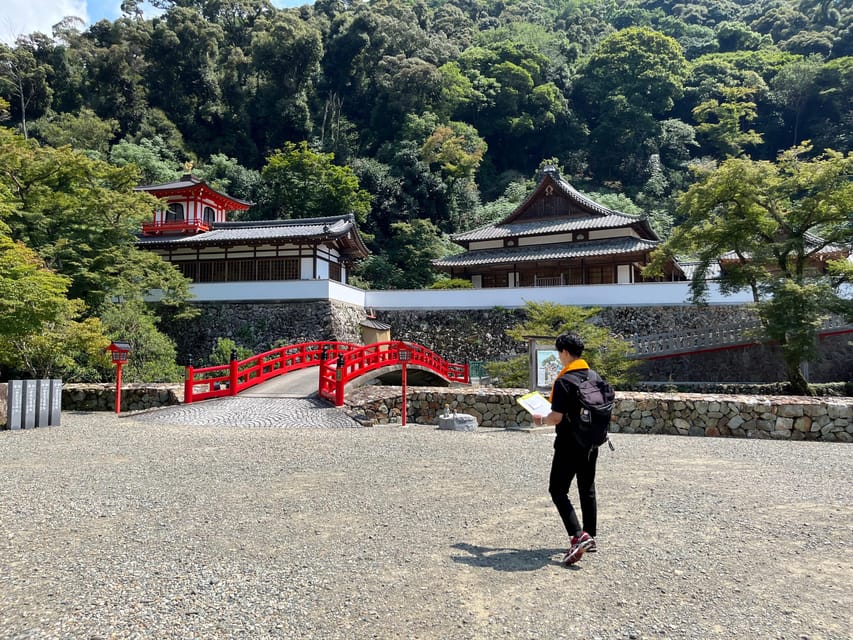
The experience begins in front of Minoh Station, where your guide holds a yellow DeepExperience sign. Minoh is outside central Osaka, and the station meeting point gives you a clear place to gather before heading toward the temple.
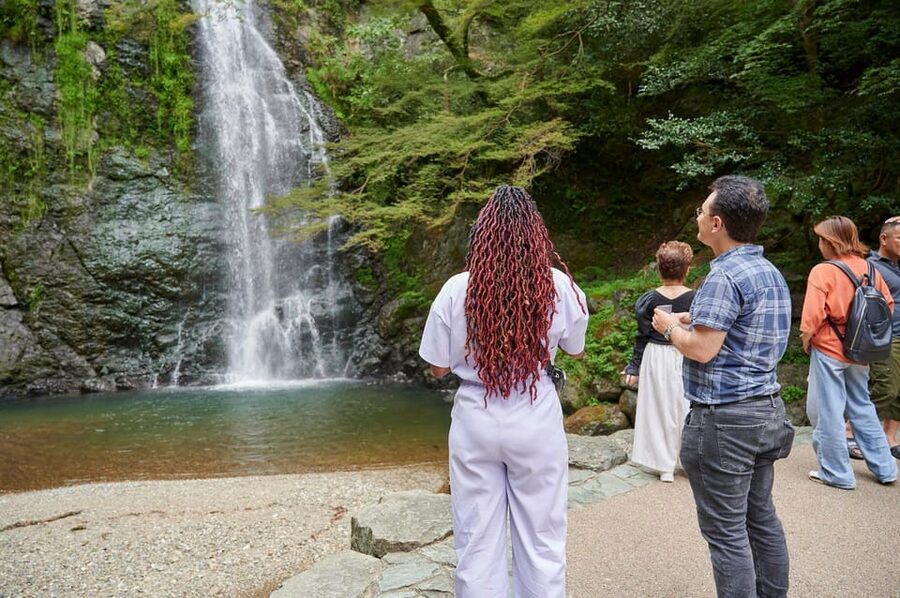
From there, your guide takes you to Ryuan-ji or Saiko-ji. The precise temple may depend on the day’s arrangement, but both settings offer the same basic idea: a quieter religious site where the sword lesson feels connected to its surroundings. The walk and temple visit are part of the experience, not just transportation to the training room.
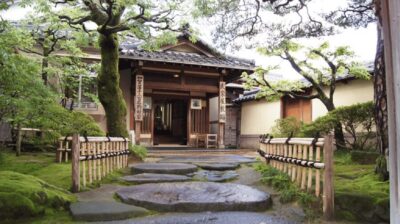
That setting matters. You are not standing in a modern studio with plastic armor on the wall. You are entering a working religious place with secluded areas that are generally closed to the public. The setting helps explain why traditional swordsmanship was tied to conduct, silence, discipline, and attention rather than just combat.
Your guide provides background as you go. Benoit has translated for English-speaking groups, while Aimu and Claire have also guided previous sessions. The assigned guide can vary, but the practical point is important: translation is built into the experience, which makes detailed instruction possible even though Watanabe teaches in Japanese.
More Samurai Experiences in Osaka
- Samurai Training Experience KENDO in Osaka
★ 5.0 · 515 reviews - OSAKA NIGHT FUSION Japanese Taiko Kabuki Samurai Dance Show
★ 4.8 · 155 reviews - Osaka: Samurai Training Experience KENDO in Osaka
★ 5.0 · 111 reviews
What Tatsuya Watanabe brings to the lesson
Watanabe began kendo in his early teens. Later, while at university, he joined Yagyū Shinkage-ryu, one of Japan’s established classical schools of kenjutsu. His training then continued through other lineages, including Suishin-ryu.
He was appointed soke, or headmaster, of Suishin-ryu in his twenties. That is not simply a job title for a performance. It means he carries responsibility for the school’s techniques, teachings, values, and presentation.
The program presents swordsmanship as a complete practice. You learn how the body moves, but you also hear about the mental and spiritual side of the art. Watanabe continues daily training and works to keep classical sword culture meaningful in modern life. His work includes performances, cultural programs, and teaching sessions for people outside Japan.
I find that background useful because it sets a more accurate expectation. You are not being taught by an actor hired to play a samurai. At the same time, you should not expect to become a trained swordsman in one afternoon. The value lies in meeting a serious practitioner and getting a careful introduction to a tradition that normally takes years to study.
The opening performance shows what control looks like
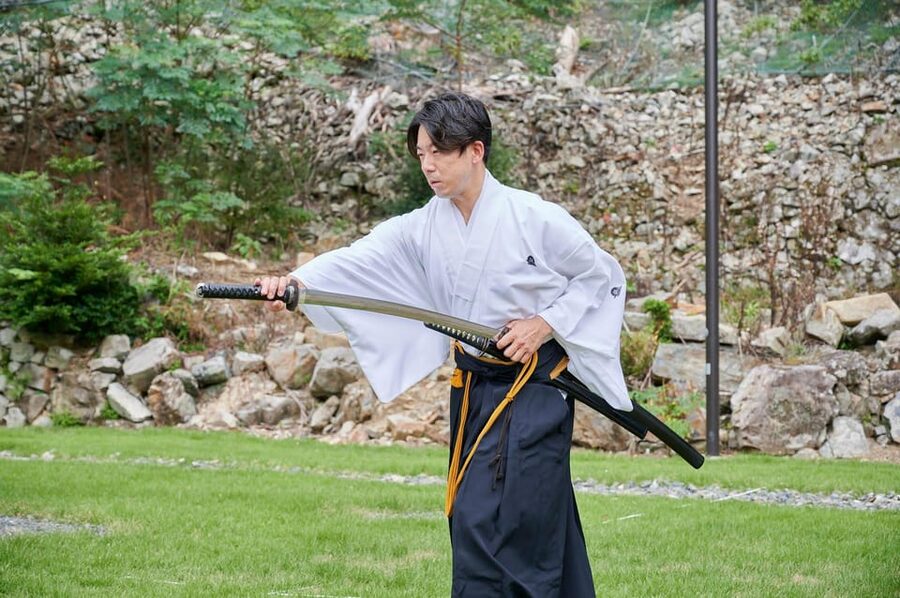
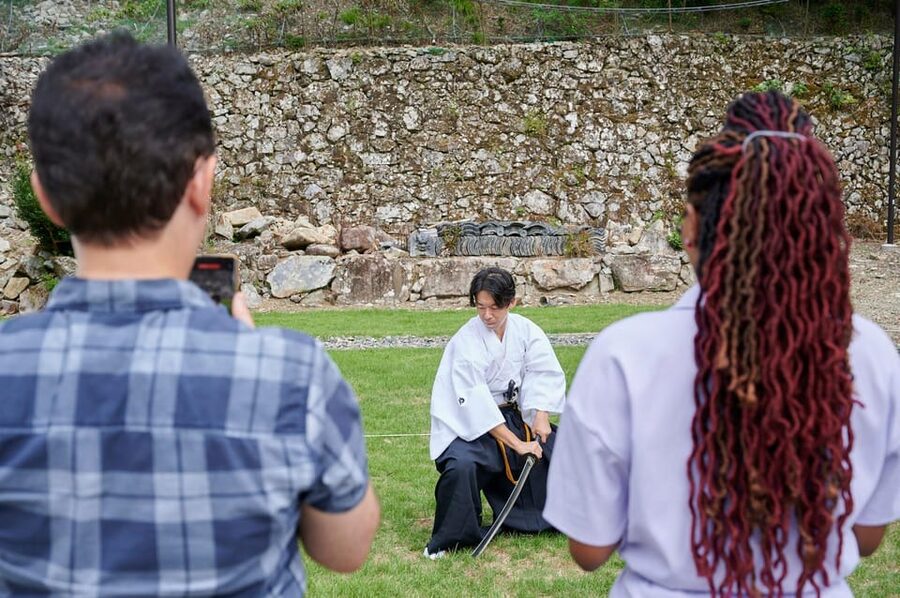
Before you begin, Watanabe gives a special sword performance prepared for this experience. This is one of the strongest parts of the program because it gives you a visual guide to the movements you will later attempt.
At close range, the important details are not just speed or dramatic strikes. You can watch the placement of the feet, the position of the hands, the direction of the cut, and the calm pause before and after each movement. The performance shows why traditional swordsmanship relies on economy and control.
Several people who took the session described the demonstration as inspiring. That makes sense: seeing a master perform first gives the lesson a clear standard, even if your own movements are much simpler. It also helps you understand the difference between a theatrical sword fight and a classical form built around precision.
The performance takes place in a religious setting, which adds restraint to the mood. There is no need for loud music or staged battle scenes. The temple, the wooden practice sword, and Watanabe’s concentration provide the drama.
The 90-minute training session
The practical lesson forms the heart of the visit. The training is described as about an hour and a half, with the full program including the temple visit, performance, instruction, and time for cultural explanation.
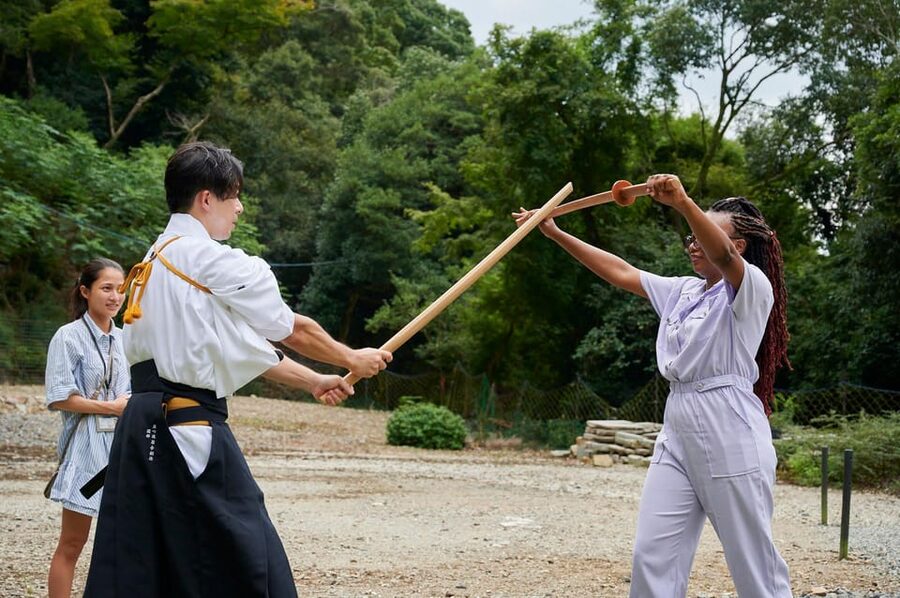
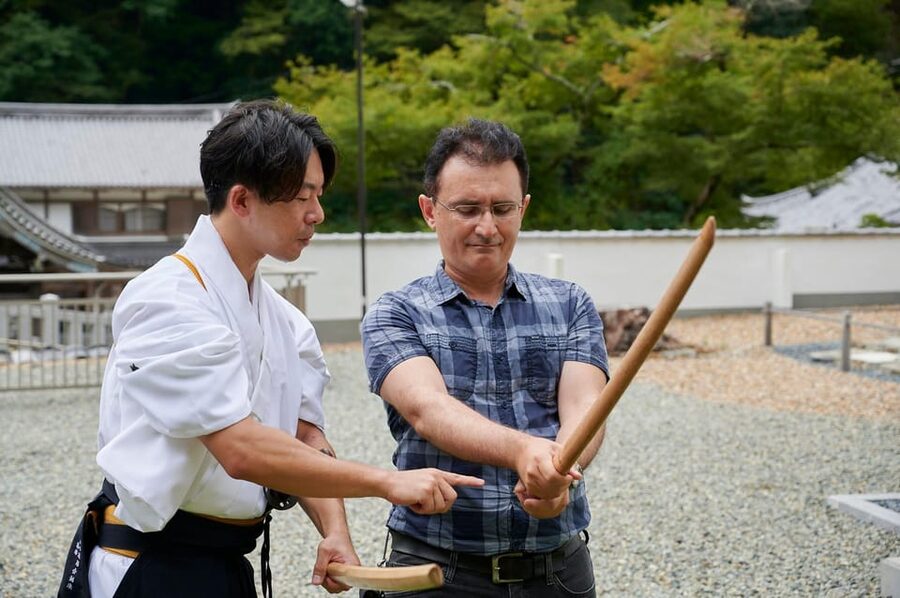
You begin with basic handling and posture. The goal is not to swing hard. Watanabe focuses on alignment, balance, fluidity, and the path of the blade. Your guide translates the corrections, which can include small changes to your stance, grip, or striking motion.
That translation makes a major difference. Martial arts instruction often depends on short corrections that are easy to miss. Benoit, in particular, has helped English-speaking groups follow the instructions during the practice. The lesson becomes interactive rather than a demonstration you simply watch from the side.
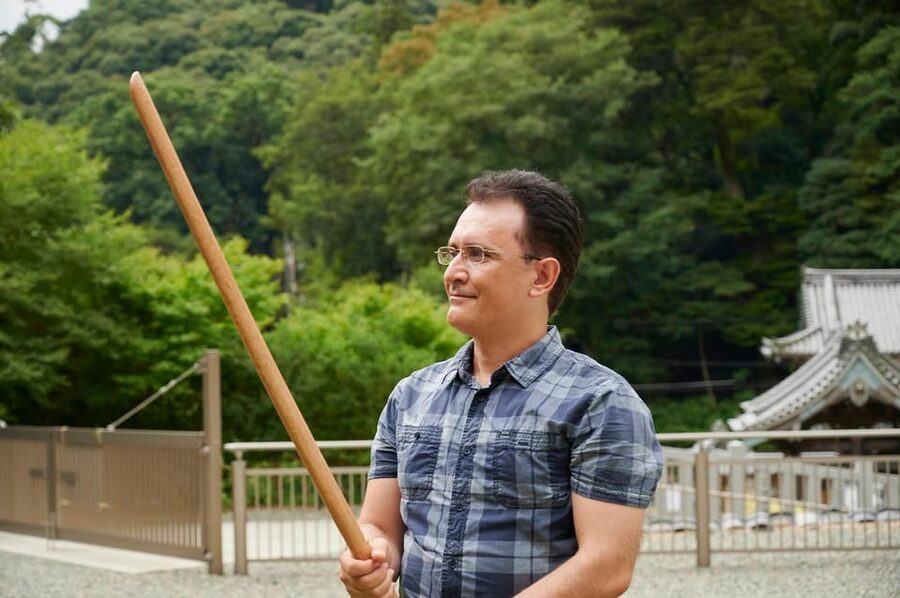
The practice swords are wooden. This lets you work through the movements in a controlled way while learning the basic form. You may also be shown real swords during the wider cultural portion, and one past session included a demonstration of cutting paper with a real blade. Treat that as a special possibility, not a guaranteed part of every booking.
The most useful lesson is likely to be the connection between movement and state of mind. Watanabe emphasizes fluidity and a meditative quality rather than force. You may find yourself concentrating on a simple strike far more carefully than expected. That is where this experience differs from a souvenir activity.
The training can suit beginners because the focus is on fundamentals, not prior martial arts experience. Still, you should be ready to listen closely and repeat movements. If you want nonstop action, you may find the pace slow. If you enjoy learning how a traditional practice works from the inside, the repetition is the point.
Same trip, a completely different kind of day:
- Osaka Go Karting Tour with Funny Costume
★ 5.0 · 2,658 reviews - Osaka Castle: Museum and Tower Entry Ticket
★ 4.5 · 2,380 reviews - Osaka: Shinsekai Food Tour with 13-15 Dishes at 5 Eateries
★ 4.8 · 2,204 reviews - Osaka Food Tour: 13 Dishes at 5 Local Eateries
★ 5.0 · 2,149 reviews
Seeing swords and the personal side of the tradition
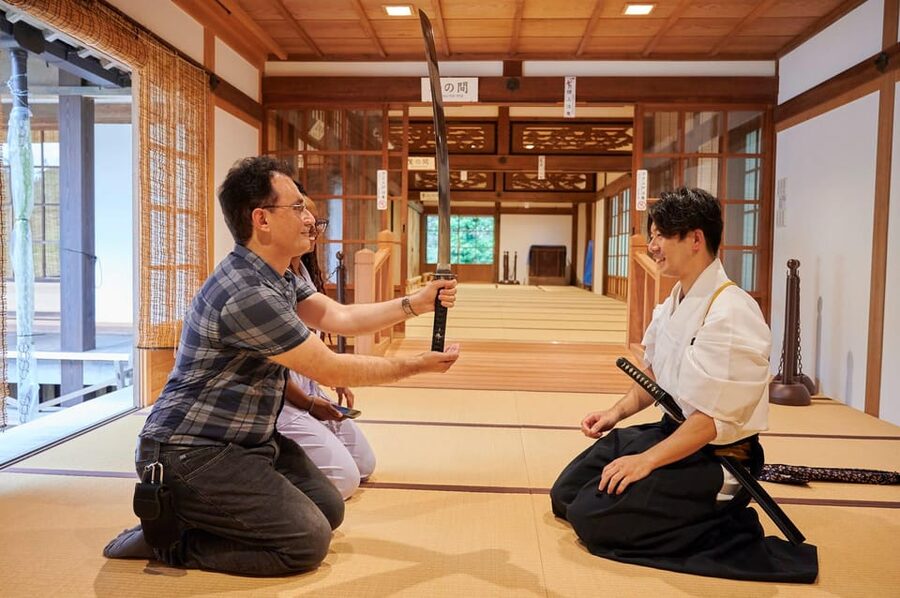
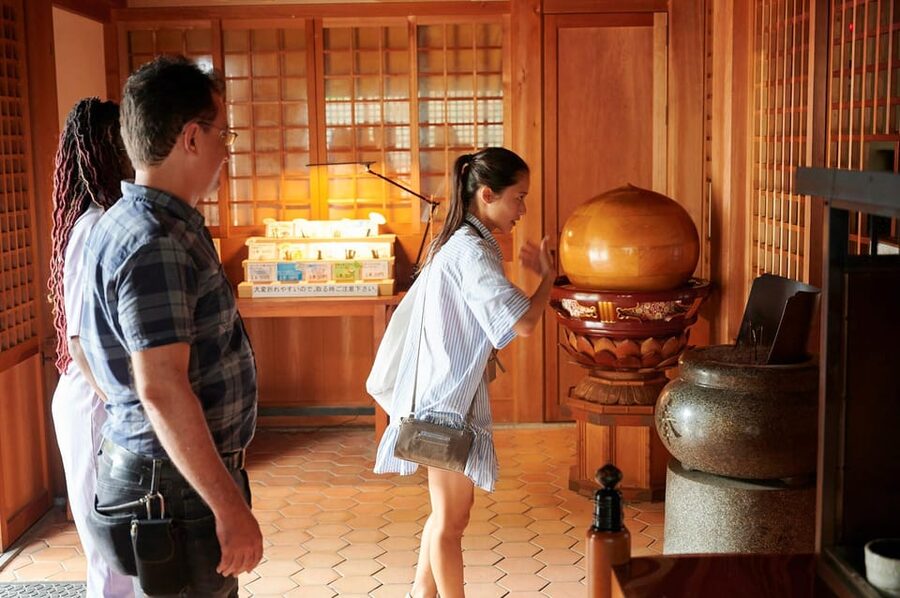
The program can include time inside the temple house, where you may see Watanabe’s personal sword collection. One session included a sword dating from 1370. Holding or viewing real weapons in such a setting gives you a better sense of the age and care attached to Japanese sword traditions.
This part should be handled with respect. The swords are not props for casual handling, and access may depend on the day’s arrangements. The supplied details do not promise that every group will see the same objects or hold a live blade.
That uncertainty is worth noting, but it does not weaken the main experience. The lesson does not depend on a particular antique sword being available. The collection adds historical depth, while the training gives you a physical understanding of how the art is practiced.
I especially like the combination of the two. A museum display can tell you that a sword is old. A lesson in grip, posture, and controlled movement helps you understand why the object mattered to the people who used and preserved it.
Why the temple access matters

Ryuan-ji is described as a sacred site in Minoh with a long spiritual connection to the area. Saiko-ji may be used as an alternative setting. The exact location can vary, but the key feature is private access to an area normally closed to the public.
That changes the character of the afternoon. You are not fitting a quick photo into a busy sightseeing route. You are entering a quieter space with a guide, a teacher, and time to pay attention.
The temple visit also gives context to the samurai ideal. The program presents the sword not only as a weapon but as a tool for training the body and mind. The religious surroundings make that message easier to grasp than it might be in a commercial martial arts venue.
You should still think of this as a structured cultural program, not a free visit to explore every corner of the temple. Access is special but controlled. Follow the guide’s instructions, respect the sacred setting, and expect the schedule to keep you moving through the planned areas.
Language support and private-group format
The experience is offered with English, Japanese, and French-speaking guides. The sword master himself speaks Japanese, so an interpreter is especially useful during the training. Translation also helps with temple history and questions about Watanabe’s practice.
The private-group format is another major advantage. You are not trying to hear instructions over a large crowd or waiting for several unrelated groups to finish. The guide can help keep the explanation at a pace that works for your party, and Watanabe can focus on individual form.
This format is particularly good for families, couples, and small groups with different interests. A parent and child can practice together, as one past booking did. Someone interested in Japanese history can focus on the temple and swords, while someone more active can pay closer attention to the physical lesson.
The private setup does not mean the session becomes casual. Traditional etiquette still matters. You are receiving access to a serious practice, so punctuality, attentive listening, and respectful behavior are part of getting the most from it.
Is $158 per person a fair price?
At $158 per person, this is not a bargain activity. You are paying more than you would for a short public demonstration or a basic martial arts class.
The price makes more sense when you count what is included: a private guide, a temple visit, access to a restricted training area, a performance by the school headmaster, hands-on instruction, translation, and cultural explanation. The experience also avoids the usual tourist crowd and gives you direct contact with a living tradition.
For someone who only wants to hold a katana for a photograph, the cost may feel high. You can find cheaper sword-themed activities in Japan. But those alternatives may not include a classical school headmaster, a private temple setting, or ninety minutes of instruction.
I would call this a good value for people who care about Japanese culture, martial arts, or unusual access. The value is not in the amount of equipment or the number of attractions. It is in the quality of the teacher and the setting.
Who should book this experience?
I would recommend it to you if you like activities that ask for attention rather than simply entertain you. It works well for:
- People curious about Japanese martial arts and samurai culture
- Couples or families looking for a shared activity outside central Osaka
- Visitors who prefer small, private programs
- Beginners who want clear instruction and translation
- Anyone interested in temples, historical weapons, or traditional arts
You may want to skip it if you need a fast-moving attraction with constant spectacle. You may also be disappointed if you expect to use a sharp sword throughout the session. The core practice uses wooden swords, and any real-blade demonstration or paper cutting should be treated as subject to the day’s program.
Wear something that allows comfortable movement, though no specific clothing requirement is provided. Most of all, arrive ready to concentrate. This experience rewards patience more than athletic ability.
Booking, timing, and cancellation details
Meet your guide in front of Minoh Station, marked by the yellow DeepExperience sign. The program returns you to Minoh Station after the temple visit and lesson.
The activity is listed as three hours, while the booking details also display 270 minutes. Since those figures do not match, check the confirmed schedule and starting time when you reserve. Availability depends on the date.
You can cancel up to 24 hours before the activity for a full refund. A reserve-now, pay-later option is also available, which helps if your Osaka schedule is still changing.
Should you book the Minoh samurai experience?
Book this if you want a serious, personal introduction to Japanese swordsmanship rather than a quick samurai photo stop. The combination of Watanabe’s instruction, a private temple area, language support, and the opening performance gives the afternoon real substance.
I would be especially keen to book it for a family, a small group of friends, or anyone who has already seen Osaka’s main sights and wants something quieter and more focused. Just keep your expectations realistic: you will learn foundations, not master kenjutsu in three hours. For the right person, that first lesson, in the temple setting and under a genuine school headmaster, can be one of the most memorable cultural experiences near Osaka.
FAQ
Where does the experience begin?
You meet your guide in front of Minoh Station. The guide holds a yellow sign with the DeepExperience logo.
Where does the sword training take place?
Training takes place in a private area at Ryuan-ji or Saiko-ji Temple. These secluded areas are normally closed to the public.
How long does the experience last?
It is listed as three hours, though the booking information also shows 270 minutes. Check the confirmed schedule for the exact duration and start time.
Who teaches the swordsmanship?
Tatsuya Watanabe leads the sword instruction. He is the headmaster of Suishin-ryu and studied classical schools including Yagyū Shinkage-ryu.
What languages are available?
Guiding is available in English, Japanese, and French. The sword master teaches in Japanese, with the guide providing translation when needed.
Do I use a real sword during the lesson?
The training uses wooden swords. Some sessions have included viewing real swords and a paper-cutting demonstration, but those details are not guaranteed for every booking.
Can I cancel for a refund?
Yes. You can cancel up to 24 hours in advance for a full refund. A reserve-now, pay-later option is also available.
More Train Trips in Osaka
- Osaka: Wakayama Cat Train, Seafood market, Hot Springs Tour
★ 4.6 · 24 reviews - Mt Fuji and Hakone 1-Day Bus Tour Return by Bullet Train
★ 5.0 · 26,383 reviews - Mt Fuji & Hakone Cruise, Drum Show Bullet Train 1 Day from Tokyo
★ 4.0 · 7,413 reviews - Tokyo Mt Fuji 5th St & Hakone Cruise Bus Tour w/Bullet Train
★ 4.4 · 5,024 reviews
Just added around Osaka
- Exclusive Sushi Making Experience with a Master Chef – Osaka Area★ 5.0 · 25 reviews
- Private Home-Style Cooking Class in Osaka with Local Mom Yoshiko★ 5.0 · 46 reviews
- Hidden Osaka – Yukaku Red Light Tour & Culinary Adventure★ 4.8 · 96 reviews
- Osaka: Walking Tour and Top Highlights★ 4.8 · 104 reviews
- Osaka: Private Ceramic Painting Workshop★ 5.0 · 13 reviews
- Pickleball in Osaka, Kobe & Kyoto with Locals!★ 4.7 · 80 reviews
- Eat Like a Local in Osaka – Private Custom Street Food Tour★ 4.3 · 33 reviews
- Osaka:SUMO BEATS SHOWCASE: Taiko Drum and Wagyu burger!★ 4.2 · 37 reviews
Samurai Experiences, compared.

Browse the lists this tour appears in