
Reviewed · TEA CEREMONY EXPERIENCES
Osaka: Private Tea Ceremony and Calligraphy Experience
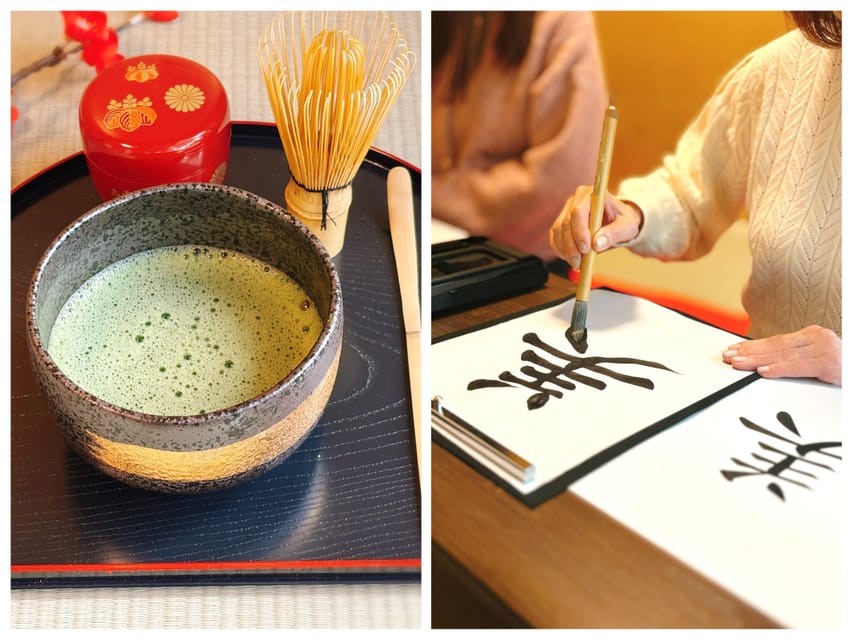
A bowl of matcha, a brush, and your name written in Japanese make a fine Osaka souvenir. At Wa No Ma, you learn the meaning behind the tea ceremony, prepare your own matcha, and create a calligraphy piece rather than simply watching a demonstration. The private setting keeps the mood calm and gives you room to ask questions.
I especially like the personalized kanji name and the chance to choose your own tea bowl. I also like the patient, flexible teaching style from Wanoma, who adjusts the pace for children, welcomes photos, and explains mistakes without making you feel awkward. The main consideration is practical: the experience lasts 135 minutes, requires socks, and is not suitable for wheelchair users.
Key Points to Know Before Booking
- Your name becomes a custom kanji design: Wanoma suggests Japanese characters that reflect your personality, interests, or chosen theme.
- You make your own matcha: This is a hands-on lesson, not just a tea tasting.
- Sweets appear twice: You taste different Japanese sweets during the tea ceremony, with seasonal meaning explained along the way.
- The class is fully private: Your group receives the instructor’s full attention, with time for photos and questions.
- The studio is in Namba: It is about 30 seconds west of the New Osaka Hotel Shinsaibashi entrance, near Shinsaibashi-suji.
- The finished calligraphy goes home with you: Colored paper, ink, and the artwork are included in the price.
A Quiet Cultural Class in the Heart of Namba
This experience takes place at Japanese Culture Experience WA NO MA, a studio in Namba, one of Osaka’s main visitor areas. The location makes it easy to combine with shopping around Shinsaibashi-suji, yet the class itself is designed as a quiet break from the city streets.
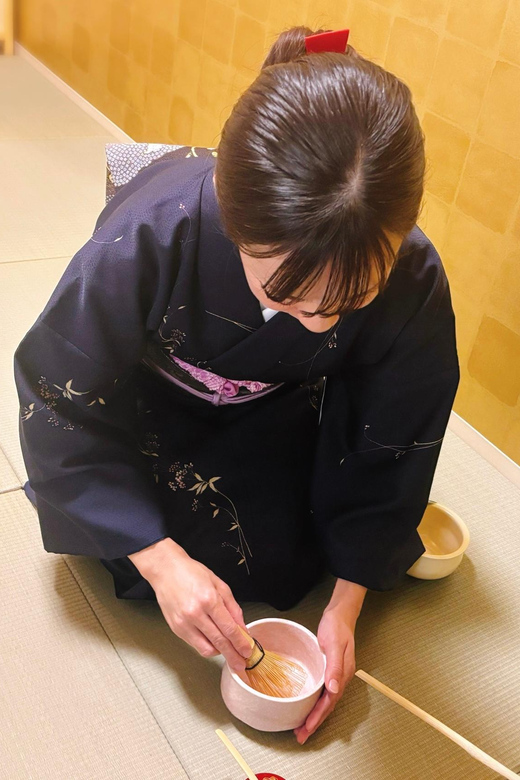
You meet outside the main entrance of New Osaka Hotel Shinsaibashi five minutes before your booking. Look for the blue vending machine and instructors wearing kimonos. From there, the studio is only about 30 seconds west on foot.
The meeting instructions are clear, but I would still arrive a few minutes early. The instructor waits outside rather than expecting you to find your way through an unfamiliar building. That small detail matters when you are carrying shopping bags, guiding children, or trying to reach a timed appointment in a busy part of Osaka.
The entire class is private. That means a couple, family, or small party does not share the room with strangers. You can ask basic questions without feeling self-conscious, take photographs when you like, and request a slower pace. For families, the ability to adjust the lesson to a child’s attention span is a real advantage.
English and Japanese are available. Wanoma is the instructor named in the experience information and in several personal accounts of the class. Her teaching style is described as friendly, funny, patient, and careful, with clear explanations of both tea customs and brush technique.
More Calligraphy Classes in Osaka
- Osaka: Private Japanese Calligraphy Experience
★ 5.0 · 66 reviews - Calligraphy Workshop in Namba, Dotonbori
★ 5.0 · 57 reviews - Learning Zen of Japanese Calligraphy in kimono near Osaka Castle
★ 4.5 · 53 reviews
The Tea Ceremony Begins With Attention to Small Details
The tea portion introduces you to the manners, objects, and movements that shape a Japanese tea ceremony. This is not presented as a quick cup of green tea. You learn why each step matters and how to taste the tea with care.
The exact order can be adjusted to suit your group, but the usual lesson includes an explanation of the ceremony, a demonstration of matcha preparation, and time for you to make your own bowl. You choose from several tea bowls, picking the one that best expresses how you feel that day.
That choice is a thoughtful part of the activity. It gives you a simple way to participate before you even pick up the whisk. The bowls also help you notice that tea culture is not only about the drink. The shape, design, and feel of the bowl are part of the experience.
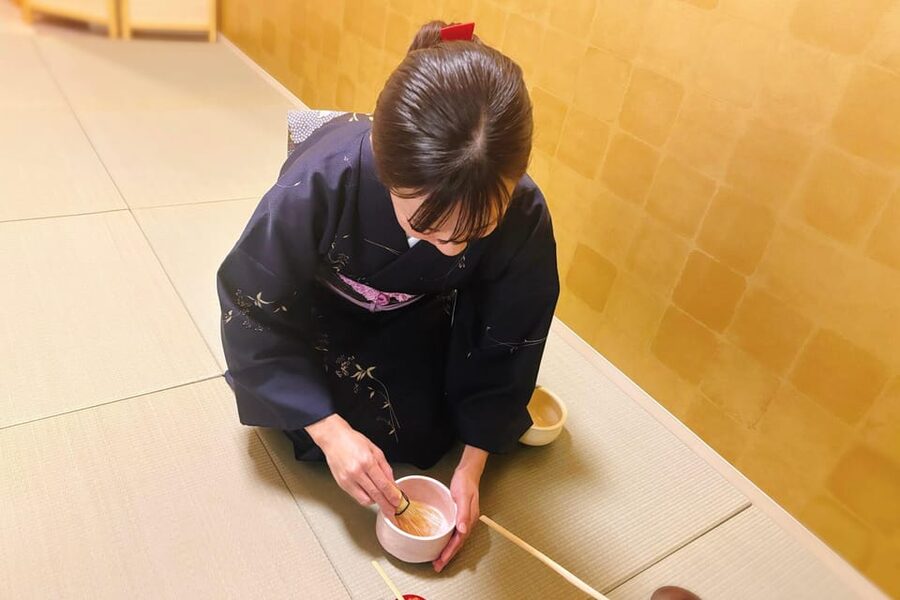
You then learn how to prepare matcha yourself. The instructor guides you through the process, so you do not need prior knowledge of Japanese tea customs. You can expect some imperfect whisking, but that is part of the fun. The private format lets you try again and ask exactly how to improve.
I like this hands-on approach more than a ceremony where you sit silently and watch. You leave with a better sense of how matcha is made and how the ritual creates a slower, more focused moment. The lesson also gives you a practical memory of Japan: you can recognize the tools and basic method when you encounter matcha elsewhere.
Seasonal Sweets Add a Second Layer to the Tea Lesson
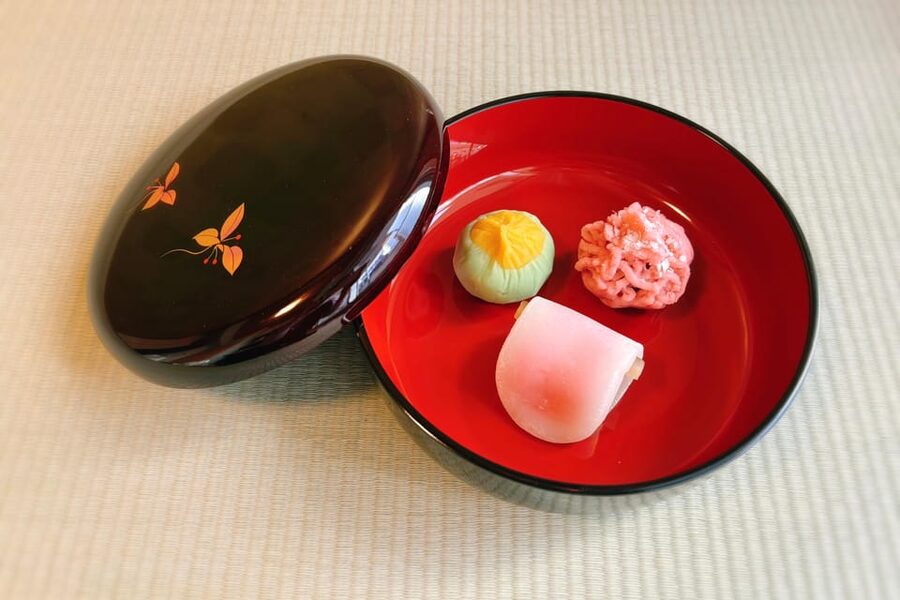
Japanese sweets are served with the matcha, and you have the chance to enjoy different types twice during the tea ceremony. The sweets are not just a snack placed beside the tea. Wanoma explains how the choice of sweets can relate to the seasons.
That seasonal connection gives the tasting more meaning. You may find yourself paying closer attention to color, shape, sweetness, and texture instead of treating the sweets as a simple dessert. The matcha balances the sweetness, which is one reason the two are traditionally served together.
One useful detail for anyone with dietary concerns is that a visitor specifically found the sweets lactose-free. Still, the supplied information does not promise that every dietary need can be accommodated, so you should raise allergies or restrictions when booking or at the beginning of the class.
The tea ceremony is the calmer half of the experience. If you prefer a formal, silent performance, remember that this class is built around participation and conversation. You can ask questions, take pictures, and laugh at mistakes. That makes it approachable, though it may feel less solemn than a ceremony intended mainly for observation.
Choosing Kanji That Fits Your Personality
After the tea lesson, the class turns to Japanese calligraphy. You begin by choosing a theme, favorite letter, or word. If you do not know which Japanese characters suit you, Wanoma can suggest kanji based on your personality or the idea you want to express.
This is one of the most distinctive features of the experience. Writing a random character can produce a pretty souvenir, but understanding why that character was selected makes the piece more personal. Your name can also be converted into Japanese characters, giving you an artwork tied directly to your visit.
You do not need to know Japanese. The instructor helps you choose a character and explains the brush strokes before you write. The lesson includes practice, so your first attempt does not need to be the final one.
The teaching is especially useful for beginners because Japanese calligraphy depends on stroke order, pressure, and movement. The brush is not a marker. You learn how each stroke begins and ends, then try to reproduce it on paper.
The class offers characters at different difficulty levels, according to one detailed account of the lesson. That is helpful if your group has mixed ages or abilities. You can pick something simple and bold, or choose a more demanding character if you want a greater challenge.
More Tea Ceremony Experiences in Osaka
- Osaka: Tea Ceremony Experience
★ 4.9 · 1,426 reviews - Tea Ceremony Experience in Osaka Doutonbori
★ 5.0 · 754 reviews - Matcha Making Class in Osaka with Authentic Japanese Sweets Set
★ 5.0 · 509 reviews - Osaka: Matcha Making Experience with Japanese Sweets
★ 5.0 · 146 reviews
Making a Souvenir You Actually Made Yourself
Once you have practiced, you choose from several colored papers. You then write the final character, add your name in Japanese, and stamp your initials. The finished work becomes a small piece of art to take home.
I prefer this kind of souvenir to a shop-bought item because the memory is connected to the work. The result may not look perfect, but the brush marks show that you made it during a lesson in Osaka. The instructor’s guidance helps you create something presentable without removing the personal part of the process.
The class also provides an opportunity to take photographs. Since the group is private, you can ask for pictures during the tea preparation or calligraphy without interrupting another party. If photos matter to you, say so at the start and ask Wanoma to take plenty.
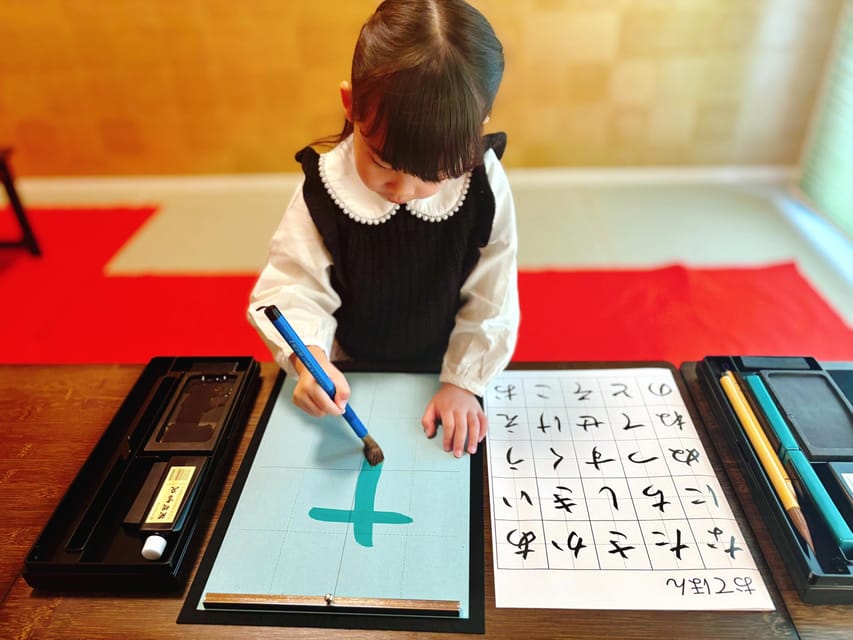
Young children can use water calligraphy. This option helps prevent ink from getting onto hands and clothes, making the activity more practical for families. The information does not state a minimum age, so families with very young children should check suitability when booking.
The class has worked well for families with older children and teenagers. One family specifically found that the instructor kept a 10-year-old and a teenager engaged, including children with ADHD. That does not guarantee the same result for every child, but it suggests that the private, adjustable format is more forgiving than a fixed group lesson.
Why the Private Format Matters
Private experiences cost more than a large shared class, but this one uses the extra attention well. At $64 per person for 135 minutes, the price includes the instructor, all fees and taxes, colored paper, matcha, sweets, and the matcha-making activity.
The value comes from the amount of teaching packed into the time. You receive two connected cultural lessons, several tasting moments, personal guidance on choosing kanji, and a finished piece of calligraphy. You are not paying only for materials or a short demonstration.
The private format also removes several common frustrations. You do not need to keep pace with an unrelated group, and you can ask for more explanation when a custom feels unfamiliar. If a child needs a pause or you want extra photographs, the instructor can adjust the session.
There are limits. The experience is not designed for wheelchair users, and you must wear socks. The tea ceremony often involves traditional seated positions, although the information does not specify every seating arrangement or whether alternatives are available. If sitting on the floor is difficult, ask before booking.
The price is strongest for couples, families, or friends who want a personal activity rather than a quick cultural stop. Solo visitors can also benefit from the one-to-one attention, though the per-person cost may feel higher when compared with a larger class.
Who Will Enjoy This Osaka Experience Most
I would choose this for a first visit to Japan when you want cultural context without committing to a full-day tour. It introduces tea customs and calligraphy in one sitting, and both activities leave you with something tangible to remember.
It is particularly good for:
- Couples looking for a quiet shared activity
- Families wanting a hands-on lesson
- First-time visitors with no experience of matcha or calligraphy
- People who enjoy handmade souvenirs
- Anyone curious about Japanese language and personal names
- Small private groups that prefer flexible timing
It may be less suitable if you want a large public ceremony, a fast activity, or a fully passive performance. You should also think carefully about the 135-minute duration. The class has several stages, so it is not something to squeeze between two closely timed reservations.
The experience works well in bad weather because the main activities take place inside the studio. The Namba location also makes it easy to pair with shopping around Shinsaibashi-suji before or after the class.
Practical Details That Can Make the Class Better
Wear socks. This is a stated requirement, and it is an easy thing to forget when you are wearing sandals in warm weather.
Arrive at the New Osaka Hotel Shinsaibashi entrance five minutes before your scheduled start. Find the blue vending machine and look for the instructors in kimono. The studio is about 30 seconds west of the entrance.
Bring questions. The lesson is designed to explain the reasons behind the tea ceremony and the writing, not just show you what to do. Ask about the seasonal sweets, the meaning of your selected kanji, or the correct brush strokes.
Tell the instructor if you want many photos or a slower pace for children. The class can be arranged around requests, and the private format makes those requests easier to handle.
If you have food allergies or dietary restrictions, explain them in advance. One type of sweet was specifically described as lactose-free, but the available information does not confirm every ingredient or promise a full dietary substitute.
Smoking is not allowed. Wheelchair users should note that the activity is listed as unsuitable for them.
The booking terms are also fairly flexible: you can cancel up to 24 hours before the activity for a full refund, and reserve now while paying later. Availability and starting times vary, so check the date that suits your Osaka plans.
Should You Book the Wa No Ma Tea and Calligraphy Class?
I would book it if you want a personal, calm introduction to two Japanese traditions and like the idea of making your own souvenir. The strongest parts are the private instruction, the custom kanji name, the matcha preparation, and the chance to choose a tea bowl and colored paper.
The class is also a strong choice for families because the pace can be adjusted and water calligraphy is available for young children. Wanoma’s patient teaching style adds to that flexibility, especially when a group has different ages or levels of confidence.
Skip it if you are looking only for a formal ceremony to watch, cannot manage the seating requirements, or need wheelchair access. For everyone else, $64 is a fair price for 135 minutes of instruction, tasting, and hands-on work in central Osaka. You leave with more than a cup of tea. You leave with a better sense of why the ritual matters and a calligraphy piece that carries your own name.
FAQ
Where does the Osaka tea ceremony and calligraphy experience take place?
It takes place at Japanese Culture Experience WA NO MA in Namba, Osaka, on Honshu. The studio is close to Shinsaibashi-suji shopping street.
Where is the meeting point?
Meet outside the main entrance of New Osaka Hotel Shinsaibashi. Walk west for about 30 seconds from the entrance and look for a blue vending machine.
How do I recognize the instructor?
The instructor waits outside the building five minutes before the scheduled booking time and wears a kimono.
How long does the experience last?
The experience lasts 135 minutes.
Is the experience private?
Yes. It is offered as a private group experience, with the instructor attending closely to your group.
Can I make my own matcha?
Yes. You first learn how to make matcha and then prepare it yourself during the tea lesson.
Are Japanese sweets included?
Yes. Matcha and various Japanese sweets are included, and different sweets are enjoyed twice during the tea ceremony.
Can I take home my calligraphy?
Yes. You choose colored paper, write your selected kanji and Japanese name, add your initials, and take the finished artwork with you.
Is the activity offered in English?
Yes. The listed languages are English and Japanese.
What should I bring, and is the activity wheelchair accessible?
You should bring socks. The activity is not suitable for wheelchair users, and smoking is not allowed.
Just added around Osaka
- Exclusive Sushi Making Experience with a Master Chef – Osaka Area★ 5.0 · 25 reviews
- Private Home-Style Cooking Class in Osaka with Local Mom Yoshiko★ 5.0 · 46 reviews
- Hidden Osaka – Yukaku Red Light Tour & Culinary Adventure★ 4.8 · 96 reviews
- Osaka: Walking Tour and Top Highlights★ 4.8 · 104 reviews
- Osaka: Private Ceramic Painting Workshop★ 5.0 · 13 reviews
- Pickleball in Osaka, Kobe & Kyoto with Locals!★ 4.7 · 80 reviews
- Eat Like a Local in Osaka – Private Custom Street Food Tour★ 4.3 · 33 reviews
- Osaka:SUMO BEATS SHOWCASE: Taiko Drum and Wagyu burger!★ 4.2 · 37 reviews
Tea Ceremony Experiences, compared.

Tea Ceremony in a Traditional Tea House in Kiyomizu
Our verdict →


World Heritage Kyoto & Nara Uji Authentic Matcha Experience
Our verdict →


Arashiyama Bamboo Forest, Monkeys, Matcha & Temple Tour
Our verdict →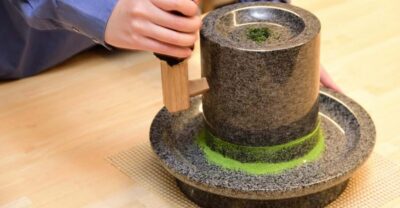
Browse the lists this tour appears in