
Reviewed · COOKING CLASSES
Nishiki Market Food Tour with Cooking Class
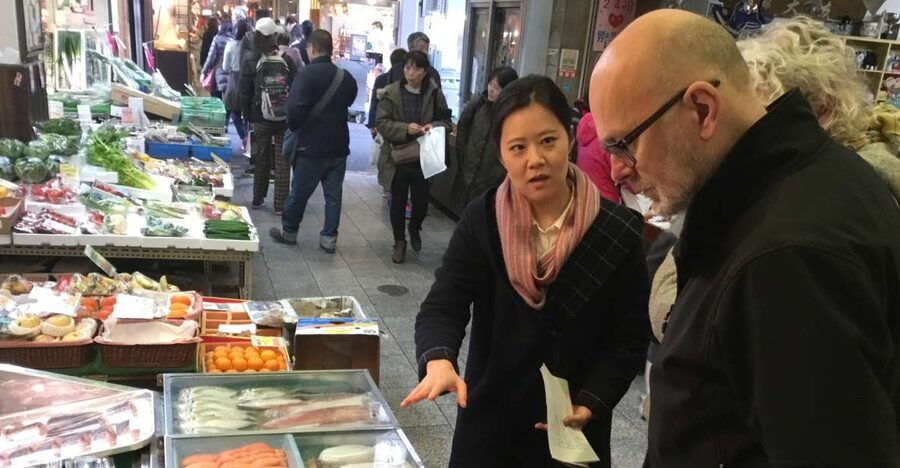
The clever part of this Kyoto experience is the handoff from market visit to cooking class. Nishiki Market can be crossed in 15 minutes if you simply follow the crowd. With a local guide translating labels, explaining old shops, and helping you ask questions, it becomes a useful lesson in Japanese food.
I like two things especially: you cook with ingredients chosen at the market, and the private format lets you request a substitution or choose different donburi dishes within your group. The main consideration is pace. If you want lots of time to shop or sample on your own, the scheduled market walk may feel short, especially when the arcade is crowded.
Key points to know before booking
- Choose your own donburi: Pick kaisen-don with seafood, ten-don with tempura, or oyako-don with chicken and egg.
- Start at Nishiki’s western entrance: The tour spends about an hour in the market before moving to the cooking studio by included taxi.
- Ask questions freely: This is a private group, so you can ask about unfamiliar foods, sauces, brands, customs, and shop specialties.
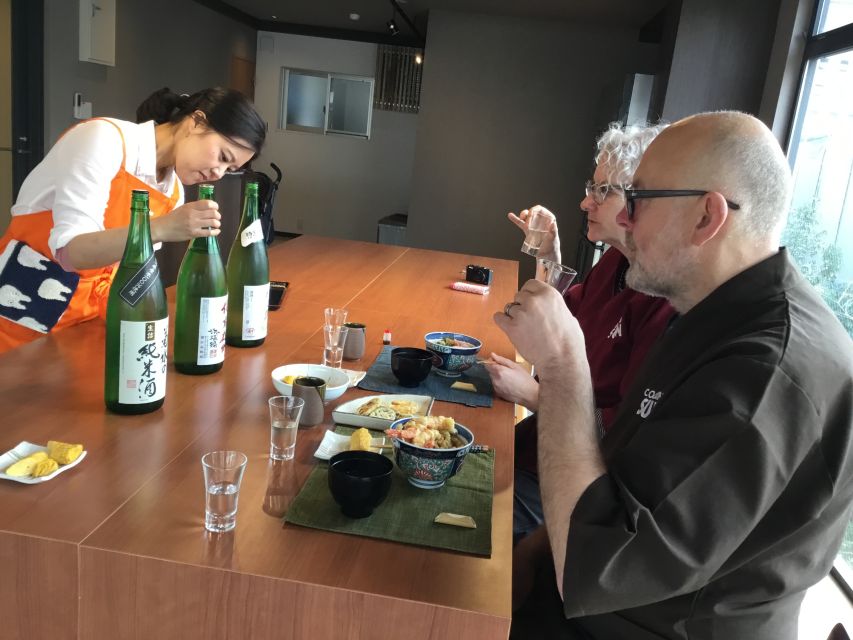
- Taste as you go: Sample market foods, try Japanese pickles, and choose an optional tasting of three types of sake.
- Ingredients and recipe are included: You pay separately only for food you decide to buy for yourself.
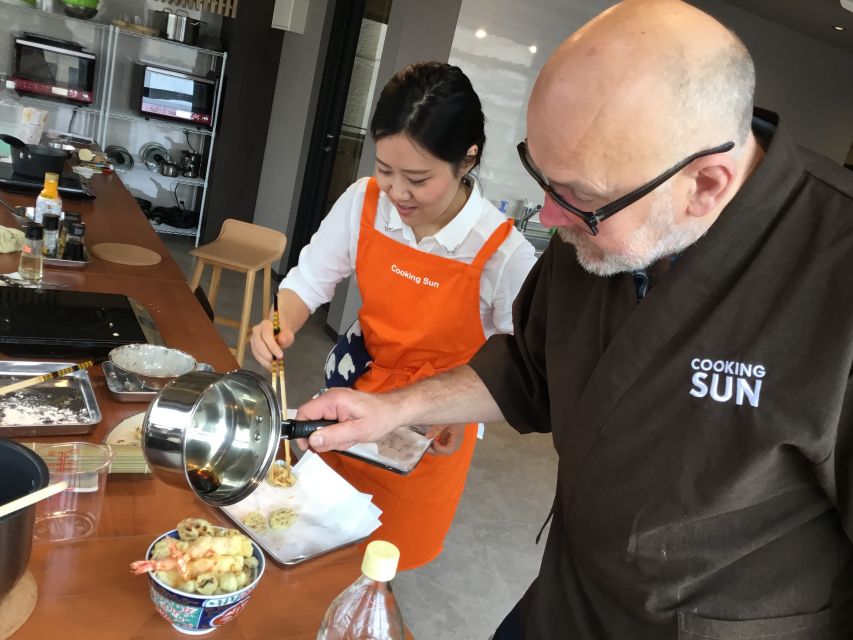
- Expect a hands-on class: You prepare and eat your own bowl meal in a clean cooking studio rather than watching a demonstration from the sidelines.
Why Nishiki Market is better with a guide
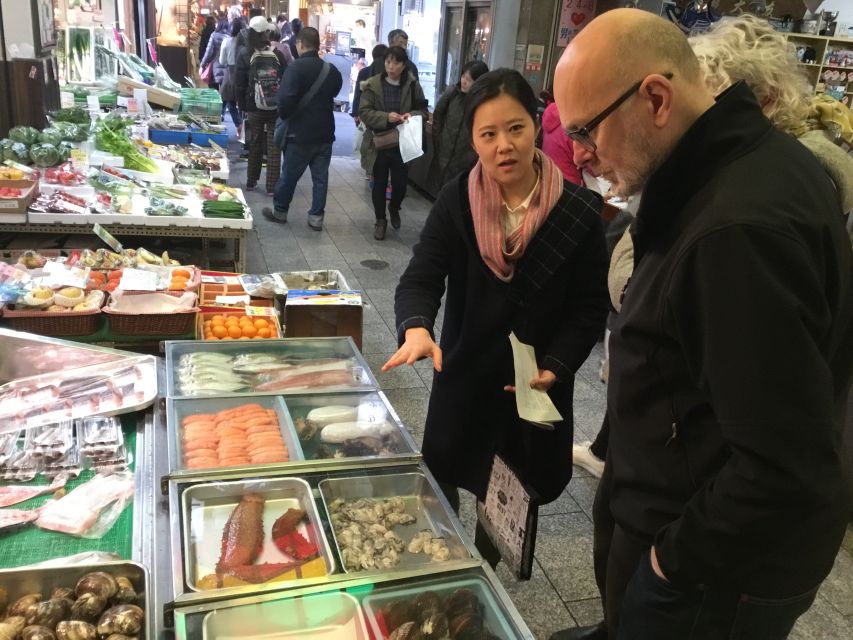
Nishiki Market is often called Kyoto’s kitchen, but the nickname does not tell you how to use the place. The covered market is packed with food stalls, small shops, snacks, pickles, spices, seafood, meat, and prepared dishes. Without context, it is easy to walk through, take a few photos, and miss what makes the market useful.
Your English-speaking Japanese guide gives you a way into that confusion. You can ask what an unfamiliar item is, how it is used, and whether it is a Kyoto specialty. If a shop staff member has something worth explaining, your guide can help translate.
That translation matters more than it may sound. Food labels and short exchanges at market stalls can be hard to follow, even if you know a little Japanese. A private guide also gives you room to ask the questions you would skip in a large group.
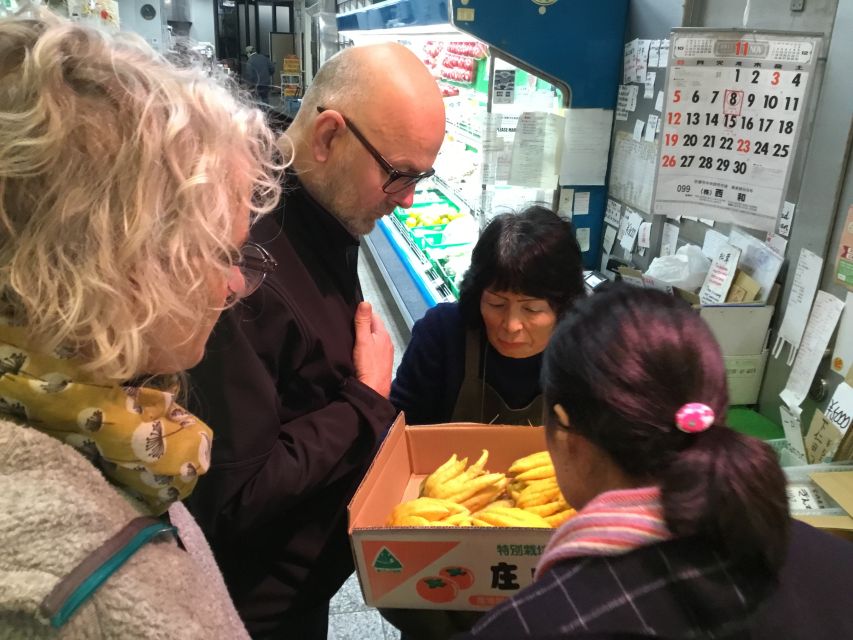
The walk includes samples, with Japanese pickles among the foods you may try. Pickles are a good fit for this market because they show how Japanese meals use small side dishes for sharp, salty, sour, and savory flavors. You may also get suggestions about sauces, brands, and ingredients to look for later.
One practical lesson is market etiquette. You are told not to eat while walking, an easy rule to miss when stalls sell tempting snacks. You can sample during the tour, then return later for more browsing and purchases if you wish.
More Cooking Classes in Kyoto
- Ramen Cooking Class at Ramen Factory in Kyoto
★ 5.0 · 1,937 reviews - Kyoto: Ramen Cooking Class at a Ramen Factory with Souvenir
★ 4.9 · 532 reviews - Kyoto: Ramen, Gyoza, and Onigiri Cooking Class
★ 5.0 · 445 reviews
The western entrance and the first hour
Meet at the western entrance of Nishiki Market. The guide briefs you on the plan, then leads you through the arcade. The market portion typically takes about one hour, although the exact pace depends on questions, crowds, and the foods being discussed.
The value here is not simply seeing a long row of shops. Your guide can point out older, established stalls and explain why certain businesses are known for particular offerings. This helps you separate food worth investigating from items aimed mainly at quick tourist sales.
The market has changed, and some stalls are now quite tourist-focused. That is not a reason to skip Nishiki, but it does make local guidance more useful. A guide can direct your attention to shops that matter to Kyoto’s food culture rather than leaving you to follow the busiest queue.
You should not expect a full shopping trip during this hour. The tour is designed to gather ingredients and introduce you to the market, not give you unlimited time to buy souvenirs. One useful approach is to note the shops and products you like, then return after the class if you want to shop at your own pace.
The crowd can also affect the experience. One booking found the market walk harder to follow because it was so busy, and another felt there was less time for explanations and tastings than expected. That is fair criticism. Nishiki is narrow in places, and stopping for a long talk can block other shoppers.
Still, a private group gives you a practical advantage. You can ask to slow down for a particular stall, or clarify something before moving on. The guide does not need to fit your questions into a large group’s schedule.
Picking a bowl: seafood, tempura, or chicken and egg
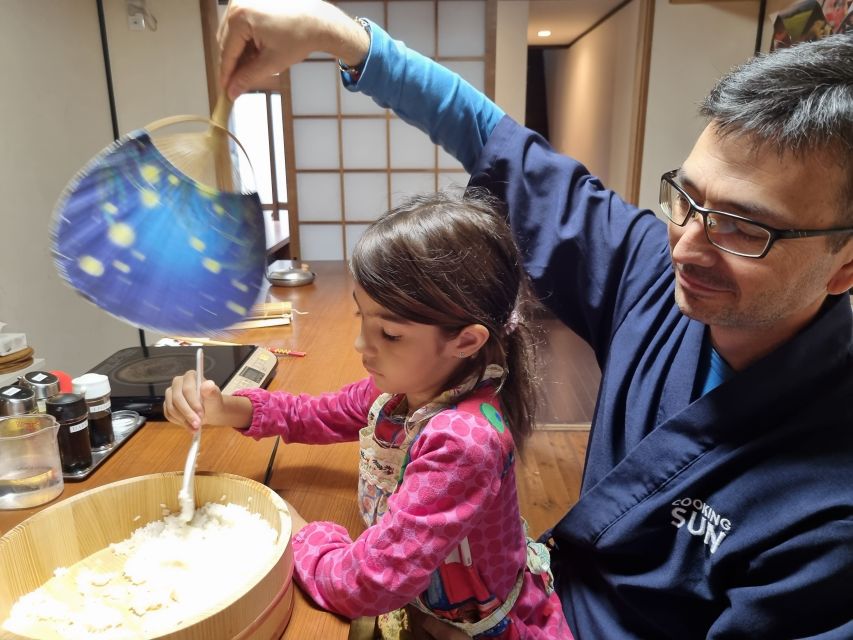
The cooking portion centers on donburi, a Japanese bowl of rice topped with other ingredients. You choose one of three main options:
- Kaisen-don, a seafood bowl
- Ten-don, a tempura bowl
- Oyako-don, chicken and egg
The choice gives the experience some flexibility. If one person in your group wants seafood and another prefers a cooked dish, each person may be able to choose a different option. Past groups have prepared all three dishes together, making this especially useful for families or mixed groups.
Kaisen-don is the least predictable choice because seafood quality can vary. One booking found the fatty tuna disappointing, so I would choose this dish for the style of meal rather than assume every piece will be exceptional. Ingredients depend on what is available and selected that day.
Ten-don offers the most active cooking appeal because tempura requires attention to batter and frying. Oyako-don is likely the most approachable choice for home cooking, with familiar chicken and egg combined with Japanese seasoning. The class also covers dashi, sauces, and ways to make the finished bowl look attractive.
Requests may be possible. One group arranged tofu instead of chicken, and other groups received small extras based on their tastes. You should ask in advance rather than assume every substitution can be made. The private setup makes a request more realistic, but the kitchen still needs ingredients that work with the planned meal.
From market ingredients to the cooking studio
After the market, an included taxi takes you to the studio. This is a small but important benefit. You do not need to work out a separate route while carrying ingredients, and the transfer saves time in a 150-minute activity.
The cooking class itself generally takes about an hour, with the remaining time covering the market introduction, transport, and transitions. Once you arrive, you begin preparing fairly soon. The kitchen has been described as clean, well stocked, and cozy, with enough structure for an instructor to teach each step.
This is not a class where you sit at a counter and watch someone else cook. You take part in preparing your meal, then eat what you made. The guide explains techniques, seasonings, sauces, and presentation, so the lesson has value beyond lunch.
The English instruction is a major reason to book. Guides such as Chie, Momo, and Mio have been praised for clear explanations, patience, and friendly teaching. The experience has also worked well with children, since different dishes keep the group involved.
You can expect practical instruction rather than restaurant-level culinary training. The useful takeaway is a recipe and a clearer sense of how Japanese ingredients fit together. You may leave knowing how to prepare dashi, how to use a particular sauce, or which brand to look for at home.
More Food Tours in Kyoto
- Kyoto Night Foodie Tour in Gion (9+ dishes + 6 Sake tastings)
★ 5.0 · 1,762 reviews - Kyoto Nishiki Market Food and Culture Walking Tour
★ 5.0 · 412 reviews - Kyoto: Gion Food Tour 13 Dishes at 4 Eateries
★ 5.0 · 408 reviews - Kyoto Foodie Night Tour
★ 5.0 · 376 reviews
What the tastings add
The included samples make the market walk feel more like a food tour than a guided shopping trip. Japanese pickles are specifically part of the tasting, and other sample foods may be selected as the guide takes you through the stalls.
An optional tasting of three types of sake is also available. Since it is optional, you can decide if it suits your interests and schedule. The experience does not require you to drink sake to benefit from the market tour or cooking class.
The tasting portion has limits. You should not book this expecting a long succession of full meals. The samples introduce you to local foods, while the donburi provides the main meal. If you want extra snacks or purchases, those are your responsibility and are not included.
That separation is helpful for budgeting. You know the tour fee covers the class ingredients and samples, but you can control additional spending. Nishiki Market makes it easy to buy more than planned, so deciding what you want before the walk can help.
Is $109 a fair price?
At $109 per person, this is not a cheap market stroll. The fee covers a private English-language guide, market samples, ingredients for the donburi, the cooking lesson, a recipe, and the taxi from the market to the studio.
The value depends on what you want from Nishiki. If you only want to see the arcade and grab a snack, you can spend far less on your own. If you want translation, food explanations, a hands-on meal, and the convenience of a private group, the price becomes easier to justify.
I see the strongest value for couples, families, and small groups with different food interests. You can ask more questions than in a large tour, and group members may be able to choose different bowls. The private format also makes the cooking class feel personal rather than standardized.
The price is less attractive if your main goal is shopping time. The market portion is about an hour, and the guide’s job is to explain and gather cooking ingredients. You may need to return later for a relaxed look at the stalls.
Free cancellation up to 24 hours before the activity and reserve-now, pay-later terms make planning easier, especially when your Kyoto schedule is still changing. The activity lasts 150 minutes, and you need to check available starting times when booking.
Who will enjoy this experience most?
I would recommend this to you if you want food to be a way into Kyoto’s local customs. You do not need advanced cooking skills. The instruction is designed to guide you through each step, and the recipe gives you something practical to use after the trip.
Families are a good match. The class has kept children involved, and cooking different dishes gives each person a role. The market walk also offers plenty to point out, though young children may find a crowded arcade tiring.
It suits curious eaters who like asking questions. You can ask about unfamiliar foods, pickles, sauces, shop specialties, and etiquette without worrying about slowing down a large group.
It may not suit you if you dislike seafood, cannot eat the listed ingredients, or want a long sake tasting. Substitutions have been possible, but they are not guaranteed. Ask before booking if a dietary concern affects your choice of donburi.
Small details that can improve your day
Wear comfortable shoes. You will walk through the market, stand during parts of the tour, and move from the market to the studio.
Arrive at the western entrance with enough time to identify the meeting point. The market can be crowded, so locating the guide may take a moment.
Keep your shopping list short during the tour. Write down stalls and products that catch your attention, then return after the class if you want to browse without watching the clock.
If you care about the cooking result, tell the guide your preferences early. The private format has allowed tofu substitutions and small additions, but advance notice gives the instructor more options.
Finally, treat the market as a working food district, not just a snack street. Follow the no-eating-while-walking rule, listen when the guide explains shop customs, and leave room for the prepared donburi meal.
Should you book the Nishiki Market Food Tour?
Book it if you want a guided market lesson followed by a meal you prepare yourself. The strongest parts are the fluent English instruction, the private pace, the chance to ask about foods and customs, and the link between the market ingredients and the cooking class.
Skip it if you want several hours of independent shopping or a large food crawl with many full portions. The tour is more focused: about an hour in Nishiki, a taxi to the studio, and a practical donburi class.
For most food-focused visitors, $109 is reasonable because it combines several services that would be difficult to arrange alone. Choose it especially if you want to take a Kyoto recipe home, not just take a photo of the market.
FAQ
Where does the Nishiki Market tour begin?
It begins at the western entrance of Nishiki Market.
How long does the activity last?
The activity lasts 150 minutes.
What languages are offered?
The tour is offered in English, with an English-speaking instructor and local Japanese guide.
Is this a private tour?
Yes. It is arranged for a private group, allowing you to ask questions and move at your group’s pace.
Which donburi dishes can I choose?
You can choose kaisen-don with seafood, ten-don with tempura, or oyako-don with chicken and egg.
Are the cooking ingredients included?
Yes. The ingredients for the donburi, a recipe, and sample food tastings are included.
Is transportation included after the market visit?
Yes. The taxi cost from Nishiki Market to the cooking studio is included.
More Food & Drink in Kyoto
- 3-Hour Kyoto Insider Sake Brewery Tour with Tastings & Pairings
★ 5.0 · 917 reviews - Arashiyama Bamboo, Temple, Monkeys, or Secret Sake Brewery
★ 4.8 · 886 reviews - Kyoto: Insider Sake Brewery Tour with Sake and Food Pairing
★ 5.0 · 704 reviews - Kyoto Sake Brewery & Tasting Walking Tour
★ 5.0 · 623 reviews
More Market Tours in Kyoto
- Nishiki Market Brunch Walking Tour (7 Tastings + Brunch)
★ 5.0 · 1,355 reviews - Kyoto: Nishiki Market Tea Ceremony with Koto Performance
★ 4.8 · 294 reviews - Kyoto: Nishiki Market Brunch Walking Tour-7 Tastings+Brunch
★ 4.8 · 197 reviews - Kyoto: Local Food Tasting Tour at the Nishiki Market
★ 4.7 · 135 reviews
Just added around Kyoto
- Sekka Cotton Furoshiki Class★ 5.0 · 19 reviews
- Kyoto Sword Experience – includes Museum Ticket/Ninja Experience★ 4.5 · 149 reviews
- Scenic Green Tea Fields of Hidden Kyoto & Local Tea Exp (Private)★ 5.0 · 32 reviews
- Secret Eastern Kyoto Biking Adventure★ 5.0 · 44 reviews
- Private Sake Tasting in Central Kyoto with Sake Sommelier★ 5.0 · 32 reviews
- Samurai School in Kyoto: Samurai for a Day★ 5.0 · 202 reviews
- SHIRAKAWA Japanese Culture Experiences with private English staff★ 5.0 · 16 reviews
- A Privately Guided Photoshoot in Beautiful Kyoto by a Pro★ 5.0 · 18 reviews
Cooking Classes, compared.
Browse the lists this tour appears in