
Reviewed · RAMEN & NOODLE TOURS
Kyoto Udon and Tempura Cooking Class with Professional Chefs
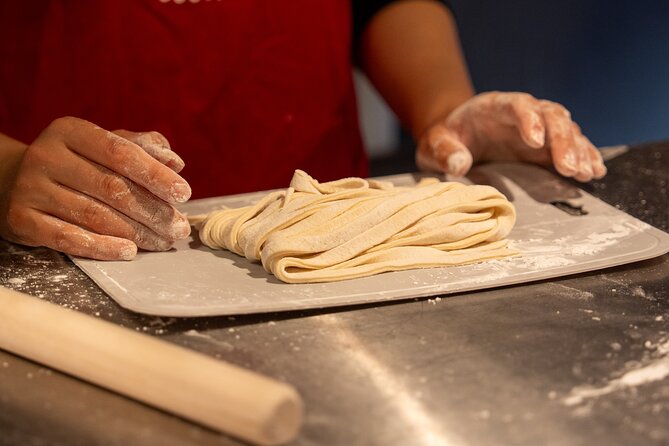
Making udon by hand is the heart of this Kyoto cooking class. You start with flour and water, then knead, roll, and cut the dough with help from udon master Nakajima-san and English-speaking guide Josh. It is a practical way to learn a Japanese staple, not just watch someone else cook.
I like the small group of up to eight, which should give you room to work and ask questions. I also like the generous menu: handmade udon, onigiri, inari sushi, and tempura, followed by two drinks. The main consideration is timing. At 2.5 hours, the class is a substantial morning activity, and you should skip or keep breakfast light if you want to try everything.
Key points to know before booking
- Hand-cut udon is the main event: You knead, roll, and cut the noodles yourself with guidance from Nakajima-san.
- Four Japanese dishes are included: Make udon, tempura, onigiri, and inari sushi from scratch.
- Josh provides English-speaking help: The class is designed for beginners, with instruction focused on doing rather than watching.
- The group is capped at eight: This keeps the session more personal than a large demonstration class.
- You eat what you make: The finished meal includes your food, two drinks, and a mini sake tasting.
- You leave with useful extras: English recipes are downloadable, and tour photos are sent by email afterward.
Why the udon work makes this class special
Many Japanese cooking classes focus on assembling attractive dishes. This one gives you a chance to work with a basic dough and see how a few simple ingredients become a chewy noodle. That process gives the class its character.
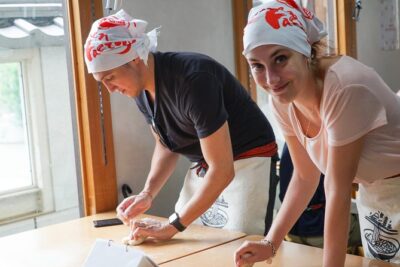
You begin with flour and water. Under Nakajima-san’s direction, you knead the dough, roll it out, and cut it into noodles. The appeal is in the physical work. You can see the dough change as you handle it, and the finished noodles have a personal touch that factory-made noodles do not.
I would pay close attention during the cutting stage. Even noodles matter if you want them to cook at the same rate, and the guide can show you the practical method. You do not need previous cooking experience. The class is built around learning by doing, so mistakes are part of the activity rather than a problem.
This is also the part most suited to families. One current account of the class specifically describes a family enjoying the cooking with Josh and Nakajima-san. Children and adults can take part in the same task, though younger children may need help with dough handling and cutting.
The class does not promise a quiet, formal chef’s lesson. It is a friendly, hands-on session. If you want a polished cooking demonstration with little participation, choose another format. If you want to get your hands busy and make a Japanese staple, this approach is a better fit.
More Cooking Classes in Kyoto
- Ramen Cooking Class at Ramen Factory in Kyoto
★ 5.0 · 1,937 reviews - Kyoto: Ramen Cooking Class at a Ramen Factory with Souvenir
★ 4.9 · 532 reviews - Kyoto: Ramen, Gyoza, and Onigiri Cooking Class
★ 5.0 · 445 reviews
From one dough to hot and cold udon
The meal may include both hot and cold udon preparations, giving you a useful sense of how the same noodle can be served in different ways. That detail matters because udon is not one fixed dish. Temperature, broth, and toppings can change the character of the meal.
The hot version is likely to be the most comforting part of the tasting. Freshly prepared noodles have a different feel from dried noodles bought in a shop. The cold version lets you notice the texture more clearly, since the noodle itself becomes the focus.
You should plan to eat a full meal at the end. The class description lists several dishes, and a family account advises arriving hungry after making hot udon, cold udon, shrimp and vegetable tempura, and other foods. That makes this more than a short snack lesson.
Because all four dishes are prepared within a 2.5-hour session, the pace may be active. That is not a flaw, but it is worth knowing. You will not spend the whole morning slowly perfecting one bowl of noodles. Instead, you will move between several tasks and finish with a broad Japanese meal.
Onigiri and inari sushi add useful variety
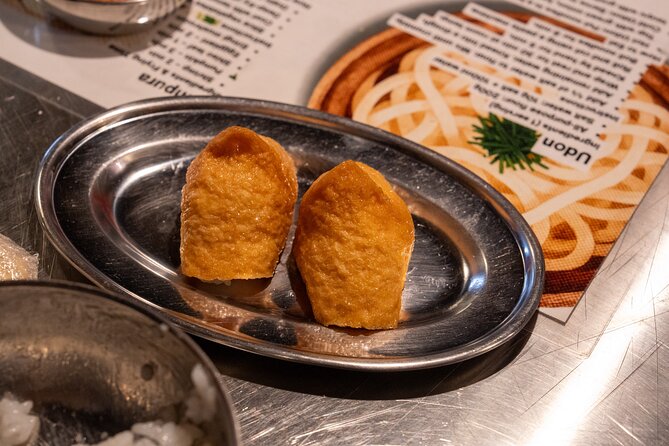
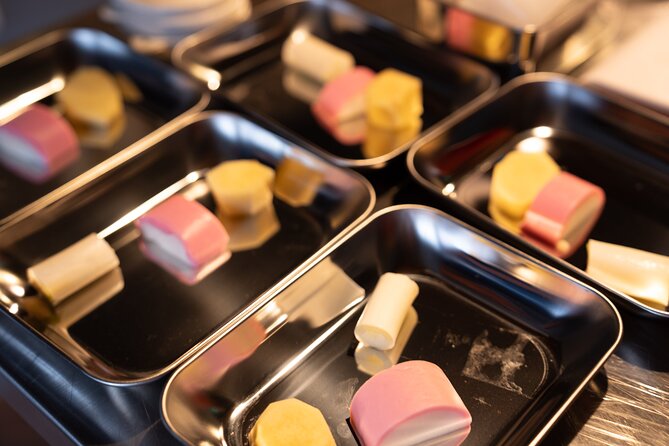
The rice dishes balance the noodle work. Onigiri is a simple rice-based food that can be shaped by hand, while inari sushi uses rice placed inside sweet-savory tofu pockets. Together, they show two different ways of turning cooked rice into a portable or casual Japanese dish.
These recipes are especially useful to take home. Making udon from scratch requires more time and practice, but onigiri and inari sushi can be easier to repeat in your own kitchen. The downloadable English recipes give you a written guide after the class, so the experience does not end when you leave the meeting point.
I like this part of the menu because it broadens the lesson. You are not simply learning one famous Japanese food. You are working with noodles, rice, tofu, and vegetables in the same session. That makes the price easier to assess for someone who wants several skills rather than a single recipe.
The format also helps people with different interests. One person in your group may enjoy dough work, while another may prefer shaping rice or preparing fillings. Everyone has several tasks to try.
Frying shrimp and vegetable tempura
Tempura brings heat and timing into the lesson. You prepare shrimp and vegetables, then fry them until crisp and golden. This is a useful contrast to udon and sushi because the result depends on handling ingredients and cooking them at the right moment.
The important point for you is participation. The class does not simply place a finished tempura plate in front of you. You get to try the cooking process under instruction, then eat the result with the other dishes.
Frying can be the most demanding section for a beginner, so follow the chef’s directions closely. The provided information does not specify the equipment, batter method, or exact vegetables, so I would not book this expecting a detailed professional frying course. Think of it as a guided introduction that fits into a wider Japanese meal.
The reward is variety. A crisp piece of tempura beside chewy udon and soft rice gives the meal different textures. That makes the final tasting feel like the natural payoff for the work rather than a routine lunch stop.
More Ramen Tours in Kyoto
- Kyoto Ramen and Gyoza Cooking Class with Professional Chefs
★ 5.0 · 282 reviews - Home style Ramen and Homemade Gyoza in Kyoto
★ 5.0 · 152 reviews - Kyoto Michelin Ramen Workshop or Painting Ramen Essentials
★ 4.9 · 100 reviews - Kyoto: Ramen Bowl Painting and Michelin Cooking Class
★ 4.9 · 96 reviews
A full meal with two drinks
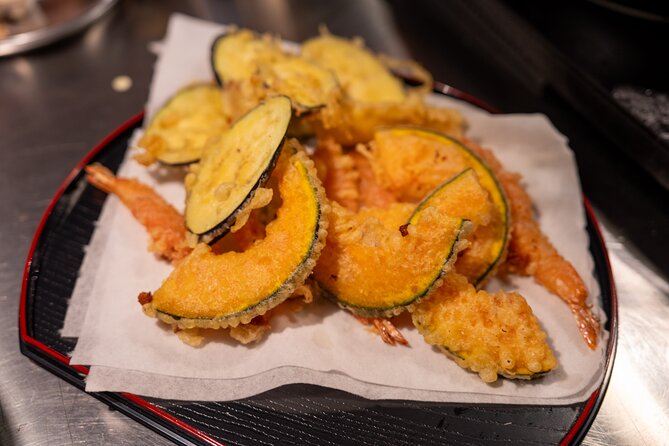
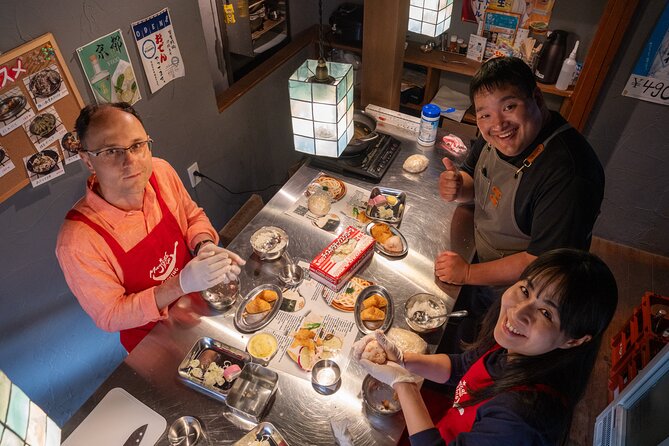
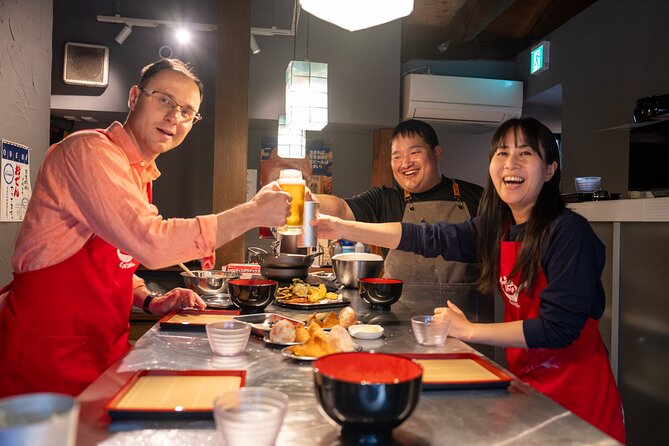
After the cooking, you eat the udon, sushi, and tempura you prepared. Two drinks are included, with alcoholic and non-alcoholic choices available. The experience also includes a mini sake tasting, which adds a small cultural element without turning the class into a dedicated sake lesson.
If you drink alcohol, you can use the sake portion to compare it with the food. If you do not drink, the availability of non-alcoholic choices keeps the class practical for a wider range of people. The supplied details do not specify the exact drinks or sake brands, so do not book it expecting a particular bottle or formal tasting course.
The meal is one reason to arrive hungry. You are preparing several dishes, not just sampling a bite of each. A light breakfast should leave you better placed to enjoy the finished food, especially with udon and tempura on the same menu.
I also like that the meal takes place at the end. You have time to see how the separate parts come together. That gives the class a clear rhythm: prepare, cook, sit down, and eat.
Josh, Nakajima-san, and the small-group format
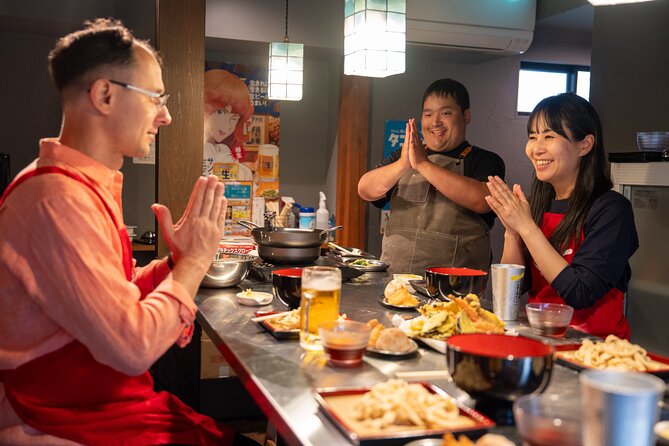
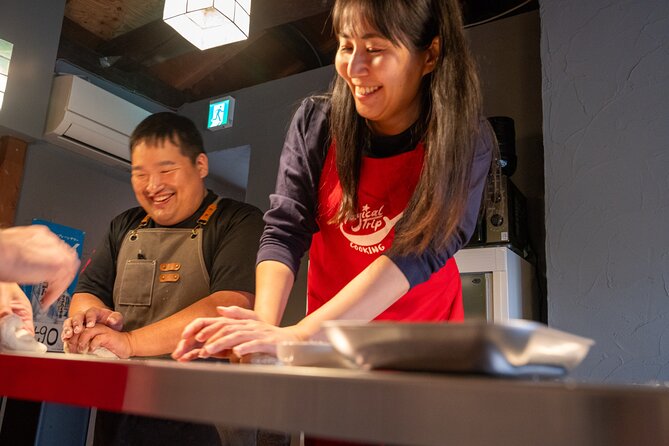
Josh is the English-speaking local guide, while Nakajima-san is the local udon master. Their different roles are useful. Josh can help with communication and keep the activity moving, while Nakajima-san brings the specialist guidance for the noodles.
The group maximum is eight people. That is small enough to make hands-on teaching more realistic. In a larger class, you might spend much of the time watching from the back or waiting for a turn. Here, you should have a better chance to handle the ingredients and ask for help.
The published rating is 5 out of 5 from 17 reviews, with 100 percent recommending the experience. That is a small sample, so I would not treat it as proof that every session will be perfect. Still, the repeated positive point available here is clear: the friendly instruction works well for families and people without cooking experience.
The family feedback also names Josh and Nakajima-san directly and describes both as kind and friendly. That is useful information if you are choosing among several Kyoto classes. The tone appears informal and welcoming rather than strict or technical.
Location, timing, and what to plan
The class starts at 10:00 a.m. at the 7-Eleven at 599 Uraderacho, Nakagyo Ward, Kyoto, postal code 604-8041. It ends back at the same meeting point, and transportation to and from the activity is not included.
This central meeting arrangement is simple, but allow time to find the exact 7-Eleven. A shop can be easy to recognize once you are nearby, yet Kyoto streets and addresses can still take a few minutes to sort out. The class is near public transportation, but your ride to the meeting point is your responsibility.
The two-and-a-half-hour length makes it easy to pair with other Kyoto plans. You finish around lunchtime if the class runs close to its advertised duration. That could work well before an afternoon visit to another part of the city, though I would avoid scheduling something with a strict start immediately afterward.
The mobile ticket is convenient. You can keep the booking on your phone rather than print a voucher. Confirmation is provided when you book, and the activity has a maximum of eight participants.
Is the $85.39 price fair?
At $85.39 per person, this is not the cheapest way to eat udon in Kyoto. You can find a bowl of noodles for much less. But the comparison is not really between this class and a restaurant lunch.
The fee covers 2.5 hours of instruction, four dishes, two drinks, a mini sake tasting, recipes, and photos taken during the activity and sent by email afterward. You are paying for food plus the chance to prepare it with a local chef and guide. For someone who values participation, that makes the price easier to justify.
The value is strongest if you use the recipes later. A restaurant meal disappears when you finish it. Here, the English recipes give you a chance to repeat the dishes at home, particularly onigiri and inari sushi. The photos are another small benefit for a family or couple who would like a record without stopping to take pictures throughout the class.
The value is weaker if you dislike group activities or already cook Japanese food regularly. You may learn less from a beginner-friendly class if you want advanced technique. You are also committing to several dishes, so this is not the right purchase for someone seeking a short, focused udon lesson only.
Who should book this Kyoto cooking class?
I would recommend it to first-time Japanese cooks, families, couples, and solo participants who enjoy meeting a local guide through food. The mix of kneading, shaping, frying, and tasting keeps the session varied.
It is also a good rainy-day plan. Since the cooking takes place indoors, the weather should not affect the main activity, though you still need to reach the meeting point. The morning start works well for anyone who prefers to complete a hands-on activity before sightseeing later in the day.
You should think twice if you have a very limited appetite, since the class produces a full spread. The same goes for anyone who wants a formal culinary qualification or advanced chef training. The tone is friendly and accessible, not professional school instruction.
Families should note that the class is suitable for beginners, but the available information does not state a minimum age or specific child facilities. If you are booking for young children, confirm those details before paying.
Cancellation and practical booking notes
Free cancellation is available if you cancel at least 24 hours before the start time. Cancellations made less than 24 hours ahead are not refunded, and changes inside that period are not accepted. The cut-off uses Kyoto local time, so check the time difference carefully if you are booking from abroad.
The provider is MagicalTrip Inc. You receive confirmation at booking, and the activity accepts a mobile ticket. Transportation is not included, so plan your route to the 7-Eleven meeting point before the morning of the class.
Should you book it?
Book this class if you want to do more than eat Japanese food in Kyoto. The hand-cut udon gives the session a clear purpose, while tempura, onigiri, and inari sushi make the meal broad and satisfying. Josh and Nakajima-san provide a useful combination of English help and local udon instruction, and the eight-person limit should keep the lesson personal.
Skip it if you want a low-cost restaurant meal, a short demonstration, or advanced culinary training. At $85.39, the price makes sense when you value the instruction, food, drinks, recipes, and photos together. Arrive hungry, meet at the 10:00 a.m. starting point, and expect to spend the morning working with your hands before sitting down to eat.
FAQ
Where does the Kyoto cooking class start?
It starts at the 7-Eleven at 599 Uraderacho, Nakagyo Ward, Kyoto, 604-8041, Japan.
What time does the activity begin?
The class starts at 10:00 a.m.
How long does the cooking class last?
The experience lasts approximately 2 hours and 30 minutes.
What dishes will I make?
You will learn to make udon, tempura, onigiri, and inari sushi.
Are drinks included?
Yes. Two drinks are included, with alcoholic and non-alcoholic options available. The experience also includes a mini sake tasting.
How many people can join the class?
The activity has a maximum of eight participants.
Are recipes and photos provided?
Yes. You receive downloadable English recipes, and photos taken during the activity are sent by email afterward.
Just added around Kyoto
- Sekka Cotton Furoshiki Class★ 5.0 · 19 reviews
- Kyoto Sword Experience – includes Museum Ticket/Ninja Experience★ 4.5 · 149 reviews
- Scenic Green Tea Fields of Hidden Kyoto & Local Tea Exp (Private)★ 5.0 · 32 reviews
- Secret Eastern Kyoto Biking Adventure★ 5.0 · 44 reviews
- Private Sake Tasting in Central Kyoto with Sake Sommelier★ 5.0 · 32 reviews
- Samurai School in Kyoto: Samurai for a Day★ 5.0 · 202 reviews
- SHIRAKAWA Japanese Culture Experiences with private English staff★ 5.0 · 16 reviews
- A Privately Guided Photoshoot in Beautiful Kyoto by a Pro★ 5.0 · 18 reviews
Ramen & Noodle Tours, compared.
Eat and Drink Like a Local: Tokyo Ueno Food Tour-Taverns&Ramen
Our verdict →

Five Must-See Highlights Walking Tour & Ramen Lunch
Our verdict →
Professional Ramen & Gyoza with Ramen Chef in a restaurant!
Our verdict →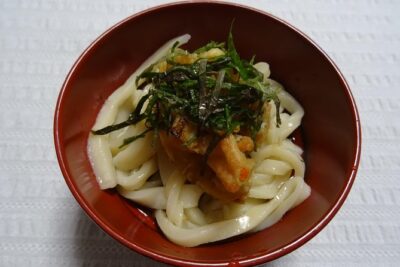
Popular in SapporoExperience authentic hand-made soba at a real soba shop!
Our verdict →
Browse the lists this tour appears in