
Reviewed · TEMPLES & SHRINES
Nara: Great Buddha, Kasuga Shrine & Deer Park Tour
Nara’s deer are only the opening act. The real reward is seeing how Shinto shrines, Buddhist temples, and everyday city life share the same old park. You feed the deer, follow lantern-lined paths at Kasuga Taisha, and finish beneath the enormous wooden roof of Todai-ji.
I like this tour for two clear reasons: the guide gives the monuments meaning, and the three-hour route covers Nara’s essential sights without wasting time on transport between them. Guides such as Eri, Takashi, Teppei, and Nobu have helped visitors with local food ideas, train connections, photos, and questions about Japanese life.
The main drawback is the pace. You walk for most of the three hours, with steps and outdoor paths along the way. If you want long, quiet visits at every shrine hall, this route may feel brisk. For a first visit, though, it is a strong use of half a day.
Key points to know before booking
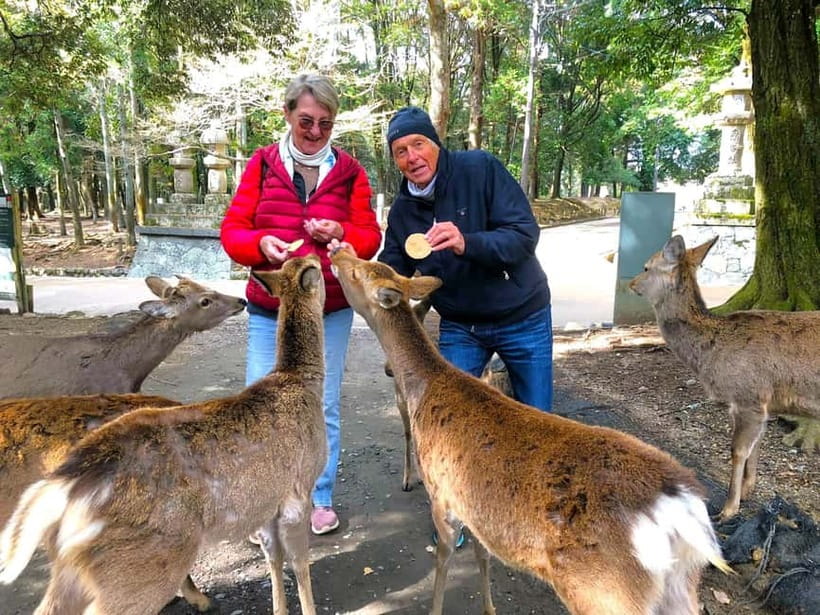
- Sacred deer come first: Feed Nara’s famous deer with included shika senbei, while your guide explains their place in Shinto tradition.
- Two major religious sites: Visit Kasuga Taisha and Todai-ji, each with its own visual style and spiritual purpose.
- Great Buddha admission included: The tour enters Todai-ji’s Great Buddha Hall, not just the temple grounds.
- Local guides shape the day: Eri, Takashi, Teppei, Nobu, Yayoi, Yoshi, and others are praised for clear explanations and personal help.
- Three hours, mostly on foot: The route is efficient but active, with outdoor walking and steps.
- Good value for a first Nara visit: At $77 per person, entry fees, deer crackers, and a private or small-group guide are included.
Why Nara works so well in three hours
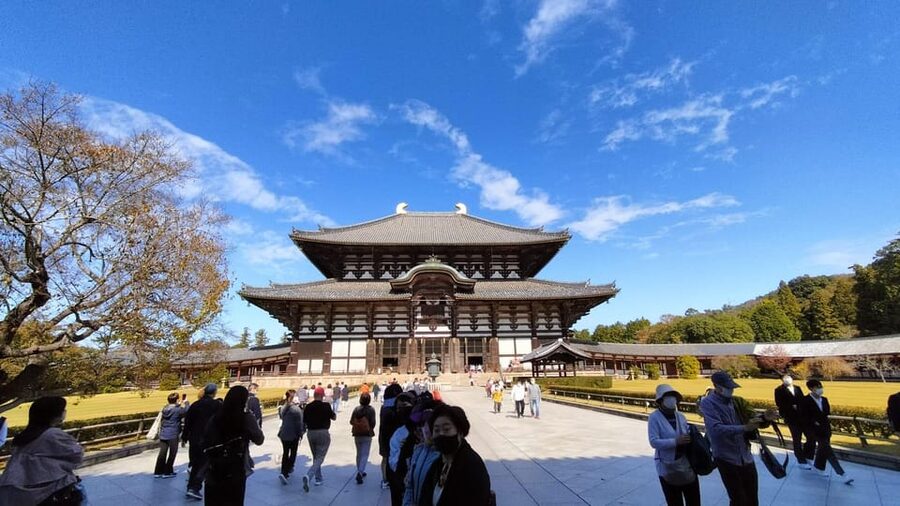
Nara was Japan’s first permanent capital, established in the eighth century. That early role left the city with a remarkable group of temples and shrines, yet the main sights still sit among trees, open lawns, and roaming deer.
This tour works because the stops tell one connected story. Nara Park introduces the relationship between people, animals, and religion. Kasuga Taisha shows Shinto practice through forest paths and lanterns. Todai-ji then shifts the focus to Buddhism and the grand political project of early Japan.
You are not simply checking off three famous names. You are moving between two faiths that have shaped Japan for centuries. A good guide helps you notice the difference between shrine and temple customs, rather than treating every building as just another photogenic stop.
At $77, the price is fair if you value interpretation and want the admissions handled for you. Todai-ji entry and special inner shrine admission at Kasuga Taisha are included, as are deer crackers. You still pay for your own drinks, food, and transport to the meeting point, so factor those costs into the day.
More Temple & Shrine Tours in Nara
- Kyoto/Osaka: Nara, Fushimi Inari Taisha, Arashiyama Bus Tour
★ 4.7 · 1,275 reviews - Osaka/Kyoto: Arashiyama, Nara & Fushimi Inari Shrine w/Lunch
★ 4.4 · 754 reviews - Kyoto/Osaka: Kinkakuji, Bamboo Forest, and Nara Deer Park
★ 4.4 · 265 reviews
Starting at Himuro Shrine
The meeting point is in front of the torii gate at Himuro Shrine. Look for the guide holding a yellow DeepExperience sign. This is a useful, specific landmark, but you should still allow enough time to find it because the tour does not include transport from your hotel, station, or other part of Nara.
Starting at a shrine sets the tone before the tour reaches the larger sights. From here, the route moves toward Nara Park, where the city quickly gives way to open space and trees. The walk between stops is part of the experience, not dead time.
The activity is offered with an English-speaking or Japanese-speaking guide. Private and small-group options are available, so the feel of the visit can vary. A private group may give you more room for questions and photo stops, while a small group can offer a more social outing.
Feeding the deer in Nara Park
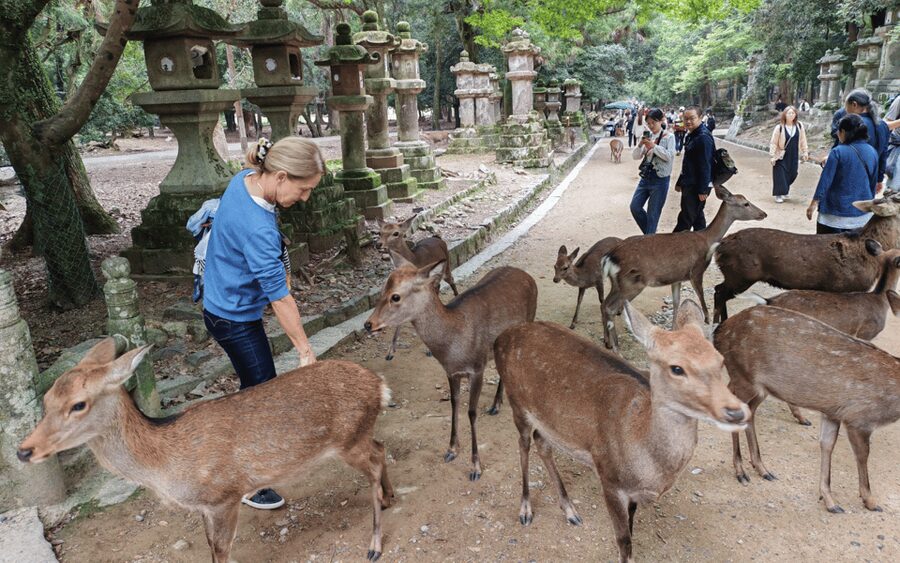
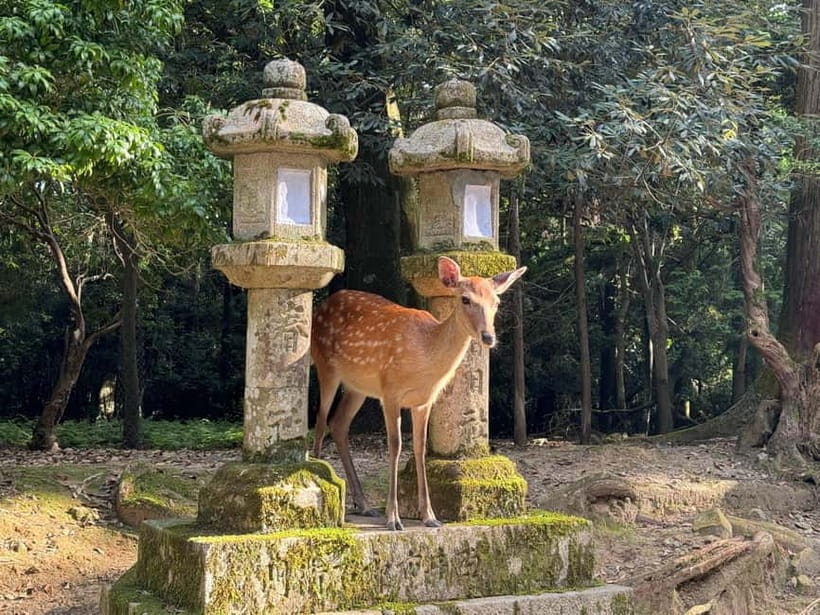
Nara Park is the most playful part of the tour, but it is not just a photo stop. Deer roam freely across the grounds, and they are regarded as sacred messengers in Shinto belief, especially in connection with Kasuga Taisha.
Your included shika senbei are special crackers made for the deer. Feeding them gives you a quick, memorable encounter with Nara’s most famous residents. The guide also explains how the animals became protected symbols and why they matter to the city’s religious identity.
Keep your expectations sensible. The deer are free-roaming animals, not trained performers. They may approach quickly when you hold food, and the experience is more enjoyable when you follow your guide’s instructions and pay attention to the animals rather than only your camera.
The scheduled guided visit here lasts about 30 minutes. That is enough time to feed the deer, take pictures, and hear the basic story, but it is not a long wildlife session. If deer are your main reason for coming to Nara, you may want extra time in the park after the tour ends.
Several guides have added small touches to this part of the outing. Takashi has helped visitors make the most of their time, while Teppei and Yayoi have been praised for their gentle approach to the deer. Nobu has even provided extra practical help on a hot day, including neck coolers.
Following the lanterns to Kasuga Taisha
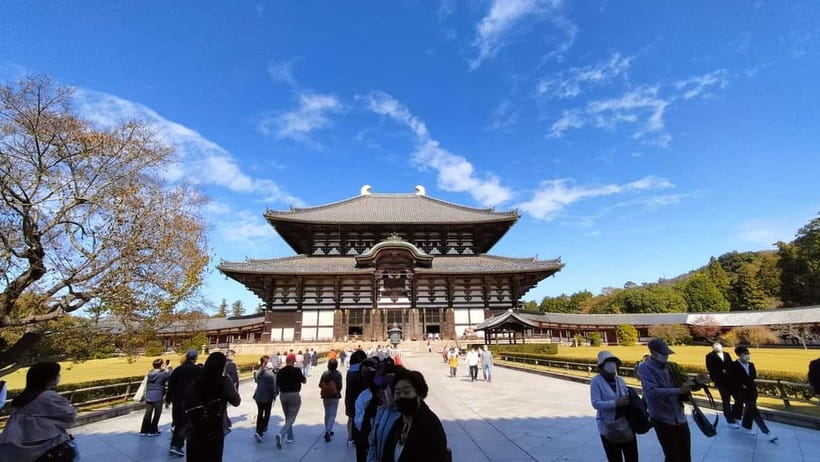
Kasuga Taisha was established in 768 for the powerful Fujiwara clan. It remains one of Nara’s most important Shinto shrines, set beside an old forest that has been protected for more than a thousand years.
The route here feels different from a standard urban temple visit. You pass through wooded paths and encounter stone and bronze lanterns donated by worshippers over many generations. Their number and repetition give the approach a quiet, ceremonial feeling.
Your guide introduces basic Shinto customs, including purification and the meaning of shrine architecture. This is where having a guide earns its keep. Without explanation, you might see a torii, a lantern, and a ritual area as attractive objects. With context, you can understand how the spaces are used and why their arrangement matters.
The tour includes special inner shrine admission, which gives you more than a walk around the outer grounds. The scheduled guided visit lasts about an hour, making Kasuga Taisha the longest stop on the route.
Do not expect every lantern to be lit during a regular daytime visit. The lanterns are illuminated during special festivals, creating a very different evening mood. The normal visit still offers the forest setting, old paths, and strong sense of continuity, but festival illumination is not part of the stated tour.
Kasuga Taisha is also where the connection between the deer and the shrine becomes clearest. The animals are not an unrelated attraction placed beside a temple complex. They are tied to the religious identity of the area, and the guide helps make that relationship understandable.
Same trip, a completely different kind of day:
- World Heritage Kyoto & Nara Uji Authentic Matcha Experience
★ 5.0 · 1,573 reviews - Nara Half Day Trip Walking Tour (Private Option Available)
★ 5.0 · 937 reviews - Nara Early Morning Tour (Kyoto or Osaka Departure Available)
★ 5.0 · 676 reviews - Kyoto and Nara Day Trip from Kyoto
★ 4.5 · 445 reviews
Entering Todai-ji and facing the Great Buddha
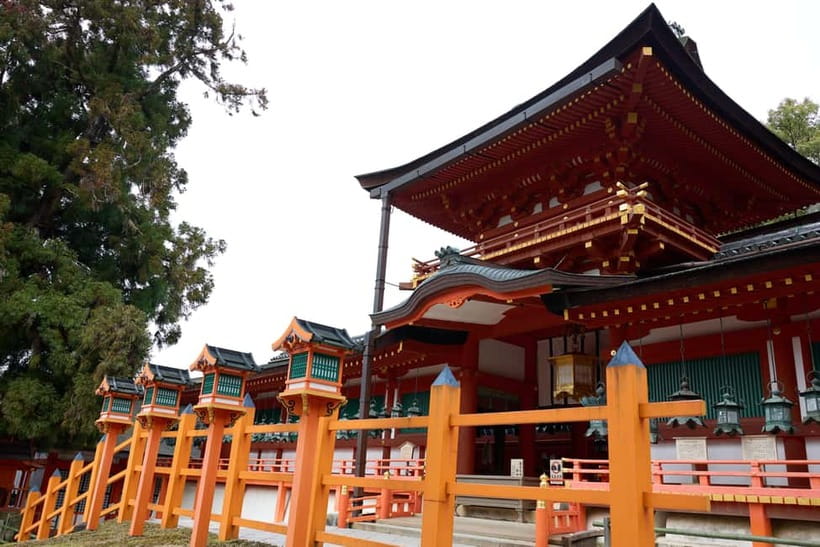
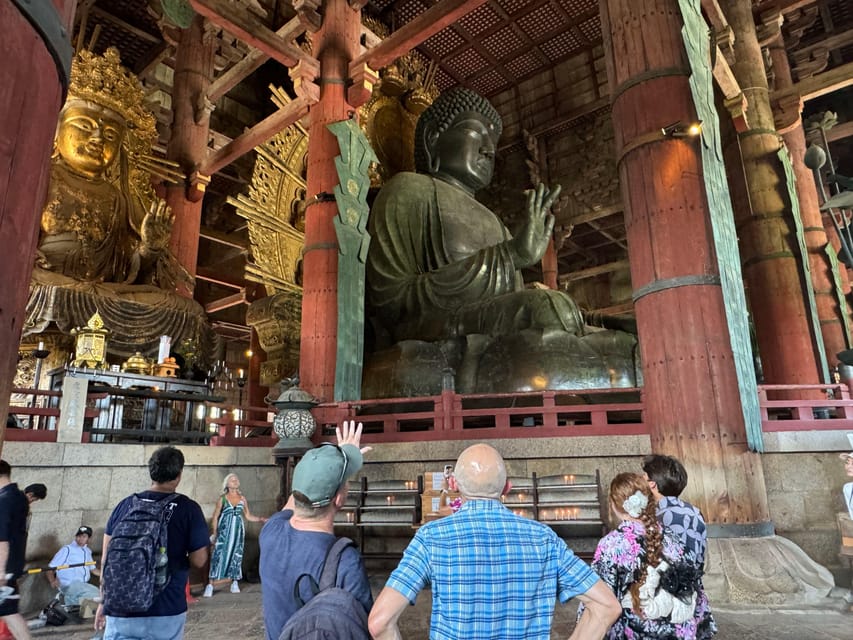
Todai-ji is the grand finale, and the scale changes sharply. You enter the Daibutsuden, or Great Buddha Hall, one of the world’s largest wooden structures, and see the colossal bronze statue known as the Great Buddha.
The statue was cast in the eighth century and represents Vairocana Buddha. Its size reflects more than religious devotion. Building such a monument required vast resources and organization, revealing the ambition of early Japan’s rulers as well as their desire for spiritual protection.
The hall is the key moment of the tour. After the more intimate shrine paths at Kasuga Taisha, you arrive at a structure designed to overwhelm. Even if you are not a student of Buddhism, the contrast is easy to grasp: Kasuga feels wooded and layered, while Todai-ji is monumental and direct.
The guided visit lasts about an hour, and admission is included. Your guide explains how the temple and statue were made, giving you a way to read the building beyond its size. Yoshi, Takashi, Eri, and other guides have been praised for answering questions and linking the monuments to Japanese customs and daily life.
You should plan for plenty of pictures, but also give yourself a moment without the camera. The Great Buddha is one of those sights where scale does much of the talking. The calm expression of the statue against the vast hall is likely to be the lasting image from the afternoon.
How the walking pace affects your day
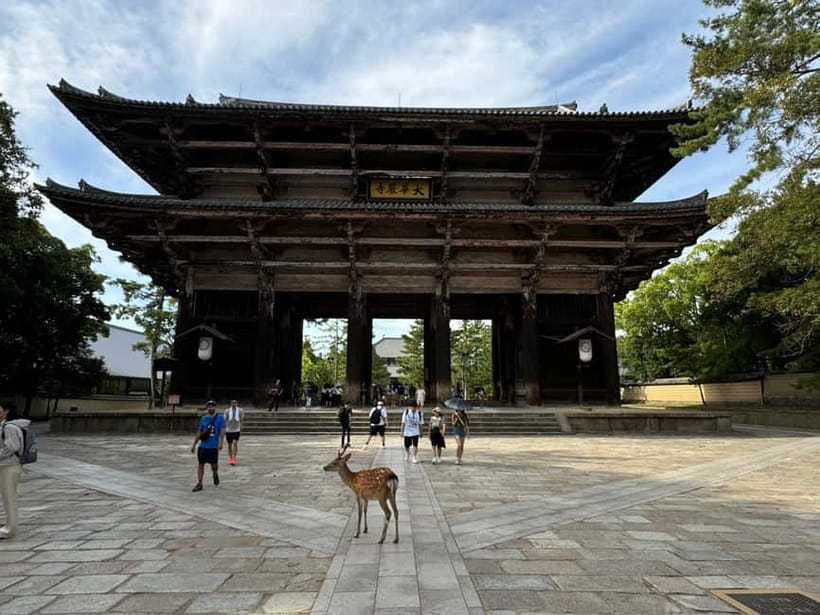
This is a walking tour, not a ride between monuments. The route includes park paths, shrine approaches, and steps. One visitor specifically noted that there was a lot of walking and that it was worth it, but that is still an important planning point.
Wear comfortable shoes and dress for the weather. The tour operates in outdoor areas, and the park offers little protection from heat or rain in some sections. A guide has provided neck coolers during hot weather, and another group enjoyed the tour despite heavy rain, but personal preparation remains important.
The planned schedule gives about 30 minutes to Nara Park, one hour at Kasuga Taisha, and one hour at Todai-ji. The remaining time covers movement and transitions. That layout makes sense for a first look, but it leaves limited space for long shopping stops, extended meals, or sitting quietly in the park.
The tour finishes at one of two drop-off points near Kasuga Taisha’s Second Torii. This is useful if you plan to keep exploring on your own, but it is not a return transfer to your hotel or station. Some guides have walked visitors toward transport afterward and helped with train or bus arrangements, but you should treat that as personal assistance from the guide, not a listed transfer service.
The guide can make or break the experience
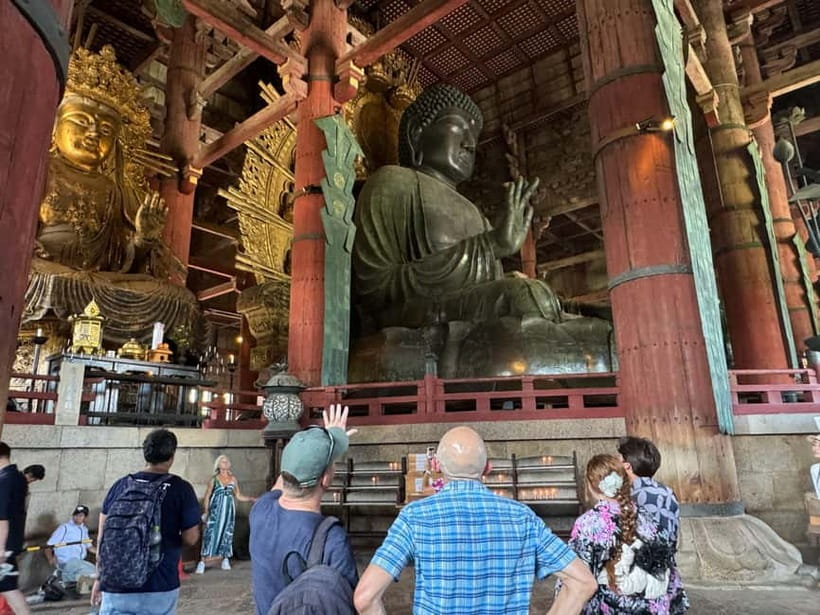
The monuments are impressive on their own, but the guide determines how much you take away. The strongest part of this activity is the chance to ask questions as you go, rather than trying to absorb signs and guidebook notes while walking.
The guide team includes English-speaking and Japanese-speaking staff. Eri has explained Nara from a local point of view and offered food suggestions. Takashi has helped with transport questions and introduced himself before the tour to learn what visitors wanted to cover.
Teppei is known for a warm, patient approach and for discussing both temple history and Japanese life. Nobu has helped with practical matters, including getting to the station and buying an express train ticket to Kyoto. Yayoi brings strong energy to the history of Nara and treats the deer with care.
You may be paired with another guide, including Yoshi, Hana, Marc, Ryan, Tomoe, or another member of the team. The consistent theme is personal attention: answering questions, allowing time for pictures, and adjusting the route with smaller paths or quieter spots when possible.
That flexibility matters in a private or small-group setting. You can ask about ritual customs, architecture, food, transport, or modern Japanese life. The tour is not only a lecture about dates and buildings. It can become a conversation shaped around your interests.
Practical value at $77 per person
The $77 price includes the professional guide, guided visits at all three main sights, Todai-ji admission, special inner shrine admission at Kasuga Taisha, and deer crackers. Those inclusions make the cost easier to justify than a basic walking orientation with entrance tickets added later.
The value is strongest for first-time visitors who want a clear route and useful context. Nara’s main attractions are easy to name but less easy to connect. A guide saves you from walking through the park without understanding the shrine, or entering Todai-ji without grasping why the Great Buddha was built.
The value is weaker if you already know Nara well, prefer a slow self-guided visit, or want to spend most of the day at one site. The three-hour format favors coverage and explanation over lingering.
You also need to pay for your own transport to Himuro Shrine, along with food, drinks, and personal purchases. There is no meal included, so plan something before or after the walk rather than expecting a food break during the scheduled route.
Free cancellation up to 24 hours before the start and reserve-now, pay-later booking add useful flexibility. Starting times vary, so check availability when selecting your date.
Who should book this Nara tour?
I would choose this tour for a first visit to Nara, especially if you are coming from Kyoto and have only part of a day. It gives you the deer, Kasuga Taisha, and Todai-ji in one orderly route, with the two major admission fees included.
It is also a good fit for families and small groups who want help managing the route and learning as they go. The deer provide an immediate point of interest, while Todai-ji gives the outing a powerful finish.
You may want another plan if you have limited walking ability, dislike outdoor weather, or want a slow temple day with long periods of quiet. The route is active, and the tour has a fixed three-hour structure.
FAQ
How long does the Nara tour last?
The tour lasts three hours.
Where does the tour begin?
It begins in front of the torii gate at Himuro Shrine. The guide holds a yellow sign with the DeepExperience logo.
Which languages are available?
The tour is available in English and Japanese.
Does the tour include Todai-ji admission?
Yes. Admission to Todai-ji Temple is included.
Does the tour include entry to Kasuga Taisha?
Yes. Special inner shrine admission at Kasuga Taisha is included.
Are deer crackers included?
Yes. Shika senbei, the special crackers used to feed the deer, are included.
Is transportation to the meeting point included?
No. You arrange and pay for transportation to the Himuro Shrine meeting point yourself.
Where does the tour finish?
The tour has drop-off points at Nino Torii and Kasuga Taisha Nino Torii.
Can I book a private tour?
Yes. Private and small-group options are available.
Can I cancel for a full refund?
Yes. You can cancel up to 24 hours in advance for a full refund.
Should you book it?
Book this tour if you want Nara’s main sights explained in a clear three-hour route, with entrance fees and deer crackers included. The strongest reason to go is the combination of places: sacred deer, Kasuga Taisha’s lanterns, and Todai-ji’s Great Buddha form a complete introduction to old Nara.
Choose a self-guided visit instead if you want to linger, avoid a walking schedule, or already understand the city’s religious sites. For most first-time visitors, though, $77 buys more than access. It buys a route, context, and a local person who can help turn three famous stops into one meaningful visit.
Just added around Nara
- Private Kyoto Tour by Car with Optional Nara or Osaka Add-Ons★ 5.0 · 36 reviews
- Kyoto, Osaka, Nara Private Tour by Car English Driver Guide★ 4.0 · 63 reviews
- Nara Todaiji Kasuga Taisha Private Full Day Tour From Kyoto★ 5.0 · 13 reviews
- From Kyoto: Nara History Guided Half Day Bus Tour with lunch★ 5.0 · 23 reviews
- Nara 8hr Private Tour – Kyoto DEP. with Licensed Guide★ 5.0 · 115 reviews
- Arashiyama & Nara Highlights: One-Day Private Tour Adventure★ 5.0 · 16 reviews
- Kyoto Private Car Tour – Full Day with Local Guide & Nara Option★ 5.0 · 169 reviews
- Kyoto & Nara Private Tour from Osaka Kyoto Hotel Pick-up★ 4.5 · 32 reviews
Temples & Shrines, compared.

Tea Ceremony in a Traditional Tea House in Kiyomizu
Our verdict →

Meiji Shrine, Asakusa, Skytree Bus Tour and Cruise
Our verdict →
Fushimi Inari Hidden Hiking Tour (Private Option Available)
Our verdict →
Osaka/Kyoto:Kinkakuji,Arashiyama,FushimiInariShrine,NaraPark
Our verdict →
Nikko: Kegon Falls, Lake Chuzenji & Toshogu Temple
Our verdict →
Kamakura & Enoshima Day Trip including Temple Tickets
Our verdict →Browse the lists this tour appears in