
Reviewed · TEMPLES & SHRINES
Kyoto: Ninnaji Temple Entry Ticket
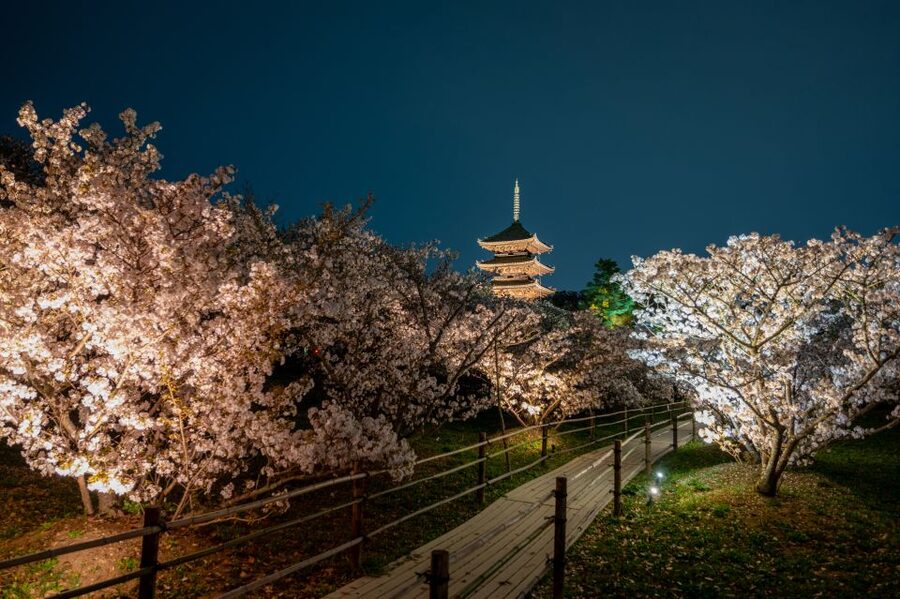
Ninnaji Temple saves one of Kyoto’s best spring surprises for late in the season: its Omuro sakura often bloom after many of the city’s famous cherry trees have finished. Add a five-story pagoda, palace gardens, Buddhist halls, and a quiet pilgrimage route, and you have a temple visit with plenty to do without feeling rushed.
I especially like the chance to walk the Omuro Pilgrimage course, a two-hour, shorter version of the famous Shikoku pilgrimage. I also like the low $5 price for access to the Goten palace and gardens. The main consideration is seasonal pricing: viewing the Omuro sakura after the Chumon inner gate requires an extra admission fee when the flowers are in bloom.
Key points to know
- Late-blooming cherry trees: Omuro sakura can give you a second chance at Kyoto’s spring blossoms.
- Historic temple setting: Ninnaji was founded in 888 AD and serves as the main temple of the Omuro school of Shingon Buddhism.
- Two-hour pilgrimage walk: The Omuro Pilgrimage course offers a shorter version of the Shikoku route, with nature and changing seasonal scenery.
- Goten palace and gardens: The base ticket includes access to the palace area and its gardens, except during special ticket periods.
- Optional cultural visits: The Reihokan Museum and flower festival may be included depending on the ticket option you choose.
- Useful timing detail: The temple is open from 9 AM to 5 PM from March through November, and until 4:30 PM from December through February.
Why Ninnaji’s late sakura changes the Kyoto spring plan
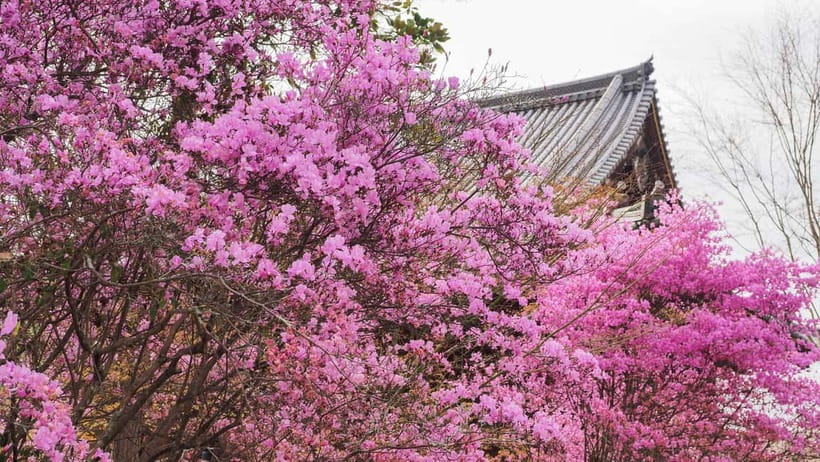
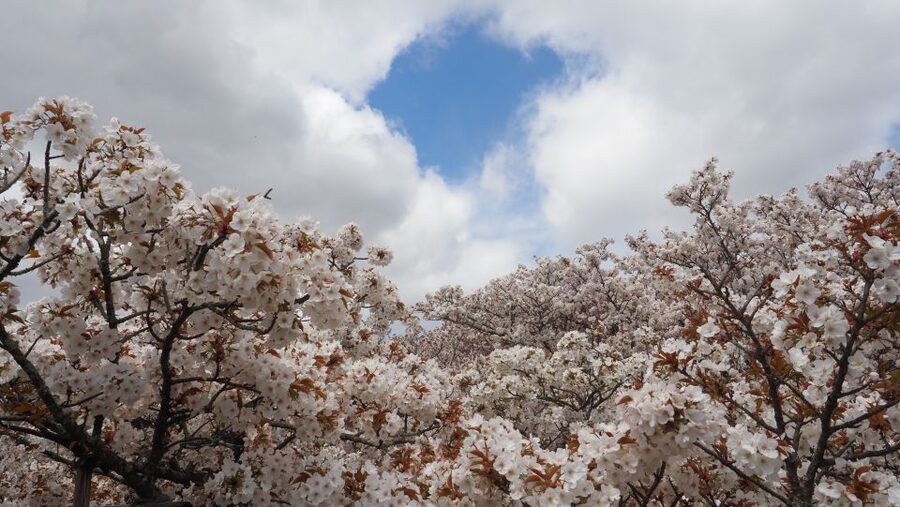
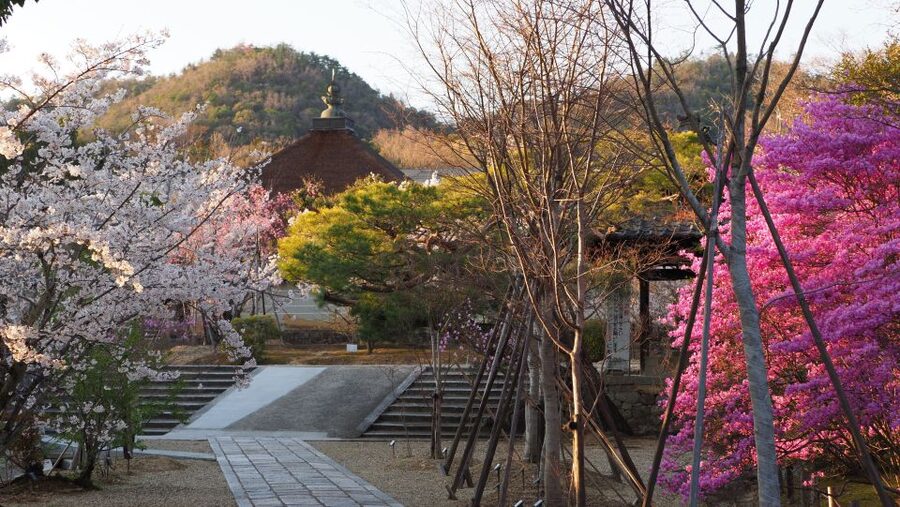
Most people plan Kyoto’s cherry blossom season around late March and early April. Ninnaji is useful for a different reason. Its Omuro sakura are famous for blooming late, so the temple can still offer a worthwhile flower display after many other cherry viewing spots have passed their peak.
The blossoms are low-growing, which gives the area a different feel from avenues lined with tall trees. You can appreciate the flowers alongside the temple buildings and the five-story pagoda, rather than treating the blossoms as a separate park visit.
The exact period for the extra flower admission changes each year. It depends on when the Omuro sakura reach full bloom. The fee applies to the area beyond the Chumon inner gate, and the money goes toward preserving the trees. Check the conditions before you arrive if spring flowers are your main reason for coming.
This is also the busiest part of the year for the temple. If you want a calmer visit, come outside the peak flower period and focus on the palace, gardens, halls, and pilgrimage route. You will lose the famous blossoms, but you may gain more quiet time with the architecture.
More Temple & Shrine Tours in Kyoto
- Kyoto: Fushimi Inari, Kinkakuji, Bamboo Grove 1 Day Bus Tour
★ 4.8 · 4,316 reviews - Kyoto: Tea Ceremony in a Traditional Tea House in Kiyomizu
★ 4.9 · 3,519 reviews - Kyoto: Tea Ceremony Ju-An at Jotokuji Temple
★ 4.9 · 3,207 reviews
Entering the Goten palace and gardens
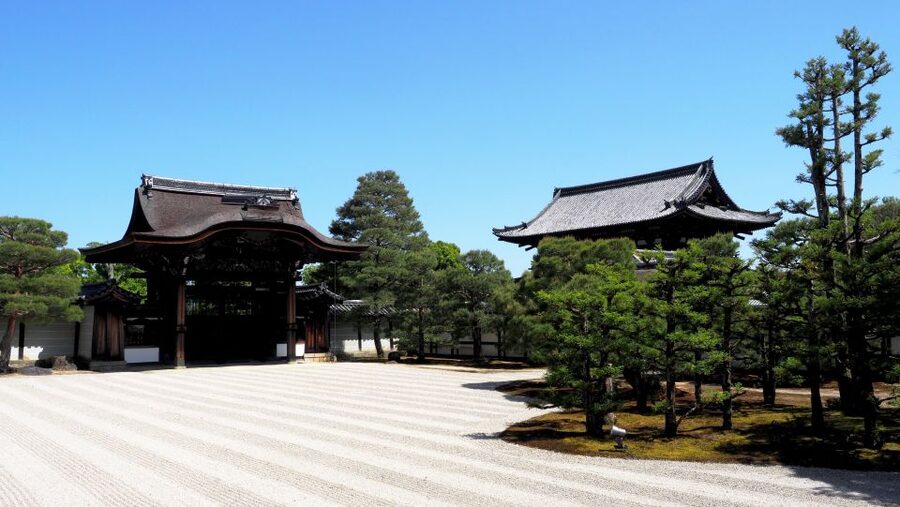
The Goten palace and gardens are the core of the standard admission. This is where the $5 ticket offers its clearest value. You get more than a quick look at an exterior gate or a single pagoda. The ticket gives you access to a historic temple setting with formal buildings and garden views.
The palace area is especially appealing if you enjoy the connection between Japanese architecture and seasonal scenery. The gardens change with the calendar. Spring brings flowers, summer brings leafy shade and Buddhist ceremonies, autumn brings red and yellow foliage, and winter can cover the garden with snow.
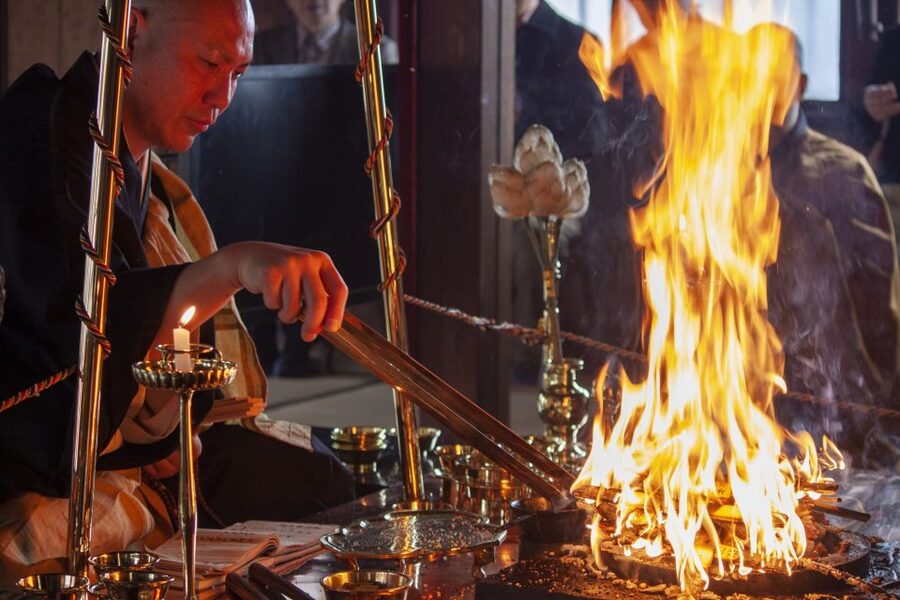
Ninnaji is the main temple of the Omuro school of the Shingon sect of Buddhism. That fact gives the buildings a living religious role, not just an architectural one. During summer, many priests are present for Buddhist ceremonies. You may find the temple feels more active at that time, while winter offers a quieter and more restrained atmosphere.
A practical point: special entrance tickets may not be included in every base admission. The Goten palace and gardens ticket is included, except during special entrance periods. Check the option you select if you are visiting for a festival or a particular exhibition.
The five-story pagoda and the temple’s visual rhythm
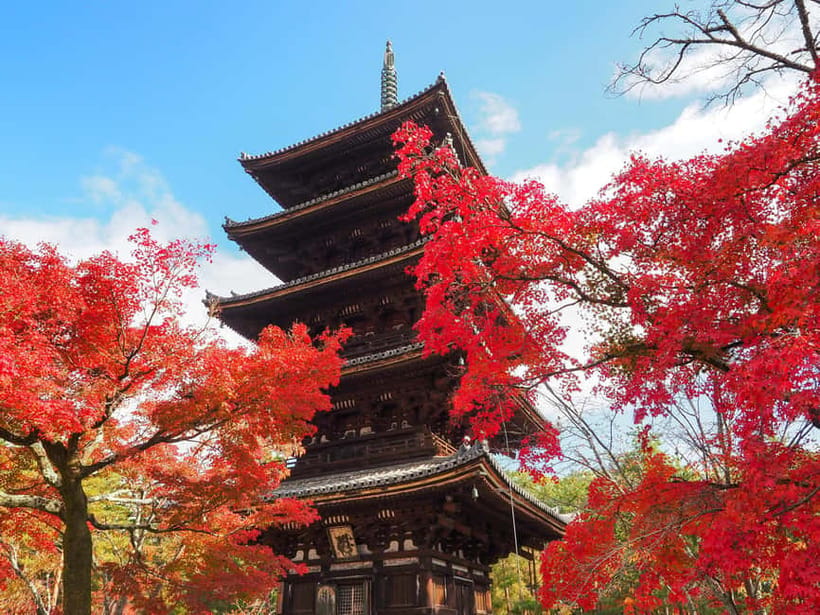
The five-story pagoda is one of Ninnaji’s easiest landmarks to recognize. It gives you a strong visual reference as you move through the grounds and helps tie together the temple’s gardens, halls, and flower areas.
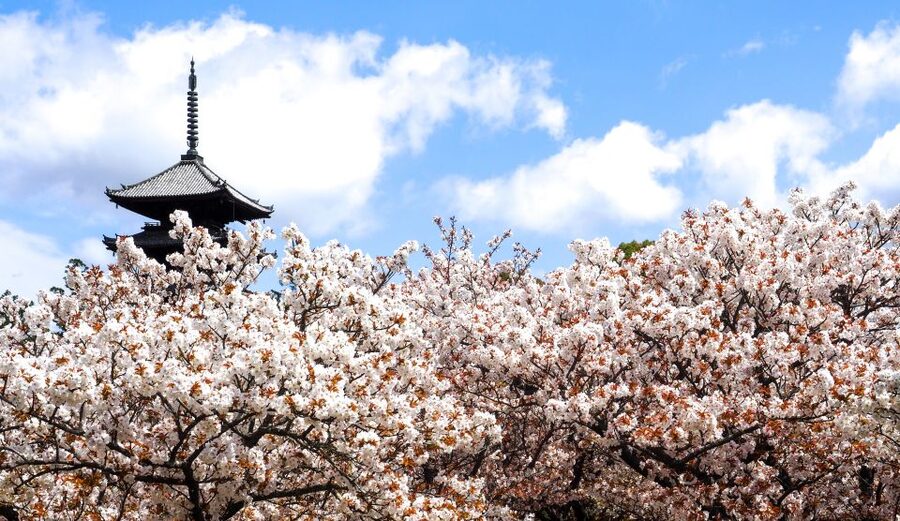
The pagoda is especially attractive during the Omuro sakura season. The low cherry trees and tall pagoda create a pleasing contrast, with the blossoms close to eye level and the tower rising above them. In autumn, the same view changes completely as red and yellow leaves replace the spring flowers.
Winter has its own appeal. Snow on the historic buildings and Japanese gardens can make the grounds feel unusually still. Snow is never guaranteed, of course, but the temple is open in winter, and the shorter daylight hours make an early visit sensible.
You should give yourself time to look beyond the most photographed structure. Ninnaji’s appeal comes from the relationship between several parts of the complex: the palace buildings, the gardens, religious halls, pagoda, and pilgrimage route. A quick stop for one photograph will miss much of what the ticket provides.
Walking the two-hour Omuro Pilgrimage course
The Omuro Pilgrimage course is one of the most distinctive parts of this visit. It takes about two hours and offers a shorter version of the Shikoku Pilgrimage, one of Japan’s best-known Buddhist pilgrimage routes.
You can expect the course to make the temple visit feel more active. Instead of moving only between buildings, you spend time following a route surrounded by natural sounds and seasonal scenery. That makes it a good choice if you want a break from Kyoto’s dense urban streets.
The course is also a useful way to understand Ninnaji as a religious site. It is not simply a garden walk added for decoration. Its connection to the Shikoku Pilgrimage gives the route spiritual purpose, even though it is much shorter and easier to fit into a day in Kyoto.
Plan your timing carefully. If you want to see the palace, gardens, pagoda, museum, and pilgrimage route, two hours on the course is only part of the visit. The one-day ticket validity gives you room to take your time, but the grounds still close at 5 PM from March through November and 4:30 PM from December through February.
The course may suit you best if you enjoy walking and want a more reflective activity. If you have limited mobility or prefer a compact temple stop, you can focus on the main grounds instead. The activity is wheelchair accessible, though the pilgrimage course itself may not be equally easy for every visitor because the supplied information does not specify its path conditions.
Same trip, a completely different kind of day:
- PERFECT KYOTO 1-Day Bus Tour
★ 5.0 · 13,518 reviews - Kyoto Geisha Walking Tour: Gion District & Hidden Gems
★ 4.7 · 3,273 reviews - Kyoto: Gion Magical Night Walking Tour with Geisha Trivia
★ 4.9 · 2,393 reviews - Kyoto: 45-Minute Tea Ceremony Lesson Experience
★ 4.3 · 2,378 reviews
The Reihokan Museum and Ninnaji’s cultural treasures
The Reihokan Museum holds important cultural items belonging to Ninnaji Temple. Its purpose is different from the outdoor grounds. The gardens show you the temple’s setting, while the museum helps you see the objects connected to its religious and artistic life.
The museum entrance is included only if you select the appropriate option. Do not assume that every ticket automatically covers it. If Buddhist art, temple objects, or cultural artifacts are a major reason for your visit, check the selected ticket carefully before paying.
Museum access can also make the visit more rewarding on a rainy or very hot day. You can move between outdoor scenery and indoor displays rather than spending the entire day in the open air. The available information does not list the exact objects on display or the length of the exhibition, so treat the museum as an important optional addition rather than planning your whole schedule around one specific item.
There is also a flower festival option at certain times. Like the museum, it depends on the ticket choice and seasonal availability. The festival may be worthwhile for a return visit or for anyone building a day around flowers, but the standard temple and garden admission remains the main product.
Ninnaji through all four seasons
Ninnaji works particularly well for people returning to Kyoto at different times of year. The temple does not depend on one single attraction.
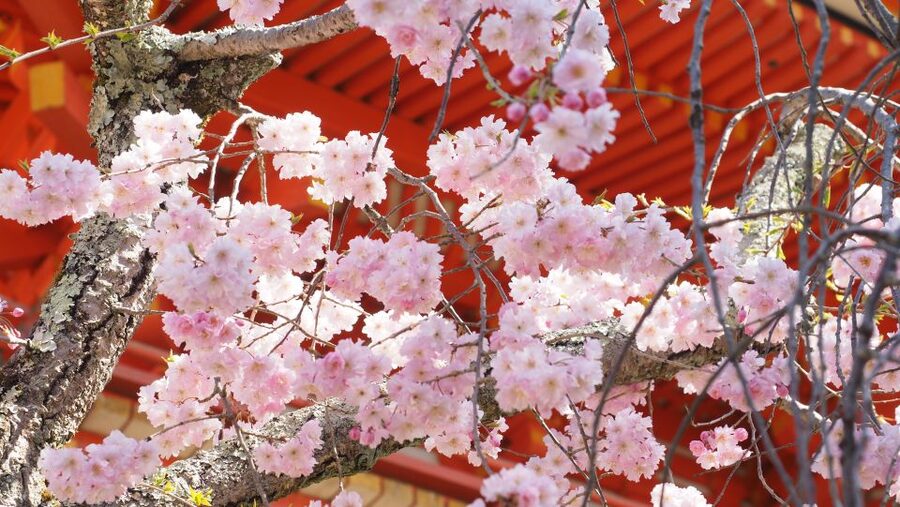
Spring is the headline season. The late-blooming Omuro sakura can extend your cherry blossom plans, but the extra admission area is only open for a fee during the relevant flowering period. The timing varies, so confirm the current conditions before you go.
Summer brings a different atmosphere. Many priests are present for Buddhist ceremonies, adding a stronger sense of active temple life. Summer can also make the garden walk more demanding in heat, so use the indoor and shaded parts of the complex as natural pauses.
Autumn changes the historic buildings with red and yellow foliage. The architecture remains the main subject, but the colors give the palace and garden views a new frame. If you prefer fall scenery to spring crowds, this may be the more comfortable time to visit.
Winter is the quietest seasonal picture described for Ninnaji. A snow-covered Japanese garden and the Goten palace can be beautiful, with fewer distractions from the buildings and views. The tradeoff is shorter opening hours and the uncertainty of snowfall.
Is the $5 ticket good value?
At $5 per person, the basic ticket is inexpensive by Kyoto sightseeing standards. Its value comes from the range of spaces it covers: the Goten palace and gardens, the temple grounds, the pagoda views, and access to the wider Ninnaji setting.
It is an especially good buy if you plan to spend several hours here. The Omuro Pilgrimage course alone can take about two hours, and the palace and garden area gives you a second activity with a different pace.
The price is less straightforward during special seasons. Cherry blossom viewing beyond the Chumon inner gate requires an extra fee, and museum, flower festival, or other special entrance tickets depend on the option selected. That is not a flaw, but you should compare the ticket details with your priorities.
For a short stop focused only on the pagoda, the price may feel less important than the time required to reach and explore the grounds. For a slower visit with gardens, a pilgrimage walk, and perhaps the museum, the low base price works well.
Timing, access, and simple planning advice
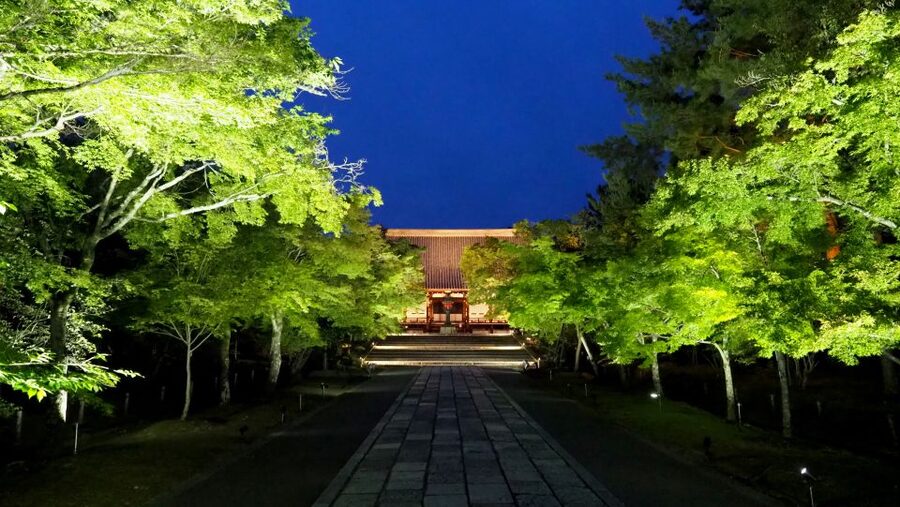
Ninnaji is open from 9 AM to 5 PM from March through November. From December through February, closing time is 4:30 PM. Ticket booths close 30 minutes before the temple, so do not arrive at the posted closing time expecting to buy admission.
I would plan to arrive earlier in the day if you are visiting during Omuro sakura season. The flower admission period can change with the bloom, and the most popular spring views are likely to be the part of the grounds where you want the most time.
Allow at least several hours if you want to combine the palace and gardens with the pilgrimage route. Add extra time if you choose the Reihokan Museum or a seasonal festival option. The ticket is valid for one day, so you do not need to force the whole experience into a quick circuit.
The temple is wheelchair accessible. Anyone with a physical disability certificate receives free admission, but only the person named on the certificate qualifies. Ask at the ticket counter when you arrive.
The supplied information does not specify guided tour times or a named guide. One useful detail is that a special guide inside Kannon-do may be available and is described as informative. Since no guide’s name or schedule is provided, ask at the temple if this is important to you.
Who should book Ninnaji Temple?
I would choose this experience if you want a temple visit with more than one focus. The palace and gardens suit architecture and garden lovers. The Omuro sakura suit spring flower seekers. The pilgrimage route suits anyone who wants a longer, quieter walk. The museum suits people who want cultural objects as well as outdoor scenery.
Families and mixed-interest groups may also find it practical because the visit can be adjusted. You can spend less time on the pilgrimage course and more time around the main buildings, or do the reverse. The one-day validity gives you flexibility within the temple’s opening hours.
I would think twice if your only goal is a guaranteed cherry blossom display on a fixed date. Omuro sakura bloom late, but the exact timing varies, and the extra viewing fee is seasonal. I would also allow more time than a simple photo stop if you want the ticket to feel worthwhile.
Should you book the Ninnaji Temple ticket?
Book it if you want an affordable, self-paced Kyoto temple visit with seasonal scenery, a five-story pagoda, palace gardens, and a two-hour pilgrimage route. The late-blooming Omuro sakura make it particularly useful for a spring itinerary that has missed the earliest blossoms.
Choose the appropriate add-ons if the Reihokan Museum, flower festival, or special entrances matter to you. If you are visiting in winter, check the shorter hours. If you are visiting in spring, check the current Omuro sakura admission period.
At $5 for the standard Goten palace and gardens access, Ninnaji offers solid value. Just remember that the most famous flower area and certain cultural attractions can require different tickets.
FAQ
How much does the Ninnaji Temple entry ticket cost?
The listed price is $5 per person. Extra admission may apply to the Omuro sakura area during its flowering season, and some museum or festival access depends on the ticket option selected.
How long is the Ninnaji Temple ticket valid?
The ticket is valid for one day. You can use it during the temple’s opening hours.
What are Ninnaji Temple’s opening hours?
From March through November, the temple is open from 9 AM to 5 PM. From December through February, it is open from 9 AM to 4:30 PM.
When do the Ninnaji ticket booths close?
The ticket booths close 30 minutes before the temple closes.
Is the Omuro Pilgrimage course included?
The experience includes access to the Omuro Pilgrimage course, which takes about two hours and is a shorter version of the Shikoku Pilgrimage.
Is the Reihokan Museum included in the ticket?
The Reihokan Museum is included if you select the ticket option that contains museum admission. It is not stated as part of every standard ticket.
Is Ninnaji Temple wheelchair accessible?
Yes, the activity is wheelchair accessible. People with a physical disability certificate receive free admission, limited to the person with the certificate, and should ask at the ticket counter.
Just added around Kyoto
- Sekka Cotton Furoshiki Class★ 5.0 · 19 reviews
- Secret Eastern Kyoto Biking Adventure★ 5.0 · 44 reviews
- Kyoto Sword Experience – includes Museum Ticket/Ninja Experience★ 4.5 · 149 reviews
- Scenic Green Tea Fields of Hidden Kyoto & Local Tea Exp (Private)★ 5.0 · 32 reviews
- Private Sake Tasting in Central Kyoto with Sake Sommelier★ 5.0 · 32 reviews
- Samurai School in Kyoto: Samurai for a Day★ 5.0 · 202 reviews
- SHIRAKAWA Japanese Culture Experiences with private English staff★ 5.0 · 16 reviews
- A Privately Guided Photoshoot in Beautiful Kyoto by a Pro★ 5.0 · 18 reviews
Temples & Shrines, compared.

Tea Ceremony in a Traditional Tea House in Kiyomizu
Our verdict →
Meiji Shrine, Asakusa, Skytree Bus Tour and Cruise
Our verdict →
Fushimi Inari Hidden Hiking Tour (Private Option Available)
Our verdict →
Osaka/Kyoto:Kinkakuji,Arashiyama,FushimiInariShrine,NaraPark
Our verdict →
Nikko: Kegon Falls, Lake Chuzenji & Toshogu Temple
Our verdict →
Kamakura & Enoshima Day Trip including Temple Tickets
Our verdict →Browse the lists this tour appears in