
Reviewed · TEMPLES & SHRINES
Kyoto Magical Night English Tour: Gion & Fushimi Inari Shrine
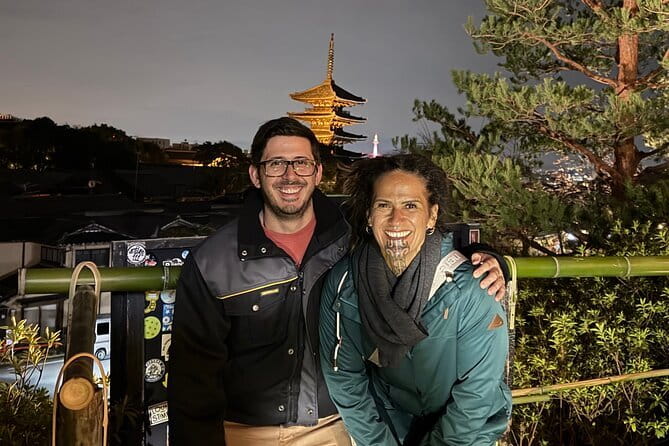
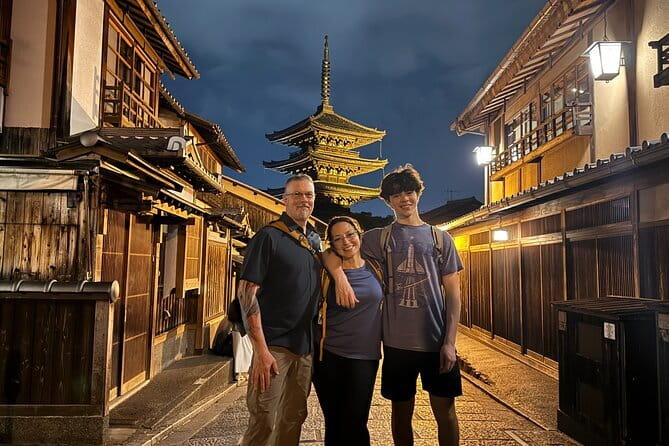
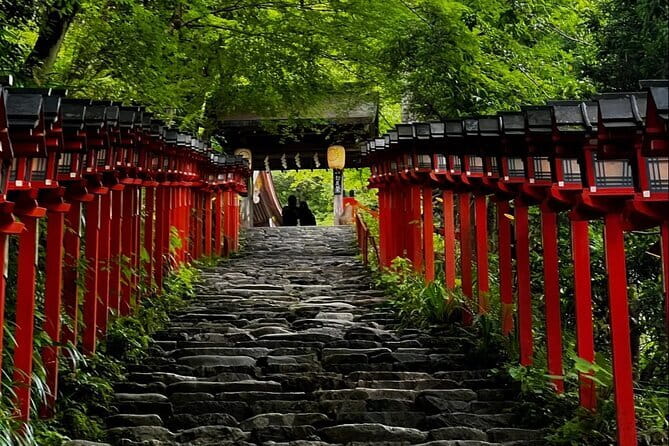
Fushimi Inari’s red torii gates look fine by day, but at night the forest paths take on a quieter, more mysterious mood. This tour then carries you into Gion, where lantern-lit lanes, wooden machiya houses, and old shrines give you a strong first taste of Kyoto after dark. I especially like the shrine etiquette lessons and the professional photos, two details that turn sightseeing into something you can understand and remember.
The main drawback is the pace. You cover a lot in 2.5 hours, and the route includes hills, stone lanes, stairs, and public transport. If you want long temple visits or a slow meal, this is not that kind of evening.
Key points to know before booking
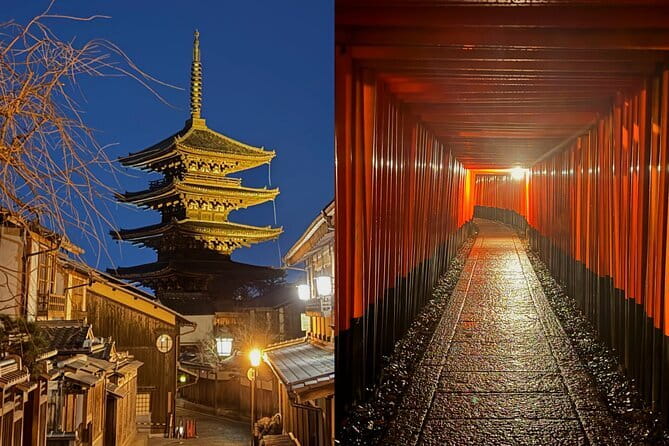
- Fushimi Inari after dark: Spend about an hour among the famous red torii gates, with explanations of Shinto customs and local lore.
- A wide Higashiyama route: See Hanamikoji, Gion, Yasui Konpiragu, Yasaka Pagoda, Ninenzaka, Nene-no-Michi, and Yasaka Shrine.
- Private attention: Only your group participates, so the guide can answer questions and adjust the pace within the tour’s limits.
- Guides who add practical help: Ikki, Yui, Yuki, Mariko, and others are praised for clear explanations, photographs, and Kyoto advice.
- Walking first, transport second: Public transportation helps connect the areas, but you spend most of the evening on foot.
- Good value at $26.43: The price includes an English-speaking guide, shrine and temple admission fees, and photos, while the ¥480 transport fare and food cost extra.
Why Fushimi Inari works so well at night
The evening begins at the Statue of Izumo-no-Okuni in Kawabatacho, in Kyoto’s Higashiyama Ward. From there, the route uses public transportation and continues on foot. The exact order of the city stops is designed around reaching Fushimi Inari and then exploring Gion and nearby Higashiyama sights.
Fushimi Inari Taisha is the tour’s big visual opening. Its thousands of orange-red torii gates form covered paths up Mount Inari, creating one of Kyoto’s most recognizable scenes. You spend about an hour here, enough time to walk beneath a meaningful stretch of gates without trying to climb the entire mountain.
I like this stop because a guide can explain what you are seeing instead of leaving you with a stack of pretty photographs. Inari is linked with rice and prosperity, and the guide may explain the shrine’s traditions, its symbols, and how to pay your respects. Several guides have also used printed charts or visual material to make the explanations easier to follow.
The dark changes the experience. You may find fewer people than during the busiest daytime hours, and the combination of shadow, lantern light, and red gates gives the walk a special atmosphere. Still, nighttime does not mean total solitude or silence. Parts of Fushimi Inari can remain popular, and you should watch your footing on uneven paths.
The tour includes shrine admission fees, though Fushimi Inari itself is free to enter. The real value here is the guide’s context and navigation. Without that help, it is easy to walk through the torii gates, take photographs, and miss the meaning behind the rituals.
More Temple & Shrine Tours in Kyoto
- Kyoto: Fushimi Inari, Kinkakuji, Bamboo Grove 1 Day Bus Tour
★ 4.8 · 4,316 reviews - Kyoto: Tea Ceremony in a Traditional Tea House in Kiyomizu
★ 4.9 · 3,519 reviews - Kyoto: Tea Ceremony Ju-An at Jotokuji Temple
★ 4.9 · 3,207 reviews
Gion’s old streets, without a rushed geisha chase
After Fushimi Inari, the tour turns toward Gion and its surrounding streets. Hanamikoji Street receives about 10 minutes, followed by another 10 minutes in Gion itself. That sounds brief, and it is. Think of these stops as an introduction to the district rather than a full neighborhood walk.
Hanamikoji is known for traditional teahouses and wooden machiya buildings. You may have a chance to see a geisha or maiko, but there is no guarantee, and you should never treat the possibility as the main purpose of the stop. The better reason to visit is the preserved streetscape and the chance to learn how Kyoto’s entertainment districts developed.
The short timing can be useful if you are arriving tired or want a broad first look at Kyoto. It can also feel too quick if you want to study building details, browse shops, or linger for photographs. Tell your guide what interests you most, but remember that this is a set route with several later stops.
The atmosphere is part of the appeal. Gion after sunset can feel more composed than it does in the middle of a busy afternoon. You walk past old wooden facades and narrow lanes, with the guide pointing out cultural details that are easy to miss when you are simply following a map.
Please keep your camera respectful. Gion is a working neighborhood, not a stage set, and the chance of seeing a geisha or maiko does not give anyone permission to block a lane or take intrusive photographs. A good guide can help you enjoy the district without turning local residents into scenery.
Yasui Konpiragu and the wish to cut bad ties
Yasui Konpiragu is one of the tour’s more unusual stops. The shrine is associated with cutting unwanted relationships and ending negative ties, while also seeking better connections. That idea gives the visit a personal angle that differs from the grand scale of Fushimi Inari.
You receive about 10 minutes here. That is enough for an explanation of the shrine’s purpose and time to observe its distinctive ritual setting, but not enough for an extended personal visit. If you have a specific wish, carry a few coins for offerings. One guide also encouraged the use of coins at other shrines, so having small change is sensible.
I like this stop because it helps you see Japanese shrines as places of active belief, not only historic buildings. The guide can explain the difference between Shinto shrines and Buddhist temples, a distinction that several participants found especially useful during the evening.
Yasaka Pagoda and the stone lanes of Higashiyama
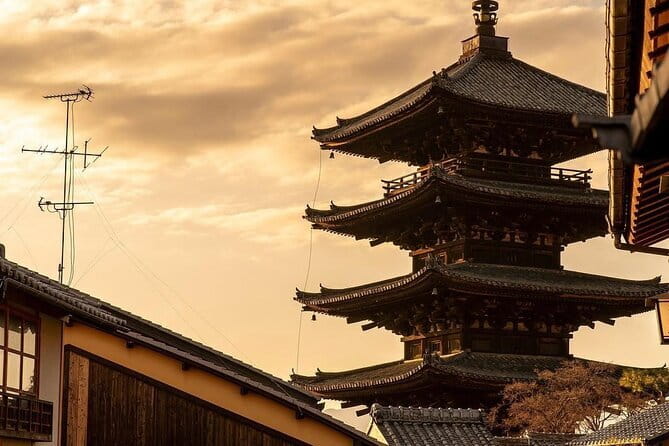
Yasaka Pagoda, also called Hokanji Temple, receives about 15 minutes. The pagoda is one of Kyoto’s best-known landmarks, and its strong wooden form gives the surrounding streets an immediate sense of place. The tour does not promise entry inside, so you should treat this as a brief exterior visit and photo stop.
The next section covers Sannenzaka and Ninenzaka, traditional stone-paved lanes lined with shops and restaurants in old wooden buildings. You have around 15 minutes here. That is enough to walk through and get your bearings, but not enough for a relaxed shopping session.
These lanes can be crowded at popular times, though an evening visit may feel calmer. The stones and steps also require care. Local tradition connects a fall on these slopes with bad luck, but the practical lesson is simpler: wear shoes with a firm grip and do not hurry for the sake of keeping up.
One guide was praised for walking quickly, while another was noted for patiently allowing older people to take breaks. That tells you something important about the route. The guides appear willing to adjust, but you should still tell them before the tour if someone in your party needs frequent rests.
Nene-no-Michi follows for about 15 minutes. Named for Nene, the wife of a powerful shogun, this path passes historic temples and offers a quieter contrast to the shopping lanes. It is one of the places where the tour feels less like a checklist and more like a guided evening stroll.
The route can be particularly helpful on your first night in Kyoto. You get a basic map in your head: Fushimi Inari to Gion, then through the Higashiyama streets toward Yasaka Shrine. Guides have also helped with public transportation questions and suggested places to eat after the tour.
Same trip, a completely different kind of day:
- PERFECT KYOTO 1-Day Bus Tour
★ 5.0 · 13,518 reviews - Kyoto Geisha Walking Tour: Gion District & Hidden Gems
★ 4.7 · 3,273 reviews - Kyoto: Gion Magical Night Walking Tour with Geisha Trivia
★ 4.9 · 2,393 reviews - Kyoto: 45-Minute Tea Ceremony Lesson Experience
★ 4.3 · 2,378 reviews
Ending at Yasaka Shrine
The final stop is Yasaka Shrine, which receives about 15 minutes. It is the headquarters of roughly 2,300 related shrines across Japan and is linked with protection and prosperity. The shrine gives the route a fitting finish because it connects the smaller rituals and neighborhood lanes with one of Kyoto’s major religious centers.
Your guide can show you how to approach and pay your respects. That practical instruction is one of the strongest reasons to choose a guided tour rather than simply walking the route alone. You learn where to bow, how shrine customs differ from temple customs, and why the gestures matter.
The tour ends back at the original meeting point. Since the route uses public transportation, you pay an additional ¥480 per person. Food and drinks are not included, so plan a meal afterward rather than expecting dinner along the way.
One particularly useful touch is the guide’s local help after the formal tour ends. Ikki has helped people find restaurants and even assisted with seating, while other guides have offered suggestions for the rest of a Kyoto stay. That kind of practical conversation can be as valuable as another monument.
What the guides add to the evening
The provider assigns an English-speaking local guide, and names appearing in the feedback include Ikki, Yui, Yuki, Mariko, and Joi. You cannot assume a particular guide unless the company confirms one, but the recurring strengths are clear: friendly communication, cultural explanations, route knowledge, and help with photographs.
Ikki receives especially strong praise for using visual materials, explaining shrine lore, and making children part of the conversation. One family of eight, including children from ages 5 to 12, found that he answered their questions patiently and kept them involved.
Mariko is described as energetic and fast walking, with a talent for taking photographs in low light. Yui has been appreciated for explaining the city’s history and offering useful suggestions for the rest of a Kyoto visit. Yuki is praised for warmth and enthusiasm.
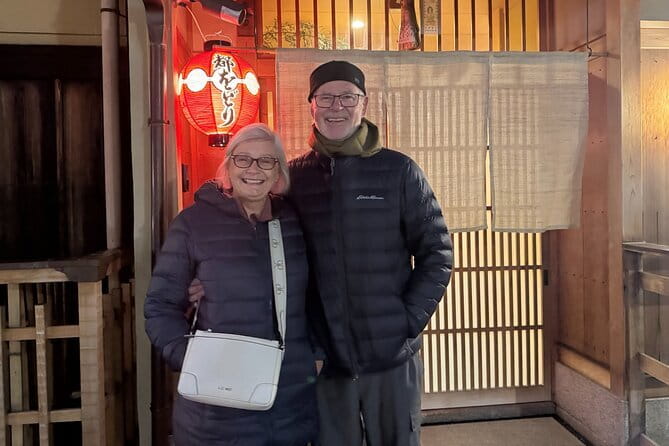
The photo service is included. Guides take pictures throughout the walk and send them afterward, with one group receiving more than 40 photos and short videos within about an hour. Results will depend on conditions and the guide, but this is a real benefit if you want photographs of the whole group instead of the usual arm’s-length snapshots.
Price, pace, and physical effort
At $26.43 per person, the tour offers good value for a short private experience. You are paying for a local English-speaking guide, the explanations at several religious sites, photographs, and a planned route connecting two major Kyoto areas. The modest price is especially attractive if you are a couple or small group and want help on your first evening.
The price does not cover the ¥480 public transportation fare per person. It also excludes food and drinks. Group discounts are available, and only your group participates, which can make the cost more appealing for a family or group of friends.
The 2.5-hour length is both a strength and a limit. You see a lot without giving up an entire evening, but several stops last only 10 to 15 minutes. I would book this for orientation, atmosphere, and cultural explanation, not for intensive photography, shopping, or extended shrine visits.
You need moderate physical fitness. Expect plenty of walking, stone paving, uneven surfaces, and some slopes or steps. Comfortable shoes matter. The tour can suit older participants, and guides have allowed breaks, but anyone with limited mobility should ask detailed questions before booking because this is not a vehicle-based sightseeing tour.
Arrive early at the meeting point. If you are late, you cannot join the tour and will not receive a refund. Cancellation is free up to 24 hours before the start time, but changes or cancellations inside that window are not accepted.
Who should book this Kyoto night walk

I would choose this tour for a first evening in Kyoto, especially if you want a quick orientation to Gion and Higashiyama. It suits couples, families, and small private groups who prefer a guide they can question rather than a large group following a flag.
It is also a good fit if Japanese religious customs are new to you. The explanations about Shinto and Buddhism, offerings, shrine behavior, and local legends give the sights more meaning.
Families should like the private format and the chance for children to ask questions. Older participants can enjoy it too, provided they are comfortable walking and the group agrees to take sensible breaks.
I would skip it if your priority is a slow dinner, serious shopping, a full climb up Mount Inari, or an in-depth tour of every temple. The route covers many places, but it does so at a brisk sightseeing pace.
Should you book it?
Book this tour if you want Kyoto’s most famous evening sights tied together by a friendly English-speaking guide. The strongest reasons are the nighttime setting at Fushimi Inari, the clear help with shrine customs, the private format, and the included photographs.
Go in with realistic expectations. You will walk quickly, pay extra for transport, and spend only short periods at most stops. If that sounds like a fair trade for seeing a large slice of Kyoto after dark, $26.43 is a sensible buy. If you want depth at one shrine, choose a slower, more focused experience instead.
FAQ
How long is the Kyoto Magical Night tour?
The tour lasts approximately 2 hours and 30 minutes.
What is the tour price?
The listed price is $26.43 per person. Group discounts are available.
Is this a private tour?
Yes. Only your group participates in the activity.
Where does the tour begin?
It begins at the Statue of Izumo-no-Okuni in Kawabatacho, Higashiyama Ward, Kyoto.
Where does the tour end?
The activity ends back at the meeting point.
Is public transportation included in the price?
No. Public transportation costs ¥480 per person and is paid separately.
Are shrine and temple admission fees included?
Yes. Admission fees for the temples and shrines visited are included. The listed stops also indicate free admission.
Are food and drinks included?
No. Food and drinks are not included.
What happens if I arrive late?
If you are late for the meeting time, you cannot join the tour and will not receive a refund.
Just added around Kyoto
- Sekka Cotton Furoshiki Class★ 5.0 · 19 reviews
- Kyoto Sword Experience – includes Museum Ticket/Ninja Experience★ 4.5 · 149 reviews
- Scenic Green Tea Fields of Hidden Kyoto & Local Tea Exp (Private)★ 5.0 · 32 reviews
- Secret Eastern Kyoto Biking Adventure★ 5.0 · 44 reviews
- Private Sake Tasting in Central Kyoto with Sake Sommelier★ 5.0 · 32 reviews
- Samurai School in Kyoto: Samurai for a Day★ 5.0 · 202 reviews
- SHIRAKAWA Japanese Culture Experiences with private English staff★ 5.0 · 16 reviews
- A Privately Guided Photoshoot in Beautiful Kyoto by a Pro★ 5.0 · 18 reviews
Temples & Shrines, compared.

Tea Ceremony in a Traditional Tea House in Kiyomizu
Our verdict →

Meiji Shrine, Asakusa, Skytree Bus Tour and Cruise
Our verdict →
Fushimi Inari Hidden Hiking Tour (Private Option Available)
Our verdict →
Osaka/Kyoto:Kinkakuji,Arashiyama,FushimiInariShrine,NaraPark
Our verdict →
Nikko: Kegon Falls, Lake Chuzenji & Toshogu Temple
Our verdict →
Kamakura & Enoshima Day Trip including Temple Tickets
Our verdict →Browse the lists this tour appears in