
Reviewed · GEISHA & MAIKO EXPERIENCES
Kyoto: Lunch or Dinner with Maiko
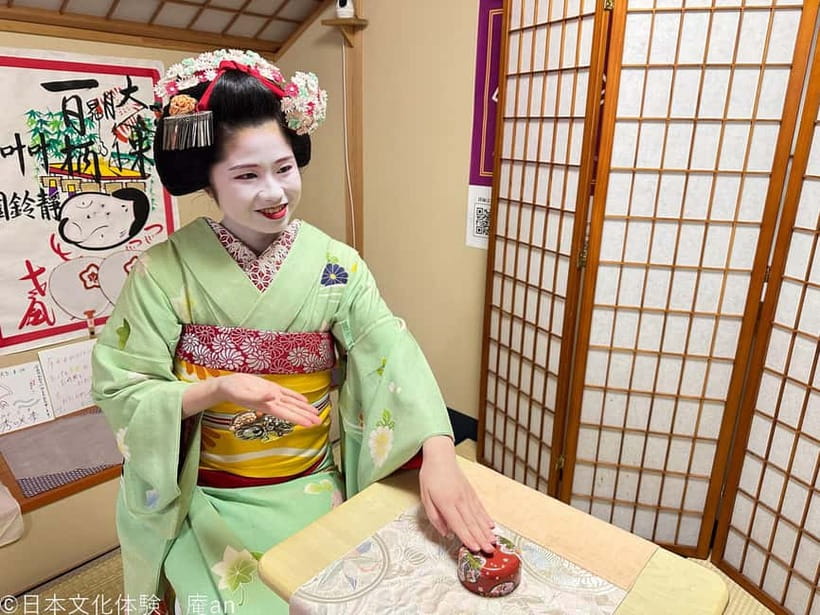
Kyoto: Lunch or Dinner with Maiko gives you a rare close look at a living tradition. You’ll watch a maiko prepare tea, see two elegant dances, ask about her daily life, and join a lighthearted game before taking a photo together.
I especially like the direct Q&A and the small senjafuda lucky charm presented after your photo. The location, just one minute from Gojo Station, is easy to reach. The main caution is the setting: this is a plain building, not an ornate ochaya, and the meal may feel modest beside the performance.
Key points
- Two traditional dances: Watch graceful performances shaped by Japan’s seasons, love stories, and everyday life.
- Personal questions: Ask a maiko about her work and routines during the dedicated Q&A.
- Tea ceremony first: See the careful movements of the ceremony, with tea-making available for an extra ¥1,600.
- Photo and senjafuda: Take a picture beside the maiko and receive a small lucky charm.
- Traditional Kyoto food: Enjoy a meal from a long-established local restaurant, with dashi used in the cooking.
- Simple venue, easy location: The building has stairs and classroom-like furnishings, but it is one minute from Gojo Station.
Meeting a maiko near Gojo Station
The experience begins close to Gojo Station on the Subway Karasuma Line. From Exit 1, walk about one minute, keeping in mind that the entrance faces Gojo-dori. This is useful after a full day of sightseeing because you do not need to hunt through Kyoto’s narrow back streets or find a distant entertainment district.
The program is offered in a building rather than a traditional Japanese house. That detail matters. You are coming for the maiko, the food, and the cultural exchange, not for a highly decorated historic room. The room is described as relaxed, with friendly staff, but some seating areas have plain furnishings and bright lighting. One recent account found the surroundings more like a classroom than a traditional theater, while another felt the lack of screens or decorative partitions reduced the sense of occasion.
I would set your expectations early: the artistry is in the performer, not in the room. If you need an elegant backdrop for photographs, this may disappoint. If you care more about meeting a maiko at close range, the straightforward venue keeps the focus on the program.
There is no elevator, so you need to use stairs to reach the event room. Anyone with mobility concerns should contact the organizer before booking. The staff can provide English translation as much as possible if you request it, but the listed program language is Japanese. This is not a tour to choose if you need guaranteed, continuous English interpretation.
More Dinner Experiences in Kyoto
- Kyoto Gion Cultural Walk & Geisha Show with Dining Options
★ 5.0 · 518 reviews - Kyoto Gion Cultural Walk & Geisha Show with Dining Options
★ 5.0 · 483 reviews - Dinner with Maiko in a Traditional Kyoto Style Restaurant Tour
★ 5.0 · 175 reviews
The tea ceremony opens the 90-minute program
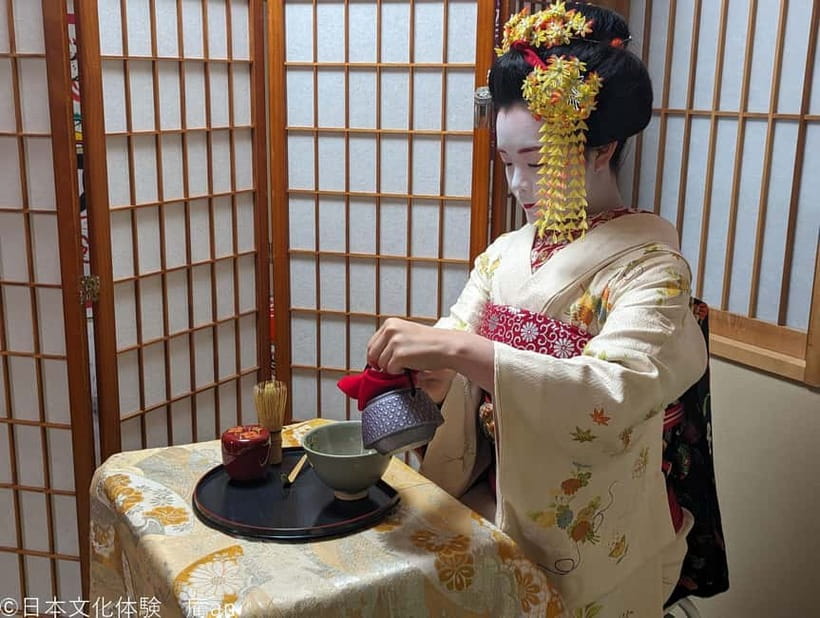
The first scheduled activity is a tea ceremony demonstration. You will watch the maiko handle the tea and utensils with measured movements and formal manners. Even if you have little interest in tea itself, this opening gives you a useful glimpse into the discipline behind the costume and performance.
Tea ceremony is not simply about drinking a cup. The pace, posture, gestures, and attention to the person being served all carry meaning. Watching the demonstration helps you notice the controlled movements later in the dances. The program also offers an optional chance to make your own tea for ¥1,600. You must request and select that option when applying, rather than assuming it is part of the basic price.
The room may be shared by people on different packages. Some participants may be eating while others take part in the tea option. That arrangement can make the event feel less private and less carefully staged, but it also explains why the schedule can serve several kinds of visitors at once.
If you want a quiet, formal tea lesson, this may not be the right format. If you want a short introduction before dinner and dance, it fits well within the 90-minute program.
Kyoto dinner built around dashi
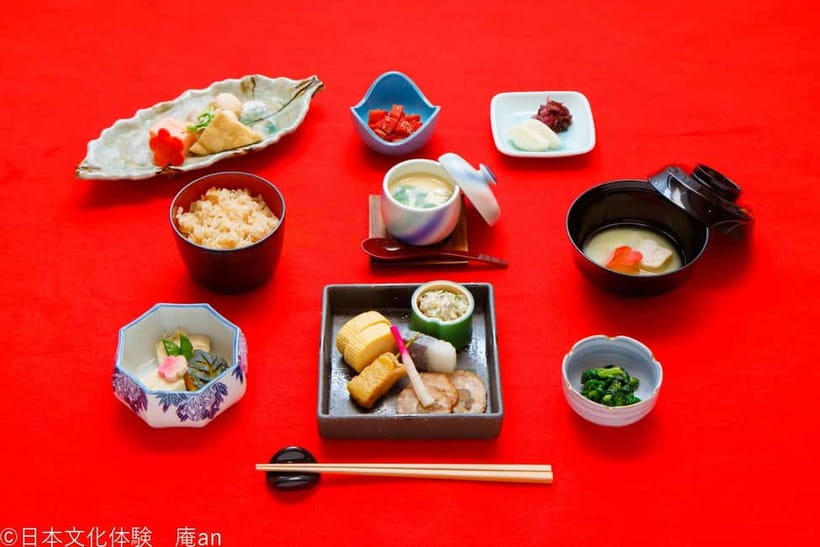
After the tea demonstration, you receive a traditional Kyoto meal prepared by a long-established local restaurant. The food is described as classic Kyoto cooking, with dashi, the Japanese soup stock, used often. Dashi gives many Japanese dishes their savory base while keeping the flavors light and restrained.
The meal is part of the experience, not the sole reason to book it. You should think of it as a cultural dinner served alongside a performance. Some diners have found the seasoning quite mild, and one particularly negative account described the meal as barely thawed and difficult to eat. Another felt it was typical but lacked much aroma. These are important warnings if food quality is your main reason for spending the money.
The meal may arrive in a traditional delivery style known in Kyoto as shidashi. That custom is part of local dining culture, but it does not promise a large restaurant-style spread or elaborate service. If you expect a polished kaiseki dinner, you may come away disappointed. If you want to taste familiar Kyoto dishes while learning about maiko culture, the meal adds useful context.
At about $63 per person, the price is best judged as a combined cultural program. You are paying for the performer, the demonstrations, the dance, the conversation, the game, the meal, and the central location. The value is weaker if you are mainly seeking a memorable dinner. It is stronger if a close encounter with a maiko is high on your Kyoto list.
Children under two can attend free when sitting on a parent’s lap. If a child needs a seat or meal, the regular one-person fee applies.
The Q&A is the most personal part
The Q&A session gives this program its human side. Instead of only watching a costumed performer from a distance, you can ask about her daily life and the demands of maintaining a traditional lifestyle.
Maiko are apprentices in Kyoto’s geisha districts, and their work involves more than dancing for an audience. Their kimono, hairstyles, makeup, manners, and routines all require care. The supplied program does not promise a lecture on every part of this system, but the Q&A lets you ask what interests you most.
Prepare a few short questions in advance. You might ask about the meaning of the dances, the time needed to dress, the challenges of performing, or how she spends an ordinary day. Since the instructor language is Japanese, request English help before the program if you need it. Translation is offered as much as possible, but it is not listed as a guaranteed full-language service.
The answer quality will depend partly on translation and partly on how actively the room participates. This is a much better setting for curiosity than for a long formal presentation. Keep your questions respectful and concise, and you are more likely to get something personal and useful from the exchange.
More Geisha Experiences in Kyoto:
- Kyoto Geisha Walking Tour: Gion District & Hidden Gems
★ 4.7 · 3,273 reviews - Kyoto: Gion Magical Night Walking Tour with Geisha Trivia
★ 4.9 · 2,393 reviews - Kyoto: Gion Geisha District Walking Tour – Stories of Geisha
★ 4.7 · 2,187 reviews - Best of Kyoto: Gion, Geisha, Pagodas & Cobblestones
★ 4.9 · 2,058 reviews
A close photo and the senjafuda gift
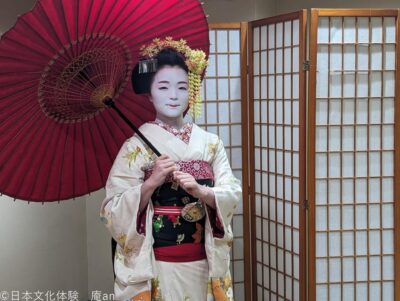
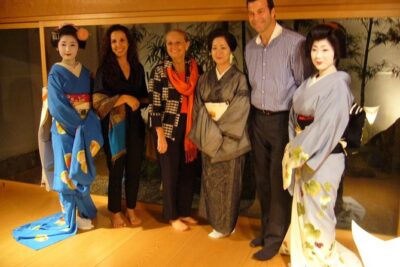
The photo opportunity comes after the Q&A. You can stand beside the maiko for a commemorative picture, which is a different experience from photographing a performer across a stage.
This part works best when you remember that the maiko is a professional artist, not a costumed prop. Follow the staff’s instructions, keep the moment brief, and let the program move at its planned pace. The photo is included, and the maiko also presents a senjafuda.
A senjafuda is a small paper or card associated with a person’s name or mark. Here it is offered as a lucky charm and keepsake. It is an appealing touch because it gives you something small and personal to take away, rather than leaving the experience as a single photograph on your phone.
The room may not provide the traditional screens or painted décor you might picture in a Kyoto cultural show. That makes the photo less atmospheric, but the close position beside the performer remains one of the program’s strongest features.
Two dances show the maiko’s skill
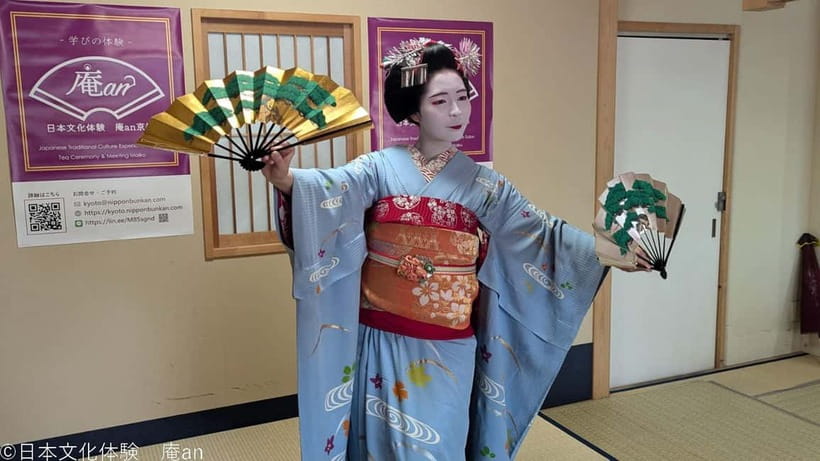
The dance portion includes two traditional dances. Their subjects may draw on the seasons, love stories, or ordinary life. The movements are controlled and expressive, and the quiet details matter more than large gestures.
Watch the hands, fan work if used, posture, and small shifts of the head and feet. You will see why a maiko’s training is so demanding. The dances are not simply a colorful interlude before a game. They show how movement, costume, music, and storytelling work together in Japanese performance.
A recent booking was fortunate to have a geiko instead of a maiko. The organizer notes that this substitution can happen depending on circumstances. A geiko is a more experienced performer, so the change may be a welcome surprise, but you should book knowing that the exact performer is not guaranteed.
The dances are also the part most likely to satisfy you if you prefer a clear cultural performance rather than a long meal. They are short enough to fit a tight itinerary while still giving you two examples of the art form.
A playful game ends the formal program
After the dances, the maiko leads a simple interactive game. Volunteers can take part, while everyone else can clap, watch, and encourage the players.
This is not a serious competition. The charm comes from seeing the performer shift from formal dance to friendly play. The program presents the game as a traditional part of hospitality, and it gives the room a shared activity after the quieter tea and dance segments.
You do not need to volunteer. If you prefer to observe, you can still enjoy the reactions and cheer for the players. If you like participatory events, this is the moment to step forward. The playful format also makes the program suitable for families with older children, although the food and Japanese-language format may hold more appeal for adults.
At roughly 75 minutes, the maiko leaves the room. The remaining 15 minutes are set aside for chatting before you depart. That final buffer is useful because it keeps the experience from ending the instant the performance stops, although the exact amount of informal conversation may depend on the schedule and translation.
Optional seating upgrades and timing
The base price is $63 per person. You can pay extra for a better seat:
- SS seat, first row: ¥3,300
- S2 seat, second row: ¥2,200
- S3 seat, third row: ¥1,100
The seating supplements make the most sense for anyone who wants a clear view of the dance and tea demonstration. The room is not a huge theater, but close seating can still matter when you want to observe hand movements or take photographs. The basic ticket may be enough if keeping costs down is more important than being near the front.
The tea-making option costs ¥1,600. I would add it if you want a hands-on activity and do not mind giving up some of the passive viewing time. Skip it if the maiko’s dance and Q&A are your priorities.
The full program lasts 90 minutes. You should arrive on time because the event cannot be held for late arrivals, and travel costs are not reimbursed if you miss it. Reservations are processed during operating hours from 10:00 to 17:00, with requests after 17:00 handled the next day.
Cancellation is free up to eight days in advance. After that point, fees apply, and changing the date or time can also create a charge. The organizer does not admit people who are not participating, so do not plan to accompany a non-paying observer into the room.
Who will enjoy this Kyoto experience
I would recommend this program to you if you want a convenient introduction to maiko culture without committing to an expensive private dinner. It suits first-time visitors who want a performance, a meal, and direct questions in one compact evening or afternoon.
It is especially useful for:
- People with only 90 minutes to spare
- Visitors who value a personal photo and conversation
- Anyone curious about tea ceremony and Kyoto cooking
- Families with children old enough to sit through a short cultural program
- Visitors staying near central Kyoto who want easy subway access
I would hesitate if you expect a historic ochaya, elaborate interior design, or a high-end multi-course dinner. The food receives mixed impressions, and the plain room can feel at odds with the elegance of the maiko. You also need to be comfortable with Japanese as the main language unless you arrange translation.
Should you book lunch or dinner with a maiko?
Book it if the meeting itself matters more to you than the décor or meal. The two dances, Q&A, photo, senjafuda, and game create a well-packed introduction to a tradition that is difficult to see up close on your own.
For the best experience, request English translation in advance, choose a front seat if dance details matter to you, and add the tea-making option only if you want to participate. Go in expecting a modest building and a simple traditional meal rather than a grand Kyoto banquet.
That honest expectation makes the decision easy. This is a good-value cultural encounter at $63 when you want access, context, and a personal connection. It is not the best choice for a luxury dinner or a picture-perfect setting.
FAQ
Where is the maiko experience held?
It is held one minute from Exit 1 of Gojo Station on Kyoto’s Subway Karasuma Line. The entrance faces Gojo-dori.
How long does the program last?
The full experience lasts 90 minutes. The maiko portion ends at about 75 minutes, followed by chatting time before room departure.
Is dinner included in the price?
Yes. The experience includes dinner prepared by a long-established Kyoto restaurant.
Is the tea ceremony included?
A tea ceremony demonstration is part of the program. Making your own tea is an optional extra costing ¥1,600.
Can I ask the maiko questions?
Yes. A Q&A session is included, and you can ask about the maiko’s daily life and work.
Can I take a photo with the maiko?
Yes. A commemorative photo beside the maiko is included, along with a senjafuda lucky charm.
Will the performer always be a maiko?
Not necessarily. Depending on the circumstances, a geiko may appear instead.
Is English spoken during the program?
The listed activity language is Japanese. English translation can be provided as much as possible if you request it in advance.
Is the building accessible by elevator?
No. There is no elevator, and you need to use stairs to reach the venue.
Can children attend for free?
Children under two can attend free when sitting on a parent’s lap. If the child needs a seat or meal, the regular fee applies.
Just added around Kyoto
- Sekka Cotton Furoshiki Class★ 5.0 · 19 reviews
- Kyoto Sword Experience – includes Museum Ticket/Ninja Experience★ 4.5 · 149 reviews
- Scenic Green Tea Fields of Hidden Kyoto & Local Tea Exp (Private)★ 5.0 · 32 reviews
- Secret Eastern Kyoto Biking Adventure★ 5.0 · 44 reviews
- Private Sake Tasting in Central Kyoto with Sake Sommelier★ 5.0 · 32 reviews
- Samurai School in Kyoto: Samurai for a Day★ 5.0 · 202 reviews
- SHIRAKAWA Japanese Culture Experiences with private English staff★ 5.0 · 16 reviews
- A Privately Guided Photoshoot in Beautiful Kyoto by a Pro★ 5.0 · 18 reviews
Geisha & Maiko Experiences, compared.
Kyoto Geisha Walking Tour: Gion District & Hidden Gems
Our verdict →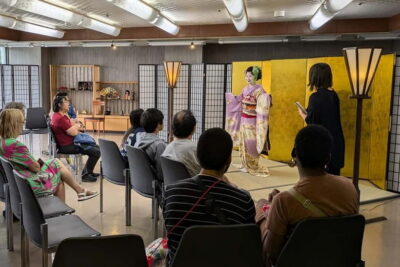
Dinner with Maiko in a Traditional Kyoto Style Restaurant Tour
Our verdict →
Browse the lists this tour appears in