
Reviewed · WALKING TOURS
Kyoto: Gion Walking Tour
Gion is not just a pretty lane of wooden houses and geisha photographs. This two-hour walk connects Pontocho, Gion-Kobu, and Gion-Higashi, then may finish at Yasaka Shrine, showing you how Kyoto’s entertainment districts grew from older religious and riverfront neighborhoods. I like the way Jose, Saskia, and the other guides use maps, photographs, and personal stories to make small details easier to see.
I also like the six-person limit and the open question time. You can ask about geiko, maiko, shrines, food, Japanese customs, or daily life, rather than simply following a script. The main limitation is clear: Hanamikoji-dori is not part of the route, and seeing a maiko or geiko is never promised.
Key points at a glance
- Three hanamachi in one walk: Visit Pontocho, Gion-Kobu, and Gion-Higashi, three of Kyoto’s five traditional geisha districts.
- A true small-group format: The maximum is six people, so it can feel close to a private walk.
- Jose and Saskia bring local perspective: Their talks combine Kyoto history with their own lives in Japan and plenty of time for questions.
- A 3.3-kilometer route: You cover a fair stretch of central Kyoto, but the walk is designed around frequent stops rather than a hard march.
- Yasaka Shrine adds context: The former Gion Shrine explains where the district name came from and may lead into the story of the Gion Festival.
- No geisha sighting guarantee: You learn about geiko and maiko life, but you should not book this as a sighting hunt.
Why this Gion walk is more than a geisha district stroll
Many people arrive in Gion expecting one famous street, a few tea houses, and perhaps a glimpse of a woman in full makeup and kimono. This tour gives you a wider picture. It treats Gion as part of central Kyoto, shaped by religion, bridges, waterways, entertainment, architecture, and centuries of changing city life.
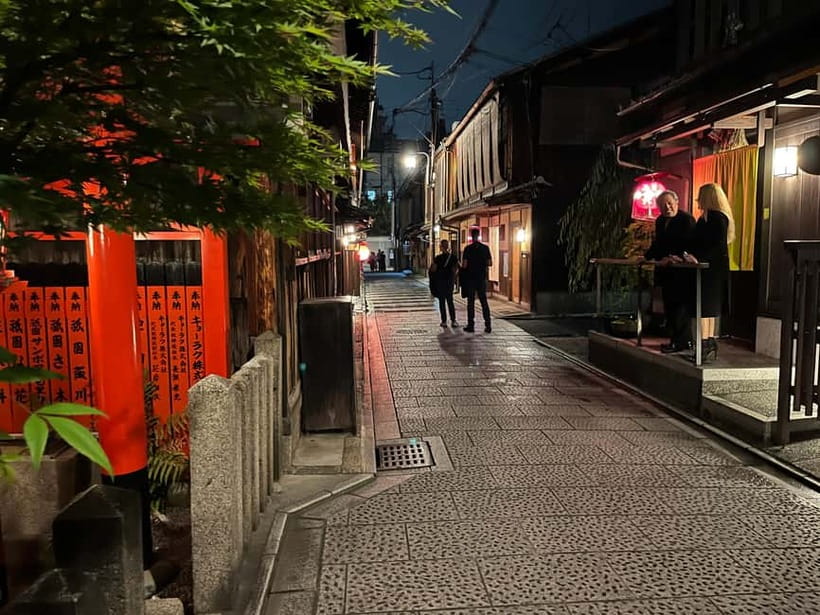
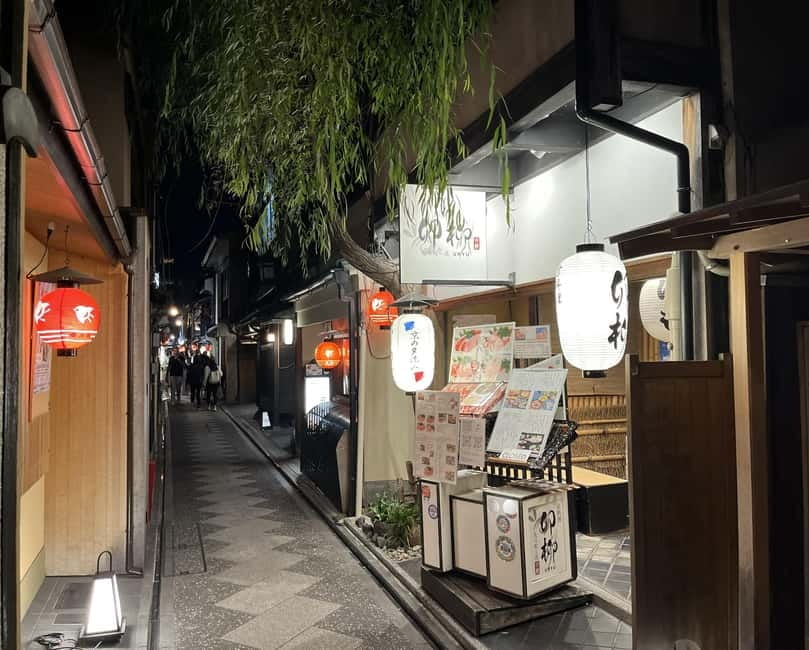
I especially like that the route includes three hanamachi, the traditional districts associated with geiko and maiko. Pontocho, Gion-Kobu, and Gion-Higashi are not interchangeable. Each has its own streets and character, and walking between them helps you understand that Gion is not one single attraction with one entrance.
The guides also explain the words used in Kyoto. A geiko is the Kyoto term for a professional entertainer often called a geisha elsewhere in Japan. A maiko is an apprentice. You hear about their routines, training, work, and customs without reducing the subject to costume and photography.
That approach matters. You get a look at a living cultural practice, not a staged performance built for visitors. The guide can also explain how older traditions fit into modern Kyoto, which is often the most useful part of the walk.
More Walking Tours in Kyoto
- Kyoto Geisha Walking Tour: Gion District & Hidden Gems
★ 4.7 · 3,273 reviews - Kyoto: Gion Magical Night Walking Tour with Geisha Trivia
★ 4.9 · 2,393 reviews - Kyoto: Gion Geisha District Walking Tour – Stories of Geisha
★ 4.7 · 2,187 reviews
Starting at Pontocho Alley and the Kamo River
Meet your guide outside the Disney Store at Kyoto Shijo-Kawaramachi. Look for someone seated with an iPad showing the Get Your Guide image and the tour title. This is a busy central area, so arrive with enough time to identify the meeting spot without rushing.
The walk begins at Pontocho Alley, one of Kyoto’s best-known traditional entertainment lanes. From there, the route includes Pontocho Kaburenjo, a theater and important cultural site connected with performances by the district’s geiko and maiko.
The Kamo River provides the wider setting. The river has long shaped movement and leisure in Kyoto, and the nearby bridges connect several districts that can seem separate when you explore them alone. The route includes the Yagi-san and Kita-san statues, Sanjo Ohashi, and Yamato-dori.
These stops are useful because they give you a city framework before the walk turns into narrower lanes. Instead of seeing only attractive facades, you learn how streets, bridges, theaters, shrines, and river crossings fit together.
A guide can also point out details you would probably pass without noticing. Several people who took the walk found that familiar streets looked different once someone explained the small architectural and historical clues. That is a strong reason to schedule this early in your Kyoto visit.
Gion-Kobu and the wooden streets of Shirakawa
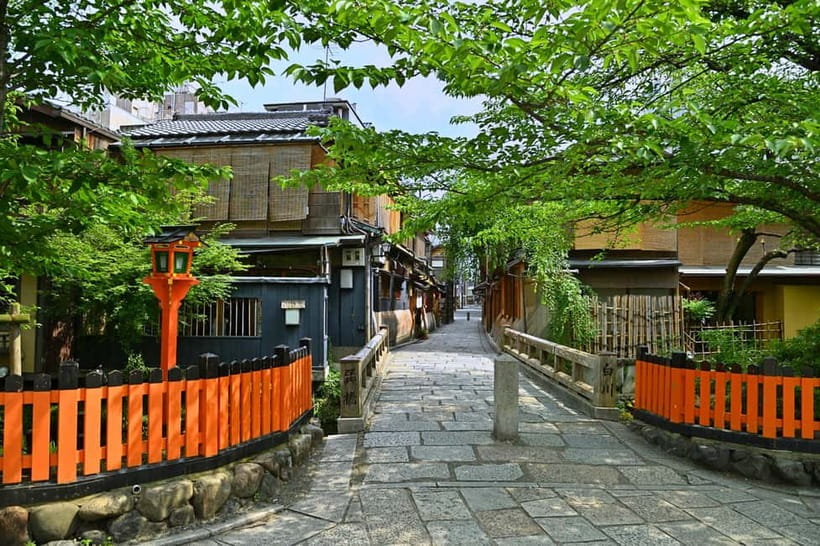
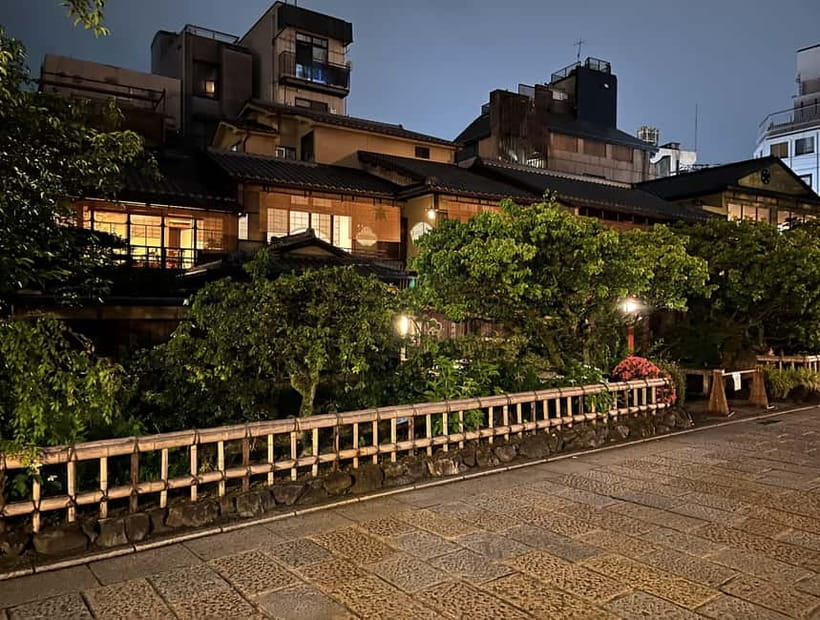
The route then enters Gion-Kobu, including Gion-Shinbashi-dori and Gion Shirakawa. This is the section many people picture when they think of old Kyoto: wooden machiya houses, narrow lanes, carefully maintained facades, and waterways that give the neighborhood a calm, traditional feel.
The appeal is not simply the appearance. Your guide explains how the streets functioned and how the hanamachi developed. You learn about the relationship between tea houses, performers, clients, apprentices, and the wider neighborhood.
Gion-Kobu is also a national historical preserved neighborhood. That designation helps explain why the streets look more restrained than much of central Kyoto. The point is not that every building is unchanged, but that the area retains a strong connection to older urban design.
Tatsumi Jinja and Tatsumi Bridge are among the stops here. Small shrines like these can be easy to overlook when you are focused on the larger Yasaka Shrine or the famous lanes. This is where the guide’s frequent, short explanations work well. You stop, listen, look at a map or photograph when useful, and then continue.
The route covers about 3.3 kilometers, or two miles. That is a moderate distance for two hours, and the walk is broken up by many stops. Still, you are on your feet for the full experience. Wear comfortable shoes, and bring water, sunscreen, a hat, and an umbrella depending on the forecast.
Gion-Higashi and the limits of the route
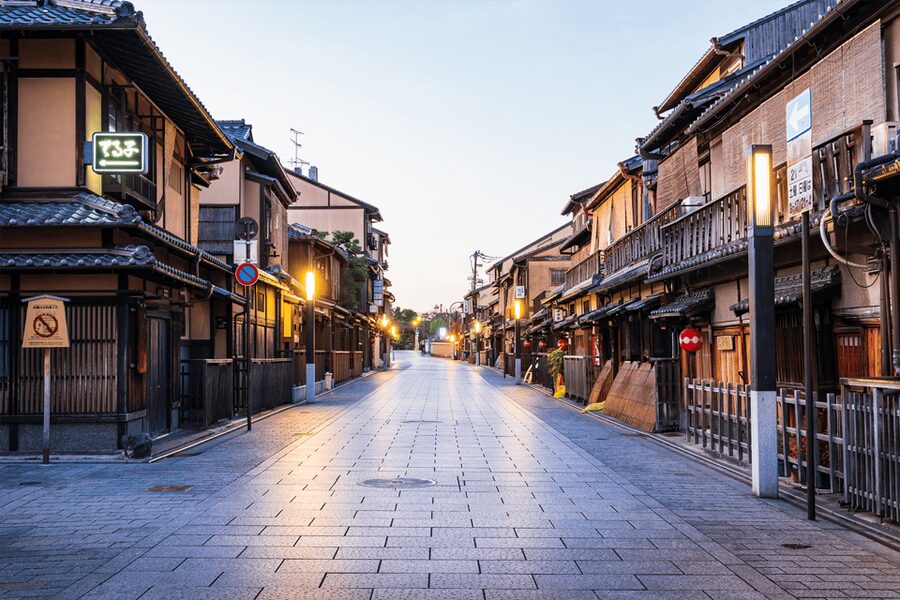
The final hanamachi is Gion-Higashi. Including it is one of the tour’s best features because it takes you beyond the most obvious Gion streets. You get a better sense of the district as a collection of related neighborhoods rather than one photo stop.
There is an important point to understand before booking: Hanamikoji-dori is not included. That street is one of the best-known names in Gion, so anyone hoping for a classic first-time Gion walk centered on it may feel the route is missing a familiar highlight.
That is not necessarily a flaw. This tour deliberately takes a broader path, with attention to areas and details that independent walkers often miss. But you should know the distinction and visit Hanamikoji separately if it matters to you.
You also should not treat the walk as a way to find a geiko or maiko on demand. A sighting can happen, but it is not guaranteed. The useful part is learning how to understand the clothing, hairstyles, and behavior if you happen to see one, while remembering that these are working people, not public performers available for close-up photographs.
Same trip, a completely different kind of day:
- PERFECT KYOTO 1-Day Bus Tour
★ 5.0 · 13,518 reviews - Kyoto: Fushimi Inari, Kinkakuji, Bamboo Grove 1 Day Bus Tour
★ 4.8 · 4,316 reviews - Kyoto: Tea Ceremony in a Traditional Tea House in Kiyomizu
★ 4.9 · 3,519 reviews - Kyoto: Tea Ceremony Ju-An at Jotokuji Temple
★ 4.9 · 3,207 reviews
Yasaka Shrine and the origin of Gion
If time allows, the walk reaches Yasaka Shrine, formerly called Gion Shrine. The district takes its name from this religious connection, and the shrine helps tie together the cultural and spiritual story of the neighborhood.
Yasaka Shrine is also linked to the Gion Festival, one of Japan’s three most important festivals. The festival’s origins reach back more than 1,100 years, and an explanation here adds scale to what can otherwise feel like a simple neighborhood walk.
The shrine may be especially appealing later in the day. One account describes enjoying Yasaka Shrine at night, along with visits to smaller areas associated with beauty and love. The exact timing and amount of time at the shrine depend on the route and available time, so do not assume every tour will linger there.
The guide can also explain how religious sites and entertainment districts developed close to one another. That connection is one of the more interesting themes of the walk. Kyoto’s old quarters were not neatly separated into tourist sights, residential streets, places of worship, and working districts. They overlapped.
Guides, languages, and the personal feel
The tour is offered in English, Spanish, Dutch, and French. Jose and Saskia are the names most often associated with the experience, and their approach is notably conversational. They are not presented as native Japanese guides, but they have lived in Japan for years and speak with strong enthusiasm about Kyoto and Japanese culture.
That can be an advantage for you. A guide who has had to learn Japanese customs and systems from the outside may anticipate the questions that first-time visitors have. The guides also share personal experiences from daily life in Japan, making the conversation less formal than a lecture.
Jose is particularly good for visitors who want to ask broad questions. His explanations have included maps, older photographs, and images showing how Kyoto changed over time. Saskia is a useful choice for Dutch-speaking visitors, and Dutch-language tours are available when scheduled.
The quality of the tour depends partly on which guide leads it. The supplied experiences describe guides as warm, funny, energetic, and patient with repeated questions. The strongest common thread is their willingness to adjust the talk to your interests. You might spend more time on geisha culture, architecture, Japanese customs, or everyday life depending on the group.
Why the six-person limit matters
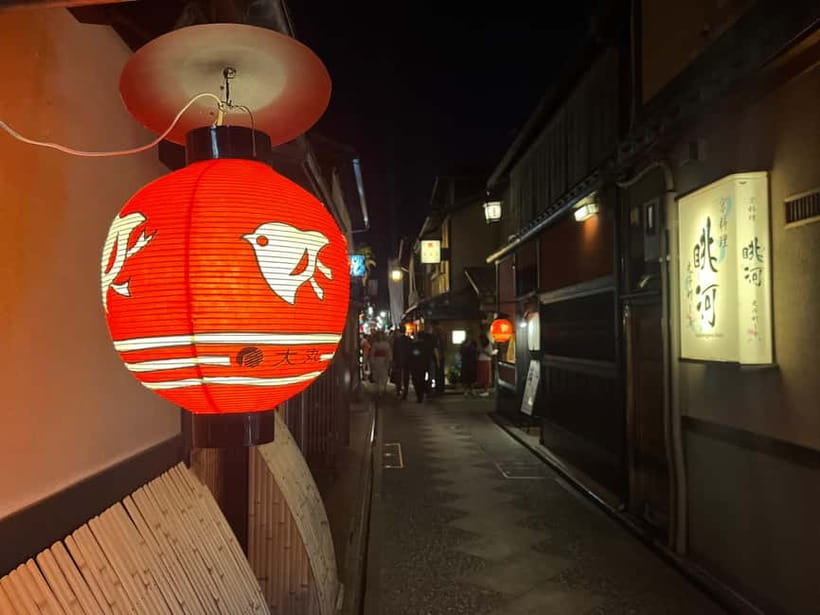
A six-person maximum is a major part of the value here. In a crowded Gion lane, a large group can block the walkway, lose members at crossings, or force the guide to repeat every point. A small group lets you hear the explanation and ask something before moving on.
If only two or three people book, the walk can feel almost private. That is particularly useful for families, couples, or anyone who wants to ask many questions without slowing down a large group.
The tradeoff is that availability may be tighter than for a standard group walk. The small size also means the experience is built around conversation. If you prefer to walk silently and take photographs at your own pace, a self-guided visit may suit you better.
The tour has received a perfect rating from 195 reviews, and the praise centers on the same practical qualities: clear explanations, a sensible walking pace, small details, personal attention, and guides who make room for questions. Those are the qualities I would prioritize over a long list of sights.
Price, timing, and practical value
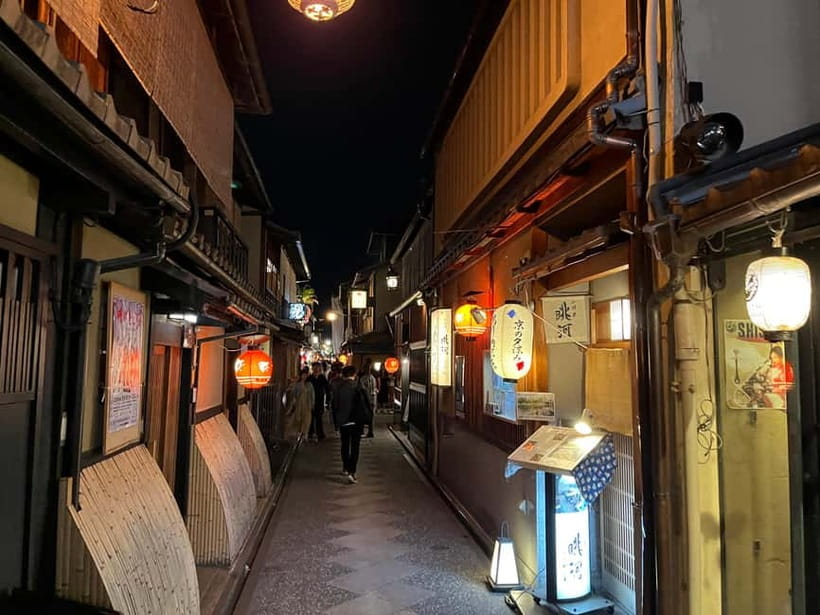
At $35 per person, this is a reasonable price for a two-hour walk with a maximum of six people. You are not paying for meals, transport, entrance tickets, or other amenities. You are paying for interpretation, route planning, and access to a guide who can connect what you see with Kyoto’s past and present.
The value is strongest if this is your first time in Kyoto or your first visit to Gion. A guide can help you get your bearings, explain customs that might otherwise seem mysterious, and suggest places to explore afterward. The tour also works well for a short Kyoto visit, since two hours gives you a useful introduction without taking an entire day.
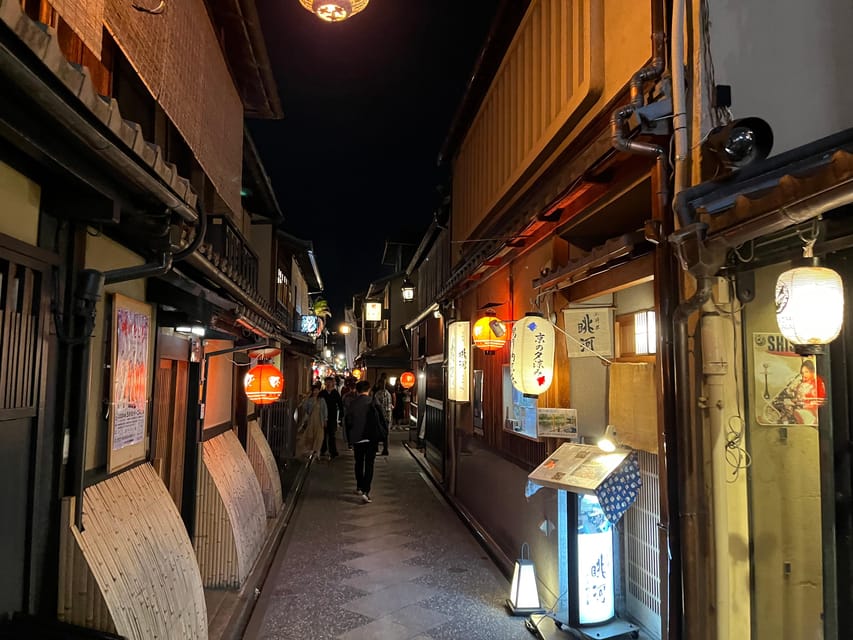
The route may be altered during cherry blossom season, roughly late March through early April, to show attractive sakura areas around Gion. That seasonal adjustment is a nice bonus, but spring weather can change quickly, so bring an umbrella and dress for walking.
The 9:45 and 12:30 departures can include a free visit to the Gion Gallery if you want to extend the experience. Since this is optional and depends on the tour timing, ask your guide about it at the start.
Free cancellation is available up to 24 hours before the tour, and you can reserve now and pay later. No amenities are supplied, so bring your own water and weather protection.
Who should book this Gion experience?
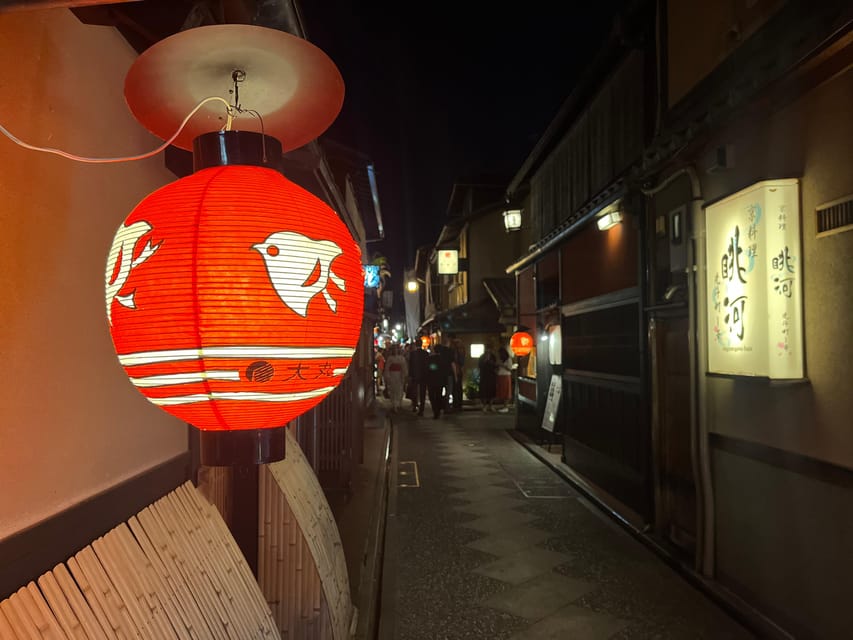
I would choose this walk if you want context rather than a checklist. It suits first-time visitors, curious families, couples, solo visitors, and anyone who wants a friendly guide for questions about Japan.
It is also a good match for visitors who have already walked through Gion but felt they were missing the point. The guides focus on details that are easy to overlook, and several stops are outside the most familiar tourist path.
You may want a different option if Hanamikoji-dori is your main goal, if you need guaranteed access to a geisha performance, or if you dislike walking two miles. You should also avoid booking with the expectation of a maiko sighting. The cultural explanation is guaranteed by the format, but a sighting is not.
FAQ
Where does the Gion walking tour meet?
The meeting point is in front of the Disney Store at Kyoto Shijo-Kawaramachi. The guide will be seated and holding an iPad showing the Get Your Guide image and the tour title.
How long is the tour?
The tour lasts two hours and covers about 3.3 kilometers, or two miles.
Which areas does the route visit?
The route includes Pontocho, Gion-Kobu, and Gion-Higashi. It also includes sites such as Pontocho Kaburenjo, the Kamo River, Sanjo Ohashi, Gion Shirakawa, Tatsumi Jinja, Tatsumi Bridge, and Yasaka Shrine if time allows.
Is Hanamikoji-dori included?
No. Hanamikoji-dori is not included in the stated itinerary.
Will I definitely see a maiko or geiko?
No. A maiko or geiko sighting cannot be guaranteed.
Which languages are available?
The tour is offered in English, Spanish, Dutch, and French. The group is limited to six participants.
Should you book the Gion Walking Tour?
Book it if you want to understand what you are seeing, not just photograph it. For $35, the small group, three hanamachi, Yasaka Shrine connection, and open question time make this a useful introduction to Kyoto.
I would schedule it near the start of your stay. You will leave with a better sense of Gion’s streets, more respect for the people who work there, and a list of places to revisit at your own pace. Just remember that the route skips Hanamikoji-dori and makes no promise of a maiko or geiko sighting. If those limits work for you, this is a thoughtful and well-priced way to meet Kyoto.
Just added around Kyoto
- Sekka Cotton Furoshiki Class★ 5.0 · 19 reviews
- Kyoto Sword Experience – includes Museum Ticket/Ninja Experience★ 4.5 · 149 reviews
- Scenic Green Tea Fields of Hidden Kyoto & Local Tea Exp (Private)★ 5.0 · 32 reviews
- Secret Eastern Kyoto Biking Adventure★ 5.0 · 44 reviews
- Private Sake Tasting in Central Kyoto with Sake Sommelier★ 5.0 · 32 reviews
- Samurai School in Kyoto: Samurai for a Day★ 5.0 · 202 reviews
- SHIRAKAWA Japanese Culture Experiences with private English staff★ 5.0 · 16 reviews
- A Privately Guided Photoshoot in Beautiful Kyoto by a Pro★ 5.0 · 18 reviews
Walking Tours, compared.

Kyoto Geisha Walking Tour: Gion District & Hidden Gems
Our verdict →
Imperial Palace and Shogun Historical Walking Tour
Our verdict →
Shinjuku Local Bar and Izakaya Guided Walking Tour
Our verdict →

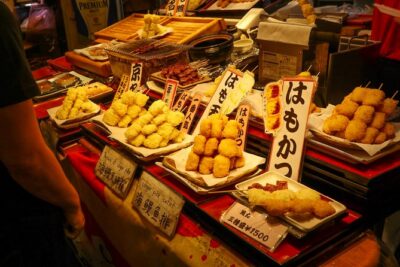
Nishiki Market Brunch Walking Tour (7 Tastings + Brunch)
Our verdict →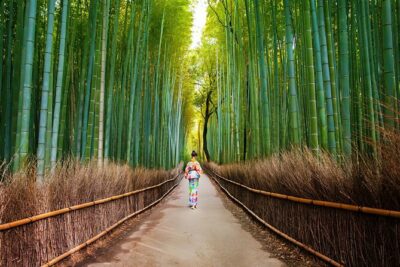
Kyoto Arashiyama Walking Tour: Bamboo, Monkeys, Gardens & Secrets
Our verdict →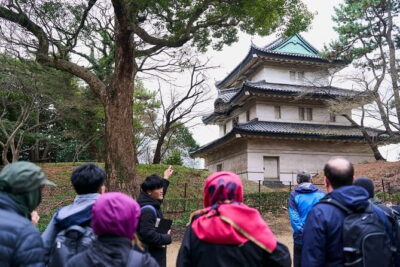
Tokyo Castle & Imperial PalaceーShogun Walking Tour
Our verdict →Browse the lists this tour appears in