
Reviewed · WALKING TOURS
Kyoto: Gion Magical Night Walking Tour
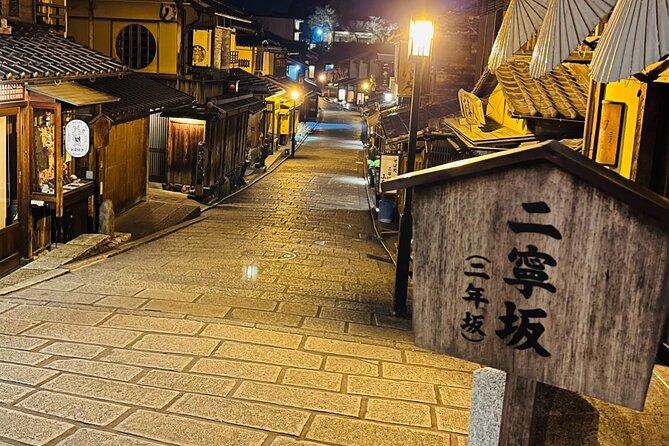
Gion feels most atmospheric after dark, when lanterns glow and the daytime crowds thin out. This walk takes you from the Minamiza Theater through geisha streets, shrines, pagoda views, and quieter corners that are easy to miss on your own.
I like the small group size, which makes it easier to ask questions without crowding the narrow lanes. I also like the range of guides, including Karen, Ricky, May, Hina, Sho, and Pam, whose personal stories and local knowledge can add character to the walk. The main drawback is the amount of walking, including slopes and stairs, and the exact route or timing may vary.
Key things to know before you book
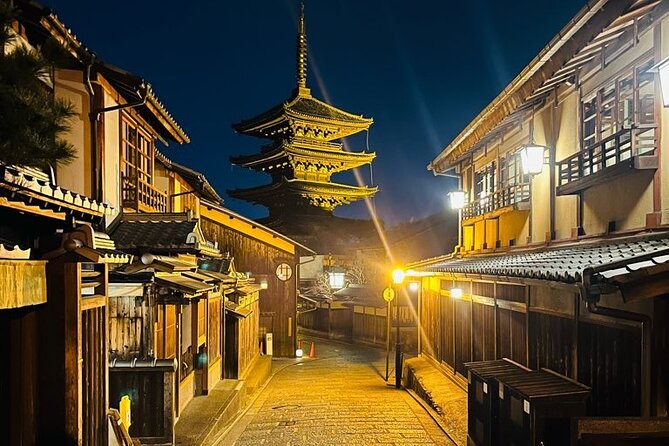
- Gion after dark: Lanterns, temple grounds, and quiet lanes give Kyoto a different mood from the daytime rush.
- Geisha culture explained: You learn about Maiko, Geiko, etiquette, and their place in Kyoto society.
- Small group format: The group is advertised at a maximum of eight, while the additional details allow up to ten.
- Several major sights: The route includes Gionmachi Minamigawa, Yasui-Konpiragu, Ninenzaka and Sannenzaka, nearby temples, and Yasaka Shrine.
- About 100 minutes on foot: Wear comfortable shoes and expect hills, stairs, and plenty of standing.
- Good value at $29.60: The price is modest for a guided introduction to one of Kyoto’s most famous districts.
Why Gion works better at night
Gion is often treated as a postcard of Kyoto: wooden facades, narrow lanes, shrine gates, and the possibility of seeing a Maiko or Geiko moving between appointments. In daylight, though, the district can feel crowded and hurried. This tour is designed for the quieter part of the day, with many departures taking place in the evening.
That timing matters. Streetlights and shrine lanterns change the mood of the neighborhood, and several stops look especially appealing after sunset. You get time for photographs without having to fight through the largest daytime crowds.
The tour is not a staged geisha show. It is a walking introduction to the district and the customs tied to it. If you are lucky, you might see a Maiko or Geiko. The proper response is simple: smile and say Konnichiwa. Do not block the path or treat anyone like a photo prop.
I particularly like that the walk connects geisha culture with ordinary religious life. You are not only looking at pretty streets. You are also hearing why people visit particular shrines, what certain rituals mean, and how Gion fits into Kyoto’s wider story.
More Walking Tours in Kyoto
- Kyoto Geisha Walking Tour: Gion District & Hidden Gems
★ 4.7 · 3,273 reviews - Kyoto: Gion Magical Night Walking Tour with Geisha Trivia
★ 4.9 · 2,393 reviews - Kyoto: Gion Geisha District Walking Tour – Stories of Geisha
★ 4.7 · 2,187 reviews
Starting at Minamiza Theater and Gionmachi Minamigawa
The meeting point is at the Minamiza Theater, near the east end of Shijo Bridge. This is a useful starting point because it puts you right beside one of Kyoto’s best-known entertainment districts.
From there, the route heads toward Gionmachi Minamigawa, one of Gion’s most famous streets. This is where the traditional wooden architecture and geisha associations become most obvious. The stop lasts about 10 minutes, enough for an introduction and photographs.
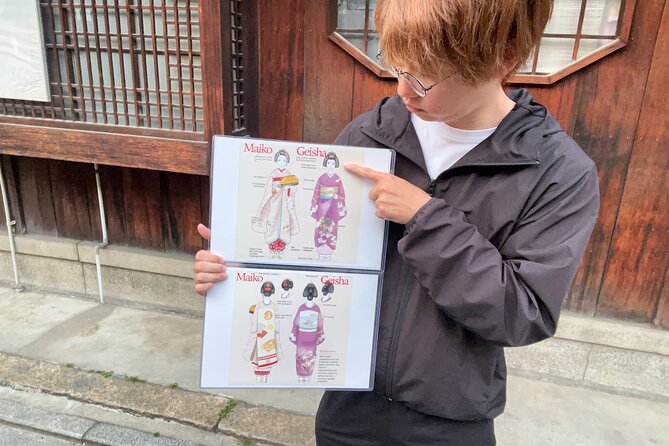
Your guide will explain how Maiko and Geiko fit into Kyoto’s cultural life. The distinction matters. Maiko are apprentice entertainers, while Geiko are fully trained professionals. The walk also helps you understand that these are working people, not costumed performers placed on the street for visitors.
This section can be busy even at night, depending on the departure time. You may see other small groups nearby. Still, a group of eight to ten is much easier to manage here than a large procession. You can hear the guide, stay out of doorways, and move through the lane with less fuss.
Guides have included Karen, Ricky, May, Hina, Sho, and Pam. The strongest accounts describe guides who answer questions, tell personal stories, and explain local customs in a friendly way. One guide was able to share family connections to geisha culture, while another used photographs and personal knowledge of the area to make the subject feel less distant.
Guide quality can vary, and one account noted that Sho was still building confidence in English. If you have a detailed question, ask it clearly and give the guide time to answer. The small group makes that exchange easier.
Yasui-Konpiragu and the meaning of cutting ties
The next stop is Yasui-Konpiragu, a shrine with a memorable purpose. It is associated with cutting off harmful relationships and strengthening good ones. That makes it a place of personal wishes, not simply another attractive religious site.
The shrine is also described as helping men and women meet. For couples, the prayer is meant to strengthen the bond. For someone hoping to end a damaging relationship, the symbolism points in the opposite direction.
You spend about 10 minutes here. That is enough for the guide to explain the shrine’s role and for you to take in the setting without turning the visit into a long ritual lesson.
This stop is one reason a guide adds value. If you walked through the area alone, you could easily admire the shrine and move on without knowing why people come here. The explanation gives the place a human purpose.
Expect uneven surfaces and some walking between stops. This is not a tour where you remain on a flat sidewalk the entire time. The guide keeps a steady pace, but you should be comfortable walking for close to two hours.
Sannenzaka and Ninenzaka, with views toward Yasaka Pagoda
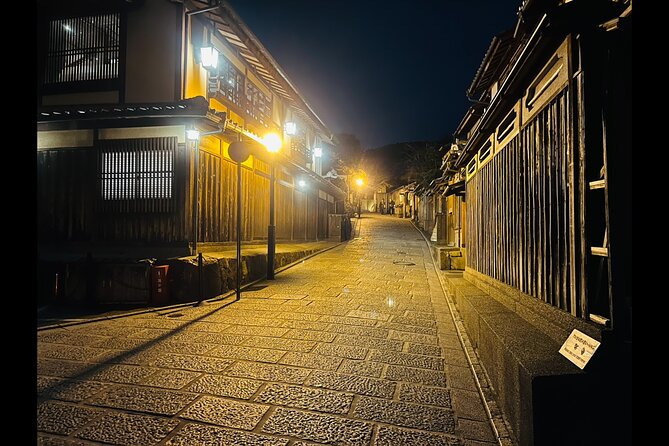
The route then reaches the Sannenzaka and Ninenzaka area, with about 20 minutes devoted to these traditional streets. The lanes lead toward Kiyomizu-dera Temple and are known for their preserved Kyoto townscape.
Yasaka Pagoda is the visual highlight here. Its shape rises above the surrounding buildings, and at night the combination of old streets, dark rooflines, and soft lighting makes this one of the best photo sections of the walk.
The setting is beautiful, but it is also where the physical demands become clearer. These streets include slopes and steps. You should wear shoes with good grip and avoid bringing anything awkward to carry. The tour is not recommended if you are uncomfortable with stairs or extended walking.
You may have less time here than you would on a private photography outing. The 20-minute stop is meant to give you an overview, a few stories, and photographs before the group continues. If you want long exposure shots or detailed architectural study, you may prefer to return on your own later.
Still, the guided context is useful. The streets are more than a backdrop for pictures. They form part of the approach to Kiyomizu-dera and show how Kyoto’s older neighborhoods connect temples, shops, homes, and religious sites.
Same trip, a completely different kind of day:
- PERFECT KYOTO 1-Day Bus Tour
★ 5.0 · 13,518 reviews - Kyoto: Fushimi Inari, Kinkakuji, Bamboo Grove 1 Day Bus Tour
★ 4.8 · 4,316 reviews - Kyoto: Tea Ceremony in a Traditional Tea House in Kiyomizu
★ 4.9 · 3,519 reviews - Kyoto: Tea Ceremony Ju-An at Jotokuji Temple
★ 4.9 · 3,207 reviews
Two quieter temple stops along the way
The route also includes two additional temple locations, though the supplied details do not identify them by name. One was built in 1955 to pray for the souls of people who died in World War II. Its main feature is a very large statue of Kannon, the Buddhist figure associated with compassion.
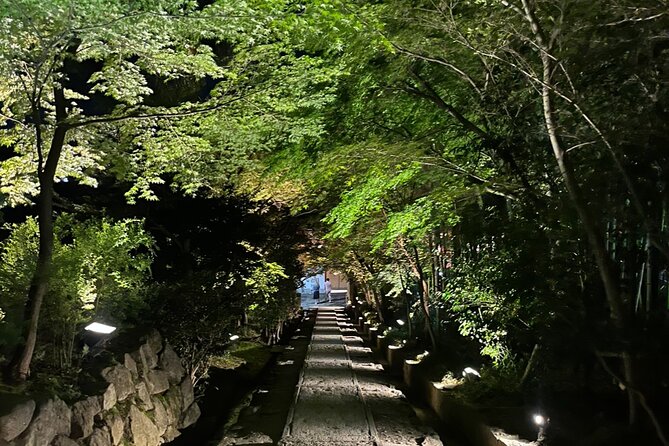
The other was built about 400 years ago by a shogun’s wife to mourn her husband. Its grounds include a garden, a 400-year-old tea ceremony house, and a bamboo grove.
These stops broaden the walk beyond Gion’s famous geisha image. You see how memorial prayer, gardens, tea culture, and family grief all form part of Kyoto’s religious life.
Because the tour lasts about 1 hour and 40 minutes, these sites are introduction points rather than full temple visits. You should not expect a long, unhurried exploration of every garden or building. The benefit is variety: the route moves from entertainment streets to shrines, memorial spaces, gardens, and Buddhist art.
At night, some details may be harder to see than they would be in daylight. The tradeoff is a calmer atmosphere. If your main goal is garden photography, visit during the day. If you want mood, quiet, and a wider cultural picture, the evening route makes sense.
Yasaka Shrine, Gion’s grand finish
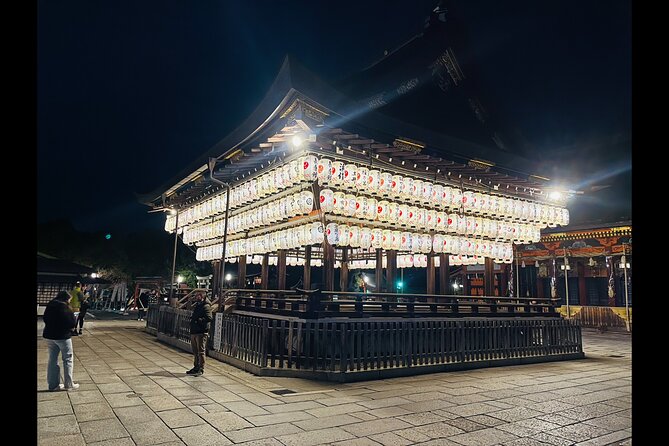
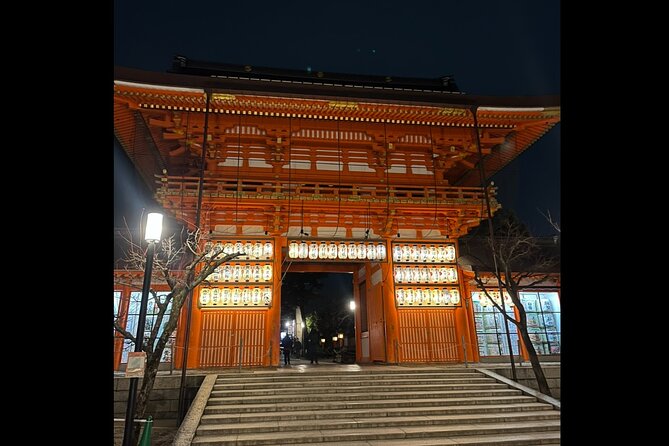
The final named stop is Yasaka Shrine, also called Gion-san. It is the head shrine of roughly 2,300 related shrines across Japan and is linked with prayers for protection from bad luck, good fortune, and beauty.
The shrine is free to enter, and the tour spends about 10 minutes there. Lanterns and shrine buildings can look especially striking at night, making this a fitting end to the walk.
Yasaka Shrine also helps tie the tour together. You have already seen streets associated with geisha culture and a shrine concerned with relationships. Here, the guide can place Gion within a larger network of religious practice that reaches far beyond this one neighborhood.
Ten minutes is enough to understand the site, but not enough for a full visit. If Yasaka Shrine interests you, I would return during the day or allow extra time before the tour. The guided walk gives you orientation, then you can decide what deserves a longer look.
The listed ending point is at 625 Gionmachi Kitagawa. That is helpful because you finish in central Gion rather than being taken back to the original meeting point. You can continue to dinner or return by public transportation, though the tour itself does not include transportation.
What the small group changes
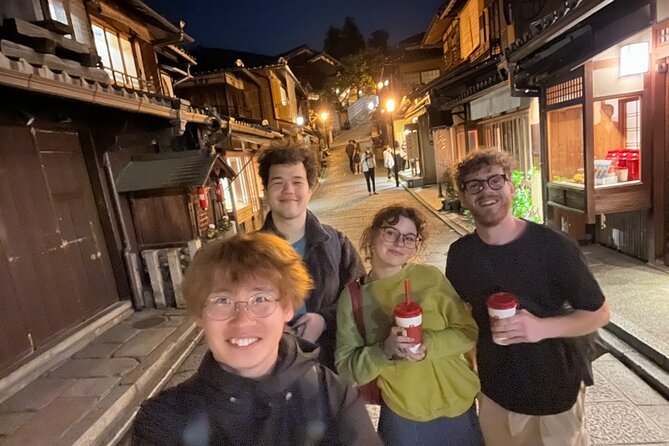
The experience is described as a maximum of eight people, while the additional information gives a maximum of ten. Either way, this is a small walking group rather than a large bus-style outing.
That difference is important in Gion. Narrow streets and working businesses do not suit a crowd. A smaller group lets the guide stop without blocking the lane, and it gives you a better chance to ask about geisha etiquette, shrine customs, and local buildings.
The group size also affects the tone. The best guides can adjust their explanations to the people in front of them. Families can ask questions, photographers can pause for a picture, and first-time visitors can request clarification without shouting over a large group.
There is one practical limit. A small group does not make the walk private. Other visitors may still be nearby, and the streets can still fill up depending on the time. Think of the format as more considerate and easier to follow, not as exclusive access.
Is $29.60 good value?
At $29.60 per person, this is a reasonable price for a guided walk lasting around 100 minutes. You are paying mainly for orientation and interpretation, not admission fees, since the listed stops are free.
I see the best value for first-time visitors to Kyoto. Gion can look simple on a map, but its shrines, streets, entertainment traditions, and etiquette are not always obvious. A good guide helps you understand what you are seeing and prevents the district from becoming a quick sequence of photo stops.
The value is also strong if you have only a short stay. The route brings together several major sights in one outing, including Gionmachi Minamigawa, Yasui-Konpiragu, Ninenzaka, Sannenzaka, Yasaka Pagoda, additional temples, and Yasaka Shrine.
The price is less compelling if you already know Gion well or want a slow, highly detailed temple visit. You could walk the streets independently for free, and you would have more control over how long to stay at each stop. The guide is what makes the fee worthwhile.
Walking comfort, timing, and weather
Plan on about 1 hour and 40 minutes, though one account expected a shorter walk and found the actual outing closer to two hours. Allow a little flexibility rather than scheduling a tight dinner reservation immediately afterward.
The route includes slopes and stairs. Comfortable shoes are essential. Most people can take part, but the experience is not a good fit if you are uneasy on hills or prefer a seated tour.
The walk requires good weather. If poor conditions cancel it, you are offered another date or a full refund. You can cancel for a full refund up to 24 hours before the start time. Within 24 hours, refunds are not provided, and late changes are not accepted.
The mobile ticket is convenient, and confirmation is provided when you book. Service animals are allowed, and the meeting point is near public transportation.
Rain does not always ruin the atmosphere. A light shower can make the lantern-lit streets feel even quieter, but you should bring an umbrella and wear shoes that handle wet pavement. Do not count on the tour running in severe weather.
Who will enjoy this walk most?
I would choose this experience for:
- First-time visitors who want a clear introduction to Gion
- People curious about Maiko, Geiko, and local etiquette
- Photographers who want nighttime views of pagodas and shrines
- Families with older children who can manage a long walk
- Visitors who prefer small groups to large sightseeing parties
- Anyone looking for a short evening activity after a day of temple visits
It may not suit you if you want a private tour, a full geisha performance, or extensive time inside each temple. It is also a poor match for anyone who has difficulty with stairs, slopes, or standing for long periods.
Children can enjoy it when the guide keeps the pace lively. One family found the guide patient with questions from 12 and 14 year olds. Younger children may find the walking and cultural explanations less engaging, especially late in the evening.
Should you book the Gion Magical Night Walking Tour?
Book it if you want a compact, affordable way to make sense of Gion after dark. The strongest parts are the small group, the nighttime setting, the range of religious sites, and the chance to learn about geisha culture without treating the neighborhood like a stage set.
Go in with realistic expectations. You are not guaranteed to see a Maiko or Geiko, the route involves hills and stairs, and the unnamed temple stops may receive only a brief introduction. Guide quality and English communication can vary, though several guides, including Karen, Ricky, May, Hina, Sho, and Pam, have led engaging walks.
For $29.60, I think it is a sound choice for a first visit, especially if you want context rather than another self-guided stroll. If you already know Kyoto’s eastern districts or prefer to linger at each shrine, save your money and explore independently.
FAQ
How long does the Gion Magical Night Walking Tour last?
The tour lasts approximately 1 hour and 40 minutes. One account found the actual walk closer to two hours, so allow some extra time afterward.
What is the price?
The price is $29.60 per person.
Where does the tour start?
The meeting point is the Minamiza Theater, at 198 Nakanocho, Higashiyama Ward, Kyoto, near the east end of Shijo Bridge.
Where does the tour end?
The tour ends at 625 Gionmachi Kitagawa in Kyoto’s Higashiyama Ward.
How large is the group?
The tour is described as having a maximum of eight people, while the additional information states a maximum of ten travelers.
Is the walk suitable for people who do not like hills or stairs?
No. Because the route includes slopes and stairs, it is not recommended for people who are uncomfortable with walking.
Can I cancel for a refund?
Yes. You can cancel at least 24 hours before the start time for a full refund. Cancellations or changes made within 24 hours are not refunded or accepted. If poor weather or an insufficient number of participants cancels the experience, you are offered another date or a full refund.
Just added around Kyoto
- Sekka Cotton Furoshiki Class★ 5.0 · 19 reviews
- Kyoto Sword Experience – includes Museum Ticket/Ninja Experience★ 4.5 · 149 reviews
- Scenic Green Tea Fields of Hidden Kyoto & Local Tea Exp (Private)★ 5.0 · 32 reviews
- Secret Eastern Kyoto Biking Adventure★ 5.0 · 44 reviews
- Private Sake Tasting in Central Kyoto with Sake Sommelier★ 5.0 · 32 reviews
- Samurai School in Kyoto: Samurai for a Day★ 5.0 · 202 reviews
- SHIRAKAWA Japanese Culture Experiences with private English staff★ 5.0 · 16 reviews
- A Privately Guided Photoshoot in Beautiful Kyoto by a Pro★ 5.0 · 18 reviews
Walking Tours, compared.
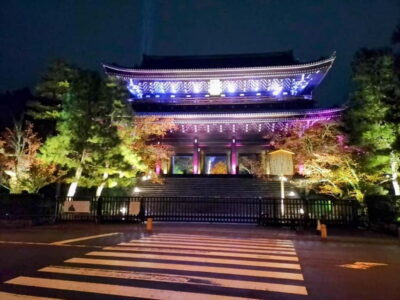
Kyoto Geisha Walking Tour: Gion District & Hidden Gems
Our verdict →
Imperial Palace and Shogun Historical Walking Tour
Our verdict →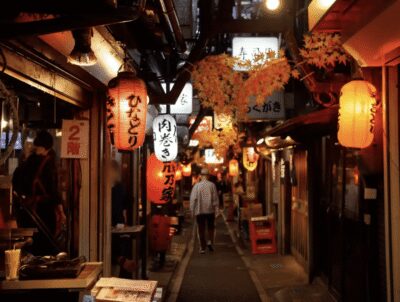
Shinjuku Local Bar and Izakaya Guided Walking Tour
Our verdict →

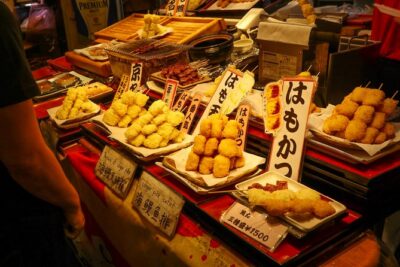
Nishiki Market Brunch Walking Tour (7 Tastings + Brunch)
Our verdict →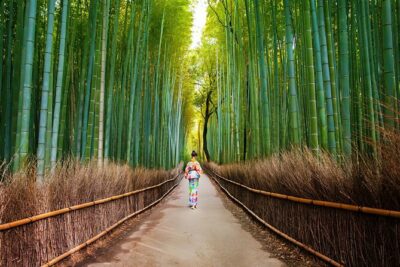
Kyoto Arashiyama Walking Tour: Bamboo, Monkeys, Gardens & Secrets
Our verdict →
Tokyo Castle & Imperial PalaceーShogun Walking Tour
Our verdict →Browse the lists this tour appears in