
Reviewed · TEMPLES & SHRINES
Kyoto Fushimi-Inari Night Walking Tour
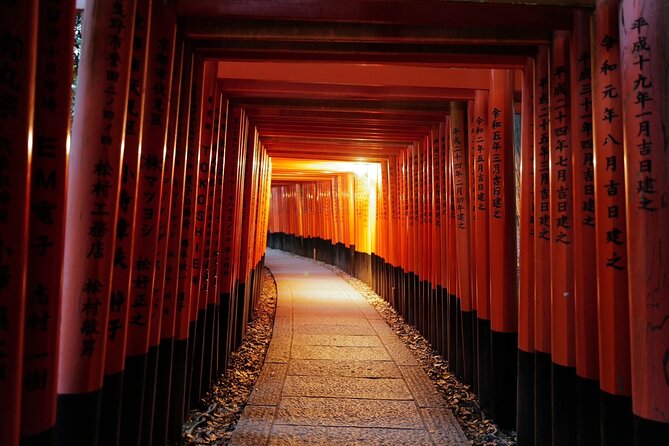
Fushimi Inari is famous for its long corridors of red torii gates, but the shrine feels very different after sunset. This small-group walk takes you along the paths when the heat has eased and the daytime crush begins to thin. The lantern-lit gates, stone fox statues, and wooded mountain route create a quieter setting for learning about Kyoto’s Shinto traditions.
I like the small group of no more than 12 because it gives you room to ask questions and stay close to your guide. I also like the practical cultural detail, from how to pray at different sites to what the fox statues represent. The main consideration is that this is a mountain walk, and much of it may take place in proper darkness, so good walking shoes and a light layer are wise.
Key points at a glance
- Nighttime changes the shrine completely: The red gates look more atmospheric under evening lights, while the paths grow quieter as the night goes on.
- Guides add the missing context: Hiro, Caleb, Tammy, Jem, Masaki, Yessi, Vincent, and others are praised for explaining customs, symbols, prayers, and local history in an easy-to-follow way.
- The walk reaches beyond the main entrance: You follow paths toward Mount Inari, passing smaller shrines, fox statues, and scenic points along the route.
- It suits curious first-time visitors: You’ll notice details you could easily pass on your own, especially around Shinto rituals and shrine architecture.
- Plan for uneven uphill walking: The tour lasts about 90 minutes to 2 hours, and the mountain paths can be dark after dusk.
- The price is reasonable for guided access: At $43.11 per person, the value lies in the interpretation, navigation, and small-group setting rather than admission, which is free.
Why Fushimi Inari works so well after sunset
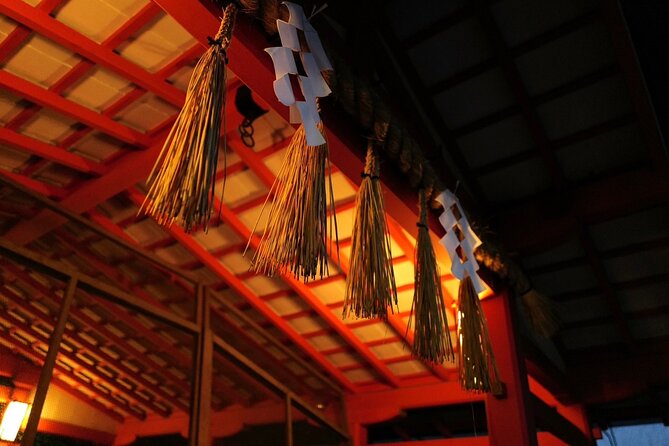
Fushimi Inari Taisha is one of Kyoto’s most recognizable sights. Its thousands of orange-red torii gates climb the wooded slopes of Mount Inari, creating a series of narrow passages that feel almost theatrical in the evening.
During the day, the shrine can be crowded. That affects the pace. You may spend more time waiting for a clear photo than looking at the gates themselves. This tour begins as dusk arrives, then continues into the night, when the number of people generally drops as you move farther along the route.
You should not expect complete solitude. One useful point from the experience details is that plenty of people may still be around at the beginning, especially at an early evening start. The paths become quieter later, but Fushimi Inari remains a major Kyoto attraction.
The nighttime setting is the real reason to book. The gates are lit, the air is cooler, and the shrine’s quieter corners become easier to notice. In summer, that cooler timing can be a real relief. In winter, bring layers. The route is outdoors and on the mountain, so evening temperatures may feel quite different from those in central Kyoto.
More Temple & Shrine Tours in Kyoto
- Kyoto: Fushimi Inari, Kinkakuji, Bamboo Grove 1 Day Bus Tour
★ 4.8 · 4,316 reviews - Kyoto: Tea Ceremony in a Traditional Tea House in Kiyomizu
★ 4.9 · 3,519 reviews - Kyoto: Tea Ceremony Ju-An at Jotokuji Temple
★ 4.9 · 3,207 reviews
Meeting the guide by the entrance fox
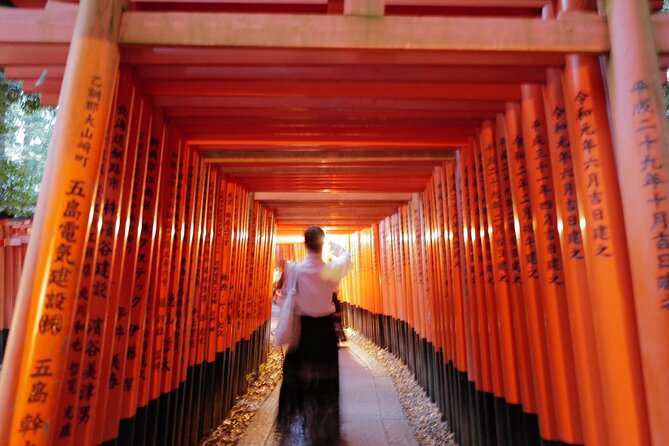
The meeting point is the fox statue at the entrance to Fushimi Inari Taisha, near Inari Station in Fushimi Ward. That detail matters because the shrine complex has many paths and entrances, and the fox statue gives you a clear landmark.
The tour ends back at the same meeting point. That makes the activity easy to fit into a Kyoto evening. You can arrive by public transportation, take the walk, then continue to dinner or return to your accommodation from the shrine area.
Give yourself enough time to find the entrance. The meeting point is written as Fukakusa Inarionmaecho, Kyoto 612-0881, beside Inari Station. If you are relying on a phone map, keep the meeting instructions available before you arrive. Some guides contact participants through WhatsApp to confirm the address and attendance, which can help avoid a rushed start.
The tour uses a mobile ticket, and confirmation is provided when you book. The group limit is 12 people. That is small enough for a guide to keep everyone together on the narrower sections and for you to hear explanations without standing right beside the guide.
Walking beneath the torii gates toward Mount Inari
The main event is the climb through the torii gates. Each gate is a donation from a person, family, or company, and the repeated structures form long orange-red tunnels through the trees. Your guide uses the route to explain why Fushimi Inari is linked with rice, agriculture, business, success, health, and happiness.
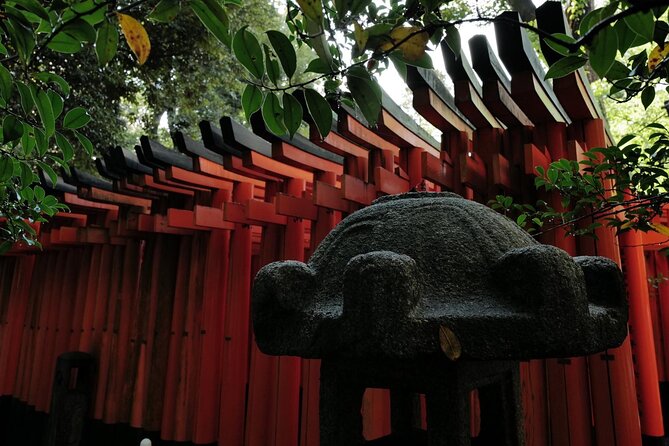
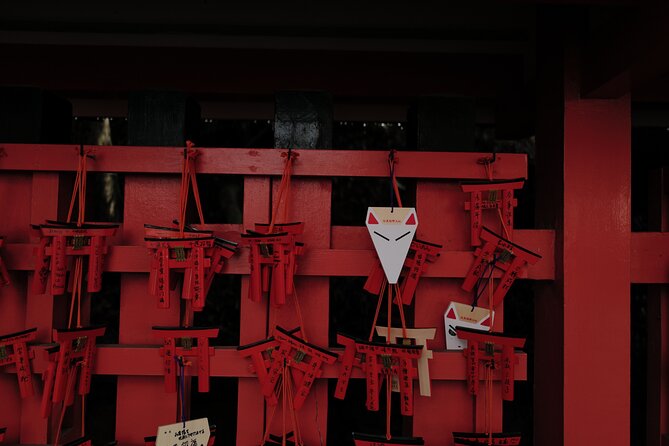
You will also encounter smaller shrines and stone fox statues. Foxes are closely tied to Inari worship, and the statues often hold symbolic objects. This is the kind of detail that can disappear when you are focused only on taking photos.
The route is not just a photo stop. It is a working religious site. You may see people praying, making offerings, or following shrine customs that are unfamiliar if you have only visited major tourist sights. Guides such as Yessi explain that different sites can have different prayer rituals, then show you how to approach them respectfully.
That practical instruction is one of the tour’s best features. It helps you understand what you are seeing without turning the shrine into a collection of decorative objects. You learn how to behave, what certain features mean, and why people continue to visit the mountain.
The walk may include scenic viewpoints and sections through the wooded mountain paths. The exact pace will depend on the group and the guide, but the total activity lasts roughly 1 hour 30 minutes to 2 hours. It is not a flat stroll around a city block. The route includes a small hike, and the surface can feel more demanding after dark.
What the guides add to the visit
The guides are the strongest part of this experience. Names associated with the tours include Hiro, Caleb, Tammy, Jem, Masaki, Yessi, Vincent, Cade, and others. Their styles vary, but the best qualities are consistent: clear explanations, patience with questions, and a willingness to point out small details.
Hiro is praised for explaining the shrine’s history, cultural importance, and traditions while helping visitors feel welcome in Japan. He also helps with navigation, which matters here. Fushimi Inari is easy to get turned around in, particularly once the paths become darker and the gates create a repeating pattern.
Caleb’s style is especially suitable for families or anyone who dislikes long lectures. He explains ideas in an accessible way, keeps the tour interactive, and gives enough information without burying the group in detail. One account also notes his musical life in Japan, a personal touch that can make the conversation feel less formal.
Tammy is described as attentive from the start, including confirming the meeting address before the tour. Jem brings an organized approach and keeps the group together while explaining the meaning of the shrine. Masaki combines cultural explanations with practical suggestions for food and other Kyoto sights.
Vincent is noted for being patient with photo stops. That may sound minor, but it is useful at Fushimi Inari. You will want pictures, and a guide who allows a moment to frame them properly makes the walk more pleasant.
The different guides mean the exact tone can vary. Some are more focused on history, while others add personal stories and local recommendations. Still, the repeated strength is interpretation that feels conversational rather than academic.
More Walking Tours in Kyoto
- Kyoto Geisha Walking Tour: Gion District & Hidden Gems
★ 4.7 · 3,273 reviews - Kyoto: Gion Magical Night Walking Tour with Geisha Trivia
★ 4.9 · 2,393 reviews - Kyoto: Gion Geisha District Walking Tour – Stories of Geisha
★ 4.7 · 2,187 reviews - Night Walk in Gion: Kyoto’s Geisha District
★ 4.5 · 2,003 reviews
Shinto customs you might otherwise miss
Fushimi Inari is dedicated to Inari, associated with rice, farming, commerce, and prosperity. People visit to pray for success, good health, happiness, and other forms of good fortune.
A guide can connect those broad ideas to what you see on the ground. The torii gates are not simply a repeated design. They mark movement into sacred space and reflect offerings made to the shrine. The foxes are not random decorations. They connect to Inari worship and help explain why the shrine looks different from many other religious sites in Kyoto.
You will also learn how to recognize smaller worship areas and how the rituals differ from one place to another. That information gives the walk a stronger sense of purpose. Instead of passing every side shrine on the way up, you have a reason to pause.
This is where the $43.11 price earns its keep. Admission to Fushimi Inari is free, so you are not paying for a ticketed attraction. You are paying for a guide who helps you read the site, navigate the mountain, answer questions, and make respectful choices. If you are happy to wander with a guidebook or phone notes, the cost may feel unnecessary. If you want cultural context, it is fair value.
Night photography, heat, rain, and walking comfort
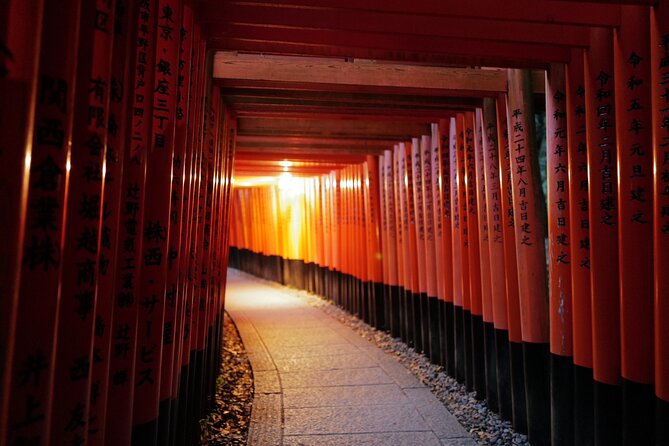
The gates photograph well at dusk and after dark, though the look is different from daytime images. Evening light adds atmosphere, and the lower crowds can make it easier to take photos without a stream of people passing through the frame.
Do not assume every tour takes place at twilight. One useful point is that some departures begin around 6 p.m., with sunset soon after, while other portions of the walk take place in full darkness. The paths have lighting, but you should still be comfortable walking at night.
The tour operates in different conditions. A rainy outing can still work, and the paths remain atmospheric, but wet surfaces and umbrellas make the uphill walk less convenient. Comfortable walking shoes are more important than stylish footwear. In December, layers are useful. In August, the later hour can help with the heat.
The route is suitable for most people, and service animals are allowed. Still, the phrase most people should not be read as a promise of an effortless walk. You should be prepared for a small mountain hike, uneven paths, and a slower pace if you stop for photos.
Who will get the most from this Kyoto walk
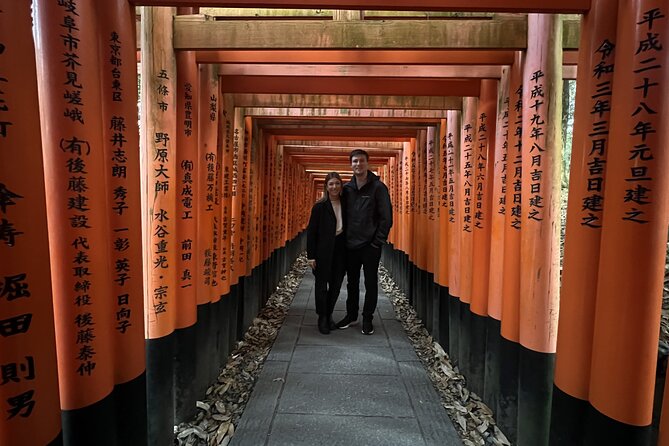
I would choose this tour if you are visiting Kyoto for the first time and want more than a quick photo at the lower gates. It is also a good fit if you are interested in Shinto, Japanese customs, religious architecture, or the way a major shrine functions beyond its famous image.
Families can benefit from the guided format, particularly with a guide who explains things in an interactive way. The small group also makes it easier to keep children within reach, though the length and uphill sections may not suit every young child.
Photographers should like the late timing, cooler air, and reduced crowd pressure. Just remember that night photography is not the same as daytime photography. The gates may be lit, but some areas will be dark and your guide may need to keep the group moving.
This is less suitable if you want a completely private walk, a flat route, or a long free period to explore at your own pace. The group may pause for explanation, and the guide sets the route. You also should not book it expecting the shrine to be empty. The tour reduces the crowd problem; it does not remove it entirely.
Small-group size, timing, and cancellation terms
A maximum of 12 participants is a useful middle ground. You receive a social experience without being placed in a large crowd, and the guide can generally answer questions without turning the walk into a public speech.
The duration is listed as approximately 1 hour 30 minutes to 2 hours. Allow the longer end when planning dinner or another evening booking. The tour finishes at its original meeting point, so you will need to account for your onward transportation afterward.
Free cancellation is available if you cancel at least 24 hours before the start time. Cancellations or changes made less than 24 hours ahead are not refunded or accepted. The cut-off follows local Kyoto time.
Should you book the Fushimi Inari night tour?
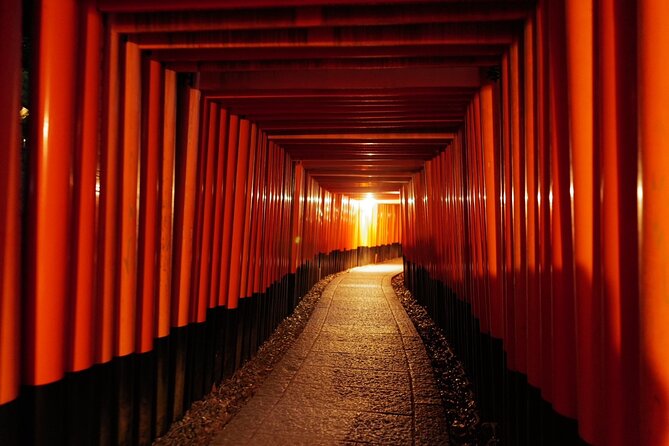
Book it if you want cultural explanation, evening atmosphere, and a manageable group size at one of Kyoto’s busiest sights. The guide’s help is especially valuable for understanding prayer rituals, fox symbolism, the purpose of the gates, and the smaller shrines along the mountain path.
At $43.11, the tour is not the cheapest way to see Fushimi Inari, since entering the shrine costs nothing. But it offers solid value if you want the site to make sense, prefer not to navigate the mountain alone at night, and appreciate a guide who can answer questions.
Skip it if you only want a quick daytime photo or dislike uphill walking. For everyone else, this is a smart evening choice, especially in hot weather or when Kyoto’s famous sights feel too crowded during the day.
FAQ
How long does the Fushimi Inari night tour last?
The tour lasts approximately 1 hour 30 minutes to 2 hours.
Where does the tour meet?
It meets at the fox statue at the entrance to Fushimi Inari Taisha Shrine, near Inari Station in Kyoto’s Fushimi Ward.
Where does the tour finish?
The activity ends back at the meeting point.
How large is the tour group?
The tour has a maximum of 12 participants.
Is admission to Fushimi Inari included?
Admission to Fushimi Inari Taisha Shrine is free. The tour price covers the guided walking experience.
Is this an easy walk?
The tour includes a small hike along paths leading toward Mount Inari. Good walking shoes are recommended, and you should expect some portions to be dark after sunset.
Can I cancel for a full refund?
Yes, if you cancel at least 24 hours before the experience start time. Cancellations or changes made less than 24 hours before the start are not refunded or accepted.
Just added around Kyoto
- Sekka Cotton Furoshiki Class★ 5.0 · 19 reviews
- Kyoto Sword Experience – includes Museum Ticket/Ninja Experience★ 4.5 · 149 reviews
- Scenic Green Tea Fields of Hidden Kyoto & Local Tea Exp (Private)★ 5.0 · 32 reviews
- Secret Eastern Kyoto Biking Adventure★ 5.0 · 44 reviews
- Private Sake Tasting in Central Kyoto with Sake Sommelier★ 5.0 · 32 reviews
- Samurai School in Kyoto: Samurai for a Day★ 5.0 · 202 reviews
- SHIRAKAWA Japanese Culture Experiences with private English staff★ 5.0 · 16 reviews
- A Privately Guided Photoshoot in Beautiful Kyoto by a Pro★ 5.0 · 18 reviews
Temples & Shrines, compared.

Tea Ceremony in a Traditional Tea House in Kiyomizu
Our verdict →

Meiji Shrine, Asakusa, Skytree Bus Tour and Cruise
Our verdict →
Fushimi Inari Hidden Hiking Tour (Private Option Available)
Our verdict →
Osaka/Kyoto:Kinkakuji,Arashiyama,FushimiInariShrine,NaraPark
Our verdict →
Nikko: Kegon Falls, Lake Chuzenji & Toshogu Temple
Our verdict →
Kamakura & Enoshima Day Trip including Temple Tickets
Our verdict →Browse the lists this tour appears in