
Reviewed · TEMPLES & SHRINES
Kyoto Early Bird Tour in Uji and Fushimi Inari
The best thing about this Kyoto tour is its timing. You visit Fushimi Inari Shrine and Uji in the morning, before the day’s heavier crowds fill the paths and temple grounds. I like the efficient route, which covers three major sights without forcing you onto an afternoon bus tour, and I like the small group limit of eight, which gives you room to ask questions. The drawback is that transportation costs an extra ¥390, and you finish in Uji rather than Kyoto.
I also like the balance between famous places and quieter corners. Byodoin Temple gives you a major UNESCO World Heritage Site, while Ujigami Shrine offers a calmer stop with old wooden buildings and mossy grounds. Guide Genki has earned special praise for explaining the difference between Shinto and Buddhism in clear, manageable pieces. Just expect a fair amount of walking and a moderate level of fitness.
Key points at a glance
- Three major sights in five and a half hours: Visit Fushimi Inari, Byodoin Temple, and Ujigami Shrine in one carefully timed morning.
- Early access matters: The morning schedule aims to reach the most popular sites before the largest crowds arrive.
- Byodoin admission is included: You do not need to wait in the regular ticket line for the temple entrance.
- A group of no more than eight: The smaller format makes it easier to hear the guide and ask questions.
- The tour ends at Uji Station: This is useful if you plan to continue exploring Uji, but you must arrange your own return to Kyoto.
- Budget for ¥390 in transport: The train or other local transportation is not included, and lunch is also your responsibility.
Why an early start changes Fushimi Inari
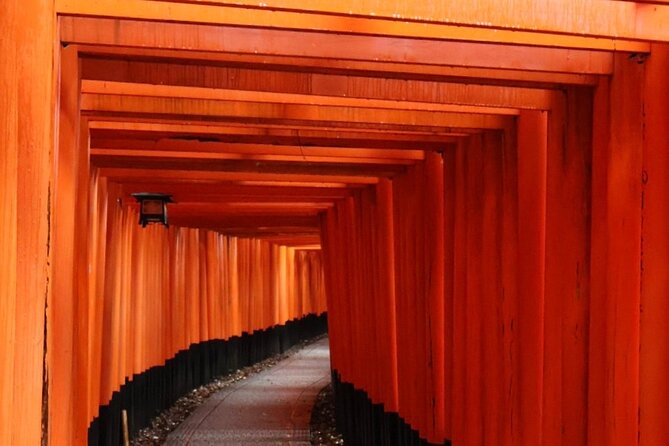
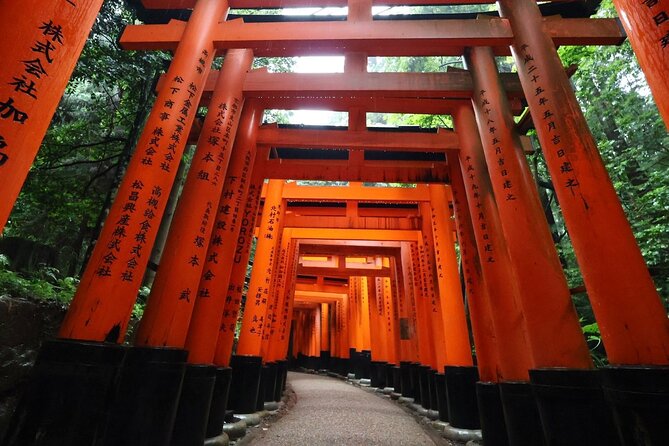
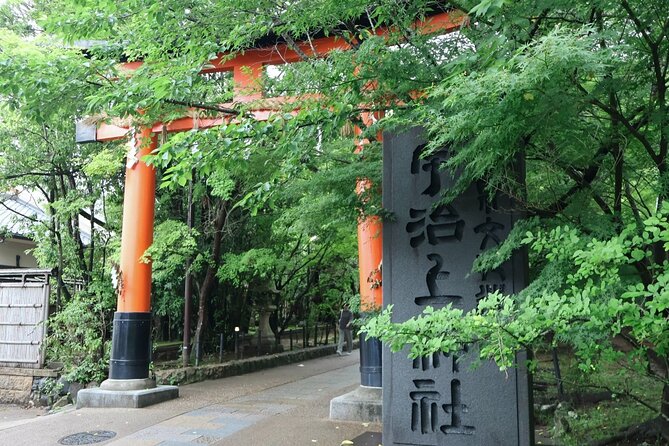
Fushimi Inari-taisha is one of Kyoto’s most recognizable sights. Its long corridors of red torii gates climb the wooded slopes behind the shrine, creating a place that feels both grand and intimate. The gates are donated by individuals and businesses, and together they form the visual signature that draws people here.
You have about 1 hour and 30 minutes at the shrine. That is enough time to walk through the lower torii paths, pause at the shrine buildings, and get a real sense of the place without trying to complete every trail on the mountain. Fushimi Inari is much larger than most first-time visitors expect, so a limited visit is best viewed as an introduction rather than a full hike.
The early timing is a real advantage. The main approach can become crowded later in the day, making it harder to enjoy the repeated gates or take clear photographs. In the morning, you have a better chance of finding breathing room along the paths. The tour does not promise an empty shrine, but its schedule is designed to avoid the busiest period.
Admission to Fushimi Inari is free. That keeps the cost of this stop low, but the value comes from having a guide explain what you are seeing and help you use your time well. The shrine is easy to recognize but less easy to understand at a glance. A good explanation can make the fox statues, torii, and religious customs more meaningful.
Wear shoes that are comfortable for walking. The route includes shrine paths and uneven ground, and you may want to walk farther than the basic group route if time allows. If you are hoping to reach the upper sections of the mountain, ask the guide how much free time remains before setting off. The schedule continues to Uji, so this is not a day for an unplanned full ascent.
More Temple & Shrine Tours in Kyoto
- Kyoto: Fushimi Inari, Kinkakuji, Bamboo Grove 1 Day Bus Tour
★ 4.8 · 4,316 reviews - Kyoto: Tea Ceremony in a Traditional Tea House in Kiyomizu
★ 4.9 · 3,519 reviews - Kyoto: Tea Ceremony Ju-An at Jotokuji Temple
★ 4.9 · 3,207 reviews
Byodoin Temple and the Phoenix Hall in Uji
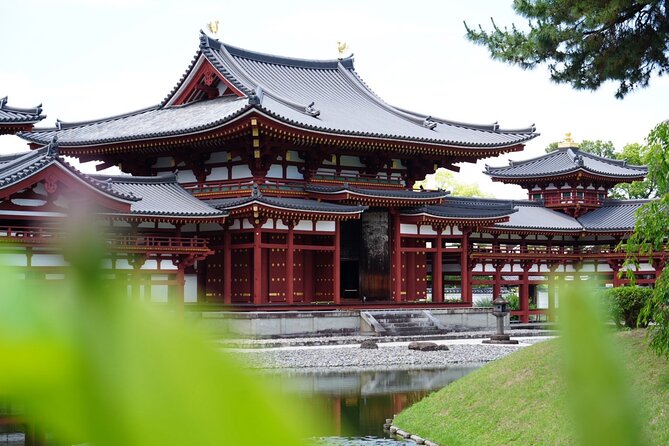
The move from Fushimi Inari to Uji shifts the mood. Uji is known for its temples, river setting, and long connection with Japanese culture, but this tour focuses on two important religious sites. The main event is Byodoin Temple, a UNESCO World Heritage Site and one of Kyoto’s most memorable cultural stops.
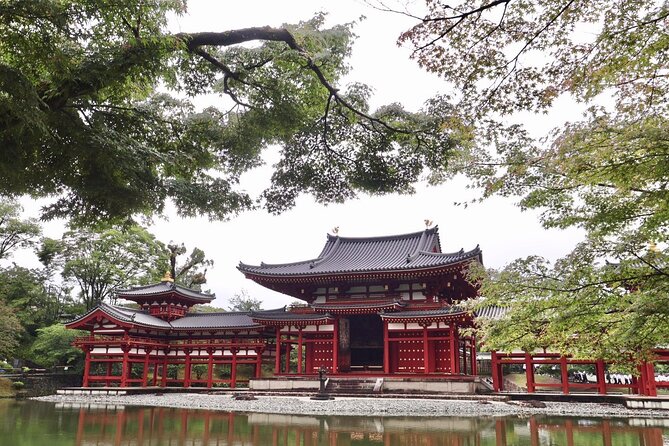
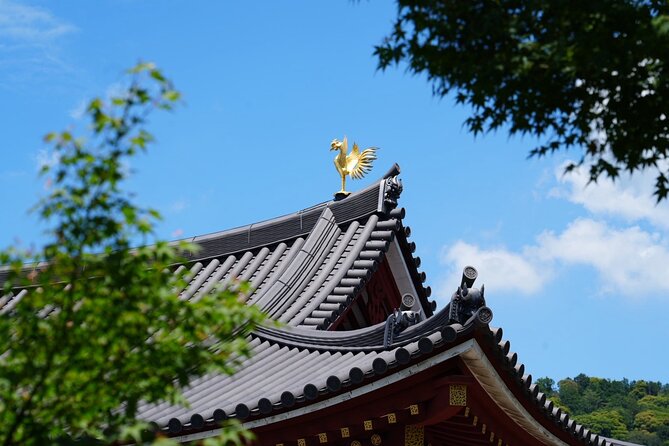
You have about 1 hour and 30 minutes here. The temple is famous for Phoenix Hall, the elegant building shown on the Japanese 10 yen coin. Seeing the actual structure after recognizing it from everyday currency gives the visit a pleasing sense of scale. The coin’s image is small and flat; the real hall sits within a carefully arranged temple setting and is much easier to appreciate when you can study its rooflines and balanced form.
Admission to Byodoin is included in the tour price. That is useful in two ways. First, it removes one extra expense. Second, it saves you from handling the ticket purchase during a tightly planned morning. The tour description specifically notes that you can avoid long ticket lines, a practical benefit at one of Uji’s most sought-after sights.
The guide can help connect the architecture to the Buddhist ideas behind it. This is one of the strongest reasons to choose a guided visit rather than simply arriving with a camera. The building is beautiful on its own, but the symbolism and setting are easier to appreciate when someone explains them in plain language.
Do not expect Byodoin to be a quick photo stop. Give yourself time to look at the temple from different angles and notice how the water and surrounding grounds frame Phoenix Hall. Since the stop lasts 90 minutes, you should have time to appreciate the main building without racing through the site.
There is one practical point to keep in mind. The tour includes entrance to Byodoin itself, but it does not include lunch, and the morning continues after the temple. If you need a substantial meal, plan to eat before the tour or after reaching Uji Station, depending on the day’s schedule and your guide’s directions.
Ujigami Shrine, a quieter finish
Ujigami Shrine gives this tour a useful change of pace. After the famous torii gates and the iconic Phoenix Hall, you reach a smaller, more peaceful religious site. It is described as Japan’s oldest standing shrine, with centuries-old wooden architecture and moss-covered grounds.
You have another 1 hour and 30 minutes here, which is generous compared with the time many independent visitors might spend at a smaller shrine. That extra time lets you slow down. Instead of collecting another quick photograph, you can look at the woodwork, absorb the quiet, and ask the guide about Shinto customs.
Ujigami Shrine is free to enter. Its appeal is not a single blockbuster building or famous view. The pleasure comes from the atmosphere and the contrast with Fushimi Inari. At Fushimi Inari, the red gates create a dramatic procession. At Ujigami, the feeling is more restrained and reflective.
This stop also makes the tour feel less like a checklist. You get the big-name Kyoto sight, the UNESCO temple, and then a place that rewards patience. If your idea of a good tour includes a little quiet time, Ujigami Shrine may be the stop you remember most clearly.
The downside is that anyone mainly interested in headline attractions might find this stop less immediately impressive. Its value depends on your interest in traditional architecture, religious spaces, and slower sightseeing. I would not choose this tour if you want only the most famous photo locations and no interpretive time.
A guide who explains Shinto and Buddhism clearly
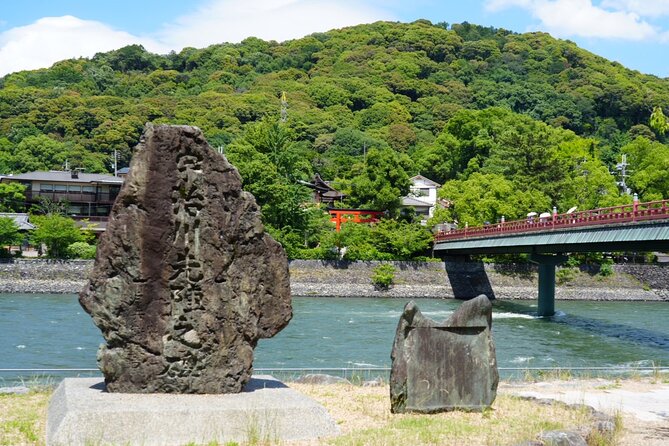
The guide can make or break a temple tour. Here, Genki is the guide name most closely associated with the experience, and the feedback describes him as warm, engaging, caring, and clear. Most useful is his approach to explaining the differences between Shinto and Buddhism without loading the visit with too many facts.
That matters in Kyoto. A shrine and a temple are not simply two versions of the same attraction, but the distinction can be confusing when you are moving quickly between sites. The tour’s route gives you several chances to compare the two traditions in their actual settings.
I especially like the reported teaching style: enough information to understand what you see, but not so much that the details blur together. That is the right approach for a five-and-a-half-hour tour. You can ask follow-up questions as they come up, and the group size helps keep the conversation personal.
The small group is limited to eight people. This is not a private tour, but it is small enough that you should be able to hear the guide and get answers without shouting from the back. It also makes moving between sights less cumbersome than a large bus group.
Guide assignments can vary, so Genki may not be the person leading every departure. Still, his strong feedback gives you a useful sense of the standard this experience aims for: approachable explanations, attention to the group, and a focus on cultural meaning rather than only photographs.
Same trip, a completely different kind of day:
- PERFECT KYOTO 1-Day Bus Tour
★ 5.0 · 13,518 reviews - Kyoto Geisha Walking Tour: Gion District & Hidden Gems
★ 4.7 · 3,273 reviews - Kyoto: Gion Magical Night Walking Tour with Geisha Trivia
★ 4.9 · 2,393 reviews - Kyoto: 45-Minute Tea Ceremony Lesson Experience
★ 4.3 · 2,378 reviews
What the $55.18 price includes
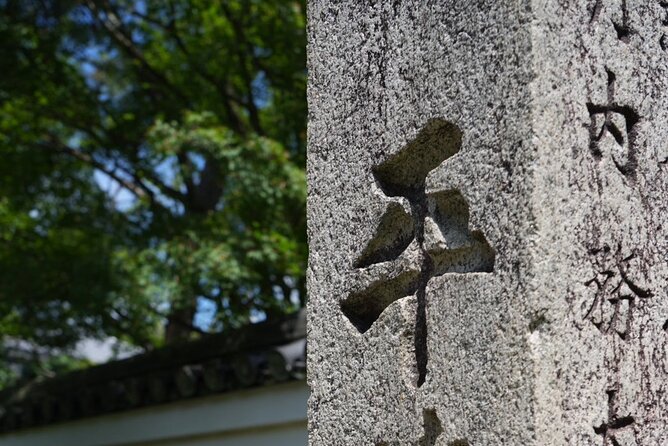
At $55.18 per person, this is a reasonably priced half-day guided outing, especially because Byodoin Temple admission is included. You are paying for an English-speaking guide, route planning, interpretation, and access to three major sites in one morning.
The price does not include the ¥390 transportation fee. That amount is modest, but it should be part of your calculation. Lunch is also not included. Since the tour ends at Uji Station, you may want to budget for food afterward, particularly if you plan to continue around Uji.
The strongest value comes from the route. Reaching Fushimi Inari and Uji independently is possible, but you would need to check train connections, manage the timing, buy Byodoin admission, and decide how long to spend at each stop. If you are comfortable doing all that, a self-guided visit may cost less. If you want context and a smooth morning, the guided price is fair.
The tour is also well suited to a first visit. You can see major highlights without spending an entire day on transportation planning. Since the average booking time is 62 days ahead, popular dates may fill early, so it is sensible to reserve ahead if your Kyoto schedule is fixed.
Starting at Kyoto Station and ending in Uji
The meeting point is Kyoto Station, at Higashishiokoji Kamadonocho in Shimogyo Ward. Kyoto Station is a practical place to begin because it is a major transport hub, but allow enough time to find the exact meeting point. The tour has a fixed morning schedule, so arriving late could affect the whole group.
The end point is Uji Station, at Otsukata Uji. This is an important detail when planning your day. You are not returned to Kyoto with the group, and the guide will not take the train back with you. The guide can explain how to return, but you will make the journey independently.
That ending can be an advantage. Uji is worth more than a quick pass between stations, and you may want to remain in the area after the tour. It can also be inconvenient if you have a lunch reservation or another Kyoto activity immediately afterward. Leave a time cushion rather than booking something tight across town.
The included transportation arrangement is limited to the tour’s transport needs, with ¥390 listed as an additional per-person fee. Confirm the payment details when booking so you know how the transport charge will be handled.
Who will enjoy this Kyoto morning
I would choose this tour if you want a compact introduction to Kyoto’s religious sites and prefer a guide over independent research. It is particularly useful for first-time visitors who want Fushimi Inari and Byodoin on the same day without dealing with every timing decision themselves.
It also suits you if you value cultural explanation. Genki’s clear comparison of Shinto and Buddhism is exactly the sort of context that turns a pretty walk into a more informed visit. The small group makes it easier to ask about customs, architecture, and the purpose of the places you enter.
You should think twice if you dislike early starts, walking, or fixed schedules. The tour does not leave much room for lingering at one stop while skipping another. It is also not ideal if you need a round trip from Kyoto included, since the day ends at Uji Station.
A moderate fitness level is requested. The information provided does not give a detailed accessibility assessment, so ask the operator if you have specific mobility needs. Fushimi Inari includes sloping shrine paths, and all three stops involve walking.
Should you book the Uji and Fushimi Inari tour?
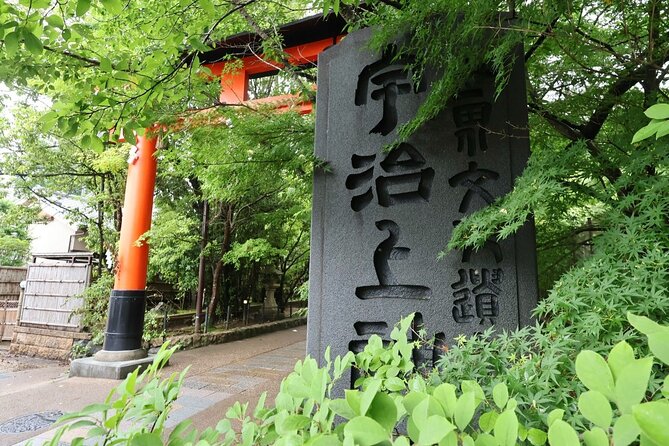
Book it if you want a well-paced morning that combines Kyoto’s famous red torii gates with Uji’s grand temple and quieter shrine. The small group, included Byodoin admission, and strong guide feedback make the $55.18 price attractive for visitors who want explanation as well as sightseeing.
Skip it if you prefer to set your own pace, need a round-trip transfer to Kyoto, or want a leisurely meal built into the experience. For everyone else, this is a smart way to connect two areas that are easy to combine on a map but harder to time well in practice. Plan for ¥390 in transport, wear good walking shoes, and treat the Uji ending as a chance to keep exploring rather than a complication.
FAQ
How long does the Kyoto Early Bird Tour last?
The tour lasts approximately five hours and 30 minutes.
Where does the tour begin?
It begins at Kyoto Station, at Higashishiokoji Kamadonocho in Kyoto’s Shimogyo Ward.
Where does the tour end?
The tour ends at Uji Station. The guide can provide directions for returning to Kyoto, but will not take the train back with the group.
What attractions are included?
The tour visits Fushimi Inari-taisha Shrine, Byodoin Temple, and Ujigami Shrine.
Is admission to Byodoin Temple included?
Yes. The entrance fee to Byodoin Temple is included in the tour price.
Is transportation included?
A transportation fee of ¥390 per person is listed separately and is not included in the tour price. Lunch is also not included.
How large is the group?
The tour has a maximum of eight travelers and includes an English-speaking guide.
Just added around Kyoto
- Sekka Cotton Furoshiki Class★ 5.0 · 19 reviews
- Kyoto Sword Experience – includes Museum Ticket/Ninja Experience★ 4.5 · 149 reviews
- Scenic Green Tea Fields of Hidden Kyoto & Local Tea Exp (Private)★ 5.0 · 32 reviews
- Secret Eastern Kyoto Biking Adventure★ 5.0 · 44 reviews
- Private Sake Tasting in Central Kyoto with Sake Sommelier★ 5.0 · 32 reviews
- Samurai School in Kyoto: Samurai for a Day★ 5.0 · 202 reviews
- Samurai Performance and Casual Experience: Kyoto Ticket★ 4.5 · 115 reviews
- SHIRAKAWA Japanese Culture Experiences with private English staff★ 5.0 · 16 reviews
Temples & Shrines, compared.

Tea Ceremony in a Traditional Tea House in Kiyomizu
Our verdict →
Meiji Shrine, Asakusa, Skytree Bus Tour and Cruise
Our verdict →
Fushimi Inari Hidden Hiking Tour (Private Option Available)
Our verdict →
Osaka/Kyoto:Kinkakuji,Arashiyama,FushimiInariShrine,NaraPark
Our verdict →
Nikko: Kegon Falls, Lake Chuzenji & Toshogu Temple
Our verdict →
Kamakura & Enoshima Day Trip including Temple Tickets
Our verdict →Browse the lists this tour appears in