
Reviewed · WORKSHOPS
Kyoto: Beginner Knife Sharpening & Handle Fitting Workshop
A Kyoto knife workshop gives you something more useful than a souvenir: a practical skill and a blade you helped finish yourself. You begin with a short look at Japanese knife history, then work through sharpening and handle fitting under close instruction. The small group, limited to three people, keeps the lesson personal.
I like the clear beginner-friendly teaching, especially the chance to practice on demonstration knives before touching your own blade. I also like that the standard price includes the knife, sharpening, magnolia handle, apron, working uniform, and engraving. The main consideration is smoke from the handle-fitting work, so wear clothes you do not mind smelling smoky.
Key points at a glance
- Choose your own knife: Pick a Santoku, Deba, or Yanagi blade for the workshop.
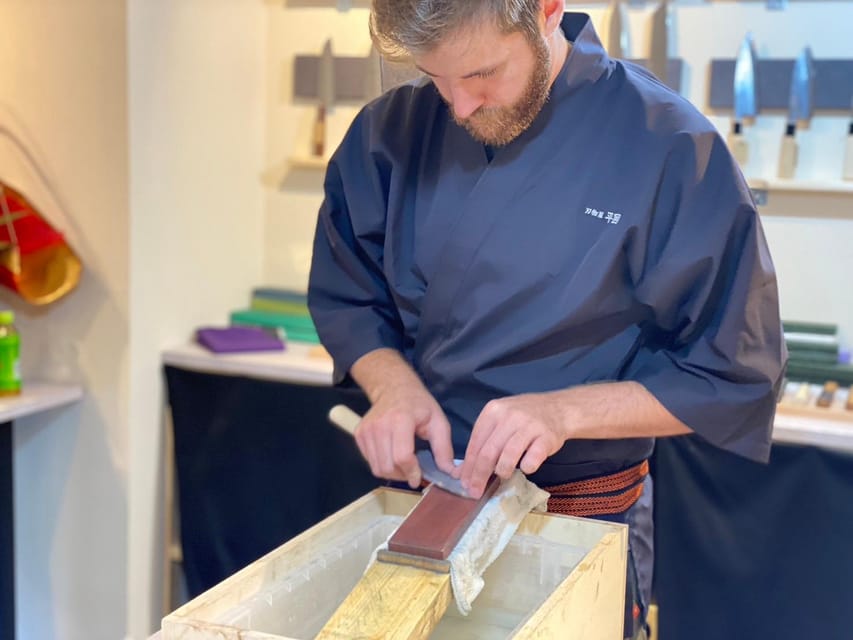
- Learn wetstone sharpening: The instructor demonstrates the method, then corrects your hand position and technique.
- Fit a magnolia handle: You attach the included handle and can pay extra for another style.
- Take home a working souvenir: Your finished knife is packaged for you after the session.
- Small and personal: Groups are limited to three, with English and Japanese instruction.
- Plan for a little smoke: Fire is used during handle fitting, so dress accordingly.
A Kyoto souvenir you can actually use
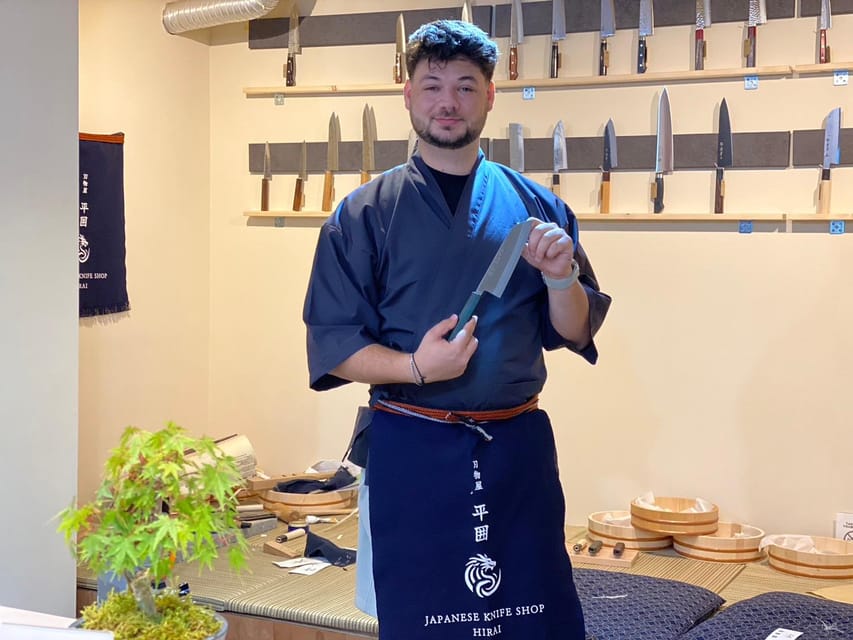
Many Kyoto souvenirs sit on a shelf and gather dust. This one can go straight into your kitchen. The workshop at Japanese knife shop HIRAI teaches you how to sharpen a blade, fit its handle, and care for it properly. You leave with a knife that has a story attached to it, not just a shop receipt.
The two-hour format works well for a Kyoto itinerary. It is long enough to learn the basic movement and complete the handle fitting, but short enough to fit between sightseeing stops. You go directly to the shop rather than meeting a guide elsewhere. Look for the white storefront curtain on the building, and arrive five minutes early so the session can start on time.
The setting near Nishiki Market can make the shop a little hard to spot at first. Give yourself extra time, especially if you are arriving through the crowded market area. This is not a tour that sweeps you through several sights. It is a focused workshop where the value comes from using your hands.
A few more Kyoto half-days worth comparing
- PERFECT KYOTO 1-Day Bus Tour
★ 5.0 · 13,518 reviews - Kyoto: Fushimi Inari, Kinkakuji, Bamboo Grove 1 Day Bus Tour
★ 4.8 · 4,316 reviews - Kyoto: Tea Ceremony in a Traditional Tea House in Kiyomizu
★ 4.9 · 3,519 reviews
What happens during the two hours
The lesson begins with an explanation of Japanese knives and their history. This gives the tools some context before you start working. You learn why different blade shapes exist and how the knife you choose relates to its intended use.
You then select one knife from three standard options:
- Santoku: A general-purpose kitchen knife, often the easiest choice if you want one blade for everyday cooking.
- Deba: A heavier knife associated with fish preparation.
- Yanagi: A long, narrow knife traditionally used for slicing.
The choice matters because these knives have different shapes and purposes. If you mainly want a useful home kitchen knife, the Santoku is the straightforward pick. If you already cook fish or want a more specialized blade, the Deba or Yanagi may be more appealing. The workshop gives you a chance to ask questions before settling on one.
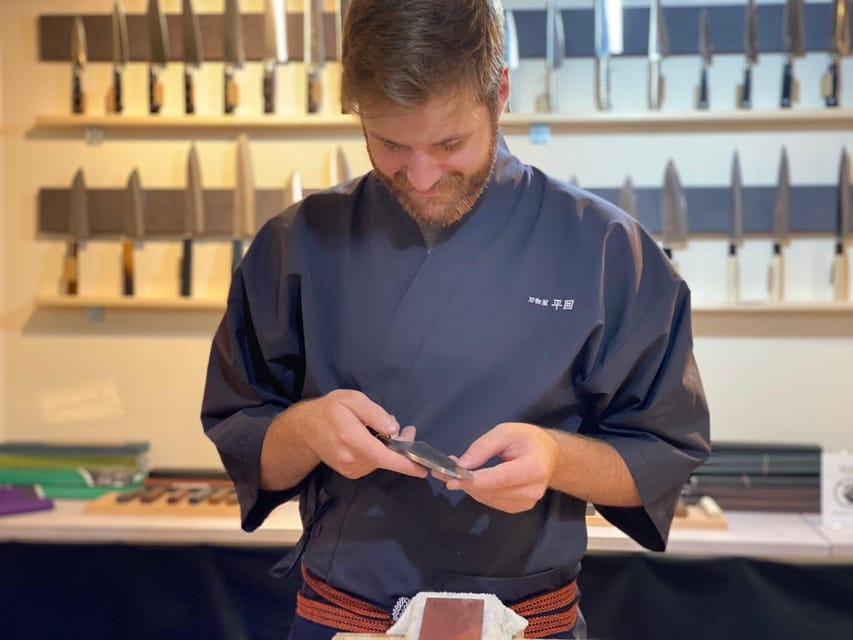
The sharpening lesson starts with a demonstration. You first see how to place and move the blade, then practice with the whetstones supplied by the shop. You do not need to bring your own stone. The instructor watches your technique and offers corrections, which is important because sharpening can look simple until you try to hold the angle consistently.
The teaching is hands-on rather than a quick lecture. The instructor may use demonstration knives first, allowing you to feel the motion before working on your own blade. This is a good arrangement for beginners who have watched online videos but still feel unsure about pressure, angle, or blade movement.
Once your technique is on track, you sharpen your selected knife. Do not expect to become a professional sharpener in two hours. You can, however, learn a usable foundation and gain the confidence to continue at home. The most useful part is the immediate feedback. An instructor can spot a small mistake in your hand position much faster than a video can.
The handle-fitting work adds a personal touch
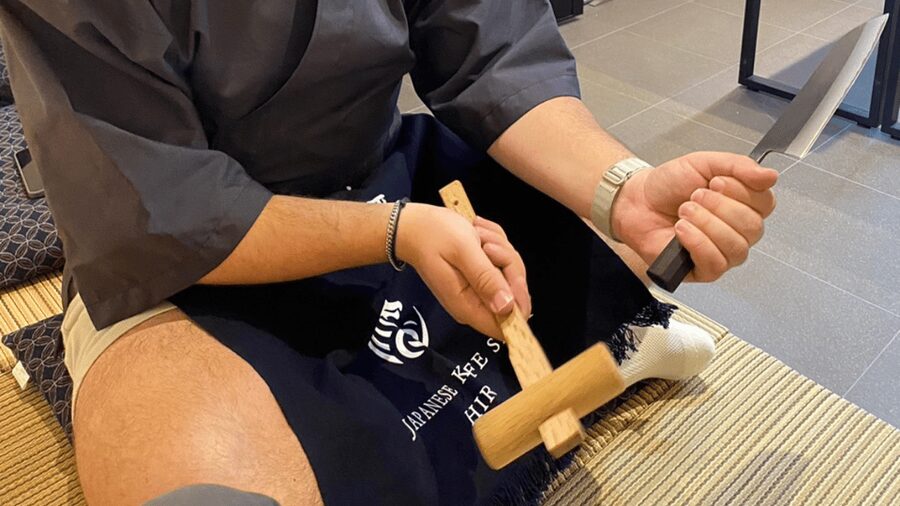
After sharpening, you move to the handle-fitting section. The included handle is made from magnolia wood, a simple and traditional choice. You select the handle and fit it to the blade with help from the instructor.
This part makes the workshop feel different from simply buying a Japanese knife. You are not only choosing an object from a display. You are taking part in the final assembly. That small act gives the knife a personal connection to your time in Kyoto.
Fire is used while fitting the handle, and smoke may come out. The smell can cling to clothing, so wear something you are happy to expose to smoke. Smoking, alcohol, drugs, pets, baby strollers, and loud behavior are not allowed, which suits the careful nature of the work.
The standard magnolia handle is included. You can choose another type if you pay an additional fee, but the extra cost depends on the handle you select. Ask about upgrades before the handle work begins if you are considering one. Some people choose to upgrade the blade or handle, but you should feel no pressure to do so. The included choices are designed to make the workshop worthwhile on their own.
Why the sharpening lesson is worth your time
A Japanese kitchen knife is only as useful as its edge. Buying a good blade without learning basic care can leave you with an expensive tool that slowly becomes dull. This workshop addresses that problem directly.
I especially like the way the lesson lowers the barrier for people who have been intimidated by whetstones. Beginners often worry that one wrong move will damage the blade. Careful demonstrations, practice knives, and corrections make the process feel more manageable.
The instructor also checks your progress. That matters because sharpening is partly about touch. You need to notice how the blade meets the stone and learn when the edge is changing. Written instructions can help later, but the physical correction during class is the part you cannot get from a video.
Bring your attention, not just your camera. The work requires concentration, and the pace may feel slower than a typical sightseeing activity. That is part of the appeal, but it may not suit someone who wants a fast, casual stop. You will get more from the class if you are willing to follow instructions carefully and repeat the movement.
Some practical follow-up material would be useful after the session, since the techniques can be easy to forget. You may want to take mental notes or ask the instructor to repeat the steps before leaving. The workshop gives you the basic skill, but regular practice at home will make it more natural.
More Hands-On Experiences in Kyoto:
- Kyoto: 45-Minute Tea Ceremony Lesson Experience
★ 4.3 · 2,378 reviews - Ramen Cooking Class at Ramen Factory in Kyoto
★ 5.0 · 1,937 reviews - Kyoto : Chopsticks Making Workshop in Gion with Engraving Option
★ 5.0 · 958 reviews - Kyoto: Samurai Sword Class by Experts in Traditional Arts
★ 4.9 · 657 reviews
English instruction and a very small group
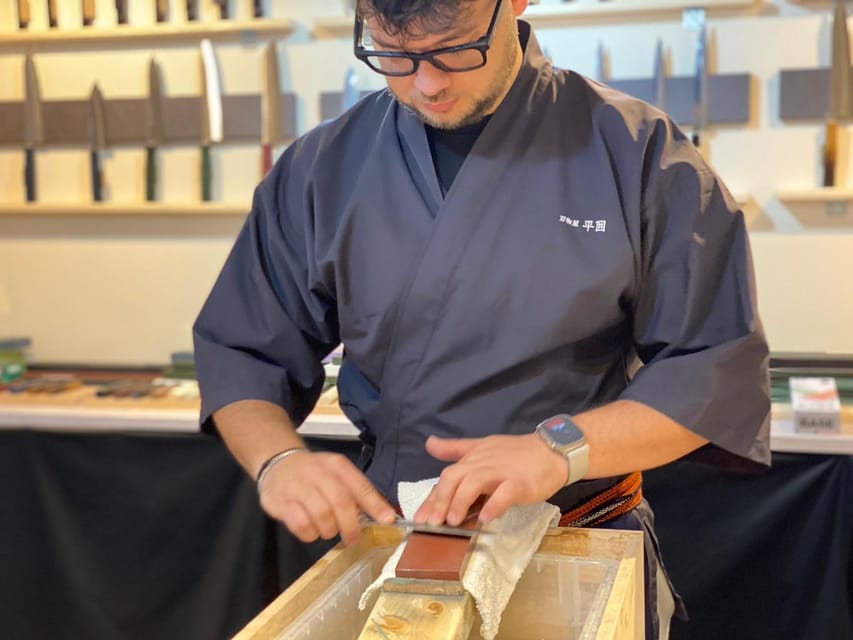
Instruction is available in English and Japanese. Communication is especially important here because the work involves safety, hand position, and precise movement. English-speaking visitors have been guided through the process by instructors and translators, and Julio is one instructor named in the experience feedback for his patient, clear teaching.
The group limit is three participants. That is a major advantage over a large class. You have room to ask questions, and the instructor can watch your sharpening rather than speaking to a room full of people. It also keeps the atmosphere quiet enough for careful work.
The small group does not mean the session will be completely private. You share the workshop with other participants, and your pace may differ from theirs. Still, three people is small enough for individual attention. It also makes this a good choice for a couple or a small family group with older teenagers.
The minimum age is 15. The activity is not suitable for wheelchair users or people over 80, according to the supplied participation information. If you have mobility concerns, check before booking rather than assuming the shop layout will work for you.
What you receive for $161
The price is $161 per person. That is not a cheap two-hour activity, but the calculation is different from paying for a class alone. You receive a knife, sharpening instruction, a magnolia handle, use of the shop’s whetstones, a working uniform and apron, the workshop fee, and engraving if requested in advance.
The included knife is the main reason the price can make sense. Several participants found the experience good value because the cost was not much more than buying a knife without the lesson. You leave with both a physical product and a skill you can use on other blades.
The value is strongest if you already cook or want to learn basic knife care. If you have no interest in cooking, sharpening, or Japanese blades, the price may feel high for a souvenir. In that case, simply visiting a knife shop and buying a blade would be the simpler option.
You are free to buy additional knives in the shop, but those purchases are not included. The same applies to upgraded handles. Set a spending limit before you arrive if you are easily tempted by fine Japanese cutlery. The shop has other knives available, yet the workshop does not require an extra purchase.
Engraving and taking the knife home
Engraving is included, but you must request it in advance and provide the characters you want, up to four letters. This is a useful detail to handle before your visit. A short name, initials, or a compact word will work within the stated limit.
At the end, the shop packages the knife for you and you take it home. That final step turns the class into a lasting Kyoto keepsake. You can remember the market area, the lesson, and the effort involved each time you use the blade.
Check any airline or customs requirements that apply to your own trip before carrying a knife home. The activity information confirms that the knife is packaged, but it does not give specific airline or customs advice. Keep the knife packaged and follow the rules that apply to your route.
Clothing, timing, and finding the shop
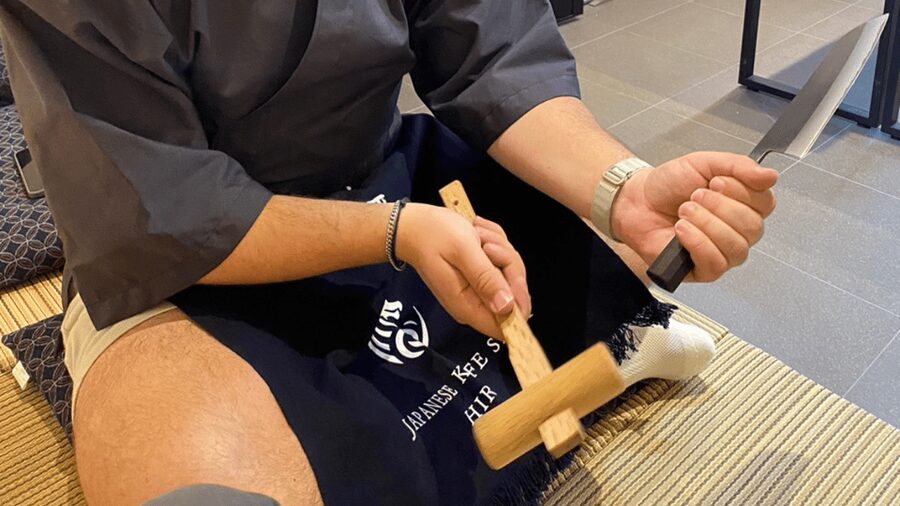
Wear clothes you do not mind getting smoky. The handle fitting uses fire, and smoke may appear. An apron and Japanese working uniform are provided, but those items do not necessarily protect every layer of clothing from the smell.
Arrive at least five minutes before your booking. This is a small request, but it matters when the session has only two hours and several practical steps to cover. Late arrival could reduce your time for the demonstration or sharpening work.
The meeting point is the shop itself. Look for the white storefront curtain on the building. Since the shop is in the Nishiki Market area, busy foot traffic can make the entrance easy to miss. I would not schedule the workshop with a tight connection to another reservation.
The experience lasts two hours, and starting times vary. Check availability for the day you want. Free cancellation is available up to 24 hours before the activity for a full refund, and you can reserve now and pay later. Those terms help if your Kyoto plans are still shifting.
Who should book this workshop?
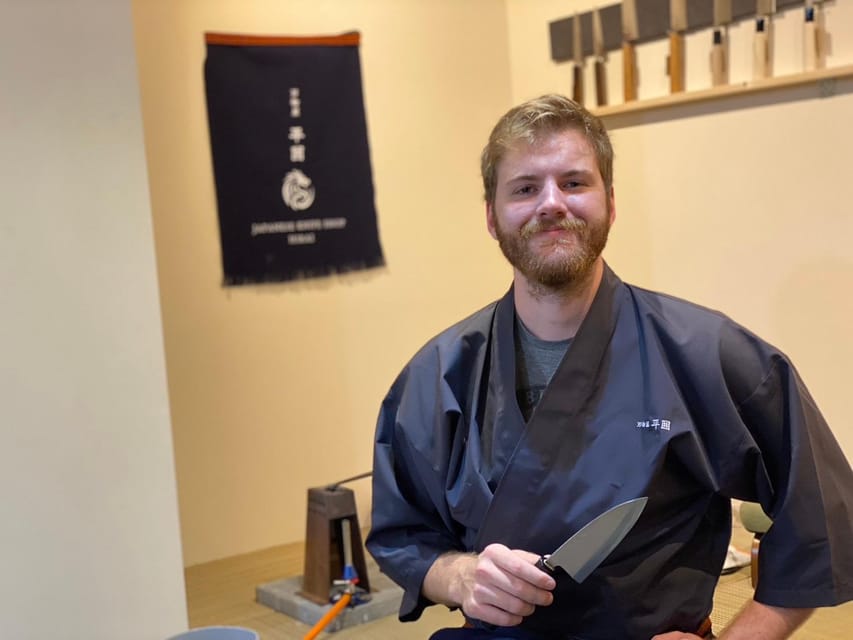
This is a strong choice for home cooks, food lovers, and anyone who has wanted to learn whetstone sharpening but never felt confident starting. It also suits a visitor who wants a practical souvenir rather than another decorative item.
It works well for couples and small groups because the class limit is three. The hands-on structure gives you something to do together without turning the session into a loud group performance. It can also suit a teenager aged 15 or older who has a real interest in cooking or tools.
You should think twice if you want a passive activity. The class requires concentration and careful handwork. It also may not be right if you dislike smoke, have mobility limitations, or are looking for a family activity for young children.
The choice of knife makes the workshop more flexible than a one-size-fits-all lesson. Santoku is the sensible everyday option, while Deba and Yanagi offer a more specialized connection to Japanese cooking. Ask questions before choosing if you are uncertain.
Should you book the HIRAI knife workshop?
Book it if you want to understand how a Japanese knife is sharpened, enjoy practical crafts, and value a souvenir you can use for years. The combination of a small group, English instruction, direct feedback, handle fitting, and an included knife gives the $161 price real substance.
Skip it if your main aim is simply to buy a knife quickly, or if you do not want to concentrate for two hours. Also remember the smoke, the age and accessibility limits, and the possibility of extra charges for upgraded handles or additional knives.
For the right person, this is one of Kyoto’s more useful hands-on activities. You leave with a sharper blade, a fitted handle, and enough basic instruction to keep learning at home.
FAQ
Where does the knife sharpening workshop take place?
You go directly to Japanese knife shop HIRAI in Kyoto, on Honshu. The shop has a white storefront curtain on the building.
How long does the workshop last?
The workshop lasts two hours. Starting times depend on availability.
Which knife can I choose?
You can choose one knife from three options: Santoku, Deba, or Yanagi.
Is English instruction available?
Yes. Instruction is available in English and Japanese.
What is included in the price?
The price includes the knife you sharpen, the magnolia wood handle you fit, a Japanese working uniform and apron, the experience fee, and engraving. You use whetstones supplied by the shop.
Can I have letters engraved on the knife?
Yes. You must request engraving in advance and provide up to four letters or characters.
Can I take the knife home afterward?
Yes. The shop packages the knife after the workshop, and you can take it home.
Just added around Kyoto
- Sekka Cotton Furoshiki Class★ 5.0 · 19 reviews
- Kyoto Sword Experience – includes Museum Ticket/Ninja Experience★ 4.5 · 149 reviews
- Scenic Green Tea Fields of Hidden Kyoto & Local Tea Exp (Private)★ 5.0 · 32 reviews
- Secret Eastern Kyoto Biking Adventure★ 5.0 · 44 reviews
- Private Sake Tasting in Central Kyoto with Sake Sommelier★ 5.0 · 32 reviews
- Samurai School in Kyoto: Samurai for a Day★ 5.0 · 202 reviews
- SHIRAKAWA Japanese Culture Experiences with private English staff★ 5.0 · 16 reviews
- A Privately Guided Photoshoot in Beautiful Kyoto by a Pro★ 5.0 · 18 reviews
Workshops, compared.
Sushi Making Tokyo Roll and Authentic Japanese Sushi Class
Our verdict →
Ninja 1-hour Hands-on Lesson by Japanese master in Kyoto -Entry
Our verdict →
Browse the lists this tour appears in