
Reviewed · TEMPLES & SHRINES
Kyoto 6h Private Tour Fushimi Inari, Kiyomizu, Gion & Hidden Gems
Fushimi Inari’s tunnel of red torii gates is the headline, but this private Kyoto tour gives you much more than a quick shrine stop. You’ll also see Kiyomizu-dera, Sanjusangendo, Gion, and several old streets, with a guide handling the route and transport. I like the smart mix of famous sights and quieter Chishaku-in, a temple with a Japanese garden where you can pause.
I also like the private format. Yoshi, Kaori, and Mutsumi are named guides connected with especially warm feedback, and the tour can feel more personal than a large bus outing. The catch is pace: seven places in roughly five and a half hours leaves little room for wandering, lunch, or changes to the route.
Key points to know before booking
- Seven Kyoto sights in one half-day: You visit Fushimi Inari, Chishaku-in, Sanjusangendo, Kiyomizu-dera, Sannenzaka and Ninenzaka, Yasakanoto, and Gion.
- A private guide for up to three people: The $236.48 group price works out to about $79 per person for three, before transport and admission costs.
- Chishaku-in breaks up the major sights: Its Japanese garden offers a calmer stop between busy temple areas.
- Transport is part of the strategy, not the price: You use public transportation and taxis, with about 150 yen per person for transit and roughly 2,500 to 3,000 yen per taxi.
- The afternoon starts at noon: Finish lunch first, wear comfortable shoes, and carry Japanese yen.
- The tour ends around Gion: Your guide explains how to reach your next stop after the activity.
A fast route through Kyoto’s southern temples
This tour is built for a first day in Kyoto, or for a short visit when you want the main sights without spending hours plotting train lines and walking routes. You meet at the Kyoto Tourist Information Center, Kyo-Navi, on the second floor of Kyoto Station at noon.
The experience is advertised as a six-hour private tour, with an approximate duration of five hours and thirty minutes. That difference is worth noting. Your actual day may depend on traffic, temple crowds, and how smoothly the group moves between stops.
The guide takes care of navigation, using taxis and public transportation to save time and energy. That is useful in Kyoto, where nearby-looking sights are not always close by road or rail. It also means the advertised price is not the final cost. You pay transport, temple admissions, and anything you buy along the way.
The group limit is three people, so this suits a couple, a small family, or a few friends. A private tour also makes questions easier. You can ask why a temple matters, how a shrine differs from a temple, or what you are looking at instead of simply following a flag through a crowd.
More Hidden Gems Tours in Kyoto
- Kyoto Geisha Walking Tour: Gion District & Hidden Gems
★ 4.7 · 3,273 reviews - Private Kyoto Tour with a Local, Highlights & Hidden Gems, Personalised
★ 5.0 · 1,543 reviews - Arashiyama Bamboo Forest & Hidden Gems Bike Tour (Early Bird)
★ 5.0 · 613 reviews
Fushimi Inari and the first torii gates
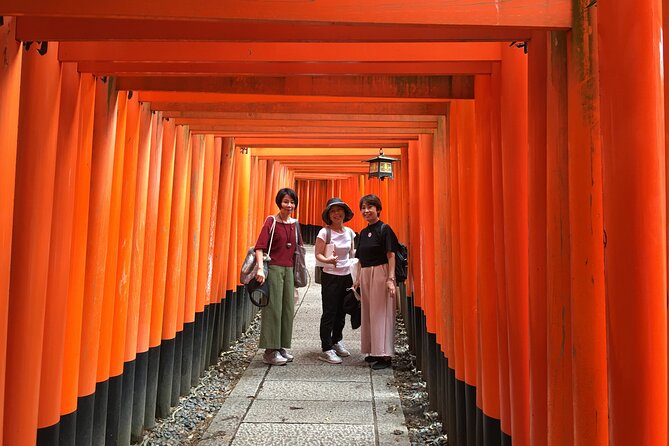
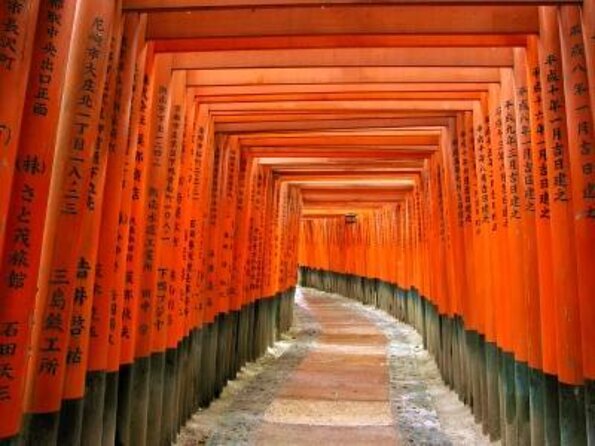
The tour opens at Fushimi Inari-taisha Shrine, one of Kyoto’s most recognizable sights. Its rows of orange-red torii gates climb into the wooded hills behind the shrine, creating the famous passage that appears in so many photographs.
You have about one hour here. That gives you time to enter the shrine grounds and walk through part of the torii route, but not enough for an extended climb far into the mountain. The shrine is connected with Inari, a deity associated with business and prosperity, and you will see fox imagery tied to that tradition.
This is an excellent first stop because it delivers a strong visual impression quickly. You do not need to spend the whole day here to understand why it matters. Still, the approach can feel crowded, and the route includes steps and sloping paths. Wear shoes with good support, especially since the rest of the tour also involves old lanes and temple grounds.
Chishaku-in, a quieter garden pause
After Fushimi Inari, Chishaku-in provides a change of mood. It is less famous than the major stops, and the attraction here is its Japanese garden and calm temple setting.
You spend about forty minutes at Chishaku-in. That is enough time to sit, look carefully, and enjoy a more traditional Kyoto atmosphere without the same pressure to keep moving through a landmark checklist. I consider this one of the tour’s best choices because it gives your eyes and feet a break.
Admission is not included. The information provided does not give a separate price for Chishaku-in, so you should keep yen ready for temple fees. A guide can also help you notice details you might otherwise pass without understanding, particularly if this is your first visit to a Japanese temple garden.
Sanjusangendo and its remarkable wooden hall
Sanjusangendo is the tour’s major indoor temple visit. You have one hour here, and that time matters because the hall is known for its thousand statues of Kannon, the Buddhist goddess of mercy.
The temple is also famous for its long wooden structure and large number of national treasures. The scale is the point. Instead of a single statue or a small altar, you encounter a repeated arrangement that creates a powerful sense of order and abundance.
This stop adds art and religious history to the day. Fushimi Inari gives you gates and mountain paths, while Sanjusangendo gives you a long, quiet interior space filled with sculpture. Photography rules and interior conditions can vary at religious sites, so follow the guide’s instructions and focus on looking rather than collecting pictures.
Admission is extra. The estimated total admission cost for all temples on the tour is about 1,500 yen per person, though the exact amount can depend on the sites visited and current fees.
More Temple & Shrine Tours in Kyoto
- Kyoto: Fushimi Inari, Kinkakuji, Bamboo Grove 1 Day Bus Tour
★ 4.8 · 4,316 reviews - Kyoto: Tea Ceremony in a Traditional Tea House in Kiyomizu
★ 4.9 · 3,519 reviews - Kyoto: Tea Ceremony Ju-An at Jotokuji Temple
★ 4.9 · 3,207 reviews - Fushimi Inari Hidden Hiking Tour (Private Option Available)
★ 5.0 · 1,750 reviews
Kiyomizu-dera and the view over Kyoto
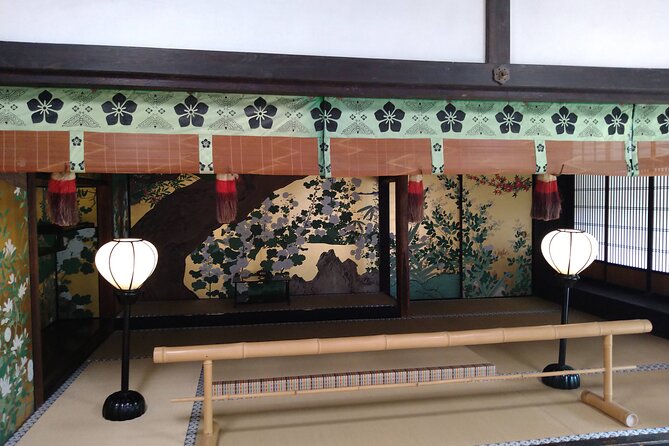
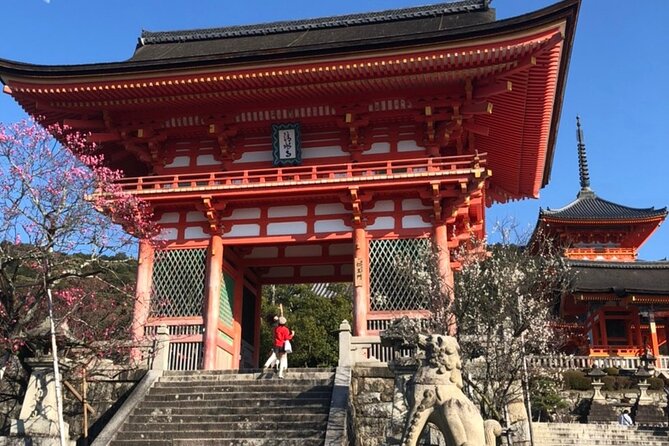
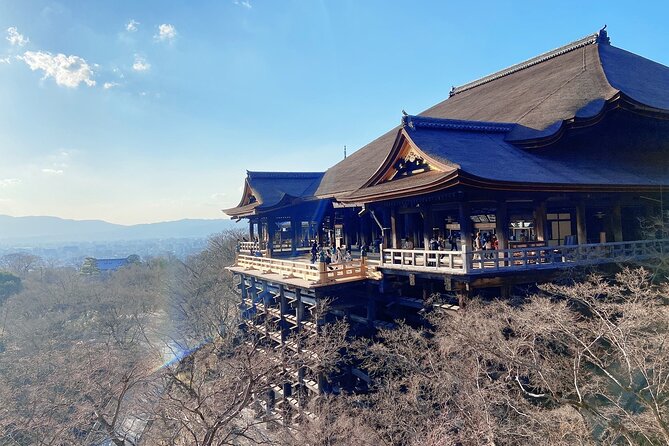
Kiyomizu-dera receives another full hour. This is one of Kyoto’s most important temple visits and a UNESCO World Heritage site. Its broad wooden stage is the visual centerpiece, with views across Kyoto from the hillside.
The temple is also a good place to understand how Kyoto’s famous sights connect to the old streets below. You will likely encounter slopes, steps, and large numbers of people, especially at popular times. The tour’s private guide helps you keep moving, but this is not a long, leisurely temple visit.
I like the way Kiyomizu-dera follows Sanjusangendo. One is focused on a long hall and sculpture; the other opens outward to a grand city view and a large complex. Together, they give you two very different ways to experience Kyoto’s religious buildings.
Admission is not included, and the tour information recommends having yen ready. The temple is one of the day’s main expenses, but it is also one of the stops most likely to justify the cost for a first-time visitor.
Ninenzaka and Sannenzaka, Kyoto’s old shopping lanes
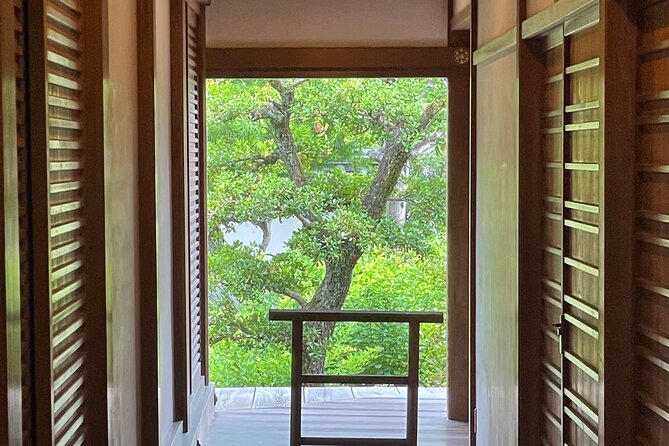
The route then moves into Ninenzaka and Sannenzaka, two sloping streets lined with traditional wooden buildings. You have about one hour here, which gives you time to browse shops, look at the architecture, and search for gifts.
This is the least formal part of the day, but it may be the most useful if you want a sense of Kyoto beyond temple gates. The streets connect the sightseeing stops with shops and small details of old Kyoto style. You can buy souvenirs here, but remember that the tour does not include a meal break.
The slopes are not difficult for most people, but the combination of uneven streets, steps, and a long afternoon can wear you down. Comfortable shoes are not a polite suggestion here. They are one of the few things that can make the difference between enjoying the final stops and simply waiting for them to end.
Shopping time is also limited by the fixed route. If you find something you want, do not assume you can return later with the group. Keep your purchases manageable, especially if you still have Gion ahead.
Yasakanoto, a five-story Kyoto landmark
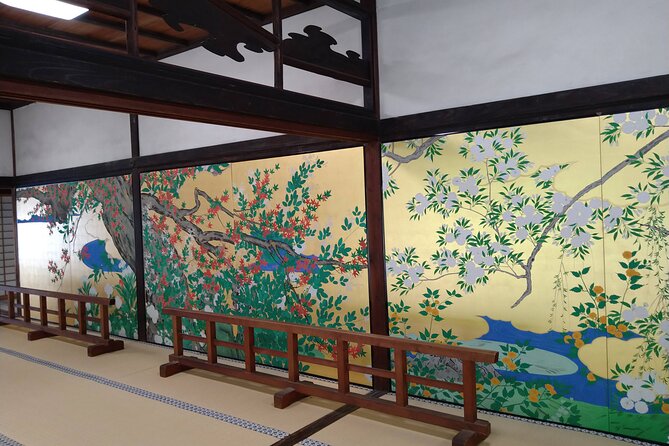
Yasakanoto is a short photo stop, lasting about five minutes. The five-story pagoda is a well-known Kyoto landmark, and the tour views it from outside rather than taking you inside.
Five minutes tells you exactly what this stop is for. You are there to see the pagoda, frame a photograph, and continue through the surrounding streets. It is not a full temple visit, so keep your expectations in proportion.
I appreciate this kind of brief addition on a packed route. Yasakanoto gives you a classic Kyoto image without using another long block of time. The trade-off is that anyone wanting a slower look at the structure will find the stop too quick.
Gion and the end of the afternoon
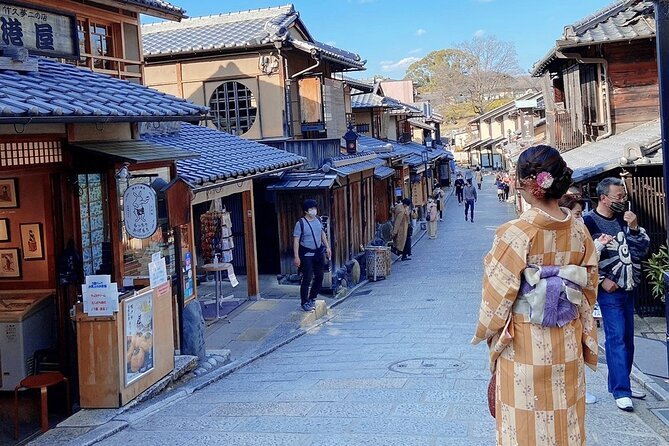
The final stop is Gion, with about twenty minutes in the historic geisha district. The area is known for traditional entertainment houses and for maiko and geiko, the apprentices and professionals associated with Kyoto’s refined arts.
Twenty minutes is enough for an orientation walk, a look at the streets, and a sense of the district’s layout. It is not enough for a full evening in Gion, a meal, or a performance. The tour ends around Gion, at 570-177 Gionmachi Minamigawa, and your guide tells you how to reach your next destination.
That ending is practical. You can continue exploring Gion on your own, find dinner nearby, or make your way back to your hotel. Since the tour begins at Kyoto Station and finishes elsewhere, plan around the one-way route rather than expecting to return to the station with the guide.
What the private format adds
The private setup is the main reason to choose this experience over a cheaper group outing. Only your party participates, and the group limit is three. You are not waiting for a large crowd to gather at every corner, and you can ask questions as you go.
The named guides connected with the tour include Yoshi, Kaori, and Mutsumi. The strongest comments focus on their warmth, patience, humor, flexibility, and clear explanations. Kaori is praised for sharing her affection for Kyoto and for adapting the day to the group. Mutsumi is described as comfortable with suggestions and quick to adjust. Yoshi is noted for being informative and pleasant.
The written plan says the itinerary and starting point cannot be changed because so many places are covered in half a day. That is important. The tour is private, but it is not fully flexible. You may get a little adjustment in how long you pause, yet the seven-stop structure is fixed.
The best guides will make a set route feel personal. They can explain what you are seeing, point out the difference between a shrine and a temple, and help you avoid wasting time on the wrong train or street. The private format is especially useful if your group has different walking speeds or if you want historical context instead of a self-guided photo run.
Price, extra costs, and real value
The group price is $236.48 for up to three people. For three people, that is about $79 each before local costs. For one person, the per-person price is much higher, but you still receive a private guide rather than joining a shared group.
You should add the following expenses:
- About 150 yen per person for public transportation
- About 2,500 to 3,000 yen per taxi
- About 1,500 yen per person for temple admissions
- Lunch and personal purchases
The taxi cost matters most. The route uses taxis to save time, but the stated taxi estimate is for one taxi, not necessarily the whole day’s transport. Ask your guide how the fare is handled and keep enough yen available.
For a small group, I see reasonable value in the price if you want a guide and need an efficient introduction to Kyoto. The value drops if you prefer to move slowly, eat at a set time, or choose your own temples. You are paying for route planning, private attention, and time saved, not for an all-inclusive day.
The tour is often booked well in advance, with an average lead time of 113 days. That suggests you should reserve early for a particular Kyoto date, especially if you want a named guide or have a tight schedule. Confirmation is provided within 48 hours, subject to availability.
Who should book this Kyoto tour
I would choose this tour for a first visit, a short stay, or an arrival itinerary that needs to cover several major sights quickly. It also suits anyone who feels uneasy about navigating Kyoto’s trains, taxis, and temple districts alone.
It is a good fit for couples and small families who want a private guide without arranging a full custom day. The route includes major landmarks, old streets, shopping, a garden, sculpture, and a geisha district, so you get a broad sample of Kyoto in one afternoon.
I would hesitate if your priority is quiet temple time. The schedule allows about an hour at the biggest sites, forty minutes at Chishaku-in, and only five minutes at Yasakanoto. You also need to eat before noon, since there is no planned lunch break.
The experience requires a reasonable level of walking, though the information says most people can participate. Wear comfortable shoes, carry Japanese yen, and bring water. The tour requires good weather, and a cancellation caused by poor weather offers a different date or a full refund.
Should you book it?
Book this private Kyoto tour if you want an efficient introduction to the city and value a guide who can explain the sights while keeping the route moving. The combination of Fushimi Inari, Kiyomizu-dera, Sanjusangendo, Gion, and Chishaku-in gives you more variety than a simple shrine-and-shopping outing.
Skip it if you want long meals, flexible timing, or deep exploration of just one temple district. For everyone else, the tour is a practical first look at southern Kyoto, especially when three people can share the group price and the guide’s attention.
FAQ
How long is the tour?
The experience lasts approximately five hours and thirty minutes. It is also presented as a six-hour tour, so allow roughly half a day.
Where does the tour begin?
You meet at the Kyoto Tourist Information Center, Kyo-Navi, on the second floor of the Kyoto Station Building at noon.
Where does the tour end?
The tour ends around Gion, at 570-177 Gionmachi Minamigawa, Higashiyama Ward. Your guide explains how to reach your next stop.
How many people can join the private tour?
The price covers one private group of up to three people. Only your group participates.
Is transportation included?
No. Public transportation costs about 150 yen per person, and a taxi costs approximately 2,500 to 3,000 yen per taxi.
Are temple admission fees included?
No. Admission fees are estimated at about 1,500 yen per person for all temples.
Is lunch included?
No. There is no time for lunch during the tour, so you should eat before the noon meeting time.
Can the itinerary or starting point be changed?
The information states that the itinerary and starting point cannot be changed because the tour visits many places in a half-day.
Which Kyoto sights are included?
The route includes Fushimi Inari-taisha Shrine, Chishaku-in, Sanjusangendo Temple, Kiyomizu-dera Temple, Sannenzaka and Ninenzaka, Yasakanoto, and Gion.
Can I cancel for a refund?
You can cancel at least 24 hours before the start time for a full refund. Changes or cancellations made less than 24 hours before the start time are not refunded, and poor weather may result in a new date or a full refund.
Just added around Kyoto
- Sekka Cotton Furoshiki Class★ 5.0 · 19 reviews
- Kyoto Sword Experience – includes Museum Ticket/Ninja Experience★ 4.5 · 149 reviews
- Scenic Green Tea Fields of Hidden Kyoto & Local Tea Exp (Private)★ 5.0 · 32 reviews
- Secret Eastern Kyoto Biking Adventure★ 5.0 · 44 reviews
- Private Sake Tasting in Central Kyoto with Sake Sommelier★ 5.0 · 32 reviews
- Samurai School in Kyoto: Samurai for a Day★ 5.0 · 202 reviews
- SHIRAKAWA Japanese Culture Experiences with private English staff★ 5.0 · 16 reviews
- A Privately Guided Photoshoot in Beautiful Kyoto by a Pro★ 5.0 · 18 reviews
Temples & Shrines, compared.

Tea Ceremony in a Traditional Tea House in Kiyomizu
Our verdict →
Meiji Shrine, Asakusa, Skytree Bus Tour and Cruise
Our verdict →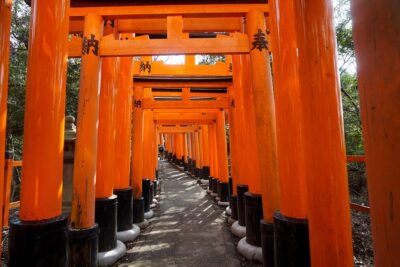
Fushimi Inari Hidden Hiking Tour (Private Option Available)
Our verdict →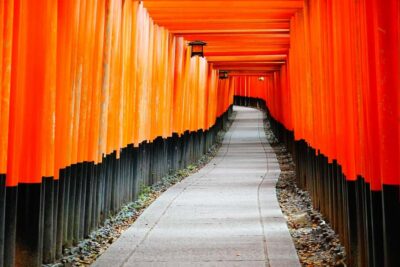
Osaka/Kyoto:Kinkakuji,Arashiyama,FushimiInariShrine,NaraPark
Our verdict →
Nikko: Kegon Falls, Lake Chuzenji & Toshogu Temple
Our verdict →
Kamakura & Enoshima Day Trip including Temple Tickets
Our verdict →Browse the lists this tour appears in