
Reviewed · TEMPLES & SHRINES
Kiyomizu Temple and Backstreets of Gion, Half Day Group Tour
Kiyoto’s eastern hills give you Kyoto in one compact walk: a major Buddhist temple, old shopping lanes, small shrines, a Zen temple, and the wooden streets of Gion. The route begins near the Kyoto Ceramic Center and finishes in Gion, so you spend your four hours moving through real neighborhoods rather than sitting on a bus.
I like the small maximum group of eight, which makes it easier to hear your guide and ask questions. I also like the mix of famous sights and smaller stops, especially Yasaka Koshin-do and Kennin-ji. The main drawback is the amount of walking, including an uphill approach to Kiyomizu-dera and crowded lanes around the temple.
Key points to know before you book
- Kiyomizu-dera is the main event: You get about an hour at one of Kyoto’s best-known temples, with admission included.
- The route finishes in Gion: You end near Hanamikoji Street, a useful location for continuing your afternoon or evening.
- Expect a small walking group: The tour caps participation at eight people.
- Several guides have earned strong praise: Mika, Takuma, Kiyoto, Mitsuhiko, and Toshi have each led highly regarded tours.
- The route covers hills and crowded lanes: Comfortable walking shoes are essential.
- The experience can suit families and solo visitors: Guides have adjusted pace, interests, and explanations for different groups.
Why this four-hour route works so well
Kyoto is easy to admire and surprisingly easy to misunderstand. You can walk past a temple, shrine, or traditional wooden house without knowing what you are seeing. This tour gives you a local guide to explain the difference between Buddhist and Shinto sites, add historical context, and keep you moving in the right direction.
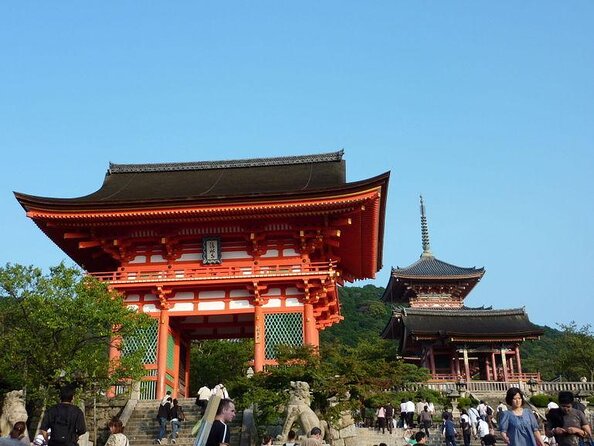
The route also solves a practical problem. Kiyomizu-dera, Sannenzaka, Ninenzaka, Yasaka Pagoda, and Gion are close enough to combine, but the lanes can be confusing and heavily crowded. A guide helps you spend less time checking maps and more time looking up at the architecture.
This is described as a group tour, with no more than eight participants, but the experience also has a private-tour feel in its flexibility. The guide can respond to your interests, and past tours have adjusted for children, solo visitors, food stops, and questions about Japanese culture.
At $59.45 per person, the price is reasonable for a four-hour guided walk with two included temple admissions. You are paying mainly for local interpretation and route planning, not transportation or a meal. If you already know Kyoto’s religious traditions and enjoy navigating on your own, the value is less clear. If this is your first visit, the explanation and efficient route can make the fee worthwhile.
More Temple & Shrine Tours in Kyoto
- Kyoto: Fushimi Inari, Kinkakuji, Bamboo Grove 1 Day Bus Tour
★ 4.8 · 4,316 reviews - Kyoto: Tea Ceremony in a Traditional Tea House in Kiyomizu
★ 4.9 · 3,519 reviews - Kyoto: Tea Ceremony Ju-An at Jotokuji Temple
★ 4.9 · 3,207 reviews
Starting at the Kyoto Ceramic Center
The meeting point is the Kyoto Ceramic Center, officially called the Kyoto Ceramic Art Association Official Shop and Gallery, at 583-1 Yūgyōmaechō in Higashiyama Ward. You meet in front of the center before beginning the walk.
This is a sensible starting point for a tour focused on Kyoto’s traditional arts. The first stop is brief, about 10 minutes, so do not expect a long gallery visit. Think of it as a meeting point and a quick introduction before the main climb toward Kiyomizu-dera.
The tour ends at 571 Gionmachi Minamigawa, near Gion. That point-to-point design is useful because you do not have to retrace your steps. It also puts you in a good area for further sightseeing, shopping, or dinner, although the tour itself does not include a meal.
Kiyomizu-dera, Kyoto’s great hillside temple
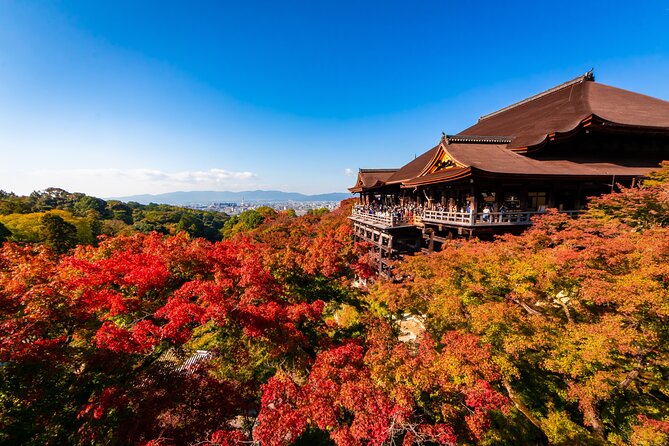
Kiyomizu-dera receives about an hour, the longest single stop on the route. Admission is included, which removes one small task from your visit.
The temple is both a major religious site and a UNESCO World Heritage Site. Its hillside setting is a major part of the appeal. You will learn about the temple’s culture and history while taking in views over Kyoto, though the exact views depend on weather, crowds, and the season.
This is also the most demanding part of the walk. The approach involves an uphill route, and the area can be very crowded. That is where a guide such as Toshi or Mika can help. A local guide can keep the group together, point out what matters, and prevent the visit from becoming a slow shuffle through packed lanes.
The temple is important enough that you could easily spend half a day there alone. Here, you receive a focused visit that fits into a broader Higashiyama route. That is efficient, but it also means you will not see every corner or linger indefinitely.
Sannenzaka, Ninenzaka, and the old streets below
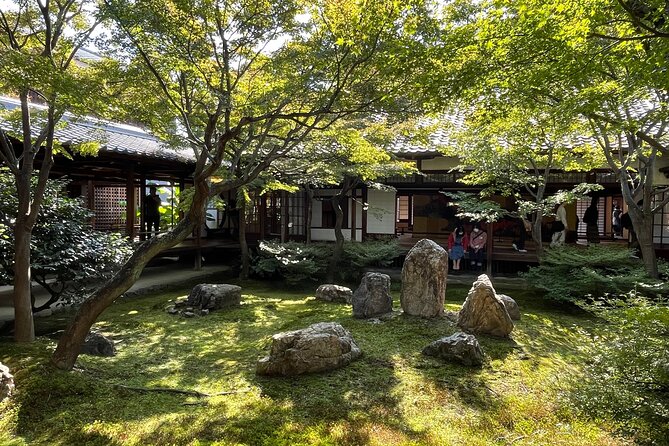
After Kiyomizu-dera, the route heads down through Sannenzaka and Ninenzaka. These historic lanes lead toward the lower Higashiyama district and are lined with traditional buildings, shops, and places to pause for food.
Sannenzaka is the longer and steeper slope. Ninenzaka is somewhat gentler, though both can be tiring after the temple visit. The polished streets and old-style buildings create one of Kyoto’s most recognizable scenes, but this is not a quiet village walk. Crowds can be thick, especially around popular shops and photo spots.
A guide adds value here by helping you read the setting. Instead of seeing only souvenir stores, you can ask about Kyoto’s traditional architecture, local customs, and the way the district connects the temple above with Gion below.
One useful detail from the tour experience is the chance to sample Japanese snacks. This is not presented as a formal food tour, and snacks are not included in the price, but a guide may point out places to try something along the way. If food interests you, mention it early so the guide can take your preferences into account.
Same trip, a completely different kind of day:
- PERFECT KYOTO 1-Day Bus Tour
★ 5.0 · 13,518 reviews - Kyoto Geisha Walking Tour: Gion District & Hidden Gems
★ 4.7 · 3,273 reviews - Kyoto: Gion Magical Night Walking Tour with Geisha Trivia
★ 4.9 · 2,393 reviews - Kyoto: 45-Minute Tea Ceremony Lesson Experience
★ 4.3 · 2,378 reviews
Smaller Higashiyama stops: gardens and Yasaka Pagoda
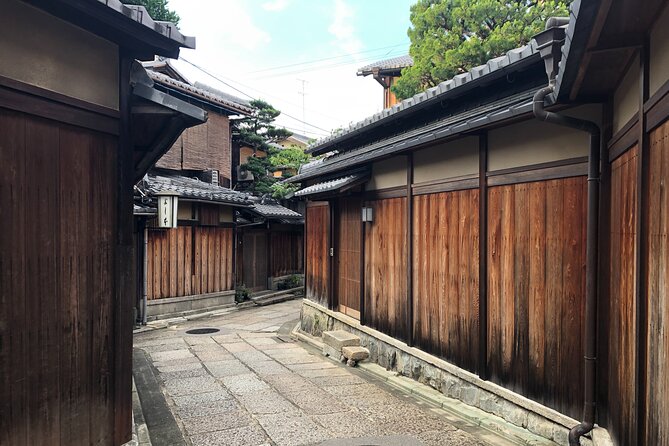
The route includes a Japanese garden near Kiyomizu-dera, with ponds, wooden bridges, and carefully arranged plants. The supplied schedule does not give this stop a separate name or time, so treat it as a short pause rather than a full garden visit.
That pause can be welcome after the crowded temple lanes. A traditional garden asks you to slow down and notice composition, water, bridges, and seasonal planting. You might find it offers a calmer contrast to the busy streets nearby.
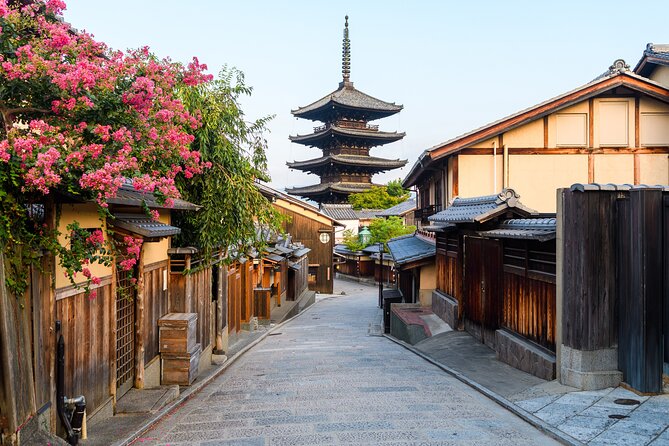
You also pass the Yasaka Pagoda, a historic five-story pagoda and one of the area’s most recognizable landmarks. Its compact, elegant shape appears frequently in views through the surrounding streets. The route information does not list a separate admission or interior visit, so expect to see it from the surrounding area rather than tour it in depth.
Yasaka Koshin-do and its colorful charms
Yasaka Koshin-do is a small temple dedicated to Koshin, a guardian figure associated with protection from illness and misfortune. It is known for colorful kukurizaru charms, which give the site a distinctive appearance.
The scheduled visit lasts about 10 minutes and has no admission charge. That short stop is useful because it introduces a less imposing religious site after the large scale of Kiyomizu-dera.
Do not expect a long meditation session or a major temple complex. The appeal is the brief, visual lesson in popular religious practice. This is the kind of stop that can be easy to miss when walking independently, especially if your attention is fixed on the larger sights.
Yasui-Konpiragu and its unusual ritual
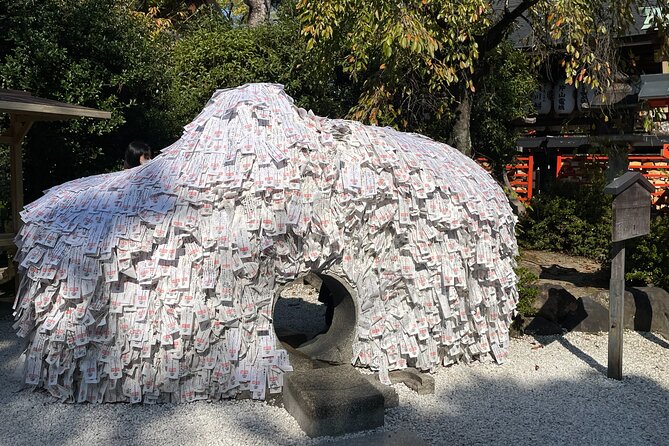
The next short stop is Yasui-Konpiragu, a Shinto shrine known for a ritual connected with ending negative relationships and forming positive ones. Visitors come to take part in this distinctive practice, and lines can form.
The visit lasts about 10 minutes and admission is free. Your guide can explain the meaning behind the ritual and help you understand why the shrine has such a different character from the temples on the route.
This is a good example of the tour’s range. You are not simply moving from one famous building to another. You are seeing how religion functions in daily life, from grand Buddhist temples to small sites tied to personal hopes and worries.
Kennin-ji, a quiet finish before Gion
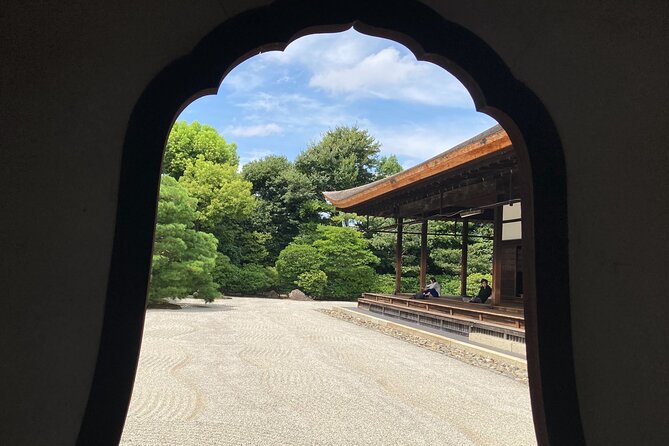
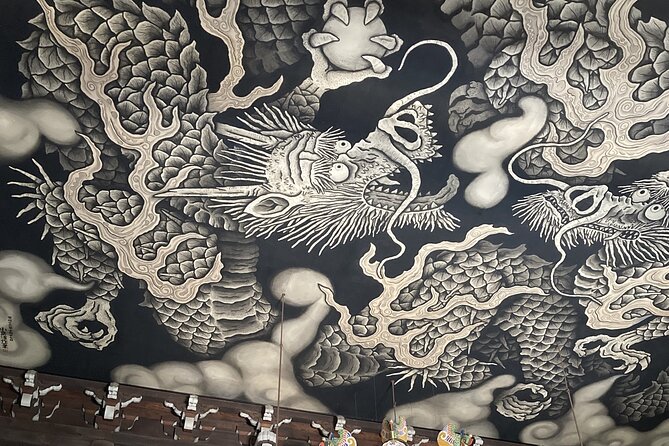
Kennin-ji receives about 50 minutes, with admission included. Founded in 1202, it is Kyoto’s oldest Zen temple.
Its central location makes the relative calm of the grounds especially welcome. The Dharma Hall is an important feature, and the temple offers a change of pace after the streets around Kiyomizu-dera.
I especially like this part of the route because it gives the afternoon a pause for reflection. Kiyomizu-dera is grand and crowded. Kennin-ji is more spacious and controlled, allowing you to pay attention to Zen design and temple atmosphere.
The stop is long enough for a proper visit but still limited by the four-hour schedule. If you are deeply interested in Zen art or architecture, you may want to return independently for more time. For a first visit, 50 minutes gives you a useful introduction without letting one site consume the whole tour.
Finishing through Gion and Hanamikoji Street
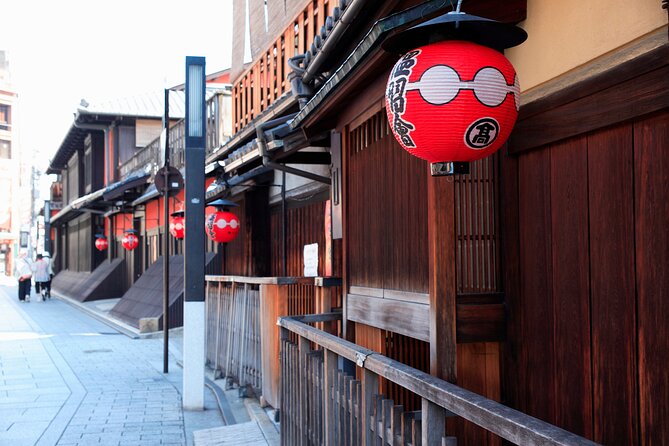
The final walk takes you through Gion, Kyoto’s largest geisha district, and along Hanamikoji Street. Traditional wooden machiya houses, teahouses, shops, and restaurants line the route.
This is a good ending because the scenery shifts again. You begin with temple grounds and hillside lanes, then move into a district connected with Kyoto’s performing arts and dining culture. Hanamikoji is attractive, but it is also a working neighborhood. Respect private areas, avoid blocking entrances, and do not photograph people without permission.
The tour finishes at 571 Gionmachi Minamigawa. Since the tour may run late, avoid booking a tight appointment immediately afterward. The operator specifically asks guests with fixed plans to mention them in advance, but a four-hour walking route through crowded streets is best enjoyed without watching the clock every few minutes.
The guides and the style of the experience
The guide can shape the day. Mitsuhiko has been praised for clear information, good organization, and a comfortable pace. Mika has led tours through crowded areas while explaining temples, shrines, Buddhism, Shinto, and Kyoto culture.
Takuma Goda brings a personable, engaging approach, while Kiyoto has tailored tours to individual interests and offered recommendations beyond the scheduled walk. Toshi has also been noted for flexibility and for handling the crowded Kiyomizu-dera area with local skill.
These names do not guarantee who will lead your tour, but they show the range of guiding styles available. The strongest feature is not a single scripted performance. It is the guide’s ability to answer questions, adjust pace, and explain what you are seeing.
Families can benefit from that flexibility. A guide has accommodated children’s pace and interests, which matters on a route with hills and several religious sites. Solo visitors also fit well here. One solo guest used the tour to cover Kyoto’s major sights during a day trip from Tokyo, an efficient choice when independent planning time is limited.
Walking, weather, and practical planning
Plan on steady walking for roughly four hours. Wear comfortable shoes with good support, especially for the slopes leading to Kiyomizu-dera and the stone or paved streets around Higashiyama.
The tour operates rain or shine. Bring suitable rainwear and be ready for wet surfaces if the forecast is poor. A small group is easier to manage in crowded streets, but it does not make the route quiet or flat.
The experience is near public transportation, and most people can participate. The schedule is not designed for someone who wants to avoid hills or minimize walking. Ask about your needs before booking if mobility is a concern, since the route includes slopes, temple grounds, and crowded pedestrian areas.
Free cancellation is available up to 24 hours before the start time. Changes or cancellations inside that window are not accepted for a refund.
Who should book this Kyoto walk?
Book it if you want a well-organized introduction to eastern Kyoto and prefer explanation over map reading. It is especially useful for first-time visitors, solo visitors with limited time, families wanting a flexible pace, and anyone curious about the difference between Buddhist temples and Shinto shrines.
It is also a good match if you want major sights without spending a full day on one temple complex. The route gives you Kiyomizu-dera, historic streets, small religious sites, Kennin-ji, and Gion in one compact outing.
Think twice if you dislike hills, crowds, or fixed group pacing. Independent visitors who already know Higashiyama may prefer to explore slowly and return to the sites that interest them most.
Should you book it?
I would book this tour for a first Kyoto visit, especially if you have only half a day for Higashiyama and Gion. The combination of included temple admissions, a group capped at eight, adaptable guiding, and a point-to-point route gives you solid value at $59.45.
Choose it with realistic expectations: this is an active walking introduction, not a leisurely private car tour or a full food experience. Wear good shoes, leave your schedule loose at the end, and tell the guide what interests you. Do that, and the route gives you a clear, culture-focused way to meet Kyoto.
FAQ
How long does the tour last?
The tour lasts approximately four hours.
Where does the tour begin?
It begins in front of the Kyoto Ceramic Center, at 583-1 Yūgyōmaechō in Kyoto’s Higashiyama Ward.
Where does the tour finish?
It finishes at 571 Gionmachi Minamigawa in Gion, Kyoto.
Is admission to Kiyomizu-dera included?
Yes. Admission to Kiyomizu-dera is included in the tour price.
Is admission to Kennin-ji included?
Yes. Admission to Kennin-ji is included.
How many people can join the tour?
The tour has a maximum of eight participants.
Does the tour operate in bad weather?
Yes. The tour takes place rain or shine. Comfortable walking shoes are recommended.
Just added around Kyoto
- Sekka Cotton Furoshiki Class★ 5.0 · 19 reviews
- Kyoto Sword Experience – includes Museum Ticket/Ninja Experience★ 4.5 · 149 reviews
- Scenic Green Tea Fields of Hidden Kyoto & Local Tea Exp (Private)★ 5.0 · 32 reviews
- Secret Eastern Kyoto Biking Adventure★ 5.0 · 44 reviews
- Private Sake Tasting in Central Kyoto with Sake Sommelier★ 5.0 · 32 reviews
- Samurai School in Kyoto: Samurai for a Day★ 5.0 · 202 reviews
- SHIRAKAWA Japanese Culture Experiences with private English staff★ 5.0 · 16 reviews
- A Privately Guided Photoshoot in Beautiful Kyoto by a Pro★ 5.0 · 18 reviews
Temples & Shrines, compared.

Tea Ceremony in a Traditional Tea House in Kiyomizu
Our verdict →
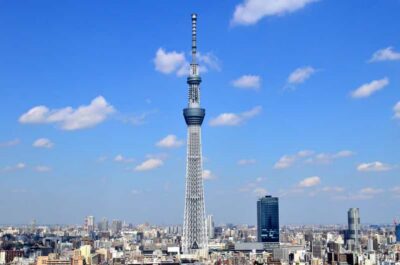
Meiji Shrine, Asakusa, Skytree Bus Tour and Cruise
Our verdict →
Fushimi Inari Hidden Hiking Tour (Private Option Available)
Our verdict →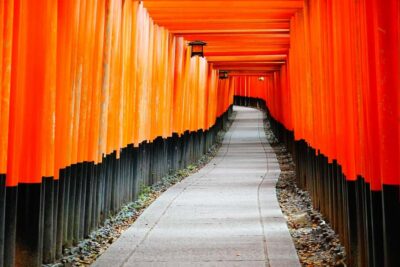
Osaka/Kyoto:Kinkakuji,Arashiyama,FushimiInariShrine,NaraPark
Our verdict →
Nikko: Kegon Falls, Lake Chuzenji & Toshogu Temple
Our verdict →
Kamakura & Enoshima Day Trip including Temple Tickets
Our verdict →Browse the lists this tour appears in