
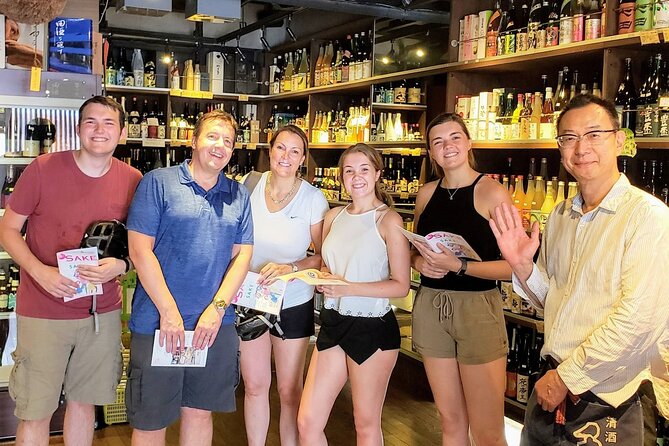
Reviewed · CYCLING TOURS
3h Tokyo E-Bike Tour: Hidden Gems, and Local Life with guide
Tokyo makes much more sense from a bicycle seat. In three hours, you can move from office towers and palace moats to old food streets and quiet neighborhood lanes, without spending half the morning underground. The electric-assist bikes make the distance manageable, while guides such as Yo, Jenny, Take, Kazu, and Ted keep the ride moving and explain what you are seeing.
I especially like two things here: you get both major sights and ordinary Tokyo streets, and the small groups, capped at six people, allow for regular photo stops and questions. The main caution is simple: you need to be comfortable riding on busy city roads, and summer heat can be serious.
Key points to know before booking
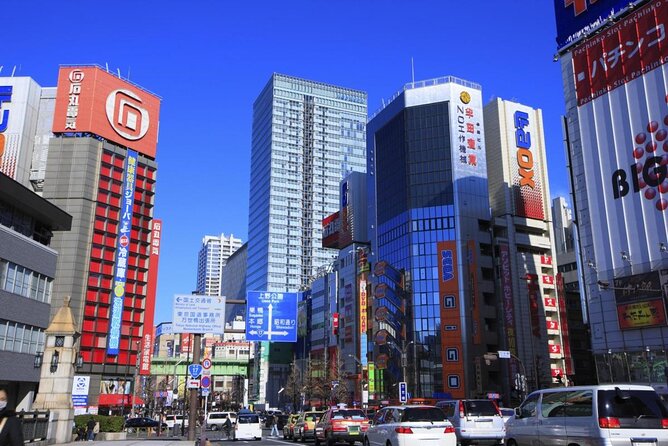
- Morning and afternoon routes are different: Morning rides cover Tokyo Station, the Imperial Palace, Ginza, Tsukiji, and Nihonbashi. Afternoon rides head toward Akihabara, Kappabashi, Asakusa, Ryogoku, and Nihonbashi.
- The e-bike does the hard work: You still pedal, but electric assistance helps with Tokyo’s long distances and hot weather.
- Groups stay small: A maximum of six people makes it easier to hear the guide and keep together.
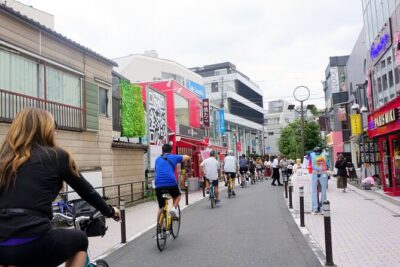
- You see local streets as well as famous sights: The route can include back lanes, residential areas, small bars, food shops, and passages that are awkward to reach by train.
- The starting point is convenient: Cycling Holiday Tokyo is a one-minute walk from the west exit of JR Kanda Station.
- Weather matters: Rain can cancel the ride, and extreme summer heat can lead to a same-day stop or cancellation for safety.
Why a bicycle works so well in central Tokyo
Tokyo is easy to reach by train, but trains give you a stop-start view of the city. You enter a station in one neighborhood and emerge in another, with little sense of how the two connect. On this ride, you see the transitions: commercial blocks give way to small homes, office districts turn into older shopping streets, and grand landmarks appear between ordinary corners.
The route is not a race. You ride at the guide’s pace, stop for explanations, and take photos along the way. The electric motor is especially useful on a warm day, when covering a large part of central Tokyo on a normal bicycle would leave you tired before lunch.
I also like the scale of the group. With no more than six people, the guide can watch the riders, answer questions, and adjust the pace. Still, this is city cycling, not a quiet park ride. You must be able to ride a bicycle, follow directions, stay with the group, and manage traffic around you.
The price is $63.01 per person. For three hours with an e-bike, helmet, English-speaking guide, insurance, and luggage storage, that is a reasonable way to get oriented in Tokyo. It is particularly useful early in your stay because you can mark places to return to later by train or on foot.
More Bike Tours in Tokyo
- Tokyo Guided Small-Group Biking Tour
★ 5.0 · 1,250 reviews - Tokyo Great Cycling Tour
★ 5.0 · 811 reviews - Tokyo Top Highlights 3h Guided E-bike Tour
★ 5.0 · 714 reviews
Starting in Kanda, Tokyo’s practical downtown
The ride begins at Cycling Holiday Tokyo, at 3-chome-8-6 Uchikanda, about a minute from the west exit of JR Kanda Station. The shop has a restroom, waiting room, and luggage storage. You can leave luggage during the ride, but valuables should stay with you.
Kanda is a good starting neighborhood because it is less polished than Ginza and less showy than Akihabara. It is a compact business district with small Japanese-style bars and streets used by office workers. Your guide will normally spend about 10 minutes here, giving you a first look at a side of Tokyo that is easy to miss if you stay near the headline sights.
The bikes come with helmets, and wearing the helmet is required. Simple rain gear is available, with cooling items in summer and simple gloves in winter. Bring sunscreen and a towel in hot weather. An extra drink with electrolytes is also a sensible choice on a muggy day, based on the practical conditions described by riders who took the tour in summer.
Morning route: Tokyo Station and the Imperial Palace
The morning course is the better choice if you want Tokyo’s grand civic sights. You first ride through the financial center, where modern office buildings create clean, photogenic views. The contrast with Kanda’s small bars arrives quickly, which helps show how sharply Tokyo can change from one block to the next.
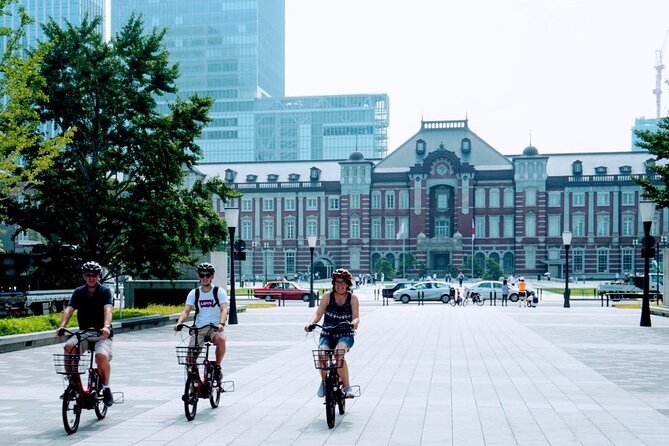
At Tokyo Station’s Marunouchi square, you stop to look at the station building from Gyoko-dori Street. The guide explains the station’s history, while you get time for photographs. The stop is short, around five minutes, so do not expect an extended architectural tour. Its value is the quick orientation and the view of one of Tokyo’s most recognizable buildings.
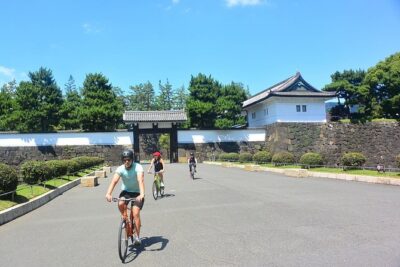
The route then reaches the Otemon Gate area of the Imperial Palace. From across the moat, you can see Fujimi-yagura tower, a traditional structure with a strong connection to the former castle grounds. This is a compact stop, but the moat, gate, and tower provide a clear sense of Tokyo’s older defensive layout.
The nearby Imperial Palace East Gardens area gives the ride some breathing room. The park covers roughly 200,000 square meters in the middle of the city, an impressive pause between office districts and major roads. Depending on the exact route and conditions, you may pass through or around sections of this area rather than spend a long time walking inside it.
Sakuradamon is another morning highlight. You pass through or near the famous traditional castle gate, a useful reminder that the palace grounds are not simply a modern government district. The ride keeps moving, so this is best viewed as part of a connected city tour rather than a series of long museum-style visits.
Ginza back streets and Tsukiji food culture
The morning course continues toward Ginza. You may ride along the main streets, or your guide may choose quieter back roads depending on traffic, pedestrians, and the day’s conditions. That flexibility is a strength. Ginza is known for luxury shops, but the back lanes reveal a more practical side, with smaller businesses and local streets tucked behind the polished avenues.
At Tsukiji Outer Market, you get about 10 minutes to see the old-fashioned food shops and narrow market streets. This is not a full food tour, and food and drinks are not included, so plan to pay for anything you want to eat. The short stop works well as a first look, but it may feel rushed if you want to shop or sample several foods.
One of the most useful parts of the morning ride comes between the main stops. The guide can take you through local streets and passages that are easier to reach by bicycle than by train. This is where the tour earns its title: you are not only checking off Tokyo Station and the palace, but also seeing how ordinary neighborhoods fit around them.
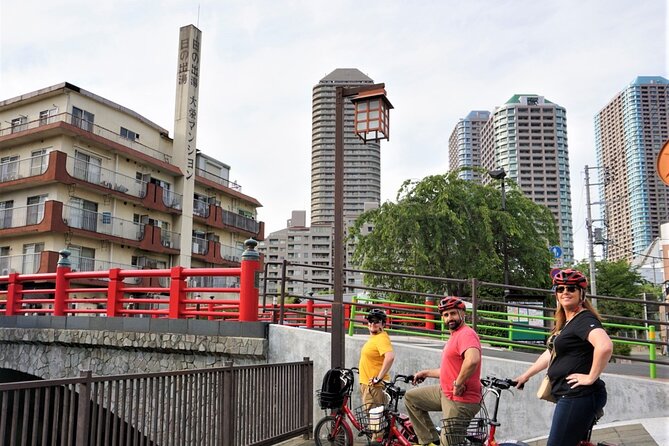
Nihonbashi Bridge is included on both the morning and afternoon courses. It has long been a central reference point in Tokyo, and traditional road-distance measurements begin there. The bridge is not a long stop, but it helps tie the city’s old transport network to the modern streets around it.
More Hidden Gems Tours in Tokyo
- Tokyo: Custom Hidden Gems & Highlights Tour with Local Guide
★ 4.7 · 272 reviews - Tokyo: 3-hour Guided E-Bike Tour of the City’s Hidden Gems
★ 4.8 · 251 reviews - Shibuya & Harajuku: Hidden Gems & Highlights Private Tour
★ 4.7 · 139 reviews - Tokyo: 3-Hour Bike or E-Bike Tour of City’s Hidden Gems
★ 4.7 · 81 reviews
Afternoon route: Akihabara, Kappabashi, and Asakusa
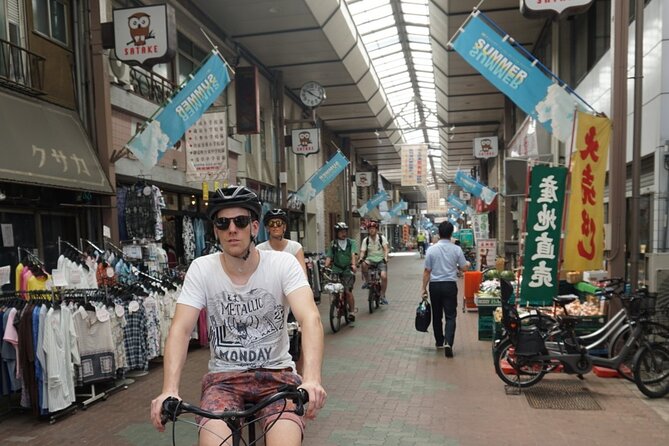
The afternoon route has a different personality. It begins around Akihabara, Tokyo’s famous subculture district. You get a brief introduction to the area’s youth and geek culture, rather than a long shopping session or an extended visit to a maid cafe.
That distinction matters. If your main goal is buying electronics, anime goods, or games, you will need separate time after the tour. Here, Akihabara works as a cultural stop within a wider ride, helping you understand why this district feels so different from the Imperial Palace or Ginza.
From there, the ride heads toward Kappabashi Street, also called Kappabashi Dogugai. This is the place for kitchen utensils, professional cooking tools, Japanese knives, restaurant supplies, and the familiar plastic food displays used outside many Japanese restaurants. You have about 10 minutes to look around, with some opportunity for shopping if the schedule allows.
Kappabashi is one of the afternoon route’s best practical stops. It is more specific than a general shopping street, and it gives you a chance to buy something useful rather than another generic souvenir. Keep in mind that the group must continue on schedule, so serious shopping is better saved for a return visit.
Asakusa and the Sumo district of Ryogoku
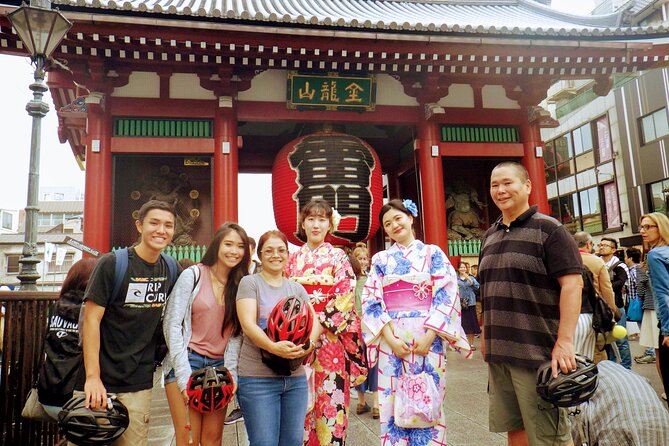
Asakusa follows, with around 10 minutes near its famous temple area. This is one of Tokyo’s essential first-visit sights, and the guide can explain temple customs and rituals that will help you during the rest of your Japan trip. That cultural explanation is more valuable than simply taking a photo in front of the gate.
The stop is short, so do not expect a full temple visit. You will likely get an introduction and time for photos, then continue by bicycle. If you want to explore the temple grounds, shops, and food streets at a slower pace, return later on your own.
The afternoon route also passes through Ryogoku, the sumo district. If timing is lucky, you might see actual sumo wrestlers in the area, but that is not guaranteed. The neighborhood still gives you a useful connection to one of Japan’s best-known sports and traditions.
The route finishes at Nihonbashi Bridge before returning to the Kanda shop. Exact locations can change because of traffic, pedestrians, road conditions, the season, and whether the ride takes place on a weekday or weekend. That flexibility is intended to keep the ride safe, but it means you should not treat every listed stop as a guaranteed long visit.
Guides, pace, and the feel of the ride
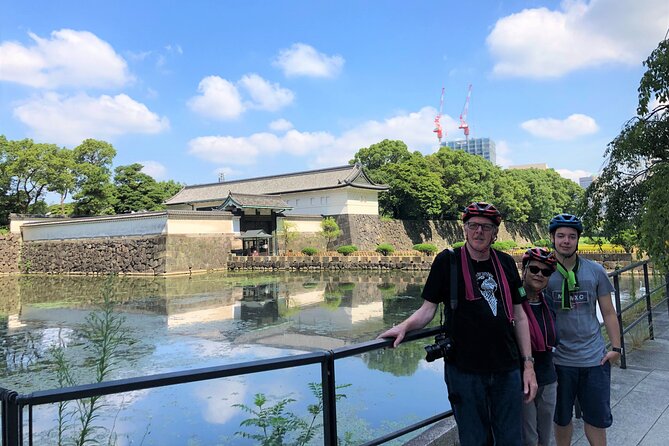
The guide is central to this experience. Yo is described as friendly and patient, and guides including Take, Kazu, Ted, Jenny, Ninja, and Yoshihisa have led rides. The strongest pattern is a guide who combines safety reminders with explanations about history, food, neighborhoods, and local customs.
You should expect regular stops for photos and short talks. The guide keeps the group together, but you still need to watch the rider in front of you. It is possible to fall behind, especially at intersections or when looking around, so stay alert rather than drifting into your own sightseeing pace.
The bikes are described as easy to operate, with strong frames and front baskets for a water bottle or small bag. You do not need to be an athlete, but you do need normal bicycle control and enough fitness for three hours in city conditions.
Families can be a good match if children are at least 12 years old, at least 147 centimeters tall, and comfortable riding in traffic. The experience has worked well for families with teenagers, but parents should be honest about their children’s road confidence. The guide can be patient and safety-focused, but cannot remove the demands of urban cycling.
Heat, rain, and other practical limits
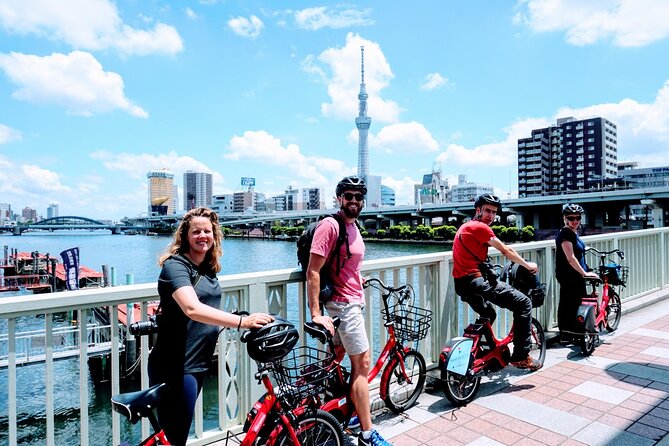
Tokyo’s July and August weather deserves serious attention. Heat and humidity can make a three-hour ride tiring even with electric assistance. Bring water, sunscreen, suitable clothing, and a towel. The operator uses the Japanese Wet-Bulb Globe Temperature, or WBGT, as one reference when deciding if conditions are unsafe.
If the guide decides conditions are dangerous during the ride, the route may stop and return to the starting point. In that case, the tour fee is refunded according to the stated safety policy. Rain can also lead to cancellation, with the decision generally made after checking the forecast the day before. Simple rain gear is provided, but you may still want your own glasses or gloves for comfort.
The tour runs on Sundays and public holidays as well as regular weekdays. Confirmation is sent within 48 hours, subject to availability. A minimum of two people is required for a departure, although a solo booking can join if other people are booked. The cancellation policy allows a full refund when you cancel at least 24 hours before the start time. Weather or minimum-participant cancellations offer a different date or a full refund.
Who should book this Tokyo e-bike tour?
I would choose this ride early in a Tokyo visit, especially if you want help understanding how the central districts connect. It gives you a useful mix of landmark views, local streets, food areas, and cultural explanations in one manageable outing.
It suits first-time visitors who want an overview, families with older children, and returning visitors who prefer side streets to a checklist of famous attractions. It also works for anyone who finds Tokyo’s train system efficient but visually frustrating.
I would think twice if you dislike city traffic, cannot ride a bicycle, or want long, unhurried visits at each sight. This is a moving tour with short stops. Also check the forecast carefully before booking a summer departure, since intense heat and rain can alter the plan.
Should you book it?
At $63.01, this is a solid value if you see it as both transportation and orientation. You cover more ground than a walking tour, get the ease of electric assistance, and have a local guide to explain the places between the major sights.
Choose the morning ride for Tokyo Station, the Imperial Palace, Ginza, Tsukiji, and quieter central streets. Choose the afternoon ride for Akihabara, Kappabashi, Asakusa, and the sumo district. If you can handle busy roads and accept short sightseeing stops, this is a smart, active way to get your bearings in Tokyo without spending three hours underground.
FAQ
How long is the Tokyo e-bike tour?
The tour lasts approximately three hours and finishes back at the Cycling Holiday Tokyo meeting point.
Where does the tour start?
It starts at Cycling Holiday Tokyo, 3-chome-8-6 Uchikanda, Chiyoda City, Tokyo. The shop is about a one-minute walk from the west exit of JR Kanda Station.
Are morning and afternoon routes the same?
No. The morning route includes Tokyo Station, the Imperial Palace, Ginza, Tsukiji, and Nihonbashi. The afternoon route includes Akihabara, Kappabashi, Asakusa, Ryogoku, and Nihonbashi.
What is included in the price?
The price includes an electric-assist bicycle, helmet, English-speaking guide, insurance, simple rain gear, and luggage storage for nonvaluable items. Winter gloves and summer cooling products are also provided.
Is food included?
No. Food and drinks are self-pay at the shop or along the route.
How many people can join?
The maximum is six people per booking and the activity has a maximum of six participants. The tour requires at least two participants to operate.
What is the minimum age?
The minimum age is 12 years.
Is there a height requirement?
Yes. Participants must be at least 147 centimeters tall.
Can someone who does not ride a bicycle join?
No. You must be able to ride a bicycle to take part.
What happens if it rains?
The tour may be canceled in poor weather. You will be offered another date or a full refund. If rain begins during the ride, the guide decides whether it is safe to continue or return to the meeting point.
More 3-Hour Experiences in Tokyo
- Tokyo: 3-Hour Food Tour of Shinbashi at Night
★ 4.9 · 45 reviews - 3-Hour Kyoto Insider Sake Brewery Tour with Tastings & Pairings
★ 5.0 · 917 reviews - Kyoto: 3-Hour Fushimi Inari Shrine Hidden Hiking Tour
★ 4.9 · 270 reviews - Kyoto Imperial Palace & Nijo Castle Guided Walking Tour – 3 Hours
★ 4.5 · 106 reviews
More Electric Bike Rides in Tokyo
- Tokyo: 3-Hour Bike or E-Bike City Highlights Tour
★ 4.8 · 435 reviews - Tokyo: 3h Private E-bike Tours, Starting at Your Hotel
★ 5.0 · 36 reviews - Hidden Kyoto E-Biking tour
★ 5.0 · 1,843 reviews - 5 Top Highlights of Kyoto Full Day Bike Tour (E-bike option)
★ 5.0 · 511 reviews
Just added around Tokyo
- Kawagoe Japanese Food Tour : Unagi Kaiseki and Sake near Tokyo★ 5.0 · 30 reviews
- Kawagoe 4hr Private Tour with Licensed Guide (Kawagoe Dep)★ 5.0 · 13 reviews
- Little EDO Sushi Making workshop in Kawagoe★ 5.0 · 18 reviews
- 【R34】Tokyo:Private Daikoku tour in Modified R34★ 4.9 · 92 reviews
- :Tokyo,Shibuya/ Pro Photography in Kimono / English-Friendly★ 5.0 · 26 reviews
- Tokyo:Celebrate Unique Japanese New Year Tradition Festivity★ 3.9 · 20 reviews
- Tokyo: Allstar Food Tour★ 4.7 · 29 reviews
- Tokyo: West-Side Cycling and Food Tour with Guide★ 5.0 · 37 reviews
Cycling Tours, compared.
Arashiyama Bamboo Forest & Hidden Gems Bike Tour (Early Bird)
Our verdict →
Browse the lists this tour appears in