
Reviewed · CYCLING TOURS
Tokyo: 3-Hour Bike or E-Bike City Highlights Tour
Tokyo makes more sense from a bicycle. In three hours, you can roll from the calm grounds of Zojo-ji Temple to the Imperial Palace, Tokyo Station, Aoyama, and Shibuya Crossing without spending your day underground. I especially like the wide mix of old and new Tokyo and the chance to see side streets that a standard sightseeing bus would miss.
I also like the friendly guides and small-group feel. Guides including Naoki, KJ, Atsu, Rinto, and Kosei have earned praise for clear English, good safety habits, and useful local suggestions. The catch is simple: this is real city cycling, not a gentle park ride. You may move between sidewalks and roads, and you need to feel comfortable riding near traffic.
Key points at a glance
- A 15 to 20-kilometer city ride: The exact route can vary, but you cover a broad stretch of central Tokyo in three hours.
- A useful first-day orientation: You see major districts and landmarks quickly, then can return later by train or on foot.
- Two bike choices: Use a Bianchi or Fuji cross bike, or choose an e-bike for hills, distance, or limited cycling stamina.
- A strong old-meets-new route: Zojo-ji Temple, the Imperial Palace, Tokyo Station, Akasaka Palace, Cat Street, and Shibuya all fit into one outing.
- Good guide support: English and Japanese are available, with guides who explain local history and watch the group’s pace.
- A practical safety note: Helmets cost an extra ¥1,000 each in cash, and road riding is part of the experience.
Why a bicycle works so well in Tokyo
Tokyo is enormous, but its central districts are close enough to connect by bicycle. The train system is superb, yet trains can make the city feel like a series of separate stations. On a bike, you see the transitions: a temple wall giving way to office towers, a quiet tree-lined avenue leading toward a stadium, or a polished shopping street opening onto a famous crossing.
This tour gives you that connecting thread. You are not stopping at one attraction and rushing back to a station. You are moving through Tokyo as a functioning city, with time for short photo stops and guide commentary.
The pace is sightseeing rather than athletic training. Still, the ride may cover about 15 to 20 kilometers, depending on the day’s route and group. If you cycle only now and then, I would choose the e-bike. It takes the worry out of hills and helps you keep up without turning the outing into a workout.
The standard bikes are high-quality cross bikes from Bianchi and Fuji. An e-bike is available as a separate option when booking. A small pouch on the bike holds a phone, wallet, or key, and bike insurance is included.
More Bike Tours in Tokyo
- Tokyo Guided Small-Group Biking Tour
★ 5.0 · 1,250 reviews - Tokyo Great Cycling Tour
★ 5.0 · 811 reviews - Tokyo Top Highlights 3h Guided E-bike Tour
★ 5.0 · 714 reviews
Starting near Commodore Perry in Shiba
The meeting point is by the Statue of Commodore Perry, about a three-minute walk from Daimon Station’s A6 exit. This puts you near Shiba Park and one of the city’s best early contrasts: a busy central district with a temple complex and parkland nearby.
The guides get the group organized here before setting out. Private and small-group formats are available, which matters in city traffic. Smaller groups are easier to manage at crossings and make it simpler to ask questions.
You should arrive in comfortable clothes and shoes, with water. Tokyo’s weather can change the feel of the ride quickly. In warm months, the effort and humidity may be tiring. In wet weather, bring or buy a rain poncho. A convenience store stop may be possible on some outings, and one group enjoyed a quick 7-Eleven break during the ride.
Zojo-ji Temple and the first look at old Tokyo
Zojo-ji Temple is the first major stop, with about 15 minutes for a visit and guide explanation. The temple sits beside Shiba Park and near Tokyo Tower, making it an efficient place to see traditional religious architecture against a modern city backdrop.
This stop is more than a quick photograph. Your guide can explain the temple’s role and the customs you are seeing, though the amount of detail depends on the guide and the group. Atsu, Naoki, and several other guides have been praised for making these short stops informative without slowing the route too much.
The visit is brief, so do not expect a full temple tour. Think of it as a clear introduction to Tokyo’s older side before the ride moves into government and commercial districts.
Hibiya Park and the Imperial Palace grounds
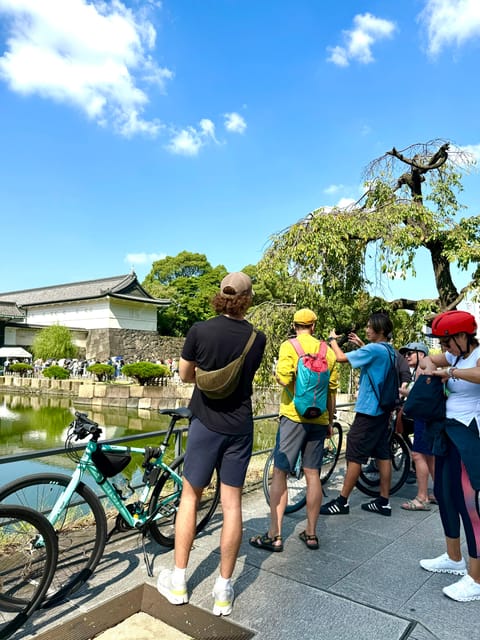
The route then reaches Hibiya Park for a short visit. It is a welcome change from the surrounding avenues and office buildings, though the listed stop is only about three minutes. You may have time for a quick look rather than a long walk through the park.
The Imperial Palace receives a longer stop of about 15 minutes, including a guided visit and photographs. The palace itself is not presented as an interior tour. The value is in seeing the surrounding grounds, moats, walls, and carefully ordered public spaces from outside.
This is a good place to ask questions about Tokyo’s government district and the role of the Imperial Palace in the city. The tour keeps moving, so you will not get the extended gardens experience available on a dedicated palace visit. For a first look, however, it gives you the setting without using half a day.
More City Tours in Tokyo
- Tokyo: Private City Highlights Tour with Local Guide
★ 4.8 · 1,433 reviews - Day Private City Tour of Tokyo with English speaking driver
★ 5.0 · 94 reviews - Tokyo City Tour by Private Car & English guide
★ 5.0 · 91 reviews - Tokyo: Private City Highlights Tour
★ 4.9 · 13 reviews
Tokyo Station, Ote-mon Gate, and Chidorigafuchi
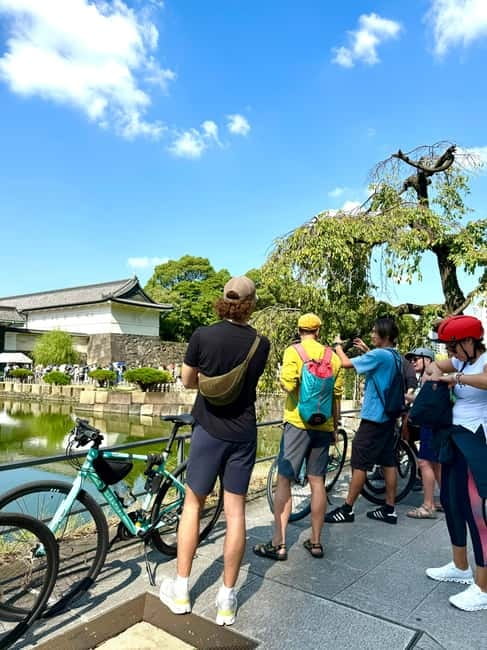
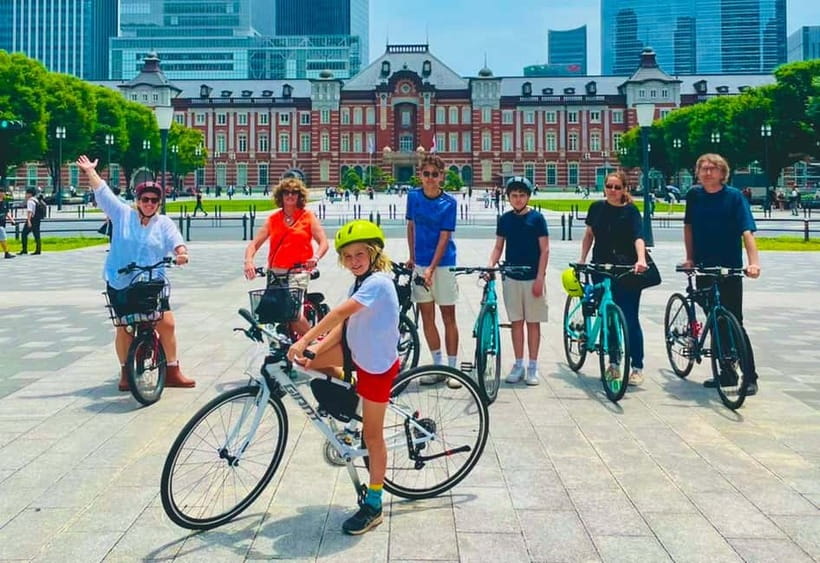
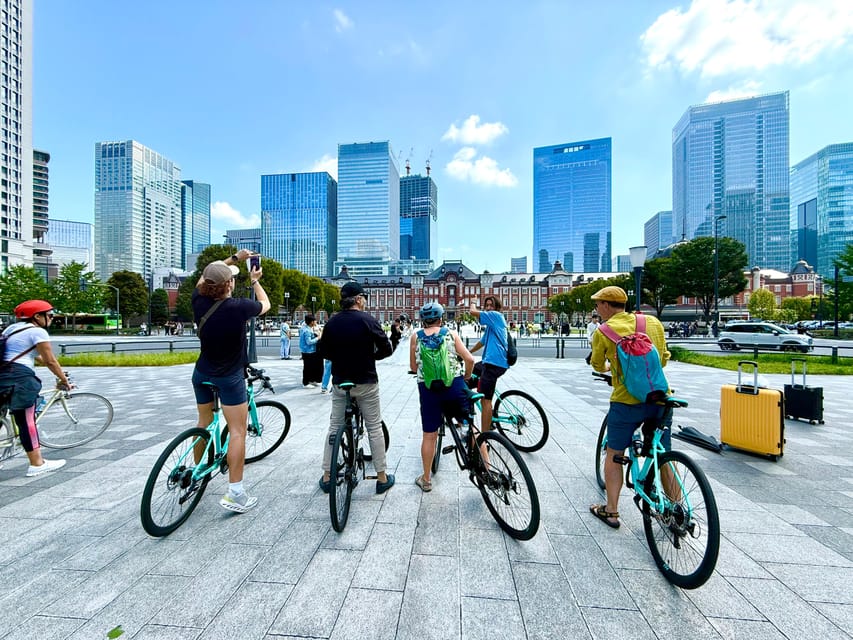
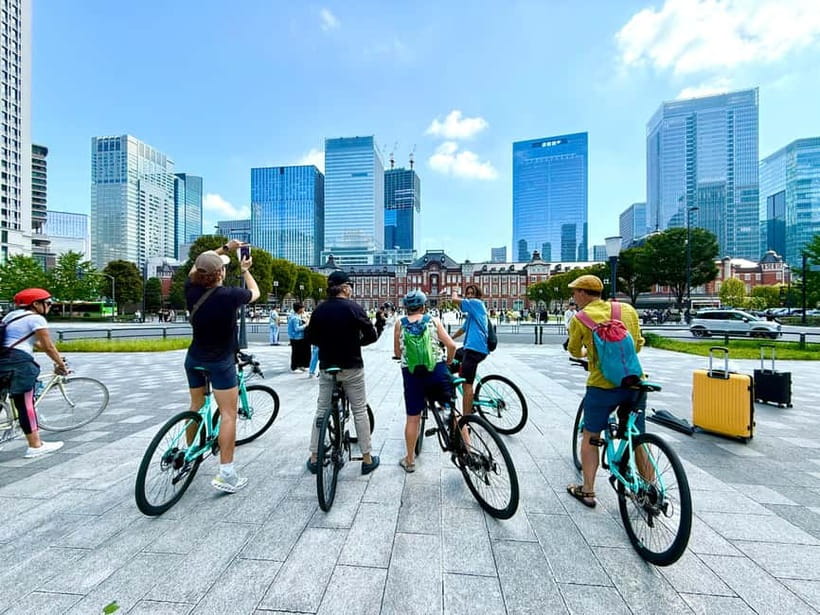
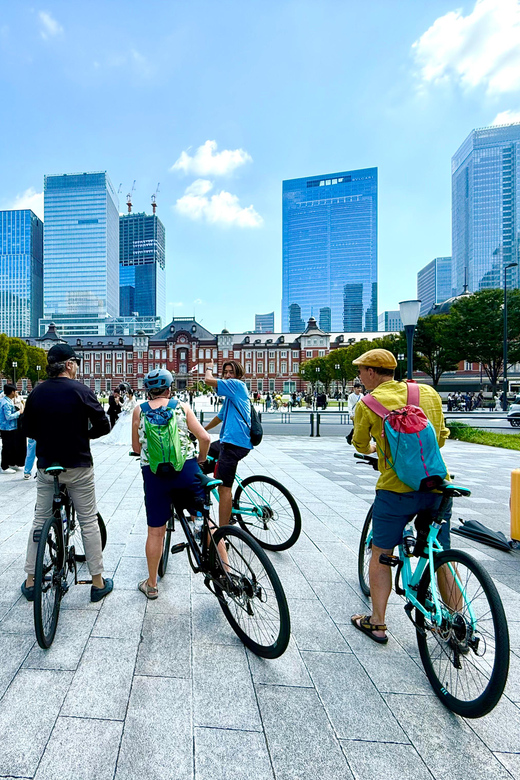
Tokyo Station is one of the route’s best architecture stops. You have roughly 10 minutes for photographs and a look around. The red-brick station building gives the ride a different visual note after the temple and palace grounds.
Next comes Ote-mon Gate, with around five minutes for a photo stop. Its scale and design help you picture the old defensive edge of the palace area. Chidorigafuchi follows, with a short break and another photo opportunity.
These stops are quick by design. The tour is trying to show you several parts of central Tokyo rather than provide lengthy visits at each one. I like this approach if you want orientation, but it can feel rushed if you prefer to study architecture or take many photographs.
A guide also makes these short pauses more useful. You get context while the group gathers, then return to the bike before the ride loses momentum.
Akasaka Palace and the National Stadium
The State Guest House Akasaka Palace is another photo stop, scheduled for about 10 minutes. Its formal architecture gives you a look at Tokyo’s diplomatic and ceremonial side. You may not have time to tour inside, so check your expectations before booking.
The New National Stadium follows with about 10 minutes for a visit and photographs. The stadium adds a modern sports landmark to a route already filled with temples, palace walls, and older civic buildings.
This pairing shows why the bicycle format works. You are not seeing Tokyo as one single style. The route keeps shifting between formal avenues, parks, major public buildings, and local streets.
A lesser-known stop, Aoyama, and Cat Street
The itinerary includes a stop described simply as a hidden local spot, with about 15 minutes for a guided visit. The precise location can vary, so do not book expecting one fixed attraction. The benefit is that your guide can show you a less obvious part of the city and explain what makes it worth noticing.
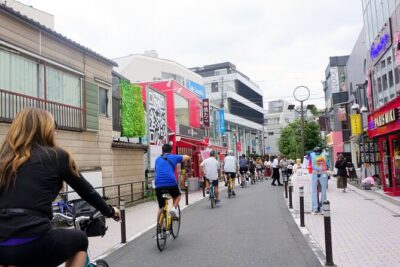
The route then passes Aoyama St. Grace Cathedral for a short sightseeing and photo stop. After that, Cat Street offers a more youthful and stylish side of Tokyo. The visit is only about five minutes, but cycling through the area gives you a quick sense of its shops, streets, and changing character.
Several people have appreciated the back streets on this part of the ride. That is a key difference from a standard landmark checklist. You are not only pausing at famous buildings; you are also seeing how Tokyo’s neighborhoods connect.
Finishing at Shibuya Crossing
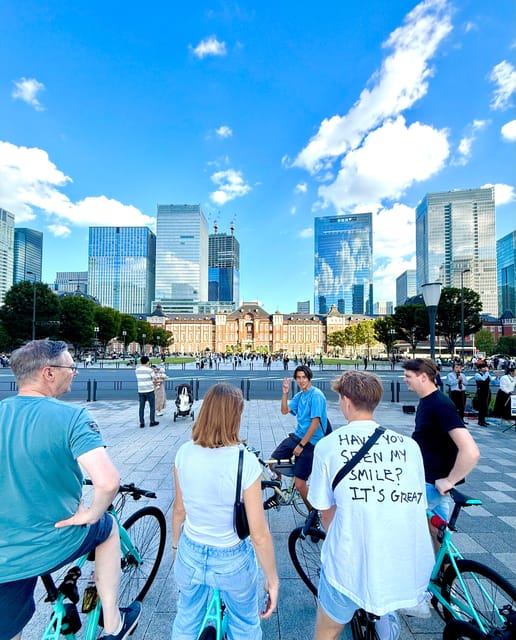
The final major area is Shibuya. You stop near Shibuya Crossing for around 10 minutes, with the guide explaining the scene and helping with photographs. Tower Records Shibuya is another brief photo and sightseeing stop.
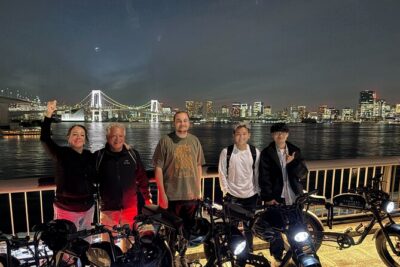
This is a fitting finish because the ride begins near a temple and ends amid Tokyo’s famous neon and pedestrian energy. Some departures may reach Shibuya in the evening, when the signs and crossing are especially striking. One outing included a night ride through Shibuya and found the traffic manageable, but conditions and timing can vary.
The tour finishes at the Bell of Peace. From there, you are well placed to continue exploring Shibuya, eat, shop, or use public transport. The ending is practical rather than isolated.
What the guides add
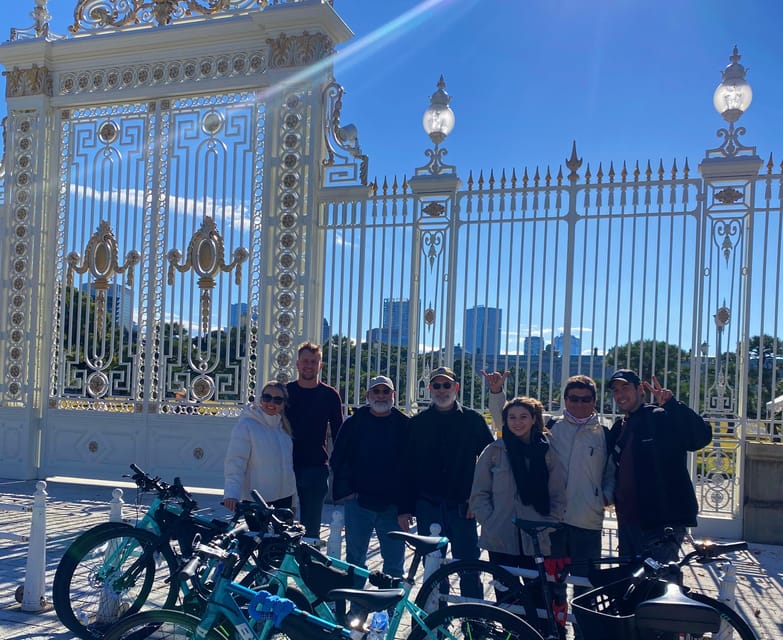
The guides are a major part of the experience. Naoki appears repeatedly as a friendly, engaging guide who explains traditions, checks the group’s comfort, and offers suggestions for later in your trip. KJ has been praised for being warm and enthusiastic, while Atsu and Rinto have been noted for clear explanations and careful group support.
You should expect conversation, not a nonstop lecture. One useful description of the format is that it feels more like a sightseeing ride with guide commentary than a formal history seminar. That suits most people. You get stories at the key stops, then time to watch the city while riding.
The guides also help with the practical side of Tokyo cycling. They divide larger bookings into smaller riding groups when needed, watch the pace, and help people feel secure. One important point remains: a guide can manage the route, but cannot remove the need to ride near traffic.
Standard bike or e-bike?
Choose the standard cross bike if you cycle regularly and want a more active ride. The Bianchi and Fuji bikes are intended for city distance, and the route gives you a proper sense of moving through Tokyo under your own power.
Choose the e-bike if you do not cycle often, are unsure about hills, or want to save energy for the rest of your day. Several outings found the electric assistance especially useful on inclines and after a late night. You still pedal and still need to handle the bike, but the effort is more forgiving.
The tour is not suitable for children under 12, pregnant people, people with back problems, or anyone who cannot ride a bike. Children aged 12 and older may be able to join, but you should consider their confidence around traffic and the length of the ride.
Helmets are not included in the stated price. You can get one on site for ¥1,000 per helmet, paid in cash. I would budget for one, especially if you are unfamiliar with city cycling.
The price and practical value
At $45 per person, this is a strong value if you want a broad first look at Tokyo. You are paying for three hours of riding, a bike, an English-speaking guide, local explanations, a phone pouch, and bike insurance. It also saves you the effort of planning a route across several districts.
The value is less clear if you want long visits at each landmark. The stops are mostly short, and the tour does not replace a dedicated visit to the Imperial Palace area, Zojo-ji Temple, or Shibuya.
I see it as an orientation tour. Book it near the start of your Tokyo stay, then return to the places that catch your interest. Several people have found that doing the ride early helped them understand the city and plan the rest of their visit.
Free cancellation is available up to 24 hours before the start, and you can reserve now and pay later. Starting times depend on availability.
Who should book this ride?
You should book if you want to cover a lot of ground quickly, enjoy seeing a city at street level, and feel comfortable on a bicycle. It works well for friends, couples, solo visitors, and families with older children who can manage city riding.
It is also a good fit if Tokyo feels too large to organize on your own. The route links Shiba, the palace district, Akasaka, Aoyama, and Shibuya in one clear outing.
Think twice if you dislike traffic, need frequent long breaks, or want a slow, detailed visit at every stop. Rain, heat, and a heavy schedule can make three hours feel longer. For most casual cyclists, the e-bike is the safer choice for comfort.
Should you book it?
I would book this tour early in a Tokyo visit, especially with the e-bike option if you are not a regular cyclist. The mix of Zojo-ji Temple, palace scenery, Tokyo Station, parks, side streets, Cat Street, and Shibuya gives you a useful mental map in one morning or afternoon.
Book it for movement, orientation, and local conversation, not for deep time inside attractions. If you can handle road riding and accept short stops, $45 buys a lively and efficient introduction to central Tokyo.
FAQ
How long is the Tokyo bike tour?
The tour lasts three hours.
How much does the tour cost?
The stated price is $45 per person.
Where does the tour meet?
Meet the guide near the Statue of Commodore Perry, about a three-minute walk from Daimon Station’s A6 exit.
Where does the tour finish?
The ride finishes at the Bell of Peace.
Which landmarks does the tour visit?
The route includes Zojo-ji Temple, Hibiya Park, the Imperial Palace, Tokyo Station, Ote-mon Gate, Chidorigafuchi, Akasaka Palace, the New National Stadium, Aoyama St. Grace Cathedral, Cat Street, Shibuya Crossing, and Tower Records Shibuya.
Are e-bikes available?
Yes. You can select an e-bike option when booking. It is recommended if you do not cycle often or are concerned about distance and stamina.
What bicycle brands are available?
The standard bikes include high-quality Bianchi and Fuji cross bikes.
Are helmets included?
No. Helmets are available on site for ¥1,000 each, paid in cash.
What is included in the tour price?
The price includes an English-speaking guide, the selected cross bike or e-bike, local stories and information, a small bike pouch, and bike insurance.
Who cannot join the tour?
The activity is not suitable for children under 12, pregnant people, people with back problems, or people who cannot ride a bicycle.
More 3-Hour Experiences in Tokyo
- Tokyo: 3-Hour Food Tour of Shinbashi at Night
★ 4.9 · 45 reviews - 3-Hour Kyoto Insider Sake Brewery Tour with Tastings & Pairings
★ 5.0 · 917 reviews - Kyoto: 3-Hour Fushimi Inari Shrine Hidden Hiking Tour
★ 4.9 · 270 reviews - Kyoto Imperial Palace & Nijo Castle Guided Walking Tour – 3 Hours
★ 4.5 · 106 reviews
More Electric Bike Rides in Tokyo
- 3h Tokyo E-Bike Tour: Hidden Gems, and Local Life with guide
★ 5.0 · 670 reviews - Tokyo: 3-hour Guided E-Bike Tour of the City’s Hidden Gems
★ 4.8 · 251 reviews - Tokyo: 3-Hour Bike or E-Bike Tour of City’s Hidden Gems
★ 4.7 · 81 reviews - Tokyo: 3h Private E-bike Tours, Starting at Your Hotel
★ 5.0 · 36 reviews
Just added around Tokyo
- Kawagoe Japanese Food Tour : Unagi Kaiseki and Sake near Tokyo★ 5.0 · 30 reviews
- Kawagoe 4hr Private Tour with Licensed Guide (Kawagoe Dep)★ 5.0 · 13 reviews
- Little EDO Sushi Making workshop in Kawagoe★ 5.0 · 18 reviews
- 【R34】Tokyo:Private Daikoku tour in Modified R34★ 4.9 · 92 reviews
- :Tokyo,Shibuya/ Pro Photography in Kimono / English-Friendly★ 5.0 · 26 reviews
- Tokyo:Celebrate Unique Japanese New Year Tradition Festivity★ 3.9 · 20 reviews
- Tokyo: Allstar Food Tour★ 4.7 · 29 reviews
- Tokyo: West-Side Cycling and Food Tour with Guide★ 5.0 · 37 reviews
Cycling Tours, compared.
Arashiyama Bamboo Forest & Hidden Gems Bike Tour (Early Bird)
Our verdict →
Browse the lists this tour appears in