
Reviewed · WALKING TOURS
Gion Walking Tour by Night
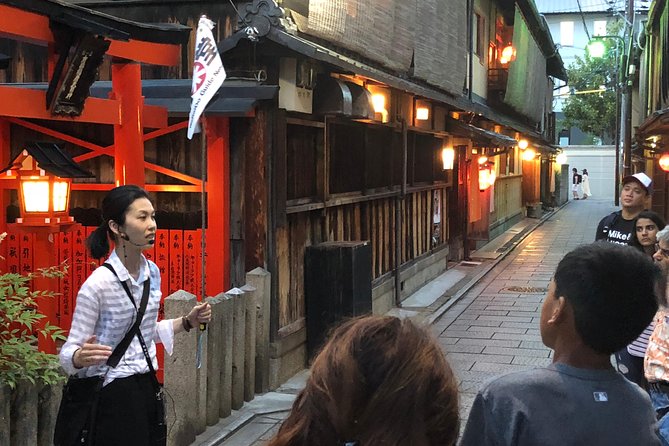
Gion becomes most atmospheric after sunset, when lanterns glow along the narrow lanes and the Shirakawa River reflects the old wooden facades. This two-hour walk gives you a guide to point out the streets linked with Memoirs of a Geisha and explain the difference between geiko and maiko, terms that can be confusing at first.
I like the way the tour combines practical navigation with cultural detail. I also like its modest price, about $19.82, which makes a guided introduction to Gion easier to fit into a Kyoto itinerary. The main drawback is group size: the standard outing can reach 20 people, and one account found the group larger than expected.
Key points to know before you book
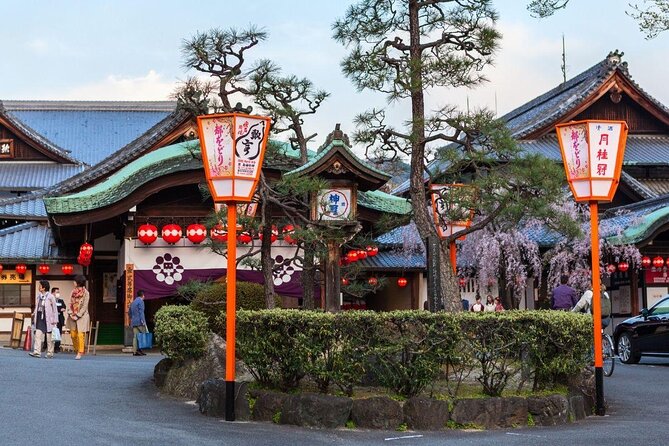
- The walk follows Gion’s narrow lanes and the Shirakawa River, including scenery associated with Memoirs of a Geisha.
- Guides explain geiko and maiko culture, including kimono, hairstyles, makeup, training, tea houses, house mothers, and daily routines.
- The tour starts at 5:30 pm, with reception from 5:00 pm. Late arrivals may miss the group.
- Sightings are possible but never guaranteed, so book this for the explanation and setting, not for a promised geiko or maiko encounter.
- The standard group may be as large as 20 people, while a smaller option guarantees fewer than 12.
- Mia, Mai, Cheko, and Mae are among the guides praised by name, with English ability, humor, and clear explanations often singled out.
Why Gion works best after dark
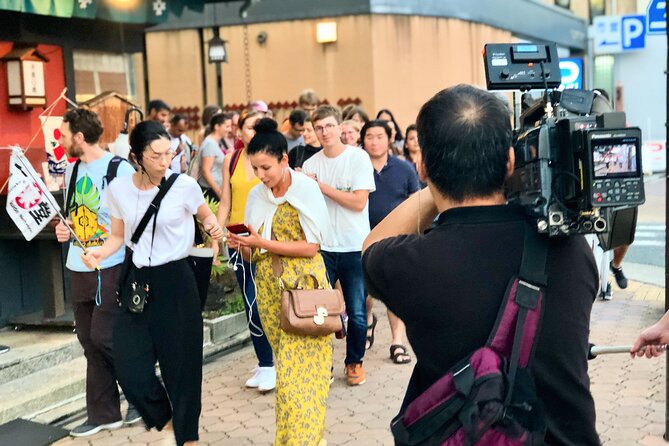
Gion is Kyoto’s best-known geisha district, though geisha is not the usual local term here. In Kyoto, you will hear geiko, meaning a fully trained entertainer, and maiko, meaning an apprentice. Your guide explains these distinctions while you walk, which helps you look at the district with more care and less confusion.
The timing matters. The 5:30 pm start brings you into Gion as evening activity begins, and the walk continues through streets that can be difficult to follow on your own. Some lanes are narrow and not clearly marked. A guide does more than lead the way: the guide gives you a reason to pause at certain doors, streams, alleys, and traditional buildings.
You should not expect a theatrical performance or a staged meeting. This is a walking tour about place, custom, and observation. If you happen to see geiko or maiko heading to evening appointments, you will be reminded that this is a working district, not a theme park.
That distinction is important. You are asked to observe respectfully and avoid treating people as photo subjects. The guides explain the customs behind what you see, which makes a brief glimpse more meaningful.
More Walking Tours in Kyoto
- Kyoto Geisha Walking Tour: Gion District & Hidden Gems
★ 4.7 · 3,273 reviews - Kyoto: Gion Magical Night Walking Tour with Geisha Trivia
★ 4.9 · 2,393 reviews - Kyoto: Gion Geisha District Walking Tour – Stories of Geisha
★ 4.7 · 2,187 reviews
Starting at 178 Tokiwacho
The meeting point is 178 Tokiwacho in Higashiyama Ward. Reception begins at 5:00 pm, while the walk starts at 5:30 pm. You should arrive early enough to identify the guide and settle in, since the tour does not wait for late arrivals.
This is one of the practical points that deserves attention. One booking failed because the participant arrived expecting a 6:00 pm departure, while the scheduled start was 5:30 pm. The tour provider stated that the earlier time had been confirmed through messages, but the episode shows why you should check the final start time carefully before setting out.
The tour ends back at the meeting point. Transportation to and from the area is not included, and there is no hotel pickup or drop-off. The location is near public transportation, so you can plan the walk as part of an evening in eastern Kyoto.
Wear comfortable shoes. The route lasts about two hours, and you will be standing and walking over streets that may be uneven. A moderate level of physical fitness is expected.
Shirakawa River and the old lanes of Gion
The walk takes you beside the Shirakawa River, one of Gion’s most attractive stretches. The water, stone edges, wooden buildings, and evening light create a setting that feels far removed from Kyoto’s wider streets.
This is also the part most closely tied to Memoirs of a Geisha. The film and novel helped make Gion familiar to a worldwide audience, and your guide points out areas connected with the story. That film connection is interesting, but it is not the main reason to come. The stronger experience is seeing how the lanes, tea houses, and riverfront fit together as a living part of Kyoto.
Your guide stops along the route to explain the district’s past and present. You may hear about the structure of a geisha house, the role of the house mother, the education of geiko and maiko, and the way evening appointments work. The information gives you a useful framework for the rest of your Kyoto visit.
The route is not designed as a museum tour. You will not enter every building, and admission tickets are not required for the walk. Much of the value comes from knowing what you are looking at and why certain streets matter.
What you learn about geiko and maiko
The strongest part of the tour is the explanation of geiko and maiko life. Guides cover the details that are easy to miss in photographs: kimono, hair ornaments, makeup, hairstyles, training, etiquette, and the rules that shape daily life.
You will also learn that the familiar image of a woman in elaborate dress does not tell the whole story. The guide helps separate popular ideas about geisha from the actual traditions of Kyoto’s entertainment districts. That makes the walk more respectful and more useful than simply searching for people in makeup.
The guide’s English matters here. Guides named Mia, Mai, Cheko, and Mae have been praised for clear explanations, humor, and an ability to answer questions. Mia, in particular, is repeatedly described as warm, funny, and well informed about Gion and geiko and maiko culture. Cheko is also praised for making the history easy to follow.
The quality can depend on the individual guide, as with any group walking tour. Still, the repeated focus on friendly English-speaking guides is a good sign for anyone worried about language barriers. You can ask about Japanese terms as you go rather than trying to sort them out later from a guidebook.
Same trip, a completely different kind of day:
- PERFECT KYOTO 1-Day Bus Tour
★ 5.0 · 13,518 reviews - Kyoto: Fushimi Inari, Kinkakuji, Bamboo Grove 1 Day Bus Tour
★ 4.8 · 4,316 reviews - Kyoto: Tea Ceremony in a Traditional Tea House in Kiyomizu
★ 4.9 · 3,519 reviews - Kyoto: Tea Ceremony Ju-An at Jotokuji Temple
★ 4.9 · 3,207 reviews
Seeing geiko and maiko without treating Gion like a show
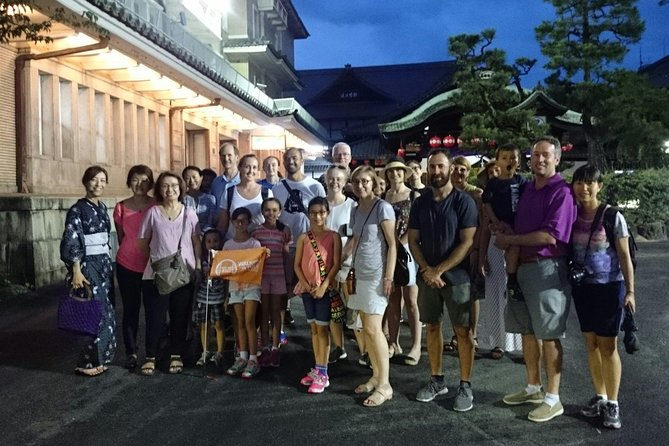
A possible sighting adds excitement, but it should be treated as a bonus. Some walks have seen several maiko or geiko heading to evening parties, while others may not see any. The activity description itself makes no guarantee.
If you do see someone, the guide can help you understand what you are seeing and may know some of the women by name. That local familiarity can add context, but it does not turn the encounter into a meet-and-greet. You should follow the guide’s instructions and remember that these women are going to work.
This is where the tour is more useful than a do-it-yourself search. Without guidance, it is easy to wander through Gion looking for a sighting and miss the meaning of the district. With a guide, you learn about the people, buildings, and customs even when the lanes are quiet.
The experience is especially well suited to a first evening in Kyoto. It gives you a basic vocabulary and a sense of place before you return to Gion for dinner or an independent walk.
Group size, guide access, and the private upgrade
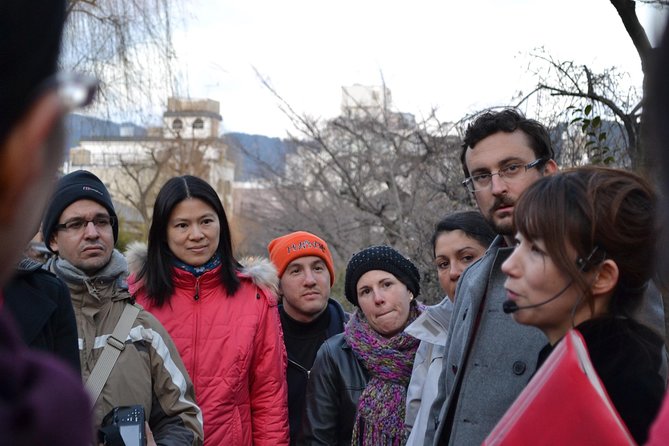
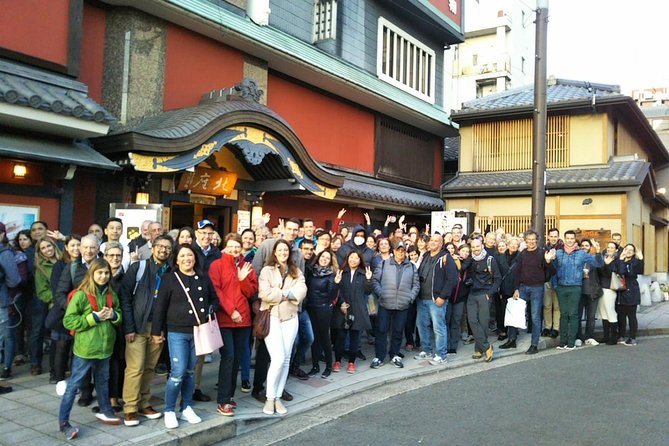
The standard booking allows up to 15 people per booking, while the overall activity may include as many as 20 people. That wording can be confusing, and one account described a group larger than expected. The guide was still audible when people stayed close, but the walk felt less personal.
A small-group option is available with fewer than 12 people guaranteed. I would consider paying the higher price for this version if you care about asking questions, taking your time at stops, or staying close to the guide without crowding around.
The standard tour can also work well. Several people found the group size reasonable, and one account described a particularly fortunate outing with only one participant. That kind of small group is not something you should count on, but it shows that the experience can sometimes be very personal.
A private upgrade is offered for anyone seeking more individual attention and a closer look at geisha culture. The available information does not specify the private tour price or exact route, so compare those details before booking. The practical advantage is clear: you can ask more questions and move at a pace that suits your group.
Is $19.82 good value?
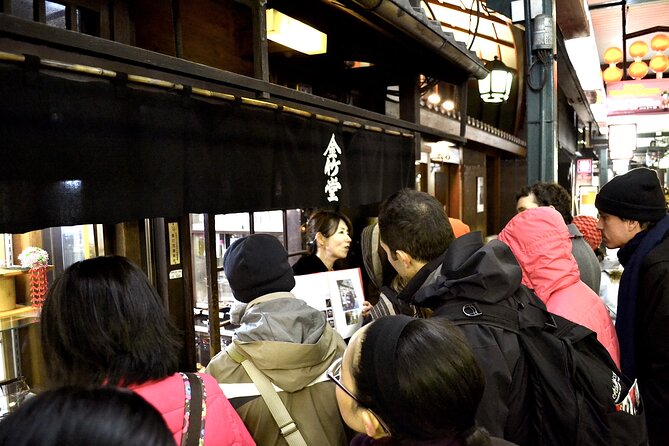
At about $19.82 per person, the standard tour is priced as an affordable introduction to Gion. The fee covers a professional English-speaking guide, while transportation, food, drinks, and hotel transfers are not included.
The value comes from interpretation, not admission. You can walk through Gion for free, but you may not recognize the important streets, understand the difference between geiko and maiko, or know how to behave around working performers. If those questions interest you, the fee is modest.
The price is less compelling if you prefer to explore at your own pace and read independently. One person found the route too fast and the explanations too general, suggesting that self-guided visitors may prefer more time at each location.
For most first-time visitors, two hours is a sensible length. It is long enough to cover the main lanes and customs without taking over your entire evening. You can continue with dinner in Gion afterward, though the tour itself does not include a meal or a cultural performance.
Group discounts are available, which may help if you are booking for several people. Check the current price for the small-group or private option, since the standard rate does not necessarily apply to those upgrades.
How the two hours feel on foot
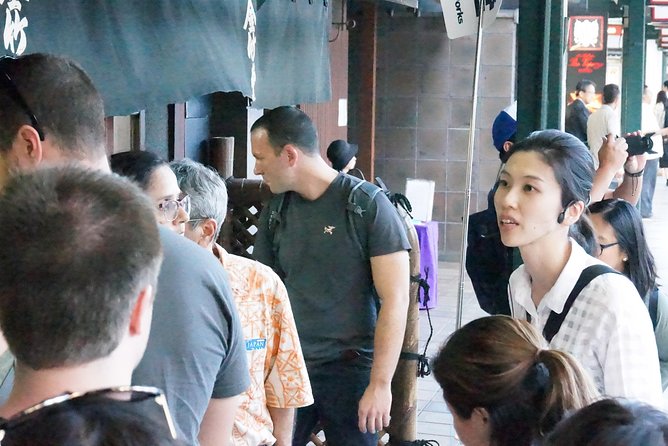
The pace is generally steady rather than strenuous. Your guide leads the group through Gion, stops to point out details, and gives explanations about the district and its entertainers.
You should be ready to walk for the full two hours. The tour is not recommended for people with serious medical conditions, and children must be accompanied by an adult. There is no indication that the route is designed for limited mobility, so anyone with mobility concerns should confirm suitability before booking.
The route’s compact nature is a strength. Gion’s narrow streets can be confusing, particularly after dark, and a guide keeps the evening orderly. The downside is that you have less freedom to pause wherever you like or leave the group for photographs.
Bring a phone with enough battery for the meeting details and any photos you take. The ticket is mobile, and confirmation is provided at booking. The experience itself does not require an admission ticket at the stops.
Weather, cancellations, and timing
The activity requires good weather. If poor weather causes a cancellation, you are offered another date or a full refund.
You can cancel for a full refund up to 24 hours before the start time. Cancellations or changes made within 24 hours are not refunded. Since the walk takes place outdoors, check the forecast before the final cancellation window closes.
The evening start is one of the tour’s best features, but it also means you should plan carefully around dinner reservations. Reception begins at 5:00 pm and the walk starts at 5:30 pm. Do not arrive at the meeting point at the supposed end of a workday and assume there will be time to spare.
Who should book this Gion walk?
I would choose this tour if you are visiting Kyoto for the first time, want a clear introduction to geiko and maiko culture, or feel uneasy finding Gion’s small lanes after dark. It is also a good fit if you want an affordable cultural activity without committing to a private dinner or performance.
The tour suits curious adults, families with accompanied children, and anyone who likes history explained through streets and buildings rather than inside a formal museum. The English-speaking guides make it useful even if you know little about Japanese customs.
I would think twice if you dislike group walking tours, need a slow pace, or mainly want a guaranteed geiko or maiko sighting. In those cases, the small-group or private option may be worth the extra cost, though no sighting is promised.
Should you book the Gion Walking Tour by Night?
Yes, for most first-time visitors to Kyoto, I would book the standard tour if the $19.82 price fits your budget. You get a well-priced introduction to Gion, a guide through lanes that are easy to miss, and useful explanations of geiko and maiko life.
Choose the small-group option if personal attention matters to you. Arrive before 5:30 pm, wear comfortable shoes, and treat any geiko or maiko sighting as luck rather than the product you are buying. The real value is learning how to see Gion with respect and understanding.
FAQ
How long does the Gion Walking Tour by Night last?
The tour lasts approximately two hours and ends back at the meeting point.
What time does the tour start?
Reception starts at 5:00 pm, and the walking tour begins at 5:30 pm. The guide cannot wait for late arrivals.
Where does the tour meet?
The meeting point is 178 Tokiwacho, Higashiyama Ward, Kyoto, 605-0079, Japan.
Is transportation included?
No. Transportation to and from the attractions, as well as hotel pickup and drop-off, is not included.
Will I definitely see a geiko or maiko?
No. Sightings may happen during the walk, but they are not guaranteed.
How many people can join the standard tour?
A booking can include up to 15 people, and the activity may have a maximum of 20 participants overall. A small-group option with fewer than 12 people guaranteed is available at a different price.
Can I cancel for a refund?
Yes. You can receive a full refund by canceling at least 24 hours before the start time. Cancellations or changes made within 24 hours are not refunded. If poor weather causes the tour to be canceled, you are offered another date or a full refund.
Just added around Kyoto
- Sekka Cotton Furoshiki Class★ 5.0 · 19 reviews
- Scenic Green Tea Fields of Hidden Kyoto & Local Tea Exp (Private)★ 5.0 · 32 reviews
- Secret Eastern Kyoto Biking Adventure★ 5.0 · 44 reviews
- Kyoto Sword Experience – includes Museum Ticket/Ninja Experience★ 4.5 · 149 reviews
- Private Sake Tasting in Central Kyoto with Sake Sommelier★ 5.0 · 32 reviews
- Samurai School in Kyoto: Samurai for a Day★ 5.0 · 202 reviews
- SHIRAKAWA Japanese Culture Experiences with private English staff★ 5.0 · 16 reviews
- A Privately Guided Photoshoot in Beautiful Kyoto by a Pro★ 5.0 · 18 reviews
Walking Tours, compared.

Kyoto Geisha Walking Tour: Gion District & Hidden Gems
Our verdict →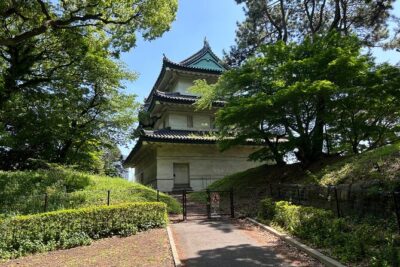
Imperial Palace and Shogun Historical Walking Tour
Our verdict →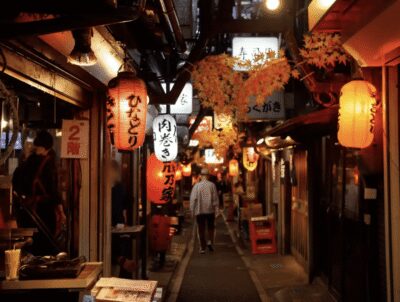
Shinjuku Local Bar and Izakaya Guided Walking Tour
Our verdict →

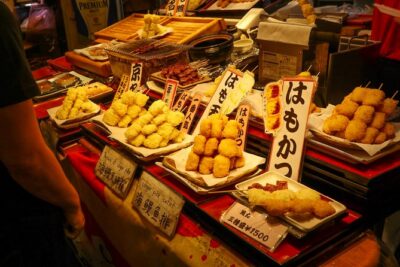
Nishiki Market Brunch Walking Tour (7 Tastings + Brunch)
Our verdict →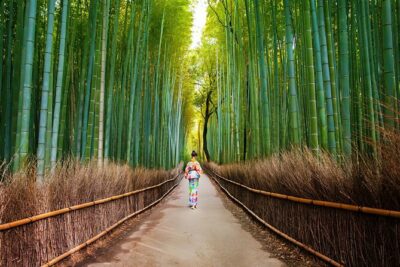
Kyoto Arashiyama Walking Tour: Bamboo, Monkeys, Gardens & Secrets
Our verdict →
Tokyo Castle & Imperial PalaceーShogun Walking Tour
Our verdict →Browse the lists this tour appears in