
Reviewed · GEISHA & MAIKO EXPERIENCES
Dance and Game with Maiko
Kyoto’s maiko are usually seen at a distance, crossing Gion in a flash of silk and careful steps. This short program gives you a much closer look, with two elegant dances, a playful traditional game, and a photo beside the performer. I like the way it brings a formal art into a compact program that fits a busy Kyoto day.
I also like the small human touches: audience members can join the game, everyone can clap along, and you receive a Senjafuda lucky charm to take home. The main caution is timing. The advertised duration is 45 minutes, but some sessions have ended closer to 30 minutes, so do not book it expecting a long cultural show.
Key points to know
- Two maiko dances: Watch graceful performances connected with Japan’s seasons, love stories, and daily life.
- A traditional audience game: Volunteers may play with the maiko, while everyone else can cheer and enjoy the comedy of the moment.
- Photo opportunity: Take a commemorative picture beside a maiko after the main program.
- Senjafuda keepsake: Each participant receives a small lucky charm at the end.
- Central Gojo location: The venue is a one-minute walk from Exit 1 of Gojo Station.
- Short but variable timing: Plan for 30 to 45 minutes, with no allowance for late arrivals.
A close look at maiko performance in central Kyoto
This program is designed for people who want to meet a maiko without giving up half a day. The setting is near Gojo Station, on the Karasuma Subway Line, so you can fit it between sightseeing stops, a meal, or an evening reservation.
You should arrive ready for a small indoor program rather than a stage production. The venue is in a building, and it is not an ochaya, the traditional tea house setting associated with geiko and maiko entertainment. That difference matters. You are not entering a historic private house or attending a full evening of traditional hospitality. Instead, you are joining a relaxed, purpose-built activity with friendly staff.
That simpler setup keeps the price down. At $28 per person, the program offers direct access to a performer, two dances, a game, a photograph, and a small gift. For a first visit to Kyoto, that is a fair price for a brief introduction to a world that is otherwise hard to access.
The performer is generally a maiko, though a geiko may appear depending on the day. The distinction is useful: a maiko is an apprentice geiko, known for more youthful styling and ornate dress, while a geiko is an accomplished professional performer. You do not get to choose which one appears, so book this for the traditional performance rather than for one specific type of performer.
More Geisha Experiences in Kyoto:
- Kyoto Geisha Walking Tour: Gion District & Hidden Gems
★ 4.7 · 3,273 reviews - Kyoto: Gion Magical Night Walking Tour with Geisha Trivia
★ 4.9 · 2,393 reviews - Kyoto: Gion Geisha District Walking Tour – Stories of Geisha
★ 4.7 · 2,187 reviews
The opening dances show maiko artistry
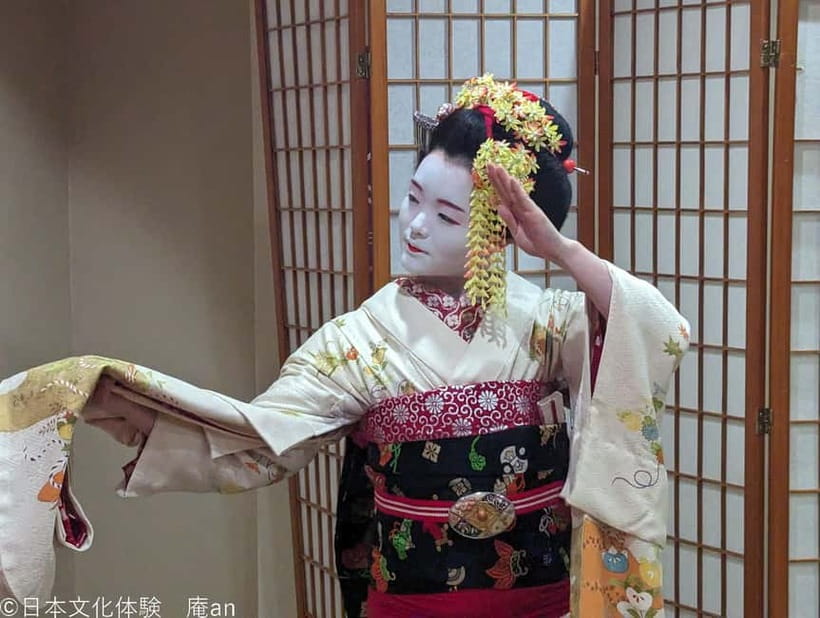
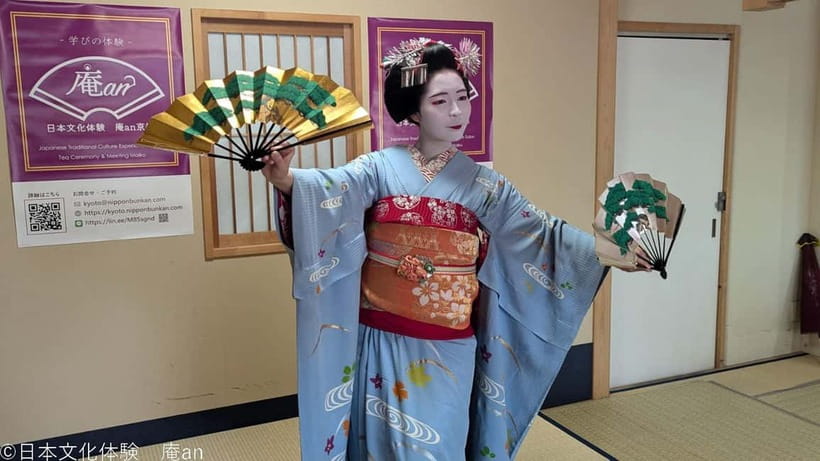
The program begins with dance. You will see two performances, accompanied by traditional music, with movements shaped by seasonal scenes, love stories, and ordinary moments of Japanese life.
Maiko dance is not about large gestures or fast choreography. Small movements carry the meaning: a turn of the head, the handling of a fan, the angle of a sleeve, or a measured step. From a nearby seat, you can notice details that are easy to miss in a distant public performance.
This is the part of the program that rewards quiet attention. Photos are allowed, and you will want to record the costumes and poses, but do not spend the entire dance looking through your phone. The most memorable details are often brief, and the performance itself lasts only a short time.
The dances also give useful context to the rest of the program. You are not simply meeting someone in elaborate clothing for a photo. You are seeing a performer use music, posture, and gesture to express a scene. That makes the later photo feel more meaningful.
The program is conducted in Japanese. English translation can be provided as much as possible if you request it, but it is not presented as a fully English-language class or lecture. If you want explanations in English, contact the operator before attending and make that request clearly.
The traditional game brings the room to life
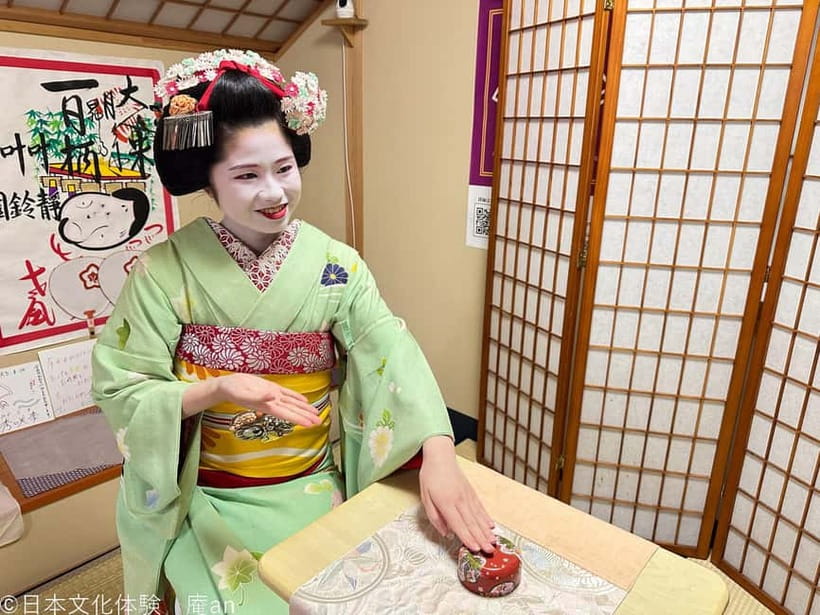
After the dancing, the tone changes. The maiko plays a simple traditional game with volunteers from the audience. You may be invited to participate, though there is no guarantee that every person who wants to play will get a turn.
This is a good part of the program for families and groups of friends because it adds some friendly tension and laughter. You do not need to understand every spoken word to enjoy the basic action. Watch the players, clap at the right moments, and join the room’s energy.
The activity is not a formal lesson in Japanese games. It is a short demonstration with audience participation. That makes it accessible, but it also means the amount of explanation may be limited, especially for people who do not understand Japanese.
If you are shy, you can simply watch. If you want your children to participate, prepare them for the possibility that they may need to volunteer in front of other people. The room can feel intimate, and some children may hesitate. A small group format can be charming, but it also puts more attention on each person who steps forward.
The photo comes after the main performance
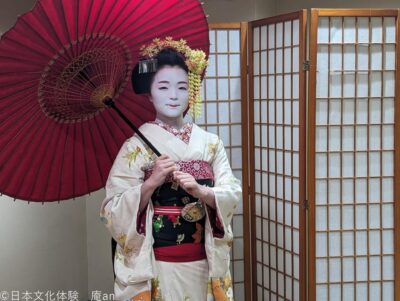
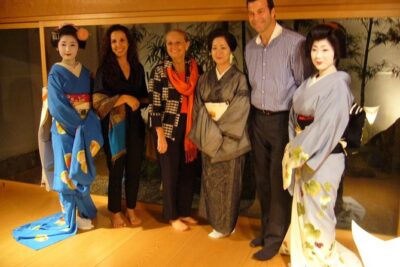
The photo opportunity takes place after the dance and game. You can stand beside the maiko for a commemorative picture, giving you a record of the meeting that a street sighting cannot provide.
This timing is practical. During the dances, you can focus on the performance. During the game, you can watch the action. The photo is saved for the end, when the main program is finished.
You should not expect a long private portrait session. The point is a shared souvenir photograph, not a personal photo shoot. Have your camera ready and follow the staff’s instructions so the line moves smoothly.
The photo also helps explain the value of the $28 price. You are paying for more than a brief appearance. The package combines a live performance, an interactive element, a photo, and a physical keepsake. It remains a short activity, but it gives you several distinct parts rather than one quick greeting.
A few more Kyoto half-days worth comparing
- PERFECT KYOTO 1-Day Bus Tour
★ 5.0 · 13,518 reviews - Kyoto: Fushimi Inari, Kinkakuji, Bamboo Grove 1 Day Bus Tour
★ 4.8 · 4,316 reviews - Kyoto: Tea Ceremony in a Traditional Tea House in Kiyomizu
★ 4.9 · 3,519 reviews - Kyoto: Tea Ceremony Ju-An at Jotokuji Temple
★ 4.9 · 3,207 reviews
A Senjafuda gives you a small Kyoto keepsake
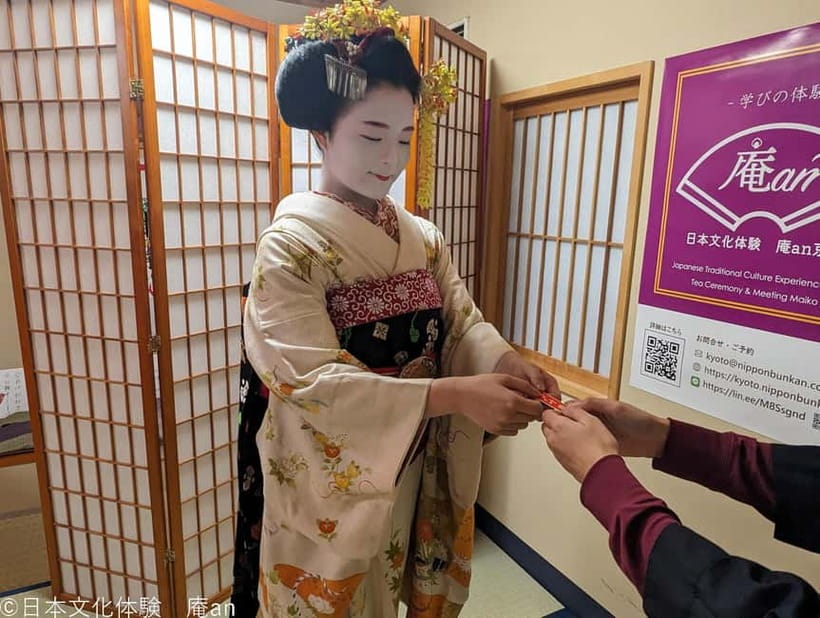
At the end, the maiko gives you a Senjafuda. These small name or lucky cards are associated with traditional performers and temples, and here the charm serves as a compact reminder of your visit.
It is not an expensive souvenir, but it is more personal than a generic shop purchase. You can tuck it into a wallet, travel journal, or passport holder. Since the program is brief, this little object helps give the meeting a lasting shape.
The gift comes after the photo, followed by the maiko leaving the room. You then have some chatting time before departure. The schedule describes the main program as ending at about 30 minutes, with photos, the Senjafuda, and conversation taking the full visit to around 45 minutes.
That explains the mixed timing people can encounter. If the dance and game finish promptly, you may leave after roughly 30 minutes. If you include the photograph and conversation, the complete visit can approach the advertised 45 minutes. Plan your day with that range in mind.
What the Gojo location means for your day
The meeting point is one minute from Exit 1 of Gojo Station. The entrance faces Gojo-dori, the main street, which makes the site relatively easy to find once you are above ground.
Gojo is a useful base for a packed Kyoto schedule. You can reach it by subway and avoid building a long taxi ride into the plan. Still, allow extra time to find the exact entrance, particularly if you are carrying luggage or arriving during a busy sightseeing period.
The building has no elevator. You will need to use stairs to reach the venue, so this activity may not suit anyone who cannot manage stairs. The supplied information does not describe a wheelchair-accessible route, and you should contact the operator before booking if accessibility is important.
Late arrival is a serious concern. The event will not be held for people who are delayed, and the operator does not compensate transportation costs if you miss it. I would schedule this before a flexible activity, not immediately before a reserved train, meal, or timed attraction.
Is $28 good value for 45 minutes?
The price is reasonable if you want direct contact with maiko culture without paying for a full dinner or tea ceremony. You get two dances, a game, a photo, and a Senjafuda for $28 per person.
The value is strongest for first-time visitors who have little chance of attending a traditional evening performance. It is also useful for people with limited time. You can see a live art form, participate in a social activity, and leave with a souvenir without committing an entire evening.
The value is weaker if you expect a formal tea house atmosphere, a detailed lecture, or a long performance. The venue is a building rather than an ochaya, and the Japanese language may limit the amount of explanation available. This is a compact introduction, not a full cultural course.
Children under two can attend free when sitting on a parent’s lap. If a separate seat or meal is needed, the regular fee applies. Anyone who does not participate in the experience cannot enter, so do not book a place for a companion who plans to wait inside.
Who will enjoy this short Kyoto activity?
I would recommend it to first-time Kyoto visitors who want a clear, approachable introduction to maiko performance. It also suits photographers, families with older children, and anyone building a day around Gojo, Kyoto Station, or central Kyoto.
It works well for people who prefer a small, focused activity over a long staged show. The dances are the heart of the program, while the game makes the visit less formal and the photo gives you a lasting record.
You may want another program if your main interest is tea ceremony. A separate tea ceremony with maiko option is available, including a premium version. Choose this dance and game program if you want performance and interaction rather than tea preparation and ceremony.
People who need step-free access, exact English interpretation, or a guaranteed 45-minute schedule should contact the operator first. The activity is Japanese-led, translation is available as much as possible on request, and the total timing can be shorter than the stated duration.
Booking, cancellation, and practical planning
You can cancel up to eight days in advance for a full refund. After that point, cancellation fees apply, and changing the date or time after a fee has been incurred can bring another specified charge.
The operation hours are 10:00 to 17:00. Reservations received after 17:00 are processed the next day, so do not expect an immediate response to a late-evening message.
Book only for people who intend to take part. The operator does not permit nonparticipants to enter, and children under two are free only when seated on a parent’s lap.
Because the instructor language is Japanese, ask for English support before the visit if you need it. Do not wait until the program begins and assume a full translation will be ready.
Should you book Dance and Game with Maiko?
Book it if you want a short, affordable, close-up introduction to Kyoto’s maiko tradition. The two dances provide the most serious cultural content, while the game, photo, and Senjafuda keep the visit warm and easy to enjoy.
Skip it if you are looking for a long formal performance, a traditional ochaya setting, or a tea ceremony. Also think twice if stairs, Japanese-language instruction, or an uncertain 30 to 45-minute schedule would cause trouble.
For most visitors with a free slot near Gojo Station, this is a sensible way to meet a maiko without reshaping the entire Kyoto itinerary. Just arrive early, keep expectations modest, and treat the program as a compact cultural encounter rather than a full evening of entertainment.
FAQ
Where does the Dance and Game with Maiko activity take place?
It takes place one minute from Exit 1 of Gojo Station on the Karasuma Subway Line. The entrance faces Gojo-dori, the main street.
How long does the activity last?
The stated duration is 45 minutes. The main dance and game portion ends at about 30 minutes, followed by the photo, Senjafuda gift, and chatting time. The visit may therefore take about 30 to 45 minutes.
What happens during the program?
You watch two maiko dances, see or join a traditional game, take a photo beside a maiko, receive a Senjafuda, and have some chatting time before leaving.
Is the venue a traditional ochaya?
No. The venue is in a building and is not an ochaya or traditional Japanese house. It offers a relaxed atmosphere with staff assistance.
Is English available?
The instructor language is Japanese. English translation can be provided as much as possible if you request it, so contact the operator before attending if you need English support.
Can children attend for free?
Children under two are free when sitting on a parent’s lap. If a separate seat or meal is required, the same fee as one person applies.
Is the building accessible by elevator?
No. The building has no elevator, and you need to use stairs to reach the venue.
Can I cancel for a full refund?
You can cancel up to eight days in advance for a full refund. Cancellation fees apply after that point, and the full cancellation terms should be checked before booking.
Just added around Kyoto
- Sekka Cotton Furoshiki Class★ 5.0 · 19 reviews
- Kyoto Sword Experience – includes Museum Ticket/Ninja Experience★ 4.5 · 149 reviews
- Scenic Green Tea Fields of Hidden Kyoto & Local Tea Exp (Private)★ 5.0 · 32 reviews
- Secret Eastern Kyoto Biking Adventure★ 5.0 · 44 reviews
- Private Sake Tasting in Central Kyoto with Sake Sommelier★ 5.0 · 32 reviews
- Samurai School in Kyoto: Samurai for a Day★ 5.0 · 202 reviews
- Samurai Performance and Casual Experience: Kyoto Ticket★ 4.5 · 115 reviews
- SHIRAKAWA Japanese Culture Experiences with private English staff★ 5.0 · 16 reviews
Geisha & Maiko Experiences, compared.
Kyoto Geisha Walking Tour: Gion District & Hidden Gems
Our verdict →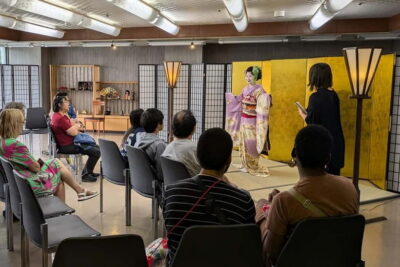
Dinner with Maiko in a Traditional Kyoto Style Restaurant Tour
Our verdict →
Browse the lists this tour appears in