
Reviewed · WORKSHOPS
Kyoto: Traditional Mini Umbrella Making Workshop
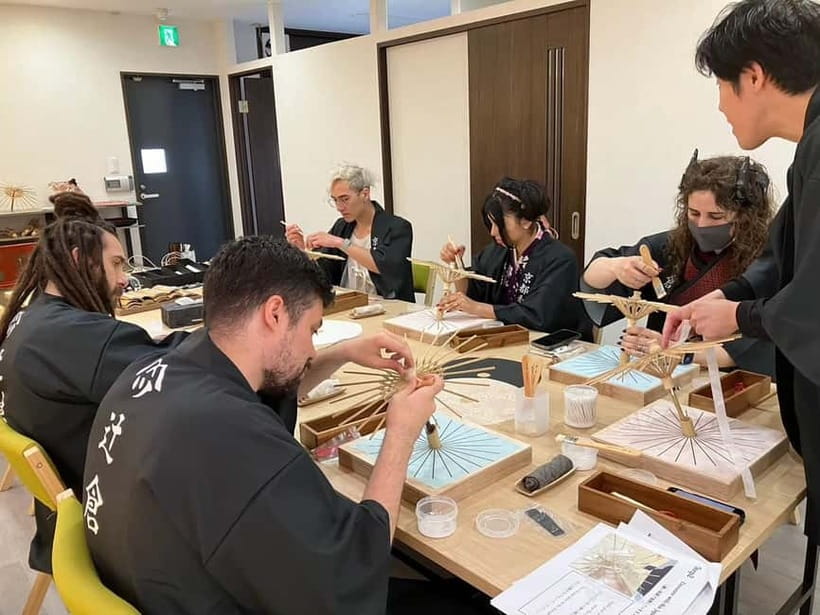
Kyoto’s traditional mini umbrella workshop gives you something more lasting than a souvenir bought in a shop. At Japan’s oldest umbrella shop, you shape and assemble a small Hime Wagasa using genuine Japanese materials, then leave with a handmade object that carries a bit of your own design.
I like two things right away: the work is hands-on, and the finished umbrella comes with a bamboo stand, decorative box, and carry bag. The patient teaching also matters. Ai Takenaka and other instructors guide you through the fiddly parts without rushing you.
The main consideration is time and concentration. Ninety minutes is enough for a satisfying project, but this is careful craft work, not a casual coloring activity. Children under six cannot take part, and small parts may test the patience of younger children.
Key points to know before you book
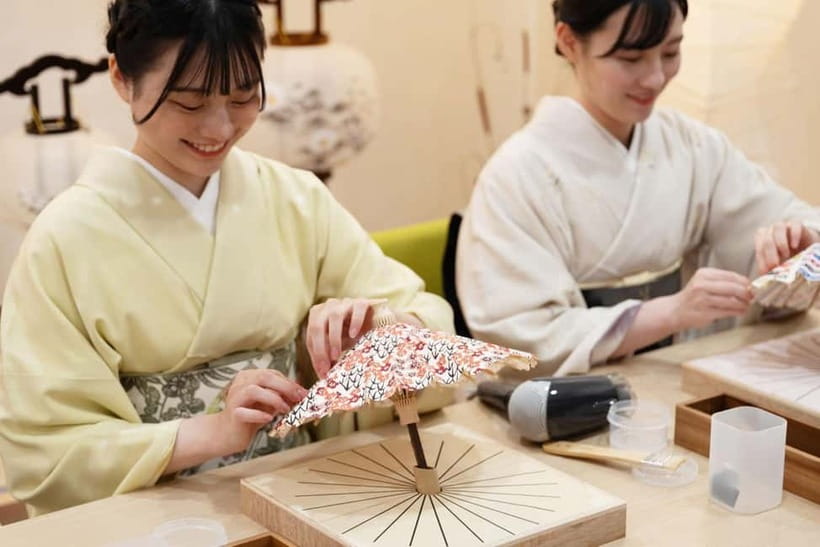
- You make a real Hime Wagasa: Use genuine Japanese materials while learning the basic steps behind a traditional mini umbrella.
- The shop is in central Kyoto: The workshop sits two minutes north of the Shijo Kawaramachi intersection, near one of the city’s main shopping districts.
- The setting feels part of the lesson: Traditional umbrellas and Japanese lighting create a calm, focused place to work.
- The finished piece is ready for display: Your price includes a bamboo stand, decorative box, and carry bag.
- English instruction is available: The workshop is taught in Japanese and English, with patient, step-by-step help.
- You can add a professional finish: A craftsman can complete extra finishing touches for an additional fee.
Making a Kyoto souvenir with your own hands
A Kyoto shopping street can fill your suitcase quickly with sweets, ceramics, fabrics, and small gifts. A handmade Wagasa gives you a different kind of keepsake. You are not simply buying an attractive object. You are spending time learning how its parts come together, then taking home the result.
The workshop focuses on a miniature Japanese umbrella rather than a full-size rain umbrella. That makes the project manageable within 90 minutes and suitable for display. The small scale also lets you pay attention to the design and construction without needing a full apprenticeship in umbrella making.
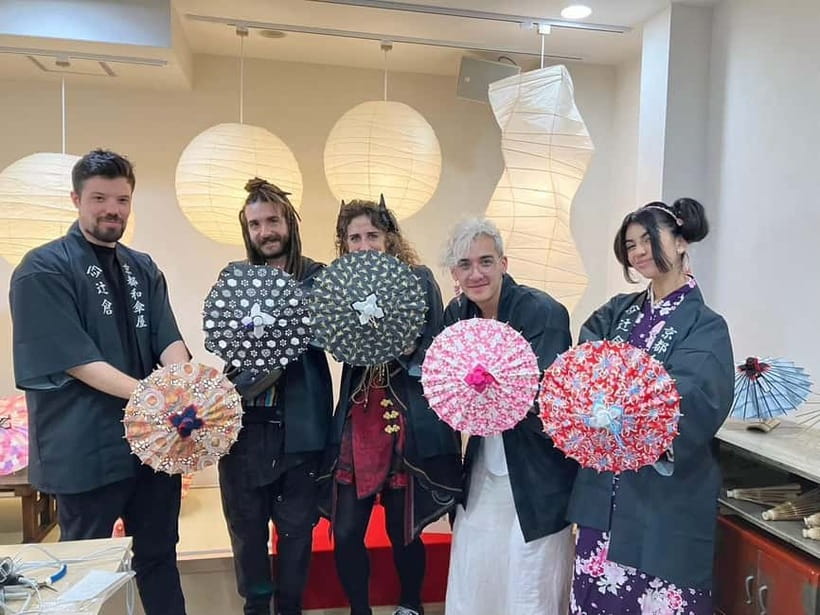
I like this balance. You get enough guidance to feel successful, but the final umbrella still belongs to you. It can reflect your choice of colors and decorative style, so two finished pieces need not look exactly alike.
The workshop also gives cultural meaning to an object you might otherwise pass without much thought. Wagasa are associated with Japanese craft and elegance, and the miniature umbrella is presented as a symbol of happiness. It works as a personal souvenir, a decoration, or a gift for someone who appreciates handmade objects.
A few more Kyoto half-days worth comparing
- PERFECT KYOTO 1-Day Bus Tour
★ 5.0 · 13,518 reviews - Kyoto: Fushimi Inari, Kinkakuji, Bamboo Grove 1 Day Bus Tour
★ 4.8 · 4,316 reviews - Kyoto: Tea Ceremony in a Traditional Tea House in Kiyomizu
★ 4.9 · 3,519 reviews
Entering the oldest umbrella shop in Kyoto
The location is one of the easiest parts of the outing. The shop is in central Kyoto, only two minutes north of the Shijo Kawaramachi intersection. That puts you close to a major shopping area, restaurants, and busy city streets, yet the workshop itself is arranged as a calmer place for making things.
Inside, traditional umbrellas and Japanese lighting help set the mood before the work begins. This matters because the setting gives you a visual introduction to Wagasa before you touch the materials. You see the graceful shape and decorative quality first, then start learning how that appearance is produced.
Do not expect a large sightseeing attraction with a long presentation. The value is in the compact craft session. If you have a full day planned around central Kyoto, the 90-minute length makes this easy to fit between shopping, temple visits, or a meal.
The meeting point is especially convenient for an afternoon plan in the Shijo Kawaramachi area. You will need to check the available starting times when booking, since the exact session time is not fixed in the basic activity details.
Choosing a design before the careful work begins
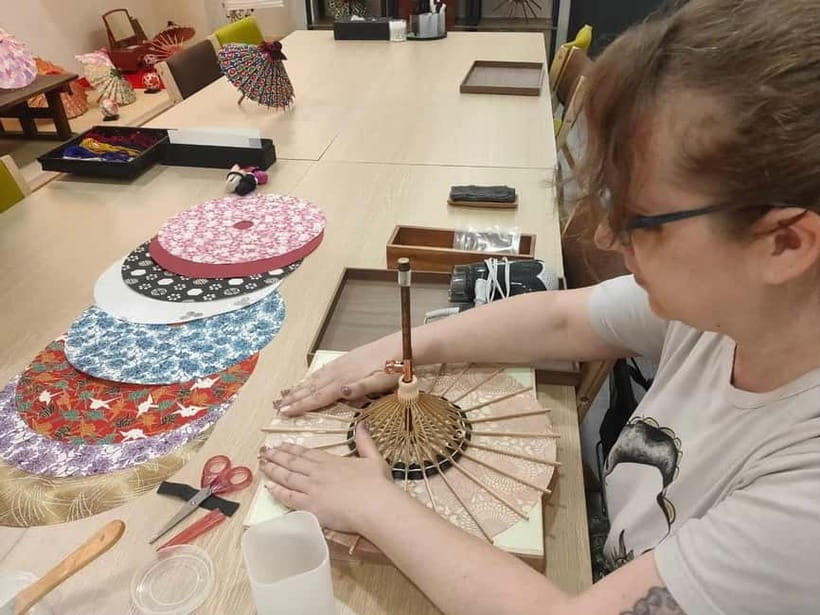
The workshop lets you create a unique mini umbrella rather than simply following a single finished model. That personal choice is important. The project feels more like your own piece of art when you have some say in how the umbrella looks.
The available information does not specify a full menu of colors or patterns, so I would ask the instructor what choices are offered when you arrive. That is a useful question if you have a particular color scheme in mind or plan to give the Wagasa as a present.
This is also the point where you should slow down and enjoy the process. A traditional umbrella has an elegant appearance, but that elegance comes from many small decisions and careful assembly. You will probably find that the simple-looking shape requires more attention than a mass-produced souvenir.
One participant, Hsinmon, specifically noted that making a mini umbrella requires close attention to detail. That is useful advice for setting expectations. You do not need prior craft experience, but you should be ready to listen, watch, and work carefully.
Following the instructor through each stage
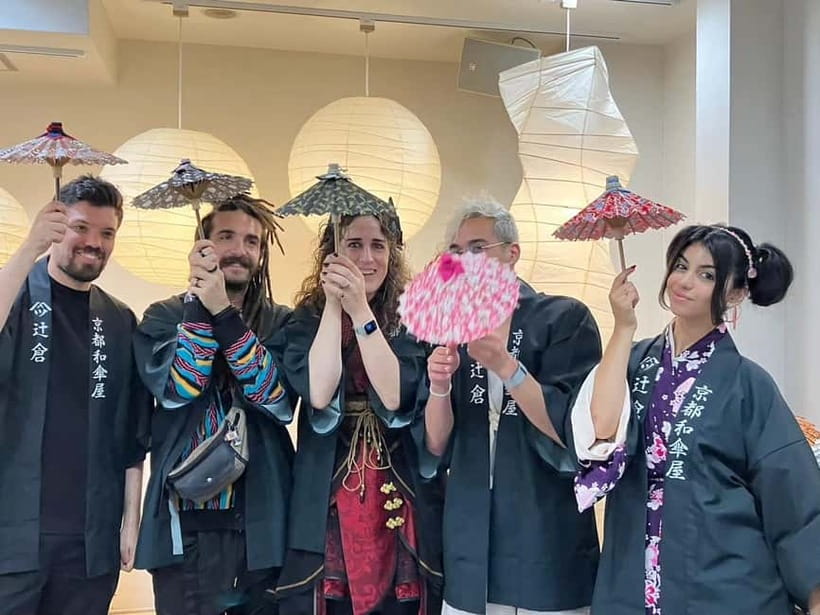
The instructor leads you through the parts of making the Hime Wagasa, explaining how to shape and assemble the materials. You are not left to guess what comes next. The teaching is practical, with the guide showing you the best way to handle each step.
That personal help is a major strength of the class. Ai Takenaka is named by one participant as friendly and helpful, while other sessions are described as patient, warm, and informative. One instructor was praised for having obvious experience with the materials and for showing the most effective ways to complete the craft.
Those details tell me that the class is built around close support rather than a rushed demonstration. You can ask for help as the umbrella takes shape, which is particularly useful when a small adjustment affects the appearance of the finished piece.
The English option makes the activity more approachable for international visitors. The instructors speak Japanese and English, although the amount of explanation may vary by session. The craft itself also helps bridge any language gap because you can watch the demonstration and copy the movement.
A nice side effect of this kind of work is focus. Several people found the activity absorbing because it narrowed their attention to the materials in front of them. After a morning of Kyoto crowds and navigation, that quiet concentration can be a welcome change.
More Hands-On Experiences in Kyoto:
- Kyoto: 45-Minute Tea Ceremony Lesson Experience
★ 4.3 · 2,378 reviews - Ramen Cooking Class at Ramen Factory in Kyoto
★ 5.0 · 1,937 reviews - Kyoto : Chopsticks Making Workshop in Gion with Engraving Option
★ 5.0 · 958 reviews - Kyoto: Samurai Sword Class by Experts in Traditional Arts
★ 4.9 · 657 reviews
Why the 90-minute format works
Ninety minutes is long enough to feel that you have made something, but short enough to protect the rest of your day. You will not spend hours away from Kyoto’s main sights, and the workshop has a clear end point.
The time does mean the session must stay focused. You will learn selected techniques and assemble a miniature umbrella, not master every part of traditional Wagasa production. Think of this as an introduction through making, not a full craft course.
That distinction helps explain the $70 price. You are paying for the materials, instruction, the setting, and a completed object with useful presentation items. A bamboo stand alone makes the umbrella easier to display at home, while the box and carry bag help protect it on the way back from Japan.
I consider the price reasonable for a hands-on Kyoto activity if you value the object and the cultural setting. It is less appealing if you are looking for a cheap souvenir or a quick demonstration with no personal work. The value comes from doing the craft yourself and having guidance when the details become tricky.
The option to pay later and cancel up to 24 hours in advance also gives you some planning flexibility. That is useful in Kyoto, where weather, temple schedules, and transport can alter a busy itinerary.
The small details that make the souvenir useful
Many craft activities give you something to carry home, but the practical extras here deserve attention. The bamboo umbrella stand means the finished Wagasa does not have to remain packed away. You can display it as soon as you return home.
The decorative box adds a more polished presentation, especially if you are making the umbrella as a gift. The carry bag helps with transport after the workshop, though you should still handle the finished piece with care.
The gift angle is built into the activity. A Wagasa is described as a symbol of happiness, so the object can carry more meaning than a generic Kyoto trinket. You might make one for yourself, for a family member, or for someone who appreciates Japanese design.
There is also an optional professional finishing service. For an additional fee, a craftsman can add finishing touches to your mini umbrella. Ask about the exact work and price before agreeing, since those details are not specified in the activity information.
Who will enjoy this workshop most
I would choose this for anyone who likes making things and wants a souvenir with a clear connection to Kyoto. It suits couples, friends, families with older children, and solo visitors who enjoy a structured activity.
It is also a good choice for a rainy day, though the class does not depend on outdoor weather. You get a cultural activity indoors, close to central shopping streets, without giving up most of your day.
Families should note the age rule carefully. Children under six are not suitable for the workshop according to the stated conditions. One larger family group included children from ages three to nine, but that does not change the published restriction, so parents should confirm eligibility before booking.
Older children may enjoy the sense of achievement, but the project still demands patience. If your child dislikes detailed craft work or wants constant movement, a 90-minute umbrella session may feel long. If your child enjoys design, careful assembly, and taking home a finished object, it can be a strong Kyoto activity.
The workshop is wheelchair accessible, which makes it easier for more visitors to consider. The available information does not describe the exact table layout or restroom arrangements, so contact the provider if you need specific access details.
What the praise tells you about the teaching
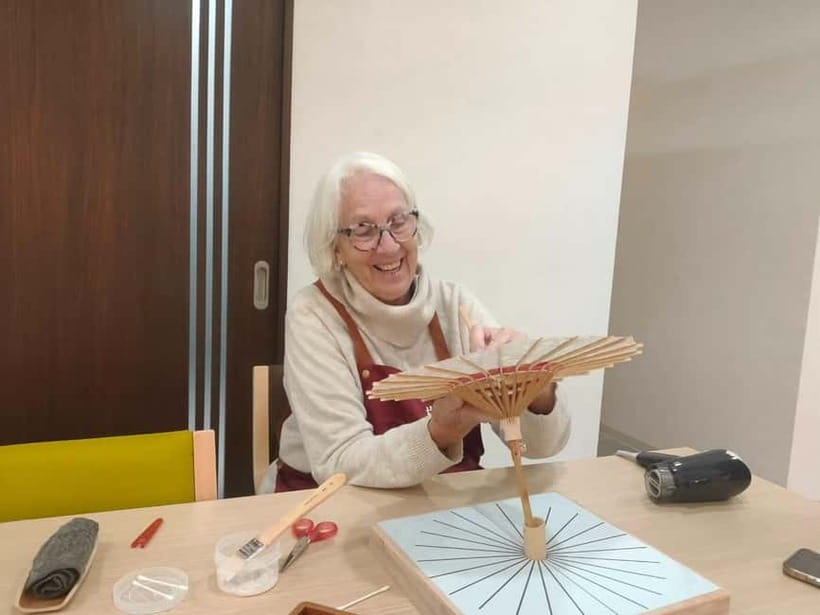
The strongest pattern is the quality of the instruction. People repeatedly describe the teachers as patient, friendly, helpful, warm, and informative. That matters more here than flashy presentation because a small mistake can affect the final appearance of the umbrella.
One participant called the class a highlight of a Kyoto visit and appreciated being taught by an esteemed craftsman. Another said the activity was engaging and that the instructor guided the group through each step. A separate participant said the teacher helped the umbrellas turn out wonderfully.
I would not treat those comments as a guarantee that every session feels identical. Instructors and group dynamics can vary. Still, the repeated emphasis on calm guidance is a strong reason to book this rather than attempting a similar craft without help.
The workshop also appears to work for mixed groups. A group of nine was accommodated, including children, although again, the age restriction under six should guide your own booking decision. If you are arranging a group, check availability early and make sure everyone understands that the activity requires attention to detail.
Practical planning around Shijo Kawaramachi
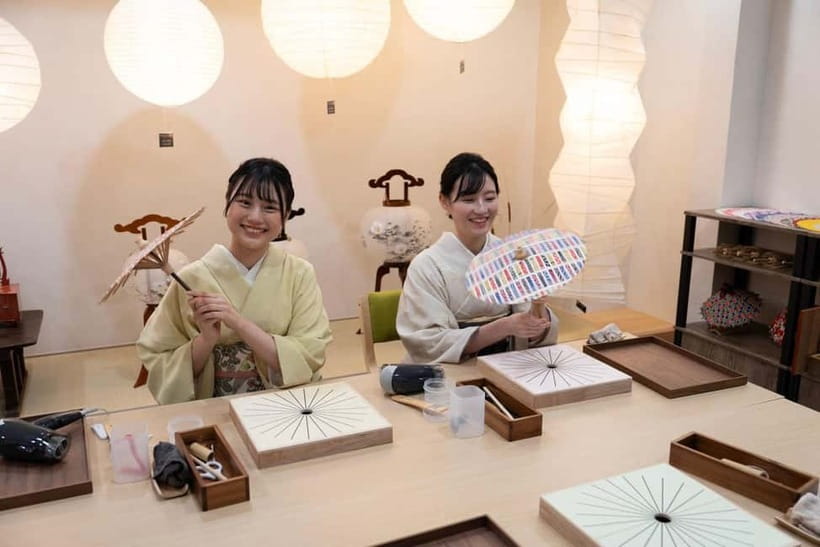
The meeting point is two minutes north of Shijo Kawaramachi, one of Kyoto’s main shopping intersections. That makes the workshop simple to pair with time in central Kyoto.
You can plan it before shopping, after lunch, or as a break between other activities. Allow a little extra time to find the shop and settle in, even though the walk from the intersection is short. The information supplied does not name a specific station exit or provide detailed directions, so use the booking instructions carefully on the day.
The session is offered in Japanese and English. If English guidance is important to you, confirm that your selected time includes the language support you need.
Smoking, alcohol, drugs, and explosive substances are not allowed. Those rules are straightforward, but they matter in a small craft setting where materials and tools need to be handled safely.
Should you book the Kyoto Wagasa workshop?
Book it if you want a Kyoto souvenir you helped create, enjoy careful hands-on work, and can spare 90 minutes near Shijo Kawaramachi. The combination of genuine Japanese materials, patient instruction, a traditional setting, and a bamboo display stand gives the $70 price a solid purpose.
Skip it if you want a fast, low-cost activity or if your group has young children under six. The work calls for concentration, and the final result will depend partly on how carefully you follow each step.
For most craft-minded visitors, I would put this high on the list of central Kyoto activities. You leave with more than a miniature umbrella. You leave with the memory of learning how its form is made, plus a useful way to display or gift the finished Wagasa.
FAQ
Where is the traditional mini umbrella workshop held?
It is in central Kyoto, two minutes north of the Shijo Kawaramachi intersection, near one of Kyoto’s main shopping districts.
How long does the workshop last?
The workshop lasts 90 minutes.
How much does the activity cost?
The listed price is $70 per person.
Is the workshop available in English?
Yes. Instruction is available in Japanese and English.
What is included in the price?
All materials for making a Hime Wagasa are included, along with a bamboo umbrella stand, decorative box, and carry bag.
Can children join the workshop?
Children under six are not suitable for the activity. The stated age restriction should be checked carefully when booking for a family.
Can I cancel or pay later?
You can cancel up to 24 hours in advance for a full refund. You can also reserve now and pay later, keeping your plans flexible.
Just added around Kyoto
- Sekka Cotton Furoshiki Class★ 5.0 · 19 reviews
- Kyoto Sword Experience – includes Museum Ticket/Ninja Experience★ 4.5 · 149 reviews
- Scenic Green Tea Fields of Hidden Kyoto & Local Tea Exp (Private)★ 5.0 · 32 reviews
- Secret Eastern Kyoto Biking Adventure★ 5.0 · 44 reviews
- Private Sake Tasting in Central Kyoto with Sake Sommelier★ 5.0 · 32 reviews
- Samurai School in Kyoto: Samurai for a Day★ 5.0 · 202 reviews
- SHIRAKAWA Japanese Culture Experiences with private English staff★ 5.0 · 16 reviews
- A Privately Guided Photoshoot in Beautiful Kyoto by a Pro★ 5.0 · 18 reviews
Workshops, compared.
Sushi Making Tokyo Roll and Authentic Japanese Sushi Class
Our verdict →
Ninja 1-hour Hands-on Lesson by Japanese master in Kyoto -Entry
Our verdict →
Browse the lists this tour appears in