
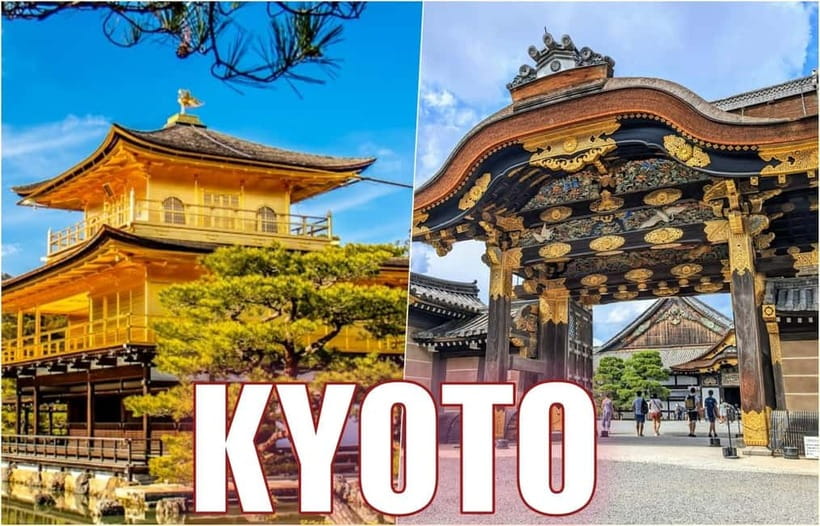
Reviewed · CASTLE TOURS
Golden Pavilion, Nijo Castle, & Nishiki Market Half day tour
Kyoto’s past comes into sharp focus on this four-hour route: Kinkaku-ji’s gold leaf, Nijo Castle’s spring-loaded security floors, and Nishiki Market’s food stalls each tell a different part of the city’s story. Guide Roberto uses an iPad with his own images and explanations, which is especially useful when a temple’s symbolism or samurai politics gets complicated.
I like the private format, since Roberto can adjust his explanations and offer ideas for the rest of your Kyoto stay. I also like the smart finish at Nishiki Market, where you are free to choose lunch instead of being sent to one fixed restaurant. The main drawback is pace: three major stops, public transport, and several walking sections make this a busy morning rather than a slow temple stroll.
Key points at a glance
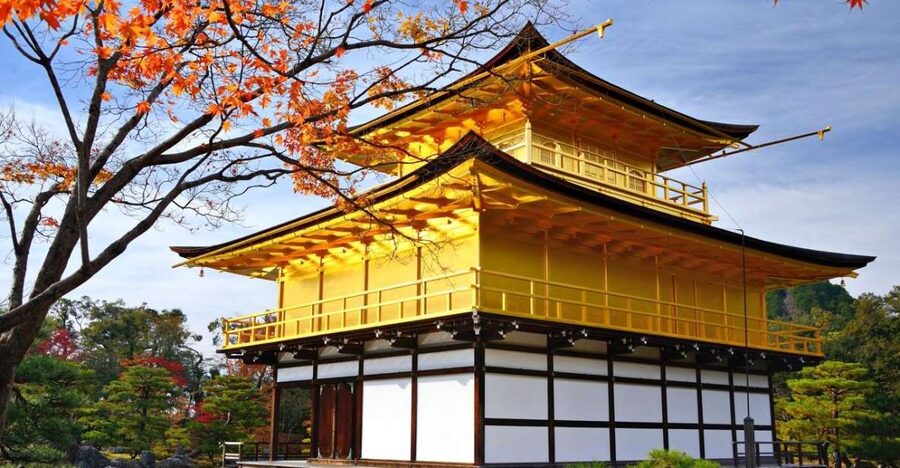
- Kinkaku-ji first: Arrive at Kyoto’s famous Golden Pavilion during the morning portion of the tour.
- Samurai history at Nijo Castle: Learn how shoguns, feudal lords, and samurai fit into Japan’s political story.
- A private English or Spanish tour: Roberto leads a private group, with explanations supported by an iPad.
- Nishiki Market finish: End at Kyoto’s Kitchen with many choices for lunch and snacks.
- Useful Kyoto orientation: Roberto can recommend places to visit during the rest of your trip.
- Bring good walking shoes: The tour uses a bus, subway, and walking routes, with no large bags or strollers allowed.
A morning that links three very different Kyotos
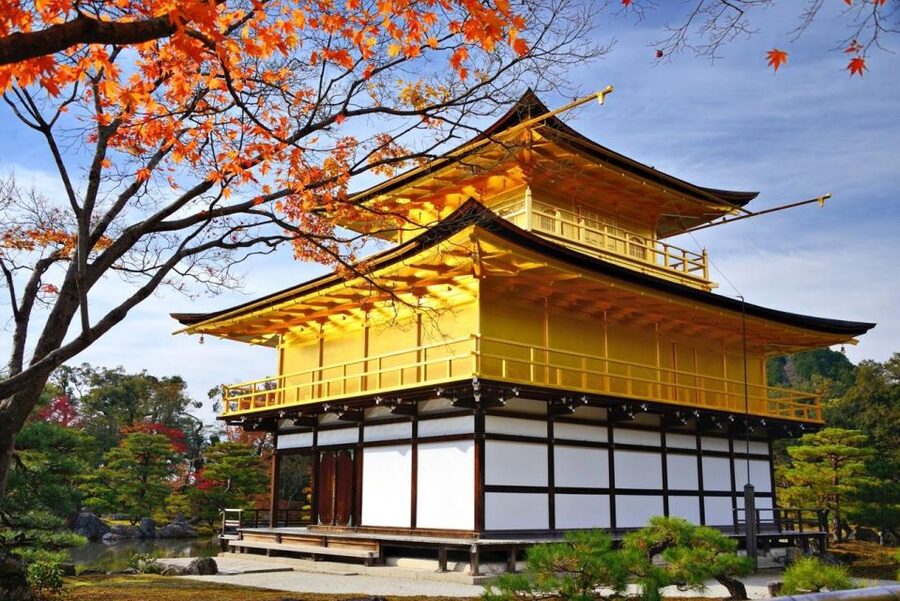
This tour works because its stops are not three versions of the same sight. Kinkaku-ji gives you polished Zen beauty and royal display. Nijo Castle puts you inside the world of shoguns and samurai politics. Nishiki Market brings you back to daily food culture, shopping, and the practical side of Kyoto life.
You meet Roberto at 8:30 a.m. in front of the 7-Eleven at the central entrance of Kyoto Station. Use the Kyoto Tower side exit, and look for an iPad and a red card marked RBRT. That clear meeting point matters at a large station, where a vague rendezvous can waste the first part of a short tour.
The group then takes public transportation toward the first stop. The listed bus ride takes about 35 minutes. Since this is a private tour, you are not simply following a flag through the city. Roberto can explain what you are seeing and answer questions as the morning unfolds.
The tour is offered in English or Spanish. It is designed for people who want context, not only photographs. You will hear about the Edo period, the shogun, the samurai, and the changes that brought Japan toward modernization. Roberto also uses an iPad with explanations he created himself, including visual material intended to make the history easier to follow.
More Castle Tours in Kyoto
- Kyoto: Nijo-jo Castle and Ninomaru Palace Guided Tour
★ 4.7 · 1,020 reviews - Kyoto: Nijo Castle, Kiyomizu & Fushimi Inari Guided Tour
★ 4.7 · 700 reviews - Kyoto: Imperial Palace & Nijo Castle Guided Walking Tour
★ 4.7 · 453 reviews
Kinkaku-ji and the famous reflection
Kinkaku-ji, also called the Golden Pavilion, sits in northwestern Kyoto. The top two floors are covered in real gold leaf, and the pavilion is reflected in the pond beside it. That familiar image is one of Kyoto’s essential sights, but an explanation adds more meaning than a quick stop for a picture.
The building began as a villa for Ashikaga Yoshimitsu, a powerful 14th-century shogun. After his death, it became a Zen Buddhist temple. The gold was not chosen merely for decoration. It expressed wealth, power, and religious devotion, which gives the dazzling surface a political and spiritual edge.
You have about 90 minutes here, enough time for Roberto to explain the site and for you to take photographs. He can also take pictures of you throughout the tour, a useful touch for couples, families, or solo visitors who do not want every photograph to be a selfie.
The practical catch is that Kinkaku-ji is one of Kyoto’s best-known sights. You should expect it to be popular, and the main view is familiar from countless guidebooks. The value of a guide is less about finding an unknown corner and more about helping you understand why this particular pavilion mattered to a shogun and why its appearance carries such weight.
Photography is not allowed in some temple areas, so follow the posted rules and Roberto’s instructions. The temple portion is not a mountain climb, but you still need to walk comfortably on the route. A good pair of shoes will serve you better than stylish but stiff footwear.
Admission to Kinkaku-ji is not included. The stated fee is 500 yen, about $3.10. That is a small extra cost, but you should add it to the advertised $90 price when comparing tours.
Nijo Castle and the sound of protection
From Kinkaku-ji, the group takes the subway for about 20 minutes to Nijo Castle. The castle visit lasts about 95 minutes, making it the longest guided stop of the morning. That is a sensible choice because the site has several layers: architecture, political history, decorative detail, and one delightfully strange security feature.
Nijo Castle was connected to the shogun’s authority and the system of feudal rule. Here, Roberto explains the contests among shoguns, feudal lords, and samurai, then connects that story to the end of the samurai era and Japan’s move toward modernization.
The castle’s Edo-period design gives you plenty to look at, including woodwork and detailed interiors. The famous nightingale floors are the star feature. They chirp or squeak underfoot, warning people inside when someone walks through. It is an early security system that makes the building feel surprisingly alive as you move through it.
This is also where the tour can help you avoid a common Kyoto problem: seeing an ornate room without understanding who controlled it or why it was built that way. The castle is not just an attractive old building. It helps explain how military power worked in Japan and how that order eventually came to an end.
Nijo Castle admission costs 1,300 yen, about $8.15, and is not included. Together, the two entrance fees come to 1,800 yen, or about $11.25 at the stated exchange rates. Transportation costs for you are also not included, while Roberto’s own entrance fees and transportation are covered.
Nishiki Market, Kyoto’s food stop
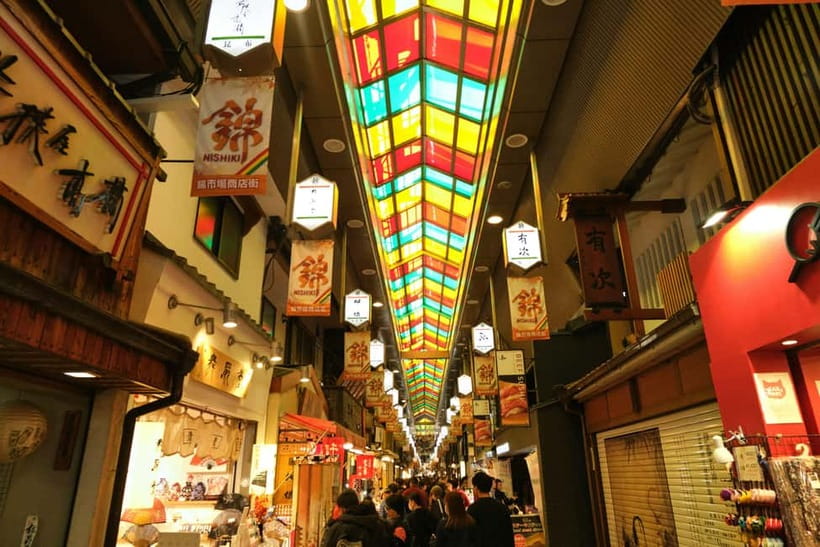
After Nijo Castle, the route uses the subway for about 15 minutes, followed by a walk of around 10 minutes to Nishiki Market. The tour finishes at the market entrance at approximately 12:30 p.m.
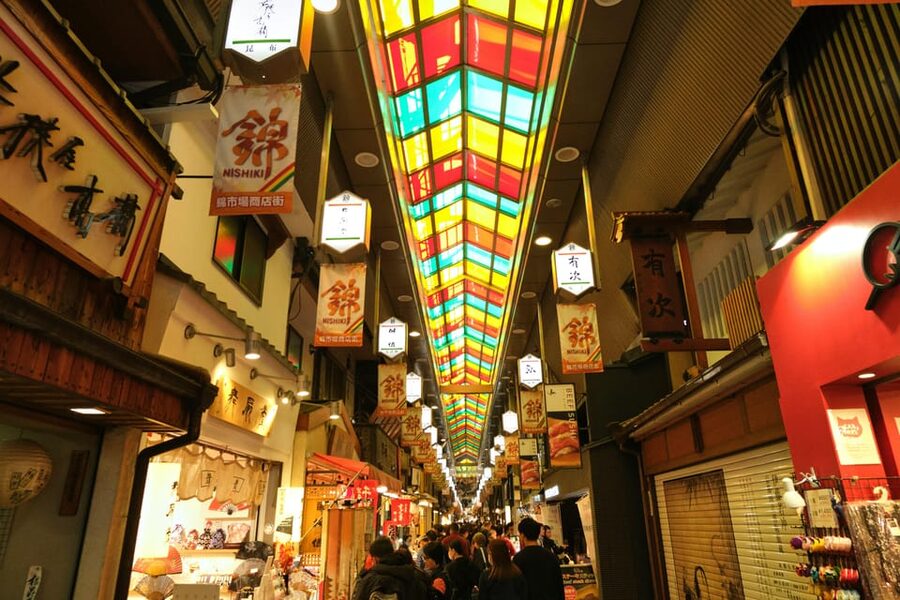
Nishiki is also called Kyoto’s Kitchen. It runs along a narrow, five-block shopping street lined with more than 100 shops and restaurants. You can find fresh seafood, produce, knives, cookware, and many food-related items. The market is lively and close-packed, so stay aware of the people around you and avoid bringing a large bag.
Roberto explains the market’s origins, then lets you decide what to eat. That freedom is one of the tour’s strongest practical features. Instead of ending at a preselected restaurant, you can look over the choices and choose lunch according to your appetite and budget. Food and drinks are not included.
The market is also a useful contrast with the morning’s formal monuments. At Kinkaku-ji, you study a carefully framed temple view. At Nijo Castle, you follow the signs of political power. At Nishiki, you see how food, tools, and shopping shape ordinary city life.
There is a tradeoff. Nishiki is a shopping street rather than a quiet cultural site, and its narrow passage can feel hectic. If you dislike crowds or food markets, you may prefer to spend more time at the castle. Still, finishing here gives you an easy place to continue your day, and Roberto can point you toward other places to visit.
More Market Tours in Kyoto
- Nishiki Market Brunch Walking Tour (7 Tastings + Brunch)
★ 5.0 · 1,355 reviews - Kyoto Nishiki Market Food and Culture Walking Tour
★ 5.0 · 412 reviews - Kyoto: Nishiki Market Tea Ceremony with Koto Performance
★ 4.8 · 294 reviews - Kyoto: Nishiki Market Brunch Walking Tour-7 Tastings+Brunch
★ 4.8 · 197 reviews
What the private guide adds
The guide is the main reason to choose this experience over visiting the three sites on your own. Roberto is a Kyoto City Certified Tourist Guide, and he speaks English and Spanish. His iPad presentations are meant to make the explanations clearer, especially for visitors who do not already know the difference between a shogun, a feudal lord, and a samurai.
The private format also means the morning can feel personal. You can ask about the sites, request photographs, and discuss plans for the coming days. Roberto’s willingness to recommend additional places is particularly helpful if this is your first Kyoto visit and you are still sorting out the city’s many districts and temples.
The available feedback is unusually consistent: the tour has a perfect overall rating from 29 reviews, with repeated praise for Roberto’s kindness, professionalism, personal attention, and historical explanations. Individual comments also note that he created a video for the trip, and one praised a short film shown at the end. These touches are not described as a formal guarantee, so I would treat them as possible extras rather than something to book solely for.
The strongest pattern is clear. People value Roberto as much as the itinerary. That matters because the three stops are easy to visit independently, but a good guide can turn disconnected sights into a story about power, religion, security, food, and modern Japan.
Timing, walking, and the real cost
The listed tour price is $90 per person. You should also budget for the two admissions, 500 yen for Kinkaku-ji and 1,300 yen for Nijo Castle, plus your own transportation fares. The guide’s entrance fees and transportation are included, but the wording does not include your transport costs.
At $90 for four hours, the guide portion works out to roughly $22.50 per person per hour before admissions and transport. For a private tour, that can be fair value if you want personal explanations, help with photographs, and advice for the rest of your visit. It is less attractive if you mainly want transport or prefer to explore at your own speed.
The schedule is active. You use a bus, two subway legs, and walking routes, with about 90 minutes at Kinkaku-ji and 95 minutes at Nijo Castle. The listed segments are approximate, and the morning leaves little room for a long unplanned stop, so arrive at the meeting point early.
Wear comfortable shoes. The tour does not involve mountain climbing or very long stairs, but you need to be in reasonable walking condition. It is not suitable for wheelchair users, people with back problems, pregnant women, people with low fitness, or people prone to seasickness. That last limitation is unusual for a land tour, but it is part of the stated suitability information.
Baby strollers and luggage or large bags are not allowed. Pack lightly, especially because Nishiki Market is narrow and the morning includes public transport. The tour operates in rain or shine, so bring weather protection appropriate to the day.
You can cancel up to 24 hours before the start for a full refund, and you can reserve now and pay later. Those policies make the booking less rigid if your Kyoto plans are still moving around.
Who should book this Kyoto morning
I would choose this tour if you want three major Kyoto experiences in one morning and prefer a guide to explain the connections. It suits first-time visitors, history-minded couples, families with older children, and anyone who wants advice for the rest of a short Kyoto stay.
It is also a good match if you enjoy asking questions. A private group gives you more room to pause over the shogun’s role, compare temple and castle design, or ask Roberto what to see next.
I would skip it if you want long, quiet visits at each site. Kinkaku-ji and Nijo Castle deserve more time than a half-day can provide, and public transportation adds movement between stops. Independent visitors may also spend less, especially if they already understand Kyoto’s history and can manage the route confidently.
Should you book it?
Book this tour if personal guidance and historical context matter more to you than a slow pace. Roberto’s iPad explanations, photo help, language options, and practical Kyoto suggestions add real value to a route that could otherwise feel like three separate attractions.
Do not book it expecting a relaxed morning or a fully inclusive price. Add the two entrance fees, your transport, and food at Nishiki Market. If you can handle the walking and want an efficient introduction to Kyoto’s temples, samurai politics, and food culture, this is a strong four-hour choice.
FAQ
Where does the tour begin?
It begins at 8:30 a.m. in front of the 7-Eleven at the central entrance of JR Kyoto Station. Use the Kyoto Tower side exit. Roberto holds an iPad and a red card marked RBRT.
Where does the tour finish?
The tour finishes at the entrance of Nishiki Market at approximately 12:30 p.m.
Which sites are included?
The route includes Kinkaku-ji, also called the Golden Pavilion, Nijo Castle, and Nishiki Market.
How long is the tour?
The tour lasts about four hours, from 8:30 a.m. to 12:30 p.m.
What languages are available?
The live tour guide is available in English and Spanish.
Are admission fees included?
No. Kinkaku-ji costs 500 yen and Nijo Castle costs 1,300 yen. These fees are paid separately.
Is transportation included?
Your transportation fee is not included. The guide’s own entrance fees and transportation are included.
What should I bring?
Bring comfortable shoes. The tour takes place in rain or shine, and you should not bring a baby stroller, luggage, or a large bag.
Just added around Kyoto
- Sekka Cotton Furoshiki Class★ 5.0 · 19 reviews
- Kyoto Sword Experience – includes Museum Ticket/Ninja Experience★ 4.5 · 149 reviews
- Scenic Green Tea Fields of Hidden Kyoto & Local Tea Exp (Private)★ 5.0 · 32 reviews
- Secret Eastern Kyoto Biking Adventure★ 5.0 · 44 reviews
- Private Sake Tasting in Central Kyoto with Sake Sommelier★ 5.0 · 32 reviews
- Samurai School in Kyoto: Samurai for a Day★ 5.0 · 202 reviews
- SHIRAKAWA Japanese Culture Experiences with private English staff★ 5.0 · 16 reviews
- A Privately Guided Photoshoot in Beautiful Kyoto by a Pro★ 5.0 · 18 reviews
Castle Tours, compared.
Tokyo Castle & Imperial PalaceーShogun Walking Tour
Our verdict →
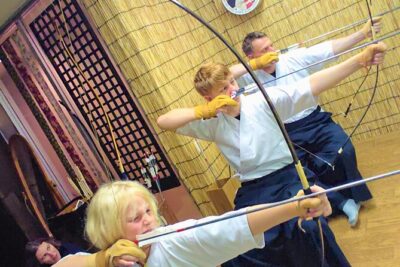
Japanesel Archery Experience HIROSHIMA CASTLE SHARAKU
Our verdict →
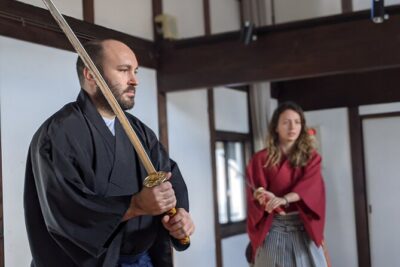
Browse the lists this tour appears in