
Reviewed · TEMPLES & SHRINES
Kyoto: Half-day Guided Bike Tour with Fushimi Inari
Fushimi Inari’s orange torii gates are the headline, but the best part of this 210-minute bike tour is how you reach them. You pedal from central Kyoto along canals, riversides, neighborhood streets, and Gion lanes instead of simply arriving by train with the usual crowd.
I like the mix of major sights and quieter riding, especially Toji, Tofukuji, and the backstreets of Gion. I also like the small group limit of eight, which gives guides such as Jay, Julian, Indra, Sean, and Mayco room to answer questions and adjust the pace. The main consideration is distance: one review reported riding more than 15 kilometers, so this is exercise as well as sightseeing.
Key points
- Fushimi Inari by bicycle: Reach Kyoto’s most visited attraction after a scenic ride through South Kyoto, then walk among the famous orange torii gates.
- A useful mix of sights: Toji, Higashi-Honganji, Tofukuji, Gion, the Takase Canal, and the Kamo River all fit into one morning or afternoon.
- Small group riding: The tour is limited to eight people, making it easier to hear the guide and keep a comfortable pace.
- Strong guide reports: Jay, Julian, Indra, Juan, Sean, and Mayco are praised for clear explanations, patience, local insight, and easygoing company.
- E-bike option: You can request an e-bike for an additional 3,000 yen, a practical choice if you are concerned about hills, distance, or stamina.
- Good practical setup: Bicycle rental, helmet, and water are included, with a small pouch on the bicycle for personal items.
Why this route works so well in South Kyoto
Kyoto can be awkward to sightsee by public transport. The famous temples are spread across the city, trains do not reach every useful corner, and buses can be slow. A bicycle gives you a better sense of how the city fits together.
This route links places that are often visited separately. You begin at Cycle Kyoto near Kyoto JR Station, then ride toward major temples before following the Takase Canal and Kamo River. From there, the route moves through Gion and onward to Tofukuji and Fushimi Inari.
I like that progression. The day does not feel like a string of unrelated photo stops. You start with large temple compounds, move through water-side paths and ordinary streets, then finish at one of Japan’s most recognizable shrines.
The small group size matters here. With a maximum of eight people, you are not trying to keep up with a large pack of cyclists at every turn. Guides can explain what you are seeing, stop for questions, and make small adjustments to the pace. Several guide names appear repeatedly in the feedback: Jay, Julian, Indra, Juan, Sean, and Mayco. The consistent theme is friendly, clear instruction and good knowledge of Kyoto’s culture.
More Bike Tours in Kyoto
- Hidden Kyoto E-Biking tour
★ 5.0 · 1,843 reviews - Bike Tour Exploring North Kyoto plus Lunch
★ 5.0 · 1,087 reviews - Arashiyama Bamboo Forest & Hidden Gems Bike Tour (Early Bird)
★ 5.0 · 613 reviews
Starting near Kyoto Station
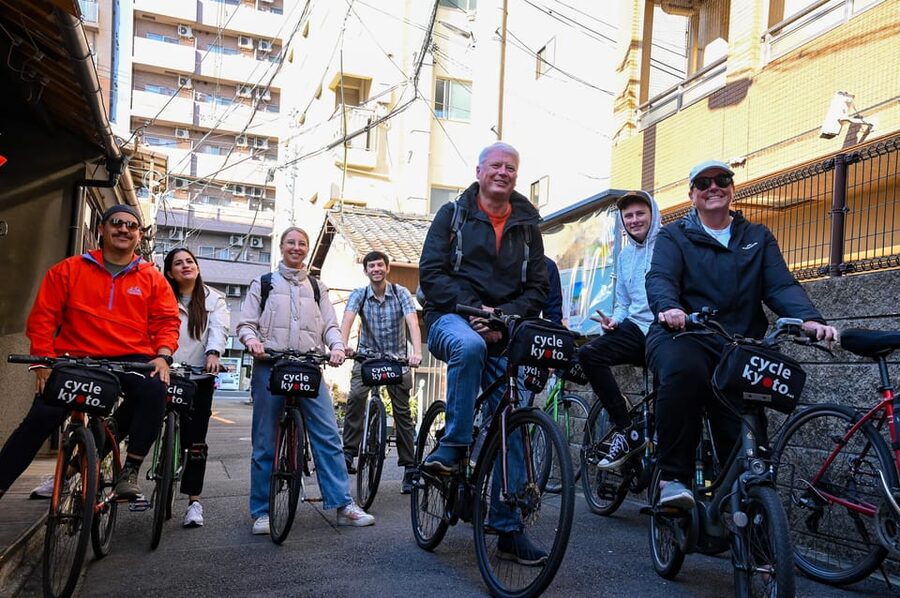
The meeting point is Cycle Kyoto, within easy reach of Kyoto JR Station. From the station, go past Avanti, cross one set of traffic lights, pass the Daily Yamazaki convenience store, and take the next left.
Allow enough time to find the shop. The tour begins with a 15-minute safety briefing, which is useful even if you cycle regularly. You will receive your bicycle, helmet, and water, and the guide will explain the riding arrangements before the group leaves.
The bicycles are reported to be in good condition, with different sizes and helmets available. You should wear comfortable clothes and shoes that work well on pedals. Sunscreen and warm clothing are sensible choices because weather conditions can change during the ride.
A small pouch on the bicycle holds personal items. Keep your belongings light, since this is not a day for a large backpack. Smoking, alcohol, and drugs are not allowed.
Toji, Kyoto’s oldest temple
The first major stop is Toji, a UNESCO heritage site and one of Kyoto’s essential temple visits. You have about 35 minutes here with the guide.
Toji is a strong opening stop because it gives you a grand first look at Kyoto’s Buddhist architecture. The temple grounds provide a sense of scale that is hard to get from a quick street view, and the site is particularly rewarding for anyone interested in religious art and traditional buildings.
The guide adds useful context instead of leaving you to identify structures on your own. This is one reason the tour works better than simply renting a bicycle and following a map. You get an explanation of what makes each place important, then move on before the sightseeing starts to feel repetitive.
Thirty-five minutes is enough for an introduction and photographs, but not enough for every corner of the temple grounds. If Toji is one of your top Kyoto priorities, you may want to return independently for a longer visit.
Higashi-Honganji and central Kyoto
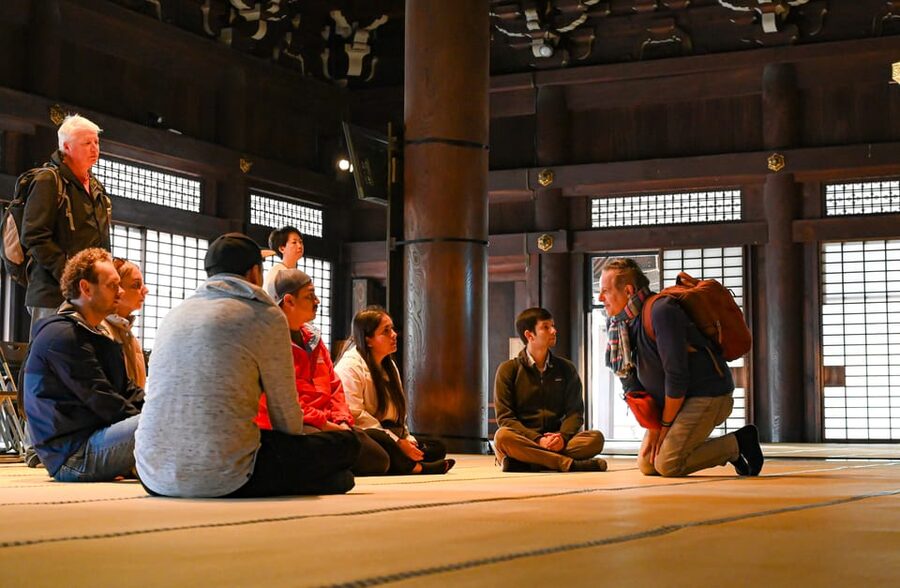
Next comes Higashi-Honganji, one of Japan’s largest temples. The guided visit also lasts about 35 minutes.
This stop changes the mood from the historic setting at Toji to a vast urban temple complex. Its scale helps you understand how important major Buddhist institutions remain in Kyoto’s city center. The guide can point out details that are easy to miss when you are focused only on the size of the buildings.
I appreciate the pairing of Toji and Higashi-Honganji. They are not simply two more temples added to a checklist. Together, they show different sides of Kyoto’s religious architecture and give the first section of the ride a clear purpose.
As with Toji, the time is focused. You will learn about the site, see the main areas included in the route, and continue by bicycle. This is best for you if you prefer a broad look at Kyoto rather than one long temple visit.
More Temple & Shrine Tours in Kyoto
- Kyoto: Fushimi Inari, Kinkakuji, Bamboo Grove 1 Day Bus Tour
★ 4.8 · 4,316 reviews - Kyoto: Tea Ceremony in a Traditional Tea House in Kiyomizu
★ 4.9 · 3,519 reviews - Kyoto: Tea Ceremony Ju-An at Jotokuji Temple
★ 4.9 · 3,207 reviews - Fushimi Inari Hidden Hiking Tour (Private Option Available)
★ 5.0 · 1,750 reviews
Following the Takase Canal and Kamo River
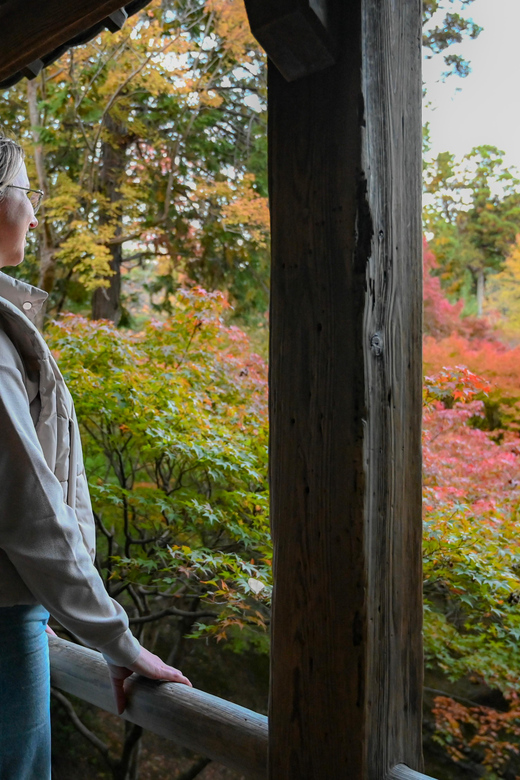
The route then leaves the large temple grounds and follows the Takase Canal for around 10 minutes before reaching the Kamo River for about 15 minutes.
These are short stops, but they help break up the temple visits. The canal offers a quieter urban view, while the Kamo River gives you open space and a chance to watch Kyoto unfold at street level. You are still close to the city’s main sights, yet the riding feels less formal than moving from gate to gate at a temple.
The river section is also one of the reasons to choose a bicycle tour. You are not just being taken from attraction to attraction. You are connecting the districts yourself, with the guide showing how the center of Kyoto leads toward Gion and South Kyoto.
The exact feel of this part will depend on the weather and riding conditions. Check the forecast before you go, and bring warm layers if the day is cool. A pleasant riverside ride can become tiring if you are dressed for a warm temple visit but the wind picks up.
Gion from the backstreets
The Gion section lasts about 30 minutes and takes you through the backstreets of Kyoto’s famous geisha and teahouse district.
This is one of the tour’s most valuable stops. Gion is easy to reduce to a few famous lanes and crowded photo spots, but riding through its quieter streets gives you a better sense of the district’s layout. Traditional facades, narrow lanes, and teahouse areas appear in a more natural sequence.
You should follow the guide’s instructions carefully here. Gion is a working neighborhood, not a theme park, and a bicycle group needs to move quietly and respectfully. The route is designed to show the area without turning the visit into a noisy procession.
The guides are especially important in this part of the ride. Sean is described as fun and informative, while Indra is praised for insider information and for making the group feel comfortable. Julian is also described as easygoing and well informed. Those qualities matter in Gion, where a little local context adds far more than another rushed photograph.
Tofukuji and the pause for photographs
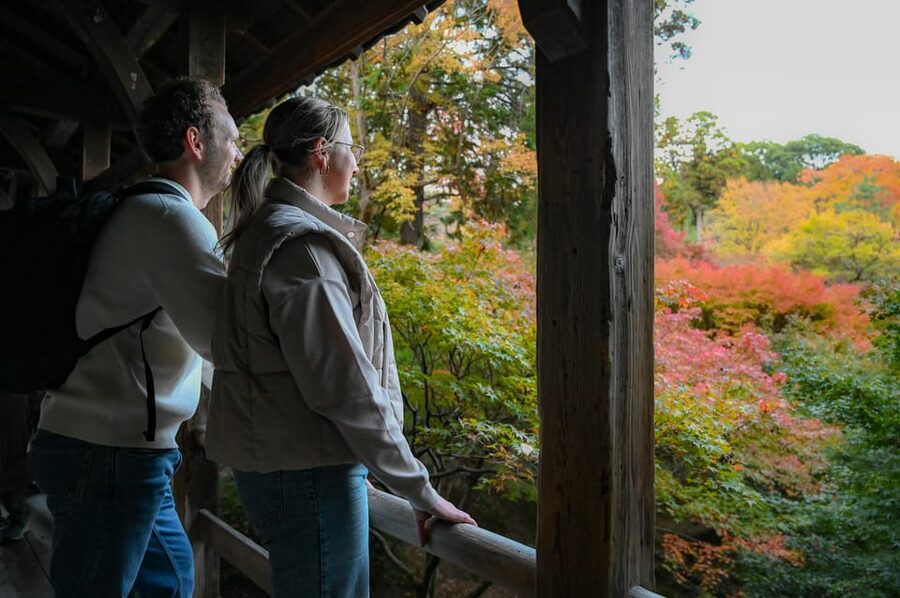
Tofukuji is the next major stop, with about 30 minutes set aside for photographs.
The temple is known for its striking setting and fine architecture, making it a natural place to slow down after the neighborhood riding. You are not given a long formal visit here, but the pause gives you time to take pictures and enjoy a change of pace.
This stop is also a practical part of the route. After cycling through central Kyoto and Gion, you get a chance to put the bicycle aside, listen to the guide, and decide how much energy you have for the final stretch.
The route is described as including some less touristy temples and backstreets, not just the headline sights. That balance is useful for repeat visitors and for first-time visitors who want a more local view of Kyoto. You still see the famous places, but you also spend time moving through ordinary streets between them.
Arriving at Fushimi Inari Taisha
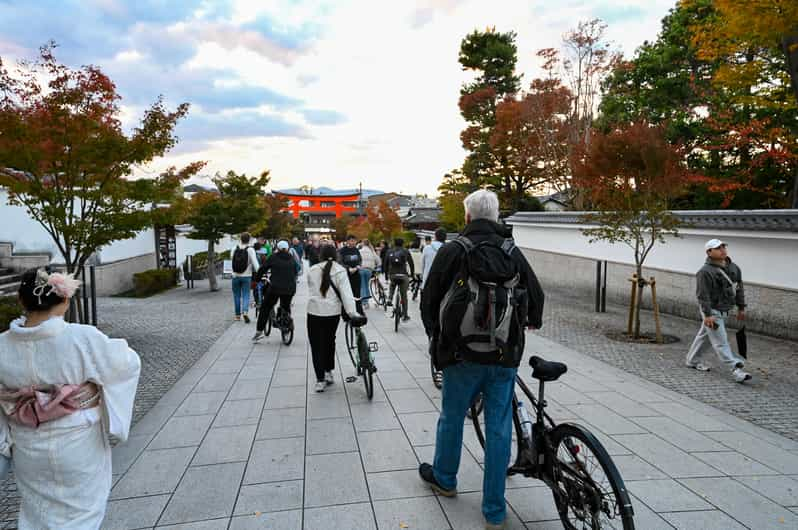
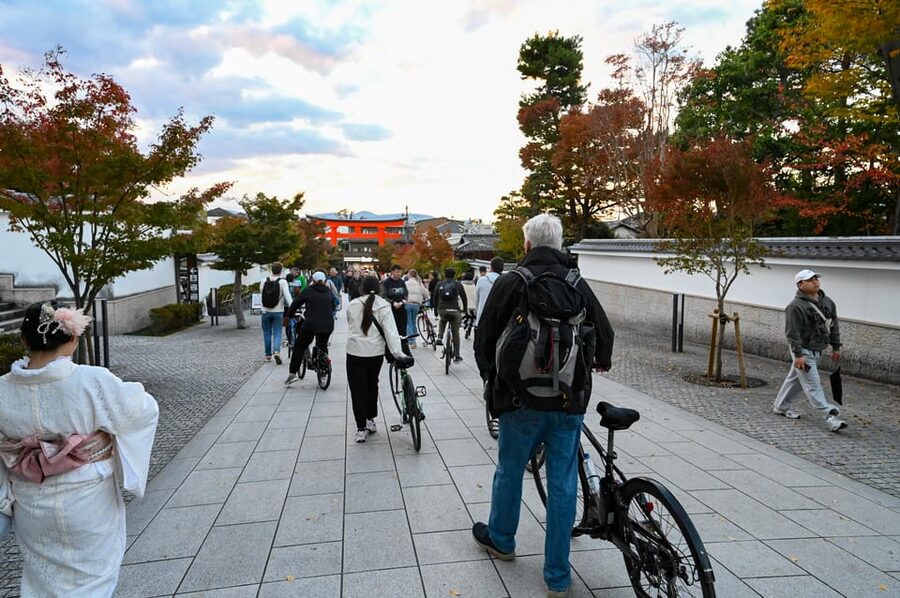
The final major stop is Fushimi Inari Taisha, with about 45 minutes for a guided visit. This is the longest stop on the route and the natural payoff.
Fushimi Inari is famous for its rows of orange torii gates climbing through the wooded shrine grounds. You will leave the bicycle and walk through part of the gate-lined route with the guide. Forty-five minutes lets you see the main approach and experience the atmosphere without committing to the much longer climb toward the summit.
That time limit is both an advantage and a limitation. It keeps the half-day schedule realistic, but you will not explore every section of the mountain. If you want to walk all the way to the top, plan a separate visit on another day.
Arriving by bicycle gives the visit a different rhythm. Instead of beginning your day in a crowded station area, you approach through South Kyoto’s neighborhoods. The ride makes Fushimi Inari feel like part of a larger Kyoto route rather than an isolated attraction.
After the shrine visit, you cycle back to Cycle Kyoto. The tour lasts 210 minutes in total, but allow extra energy for the return ride and the walking at Fushimi Inari.
Price, group size, and the e-bike decision
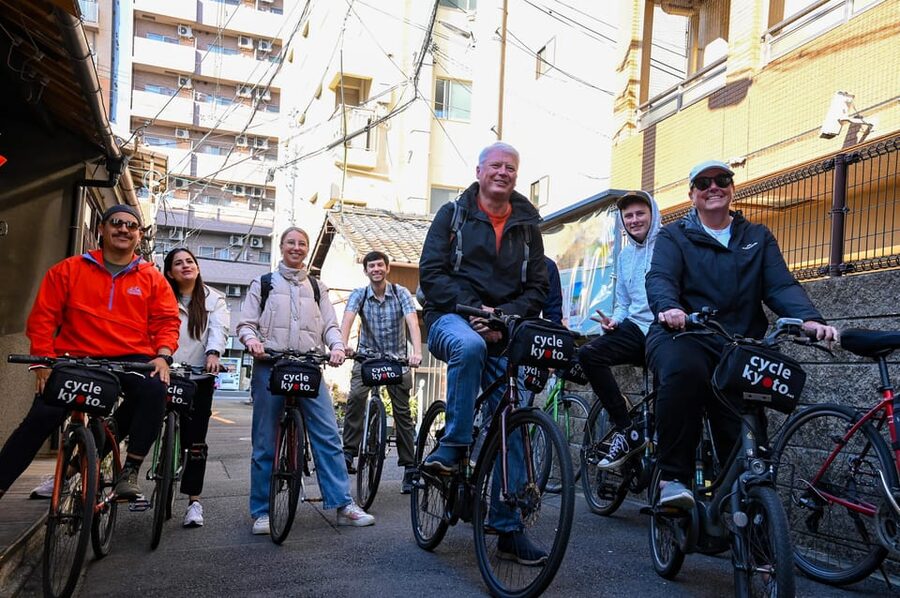
At $77 per person, the tour is not the cheapest way to see Kyoto. You are paying for the bicycle, helmet, water, English-speaking guide, route planning, and nearly three and a half hours of organized sightseeing.
The value is strongest if you want several places explained in one outing. Transport between Toji, Higashi-Honganji, Gion, Tofukuji, and Fushimi Inari can take time and planning. Here, the route is arranged for you, and the bicycle turns the journey between stops into part of the experience.
The group limit of eight also improves the value. A private tour would cost more, while a large group can make cycling and questions less pleasant. This sits in the middle: personal enough for conversation, but shared with other people.
An e-bike costs an additional 3,000 yen upon request. Consider it if you are not used to cycling, if you have back concerns but can still ride comfortably, or if you want to save energy for the temples and shrine. The tour is not suitable for anyone who cannot ride a bicycle, and the minimum age for a public tour is 13.
Who will enjoy this ride most
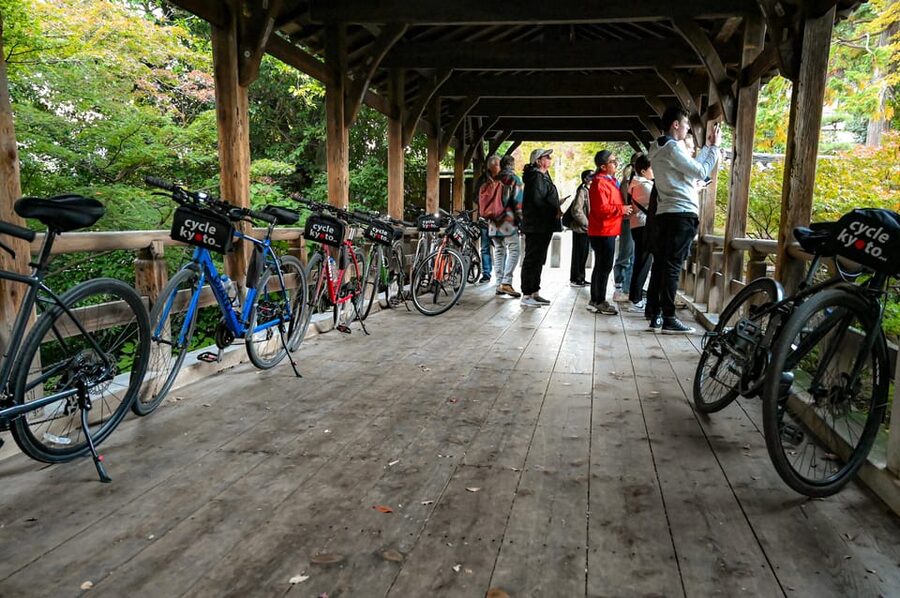
I would choose this tour for a first visit to Kyoto when you want an active introduction rather than a full day inside one temple district. It also suits repeat visitors who have seen the central sights and want more time in Gion’s backstreets and South Kyoto neighborhoods.
You should be comfortable on a bicycle and ready for a potentially long ride. One review noted more than 15 kilometers, so do not treat this as a short spin between nearby attractions.
The tour is less suitable if you have back problems, dislike cycling in city conditions, or want a slow, detailed visit at every stop. It is also not designed for children under 13.
Rain does not automatically ruin the experience. One tour went ahead in poor weather and the guide adjusted the outing successfully. Still, check conditions before departure and dress for the forecast. Comfortable shoes, suitable cycling clothes, sunscreen, a camera, and warm layers are the sensible basics.
Cancellation is free up to 24 hours before departure, and you can reserve now and pay later. Those terms help if your Kyoto schedule is still moving around.
Should you book the Cycle Kyoto route?
Book it if you want to connect Kyoto’s major South Kyoto sights by bicycle, hear clear explanations from an English-speaking guide, and see more than the standard temple interiors. The route’s best features are its small group size, varied riding, and useful mix of famous and quieter places.
Skip it if you cannot comfortably ride for several hours or if Fushimi Inari is the only place you want to see. In that case, visit the shrine on its own and spend more time walking the gates.
For most active visitors aged 13 and up, this is a smart way to get your bearings in Kyoto. Choose the e-bike if stamina is a concern, and try to book when the weather looks comfortable.
FAQ
How long does the Kyoto bike tour last?
The tour lasts 210 minutes, or three and a half hours.
What sights are included?
The route includes Toji, Higashi-Honganji Temple, the Takase Canal, the Kamo River, Gion, Tofukuji Temple, and Fushimi Inari Taisha.
Where does the tour start and finish?
It starts and finishes at Cycle Kyoto, near Kyoto JR Station.
What is included in the price?
Bicycle rental, a helmet, an English-speaking guide, and water are included.
Is the tour conducted in English?
Yes. The live tour guide speaks English.
How many people can join the group?
The group is limited to eight participants.
Can I use an e-bike?
Yes. E-bikes are available upon request for an additional 3,000 yen.
What is the minimum age?
The minimum age for a public tour is 13.
What happens if I need to cancel?
You can cancel up to 24 hours before departure for a full refund. You can also reserve now and pay later.
More Half-Day Tours in Kyoto
- Kyoto Arashiyama Bamboo forest & Garden Half-Day Walking Tour
★ 5.0 · 413 reviews - Half-Day Private Walking Tour in Kyoto
★ 5.0 · 57 reviews - Kyoto Private & Personalized Half-Day Walking Tour with a Local
★ 4.5 · 27 reviews - Miyajima Half-day Trip Historical Walking Tour
★ 5.0 · 284 reviews
Just added around Kyoto
- Sekka Cotton Furoshiki Class★ 5.0 · 19 reviews
- Secret Eastern Kyoto Biking Adventure★ 5.0 · 44 reviews
- Kyoto Sword Experience – includes Museum Ticket/Ninja Experience★ 4.5 · 149 reviews
- Scenic Green Tea Fields of Hidden Kyoto & Local Tea Exp (Private)★ 5.0 · 32 reviews
- Private Sake Tasting in Central Kyoto with Sake Sommelier★ 5.0 · 32 reviews
- Samurai School in Kyoto: Samurai for a Day★ 5.0 · 202 reviews
- SHIRAKAWA Japanese Culture Experiences with private English staff★ 5.0 · 16 reviews
- A Privately Guided Photoshoot in Beautiful Kyoto by a Pro★ 5.0 · 18 reviews
Temples & Shrines, compared.

Tea Ceremony in a Traditional Tea House in Kiyomizu
Our verdict →
Meiji Shrine, Asakusa, Skytree Bus Tour and Cruise
Our verdict →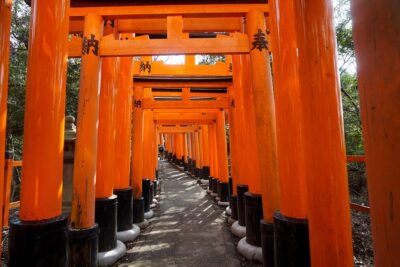
Fushimi Inari Hidden Hiking Tour (Private Option Available)
Our verdict →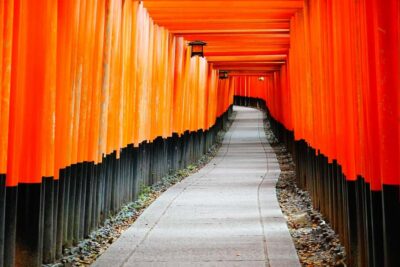
Osaka/Kyoto:Kinkakuji,Arashiyama,FushimiInariShrine,NaraPark
Our verdict →
Nikko: Kegon Falls, Lake Chuzenji & Toshogu Temple
Our verdict →
Kamakura & Enoshima Day Trip including Temple Tickets
Our verdict →Browse the lists this tour appears in