
Reviewed · GEISHA & MAIKO EXPERIENCES
Kyoto: Gion Hidden Gems & Geisha Culture Tour
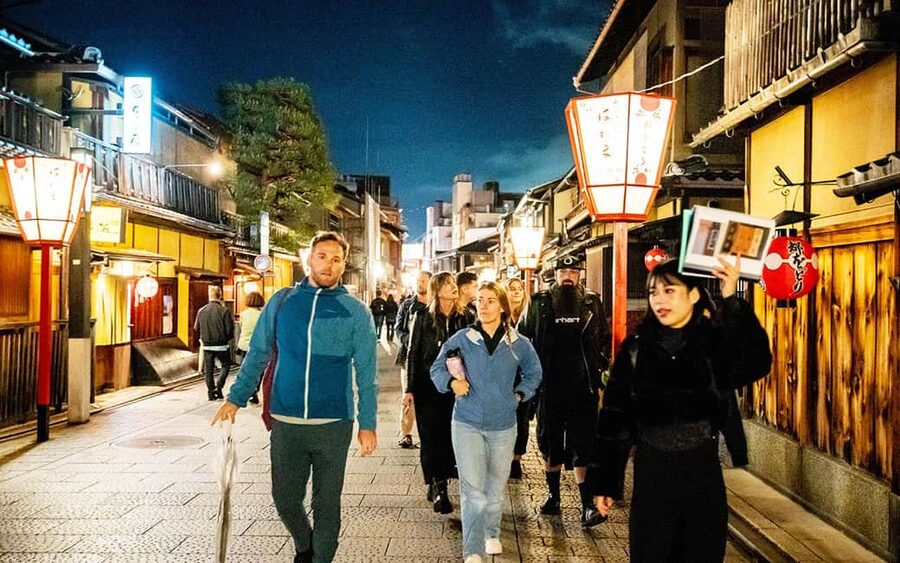
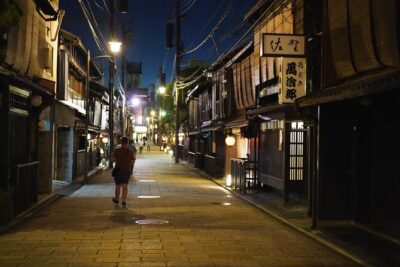
Gion’s appeal is not just its famous tea houses. It is the contrast between the willow-lined Shirakawa Canal, quiet stone lanes, old wooden townhouses, and the busy approach to Hanamikoji Street. This two-hour walk gives you that full picture, with an English-speaking guide explaining what you are seeing rather than leaving you to guess.
I especially like the route’s mix of major sights and tucked-away streets, and the useful local advice about restaurants and Kyoto customs. I also like that guides such as Uta, Dan, Mai, Takumi, Wajid, and Alex have been praised for clear explanations and a friendly pace. The main drawback is that the route covers a lot in two hours, so you should expect steady walking and limited time at each stop.
Key points to know before booking
- Geisha sightings are possible, not promised: The tour ends near Hanamikoji Street, where you might see a geisha or maiko heading to an evening appointment.
- The route covers a wide slice of eastern Gion: You visit Shirakawa Canal, several shrines, Ninenzaka, Hōkan-ji, and Hanamikoji.
- Evening departures can feel calmer: Several tours took place after dark, when parts of Gion were quieter and less crowded.
- Guides add cultural context: Expect explanations of geisha training, dances, hairstyles, kimonos, shrine customs, and Japanese terms.
- Two hours means a brisk walk: The route is packed with stops, so comfortable shoes matter.
- The price is modest for a guided introduction: At $23 per person, the tour offers a useful orientation before you explore Kyoto on your own.
Why Gion works best on foot
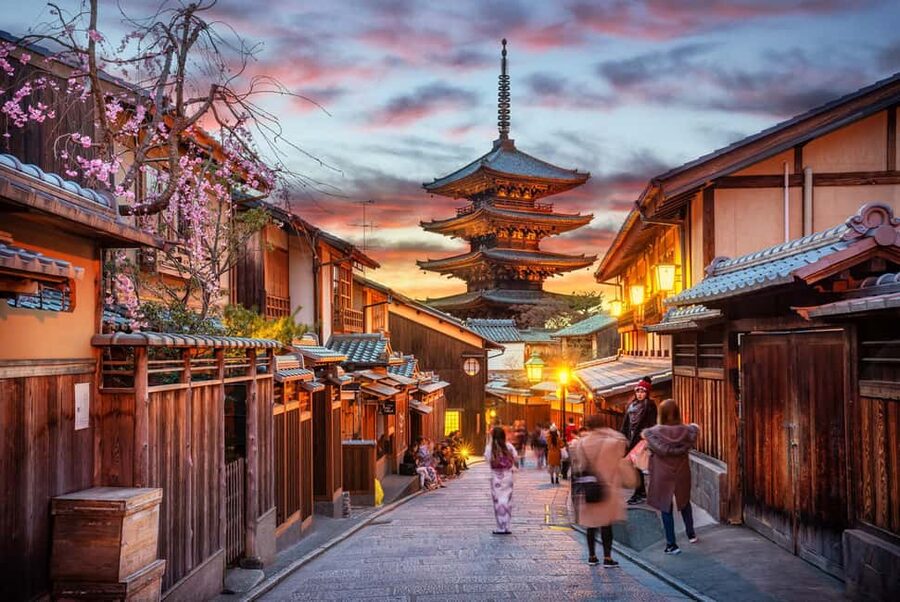
Gion is easy to misunderstand if you only visit the famous streets, take a few photographs, and leave. The district is a working cultural area, not a stage set. Its charm comes from small details: wooden façades, narrow lanes, stone paving, shrine gates, canals, and the careful appearance of the tea-house district.
This tour helps you connect those pieces. You begin near Shijo Bridge, then move toward Gion Shirakawa and the older streets around Yasaka Shrine. The walk continues through the eastern side of the district, passing Ninenzaka and Hōkan-ji before reaching Yasui Kompira-Gu and Hanamikoji-dori.
I would use this as an early Kyoto activity, especially on your first day. You get a basic map of Gion, learn how the geisha districts function, and collect restaurant suggestions for later. Several guides have also offered dining recommendations, which can be handy after the tour ends.
The starting point is the McDonald’s Shijo Ohashi store at 105-1 Hashimoto-cho in Shimogyo-ku. Look beside the restaurant for a guide holding a Local Guide Stars sign. The front of the restaurant can be crowded, so the side meeting point matters.
More Hidden Gems Tours in Kyoto
- Kyoto Geisha Walking Tour: Gion District & Hidden Gems
★ 4.7 · 3,273 reviews - Private Kyoto Tour with a Local, Highlights & Hidden Gems, Personalised
★ 5.0 · 1,543 reviews - Arashiyama Bamboo Forest & Hidden Gems Bike Tour (Early Bird)
★ 5.0 · 613 reviews
Gion Shirakawa and the willow-lined canal
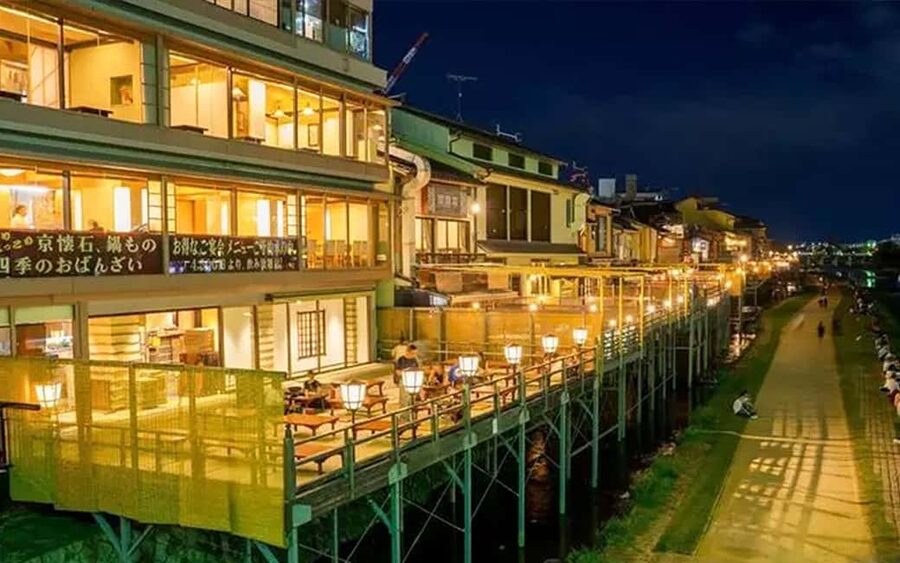
The first scenic section is Gion Shirakawa. The Shirakawa Canal runs beside traditional tea houses, willow trees, and stone-paved paths. This is one of the most attractive parts of the walk, and it gives you the classic visual introduction to Gion without rushing straight into the busiest shopping streets.
Your guide will point out the relationship between the waterway, the tea houses, and the traditional buildings. You will have time for photographs, but this is still a walking tour, not a long photo session. If you want careful architectural pictures, you may wish to return on your own later.
The canal looks different depending on the departure time and weather. An evening visit can give the area a quieter mood, while rain makes the stones slippery and the walk less comfortable. The tour operates in rainy weather, so carry an umbrella or raincoat rather than counting on a cancellation.
Tatsumi-jinja and the first cultural stop
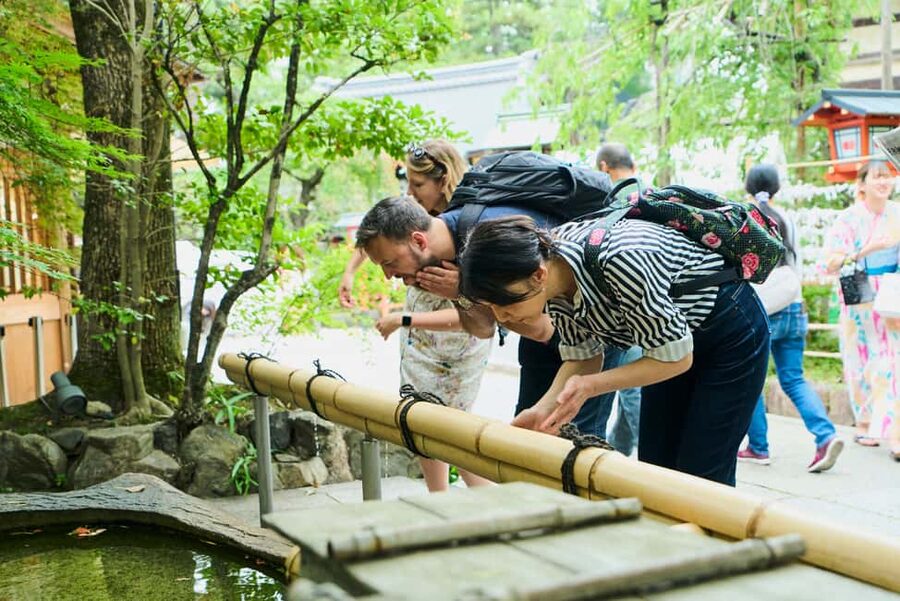
Tatsumi-jinja Shrine is a smaller stop, but that is part of its value. It gives you a chance to see a local shrine setting within the Gion district, rather than treating the area only as a collection of old streets and restaurants.
The guide explains the site while the group pauses for photographs. This is where a good guide makes a real difference. A shrine visit can feel like a quick stop if you do not understand what you are looking at. Guides such as Wajid and Kenta have been praised for explaining Japanese words, customs, and historical background in clear English.
Do not expect a long temple visit here. The tour has many stops, and the focus is on connecting several places into one story. You will get an introduction, then continue walking.
Yasaka Shrine and Kyoto’s old east side
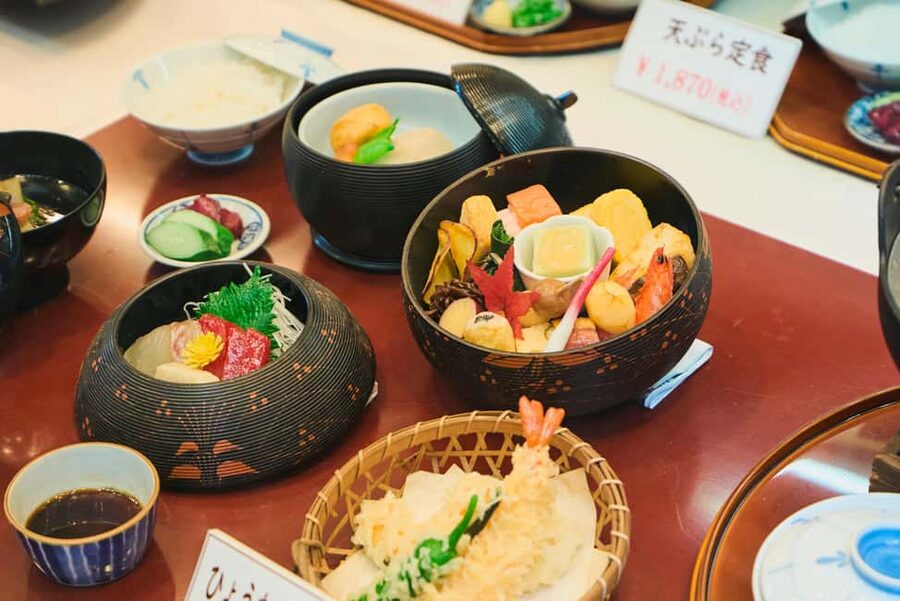
Yasaka Shrine is one of the larger and more recognizable religious sites on the route. It gives the walk a change of scale after the narrow canal lanes. The shrine visit also helps explain why Gion grew around religious institutions and traditional entertainment districts.
Your guide will lead you through the site and discuss its role in Kyoto. The tour description identifies a shrine that is 1,000 years old, and Yasaka is the major historic shrine included in this section of the walk. Photography is allowed, but flash photography is not permitted inside temples.
The stop is useful for first-time visitors because you see both the formal shrine grounds and the surrounding streets. You are not simply checking off another attraction. You are learning how Kyoto’s religious sites sit alongside older commercial and cultural neighborhoods.
More Geisha Experiences in Kyoto:
- Kyoto: Gion Magical Night Walking Tour with Geisha Trivia
★ 4.9 · 2,393 reviews - Kyoto: Gion Geisha District Walking Tour – Stories of Geisha
★ 4.7 · 2,187 reviews - Best of Kyoto: Gion, Geisha, Pagodas & Cobblestones
★ 4.9 · 2,058 reviews - Night Walk in Gion: Kyoto’s Geisha District
★ 4.5 · 2,003 reviews
Edo-period townhouses and quiet backstreets
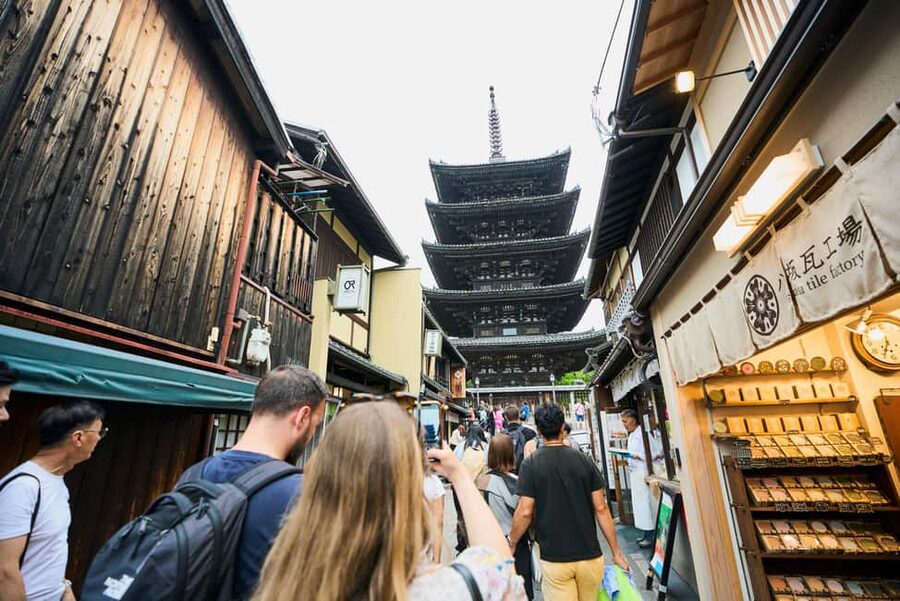
One of the best parts of the walk is the movement away from the most obvious routes. In quieter lanes, Edo-period wooden townhouses show how old Kyoto looked and felt. Their narrow fronts and traditional materials offer a sharp contrast with modern storefronts and larger roads.
You should pay attention to the proportions of the buildings and the way the lanes change. A guide can point out details you might otherwise walk past, including the design of wooden façades and the difference between a public street and a more private residential lane.
The word quiet needs a little qualification. Gion is a popular district, and conditions vary by time of day, season, and weather. Still, the route includes streets with fewer tourists than the best-known photo spots. That is a worthwhile benefit of joining a local guide rather than following only a standard map route.
Ninenzaka and Hōkan-ji’s famous pagoda
The route continues toward Ninenzaka, a historic slope lined with traditional buildings and shops. It is a photogenic area, but it can also be crowded. The two-hour timing means you will walk through it, stop for views, and hear the guide’s explanation rather than spend a long time browsing.
Hōkan-ji Temple, often recognized by its pagoda, gives the route one of its most memorable views. From the surrounding streets, the pagoda helps you understand the visual character of Kyoto’s eastern hills. The stop is mainly a photo and explanation point, so do not expect a lengthy temple interior visit.
This section also brings the practical challenge of the tour into focus. You are covering a good distance, and parts of the route involve slopes, stone paving, and uneven walking surfaces. The activity is not suitable for wheelchair users or people with mobility impairments. If stairs, inclines, or extended walking are difficult for you, choose a slower private outing instead.
Yasui Kompira-Gu and the meaning behind the visit
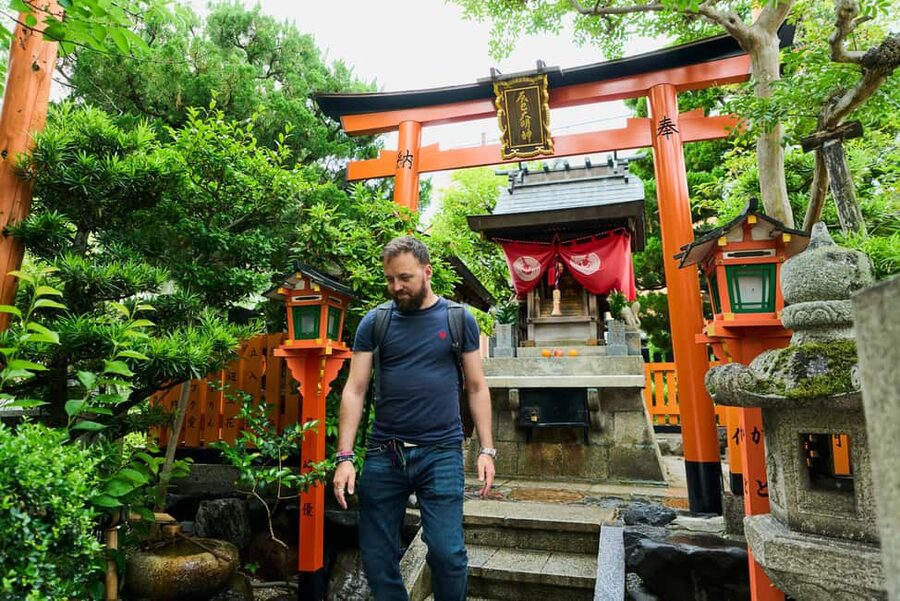
Yasui Kompira-Gu Shrine adds another layer to the walk. You visit the shrine with the guide, then continue toward Hanamikoji. The stop gives you another example of how small religious sites are woven into the older city.
This is also a place where explanations matter. Japanese shrines and temples can look similar to a first-time visitor, but their customs and purposes are not identical. A guide can help you understand what you are seeing without turning the visit into a long lecture.
The tour’s strongest guides keep the information moving. Past guests have especially praised Uta, Mai, Dan, Alex, Oliver, Noa, and Takumi for making the history easy to follow, answering questions, and keeping the pace comfortable. One useful detail from the feedback is that Noa waited for everyone to catch up before continuing the explanation. That small habit matters in a walking group.
Hanamikoji Street and the geisha culture lesson
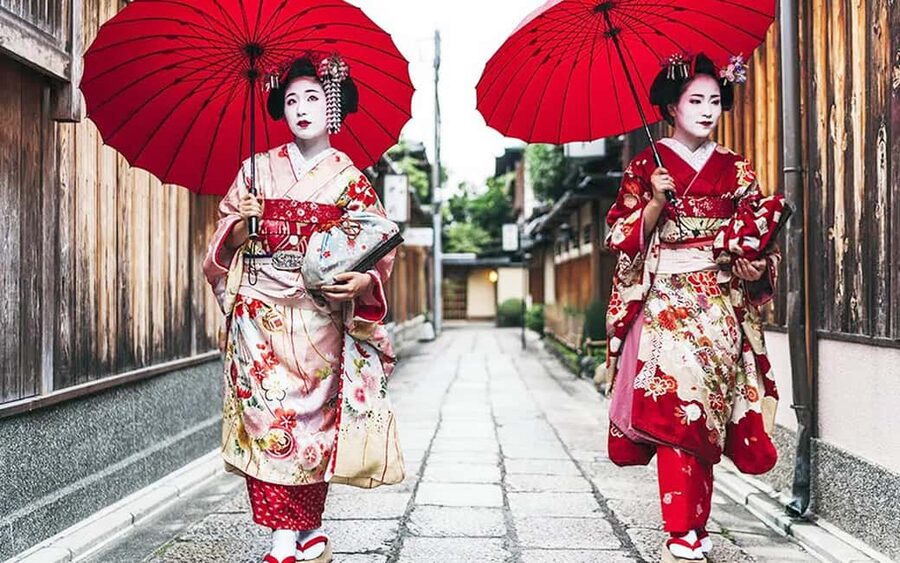
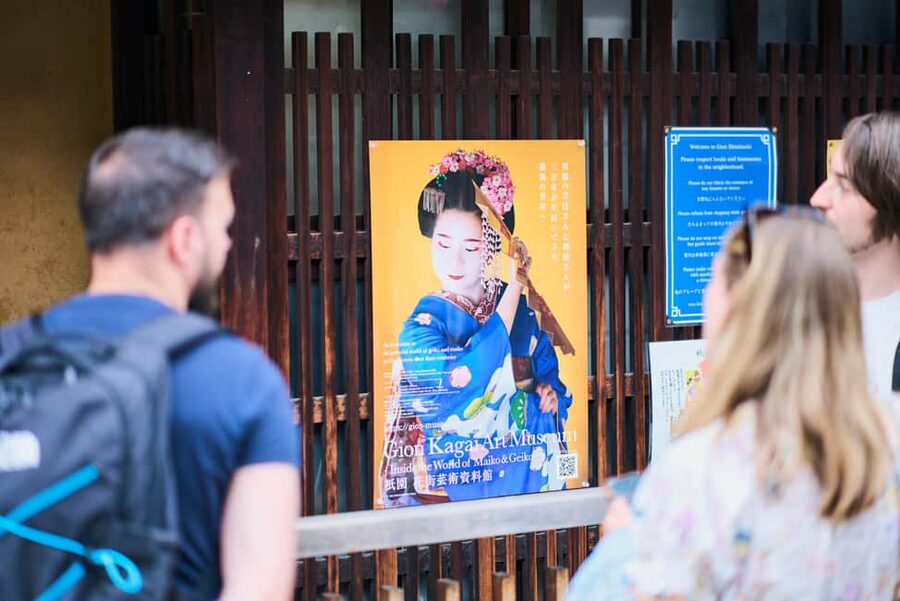
The final stop is Hanamikoji-dori, the heart of Gion’s geisha district. This is where the tour’s main cultural theme comes together. You learn about the strict training of geisha, their dances, the work involved in kimono dressing, and the elaborate hairstyles associated with maiko and geiko.
Use the terms carefully. The district’s traditional performers are often called geiko in Kyoto, while maiko are apprentices. Your guide can explain the difference and give you a better sense of the training behind the polished appearance.
You may see a geisha or maiko walking to an evening engagement, especially on a later tour, but this is never guaranteed. Some departures have included sightings, while others focus on the streets, tea houses, and cultural explanation. Do not book this as a guaranteed photo opportunity.
If you do see a performer, follow your guide’s advice. Do not use flash photography, block the lane, or treat the person as a public display. The value of this part of the tour is learning about a living tradition, not chasing a photograph.
The final location is also useful for dinner planning. Guides have recommended restaurants after the walk, and some people have used those suggestions. Since the tour ends in a restaurant-rich part of Kyoto, you can continue the evening without crossing the city.
What the $23 price really gives you
At $23 per person, this is an inexpensive guided introduction to one of Kyoto’s most complicated districts. You are paying for two hours of route planning, English explanation, cultural background, and help finding streets that you might not choose on your own.
The value is strongest if this is your first visit to Kyoto or your first evening in Gion. You learn where the main areas connect, what to look for in the old buildings, and how to approach the geisha district with basic courtesy.
It is less useful if you want long temple visits, extensive shopping time, or a slow photography walk. The route includes many stops, so the guide must keep things moving. One assessment described the pace as quick but necessary to fit everything into two hours. That is a fair warning.
The tour includes an English-speaking local guide, but no meals or other listed extras. You should bring water, sunscreen, and comfortable shoes. Summer can feel humid, while rain can make the stone lanes less pleasant. The activity continues in bad weather, so check the forecast and dress for it.
Free cancellation is available up to 24 hours before the start time, and you can reserve now while paying later. Those terms are useful if your Kyoto schedule is still changing.
Which departure time should you choose?
The available starting times vary, so check the booking calendar. The experience can work in daylight, late afternoon, or evening, but each option has a different feel.
A daytime tour gives you clearer views of the wooden townhouses and shrine details. It may also be easier for photography. An evening tour can make Gion feel more atmospheric and may bring fewer people to the lanes, though visibility is lower and rain can be more bothersome.
Several people have especially enjoyed late or evening departures because the streets felt quieter. If your main interest is geisha culture, an evening slot makes practical sense since the walk ends near the area where performers may be heading to appointments. Still, choose daytime if you care most about architectural details and bright photographs.
Is this tour right for you?
I would recommend it to first-time Kyoto visitors, couples, families with older children, and anyone who wants cultural context without committing to a long full-day excursion. One guide received praise for working well with children aged eight and ten, so the format can suit families if everyone is comfortable walking.
It also suits independent visitors who prefer to explore alone but want a short orientation first. Take notes on the streets, shrines, and restaurant suggestions, then return to the places that interest you most.
I would be more cautious if you have limited mobility, dislike walking on slopes or stone paving, or want a slow and highly detailed temple tour. The route is active, and the two-hour schedule leaves little room to linger.
Should you book the Gion walk?
Book it if you want a reasonably priced introduction to Gion that combines scenery, shrines, old townhouses, and a respectful explanation of geisha culture. The high rating of 4.9 from 126 reviews reflects a consistent pattern in the feedback: guides are friendly, explanations are clear, and the route reveals parts of the district you might miss alone.
Choose an evening departure if quieter streets and the possibility of seeing a geisha matter most. Choose an earlier time if you want better light and less concern about rain or dark lanes. Either way, arrive ready to walk, keep your expectations realistic about geisha sightings, and treat Hanamikoji as a living neighborhood rather than a photo prop.
FAQ
Where does the tour meet?
The meeting point is the McDonald’s Shijo Ohashi store at 105-1 Hashimoto-cho, Shimogyo-ku, Kyoto-shi. The guide waits at the side of the restaurant with a Local Guide Stars sign because the front can be crowded.
How long does the tour last?
The walking tour lasts two hours.
What language is the tour in?
The tour is conducted in English by a live local guide.
Is a geisha sighting guaranteed?
No. You may see a geisha or maiko near Hanamikoji Street, but sightings depend on timing and chance.
What places does the route visit?
The route includes Gion Shirakawa and the Shirakawa Canal, Tatsumi-jinja Shrine, Yasaka Shrine, Ninenzaka, Hōkan-ji Temple, Yasui Kompira-Gu Shrine, and Hanamikoji-dori.
What should I bring?
Bring comfortable walking shoes, water, sunscreen, and an umbrella or raincoat if rain is possible.
Is photography allowed?
Photography is allowed, but flash photography is not permitted inside temples.
Is the tour suitable for wheelchair users?
No. The activity is not suitable for wheelchair users or people with mobility impairments.
Just added around Kyoto
- Sekka Cotton Furoshiki Class★ 5.0 · 19 reviews
- Kyoto Sword Experience – includes Museum Ticket/Ninja Experience★ 4.5 · 149 reviews
- Scenic Green Tea Fields of Hidden Kyoto & Local Tea Exp (Private)★ 5.0 · 32 reviews
- Secret Eastern Kyoto Biking Adventure★ 5.0 · 44 reviews
- Private Sake Tasting in Central Kyoto with Sake Sommelier★ 5.0 · 32 reviews
- Samurai School in Kyoto: Samurai for a Day★ 5.0 · 202 reviews
- SHIRAKAWA Japanese Culture Experiences with private English staff★ 5.0 · 16 reviews
- A Privately Guided Photoshoot in Beautiful Kyoto by a Pro★ 5.0 · 18 reviews
Geisha & Maiko Experiences, compared.
Kyoto Geisha Walking Tour: Gion District & Hidden Gems
Our verdict →

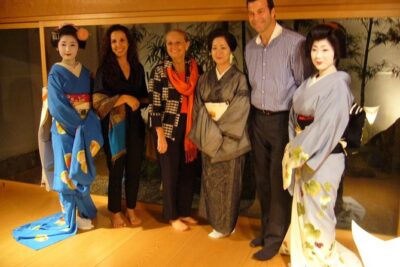
Dinner with Maiko in a Traditional Kyoto Style Restaurant Tour
Our verdict →
Browse the lists this tour appears in