
Reviewed · TEMPLES & SHRINES
Kyoto: Fushimi Inari Taisha Guided Walking Tour
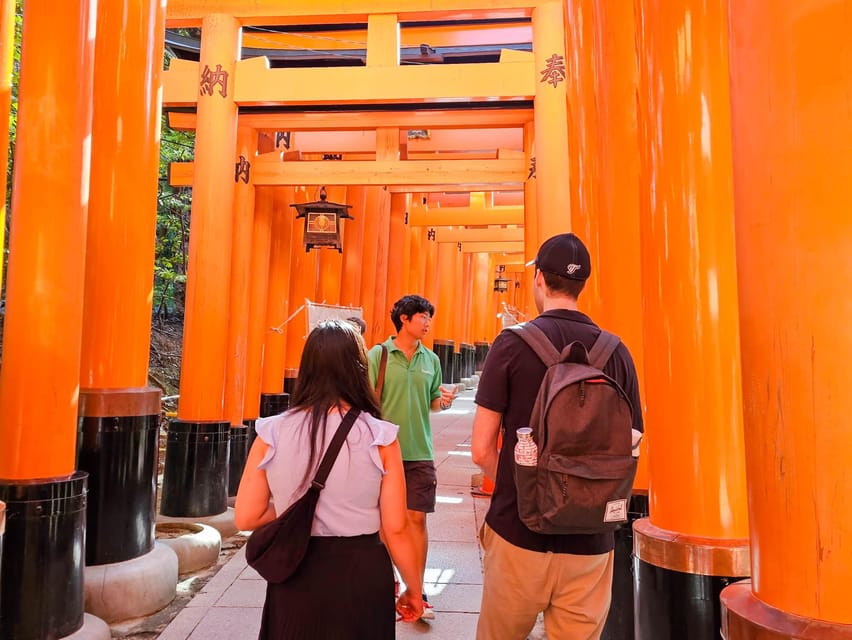
Fushimi Inari Taisha is Kyoto’s great tunnel of red torii gates, and this tour gives you a useful way into it. You’ll learn why the gates were donated, what Inari represents, and why fox statues appear around the shrine. The upper trail also opens to views over Kyoto and the surrounding mountains.
I like the choice between a full Mount Inari walk and a shorter visit focused on the gates. I also like the small group size, capped at nine, which gives guides such as Katz, Raphael, Nobumasa, and Christiana room to answer questions and adjust the pace. The main drawback is the walking: the longer route takes about an extra hour and is not suitable for people with mobility, heart, respiratory, or pregnancy-related concerns.
Key points to know before you book
- Two routes are available: Choose the full upper-and-lower shrine visit or the shorter lower section and torii-gate route.
- The gates are more than decoration: Your guide explains their connection to donations, Inari, agriculture, commerce, and fox messengers.
- The tour lasts 2 to 3 hours: That makes it a practical Kyoto activity between larger sightseeing plans.
- A small group keeps it personal: No more than nine participants join the English-language walk.
- The final stop adds local flavor: You get about 30 minutes to walk around the street-food area, but food and drinks cost extra.
- Wear proper shoes and modest clothes: The shrine includes a mountain trail, and the meeting point has a strict 10-minute waiting limit.
Why Fushimi Inari works so well with a guide
Fushimi Inari Taisha is one of Kyoto’s most recognizable sights, but recognition is not the same as understanding. The red gates make an immediate visual impression, yet the shrine has layers of meaning that are easy to miss if you simply walk through, take photos, and leave.
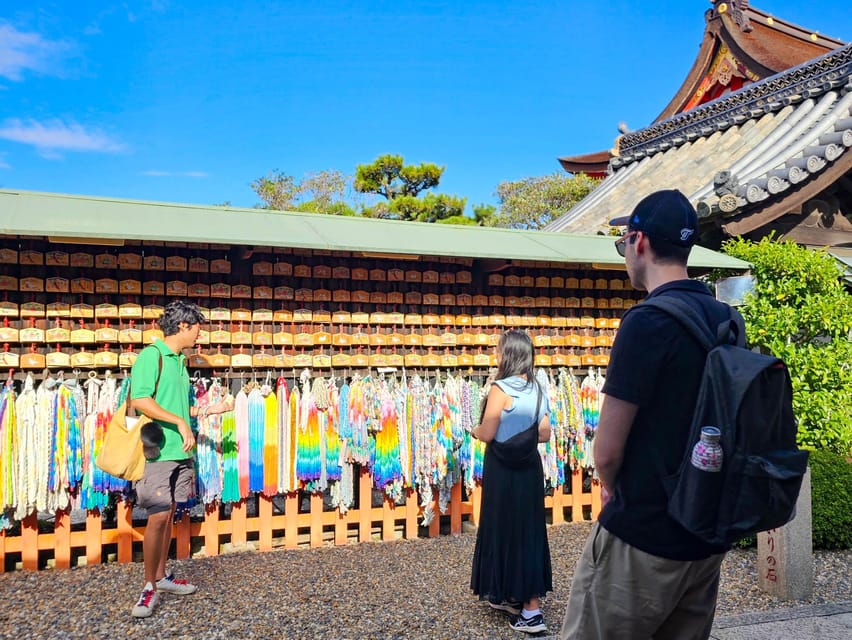
Inari is linked with agriculture and commerce. Foxes appear throughout the shrine grounds as messengers of the deity, not as the deity itself. A good guide can point out these details while also explaining how the shrine is arranged and why the torii gates cover the mountain path.
That context matters here because Fushimi Inari is not one compact building. It is a working Shinto shrine with a lower section at the foot of Mount Inari and an upper network of smaller shrines along the hillside. The walk gives you a clearer sense of how the site functions as a place of worship, not just a famous photo stop.
I also like the scale of this outing. At $24 per person, it is priced more like a focused introduction than a full-day tour. You are paying for an English-speaking guide, entrance fees, and company through a busy and sometimes confusing shrine complex. You are not paying for a meal, hotel transport, or a long list of unrelated stops.
More Temple & Shrine Tours in Kyoto
- Kyoto: Fushimi Inari, Kinkakuji, Bamboo Grove 1 Day Bus Tour
★ 4.8 · 4,316 reviews - Kyoto: Tea Ceremony in a Traditional Tea House in Kiyomizu
★ 4.9 · 3,519 reviews - Kyoto: Tea Ceremony Ju-An at Jotokuji Temple
★ 4.9 · 3,207 reviews
Meeting your guide at Daily Yamazaki
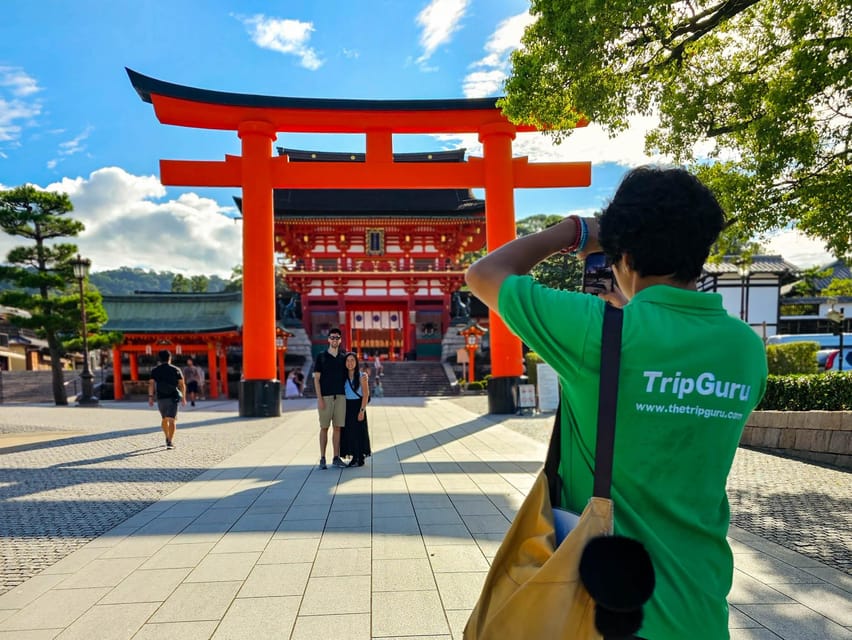
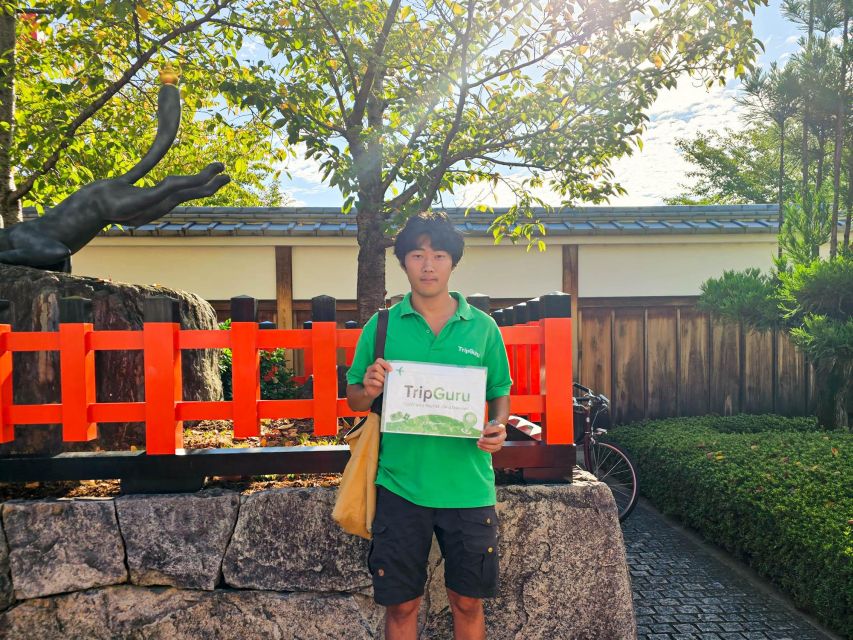
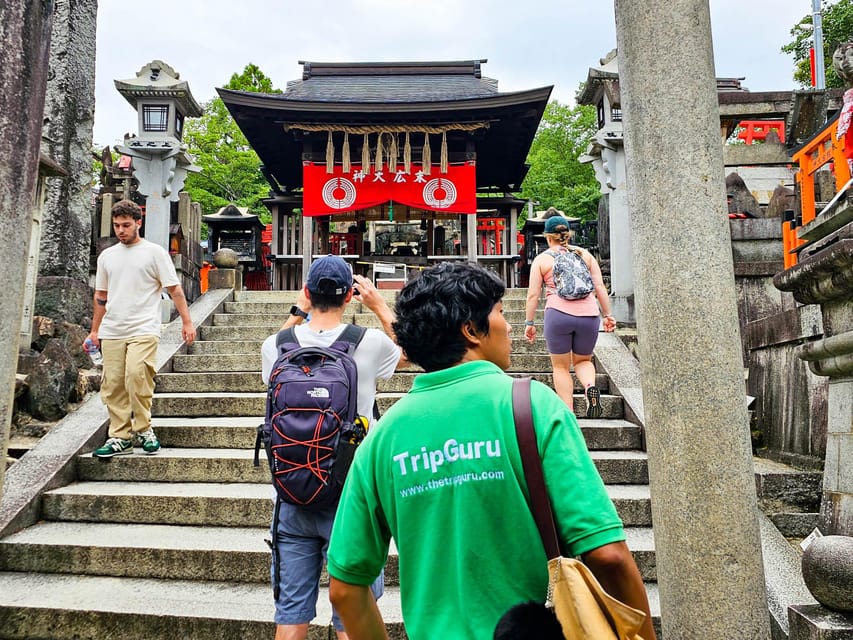
The tour begins at Daily Yamazaki Fushimi Inari Shrine. Look for a guide wearing a TripGuru shirt or holding a TripGuru sign. This is a simple arrangement, but you should arrive early and identify the meeting point before the start time.
The guide waits for a maximum of 10 minutes. That is especially important in Kyoto, where morning traffic can affect road travel more than navigation apps suggest. If you are coming by taxi or car, leave a generous buffer. A late arrival can mean missing the group entirely.
The tour is conducted in English and limited to nine participants. That size is small enough for questions and practical help without making the walk feel like a private tour. Several past guides, including Katz, Raphael, Christiana, and Nobumasa, have been praised for explaining the site clearly, taking photos, offering water breaks, and adapting to different walking speeds.
Those details are useful clues about the likely style of the experience, but guide assignments can change. You should expect an English-speaking TripGuru guide, not a particular named person.
The lower shrine: a proper introduction before the gates
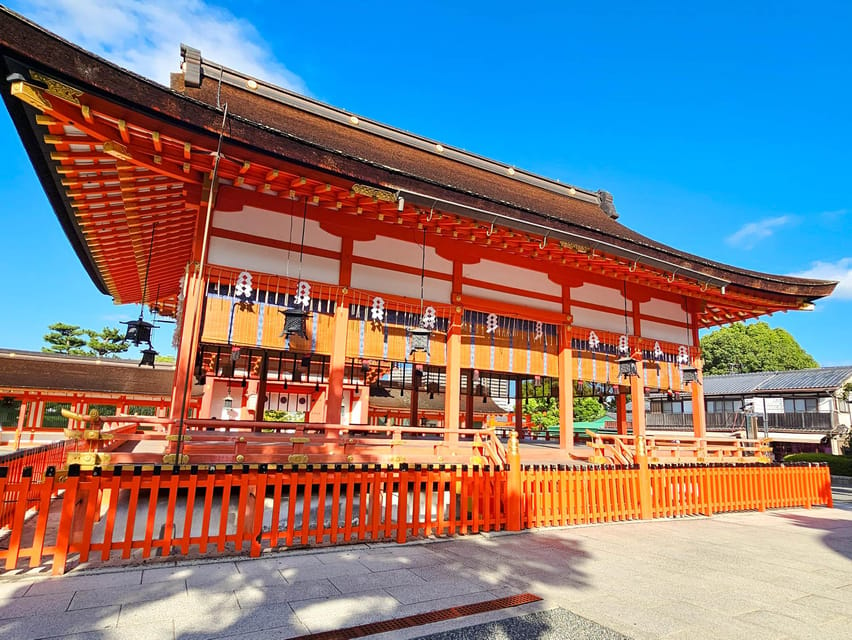
The lower part of Fushimi Inari sits at the base of Mount Inari. This is where you find the main entrance, the offering hall, and several smaller shrines. It is the easiest section to visit if you have limited time or do not want a sustained uphill walk.
Starting here gives you a chance to see the shrine as a religious site before heading toward the famous gates. Your guide can explain the basic customs and point out the connection between Inari, prosperity, farming, business, and fox imagery.
This section also makes sense for visitors who mainly want the torii gates but need to keep the outing short. The shorter option, described as Option B, focuses on the lower part and the most recognizable gate area. You still get the central visual experience, but you skip much of the mountain walking.
That choice is valuable in Kyoto. You might be fitting Fushimi Inari between a temple visit and an evening reservation, or you might be traveling with someone who cannot manage a longer climb. The shorter route protects your time and energy, though it gives you less of the mountain setting and fewer views from above.
Walking beneath thousands of vermilion torii gates
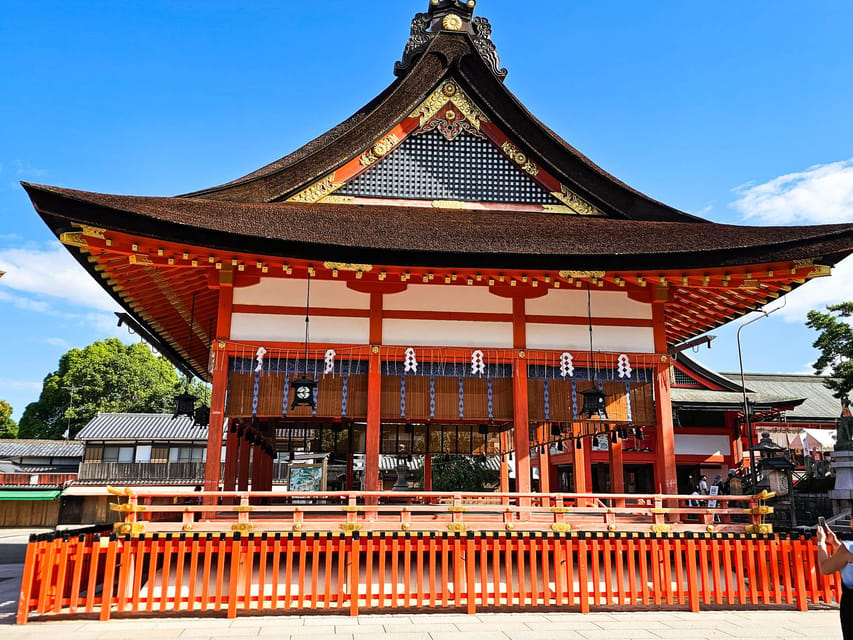
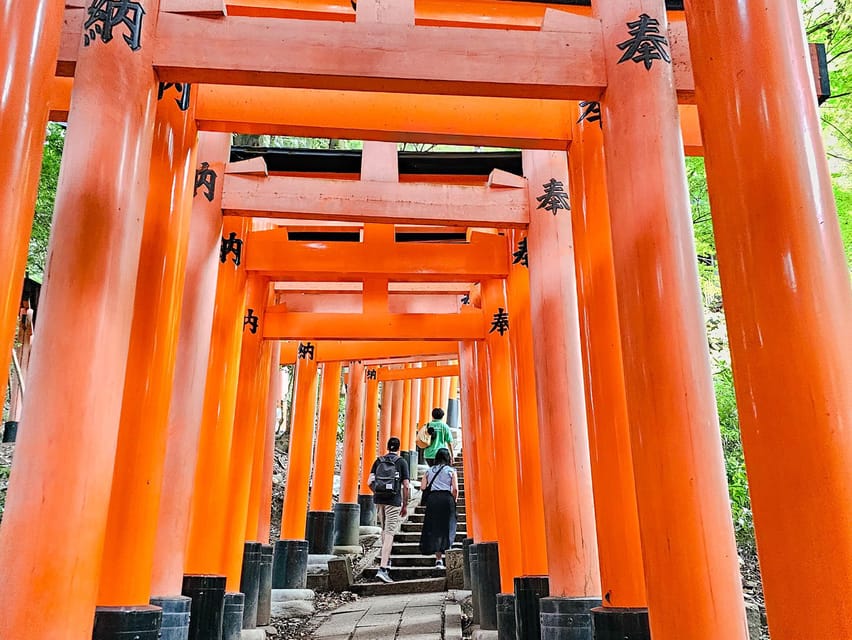
The torii gates are the heart of the experience. They form long covered passages up the trail, with the bright vermilion color creating a strong contrast against the wooded slopes of Mount Inari.
The gates were donated, and your guide can help explain what that means within the shrine’s culture. Their repetition is part of the visual power. One gate is striking. Hundreds create a changing corridor of color, shadow, and framed views.
This is also the place where a guide earns the $24 price. Without explanation, you may see only a photogenic path. With help, you get a better grasp of the symbols, the shrine’s purpose, and the relationship between the large entrance grounds and the smaller sacred spots farther uphill.
It can be tempting to rush through this section for photographs. Try not to. Give yourself time to notice the differences in the gates, the small shrines beside the path, and the way the route gradually changes as you climb. Your guide may also help with photos, a practical touch several participants valued.
The path is not an empty photo set. It is a place of worship, so modest dress and respectful behavior matter. Avoid overly revealing clothing, including tank tops or very short shorts, and keep your voice and conduct considerate around the shrines.
More Walking Tours in Kyoto
- Kyoto Geisha Walking Tour: Gion District & Hidden Gems
★ 4.7 · 3,273 reviews - Kyoto: Gion Magical Night Walking Tour with Geisha Trivia
★ 4.9 · 2,393 reviews - Kyoto: Gion Geisha District Walking Tour – Stories of Geisha
★ 4.7 · 2,187 reviews - Night Walk in Gion: Kyoto’s Geisha District
★ 4.5 · 2,003 reviews
Mount Inari and the full walking option
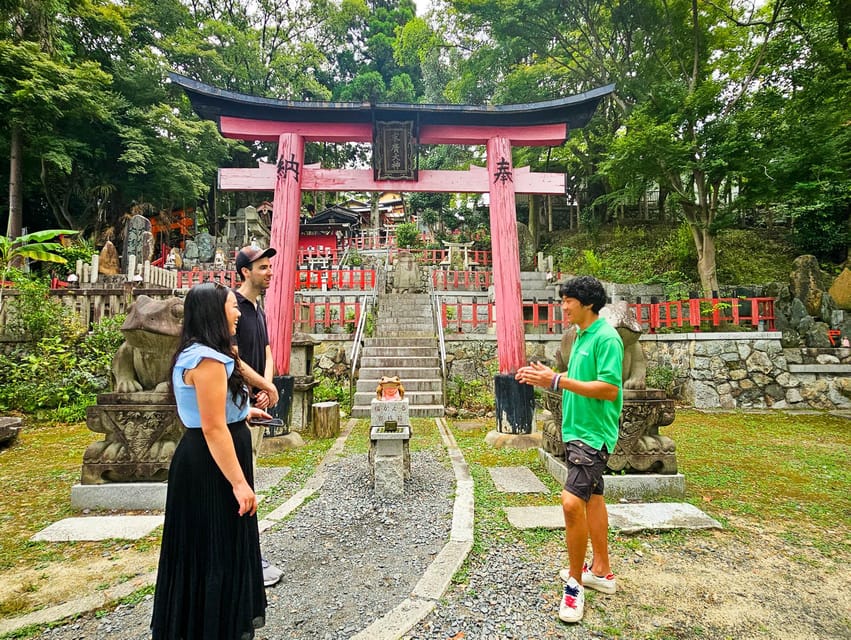
Option A includes both the lower and upper parts of Fushimi Inari. It adds roughly an hour of walking and takes you along the Mount Inari trail, where smaller shrines appear beyond the main entrance area.
The reward is a fuller understanding of the site. You see how the shrine continues up the mountain rather than ending at the first famous gate tunnel. You also get city and mountain views from higher points along the route.
The cost is physical effort. This is a walking tour, not a shuttle visit. Comfortable shoes are essential, and the full route may not suit anyone with mobility impairments, heart problems, respiratory issues, or a pregnancy. The supplied guidance specifically excludes those groups, so take that warning seriously rather than treating it as routine fine print.
The longer walk is also less suitable if your schedule is tight. The total activity lasts 2 to 3 hours, but the full option will naturally use more of that time. If you want the mountain views and smaller shrines, choose it. If your priority is the gates and a short, manageable visit, choose the lower route.
Guides have shown flexibility with families and older members of groups. Raphael, for example, accommodated a party with children and strollers, while another guide was praised for patience with older participants. That does not turn the walk into an accessible tour, but it suggests that you can discuss your pace and needs with the guide at the start.
The 30-minute street-food stop
After the shrine visit, the group returns toward the starting point and spends about 30 minutes walking around the street-food area. This is a pleasant change of pace after the mountain path and gives you time to look at local snacks and casual food stalls.
Food and drinks are not included. Think of this as an opportunity to browse or buy something, not a provided meal. Bring extra yen if you want to eat, and remember that the $24 price covers the guide, entrance fees, and walking tour only.
The stop is short, so it works best as a taste of the area rather than a full food tour. If you already have lunch plans, you can keep your purchase small. If you are hungry after the climb, you may want to budget a little more time elsewhere for a proper meal.
What the $24 price really buys you
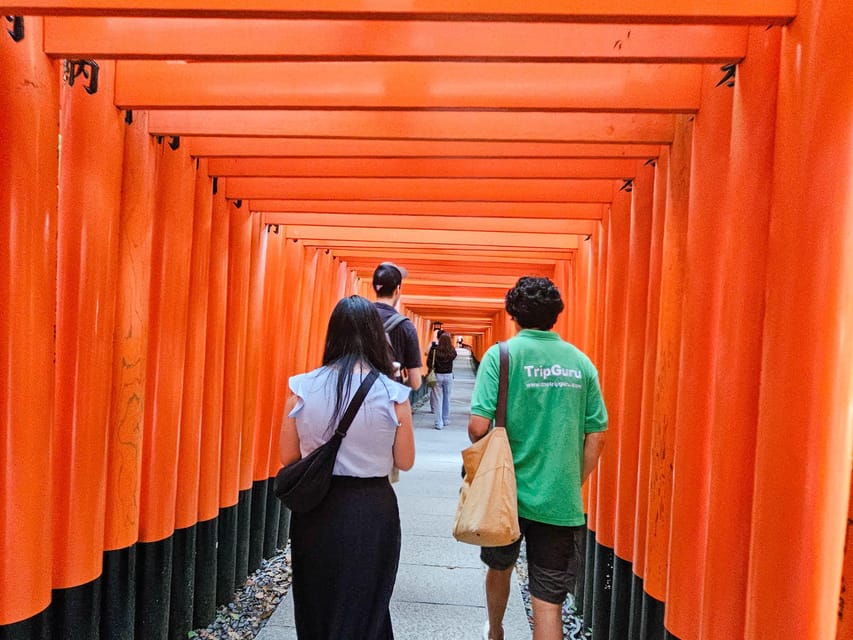
The price is reasonable for a focused, small-group introduction to one of Kyoto’s major sights. Entrance fees are included, and the group limit of nine is a real advantage over a large guided procession. You get structure, interpretation, and someone who can help you understand what you are seeing.
The value is strongest for first-time visitors who would otherwise walk through the gates without much context. It is also useful for solo visitors who want company, families who appreciate a guide taking photos and checking on the group, and anyone with only a few hours free.
The value is weaker if you prefer to wander alone or have already studied Fushimi Inari in detail. The shrine can be visited independently, and you may want more time for photography than a group schedule allows. You also need to pay for your own snacks and drinks, and there is no hotel pickup or drop-off.
Free cancellation up to 24 hours before the activity and the reserve-now, pay-later option make it easier to fit into a changing Kyoto schedule. Same-day and last-minute booking may be accepted when spaces remain, but you should still check the available start times rather than count on a particular departure.
The best match for this Kyoto walk
I would choose this tour if you want clear explanations without committing to a full-day sightseeing program. It suits:
- First-time Kyoto visitors who want cultural context
- Solo visitors looking for a small group
- Families who want a guide to help with photos and pacing
- People with only 2 to 3 hours available
- Anyone unsure how far up Mount Inari to walk
- Visitors who prefer booking close to the day of the activity
I would think twice if you have trouble with hills, need a fully accessible route, or dislike scheduled group walks. The shorter option reduces the walking, but the activity still involves walking around shrine grounds and may include uneven or uphill sections.
I would also skip the full route if you have a strict appointment shortly afterward. Traffic concerns apply mainly to reaching the meeting point, but you should leave enough time on both sides of the tour.
Small details that improve the experience
Wear comfortable shoes with good support. Even the short route involves walking, and the full option adds the mountain trail.
Dress modestly from the start. You will be visiting an active shrine, and suitable clothing saves you from having to think about it once you arrive.
Bring water, especially in warm weather. Some guides have helped participants stay hydrated and offered breaks, but you should not depend on complimentary water or supplies.
Arrive early. The guide waits only 10 minutes, and traffic can be unpredictable. The meeting point is simple to identify if you look for the TripGuru shirt or sign.
Decide in advance how much walking you want. Option A is the better choice for views and a fuller visit. Option B is smarter if the torii gates are your main goal or you are working around a busy Kyoto day.
Should you book this Fushimi Inari tour?
Book it if you want more than a quick photograph beneath the red gates. For $24, you get a compact English-language introduction, entrance fees, a small group, and the choice between a longer mountain walk and a shorter shrine visit.
The strongest reason to go is the guide’s role. Past departures have benefited from guides such as Katz, Christiana, Raphael, Nobumasa, and others who explained the site, answered questions, helped with photos, and paid attention to pace and comfort.
Skip it if you want complete freedom, need a fully accessible outing, or already know the shrine well. For most first-time visitors with a few hours in Kyoto, though, this is a sensible way to see Fushimi Inari without treating it as just another quick photo stop.
FAQ
How long does the Fushimi Inari guided tour last?
The activity lasts 2 to 3 hours. The full upper-and-lower shrine option includes about an hour more walking than the shorter route.
What languages are available?
The tour is conducted in English with a live English-speaking guide.
How large is the group?
The group is limited to nine participants.
What are the two route options?
Option A visits both the lower shrine and the upper section on Mount Inari. Option B focuses on the lower part and the famous torii gates, with less walking.
Is food included?
No. The tour includes a 30-minute street-food walk, but meals, drinks, and personal expenses are not included.
Where do I meet the guide?
Meet at Daily Yamazaki Fushimi Inari Shrine. The guide will wear a TripGuru shirt or hold a TripGuru sign.
What should I bring and wear?
Bring comfortable shoes and dress modestly for the shrine grounds. Avoid overly revealing clothing, such as tank tops or shorts.
Just added around Kyoto
- Sekka Cotton Furoshiki Class★ 5.0 · 19 reviews
- Kyoto Sword Experience – includes Museum Ticket/Ninja Experience★ 4.5 · 149 reviews
- Scenic Green Tea Fields of Hidden Kyoto & Local Tea Exp (Private)★ 5.0 · 32 reviews
- Secret Eastern Kyoto Biking Adventure★ 5.0 · 44 reviews
- Private Sake Tasting in Central Kyoto with Sake Sommelier★ 5.0 · 32 reviews
- Samurai School in Kyoto: Samurai for a Day★ 5.0 · 202 reviews
- SHIRAKAWA Japanese Culture Experiences with private English staff★ 5.0 · 16 reviews
- A Privately Guided Photoshoot in Beautiful Kyoto by a Pro★ 5.0 · 18 reviews
Temples & Shrines, compared.

Tea Ceremony in a Traditional Tea House in Kiyomizu
Our verdict →

Meiji Shrine, Asakusa, Skytree Bus Tour and Cruise
Our verdict →
Fushimi Inari Hidden Hiking Tour (Private Option Available)
Our verdict →
Osaka/Kyoto:Kinkakuji,Arashiyama,FushimiInariShrine,NaraPark
Our verdict →
Nikko: Kegon Falls, Lake Chuzenji & Toshogu Temple
Our verdict →
Kamakura & Enoshima Day Trip including Temple Tickets
Our verdict →Browse the lists this tour appears in