
Reviewed · TEMPLES & SHRINES
Kyoto: Fushimi Inari, Kinkakuji, Bamboo Grove 1 Day Bus Tour
The best thing about this Kyoto day tour is the sheer range: you pass from Kiyomizu-dera’s hillside terrace to the red torii tunnels of Fushimi Inari, with Arashiyama’s bamboo grove and Kinkakuji in between. It is a smart way to link sights that sit far apart.
I like the comfortable coach, which saves you from sorting out several train and bus connections. I also like the guides, especially names that come up often such as Den, At-Chan, Sakura, Ciel, and Tommy. They add history, Japanese phrases, photo help, and a human touch. The catch is simple: this is a full, fast day, with hills, stairs, and limited time at each stop.
Key points at a glance
- Seven Kyoto stops in one day: Visit major temples, shrines, Arashiyama, and the bamboo grove without planning separate transport.
- A strong guide-led experience: English commentary comes with multilingual audio support in Spanish, French, Italian, German, Portuguese, and Ukrainian.
- Four included temple entries: Tickets cover Kiyomizu-dera, Sanjusangen-do, Tenryuji, and Kinkakuji.
- The lunch choice matters: The Japanese buffet is convenient and includes vegetarian dishes, but it does not suit serious allergies or several special diets.
- Fushimi Inari comes late: You finish with the famous red torii tunnels, when tired legs may affect how far you walk.
- Good value at $122: The price makes more sense if you want transport, admissions, guiding, and many major sights bundled together.
Why this bus tour works for a short Kyoto stay
Kyoto is easy to love and surprisingly awkward to cover. Its headline sights are spread across the eastern hills, northern Kyoto, Arashiyama in the west, and Fushimi in the south. Public transport can handle each area, but fitting them all into one day takes time and careful planning.
This tour handles the long jumps for you. You meet near Kyoto Station at Tully’s Coffee in the Kyoto Avanti building, check in by 7:50 a.m., and leave at 8:00. Look for the green and white Japan Panoramic Tours flag. There is no hotel pickup, and latecomers or no-shows do not receive a refund, so arrive early.
The coach has air conditioning, Wi-Fi, regular ventilation, and antibacterial coating. That matters after several hours on your feet. The day lasts about 510 minutes, or nine hours, and finishes back at the same Kyoto Station area meeting point.
I would choose this tour if you have only one or two days in Kyoto and want to see the famous names efficiently. I would not choose it if you prefer long, quiet temple visits or the freedom to linger over lunch.
More Bus Tours in Kyoto
- PERFECT KYOTO 1-Day Bus Tour
★ 5.0 · 13,518 reviews - Kyoto: Hop-on Hop-off Sightseeing Bus Ticket
★ 3.9 · 2,034 reviews - Osaka/Kyoto: Katsuoji, Kinkakuji, Arashiyama 1-Day Bus Tour
★ 4.6 · 33 reviews
Kiyomizu-dera starts the day above Kyoto
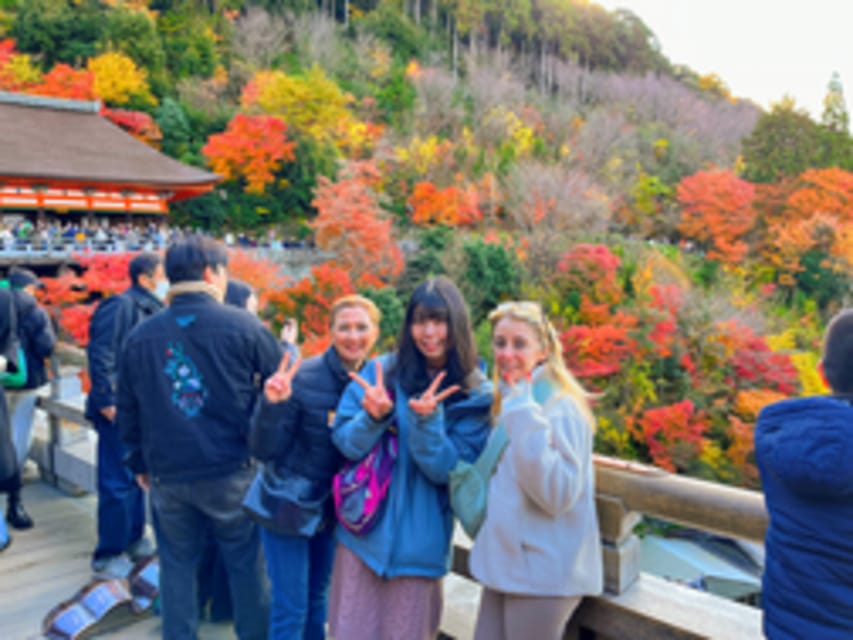
Your first proper stop is Kiyomizu-dera, with about an hour to explore. The temple reportedly opened in 778 and is now a UNESCO World Heritage Site. Its best-known feature is the large wooden terrace, where you look across Kyoto and the surrounding hills.
The approach and temple grounds involve walking uphill and using stairs. Wear shoes that can handle uneven paths. The one-hour visit gives you enough time to see the main areas and enjoy the city view, but not enough for a slow reading of every detail.
Starting here is useful. You see one of Kyoto’s most famous temples before the day’s later crowds and before your legs have had enough. Your guide can explain the site while also helping you understand what deserves your attention once you have free time.
The included entry ticket saves a separate purchase and keeps the group moving. Still, remember that a guided stop is not the same as an open-ended visit. If Kiyomizu-dera is your personal priority, you may want to return independently on another morning.
Sanjusangen-do and its thousand Kannon figures
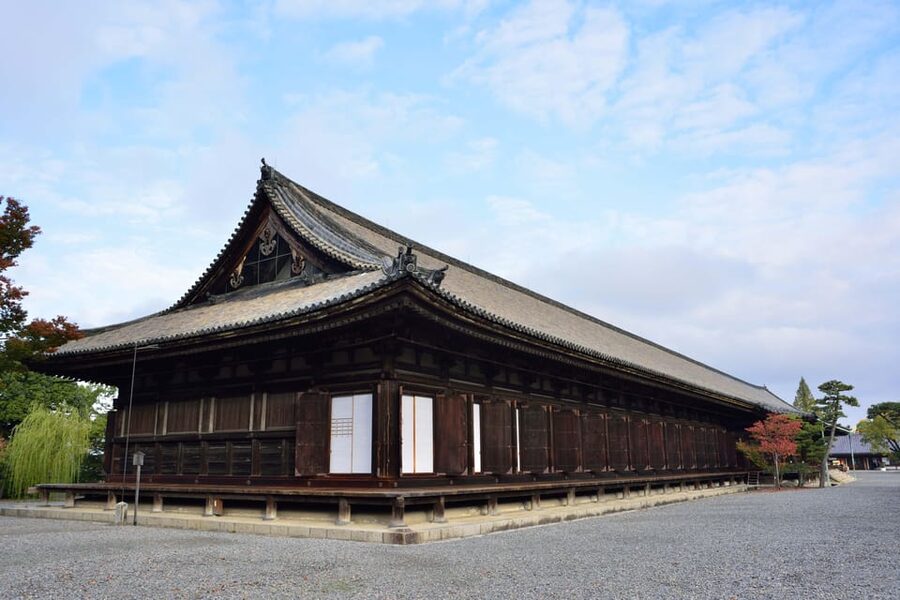
Next comes Sanjusangen-do, officially known as Rengeo-in, for about 40 minutes. The name Sanjusangen-do refers to the hall’s 33 spaces. The long wooden structure uses 35 columns to divide the building into those sections.
Inside, the main visual impact comes from the many Kannon statues arranged in rows. The tour description refers to one thousand and one Kannon figures, making this a very different experience from the open terrace at Kiyomizu-dera.
Forty minutes is a reasonable introduction. The visit is focused and indoors, which gives you a break from the hills and weather. The tradeoff is that you will not have much time to linger over every statue or architectural detail.
Sanjusangen-do also helps the day feel less like a parade of similar temples. Kyoto’s religious sites do not all offer the same mood, and this long wooden hall brings a quieter, more concentrated stop before the coach heads west.
Arashiyama brings lunch beside Togetsukyo Bridge
The bus then crosses Kyoto to Arashiyama, where you have about 50 minutes for lunch. The setting is the Togetsukyo Bridge area, Arashiyama’s central landmark, with shops, restaurants, and other sights nearby.
If you select the lunch option, you receive a Japanese buffet made with seasonal ingredients. Vegetarian dishes are available. The buffet is convenient because you do not need to search for food during a tight schedule, and some meals are described as a pleasant part of the day.
I would keep expectations practical. One meal can vary, and one recent account found some buffet items cold. If food quality is a major part of your Kyoto plans, you may prefer to skip the lunch option and use the free time in Arashiyama to buy your own meal or snacks.
Dietary limits need careful attention. The buffet does not provide Muslim-friendly, allergy-friendly, lactose-free, or gluten-free dishes. If you have a serious allergy, book without lunch. You may bring your own food, or purchase something in Arashiyama. Do not assume that choosing a vegetarian meal solves every dietary concern.
The short lunch stop also means Arashiyama itself is only partly explored. You will see the central area, but this is not a full neighborhood walk with time for every shop, garden, and riverside path.
More Day Trips in Kyoto
- 10 Must-see Spots in Kyoto One Day Private Tour (up to 7 people)
★ 5.0 · 1,108 reviews - Kyoto 1 Day Tour from Kyoto
★ 4.0 · 582 reviews - Kyoto Customized Private Tour: See Top Attractions in 1 Day
★ 5.0 · 342 reviews - From Osaka: Amanohashidate and Ine Bay Day Trip
★ 4.6 · 209 reviews
The Sagano Bamboo Forest gives you a short green walk
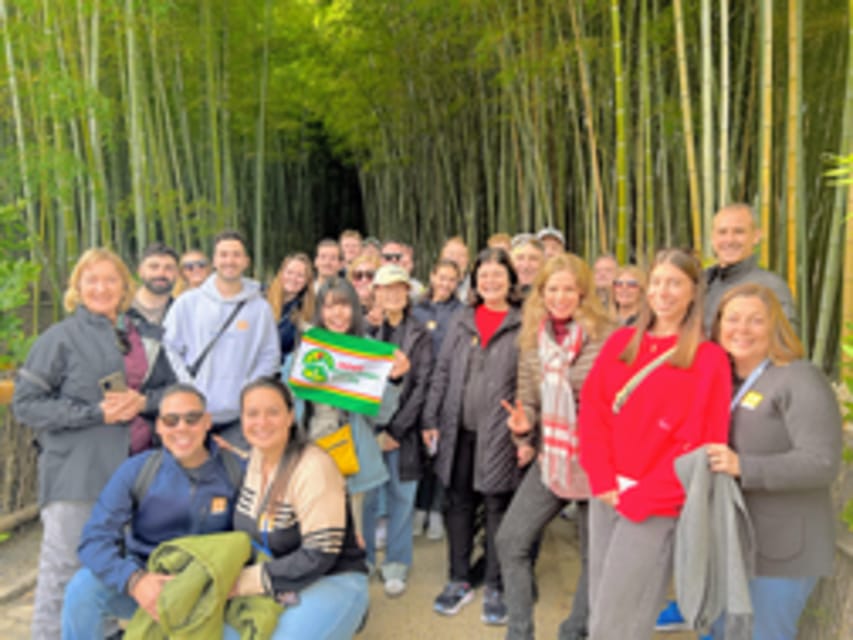
After lunch, you walk through the Sagano Bamboo Forest for about 20 minutes. Tall bamboo lines the path, creating one of Kyoto’s most recognizable photo scenes. On a light breeze, the stalks sway overhead and the path feels cooler and quieter than the city streets.
Twenty minutes is enough to enter the grove, take photographs, and experience the enclosed paths. It is not enough for a long wander. The path can also feel busy, and the tour’s schedule does not allow you to wait around for an empty frame.
This is one place where timing matters less than expectations. Come for the atmosphere and the famous view, not for solitude. Your guide can point you in the right direction, but you should stay aware of the departure time. A missed bus is not a small problem on a tightly planned day.
The route involves walking, and you will have already covered Kiyomizu-dera and Sanjusangen-do. Comfortable shoes are not a minor suggestion here. They are the difference between enjoying the final stops and counting down the minutes.
Tenryuji adds a World Heritage garden
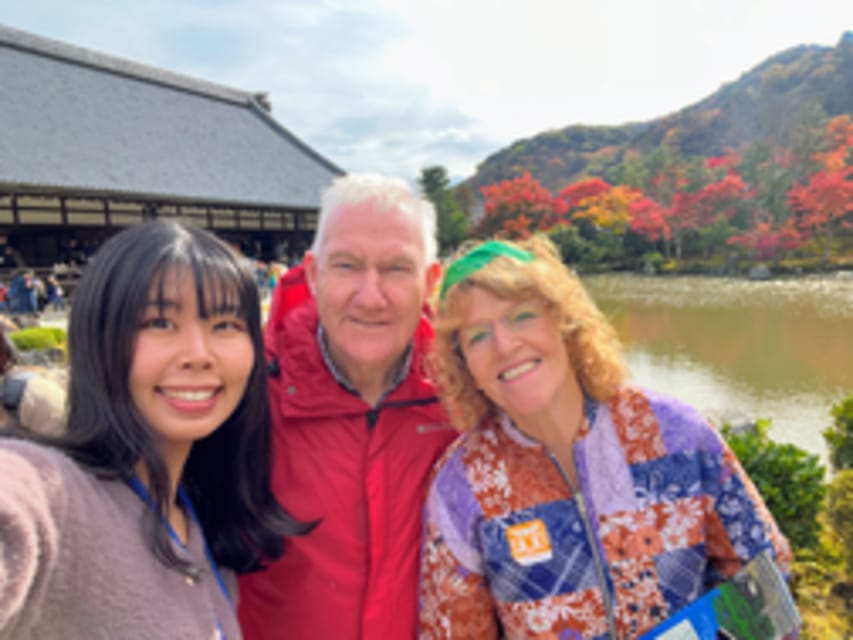
Tenryuji Temple follows the bamboo grove, with about 30 minutes inside. This is another World Heritage Site, best known here for its Japanese garden and the way the scenery changes through the seasons.
The visit gives you a useful contrast with the bamboo path. Instead of a narrow corridor of tall stalks, you get a designed garden with space, water, and carefully arranged views. The included entry ticket is a real benefit because you can enter without another queue or payment.
Thirty minutes keeps the day moving, but it is brief for a temple and garden of this importance. If gardens are your main interest, you may wish you had more time. The tour is built for coverage, not deep exploration.
Still, the pairing makes sense. You walk through the bamboo grove and then see the temple traditionally associated with the Arashiyama area. That connection is more satisfying than treating the bamboo as a quick photo stop with no cultural context.
Kinkakuji delivers Kyoto’s most famous reflection
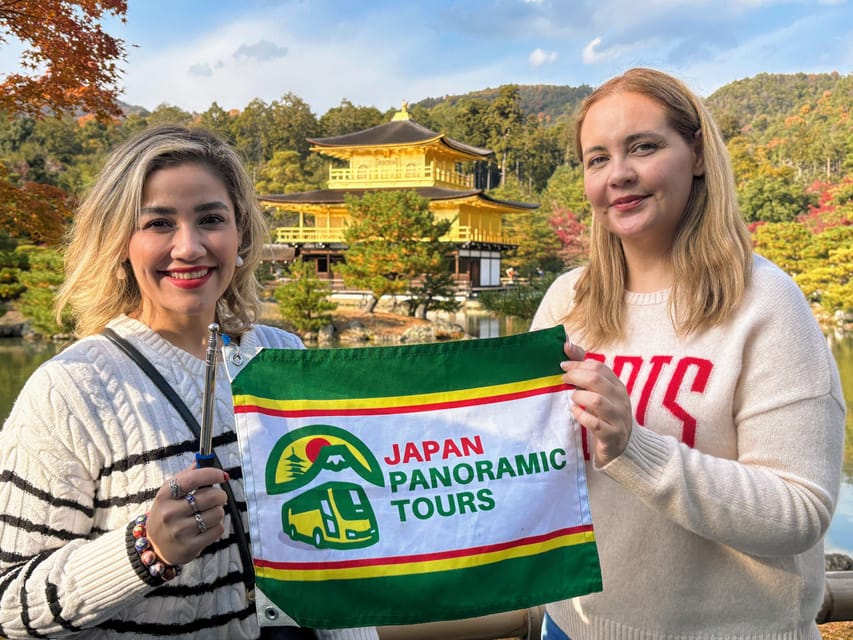
The coach next heads to Kinkakuji, officially Rokuon-ji and widely called the Golden Temple. You have about 40 minutes to visit.
The gold-covered pavilion beside its pond is one of Kyoto’s most recognizable sights. The view is compact and highly photogenic, especially when the building reflects on the water. The grounds also give you a short route through the temple area rather than a single viewpoint.
Forty minutes is generally enough to see the main scene and walk the permitted path. It will not satisfy someone hoping to explore every corner of the grounds. Kinkakuji can also be crowded, so the experience works best when you accept that this is a focused visit.
The entry ticket is included. That helps the $122 price feel more reasonable, since several admissions and transport costs are handled for you. The tour also passes by Nijo Castle, though it is not a scheduled visit. Treat that as a glimpse from the coach, not as time to explore the castle.
Fushimi Inari ends with Kyoto’s most memorable walk
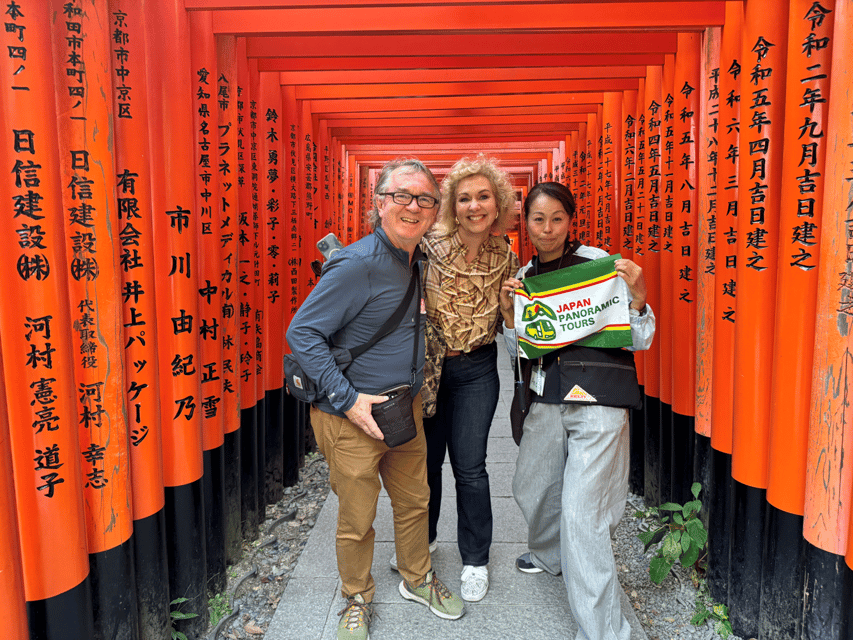
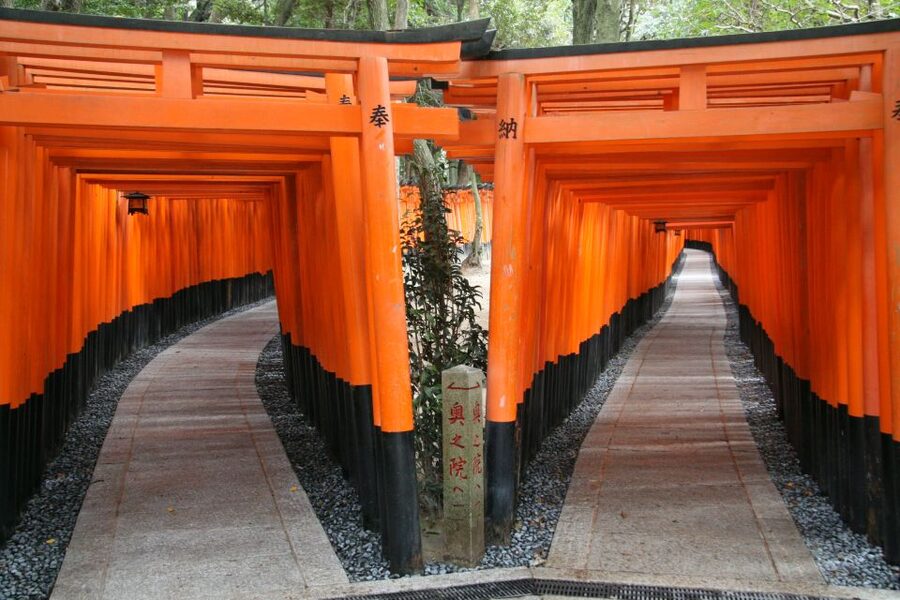
The final major stop is Fushimi Inari Taisha, with about an hour. This is the tour’s most atmospheric finish: a path under thousands of red torii gates climbing into the wooded hillside.
The torii tunnels are the reason many people book this day. Even a short walk gives you the repeated rhythm of red gates, stone fox figures, and shaded paths. You do not need to complete the full mountain route to understand why the shrine is so famous.
One hour allows a strong introduction, but not a complete hike through the entire shrine complex. The gates continue far beyond the first sections, and the route includes hills and stairs. If you want to walk high up the mountain, you will need a separate visit with more time.
Finishing here has two sides. It saves the most visually distinctive shrine for the end, which can leave you with a memorable final scene. But you may be tired after a full day of temples, walking, and coach transfers. Pace yourself earlier, drink water, and do not spend every available minute rushing at the first stops.
The bus returns to the Kyoto Station area after Fushimi Inari, with the listed final transfer taking about 20 minutes. It is a practical ending, especially if you are staying near the station or need to continue by train.
The guides make the packed schedule easier
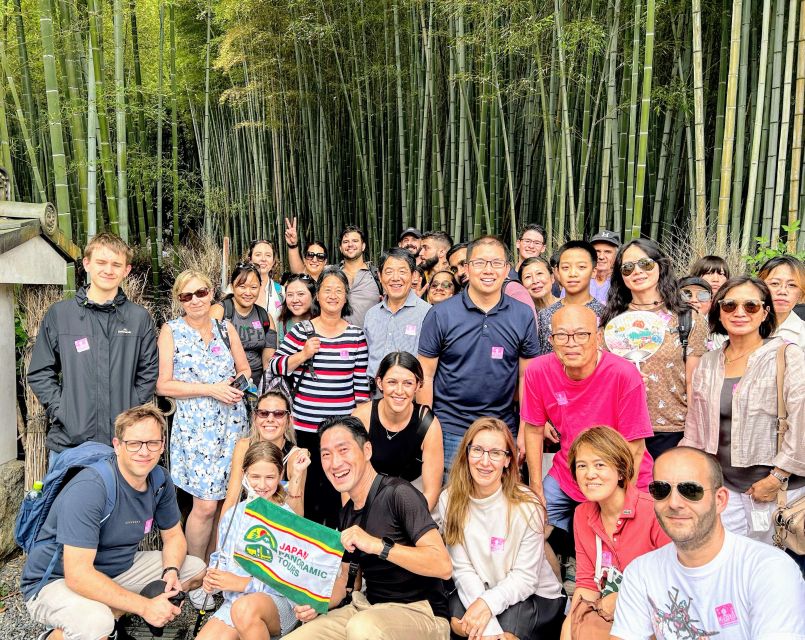
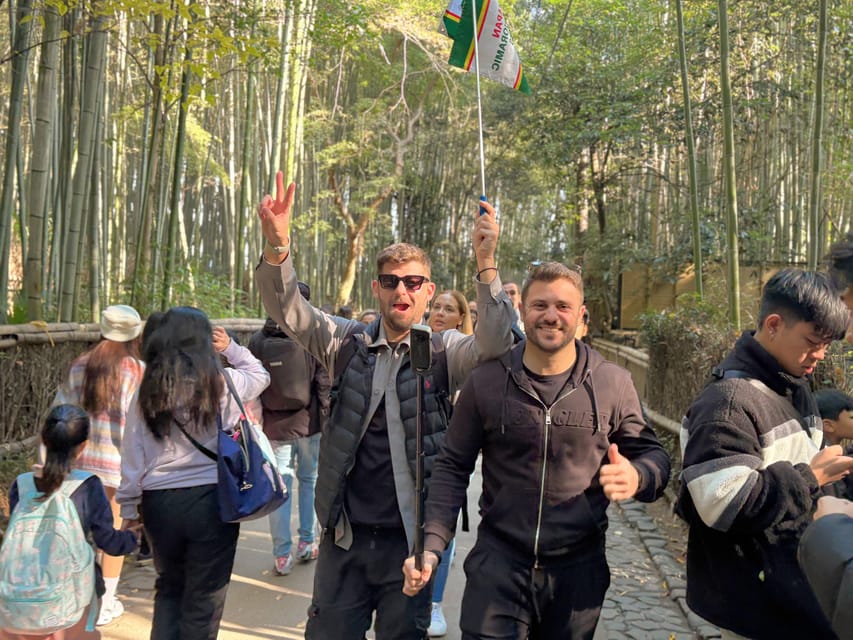
The human side of this tour matters. Guides named Den, At-Chan, Sakura, Ciel, Tommy, Hiroko, Nagomi, Mai, and others have led recent departures. The strongest pattern is clear: guides keep the group on time while adding history, simple Japanese words, cultural explanations, and help with photographs.
At-Chan is praised for helping solo participants with photos and offering useful Japanese phrases. Den is known for bright energy and clear explanations. Sakura is noted for being attentive and even providing umbrellas when needed. Tommy has used humor and bus activities to keep the long transfers pleasant.
You should not expect the same guide on every departure, but the tour provides a live English guide. Audio headsets add commentary in Spanish, French, Italian, German, Portuguese, and Ukrainian. The audio option is useful if you prefer listening in your own language, though the live guide remains the main point of contact.
A good guide is especially valuable on a day like this. Without context, six temples and shrines can blur together. Clear explanations help you notice the differences between a hillside terrace, a long wooden hall, a garden temple, a golden pavilion, and a shrine built around torii gates.
Is $122 a fair price for the day?
At $122 per person, this is not the cheapest way to see Kyoto. You are paying for convenience as much as admission. The price includes air-conditioned coach transport, Wi-Fi, an English-speaking guide, four temple entry tickets, audio headsets, and the Japanese buffet if you select that option.
The value is strongest for a first-time visitor with limited time. Recreating the route independently means managing several separate transport legs, buying admissions, watching the clock, and finding lunch. A train-based day may cost less, but it asks more from you and leaves more room for a missed connection or a poorly timed meal.
The value is weaker if you are staying in Kyoto for several days. With more time, you can visit each area independently, choose better restaurants, and spend a full morning at Arashiyama or Fushimi Inari. You also lose some freedom on the tour, since the coach waits for the group and the itinerary may change due to traffic, weather, closures, or operational needs.
I would compare the $122 against the cost of your time, not only the price of a ticket. For a short stay, the tour can be a sensible purchase. For a slower trip, independent visits may give you more pleasure.
Who should book this Kyoto day tour?
I would recommend it for first-time Kyoto visitors, families with older children, solo visitors who value an organized day, and anyone with only a short window in the city. It is also useful if you want a guide to explain the sites rather than simply collect photographs.
Families can benefit from the fixed transport and clear schedule. One family with two preteens found the day easy to handle, and the bus removes much of the stress of moving between distant districts.
I would be cautious if you use a wheelchair or have significant mobility limits. The tour is not suitable for wheelchair users or people with mobility impairments, and the route includes stairs, hills, and substantial walking.
You should also think carefully about lunch. Choose the buffet if convenience matters and you have no serious dietary restrictions. Skip it if you need strict food controls or want to choose your own Arashiyama meal.
The operator allows cancellation up to 24 hours before departure for a full refund, and you can reserve now and pay later. Those policies help if your Kyoto plans are still shifting, but they do not protect late arrival at the morning meeting point.
My call: book it for coverage, not lingering
I would book this tour if my Kyoto schedule were tight and I wanted the main sights handled in one day. The combination of Kiyomizu-dera, Sanjusangen-do, Arashiyama, the bamboo grove, Tenryuji, Kinkakuji, and Fushimi Inari is hard to arrange independently without spending much of the day on logistics.
I would skip it if my ideal Kyoto day meant sitting quietly in one garden, lingering over lunch, or hiking all the way through Fushimi Inari. This is a well-paced introduction, not a slow cultural retreat.
Bring comfortable shoes, arrive before 7:50 a.m., and treat each stop as a carefully chosen sample. If you understand that tradeoff, the $122 fare buys a lot: major sights, useful context, transport, tickets, and a full day that gets you back to Kyoto Station without requiring you to solve Kyoto’s transport puzzle alone.
FAQ
Where does the Kyoto bus tour begin?
The meeting point is in front of Tully’s Coffee at Kyoto Avanti, 31 Higashikujo Nishisannocho, Minami Ward, Kyoto. Check-in is at 7:50 a.m. and departure is at 8:00 a.m. Look for the green and white Japan Panoramic Tours flag.
How long does the tour last?
The tour lasts about 510 minutes, or nine hours. It returns to the Tully’s Coffee meeting point near Kyoto Station after the visit to Fushimi Inari.
Is lunch included?
A Japanese buffet lunch is included only if you select the lunch option. Vegetarian dishes are available, but Muslim-friendly, allergy-friendly, lactose-free, and gluten-free dishes are not available. You can book without lunch and buy food in Arashiyama or bring your own.
Which entrance tickets are included?
Entry tickets are included for Kiyomizu-dera, Tenryuji Temple, Kinkakuji, and Sanjusangen-do Temple. Nijo Castle is passed by rather than visited.
Is the tour available in languages besides English?
The live tour guide speaks English. Audio guidance is available in Spanish, French, Italian, German, Portuguese, and Ukrainian.
Is the tour suitable for people with mobility impairments?
No. The tour is not suitable for wheelchair users or people with mobility impairments. You will need to walk up hills and stairs, so comfortable shoes are important.
More Bamboo Forest Tours in Kyoto
- Kyoto: Arashiyama Bamboo Forest, Monkeys, Matcha & Temple Tour
★ 5.0 · 759 reviews - Kyoto Ghost Tour: Dark Tales, Urban Legends, Bamboo Forest Night
★ 5.0 · 625 reviews - Arashiyama Bamboo Forest & Hidden Gems Bike Tour (Early Bird)
★ 5.0 · 613 reviews - Kyoto: Arashiyama Customized Rickshaw Tour & Bamboo Forest
★ 5.0 · 432 reviews
More Temple & Shrine Tours in Kyoto
- Kyoto: Tea Ceremony in a Traditional Tea House in Kiyomizu
★ 4.9 · 3,519 reviews - Kyoto: Tea Ceremony Ju-An at Jotokuji Temple
★ 4.9 · 3,207 reviews - Fushimi Inari Hidden Hiking Tour (Private Option Available)
★ 5.0 · 1,750 reviews - Osaka/Kyoto:Kinkakuji,Arashiyama,FushimiInariShrine,NaraPark
★ 4.1 · 1,596 reviews
Just added around Kyoto
- Sekka Cotton Furoshiki Class★ 5.0 · 19 reviews
- Kyoto Sword Experience – includes Museum Ticket/Ninja Experience★ 4.5 · 149 reviews
- Scenic Green Tea Fields of Hidden Kyoto & Local Tea Exp (Private)★ 5.0 · 32 reviews
- Secret Eastern Kyoto Biking Adventure★ 5.0 · 44 reviews
- Private Sake Tasting in Central Kyoto with Sake Sommelier★ 5.0 · 32 reviews
- Samurai School in Kyoto: Samurai for a Day★ 5.0 · 202 reviews
- SHIRAKAWA Japanese Culture Experiences with private English staff★ 5.0 · 16 reviews
- A Privately Guided Photoshoot in Beautiful Kyoto by a Pro★ 5.0 · 18 reviews
Temples & Shrines, compared.

Tea Ceremony in a Traditional Tea House in Kiyomizu
Our verdict →
Meiji Shrine, Asakusa, Skytree Bus Tour and Cruise
Our verdict →
Fushimi Inari Hidden Hiking Tour (Private Option Available)
Our verdict →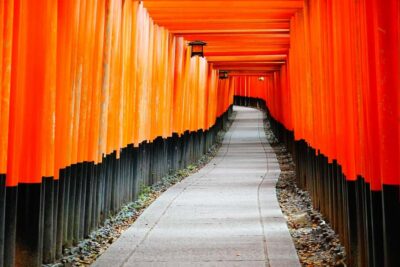
Osaka/Kyoto:Kinkakuji,Arashiyama,FushimiInariShrine,NaraPark
Our verdict →
Nikko: Kegon Falls, Lake Chuzenji & Toshogu Temple
Our verdict →
Kamakura & Enoshima Day Trip including Temple Tickets
Our verdict →Browse the lists this tour appears in