
Reviewed · DAY TRIPS IN KYOTO
10 Must-see Spots in Kyoto One Day Private Tour (up to 7 people)
Kyoto packs a lot into a small area, but its famous sights do not sit next door to one another. This private day tour tackles the problem head-on, linking 10 major stops from Kinkaku-ji in the northwest to Gion in the east. You get temples, shrines, bamboo, old streets, a bridge, a pagoda, and a geisha district in one long day.
I like two things here. First, a private guide can save you from wrestling with Kyoto’s buses, taxis, and station exits. Second, the guides often add real value: Tammy is praised for warmth and efficiency, while Yoshi is noted for excellent English, local suggestions, and a knack for adapting the day to a family’s interests. The catch is simple: this is a packed day, with roughly 15,000 to 20,000 steps possible and extra transport and entrance costs.
The quick facts that matter
- Ten famous Kyoto sights in about eight hours: You cover Kinkaku-ji, Arashiyama, Fushimi Inari, Kiyomizu-dera, Gion, and more.
- Private group of up to seven: Only your party takes part, though a group of four or more needs two taxis when taxis are used.
- Start at 9 a.m. near Kitaoji Station: Pickup is not included, and you must reach the meeting point yourself.
- Budget extra money: Temple admissions total about ¥1,500 per person, public transport about ¥1,000 per person, and taxi use about ¥7,000 to ¥9,000 per cab for the day.
- The day ends in Gion: You finish near 571 Gionmachi Minamigawa, a handy place for an evening stroll.
- Comfortable shoes are essential: You will walk through temple grounds, sloping lanes, shrine paths, and historic neighborhoods.
Why this private Kyoto day works
This tour is built for a specific kind of visitor: you have only one full day, or you want to see Kyoto’s signature sights before exploring at a slower pace later. It is not a leisurely temple study tour. It is a fast, well-organized introduction to the city.
The private format is the real selling point. A guide can keep an eye on the clock, explain how to move from one district to another, and help you avoid wasting time at a confusing station. Several guides, including Akemi, Hiromi, Mieko, Taka, Chihiro, and Yoshi, receive especially warm praise for clear explanations, thoughtful pacing, and practical help.
Do not expect the guide to rebuild the day around every request. The operator says the route, starting point, and lunch arrangement cannot normally be changed because so many stops are included. That is a fair trade for the amount covered, but it means you should book this for structure, not complete freedom.
More Day Trips in Kyoto
- PERFECT KYOTO 1-Day Bus Tour
★ 5.0 · 13,518 reviews - Kyoto: Fushimi Inari, Kinkakuji, Bamboo Grove 1 Day Bus Tour
★ 4.8 · 4,316 reviews - Kyoto 1 Day Tour from Kyoto
★ 4.0 · 582 reviews
Kinkaku-ji starts the morning with gold
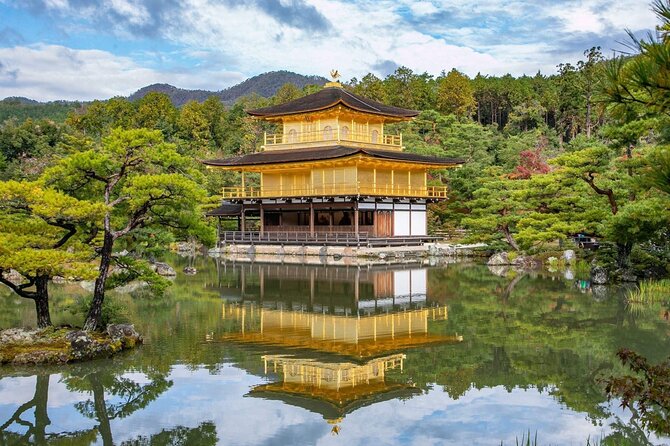
Your first stop is Kinkaku-ji, the Golden Pavilion. The upper floors are covered in gold leaf, and the building reflects beautifully in the pond when conditions are right. This is one of Kyoto’s most recognizable sights, and beginning here gives you an immediate sense of the city’s grand temple tradition.
You have about 40 minutes, with admission extra. That is enough to follow the main viewing route and take photographs, but not enough for a slow wander through every corner of the grounds. Your guide can explain the pavilion’s connection to the shogun and its place among Kyoto’s UNESCO-listed sites.
Kinkaku-ji can feel busy, especially later in the day. The early start helps, though 9 a.m. is not the first possible arrival time. Keep your camera ready, but do not expect a quiet private view of the pavilion.
Arashiyama brings bamboo, gardens, and river views
The route then shifts to Arashiyama, one of Kyoto’s most scenic districts. The Bamboo Forest Street takes only about 20 minutes, so you will pass through the famous stalks rather than spend hours walking every path. The bamboo is striking, but the main lane is also one of the city’s most photographed places.
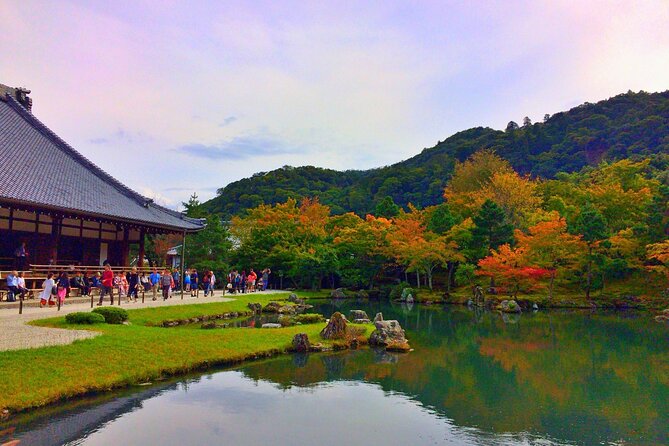
Next comes Tenryu-ji, a Zen temple known for its pond garden. You have about 30 minutes, and admission is extra. The garden is the reason to pay attention here. Its design uses water, trees, and borrowed views in a distinctly Japanese way, giving you a calmer contrast to the crowded bamboo lane.
Togetsu-kyo Bridge follows for a quick 10-minute photo stop. The bridge is one of Arashiyama’s classic scenes, especially when viewed with the hills behind it. This is a short visit, so think of it as a chance to frame the river and surrounding district, not a chance to explore the waterfront.
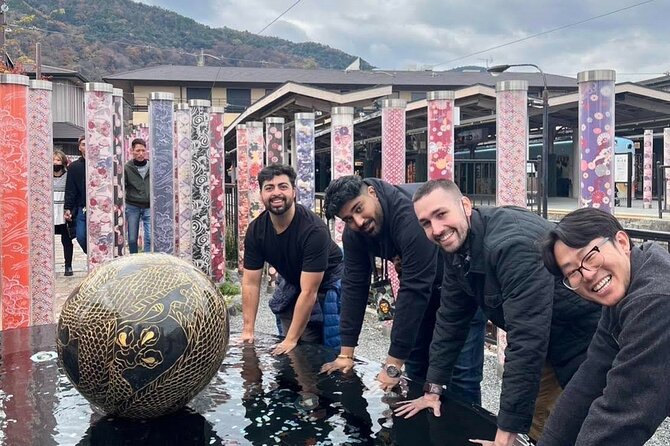
The Arashiyama Kimono Forest adds an unusual modern note. Around 600 cylinders carry 36 kimono patterns, creating a colorful installation near the train station. You get about 10 minutes here. It is an easy photo stop, though anyone expecting another historic temple may find it less substantial.
Fushimi Inari is the day’s most memorable walk
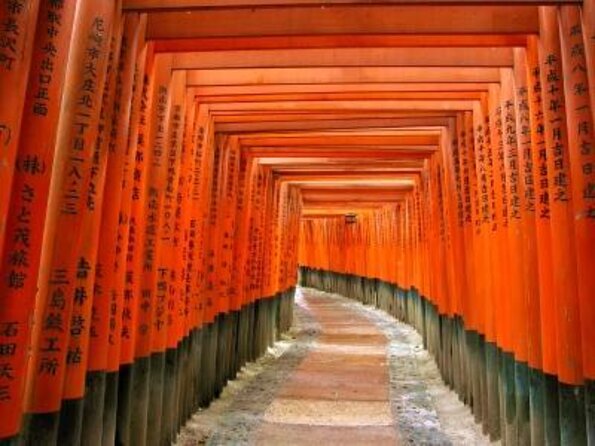
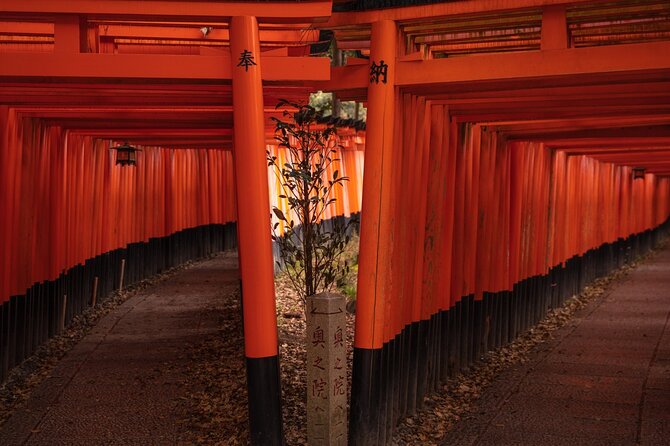
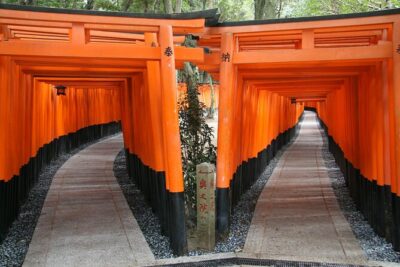
Fushimi Inari-taisha receives about an hour. Its famous vermilion torii gates climb into the wooded hills behind the shrine, creating one of Kyoto’s most powerful visual experiences. You do not need to complete the full mountain route to enjoy it. The lower gates alone provide the scene most people hope to see.
This is also where the walking begins to feel serious. The path includes steps and slopes, and the route can be crowded near the entrance. A private guide helps you understand shrine customs and decide how far to go within the available time.
The shrine is free, but bring yen for small purchases and other costs during the day. Many temples and taxis may not accept credit cards, and the practical advice here is to carry at least ¥10,000. An IC card with about ¥1,500 loaded can also make public transport easier.
Same trip, a completely different kind of day:
- Kyoto: Tea Ceremony in a Traditional Tea House in Kiyomizu
★ 4.9 · 3,519 reviews - Kyoto Geisha Walking Tour: Gion District & Hidden Gems
★ 4.7 · 3,273 reviews - Kyoto: Tea Ceremony Ju-An at Jotokuji Temple
★ 4.9 · 3,207 reviews - Kyoto: Gion Magical Night Walking Tour with Geisha Trivia
★ 4.9 · 2,393 reviews
Kiyomizu-dera delivers Kyoto’s big view
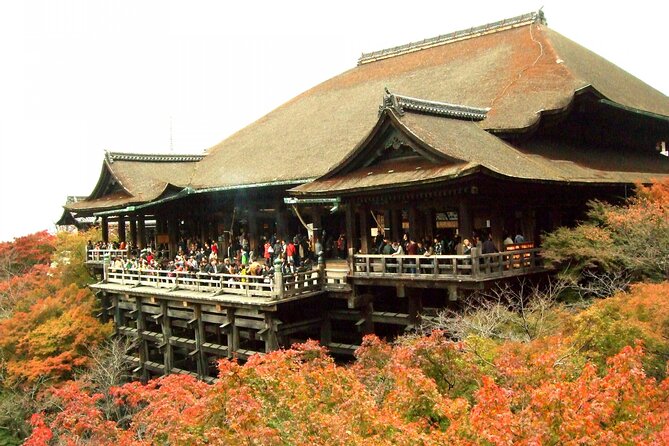
Kiyomizu-dera is allotted about an hour, with entrance extra. The temple is famous for its broad wooden stage, which looks across Kyoto from the hillside. The view is the star, but the approach matters too. You reach the temple through streets and lanes that rise steadily, so tired legs may notice this stop more than the clock suggests.
The temple is a UNESCO World Heritage site and one of Kyoto’s essential visits. Your guide can add context about the buildings and religious customs, while you focus on the city spread below.
Because the tour does not include a private vehicle waiting at every temple, allow for movement between transport points and entrances. The day depends on public transport and taxis, and the guide handles much of that planning. You still need to keep moving.
Sannenzaka, Ninenzaka, and Yasakanoto slow the pace slightly
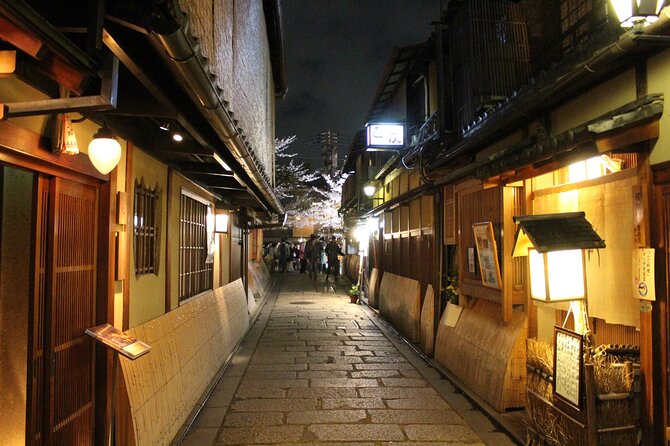
After Kiyomizu-dera, you get about an hour to explore Sannenzaka and Ninenzaka independently. These sloping lanes are lined with traditional wooden buildings, tea shops, food stops, and souvenir stores. This is one of the best places to browse for gifts, especially if you want something more distinctive than a station souvenir.
The lanes are attractive but uneven and often crowded. Watch your footing, leave room for other people, and resist trying to shop at every doorway. An hour passes quickly, so decide in advance if you care more about snacks, photographs, or gifts.
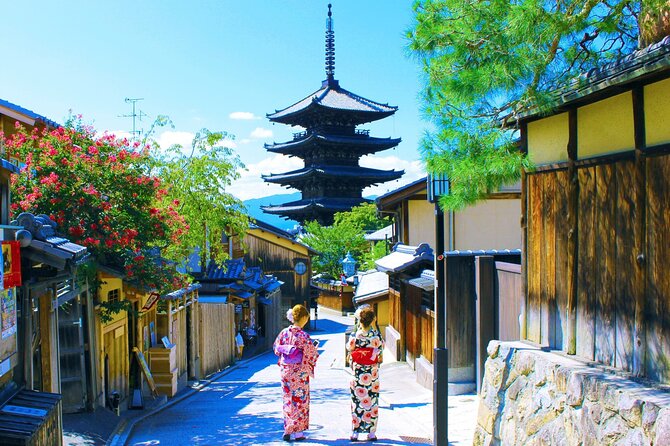
Yasakanoto is a five-minute exterior photo stop. Its five-story pagoda is a familiar Kyoto landmark and rises above the surrounding streets. You do not enter, but the brief stop helps connect the old neighborhood to the city’s wider visual identity.
Gion finishes the day in old Kyoto
The tour ends in Gion, where you have about 20 minutes to walk through traditional alleys and see the district associated with geiko and maiko. The short visit gives you a taste of the area rather than a full evening in it.
You might see a geiko or maiko moving between appointments, but this is never guaranteed. If you do, keep your distance and ask before taking photographs. Gion is a working neighborhood, not a stage set.
Ending here is useful. You can continue exploring after the guide leaves, find dinner, or return to your accommodation using the directions the guide provides. The official end point is in Gionmachi Minamigawa.
What the guide adds to the day
A guide is most useful here between the sights, not only inside them. Kyoto’s transport network can be manageable once you understand it, but a first visit often involves station changes, bus queues, and uncertainty about which exit to use.
The strongest guide experiences described for this tour share a few traits. Tammy is praised for making movement easy and keeping the day friendly. Yoshi receives high marks for excellent English, restaurant suggestions, family awareness, and adapting stops to personal interests. Hiromi is noted for taking photos and explaining temple and shrine customs. Akemi is praised for adding a matcha-shopping stop when that mattered to the group.
Guide assignment is not guaranteed, so book for the format rather than a particular person unless the operator confirms availability. The guide can also help with food restrictions if you share those needs when booking. Lunch is not fixed, and the schedule does not allow for a long restaurant break.
The real cost of the $179.07 price
The listed price is $179.07 per person, with group discounts possible. That is not a cheap sightseeing day, but a private guide for up to seven people can be good value for a family or group that would otherwise spend a day solving transport problems.
Build in the extra costs. Temple admissions are listed at about ¥1,500 per person. Public transportation may add around ¥1,000 per person. Taxi travel is estimated at ¥7,000 to ¥9,000 per cab for the day. A taxi holds four people including the guide, so four guests require two cabs. That can change the final cost sharply.
Children age three and up pay the adult rate. Infants under three are free. The price makes the most sense when divided among several adults who value convenience and want one tightly organized day.
Who should book this day
I would choose this tour if you have one day in Kyoto, are visiting for the first time, or want a guide to handle the city’s logistics. It also suits families and small groups who prefer their own guide to a large coach or walking group.
I would not choose it if you want long temple visits, unplanned meals, shopping time, or a slow photographic walk. You should also think twice if steep paths and a full day on your feet are difficult.
On very hot summer days, ask about the Plan B route. It uses fewer steps and includes Chishakuin Temple and Sanjusangendo Temple. That option may be more comfortable than forcing the standard route through the heat.
The experience is restricted to cruise ship passengers who can independently reach Kyoto Station, so confirm that this requirement fits your plans before booking. The meeting point itself is Kitaoji Station at 9 a.m., not hotel pickup.
Should you book the 10-stop Kyoto tour?
Book it if your priority is seeing Kyoto’s headline sights in one organized sweep. The combination of Kinkaku-ji, Arashiyama, Fushimi Inari, Kiyomizu-dera, and Gion would take careful planning on your own, especially on a first visit. The private guide, small group, and end point in Gion make the day practical.
Skip it if you want Kyoto at a slower rhythm. Ten stops in eight hours means some visits are brief, and the walking is real. Bring comfortable shoes, Japanese yen, water, and a willingness to keep moving. For a first look at Kyoto, though, this is a strong use of one precious day.
FAQ
How long does the Kyoto private tour last?
The tour lasts approximately eight hours and begins at 9 a.m.
Where does the tour start?
The meeting point is Kitaoji Station, at Koyamakitakamifusacho in Kyoto’s Kita Ward. Hotel pickup is not included.
Where does the tour end?
The tour ends in the Gion area near 571 Gionmachi Minamigawa, in Kyoto’s Higashiyama Ward.
How many people can join the private tour?
The activity is private for your group and can accommodate up to seven people.
Are admission fees included?
No. Temple admissions are listed at about ¥1,500 per person. Kinkaku-ji, Tenryu-ji, and Kiyomizu-dera have admission charges, while the bamboo forest, Fushimi Inari, Togetsu-kyo Bridge, Kimono Forest, Sannenzaka and Ninenzaka, Yasakanoto, and Gion are listed as free stops.
What extra transport costs should I expect?
Public transportation is estimated at about ¥1,000 per person. Taxi use is estimated at ¥7,000 to ¥9,000 per cab for all rides. A taxi holds four people including the guide, so four guests require two taxis.
Is cancellation free?
You can cancel for a full refund up to 24 hours before the experience begins. Cancellations or changes made less than 24 hours before the start time are not refunded. If poor weather causes cancellation, you will be offered another date or a full refund.
Just added around Kyoto
- Sekka Cotton Furoshiki Class★ 5.0 · 19 reviews
- Secret Eastern Kyoto Biking Adventure★ 5.0 · 44 reviews
- Kyoto Sword Experience – includes Museum Ticket/Ninja Experience★ 4.5 · 149 reviews
- Scenic Green Tea Fields of Hidden Kyoto & Local Tea Exp (Private)★ 5.0 · 32 reviews
- Private Sake Tasting in Central Kyoto with Sake Sommelier★ 5.0 · 32 reviews
- Samurai School in Kyoto: Samurai for a Day★ 5.0 · 202 reviews
- SHIRAKAWA Japanese Culture Experiences with private English staff★ 5.0 · 16 reviews
- A Privately Guided Photoshoot in Beautiful Kyoto by a Pro★ 5.0 · 18 reviews
Day Trips in Kyoto, compared.
Kyoto: 1 Day Traditional Japanese Kimono Rental Experience
Our verdict →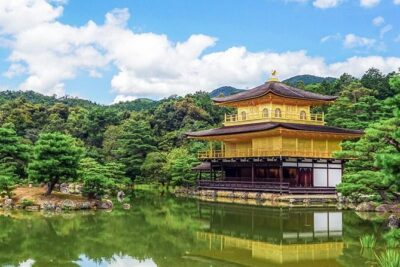
Kyoto Private Day Trip – Enjoy Your First-Time Visit to Kyoto!
Our verdict →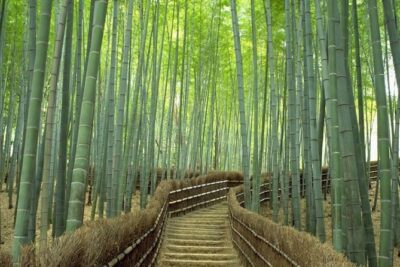
Kyoto Day Trip using Private Car with English Driver (up to 5)
Our verdict →
Tailored Full Day Private Experience of Kyoto for 1 Day Visitors
Our verdict →Browse the lists this tour appears in