
Reviewed · TEMPLES & SHRINES
Kyoto: Arashiyama Guided Tour, Bamboo, Monkey, Zen Temple
The most memorable part of this Arashiyama tour comes at the end: a climb to Iwatayama Monkey Park, where wild macaques live in their natural setting and you can feed them from the park area. Before that, you get the classic Kyoto sequence of bamboo, Zen gardens, river views, and mountain scenery in one compact outing.
I like the way this tour joins Tenryu-ji Temple with the Bamboo Forest instead of treating the grove as a quick photo stop. I also like the live guide format. Guides including Kanako, Hiro, Nabet, and Hiraki have helped explain temple details, adjust the pace, and take photos when needed.
The main caution is the walking. The monkey park requires a moderate climb, and three hours is a brisk amount of time for four major stops. Wear proper shoes, carry water in warm weather, and do not book this expecting a slow, empty-morning stroll through Arashiyama.
Five things to know before you book
- The monkey park includes a real uphill walk: The climb is manageable for many people, but it is the tour’s most demanding section.
- Tenryu-ji adds meaning to the bamboo visit: You get temple architecture, Zen design, and a carefully arranged garden, not just a famous path.
- The meeting point is simple: Look for the guide with the yellow DeepExperience sign in front of the JR Saga-Arashiyama Station ticket gate.
- The pace is focused: Bamboo Forest receives about 40 minutes, Tenryu-ji about 40 minutes, Togetsukyo Bridge about 20 minutes, and the monkey park about 40 minutes.
- Private and small-group formats are available: This matters if you want more flexibility, especially with children or different walking abilities.
- The $74 price buys guidance, not transportation: Hotel transfers, meals, drinks, entrance-related personal costs, and other personal spending are not included.
Why this three-hour Arashiyama route works
Arashiyama can feel scattered on a first visit. The station, bamboo paths, Tenryu-ji, riverfront, and monkey park all sit within the same broad area, but a short visit still benefits from a clear route. This tour gives you that structure without taking an entire day.
You meet at JR Saga-Arashiyama Station, then walk through the main sights and finish at Arashiyama Park’s Nakanoshima District. That ending makes sense: you finish near the river rather than returning to the starting station, so you can continue exploring, stop for food, or make your own way elsewhere in Kyoto.
The route covers several different sides of Arashiyama. The bamboo offers atmosphere and photographs. Tenryu-ji provides religious art, buildings, and garden design. Togetsukyo Bridge gives you the broad river view. Iwatayama adds animals and a high lookout over Kyoto.
That variety is the tour’s strongest feature. You are not spending three hours on one attraction. You keep changing settings, which helps the time pass quickly, though it also means you need to stay aware of the schedule.
More Temple & Shrine Tours in Kyoto
- Kyoto: Fushimi Inari, Kinkakuji, Bamboo Grove 1 Day Bus Tour
★ 4.8 · 4,316 reviews - Kyoto: Tea Ceremony in a Traditional Tea House in Kiyomizu
★ 4.9 · 3,519 reviews - Kyoto: Tea Ceremony Ju-An at Jotokuji Temple
★ 4.9 · 3,207 reviews
Starting at JR Saga-Arashiyama Station
The meeting point is in front of the ticket gate at JR Saga-Arashiyama Station. Find the guide holding the yellow sign with the DeepExperience logo. This is more useful than a vague instruction to meet somewhere near the station, especially in a busy tourist area.
Your guide may speak English or Japanese. The available format can be private or small group, depending on the booking option. A private setting can make a practical difference here because the route includes a climb, photo stops, and several places where you may want a little more time.
Guides have included Kanako, Hiro, Nabet, and Hiraki. The experience can therefore have a personal feel rather than a fixed audio-guide rhythm. Kanako has been especially good with families, while Hiro has adjusted plans when a participant did not have suitable shoes for the mountain section. That sort of flexibility is worth asking about when you meet, though you should not assume every change will be possible.
The tour lasts three hours, so arrive ready to walk. You should wear comfortable shoes, check the weather, and bring water in hot conditions. Arashiyama has plenty to see, but this is not the place for stiff shoes or a heavy bag.
Walking through the Arashiyama Bamboo Forest
The Bamboo Forest Path is the visual centerpiece of the morning or afternoon. Tall bamboo rises on both sides of the path, creating a narrow green corridor that feels far removed from central Kyoto. The stalks move in the breeze, and the filtered light gives you the classic Arashiyama photographs.
You receive about 40 minutes here with a guide. That is enough to walk through the main section and hear about the site, but not enough for an unhurried wander across every nearby path. I see that as a reasonable trade. The bamboo grove is easy to photograph, but its meaning and place in Arashiyama are harder to grasp without someone pointing out what you are seeing.
The grove can be crowded. A guide cannot guarantee a clear path or empty photographs, and the most famous views are also the most popular. Your best approach is to listen while walking, keep your camera ready, and accept that the scene is a public path rather than a private garden.
This is also one of the easier parts of the tour physically. The path itself is much less demanding than the climb to Iwatayama. Still, you will be on your feet for most of the experience, so save some energy for later.
Tenryu-ji and the calm of its garden
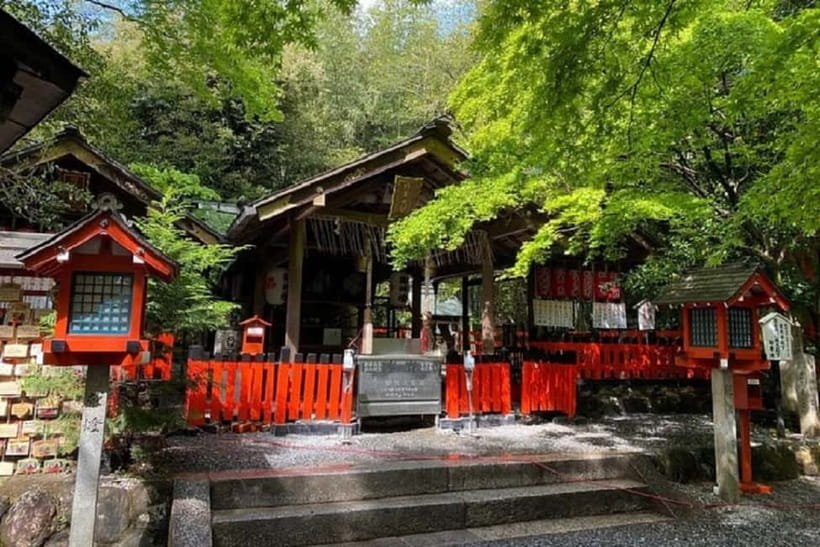
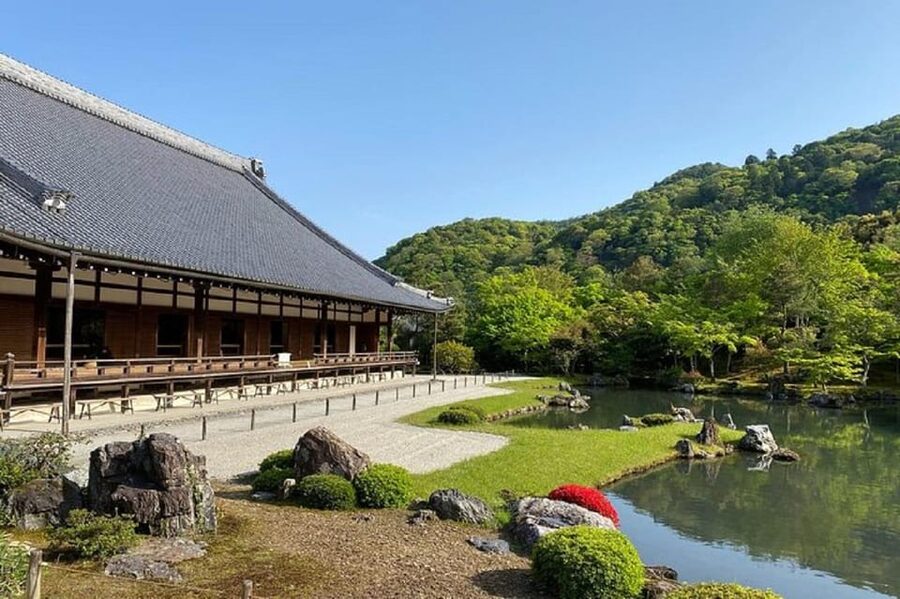
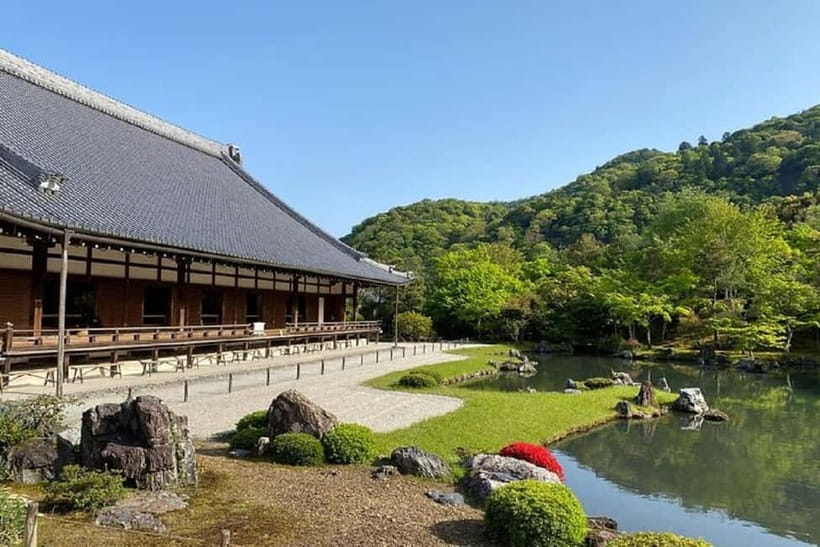
Tenryu-ji gives the tour its strongest cultural stop. This UNESCO World Heritage site is a major Zen temple, and its grounds offer more than a quick architectural photo. You can study the buildings, learn about the temple’s religious role, and see how the garden uses water, rocks, trees, and borrowed mountain views.
About 40 minutes is allotted here. That is enough for an introduction to the temple and garden, though visitors who care deeply about Zen art or architecture may want to return on their own afterward. A guided visit helps you notice details that are easy to miss when you simply walk in, take a picture, and leave.
The guides can add useful context. Hiraki has explained Kyoto and the sites in detail, with particular attention to the Zen temple. Nabet has also taken visitors through the history of the bamboo grove, temples, and shrines in a way that connects the stops rather than treating them as isolated attractions.
I would pay close attention in the garden. The bamboo is the obvious star of Arashiyama, but Tenryu-ji is where the visit gains depth. The garden offers a slower visual rhythm and a clearer sense of how Japanese religious spaces are planned.
Keep in mind that the tour cannot give you unlimited temple time. If you want to sit quietly, examine every feature, or visit more of the grounds, plan to come back after the guided walk.
Same trip, a completely different kind of day:
- PERFECT KYOTO 1-Day Bus Tour
★ 5.0 · 13,518 reviews - Kyoto Geisha Walking Tour: Gion District & Hidden Gems
★ 4.7 · 3,273 reviews - Kyoto: Gion Magical Night Walking Tour with Geisha Trivia
★ 4.9 · 2,393 reviews - Kyoto: 45-Minute Tea Ceremony Lesson Experience
★ 4.3 · 2,378 reviews
Togetsukyo Bridge and the Katsura River
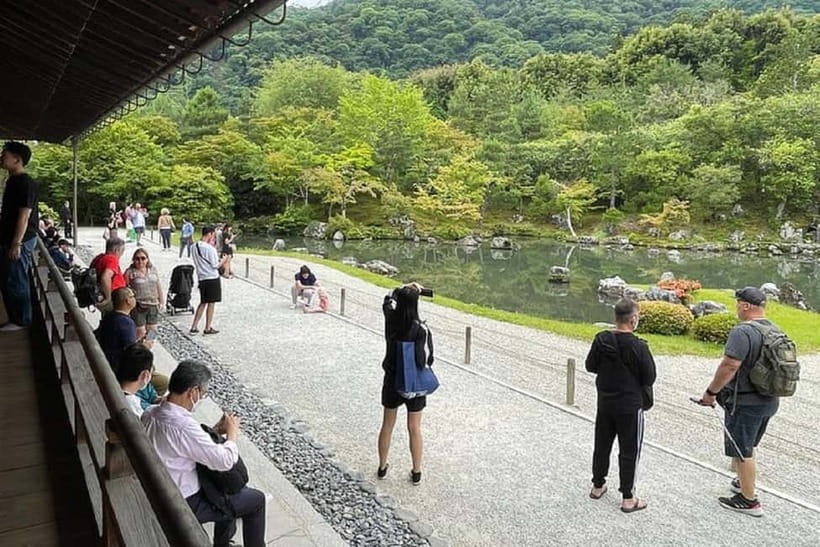
Togetsukyo Bridge is a 20-minute photo stop. The bridge crosses the Katsura River and frames the surrounding mountains, giving you the wide view that the bamboo grove cannot provide.
This stop is short but well placed. After the enclosed path and temple garden, you get open sky, water, and a sense of Arashiyama’s larger setting. The bridge is one of the easiest places to take group photographs, so this is a good moment to ask your guide for help with the camera.
Do not expect a long riverside break. Twenty minutes goes quickly, especially if you want photographs from more than one angle. The bridge is a scenic pause, not a separate river cruise or extended rest stop.
The river view also helps explain why Arashiyama became such a popular place for Kyoto outings. The area is not just famous for one bamboo lane. Its appeal comes from the combination of wooded hills, water, temple grounds, and traditional scenery.
The climb to Iwatayama Monkey Park
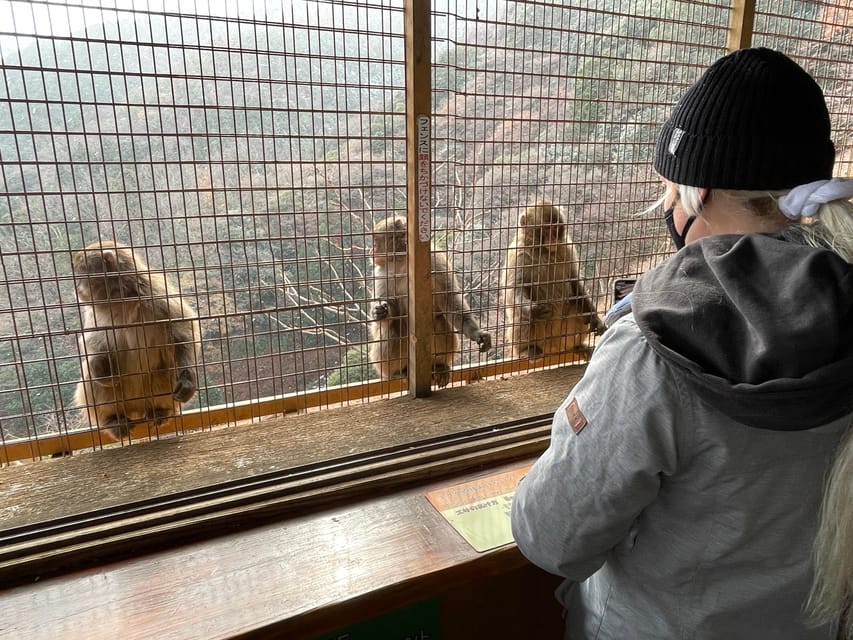
Iwatayama Monkey Park is the tour’s most unusual stop. You walk uphill to reach the park, then see Japanese macaques living in a natural mountain setting. From the upper area, you can also look across Kyoto from above.
The park visit lasts about 40 minutes, but the climb takes part of that time. The uphill walk is the clearest physical warning for this experience. One person chose not to continue to the mountaintop because of unsuitable shoes, and the guide arranged another activity instead. That shows why footwear matters, but it is wiser to prepare for the climb than to count on a substitute.
At the park, you can observe the macaques closely and feed them from the designated area. Follow the guide’s instructions and the park rules. These are wild animals, not trained performers, and the appeal comes from seeing them behave in their own environment.
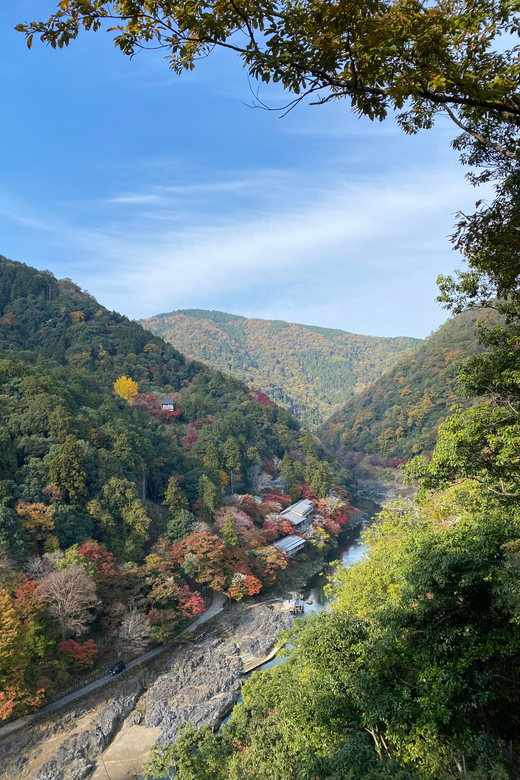
The reward is not only the monkeys. The elevated viewpoint gives you broad views over Kyoto, making this the tour’s best place for a city panorama. The climb may feel like work, especially in warm weather, but the view and the animal encounter give the final part of the tour a strong finish.
Families may find this stop especially memorable. Children can tire on the uphill section, but the chance to feed the monkeys gives them a clear goal. Adults who prefer temples and gardens should still enjoy the viewpoint, though you should not choose this tour if you want to avoid hills.
What the guides add to the experience
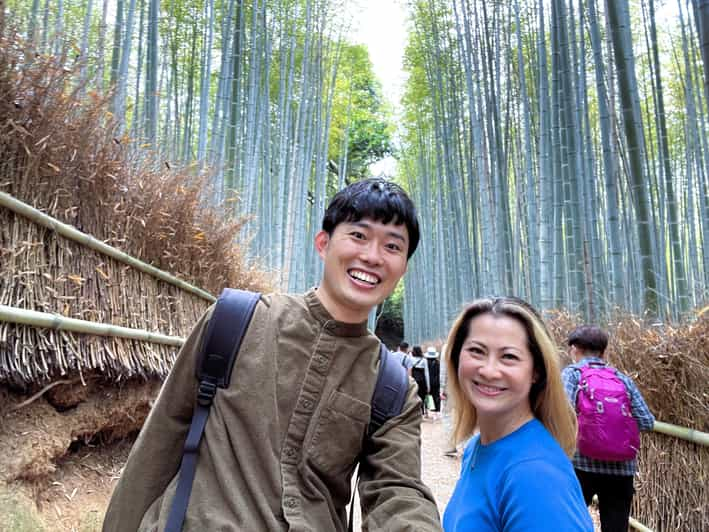
A good guide matters in Arashiyama because the sights are easy to recognize but not always easy to understand. You can see bamboo, a bridge, a temple, and monkeys without learning why each place matters. The guide connects those pieces.
The strongest guide qualities here are clear explanations, patience, and flexibility. Kanako has worked well with families and adjusted to children’s interests. Hiro has offered an alternative when someone could not manage the mountain walk. Other guides, including Nabet and Hiraki, have explained temple details and Kyoto’s background in ways that give the route more substance.
Some guides have also helped with photographs. That sounds minor, but it is useful when you are traveling alone, with children, or as a couple. Just remember that guide quality can vary by person, and the names above do not guarantee a particular guide for your date.
English and Japanese guiding are available. If you have specific interests, such as Zen gardens, local history, photography, or family pacing, tell the guide at the start. A private or small-group booking gives you the best chance of shaping the conversation.
Is $74 a fair price?
At $74 per person, this tour is priced as a guided introduction to Arashiyama rather than a cheap way to reach the sights. You are paying for a three-hour route, a live English or Japanese guide, and help making sense of several major attractions.
The value is strongest if you are short on time, visiting Kyoto for the first time, or prefer not to organize the route yourself. A guide can reduce the small decisions that slow down a half-day visit: where to begin, how to connect the bamboo grove with Tenryu-ji, and how to fit the bridge and monkey park into one outing.
The value is weaker if you already know Arashiyama well or prefer to set your own pace. You will have limited time at each stop, and hotel pickup, food, drinks, and personal expenses are not included. The price also does not remove the need for proper shoes or weather planning.
Free cancellation up to 24 hours before the tour and the option to reserve now and pay later make the booking less rigid. Check the available start times before committing, since the experience lasts three hours and the walking conditions can change with the weather.
Who should book this walk?
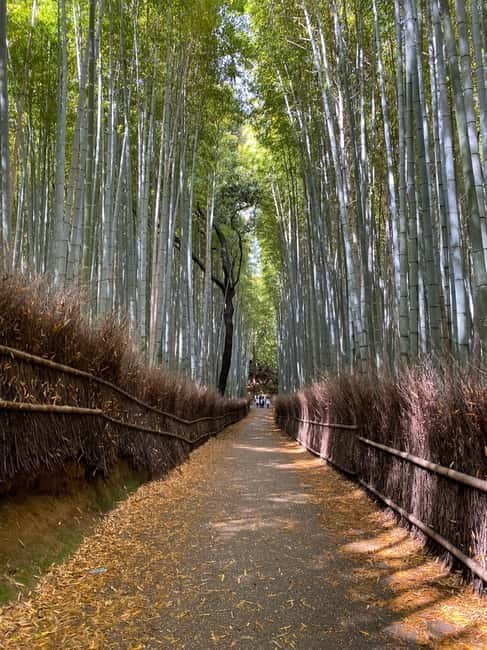
I would recommend it to first-time Kyoto visitors who want Arashiyama’s main sights in one organized route. It also suits families who want a guide to keep the day moving and give children a clear highlight at the monkey park.
It is a good fit for photographers who want bamboo, bridge, garden, animal, and city-view subjects in one short outing. The guide can also help with group pictures, though crowded conditions may limit the perfect bamboo shot.
You should think twice if you dislike uphill walking, need long rest periods, or want to spend an entire morning in one temple. The monkey park is not a minor add-on. It requires the most effort and shapes the tour’s final section.
Should you book it?
Book this tour if you want a well-organized three-hour introduction to Arashiyama with a live guide, Tenryu-ji, the bamboo grove, Togetsukyo Bridge, and Iwatayama in one route. The mix of Zen garden, river scenery, bamboo, monkeys, and Kyoto views gives you a lot of variety for a short outing.
Skip it if you would rather move slowly, avoid hills, or explore each place independently. For everyone else, $74 is a reasonable price for structure and local explanation, especially when you choose a private or small-group format and arrive with good walking shoes.
FAQ
Where does the tour meet?
Meet in front of the ticket gate at JR Saga-Arashiyama Station. Your guide will hold a yellow sign with the DeepExperience logo.
How long does the tour last?
The guided experience lasts three hours.
Which languages are available?
Live guiding is available in English and Japanese.
Does the tour include Tenryu-ji Temple?
Yes. The route includes a visit to Tenryu-ji Temple and its gardens, with about 40 minutes at the site.
Is the monkey park walk difficult?
The walk to Iwatayama Monkey Park includes a moderate uphill climb. Comfortable walking shoes are recommended.
Are hotel transfers, food, and drinks included?
No. Hotel pickup and drop-off, food, drinks, and personal expenses are not included.
Just added around Kyoto
- Sekka Cotton Furoshiki Class★ 5.0 · 19 reviews
- Kyoto Sword Experience – includes Museum Ticket/Ninja Experience★ 4.5 · 149 reviews
- Scenic Green Tea Fields of Hidden Kyoto & Local Tea Exp (Private)★ 5.0 · 32 reviews
- Secret Eastern Kyoto Biking Adventure★ 5.0 · 44 reviews
- Private Sake Tasting in Central Kyoto with Sake Sommelier★ 5.0 · 32 reviews
- Samurai School in Kyoto: Samurai for a Day★ 5.0 · 202 reviews
- Samurai Performance and Casual Experience: Kyoto Ticket★ 4.5 · 115 reviews
- SHIRAKAWA Japanese Culture Experiences with private English staff★ 5.0 · 16 reviews
Temples & Shrines, compared.

Tea Ceremony in a Traditional Tea House in Kiyomizu
Our verdict →

Meiji Shrine, Asakusa, Skytree Bus Tour and Cruise
Our verdict →
Fushimi Inari Hidden Hiking Tour (Private Option Available)
Our verdict →
Osaka/Kyoto:Kinkakuji,Arashiyama,FushimiInariShrine,NaraPark
Our verdict →
Nikko: Kegon Falls, Lake Chuzenji & Toshogu Temple
Our verdict →
Kamakura & Enoshima Day Trip including Temple Tickets
Our verdict →Browse the lists this tour appears in