
Reviewed · BUS TOURS
Kyoto: Hop-on Hop-off Sightseeing Bus Ticket
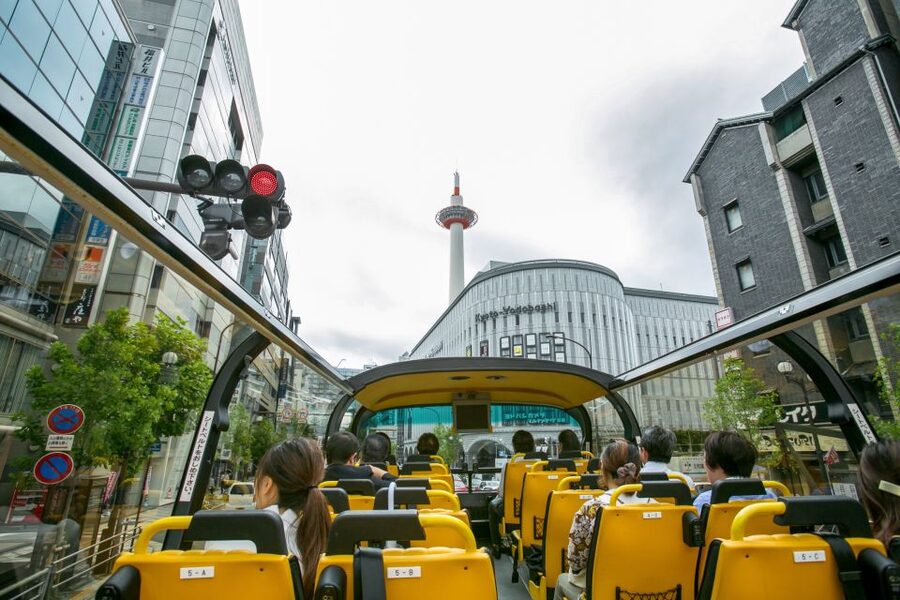
Kyoto’s sights are spread across the city, and this bus gives you a simple way to connect them without learning several train and bus systems. I especially like the freedom to hop off at Kinkakuji, Nijo Castle, or Gion, then continue when you are ready. The open-top deck also gives you a useful first look at Kyoto’s streets and temples.
Two things make this pass especially useful: the stop near Nishiki Market connects sightseeing with food and shopping, and the two-day option lets you explore at a calmer pace. The main drawback is timing. Buses can be 45 minutes apart, and one day may feel rushed if you want to enter several temples.
Key points to know before you ride
- A full loop can take about 45 minutes, making the first circuit a useful way to get your bearings.
- The route reaches major sights on both sides of central Kyoto, including Kinkakuji, Ginkakuji, Nijo Castle, Gion, and Kiyomizu-dera.
- The two-day pass is the better value if you plan to visit temples rather than simply view them from the bus.
- Audio commentary comes in seven languages, though some narration may cut off as the bus approaches a stop.
- Open-top seating is weather dependent, with direct sun in warm weather and rain protection supplied when conditions turn wet.
- Golden Pavilion visitors should carry cash, since the temple does not have an ATM on site.
Why this bus works well in Kyoto
Kyoto is not difficult to visit, but its famous sights are scattered. Kyoto Station sits in the south, Kinkakuji is northwest, Ginkakuji is northeast, and Kiyomizu-dera and Gion are southeast of the center. A trip between them can involve a mix of trains, city buses, walking, and careful station navigation.
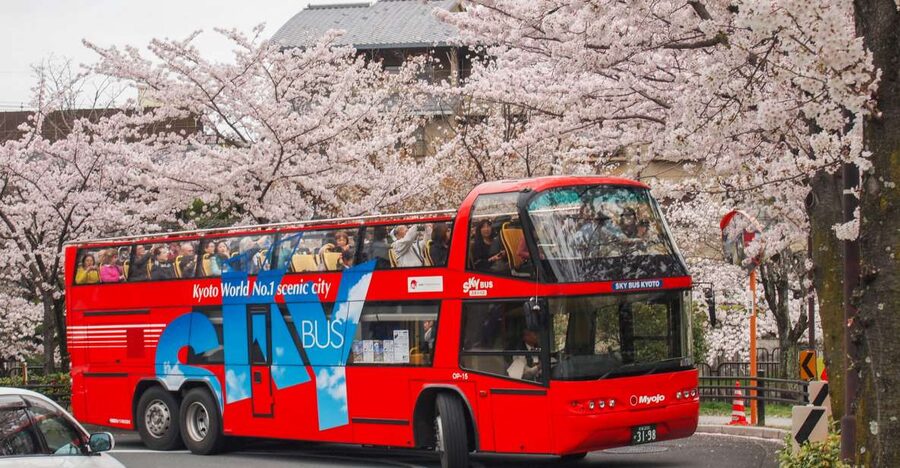
This sightseeing bus simplifies that pattern. You show your mobile voucher when boarding, then ride as much as you like during the one or two days selected. You can stay aboard for a broad city view or leave at a stop that interests you, with no need to buy another ticket for the next ride.
I would use the bus in two ways. On the first morning, take a full circuit to understand the shape of Kyoto. Then choose two or three stops for a closer look. If you have two days, use the first day for orientation and the second for temple visits, shopping, and time in Gion.
The bus is not a substitute for Kyoto’s regular transport network. It follows a sightseeing route, not the fastest route between every address. Its value comes from linking major visitor areas in a clear way, especially if you are new to the city or want to avoid crowded station transfers.
More Bus Tours in Kyoto
- PERFECT KYOTO 1-Day Bus Tour
★ 5.0 · 13,518 reviews - Kyoto: Fushimi Inari, Kinkakuji, Bamboo Grove 1 Day Bus Tour
★ 4.8 · 4,316 reviews - Osaka/Kyoto: Katsuoji, Kinkakuji, Arashiyama 1-Day Bus Tour
★ 4.6 · 33 reviews
Starting at Kyoto Station
The main boarding point is in front of the Isetan department store at Kyoto Station. Use the north central exit, then look for the sightseeing bus stop directly ahead. This is the easiest place to begin if you have just arrived by train or are staying near the station.
Kyoto Station is more than a transport hub. It has shops, restaurants, and places to rest, so it is a useful base before or after the bus ride. Staff at the boarding area can help with route questions, and several passengers have found the attendants friendly and clear in English.
Show your mobile voucher when you board. It is worth checking which route you are taking before you get on, since the service uses red and blue lines. Confusion between the lines can happen at the start, so take a moment to confirm the direction with staff.
The bus may be busy at popular times. If the upper deck is full, you may need to wait for the next one or use the lower deck. The service has been praised for clean buses and careful driving, but Kyoto traffic can still affect the schedule.
The western route: Nishihonganji to Kinkakuji
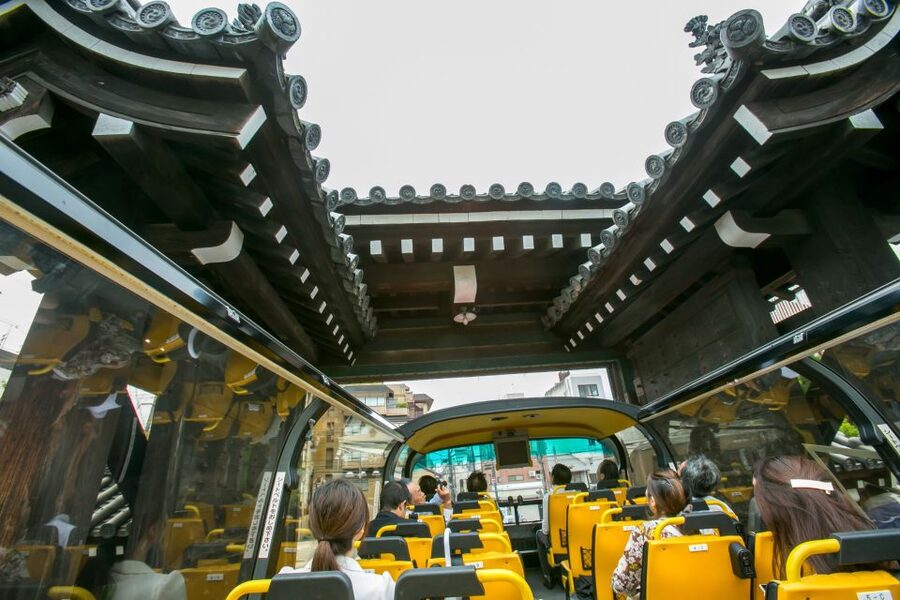
From Kyoto Station, the bus heads toward Nishihonganji, with the stop listed near the Kyoto Tokyu Hotel. Nishihonganji is one of Kyoto’s major Buddhist temple complexes and is a useful early stop if you want a quieter break from the station area.
The next central stop is Shijo Karasuma, close to Nishiki-ichiba Market. This is one of the most useful places to leave the bus if you want to eat, browse food stalls, or walk through the Teramachi-dori and Kawaramachi shopping areas. Nishiki Market is compact but can take time, especially if you stop for snacks or small food purchases.
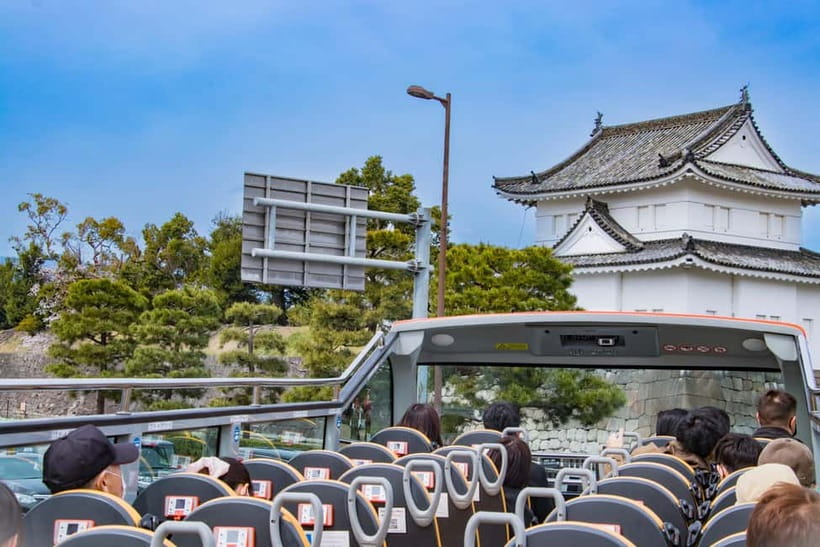
From there, the bus continues to Nijo-jo Castle. The castle is one of Kyoto’s most important historic sites, with grand gates, painted interiors, gardens, and the famous nightingale floors. The stop makes it easy to pair Nijo Castle with Nishiki Market, but do not try to rush both if you want to see the castle grounds properly.
Next comes Kitano-tenmangu Shrine and Kamishichiken. Kitano-tenmangu is dedicated to Sugawara no Michizane, a figure associated with learning. Kamishichiken, one of Kyoto’s traditional entertainment districts, offers a different feel from the more famous streets around Gion.
The western route then reaches Kinkakuji Temple, the Golden Pavilion. The bus stop is close enough to make the temple a practical visit, though the approach and temple grounds still require walking. Kinkakuji is one of Kyoto’s busiest sights, and the viewing path can feel crowded at peak times.
Carry cash for the entrance here. The Golden Pavilion does not have an ATM on site, so this is a small detail that can prevent an awkward delay. Also allow time beyond the photograph of the gold-covered building. The garden, pond, and surrounding paths are part of the visit.
Daitokuji Temple follows on the route. Daitokuji is a large temple complex with several subtemples, though not every area is open at all times. It is a better choice for visitors who want a quieter temple setting and are willing to check what can be entered on the day.
The eastern route: Ginkakuji and Heian-jingu
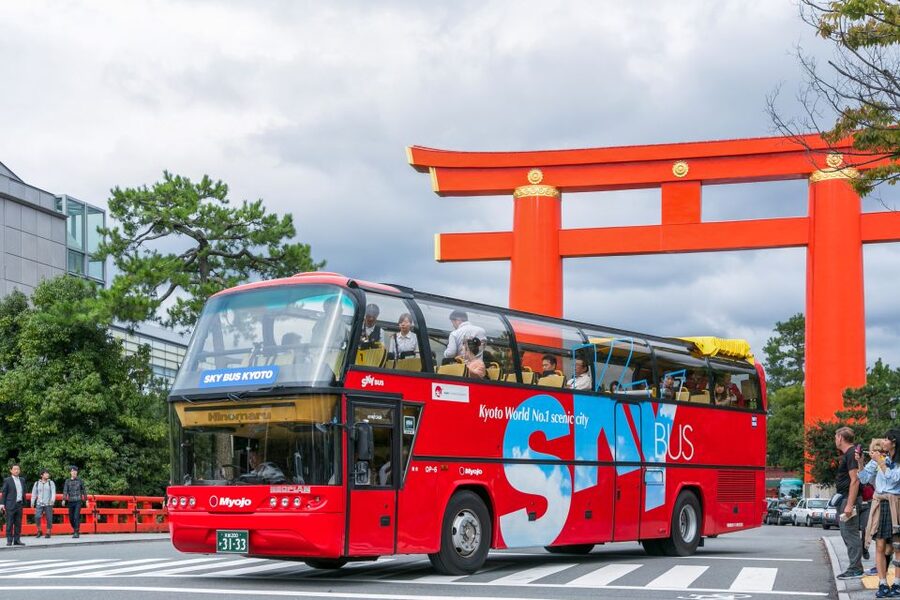
The Kyoto Imperial Palace stop is near Doshisha University. The Imperial Palace grounds offer broad paths and open space in the center of the city. You can combine this stop with a walk through the surrounding park, but the area is large, so it may take more time than a quick hop off.
Ginkakuji Temple, the Silver Pavilion, is one of the most rewarding stops on the eastern side. Despite its name, the pavilion is not covered in silver. Its appeal comes from the restrained design, mossy grounds, carefully shaped sand features, and the hillside path above the main garden.
One useful advantage of this bus is that Ginkakuji is included in the route. It is sometimes left out of short city tours, even though it gives you a different view of Kyoto from Kinkakuji. If you have only one day, decide in advance if you prefer the Golden Pavilion, the Silver Pavilion, or both.
The Heian-jingu Shrine and Okazaki Park stop serves a wide cultural area. Heian-jingu is known for its large torii gate and striking shrine buildings, while Okazaki Park is close to museums and other cultural sites. This stop works well for a slower afternoon, especially if you want to break up temple visits with a museum or park walk.
The route then reaches Gion, near Kotowa Kyoto Yasaka. Gion is one of Kyoto’s best-known traditional districts, with narrow lanes, wooden buildings, restaurants, and tea houses. It is a good place to leave the bus late in the day, when you can explore on foot rather than simply passing through by vehicle.
Gojozaka is the stop for Kiyomizu-dera Temple and the Gion area. From here, you can walk uphill toward Kiyomizu-dera through streets lined with shops and food stops. The route does not remove the hill walk, but it puts you in the right part of town without requiring a separate transport plan.
Kiyomizu-dera is one of Kyoto’s essential visits, with a large wooden stage and views across the city. The temple grounds cover more space than many first-time visitors expect, and the streets leading up to it can be crowded. Give yourself plenty of time before heading back to the bus.
Same trip, a completely different kind of day:
- Kyoto: Tea Ceremony in a Traditional Tea House in Kiyomizu
★ 4.9 · 3,519 reviews - Kyoto Geisha Walking Tour: Gion District & Hidden Gems
★ 4.7 · 3,273 reviews - Kyoto: Tea Ceremony Ju-An at Jotokuji Temple
★ 4.9 · 3,207 reviews - Kyoto: Gion Magical Night Walking Tour with Geisha Trivia
★ 4.9 · 2,393 reviews
Sanjusangendo and the Kyoto National Museum
The final listed stop is near Sanjusangendo and the Kyoto National Museum, by the Hyatt Regency Kyoto. This is an excellent stop for visitors interested in Buddhist sculpture and Japanese art.
Sanjusangendo is famous for its long wooden hall and rows of thousand-armed Kannon statues. The Kyoto National Museum provides a different kind of visit, with exhibitions that change over time. Check the museum’s current program separately if it is a priority, since entry is not included with the bus ticket.
This stop also gives you access to an area that can be missed when visitors focus only on Kiyomizu-dera and Gion. If your schedule allows, pair one of these attractions with the museum area before continuing toward Kyoto Station.
What the audio guide adds
Recorded commentary is available in English, French, Japanese, Korean, Chinese, Spanish, and German. It gives you context as the bus passes temples, neighborhoods, and landmarks, which is useful when you are seeing Kyoto for the first time.
Keep your expectations reasonable. The commentary is an introduction, not a full guided visit. Some narration may stop partway through a sentence when the bus reaches a location, then switch to an announcement about the stop or a landmark on the right side.
The audio works best as a guide to what you are passing. Once you get off, you will need the attraction’s own signs, an app, or a separate guide for detailed history. Staff can also help with practical questions. Guides and attendants named by passengers include Miyuki, Casey, Lauren, and Frederick, though the person working on your day may be different.
Open-top views, sun, and rain
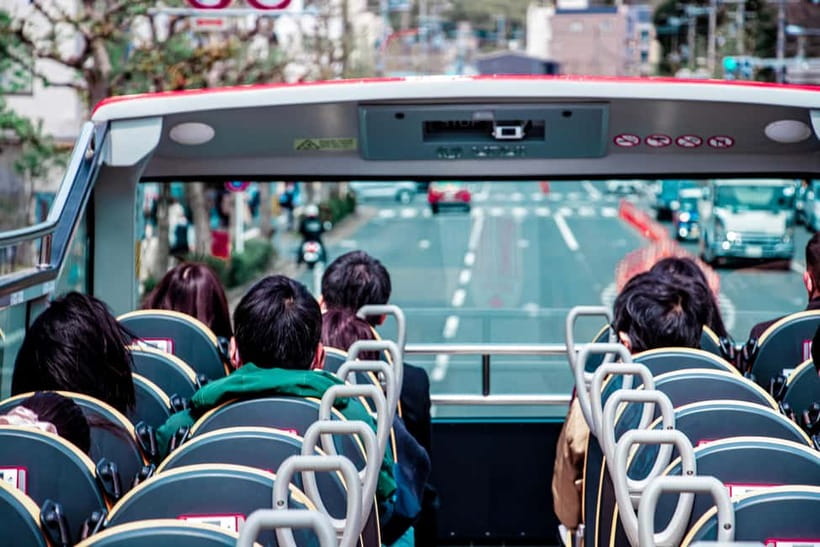
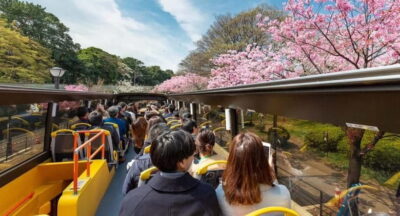
The upper deck is the most enjoyable place to ride when the weather is mild. You get a better view of Kyoto’s streets, rooftops, hills, shrine gates, and temple approaches than from a regular city bus. It is also a pleasant way to get a feel for how the old and newer parts of the city fit together.
The top is open, so direct sunlight is part of the experience. Bring sun protection and water in a bottle with a lid. Only soft drinks with lids, such as plastic bottles or covered coffee, are allowed on board.
Heat can be a real concern in summer. Some buses have a partly covered upper area, and the lower deck is air conditioned, according to passenger experience. In cold weather, the open deck can feel uncomfortable, so dress for the season rather than assuming the bus will be warm.
Raincoats are supplied in wet weather. Umbrellas are not allowed inside the vehicle, and food, alcohol, smoking, and selfie sticks are also prohibited. Severe conditions, including typhoons or thunderstorms, may stop the buses from operating.
How much time should you allow?
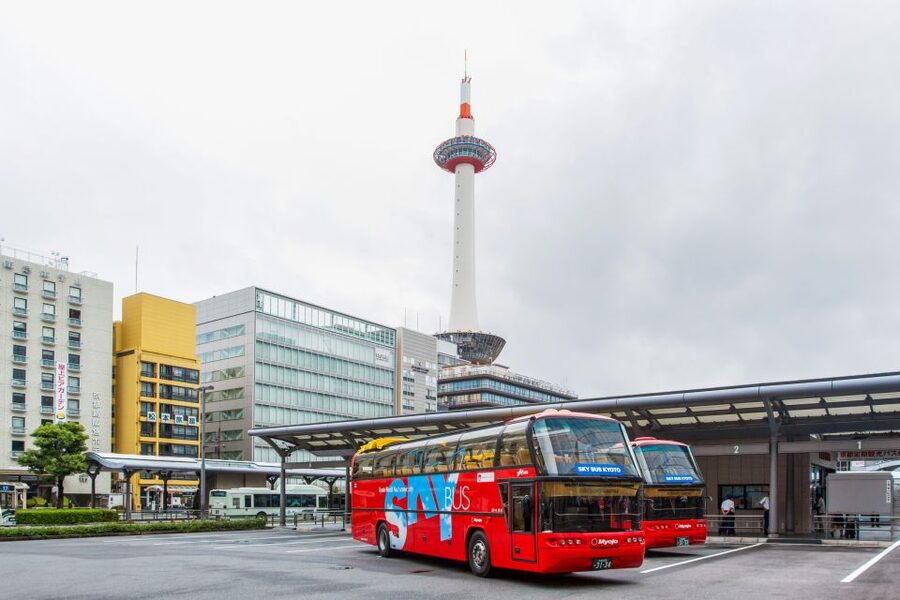
The ticket is valid for one or two days. A single circuit has been described as taking about 45 minutes, but traffic and boarding time can change that. The bus is not always frequent enough for a careless schedule, and a missed bus can mean a long wait.
Some passengers have experienced gaps of around 45 minutes, particularly during the late morning period. Plan your day around the next departure rather than assuming another bus will arrive in ten minutes.
For a one-day ticket, I would choose three major stops at most. For example, Kinkakuji, Nijo Castle, and Gion could fill a day once you include walking and entrance time. Trying to enter every temple on the route will turn the experience into a race.
The two-day ticket is the stronger choice if you want Kinkakuji, Ginkakuji, Kiyomizu-dera, and Nijo Castle. You can use one day to see the route and a second to return to the places that deserve a longer visit.
Is the $27 price good value?
At $27 per person, the pass can be good value if you use it for several rides and avoid separate taxi trips. It is particularly useful for a family or small group that wants a predictable sightseeing plan without arranging multiple point-to-point journeys.
The ticket does not include temple or museum admission, meals, hotel transport, or the cost of getting to your first stop. You still pay to enter Kinkakuji, Nijo Castle, Kiyomizu-dera, and other attractions.
The real saving is convenience. You pay for a clear route, unlimited rides during the valid period, and an easy way to link distant areas. If you plan only one or two short rides, Kyoto’s regular public transport may cost less. If you use the bus all day and take the two-day option at a relaxed pace, the price is easier to justify.
Who should choose this Kyoto bus?
I would recommend it to first-time visitors, short-stay visitors, older travelers who prefer fewer station changes, and anyone uneasy about navigating Kyoto’s transport system. It is also useful if your group has different interests, since people can get off at different stops and regroup later.
The bus suits you less if you want a detailed guided tour at each temple, the fastest route across town, or guaranteed close-up views from the vehicle. Many attractions are not fully visible from the road, so the bus is a link between places, not a replacement for walking.
Children aged five and under do not need a ticket if they sit on the lap of a ticketed adult, with one child per paying passenger. Travelers who need a lower step or more lower-deck seating should ask staff about current arrangements, since one passenger specifically found accessibility and lower-deck seating limited.
Should you book it?
Book this bus if you want an easy first look at Kyoto and plan to visit several major sights. I would choose the two-day ticket when possible, especially if Kinkakuji, Ginkakuji, Kiyomizu-dera, and Nijo Castle are all on your list.
Choose the one-day ticket only if your schedule is tight and you can limit yourself to a few stops. Start early, confirm the red and blue routes, carry cash for Kinkakuji, and allow extra time between buses.
This is a practical sightseeing tool, not a full history lesson. Used that way, it gives you a pleasant overview, saves some transport hassle, and leaves you free to spend your real time where Kyoto is best experienced, on foot.
FAQ
Where can I board the Kyoto sightseeing bus?
You can board at any listed stop along the route. The first stop is at Kyoto Station, directly in front of the Isetan department store after you leave through the north central exit.
Is the ticket valid for one or two days?
You can select either a one-day or two-day ticket. Check the available option when booking, since validity depends on the ticket selected.
Which languages are available for the audio guide?
Audio commentary is available in English, French, Japanese, Korean, Chinese, Spanish, and German.
Are attraction entrance fees included?
No. The bus ticket includes transportation and audio commentary, but entrance fees to temples, castles, museums, and other attractions are separate.
Can young children ride without a ticket?
Children aged five and under do not need a ticket if they sit on the lap of an adult passenger who has a ticket. The allowance is one child per ticketed adult.
What happens if it rains or the weather turns severe?
Raincoats are provided in wet weather. The bus has an open top, so you should expect direct sun in clear weather. Service may stop during severe weather such as typhoons or thunderstorms.
More Hop-On Hop-Off Buses in Kyoto
- Tokyo: Hop-On Hop-Off Sightseeing Bus Ticket
★ 3.9 · 4,207 reviews
Just added around Kyoto
- Sekka Cotton Furoshiki Class★ 5.0 · 19 reviews
- Secret Eastern Kyoto Biking Adventure★ 5.0 · 44 reviews
- Kyoto Sword Experience – includes Museum Ticket/Ninja Experience★ 4.5 · 149 reviews
- Scenic Green Tea Fields of Hidden Kyoto & Local Tea Exp (Private)★ 5.0 · 32 reviews
- Private Sake Tasting in Central Kyoto with Sake Sommelier★ 5.0 · 32 reviews
- Samurai School in Kyoto: Samurai for a Day★ 5.0 · 202 reviews
- SHIRAKAWA Japanese Culture Experiences with private English staff★ 5.0 · 16 reviews
- A Privately Guided Photoshoot in Beautiful Kyoto by a Pro★ 5.0 · 18 reviews
Bus Tours, compared.

Mt Fuji and Hakone 1-Day Bus Tour Return by Bullet Train
Our verdict →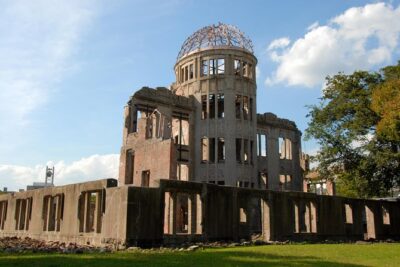
Peaceful Hiroshima & Miyajima UNESCO 1 Day Bus Tour
Our verdict →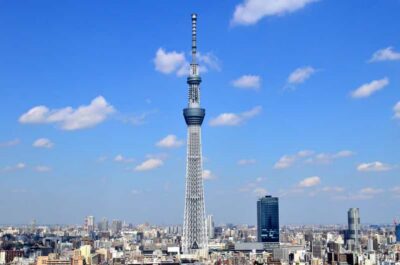
Meiji Shrine, Asakusa, Skytree Bus Tour and Cruise
Our verdict →
Kyoto/Osaka: Nara, Fushimi Inari Taisha, Arashiyama Bus Tour
Our verdict →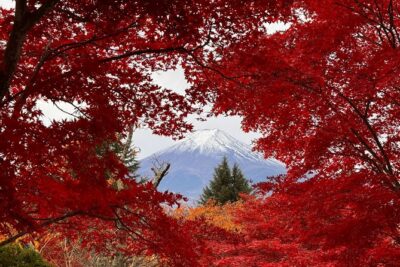
Mt.Fuji & Lake Kawaguchiko 1-Day Bus Tour w/Optional Lunch
Our verdict →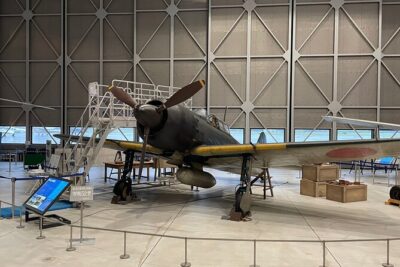
Open Top Panoramic Sightseeing Bus with Audio Guide
Our verdict →
[One-day bus tour departing from Kanazawa Station] Shirakawa-go and Gokayama – Two World Heritage Villages Enjoyable Bus Tour
Our verdict →Browse the lists this tour appears in