
Reviewed · TICKETS
Tokyo: KABUKI Show at Kabukiza Theatre Admission Ticket
Kabuki at Kabukiza is not a quick tourist performance. It is a full theatrical afternoon or evening, with stylized acting, dance, music, elaborate costumes, and stories drawn from Japan’s theatrical tradition. I like the fact that you see professional performances in the world’s only theater dedicated entirely to Kabuki, and I like that the English or simplified Chinese captions make the action far easier to follow. The main catch is time: the advertised four hours can stretch to more than four hours, and some older-style seats may feel tight.
Two details matter before you book. The monthly program changes, so check the official Kabuki Web schedule rather than assuming every visit offers the same kind of show. You also need to exchange your mobile or PDF voucher for a physical ticket at the Basement Level 2 box office. The voucher itself will not get you through the theater entrance.
Key points to know before booking
- A full Kabuki program: Expect several plays, dances, or sections rather than one short performance.
- English and Chinese caption service included: This is especially useful when the acting style is unfamiliar or the dialogue uses old Japanese.
- Kabukiza is in Ginza: The theater is at Ginza 4-12-15, Chuo-ku, with easy access to the district’s shops and restaurants.
- Programs change every month: A February program may include a modern Kabuki piece, dance, domestic drama, and historical play, while March can feature a longer historical work and seasonal dance.
- Bring a snack or buy one inside: Intermissions are built into the program, and food and drinks, including alcohol, are available at the theater.
- Seats are assigned for this booking: You cannot select your exact seat, and some places may feel narrow for a long performance.
What Kabuki at Kabukiza is really like
Kabuki is best understood as a blend of theater, dance, music, costume, and highly controlled gesture. It is not naturalistic acting in the modern Western sense. A raised hand, a fixed pose, a turn of the head, or a dramatic pause can carry as much meaning as a spoken line.
That makes Kabuki fascinating, but it can also feel difficult at first. The stories may use historical settings, family conflicts, revenge, romance, supernatural figures, or comic characters. The caption service helps you keep track of the plot, but you still need to watch the stage closely. One useful lesson from the experience is that the captions do not replace the performance. They give you the basic meaning while the actors communicate through movement, voice, costume, and rhythm.
The show is accompanied by live music. Shamisen and other traditional sounds help set the pace and mood, while narrators and performers work together in a style that may feel closer to opera, ballet, and classical theater than to a conventional spoken play.
You may find the first section takes a little adjustment. Once you understand that the pauses and formal poses are part of the language of Kabuki, the performance becomes easier to read.
More Kabuki & Theatre in Tokyo:
- Tokyo: Japanese Dance Cabaret Theater Asakusa-Kaguwa Ticket
★ 4.8 · 2,270 reviews - Tokyo: KABUKI, BUNRAKU, etc. presented by National Theatre
★ 4.6 · 135 reviews - Kyoto: Non-Verbal Theatre Show Tickets at GEAR
★ 4.9 · 198 reviews
Kabukiza Theatre in Ginza
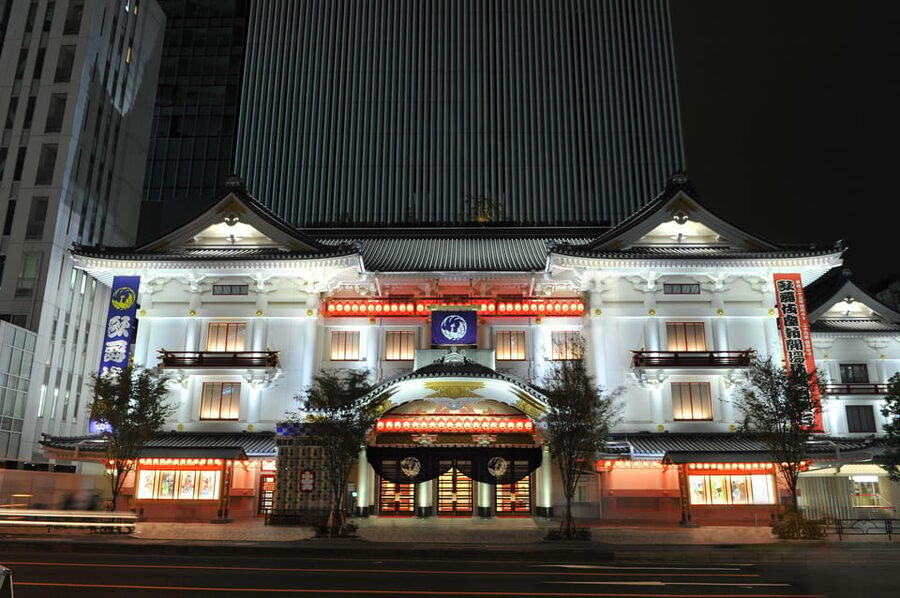
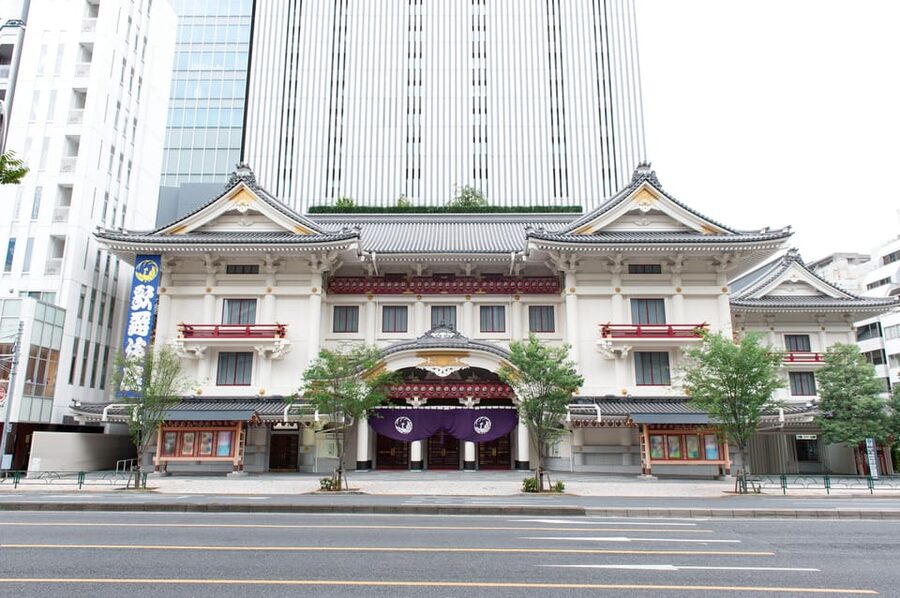
The theater is located at Ginza 4-12-15 in central Tokyo. That setting makes Kabukiza easy to combine with an afternoon in Ginza, although you should not treat the performance as a casual stop between shopping errands. The show requires a large block of time, and you need to arrive early enough to collect your ticket and find your seat.
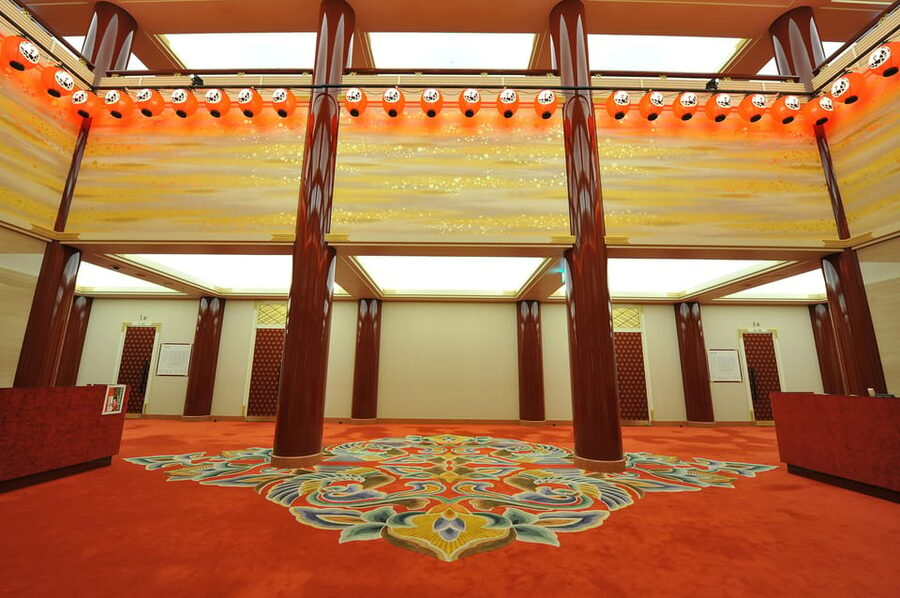
Kabukiza is a historic building designed around Kabuki performance. The interior details matter here. Curtains, screens, costumes, and stage sets contribute to the experience before the actors even begin. One program may offer a spare dramatic setting, while another can rely on colorful scenery and elaborate dress to create a completely different mood.
I like that the theater feels like part of the event, rather than just a neutral room where a show happens. You are entering a place with a clear connection to the art form. At the same time, do not expect every modern comfort. A long performance in traditional-style seating can be tiring, and some seating areas may feel tight.
The theater doors open 30 minutes before the scheduled start. Use that time to collect your ticket, locate your seat, arrange the caption service, and settle in. You do not want to be working out the screen or reading instructions after the stage action has begun.
Collecting your physical ticket
Your booking voucher is not the admission ticket. On the performance day, go to the Kabukiza box office on Basement Level 2 and show the PDF or mobile GYG Voucher to receive your physical ticket.
The box office is listed as open from 10:00 in the morning until 6:00 in the evening. If you arrive after 6:00 PM, go directly to the theater entrance, as instructed for late arrivals. Even so, I would not plan to arrive at the last minute. The ticket collection point is below ground, and you still need time to reach the correct entrance.
This is one of the most important practical details for the booking. A straightforward ticket pickup can feel confusing if you expect to scan your phone at the door. Keep the voucher ready, but remember that it is used for exchange, not direct entry.
The theater is also a place where arriving early pays off. You can visit the permanent interactive exhibition before the show, look around the shopping center, and take care of food or drink before the first curtain.
The permanent exhibition and basement shopping center
Kabuki can seem remote if you arrive with no background. The permanent interactive exhibition gives you a useful introduction to the form, its history, and the way performances are made. It is worth allowing time for this rather than walking straight from the street to your seat.
You can also browse the Kabuki-related shops on the second basement floor. The shopping center offers gifts and souvenirs connected with the theater and its performers. This is a practical stop before the performance, since the shop may not be open when you leave. If you want a souvenir, do not assume you can buy it after the final curtain.
The exhibition and shops also help you notice details during the show. Once you have seen examples of Kabuki costume, stage design, or performance conventions, the production becomes easier to appreciate. You begin to see the work behind each entrance, pose, and costume change.
More Shows & Performances in Tokyo:
- Tokyo: Sumo Show Experience with Chicken Hot Pot and a Photo
★ 4.8 · 6,678 reviews - Tokyo: Sumo Show and Dining Experience
★ 4.8 · 2,742 reviews - the SUMO show
★ 5.0 · 1,960 reviews - Tokyo Shinjuku Sumo Show & Experience with Photo
★ 5.0 · 1,750 reviews
The program changes every month
There is no single permanent Kabuki show at Kabukiza. A new program is presented each month, and the day is divided into a matinee or evening schedule.
A February matinee, for example, can run from 11:00 AM to about 3:21 PM and include a modern Kabuki work, a dance about a footman and a kite, a domestic play set in front of a theater, and a snowbound dance. The evening schedule can run from 4:30 PM to about 9:02 PM, with historical drama, dance, and modern Kabuki.
A March matinee may focus on a longer historical work presented across several acts. The evening can include a spring dance and a domestic drama about three thieves. These examples show why checking the official schedule matters. One month may give you several contrasting pieces, while another may devote much of the program to one extended story.
You do not need to know the titles in advance to enjoy the performance, but knowing the basic format helps. A program with several sections gives you variety. A longer historical play asks for more patience and attention.
The booking information describes the activity as four hours, but scheduled programs can run around four hours and twenty minutes or more. Intermissions account for part of that time. Plan your evening around the published start and finish rather than treating four hours as an exact limit.
Captions make the show approachable

The ticket includes an English or simplified Chinese caption service. For non-Japanese speakers, this is one of the strongest reasons to choose this arrangement instead of attending without language support.
Kabuki stories can be hard to follow from movement alone, especially when several characters have formal names, family connections, or historical roles. The captions give you the dialogue and narrative information needed to understand what is happening.
The service does require attention. You are watching the stage and reading a screen, so you may occasionally miss a facial expression or a small movement. Caption changes may not always happen at a rhythm that feels natural, and it can be awkward to shift your eyes between the performers and the text.
The best approach is not to read every word. Use the captions to understand the scene, then return your attention to the actors. Kabuki depends heavily on gesture and timing, and the stage remains the main event.
The booking includes this caption service as part of the plan. If you do not use it, you cannot receive a refund for that portion or change it to a Japanese earphone guide. That is worth knowing if you are comfortable with Japanese and would prefer another format.
Intermissions, food, and the four-hour schedule
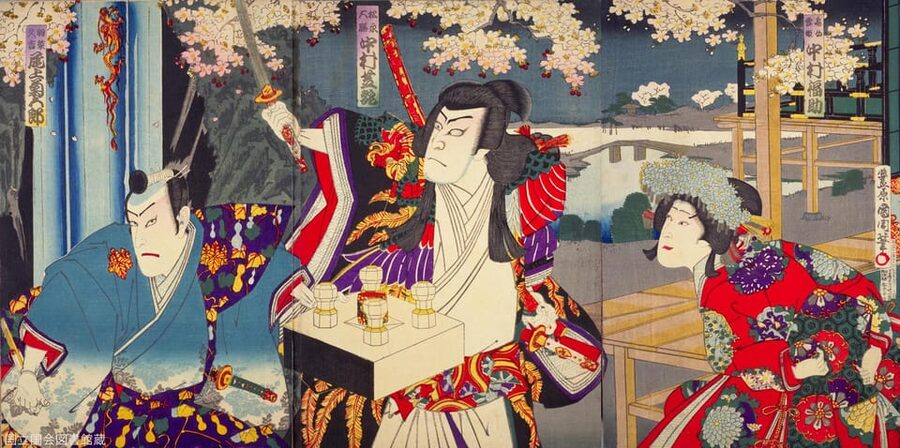
A long Kabuki program is divided by intermissions. These breaks make the length manageable and give you time to stretch, use the facilities, look at the theater, or buy something to eat.
You may bring food and drinks into the theater. Snacks and alcohol are also sold inside. This is not merely a survival tip. Eating during a traditional theater intermission is part of the rhythm of the visit, especially for an evening program that runs close to 9:00 PM.
Plan your meal sensibly. A heavy meal immediately before a long seated performance may not be ideal, while a small snack can keep you comfortable through the later sections. If you are attending the matinee, check the planned finish before arranging another activity.
The length is both a benefit and a drawback. You see several forms of Kabuki in one sitting, and the contrast between drama and dance keeps the program from feeling like one unbroken story. But if you prefer short cultural demonstrations, four hours may feel excessive.
Seats, sightlines, and comfort
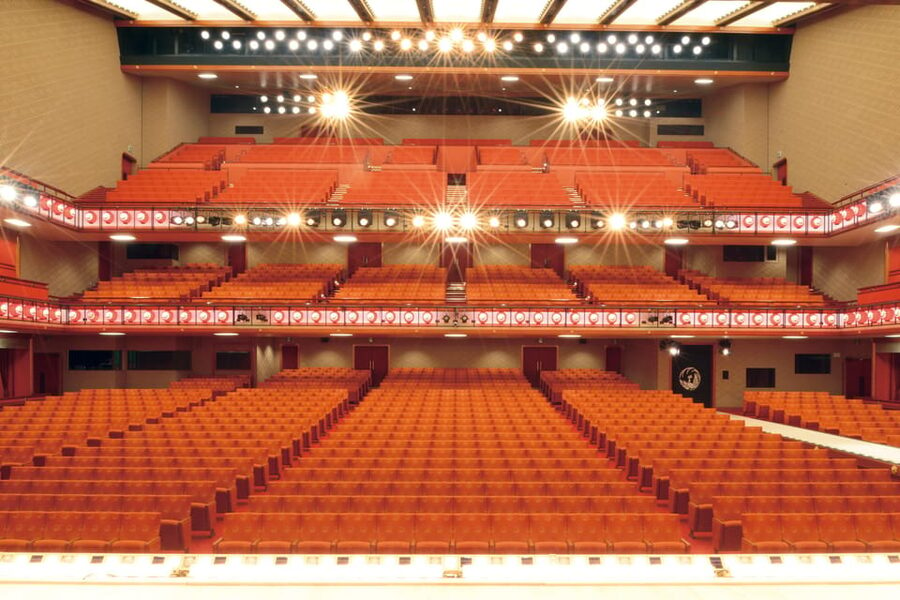
Exact seat selection is not available for this reservation. That means you cannot choose how close you are to the stage or decide in advance whether you prefer a particular section.
Distance matters in Kabuki. Facial expressions and controlled gestures are important, so a seat farther from the stage can reduce some of the fine detail. The performance still works from a distance because of the strong poses, costumes, music, and vocal style, but close seats give you more access to the actors’ expressions.
Comfort is another concern. Some seating areas use older-style, relatively narrow chairs, and a long program can make that noticeable. If you need extra room, allow for the possibility that the assigned seat may not provide it. The performance itself is not physically demanding, but sitting for more than four hours is.
Dress is flexible. You may see audience members dressed traditionally, but you do not need a costume or formal clothing to attend. Focus on arriving on time and being ready to sit through a substantial program.
Is $106 a fair price?
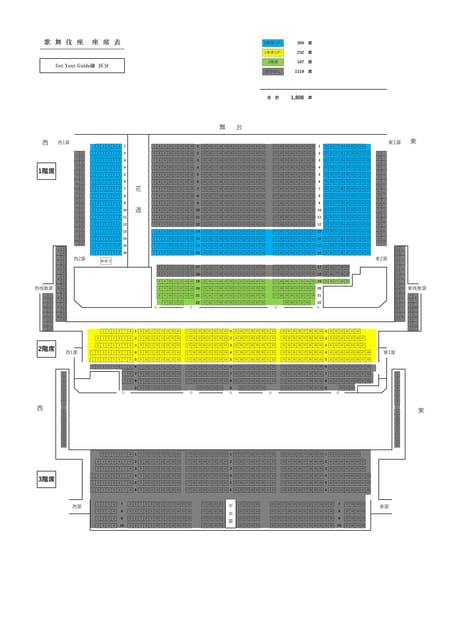
At $106 per person, this is not a cheap evening activity. You are paying for a full Kabuki program in a theater devoted to the art, not for a short introductory show.
The value depends on how you use the ticket. If you want a genuine performance with professional actors, live music, changing scenery, costumes, and caption support, the price can make sense. You also receive access to the theater experience, the exhibition, and the chance to browse Kabuki merchandise.
The price is harder to justify if you mainly want a brief taste of Japanese culture. In that case, the four-hour commitment may be more important than the dollar amount. You should also factor in the cost of food or souvenirs if you plan to buy them inside.
I see the ticket as best value for someone who already enjoys theater, dance, opera, classical music, or traditional performance. You do not need prior Kabuki knowledge, but you should be interested in watching a formal art style at its full length.
Who should book this experience?
I would recommend Kabukiza to you if you want a cultural evening that feels specific to Tokyo rather than a general stage show. It is especially suited to people who enjoy visual detail, live music, elaborate costumes, stylized movement, and stories with a strong historical or traditional setting.
The caption service makes it practical for English and simplified Chinese speakers. Families should note that children under four are not suitable for the experience. Older children may need help staying focused through the full program, particularly during slower dramatic sections.
I would think twice if you dislike classical theater or find long seated performances difficult. One program can include several different stories, and not every dance or dramatic section will appeal equally to every person. The format rewards patience.
Booking and cancellation details
Reservations for the following month begin on the 14th of each month. Since the program changes monthly, check Kabuki Web before committing to a date.
You can cancel up to two days in advance for a full refund. On the day itself, plan to arrive with the voucher, collect the physical ticket at the Basement Level 2 box office, and allow enough time before the doors close for the performance.
Should you book Kabukiza Theatre?
Book it if you want to see Kabuki in its proper setting and are willing to give the art form a full afternoon or evening. The strongest reasons are the dedicated theater, live music, changing monthly productions, and caption service that makes the stories accessible.
Skip it if you want a quick activity, need guaranteed seat selection, or dislike long performances with intermissions. For the right audience, the $106 price buys more than admission to a show. It gives you a sustained look at one of Japan’s traditional performing arts, presented in the place built around it.
FAQ
How long does the Kabuki performance last?
The activity is listed as four hours, but scheduled matinee and evening programs can run slightly longer, around four hours and twenty minutes or more. Intermissions are included.
Are English captions available?
Yes. The ticket includes an English or simplified Chinese caption service. The caption service is part of the plan, and it cannot be refunded or changed to a Japanese earphone guide if you do not use it.
Can I use my mobile voucher to enter the theater?
No. You must present the PDF or mobile GYG Voucher at the Basement Level 2 box office and exchange it for the physical ticket. The voucher alone does not provide theater entry.
Where is the ticket office?
The box office is on Basement Level 2 of Kabukiza Theatre. It is listed as open from 10:00 AM to 6:00 PM. If you arrive after 6:00 PM, proceed directly to the theater entrance.
Can I choose my seat?
No. Exact seats cannot be specified for this reservation. Some seating may feel tight during the long performance.
Can I bring food and drinks?
Yes. You can bring food and drinks into the theater. Snacks and alcohol are also available for purchase inside, which can be useful during the intermissions.
Just added around Tokyo
- Kawagoe Japanese Food Tour : Unagi Kaiseki and Sake near Tokyo★ 5.0 · 30 reviews
- Kawagoe 4hr Private Tour with Licensed Guide (Kawagoe Dep)★ 5.0 · 13 reviews
- Little EDO Sushi Making workshop in Kawagoe★ 5.0 · 18 reviews
- 【R34】Tokyo:Private Daikoku tour in Modified R34★ 4.9 · 92 reviews
- :Tokyo,Shibuya/ Pro Photography in Kimono / English-Friendly★ 5.0 · 26 reviews
- Tokyo:Celebrate Unique Japanese New Year Tradition Festivity★ 3.9 · 20 reviews
- Tokyo: Allstar Food Tour★ 4.7 · 29 reviews
- Tokyo: West-Side Cycling and Food Tour with Guide★ 5.0 · 37 reviews
Tickets, compared.

teamLab Planets TOKYO Digital Art Museum Entry Ticket
Our verdict →
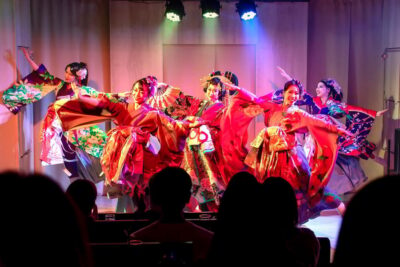
Japanese Dance Cabaret Theater Asakusa-Kaguwa Ticket
Our verdict →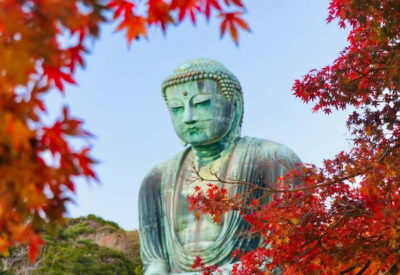
Kamakura & Enoshima Day Trip including Temple Tickets
Our verdict →

Browse the lists this tour appears in