
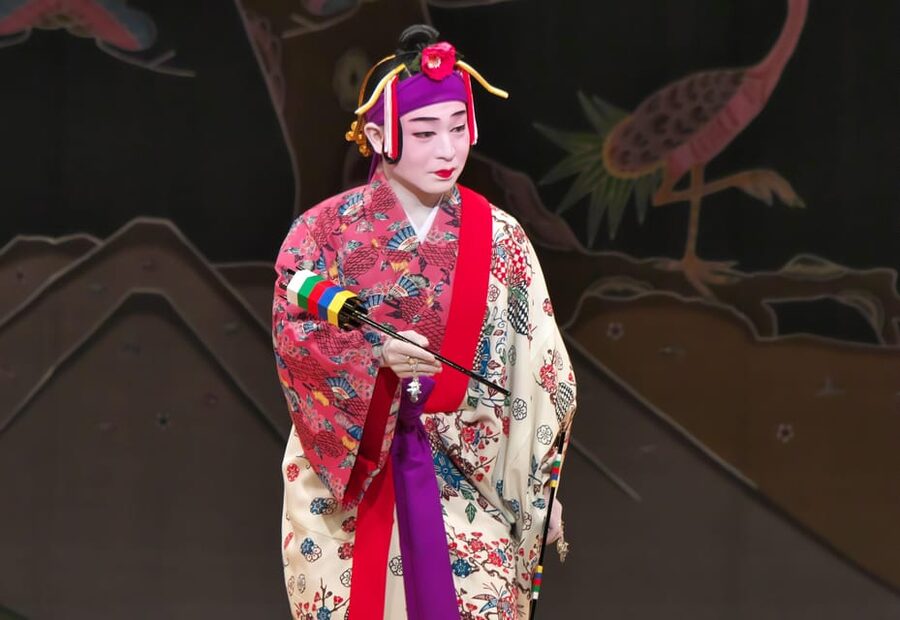
Reviewed · KABUKI & THEATRE
Tokyo: KABUKI, BUNRAKU, etc. presented by National Theatre
Kabuki and Bunraku give you a close look at Japanese theatre as it is actually performed, not a tourist show trimmed down for visitors. The live voices, shamisen music, costumes, puppets, and movement carry the performance without loudspeakers or a running English translation. It feels formal, focused, and very different from a Western play.
I especially like the English audio guide, which explains the action without translating every word, and the chance to hear highly trained performers working in traditions passed down for centuries. The main catch is time: some programs run for up to three hours, and the stories, pace, and cultural references can be hard to follow even with help in English.
Key points to know before booking
- Bunraku is held at KAAT Kanagawa Arts Theatre in Yokohama, about five minutes from Nihon-ōdōri Station.
- Kabuki and Bunraku include an English audio guide, but it summarizes the action rather than translating every line.
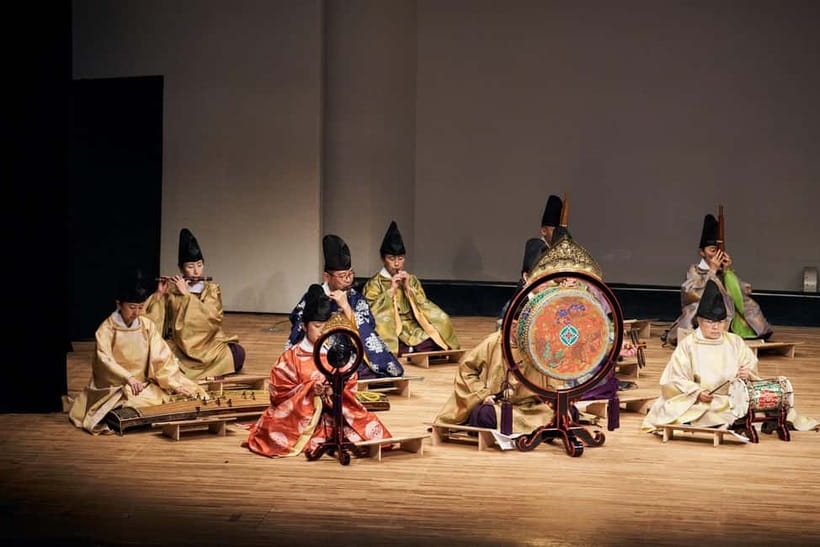
- Hogaku is a traditional music concert, with a free English explanation sheet instead of an audio guide.
- The program depends on the date, so check the option title carefully before paying.
- Your seat is assigned by the theatre, and you exchange the booking voucher for a theatre ticket at the entrance.
- Theater rules are strict: no photography, video, audio recording, food, drinks, noise, smoking, alcohol, or drugs inside.
What you are really seeing
This is a chance to see Japanese classical performance in a serious theatre setting. The programs are presented by National Theatre Japan, an organization that has supported traditional Japanese arts since 1965. The performers are not actors hired for a short tourist demonstration. They are specialists in art forms that have been handed down through generations.
That distinction matters. You are not getting a quick lesson followed by a staged photo opportunity. You sit quietly and watch a full performance, or a substantial section of one, with the same concentration expected of the audience around you.
The experience can feel unfamiliar at first. Japanese theatre uses its own timing, vocal style, music, gestures, costume language, and relationship between performer and audience. You may not understand every plot detail, but you can still follow the emotional force, visual style, and musical structure.
The exact program varies. One date may offer Kabuki, another Bunraku, and another Hogaku, a concert of traditional Japanese music. The listed duration ranges from 75 minutes to three hours, so check the date and option before building the rest of your day.
More Kabuki & Theatre in Tokyo:
- Tokyo: Japanese Dance Cabaret Theater Asakusa-Kaguwa Ticket
★ 4.8 · 2,270 reviews - Tokyo: KABUKI Show at Kabukiza Theatre Admission Ticket
★ 4.8 · 152 reviews - Kyoto: Non-Verbal Theatre Show Tickets at GEAR
★ 4.9 · 198 reviews
Bunraku: puppets, shamisen, and powerful narration
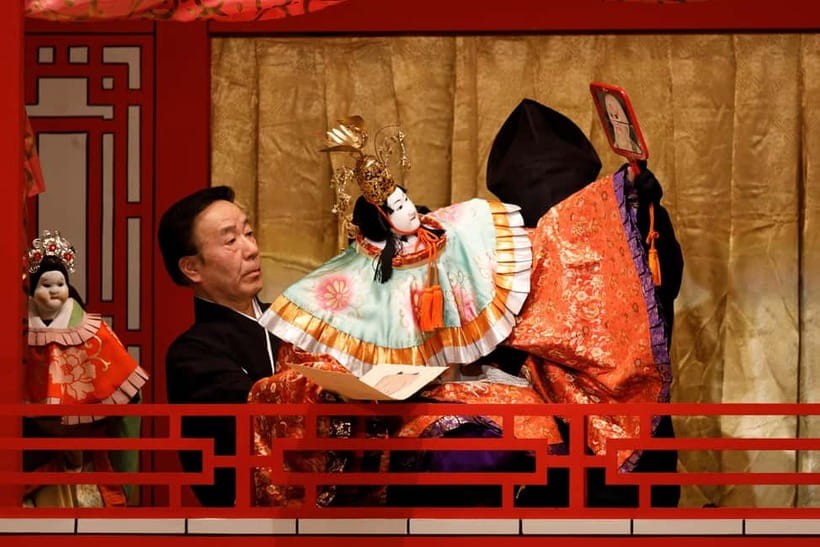
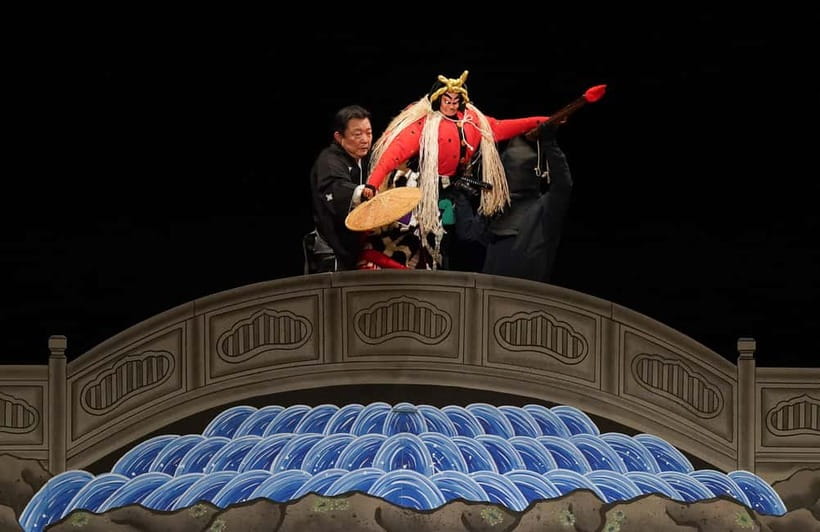
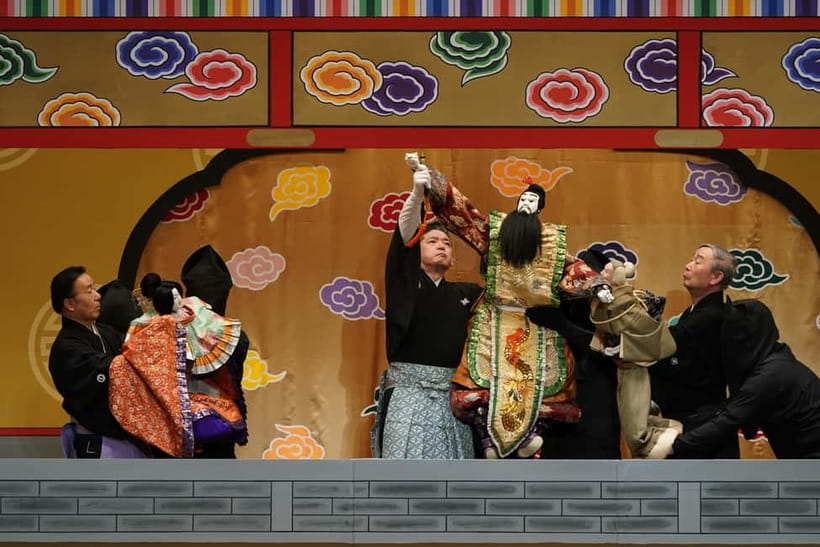
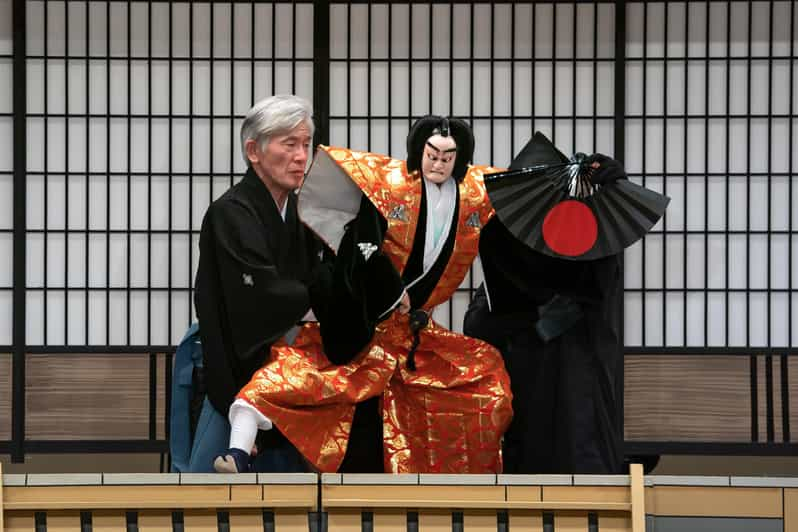
The Bunraku option takes place at KAAT Kanagawa Arts Theatre in Yokohama. Bunraku is a major Japanese theatre form built from three parts working together: a narrator, shamisen music, and puppetry.
The narrator tells the story with force and precision, often shifting between different characters and emotional states. The shamisen player supplies a sharp, expressive musical line. The puppets then move with surprising delicacy, creating gestures that can feel far more human than you might expect from wooden figures.
Bunraku is often described as puppet theatre, but that label can undersell it. The art depends on close cooperation between the narrator, musician, and puppeteers. The effect comes from their timing as much as from the puppet itself.
The English audio guide helps you keep track of the main action. It is not a word-for-word transcript, and that is intentional. Listening to a literal translation while also hearing the original narration would make it hard to appreciate either one. Instead, the guide gives you the basic story and key points, leaving room for the original sounds and performance.
That arrangement takes a little practice. You may find yourself listening to the English explanation in one ear while watching and hearing the performers with the other. The first few minutes can feel busy. Once your brain adjusts, the system becomes useful, especially when the plot involves unfamiliar names, relationships, or customs.
The stories may deal with serious subjects. One performance included a love-suicide theme, which may not suit very young children. Check the program information if you are bringing children, and remember that this is a formal performance rather than an interactive family attraction.
Special programs can also differ from the standard expectation. One Bunraku-related performance had no puppets because it was a special show. Read the option description carefully if seeing the puppets is the main reason you are booking.
Kabuki: drama, dance, music, and visual style
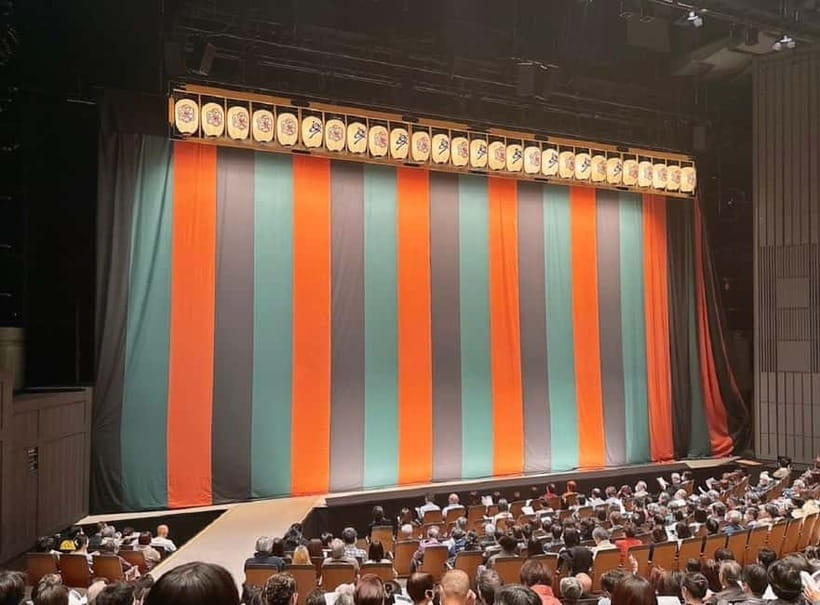
Kabuki combines drama, music, and dance. It has changed with the times during its long history, so it is not a frozen museum piece. The form uses strong visual presentation and stylized movement, often with costumes, makeup, music, and dramatic pauses doing as much work as the spoken story.
For a first-time visitor, the look of Kabuki may be the easiest way in. Costumes and gestures signal character and mood, while the English audio guide explains what is happening at the main points. You will not receive every line in English, but you can understand the broad shape of the scene.
That distinction is important. If you expect a fully translated play, you may feel lost. If you treat the audio guide as a map, it works much better. It tells you who is doing what and points out the larger dramatic turns, while the Japanese performance supplies the tone, rhythm, and detail.
A short introduction before the show can also help. One useful explanation compared Western theatre with Kabuki and outlined how to watch the form. Arrive early enough to hear any preliminary guidance offered before the performance begins.
Kabuki can be slow-paced by modern tourist standards. The concentrated acting style, pauses, music, and formal delivery take time to appreciate. I would not place it between two rushed sightseeing stops. Give yourself enough mental space to watch without checking the clock.
Hogaku: a concert built around the sound of snow
The Hogaku program focuses on traditional Japanese music. One featured idea is Yuki no Aikata, a long shamisen interlude in the jiuta piece Yuki, or Snow.
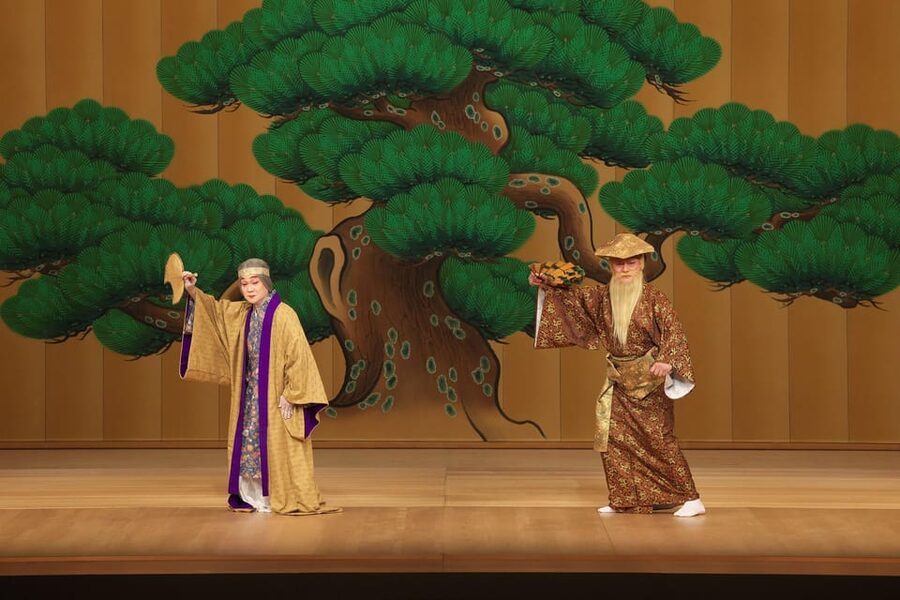
This melody has become a familiar musical way to suggest falling snow. The program brings together pieces that use or reflect this musical idea, giving you a way to listen for repetition, variation, and atmosphere.
Unlike Kabuki and Bunraku, Hogaku includes a free English explanation sheet rather than an English audio guide. That means you should read the material before the concert and use it as a listening aid, not expect an ongoing explanation during the music.
A music concert asks more patience from you than a plot-driven theatre piece. You may not have characters or a clear beginning, middle, and end to follow. The value is in hearing the instruments, melodies, pauses, and changing textures in a live hall.
If you enjoy traditional music or want a quieter cultural program, Hogaku may be a good choice. If you need a strong story to hold your attention, Kabuki or Bunraku may be easier to approach.
A few more Tokyo half-days worth comparing
- 1-Day Tokyo Bus Tour
★ 5.0 · 14,250 reviews - Tokyo: TOKYO SKYTREE® Admission ticket
★ 4.5 · 11,192 reviews - Tokyo: teamLab Planets TOKYO Digital Art Museum Entry Ticket
★ 4.6 · 9,779 reviews - Tokyo: Sumo Show Experience with Chicken Hot Pot and a Photo
★ 4.8 · 6,678 reviews
The English audio guide helps, but it is not a translation
The audio guide is one of the most useful parts of the experience for English speakers. It gives context and summarizes the important action, which can turn a confusing scene into one you can follow.
Still, do not expect subtitles for every exchange. The guide avoids a literal translation so you can hear the performers’ voices and appreciate the acting. You will lose some wordplay, cultural references, and fine points. That is simply part of seeing theatre in another language.
You may also find the audio and live sound competing for your attention. This is especially true at the start. Listen for the explanation, then return your attention to the stage. You do not need to catch every sentence in the guide to benefit from it.
For Kabuki and Bunraku, the English audio is available only in English. Japanese and other languages are not offered through this service. Hogaku uses the printed English sheet instead.
Yokohama location: plan the journey carefully
The title may mention Tokyo, but the specified Bunraku performance is in Yokohama. The venue is KAAT Kanagawa Arts Theatre, not the National Theatre at Hanzomon in Tokyo. This is the single most important logistical detail.
The nearest station is Nihon-ōdōri Station on the Minatomirai Line. From Exit 3 or Exit 4, the theatre is about a five-minute walk. Motomachi-Chukagai Station is another option, about eight minutes from Exit 1.
The Minatomirai Line connects directly with the Tokyu Toyoko Line and the Tokyo Metro Fukutoshin Line. From Shibuya, a train bound for Motomachi-Chukagai takes about 45 minutes. Build in extra time for the ride, the walk, and ticket collection.
At the theatre entrance, exchange the voucher issued through the booking service for the theatre ticket. Staff will ask for the name of the person who made the reservation. Keep that name and your booking details easy to access.
The Yokohama setting can work well with a wider day in the area, especially for a longer program. It is less convenient if you are trying to squeeze the performance into a tightly packed Tokyo sightseeing schedule.
Timing, seats, and theatre etiquette
Programs range from 75 minutes to three hours. Some longer performances include two breaks, giving you time to leave the hall or get something to eat outside. Food and drinks are not allowed inside the theatre.
One practical tip: do not count on finishing a hot coffee during a short interval. Drinks must be left outside the theatre, and you may be called back to your seat before the coffee has cooled enough to drink comfortably.
The theatre assigns seating. You cannot choose a particular row or section through this experience. That uncertainty is worth accepting if the performance itself matters more to you than having a guaranteed seat location.
The rules are strict and sensible for a quiet performance. Do not photograph, film, or record audio inside. Smoking, alcohol, drugs, pets, and disruptive noise are not allowed. Assistance dogs are permitted.
Wheelchair access is available, but contact the provider as soon as possible so accessible seating can be arranged. Do not wait until the performance day.
Is the $37 price good value?
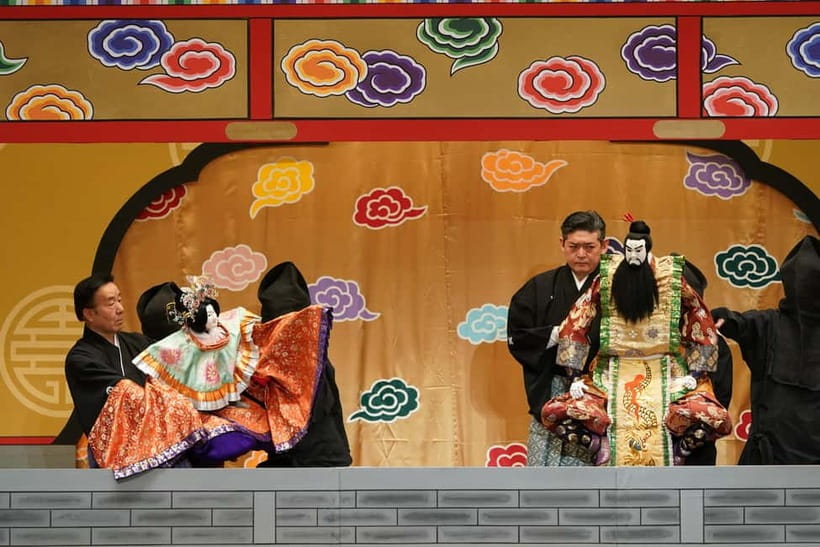
At about $37 per person, this is a reasonable price for a live performance by top-level traditional artists. You are paying for a theatre ticket and, for Kabuki or Bunraku, an English audio guide. Transportation is extra.
The value depends on what you want from a cultural activity. If your goal is a genuine performance rather than a short introduction, the price is attractive. You get more than a demonstration, and the English support makes the experience possible for people who do not speak Japanese.
The value is weaker if you are short on time or mainly want to see famous Tokyo sights. A three-hour program plus travel to Yokohama can take a large part of your day. One longer program included several separate pieces that did not all have tidy endings, which may frustrate anyone expecting one complete Western-style play.
I would spend the money if you care about theatre, music, puppetry, or traditional Japanese culture. I would think twice if you have only a few days in the region and prefer fast-moving sightseeing.
Who will enjoy this most?
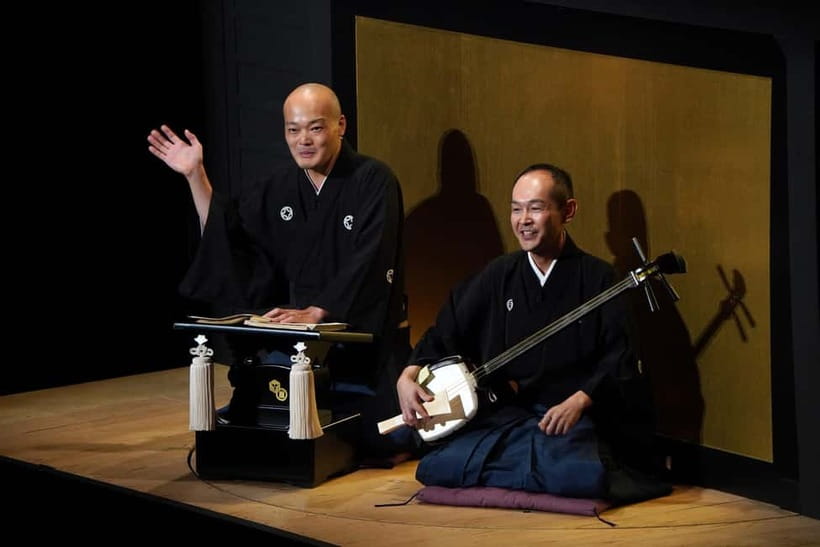
I recommend it most to adults and older teenagers who can sit quietly and give an unfamiliar art form a fair chance. Theatre fans, music lovers, and people who have already seen the main temples and shopping districts will get the most from it.
It can also work well as your first serious introduction to Japanese performing arts. The guide gives you enough structure to begin noticing how the performers use voice, gesture, sound, costume, and silence.
Young children may struggle. The programs can be lengthy and slow-paced, and noise is poorly received in the hall. The subject matter may also be serious, particularly in Bunraku.
You should also prepare for an incomplete feeling at times. Traditional programs may present excerpts, multiple acts, or separate stories rather than one neatly wrapped narrative. That is not necessarily a flaw, but it changes the way you watch.
Should you book this performance?
Book it if you want an authentic Japanese theatre experience and are ready to spend 75 minutes to three hours paying close attention. Bunraku is the strongest pick for a first visit if puppetry interests you, while Kabuki is a good choice for dramatic acting, costume, and dance. Choose Hogaku if traditional music appeals more than plot.
Before booking, confirm the date, art form, venue, and duration. Remember that the Yokohama location is not Tokyo’s National Theatre, and that the English help gives you the main story rather than a complete translation.
For the right audience, $37 buys a rare view of Japanese performance as a living art. For a hurried itinerary, it may feel like too much time in a theatre. Make the choice based on your pace, not just the price.
FAQ
Where is the Bunraku performance held?
The Bunraku performance is held at KAAT Kanagawa Arts Theatre in Yokohama. It is not held at the National Theatre in Hanzomon, Tokyo.
How do I reach KAAT Kanagawa Arts Theatre?
The nearest station is Nihon-ōdori Station on the Minatomirai Line, about five minutes from Exit 3 or Exit 4. Motomachi-Chukagai Station is about eight minutes away from Exit 1.
How long does the performance last?
The listed duration varies by program from 75 minutes to three hours. Check the date and option before booking because Kabuki, Bunraku, and Hogaku programs can differ.
Is an English translation provided?
Kabuki and Bunraku include an English audio guide. It summarizes the main action and does not translate every line. Hogaku includes a free English explanation sheet.
Is the audio guide available in other languages?
The audio guide is available in English only. Japanese and other languages are not listed as available options.
Is transportation included?
No. You must arrange and pay for transportation to the theatre yourself.
How do I enter the theatre?
Exchange the voucher issued through the booking service for a theatre ticket at the venue entrance. Staff will ask for the name of the person who made the reservation.
Can I choose my seat?
No. Seating positions are assigned by the theatre.
Can I take photos or record the performance?
No. Photography, video recording, and audio recording are not allowed inside the theatre.
Is the performance wheelchair accessible?
Yes, the activity is wheelchair accessible. Contact the provider as soon as possible so wheelchair-accessible seating can be arranged.
Just added around Tokyo
- Kawagoe Japanese Food Tour : Unagi Kaiseki and Sake near Tokyo★ 5.0 · 30 reviews
- Kawagoe 4hr Private Tour with Licensed Guide (Kawagoe Dep)★ 5.0 · 13 reviews
- Little EDO Sushi Making workshop in Kawagoe★ 5.0 · 18 reviews
- 【R34】Tokyo:Private Daikoku tour in Modified R34★ 4.9 · 92 reviews
- :Tokyo,Shibuya/ Pro Photography in Kimono / English-Friendly★ 5.0 · 26 reviews
- Tokyo:Celebrate Unique Japanese New Year Tradition Festivity★ 3.9 · 20 reviews
- Tokyo: Allstar Food Tour★ 4.7 · 29 reviews
- Tokyo: West-Side Cycling and Food Tour with Guide★ 5.0 · 37 reviews
Kabuki & Theatre, compared.
Japanese Dance Cabaret Theater Asakusa-Kaguwa Ticket
Our verdict →
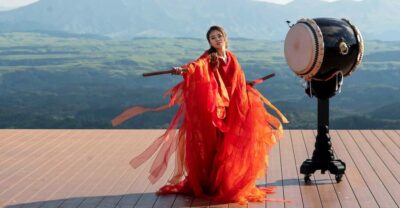
Open-air theater “Tao- no-Oka” Drum TAO Live performance
Our verdict →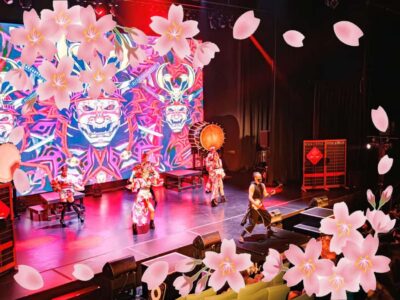
OSAKA NIGHT FUSION Japanese Taiko Kabuki Samurai Dance Show
Our verdict →Browse the lists this tour appears in