
Reviewed · TICKETS
Tokyo: Japanese Dance Cabaret Theater Asakusa-Kaguwa Ticket
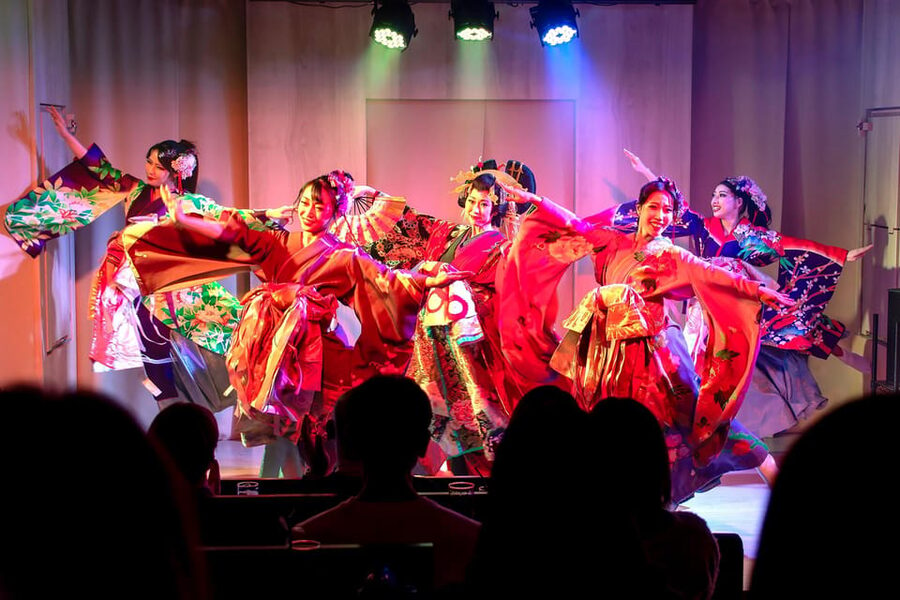
Asakusa-Kaguwa is not a quiet folk-dance recital. It is Japanese cabaret with drama, comedy, elaborate costumes, electronic music, bright lights, and traditional movement, all packed into one fast-moving hour. The small theater makes the performers feel close, and the show uses expression and action so you can follow much of it even if you do not speak Japanese.
I like the personal welcome before the curtain and the chance to take photos with the cast. I also like the location: you can pair the evening with Senso-ji, Nakamise-dori, and Asakusa’s old-town streets. The main caution is price. At about $49 per person, the standard ticket is fair for a full evening activity, but premium drink and photo packages may feel less worthwhile if you do not plan to arrive early or use the extras.
Key points to know
- A one-hour stage show: Expect dance, acting, music, lights, and stories rather than a single traditional performance style.
- An intimate Asakusa theater: The compact room keeps the cast close, with front-row and sofa-table upgrades available.
- One drink included: Standard admission includes a drink, while premium admission can include unlimited drinks before the show.
- Cast interaction: Dancers introduce themselves before the performance, and selected options include photos with the full cast.
- Two regular evening times: Doors open at 4 p.m. for the 5 p.m. show, or at 7 p.m. for the 8 p.m. show.
- A few practical limits: The venue has steep stairs and no elevator, and food costs extra.
What Asakusa-Kaguwa’s show is really like
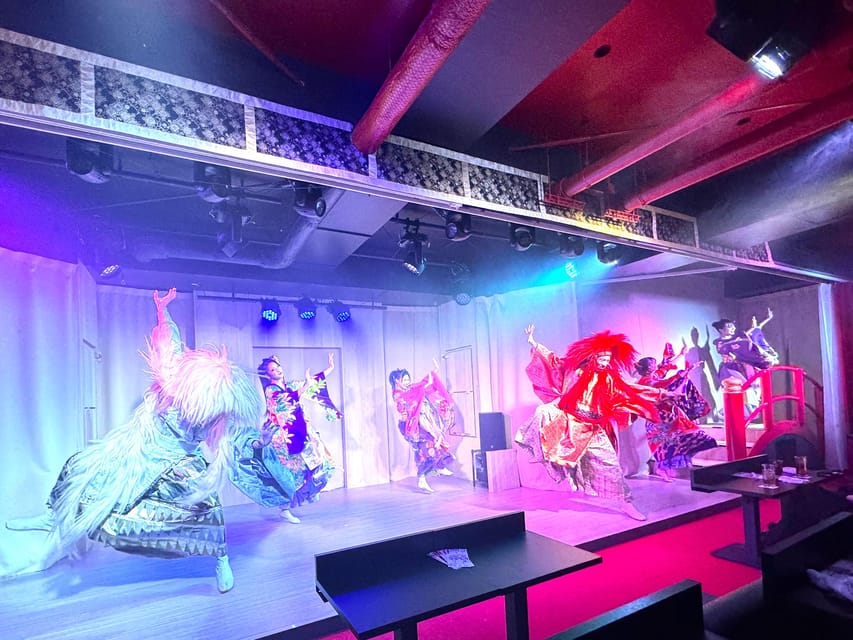
The best way to think about this production is as a Japanese stage revue with a story running through it. You will see performers in several kinds of beautiful Japanese garments, but the show is not simply a display of costumes. Dance, acting, comedy, music, laser effects, and drama all work together.
The style changes quickly. One section may feel rooted in traditional Japanese performance, followed by modern choreography and electronic music. Another may play like a short television drama, using facial expressions and physical comedy to carry the story forward.
That mixture is a large part of the appeal. If you are hoping for a formal cultural demonstration with detailed explanations, this is not that. If you want a lively stage production that gives you a colorful introduction to Japanese performance culture, it makes more sense.
The show is designed to cross language barriers. You may not catch every plot detail, but the acting, expressions, costumes, and movement make the broad emotions easy to follow. The production can be funny, energetic, romantic, or moving within the same hour.
Several people have found the emotional parts surprisingly strong. Do not assume that a cabaret night means nonstop comedy or dancing. The storytelling can turn sincere, and the cast uses drama as seriously as they use spectacle.
More Kabuki & Theatre in Tokyo:
- Tokyo: KABUKI Show at Kabukiza Theatre Admission Ticket
★ 4.8 · 152 reviews - Tokyo: KABUKI, BUNRAKU, etc. presented by National Theatre
★ 4.6 · 135 reviews - Kyoto: Non-Verbal Theatre Show Tickets at GEAR
★ 4.9 · 198 reviews
Arriving in Asakusa before the curtain
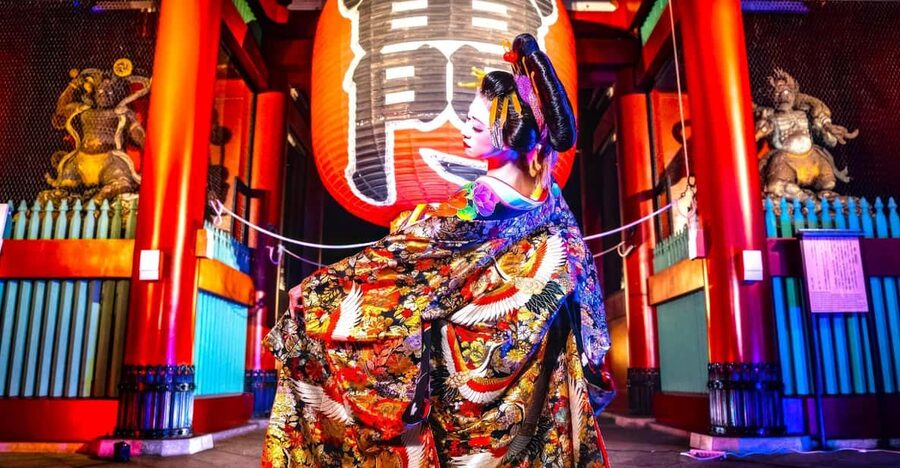
Asakusa is one of the easiest places in Tokyo to build an evening around. The theater sits in an area known for Senso-ji and the traditional shopping street leading toward the temple. A visit to the temple district before the show gives the evening a useful sense of place.
You can spend the afternoon around Senso-ji, browse Nakamise-dori, eat in the neighborhood, and then head to Asakusa-Kaguwa. The theater is not presented as a remote attraction requiring a special trip across Tokyo. It works best as part of an Asakusa plan.
Pay close attention to the time printed on your voucher. The performance begins one hour after the stated voucher time. For the regular schedule, doors open at 4 p.m. and the show runs from 5 to 6 p.m. The second performance opens at 7 p.m. and runs from 8 to 9 p.m.
An early arrival is sensible, even if you are not taking photos. The theater recommends arriving at least 15 minutes before the show begins, and you will have more time if you want to order food, claim your drink, or get comfortable before the room fills.
The venue is reached by steep stairs, and there is no elevator. That is important for anyone with mobility concerns. Staff can assist people who need help, but you should consider the stairs before booking.
The hour before the show
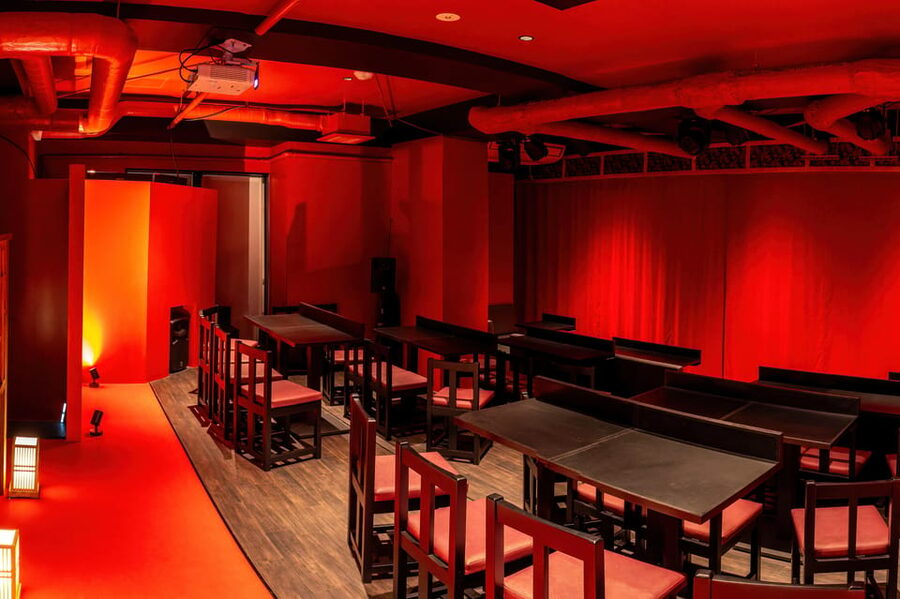
The pre-show period is more social than a standard theater arrival. After you enter, you pick up your included drink and can spend time looking around the red Japanese-style interior.
The cast may introduce themselves before the performance. This small interaction changes the feeling of the show. Instead of seeing anonymous dancers appear under stage lights, you get a sense of the people you are about to watch.
Some packages include a photo opportunity with the dancers. The photo setup can include the full cast, and some people choose to pose in a kimono. You can also use the photo booth and take pictures before or after the performance, depending on the option you purchase.
I would not rush this part. The pre-show introductions are one of the more distinctive elements of the night, especially if you are visiting alone or if you are unsure how this type of performance works. The staff and cast are accustomed to welcoming international customers, and one booking specifically praised a guide named AAmi for helping make the evening comfortable.
The premium option includes all-you-can-drink service until the show starts. This is useful if you want the pre-show social time to be part of the event, but do the math before paying extra. The window is limited to the hour before the performance, and one drink may be enough for many people.
Food and drinks at the theater
Every standard ticket includes one drink. Additional drinks and food are not included, so check the menu before ordering if you are watching your budget.
The available food is simple rather than a full Japanese dinner. You can order pizza, fried chicken, and vegetarian snacks made with soy meat. That makes the theater convenient for a light meal, but I would not book this as a destination for fine dining.
The food can be useful if you are planning to stay in Asakusa for the evening and do not want to fit a restaurant between sightseeing and the show. It also gives you something to do during the pre-show period.
Premium seating may include all-you-can-drink service until showtime, depending on the option selected. Other upgraded packages can include front-row or VIP sofa-table seating, cast photos, and original sparkling wine.
Read the package details carefully. The exact meeting point and inclusions can vary by the option booked. The standard ticket is the simpler choice: one show, one drink, and a regular seat.
A few more Tokyo half-days worth comparing
- 1-Day Tokyo Bus Tour
★ 5.0 · 14,250 reviews - Tokyo: TOKYO SKYTREE® Admission ticket
★ 4.5 · 11,192 reviews - Tokyo: teamLab Planets TOKYO Digital Art Museum Entry Ticket
★ 4.6 · 9,779 reviews - Tokyo: Sumo Show Experience with Chicken Hot Pot and a Photo
★ 4.8 · 6,678 reviews
The one-hour performance
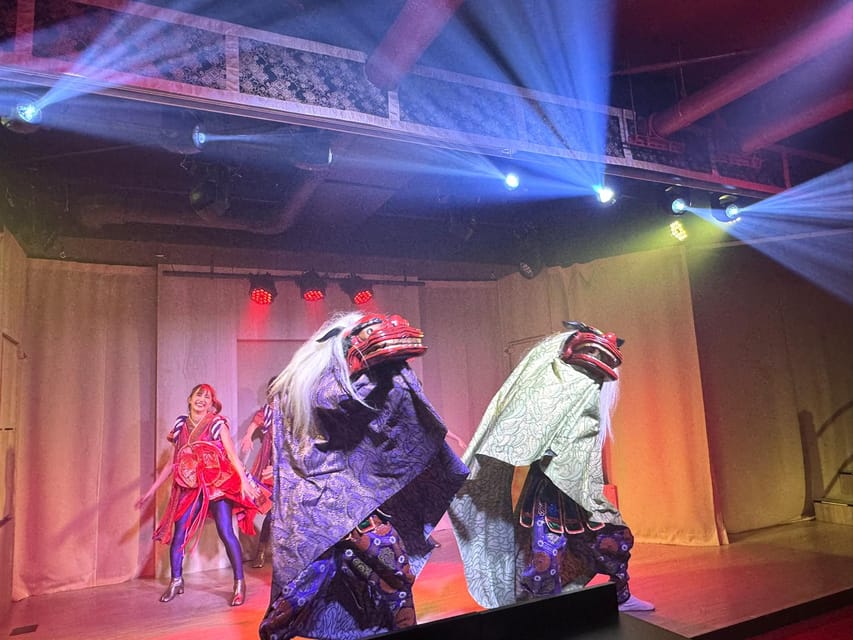
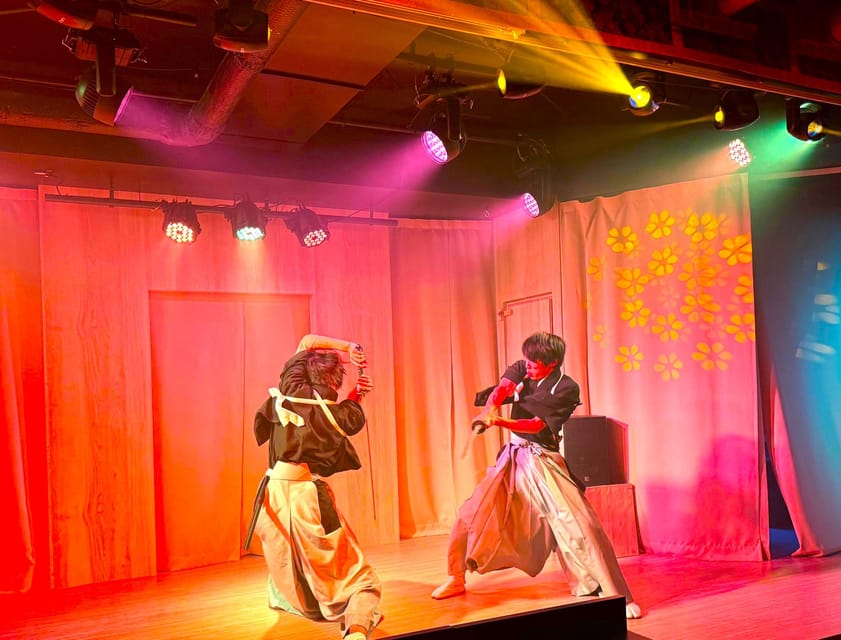
Once the music begins, the production moves quickly. Expect a mix of dance numbers, short dramatic scenes, costume changes, expressive acting, and modern stage effects.
The choreography is a major strength. The cast performs with precision, but the show also depends on personality and clear facial expression. This is why the production works for people who do not understand Japanese. The action gives you enough visual information to follow the mood and basic story.
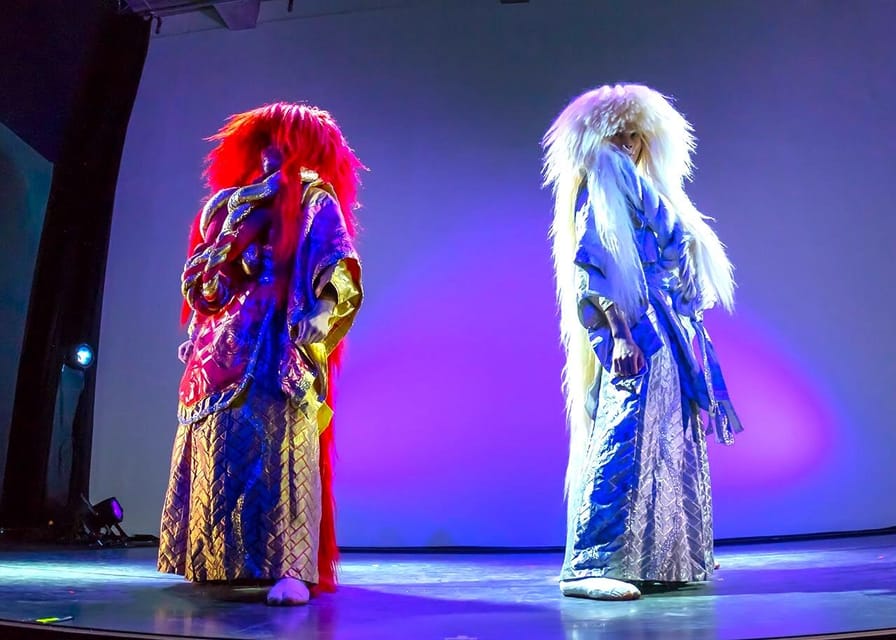
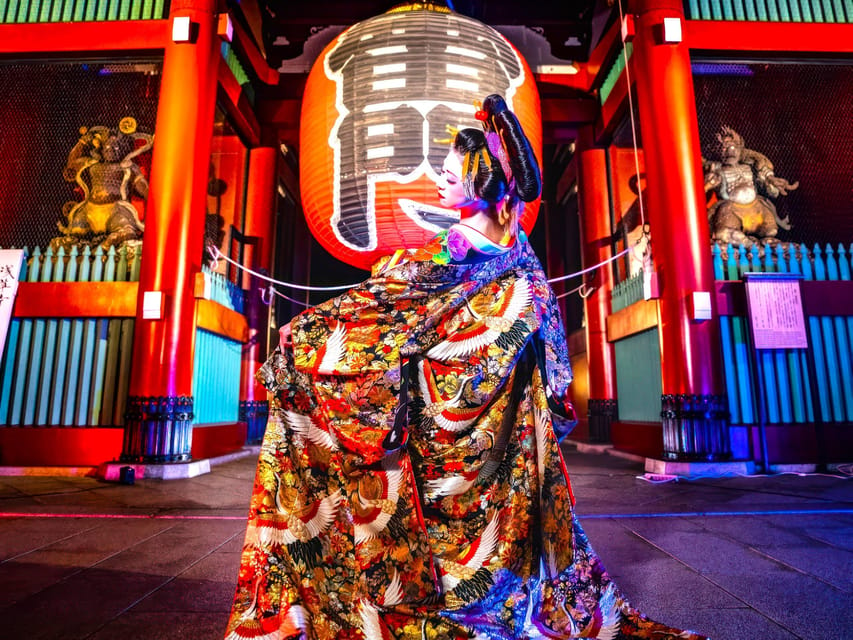
The costumes provide the clearest link to Japanese culture. You will see a variety of gorgeous garments rather than one repeated costume style. These outfits are part of the performance language, not just decoration. They help signal changes in character, tone, and setting.
Modern production tools keep the show from feeling like a museum display. Music, lasers, sound, and lighting push the performance toward contemporary cabaret. At points, the combination can feel deliberately wild. One description compared it to traditional dance mixed with Japanese television drama and electronic dance music. That is a useful expectation.
The small theater works in the production’s favor. You are close enough to notice expressions and details in the costumes, and the cast can create a direct relationship with the audience. The tradeoff is that the room may feel more intimate than grand. Do not expect the scale of a major concert hall.
The story is built for a broad international audience. It may not provide a detailed explanation of each traditional reference, but it gives you a lively introduction through movement, music, and theatrical scenes.
Seating and the premium options
Seats are assigned by the theater in reservation order. That means early booking may help, but you should not assume you can choose a particular seat unless the option explicitly promises front-row or VIP seating.
Regular admission is suitable if you mainly want to see the production. The theater is intimate, and a standard seat still puts you inside the action.
Front-row and VIP sofa-table options make more sense for a special occasion or for people who care about photographs and pre-show service. The premium package may also include unlimited drinks until the show starts and an original sparkling wine.
The strongest reason to upgrade is not simply comfort. It is the added access before and after the show. If meeting the dancers, taking photos, and enjoying drinks are central to your plan, the upgrade can be worthwhile.
If you are mainly interested in the dancing and storytelling, standard seating offers better value. One drink is already included, and the performance itself remains the heart of the night.
The cast connection and photos
The personal contact with the performers is unusual for a theater ticket. Cast members may come out before the show, introduce themselves, and speak with the audience. Photos with the dancers can be part of the selected package.
This makes the event feel less formal than a conventional theater performance. It is also helpful if you are attending alone. The friendly pre-show contact gives you an easy way into the evening without requiring you to know the customs of Japanese theater.
After the show, there may be more time for photos and interaction. Bring your camera or phone if that matters to you, but check which ticket option includes the full photo opportunity. The basic ticket does not automatically include every extra.
There is one social point to understand in advance. Tipping may be suggested after the show, including the option to tip a favorite dancer. It is wise to carry some extra cash if you want to participate, but the supplied information does not state that tipping is required. Some people may find the request uncomfortable, especially after paying for an upgraded ticket, so decide beforehand how you want to handle it.
Is $49 a good value?
At roughly $49 per person, the standard ticket is not a bargain basement night out. Still, you receive a one-hour live production, a drink, and up to two hours at the venue when the pre-show period is included.
The price looks better if you value several elements at once: a stage performance, a cultural introduction, cast interaction, an Asakusa setting, and an easy evening plan. It looks less attractive if you only want a short dance demonstration or if you expect a large-scale theater production.
The show also fills a gap in a Tokyo itinerary. Many visitors see temples, shops, observation decks, and restaurants, but do not attend a Japanese stage production. Asakusa-Kaguwa gives you that experience without requiring you to understand a long Japanese-language play.
Premium pricing needs more scrutiny. Unlimited drinks are available only before the show, not throughout the performance, and the pre-show period is limited. Choose the upgrade for the seating, photos, sparkling wine, or social access, not only because the drink offer sounds generous.
Who should book this night?
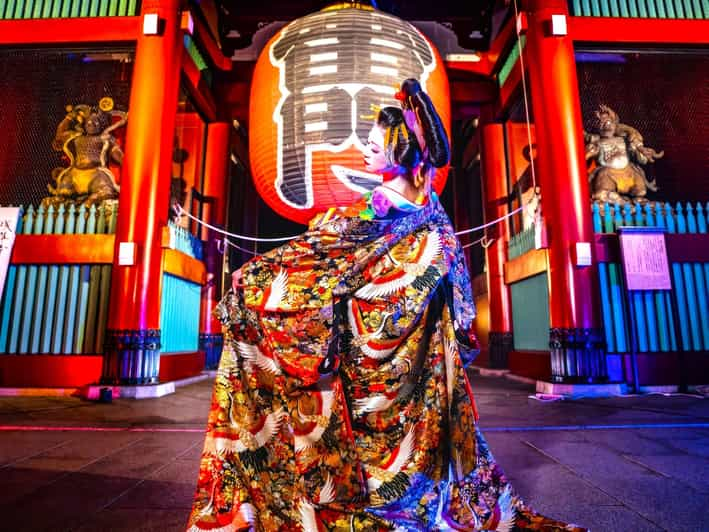
I would recommend it to first-time visitors who want an entertaining cultural activity with plenty of visual energy. It is also a good fit for couples, families, teenagers, solo visitors, and anyone who enjoys dance, costume, or theatrical storytelling.
Families can attend, and children up to five years old are free, but an infant reservation is still required so the theater can track attendance. The show may suit older children and teenagers particularly well because it combines dance, acting, music, and stage effects rather than relying on spoken explanations.
This is not the best match for you if you want a quiet, strictly traditional performance. It is also not ideal if steep stairs are a problem or if you dislike audience interaction, photo opportunities, or the possibility of a post-show tipping request.
The performance can be emotional. That may be a pleasant surprise, but it is worth knowing that the night is not just a series of flashy numbers. The stories and acting are intended to affect you.
Final recommendation for Asakusa-Kaguwa
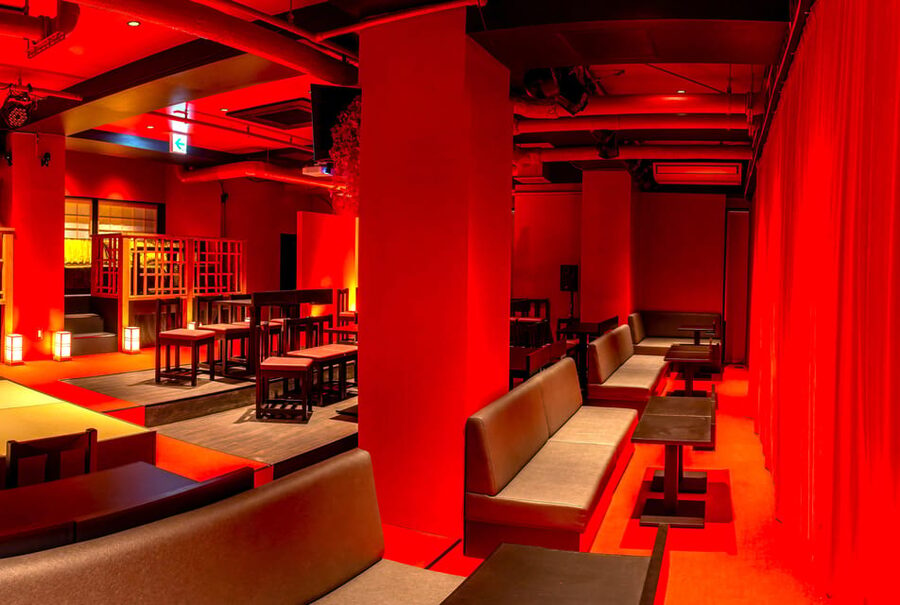
Book Asakusa-Kaguwa if you want a colorful, compact Tokyo night that combines Japanese costumes and dance with modern theater technology. The strongest features are the expressive cast, fast-moving choreography, intimate room, and easy-to-follow storytelling.
Choose the standard ticket if you want the best balance of cost and content. Consider premium seating if cast photos, front-row access, sofa seating, or pre-show drinks are a major part of your plan. Arrive early enough to enjoy the welcome, but remember that the show starts one hour after the voucher time.
For a first Japanese theater experience, this is a friendly place to start. It gives you culture without demanding a language lesson, and it fits neatly into an evening in Asakusa.
FAQ
How long does the Asakusa-Kaguwa experience last?
You can stay at the theater for up to two hours. The main performance lasts one hour, with time before the show for drinks, photos, and meeting the performers.
How long is the actual cabaret show?
The performance lasts one hour. The regular evening shows run from 5 to 6 p.m. and from 8 to 9 p.m.
What time should I arrive?
The theater recommends arriving at least 15 minutes before the show starts. Remember that the performance begins one hour after the time stated on your voucher.
What does the standard ticket include?
Standard admission includes one performance, one drink, and a regular seat. Additional food and drinks cost extra.
What does premium seating include?
Depending on the option selected, premium seating may include a front-row or VIP sofa-table seat, unlimited drinks until the show starts, a photo opportunity with the dancers, and original sparkling wine.
Can I order food at the theater?
Yes. Pizza, fried chicken, and vegetarian snacks made with soy meat are available separately. Food is not included in the ticket price.
Can children attend the show?
Yes. Families and children can attend. Children up to five years old are free, but an infant reservation is required if you are bringing an infant.
Is the theater accessible by elevator?
No. The venue is reached by steep stairs and has no elevator. Staff can assist people who need help, but anyone with mobility concerns should take this into account.
Can I cancel the booking?
You can cancel up to 24 hours in advance for a full refund. A reserve-now, pay-later option is also available.
Just added around Tokyo
- Kawagoe Japanese Food Tour : Unagi Kaiseki and Sake near Tokyo★ 5.0 · 30 reviews
- Kawagoe 4hr Private Tour with Licensed Guide (Kawagoe Dep)★ 5.0 · 13 reviews
- Little EDO Sushi Making workshop in Kawagoe★ 5.0 · 18 reviews
- 【R34】Tokyo:Private Daikoku tour in Modified R34★ 4.9 · 92 reviews
- :Tokyo,Shibuya/ Pro Photography in Kimono / English-Friendly★ 5.0 · 26 reviews
- Tokyo:Celebrate Unique Japanese New Year Tradition Festivity★ 3.9 · 20 reviews
- Tokyo: Allstar Food Tour★ 4.7 · 29 reviews
- Tokyo: West-Side Cycling and Food Tour with Guide★ 5.0 · 37 reviews
Tickets, compared.

teamLab Planets TOKYO Digital Art Museum Entry Ticket
Our verdict →
Kamakura & Enoshima Day Trip including Temple Tickets
Our verdict →
Osaka/Kyoto: Hiroshima Miyajima Bus Tour & Shinkansen Ticket
Our verdict →Browse the lists this tour appears in