
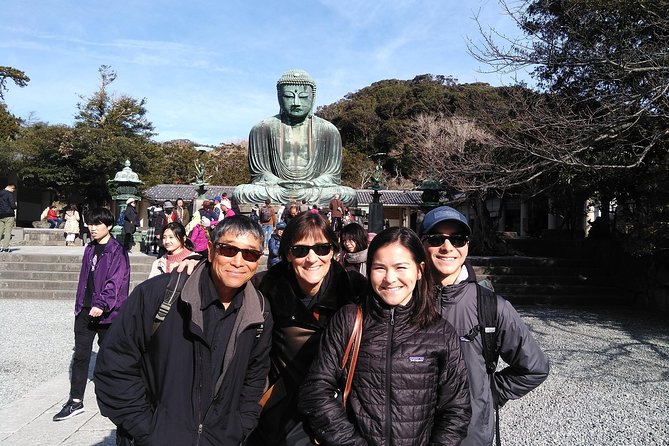
Reviewed · WALKING TOURS
Kamakura 8 hr Private Walking Tour with Licensed Guide from Tokyo
Kamakura’s Great Buddha is the hook: a 37-foot bronze Amida Buddha sitting outdoors at Kotoku-in, a short ride from Tokyo but a world away in mood. This private eight-hour tour lets you build the day around four to six sights, so you can focus on major temples, quiet paths, bamboo, shopping, or the coast instead of following a fixed bus itinerary.
I like the personal planning and the practical help with trains and buses. Guides such as Taka, Andy, Makoto, and Nobu have adjusted routes for specific temple requests, special diets, shopping preferences, and even extra coastal viewpoints. I also like that transport time is included, so you are not paying for a short Kamakura visit while the clock quietly disappears on the train.
The main caution is pace. Kamakura is spread across several areas, and the eight hours include travel from Tokyo. You will need to choose carefully, especially if you want Enoshima, a hiking trail, and several temples in the same day. Confirm the final number of included sights before booking, since the tour information describes both three to four and four to six stops.
Key points to know before booking
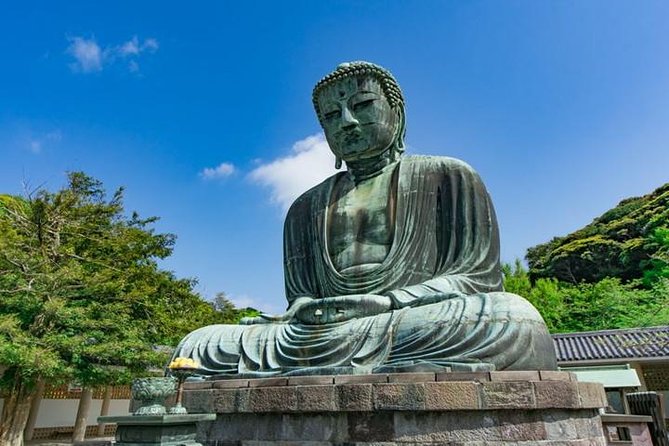
- The Great Buddha is the day’s essential sight: Kotoku-in’s 11.4-meter bronze statue is powerful even on a crowded day.
- Your guide shapes the route: Choose from major temples, shrines, bamboo, hiking paths, Enoshima, or shopping.
- Public transportation is part of the tour: Your guide handles the Tokyo to Kamakura journey, local trains, and buses, but fares are extra.
- Hasedera gives you both culture and a view: Its hillside grounds include a famous Kannon statue and ocean-facing outlooks.
- Lunch is flexible, not included: Guides have helped with restaurant choices, tempura, soba, and gluten-free meals.
- The tour works best for private groups: You get one guide for your party, with room to adjust the day as interests change.
Why Kamakura makes a strong day trip from Tokyo
Kamakura offers a useful change of pace from Tokyo. The city was the seat of Japan’s medieval shogunate and is now a compact mix of shrines, Zen temples, wooded hills, beaches, old lanes, and small restaurants. It is close enough for a day trip, yet its wooded temple districts feel far removed from Tokyo’s towers and train crowds.
The private format matters here. Kamakura’s sights are not arranged in one tidy line, and the best route depends on what you want. A first-time visitor may want Tsurugaoka Hachimangu, the Great Buddha, and Hasedera. Someone returning to Japan may prefer Zen temples, a bamboo grove, and lesser-known hillside sites.
You meet the guide on foot within the designated Tokyo pickup area. There is no private car, and the guide does not cover your transportation costs, entrance fees, lunch, or personal purchases. That sounds basic, but it shapes the value of the tour: you are paying for planning, guiding, translation, and navigation rather than a vehicle.
At $201.51 per person, the price is easiest to justify for a small private group that wants a full day of help. For a solo visitor, it is a larger spend. For a family or group that would otherwise lose time managing trains, transfers, entrances, and lunch, the personal service can make good sense.
More Walking Tours in Kamakura
- Kamakura Historical Walking Tour with the Great Buddha
★ 5.0 · 129 reviews - Kamakura Walking Tour – The City of Shogun
★ 5.0 · 100 reviews - Kamakura: Private Guided Walking Tour with Local Guide
★ 4.8 · 60 reviews
Tsurugaoka Hachimangu and the heart of old Kamakura
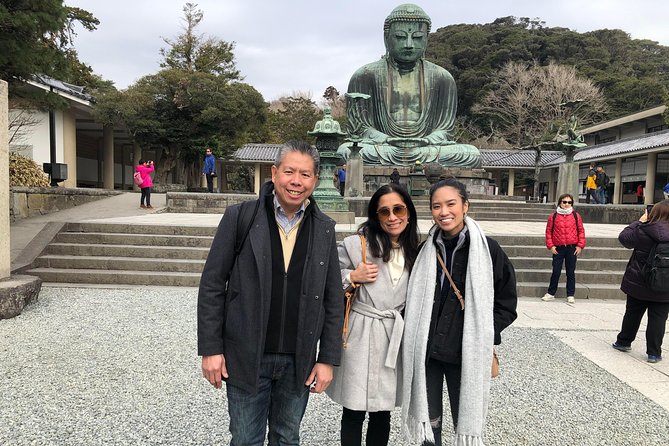
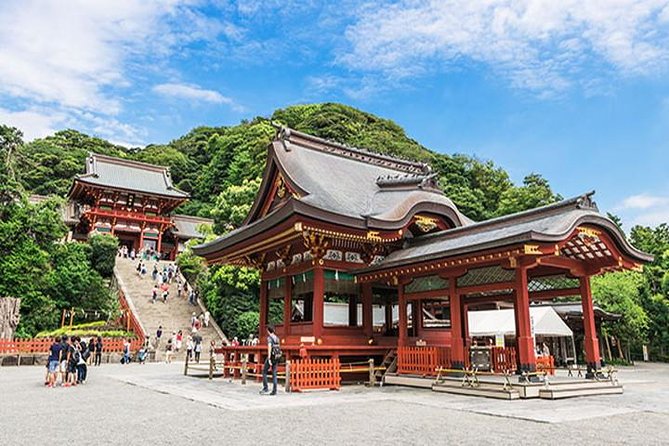
Tsurugaoka Hachimangu is often the best first stop because it gives you a clear sense of Kamakura’s political and religious importance. The shrine is dedicated to Hachiman, associated with the Minamoto family and the samurai tradition.
The grounds are open and ceremonial, with a broad approach leading toward the main shrine buildings. Your guide can explain the connection between the shrine, the warrior government, and the city’s rise in medieval Japan. The listed visit is short, so ask for more time if you want to linger, take photographs, or explore the grounds beyond the main route.
From here, Komachi Street is a natural addition. The old shopping street runs toward Kamakura Station and is packed with snacks, small gifts, sweets, and casual restaurants. It is pleasant for browsing, though much of the merchandise is aimed at sightseers rather than daily local life.
Try a hatosabure, a dove-shaped butter biscuit associated with Kamakura. It is a small detail, but it gives the shopping stop a local flavor. You can also ask your guide to help with lunch. Past guides have recommended tempura, soba, and gluten-free dishes, and have helped diners order when dietary needs made the choice less simple.
The Great Buddha at Kotoku-in
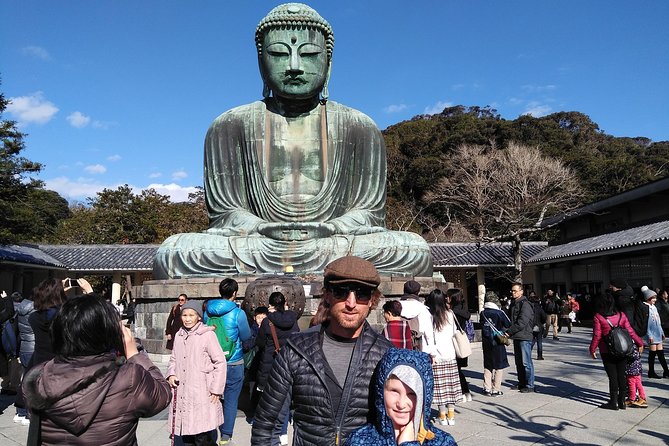
Kotoku-in’s Great Buddha is the most recognizable stop on the route and the sight most likely to stay with you after the day ends. The bronze Amida Buddha measures 11.4 meters high and sits outdoors within the temple grounds.
The open-air setting is part of its appeal. You approach through the temple grounds and suddenly find the statue filling the view. It is not merely large. The calm expression and weathered bronze surface make it feel like a long-standing part of the town rather than a monument placed for effect.
The scheduled stop is listed as 15 minutes, which is enough for a quick look but not much more. Entrance is extra. If you want photographs, time to read the signs, or a closer look at the statue, ask your guide to protect this stop from being rushed.
The Great Buddha area can be busy, particularly during popular travel periods. A private guide cannot remove the crowds, but can help you move efficiently and explain what you are seeing without forcing you to decode every sign yourself.
Hasedera for Kannon and the sea view
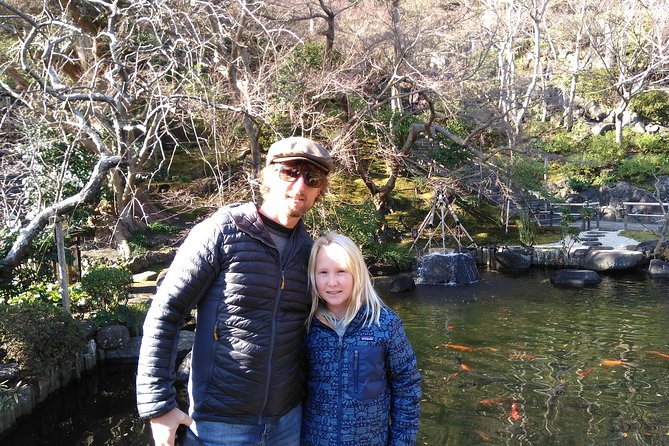
Hasedera combines art, religion, gardens, and a hillside view. The temple is associated with an 11-headed wooden statue of Kannon, the Buddhist figure linked with mercy. The gilded statue is about 9.18 meters tall and is one of the temple’s main reasons to visit.
The grounds climb the hillside, so this is not a flat stop. In return, you get higher views toward the ocean and a change from the broad shrine approach at Tsurugaoka Hachimangu. I would give Hasedera priority if you want one temple that feels scenic as well as significant.
Again, the listed time is only 15 minutes, and admission is not included. That is a tight window for a hillside temple. Tell your guide if the ocean view, the Kannon hall, or the gardens matter most to you. A good private itinerary should reflect that choice.
Several visitors have paired Hasedera with the Great Buddha and Tsurugaoka Hachimangu. This is a sensible core route for a first visit, with Komachi Street added for lunch and browsing. It gives you Kamakura’s major religious sights without trying to cover every corner of the city.
Same trip, a completely different kind of day:
- Tokyo: Kamakura & Enoshima Day Trip including Temple Tickets
★ 4.5 · 1,375 reviews - From Tokyo: Kamakura & Enoshima 1-Day Bus Tour
★ 4.5 · 189 reviews - Kamakura Private Tour: Temples, Nature, and the Great Buddha
★ 5.0 · 121 reviews - Tokyo: Kamakura & Enoshima Day Tour with Pickup & Train Ride
★ 4.1 · 61 reviews
Hokoku-ji and the small bamboo grove
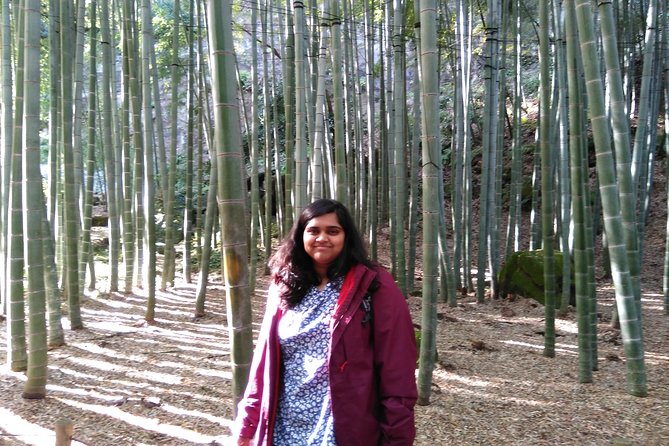
Hokoku-ji is the choice for a quiet visual change. Behind the main hall is a compact bamboo grove with more than 2,000 dark green stalks and narrow paths running through it.
Do not expect a vast forest. The grove is small, which is part of its charm and also the reason the stop can feel crowded. The listed visit is 30 minutes, and admission is extra. That gives you enough time to walk the paths and take in the atmosphere, provided you are not trying to combine it with a long tea stop.
Hokoku-ji works especially well for people who want something beyond large monuments. The bamboo, shaded paths, and temple setting create a slower moment in a day that can otherwise involve several trains, busy streets, and repeated entrance queues.
Choosing among Zen temples
Kamakura has several major Zen temples, and this is where a private guide can help you avoid a bland parade of similar-looking gates. Engaku-ji is one of eastern Japan’s leading Zen temples and ranks second among Kamakura’s five great Zen temples. Kencho-ji ranks first and is the city’s oldest Zen temple, founded in 1253.
Jochi-ji, Tokei-ji, Jufuku-ji, and Eisho-ji each offer a different scale and mood. Jochi-ji is another of the five great Zen temples. Tokei-ji is a small temple from the Engaku-ji school, while Jufuku-ji is ranked third. Eisho-ji is notable as Kamakura’s only surviving nunnery.
You probably should not attempt all of them in eight hours. Choose one or two based on your interests. Kencho-ji and Engaku-ji suit anyone who wants major temple architecture and formal grounds. Smaller temples may appeal more if you want a quieter stop and have already seen Japan’s biggest religious sites.
Entrance fees apply at several of these temples. The guide’s own admission is covered only at sights listed as part of the expected itinerary, so confirm which locations are included when you finalize your plan.
Hillside shrines, hydrangeas, and quieter corners
Zeniarai Benten offers one of Kamakura’s most distinctive customs. At this popular shrine, people wash coins in the spring, following the belief that money washed there will multiply. The ritual is simple, hands-on, and easy to remember.
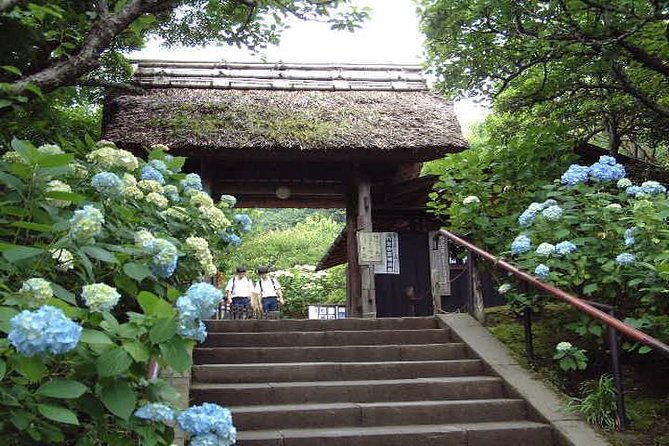
Meigetsu-in is known as the Hydrangea Temple because hydrangeas bloom across its grounds. The visit listed for this tour is only 10 minutes, so it is worth asking how much of the temple you can realistically see during your chosen season.
Zuisen-ji sits at the far eastern end of Kamakura in a narrow valley surrounded by wooded hills. Its setting makes it feel more removed than the central sights. Ankokuron-ji and Myohon-ji are Nichiren temples in the southeastern hills, both tied to the religious history of the area.
These stops are best for someone who has a particular interest in Buddhist schools, gardens, or quieter temple districts. They are less useful if your first priority is seeing the Great Buddha, Hasedera, and the main shrine in one day.
Hiking trails and Enoshima choices
Kamakura is bordered by the sea on one side and wooded hills on the others. Hiking paths connect some temples and offer a different way to experience the city. The listed hiking option lasts one hour and is free, but you should discuss fitness, footwear, and weather with your guide before adding it.
A trail can be a fine choice if you want exercise and trees rather than another temple. It can also make the day feel rushed if you are trying to reach several distant sights afterward. The private format lets you make that trade-off openly.
Enoshima is another major choice. The island lies just west of Kamakura and is linked to the mainland by a bridge. It has shrines and other attractions, with a more openly tourist-oriented feel than the quieter temple districts.
Adding Enoshima gives the day a coastal finish, but it also adds travel and limits the number of Kamakura temples you can see. Some itineraries have combined Kita-Kamakura, central Kamakura, and Enoshima, but that makes for a busy day. If you want a relaxed pace, choose Enoshima or a deeper Kamakura temple route rather than both.
How the guides shape the experience
The strongest part of this experience is the human help. Guides including Taka, Shinji, Kenji, Makoto, Andy, Tachi, Nobu, and Yasuho Suzuki have handled different kinds of requests, from changing a shopping block into extra sightseeing to finding a gluten-free lunch.
That flexibility is valuable in Japan, where a small transport mistake can cost more time than expected. A guide can help you understand which train or bus to use, keep the route moving, and explain the cultural meaning of a shrine ritual or temple feature.
The quality of a private tour still depends on the individual guide. One poor experience involved limited site information and an unhelpful manner, while the wider pattern of feedback is very strong: 95 percent recommend the experience, with a 4.8 rating from 80 reviews. I would email your priorities before the day and ask the assigned guide to confirm the plan.
Timing, transport, and practical value
Eight hours sounds generous, but the Tokyo to Kamakura journey and local movement count inside that time. You also need time for lunch, restroom breaks, photographs, and possible queues.
The best plan usually has a clear center. For a first visit, that might be Tsurugaoka Hachimangu, Komachi Street, the Great Buddha, and Hasedera. Add Hokoku-ji if bamboo matters more to you than a long shopping stop.
For repeat visitors, choose a theme: Zen temples and gardens, Kamakura’s hills, Buddhist monuments, or the coast and Enoshima. Tell the guide what you have already seen in Japan. That makes the private format work harder for you.
The tour offers free cancellation up to 24 hours before the start time. Service animals are allowed, public transportation is nearby, and most people can participate, but this remains a walking day with hills, stations, and extended time on your feet.
Should you book this Kamakura day trip?
Book it if you want Kamakura explained as you move through it, dislike sorting out unfamiliar trains, or have a group with different interests. It is especially useful for families, older relatives who need a patient pace, solo visitors who want help navigating, and anyone with a specific food or temple request.
Skip it if you prefer wandering alone, already understand Tokyo’s rail system, or want to spend several days slowly exploring Kamakura. The price is not small, and admission, transport, and lunch come extra.
For most first-time visitors, I would ask for Tsurugaoka Hachimangu, the Great Buddha, Hasedera, and Komachi Street, then decide between Hokoku-ji and Enoshima. That plan gives you history, religion, food, shopping, bamboo, and a view without turning the day into a race.
FAQ
How long is the Kamakura private walking tour?
The tour lasts approximately eight hours, including travel time between Tokyo and Kamakura.
How many sights can I choose?
The included information describes a customizable tour of four to six sites, while the overview also refers to choosing three to four sites. Confirm the exact number with the provider when planning your route.
Is transportation included in the price?
No. Transportation fees are not included. You and your guide travel by public transportation, and the time spent traveling counts toward the eight-hour tour.
Is a private vehicle provided?
No. A private vehicle is not included. The tour is conducted using public transportation and walking.
Are entrance fees included?
No. Entrance fees are generally extra. The guide’s entry fees are covered only for sights listed under the expected itinerary.
Is lunch included?
No. Lunch is not included. Your guide can help you choose a restaurant, and past itineraries have included soba, tempura, and gluten-free meals.
Can I request specific temples or sights?
Yes. The tour is customizable, and you can request sites such as the Great Buddha, Hasedera, Tsurugaoka Hachimangu, Hokoku-ji, Enoshima, Zen temples, hiking trails, and other listed locations.
Where does the guide meet me?
The guide meets you on foot within the designated area of Tokyo. This is an on-foot pickup rather than a private vehicle pickup.
Can I cancel for a full refund?
Yes. You can cancel at least 24 hours before the experience start time for a full refund. Changes or cancellations made less than 24 hours before the start time are not accepted for a refund.
Just added around Kamakura
- First time in Kamakura? Enjoy a Tour of All Must-sees!★ 5.0 · 15 reviews
- Kamakura Tours Half Day or Full Day Tours with a local guide.★ 5.0 · 12 reviews
- Buddha, Bamboo & Zen – Bespoke Kamakura Private Walking Tours★ 5.0 · 25 reviews
- Your Own HANKO Name Seal Activity in Kamakura.★ 5.0 · 24 reviews
- Exciting Kamakura – One Day Tour from Tokyo★ 5.0 · 40 reviews
- Kamakura Bamboo Forest and Great Buddha Private Tour★ 5.0 · 12 reviews
- Tokyo Yokohama Night View Tour With Kamakura And Enoshima★ 3.5 · 14 reviews
- Tokyo: Day Trip to Kamakura in Spanish – Spanish★ 4.9 · 22 reviews
Walking Tours, compared.

Kyoto Geisha Walking Tour: Gion District & Hidden Gems
Our verdict →
Imperial Palace and Shogun Historical Walking Tour
Our verdict →
Shinjuku Local Bar and Izakaya Guided Walking Tour
Our verdict →

Nishiki Market Brunch Walking Tour (7 Tastings + Brunch)
Our verdict →
Kyoto Arashiyama Walking Tour: Bamboo, Monkeys, Gardens & Secrets
Our verdict →
Tokyo Castle & Imperial PalaceーShogun Walking Tour
Our verdict →Browse the lists this tour appears in