
Reviewed · FISH MARKET TOURS
Tokyo Tsukiji Fish Market Food and Culture Walking Tour
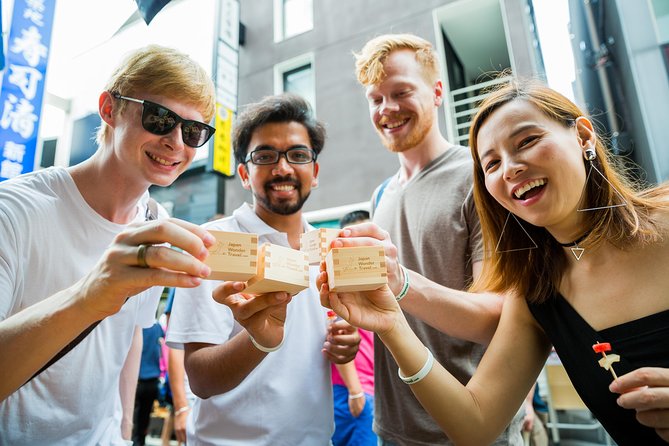
Tsukiji is not one tidy market with a single entrance and a neat row of counters. It is a maze of food stalls, shops, restaurants, and wholesale corners, and this three-hour tour gives you a local guide to help make sense of it. You may see uni in its boxes, pufferfish in tanks, or a massive tuna being cut while sampling sushi, Wagyu beef, fish cakes, omelette, fruit, dashi soup, and tea.
I like the way the tour joins food tasting with market culture, rather than treating Tsukiji as a quick photo stop. I also like the small-group feel, with a maximum of 20 people, and the chance to ask a guide such as Shoko about cooking with Japanese ingredients or ask Mike to point out a shop you would otherwise miss.
The main caution is the gap between expectation and reality. This tour visits Tsukiji’s outer market and Tsukiji Uogashi, not the former inner wholesale auction floor. Food portions can also feel light for a $99.49 tour, so arrive ready to taste, but not expecting a full banquet.
Key points at a glance
- Meet at Tsukiji Honganji Temple: The main gate is the starting point, not the back entrance shown by some map directions.
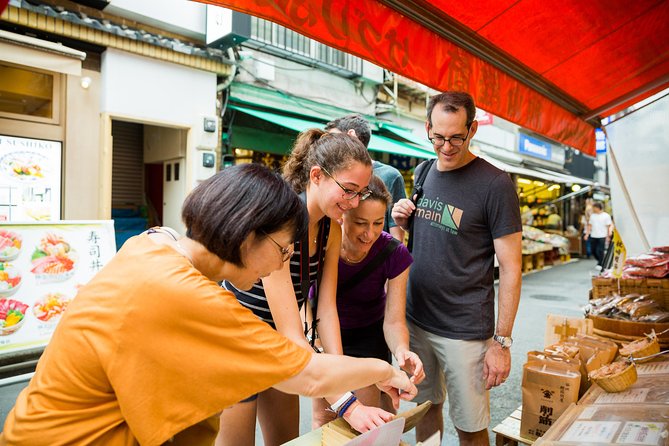
- Taste beyond sushi: The food can include Wagyu beef skewers, tuna, fish cakes, Japanese omelette, seasonal fruit, dashi soup, green tea, and sushi or a seafood bowl.
- See the working market: Fish stalls, shellfish, uni, pufferfish, tuna cutting, kitchen tools, and a mini wholesale market fill the walk.
- Expect a market walk, not the old tuna auction: Tsukiji’s famous inner wholesale market moved elsewhere, so the experience focuses on the outer market.
- Guide quality matters: Guides including Kiyo, Naz, Shoko, Masa, Yuki, and Mike have been praised for local advice, food explanations, and friendly help.
- Check the market calendar: Tsukiji Uogashi closes on Wednesdays, Sundays, and other market holidays, and some tastings are unavailable on those days.
Why Tsukiji works best with a guide
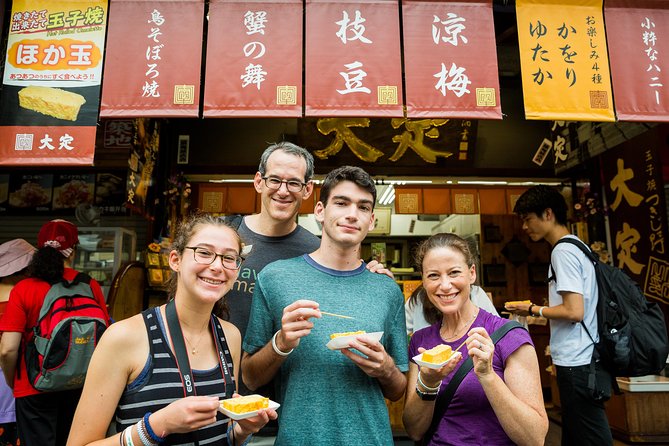
You can walk through Tsukiji on your own, but the place can feel like a food museum without labels. You see stalls packed with fish, dried goods, cookware, and snacks, yet you may not know what is seasonal, what is meant for home cooks, or which foods deserve your attention.
A good guide gives the market a storyline. You learn why Japanese chefs shop here, how the market developed over roughly 80 years, and how seafood moves from vendor to restaurant. You also gain a practical interpreter for unfamiliar foods. That matters when you are looking at sea urchin, fish cakes, or an ingredient sold only in Japanese packaging.
The strongest part of this experience is the human guide. Kiyo has been praised for explaining both the temple and the food. Naz has led visitors to foods they would not have found alone. Shoko has helped people choose ingredients to take home and explained how she uses Japanese spices and foods in her own kitchen. Masa brings a calm pace, history, humor, and patience.
That personal element can change the whole morning. At a crowded market, you want someone who can keep the group moving without rushing every bite. You also want a guide who will answer simple questions without making you feel out of place.
More Food Tours in Tokyo
- Tokyo: Shinjuku Food Tour (13 Dishes at 4 Local Eateries)
★ 5.0 · 6,603 reviews - Tokyo: Shinjuku Food Tour (15 Dishes and 4 Eateries)
★ 4.9 · 2,033 reviews - Best of Shinjuku: Izakaya Food Tour (4 Stops, 14+ Tastings)
★ 5.0 · 1,863 reviews
Starting at Tsukiji Honganji Temple
The meeting point is the main gate of Tsukiji Honganji Temple, at 3-chōme-15-1 Tsukiji. Pay attention to the word main. Some map directions lead to the back side of the temple, while the group gathers at the front.
Beginning here is more than a practical meeting arrangement. The temple’s unusual architecture gives the morning a cultural opening before the food begins. One guide, Kiyo, has explained the building’s design and the ideas that influenced it, giving you a useful first look at Tokyo beyond restaurants and shopping streets.
Arrive early. The group leaves at the stated start time and cannot wait for late arrivals. If you miss the start, the tour is not extended, and same-day late arrival does not qualify for a refund.
Wear comfortable walking shoes. You will spend much of the three hours on your feet, moving through busy lanes and stopping at food counters. This is not a sit-down tasting with a chair at every stop.
Tsukiji Jogai Market, the outer market in action
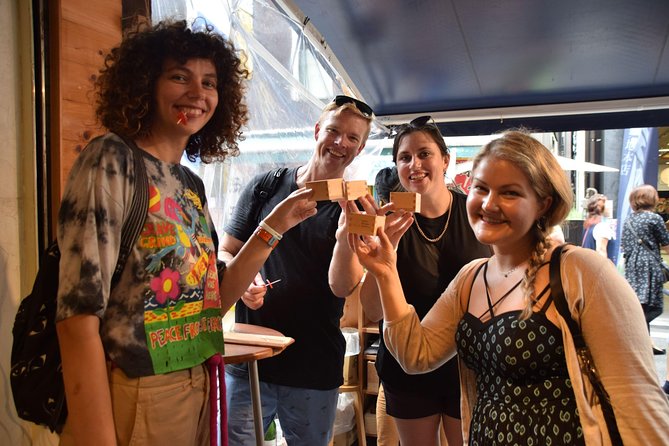
The first major portion takes place in Tsukiji Jogai Market, the outer market. Set aside roughly 90 minutes here. This is the part that best explains why Tsukiji remains such a useful food district even after the former inner wholesale market moved.
You will pass stalls selling fish, shellfish, seaweed, prepared foods, spices, kitchen goods, and other cooking supplies. Look for neatly arranged boxes of uni, tanks holding pufferfish, and vendors working with large tuna. Depending on the day and the route, you may also stop at shops offering fish cakes, Japanese omelette, seasonal fruit, and other small tastes.
The food is not only about filling your stomach. It shows how Japanese meals are built from fresh ingredients, careful preparation, and strong seasonality. A sample of dashi soup or green tea can seem modest, but it gives you a quick lesson in everyday Japanese flavor.
You may also have time to shop. The market sells more than ready-to-eat food, and guides can help explain items that look appealing but are hard to identify. Shoko, for example, has helped people choose foods and spices to bring home. A small group makes this easier because you can pause at a shop without holding up a large crowd.
The tradeoff is that the market can be crowded and noisy. Listening may take effort, especially if the guide is speaking softly or the group stretches out. One person found the explanations difficult to understand, so stay close and ask the guide to repeat important points if needed.
The old market and the changing face of Tsukiji
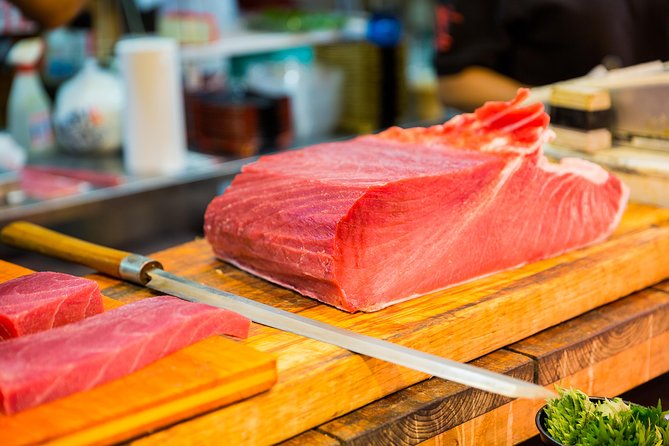
The tour also refers to the old Tsukiji Market, with about 30 minutes set aside for food tasting. This is where the history lesson becomes useful. Many people arrive expecting the famous wholesale fish market associated with tuna auctions. That inner market is no longer at Tsukiji.
The current experience centers on the outer market and nearby wholesale areas. You will still see serious fish commerce and plenty of professional food activity, but you should not book this expecting access to the former auction floor.
This distinction is the single most important point to understand before paying. If your goal is to see the old tuna auction site, this is the wrong experience. If you want to eat, shop, and understand the public market district with help from a local guide, the tour makes more sense.
Some guides add nearby shrines or urban landmarks along the route. Yuki, for instance, has been praised for linking food stops with local customs and cultural details. Nick has combined tastings with surrounding sights and ended at a sashimi lunch prepared at Moritaya. The exact stops can vary, so treat these as possible highlights rather than guaranteed inclusions.
More Market Tours in Tokyo
- Tokyo: Tsukiji Fish Market Food and Walking tour
★ 5.0 · 1,724 reviews - Tokyo: Tsukiji Fish Market Guided Walking Tour
★ 4.9 · 1,397 reviews - Tsukiji Fish Market Guided Tour and Sushi Making with Pro Chef
★ 5.0 · 775 reviews - Tokyo: Tsukiji Fish Market Food and Culture Walking Tour
★ 4.7 · 757 reviews
Kitchen tools and the Tsukiji Uogashi wholesale area
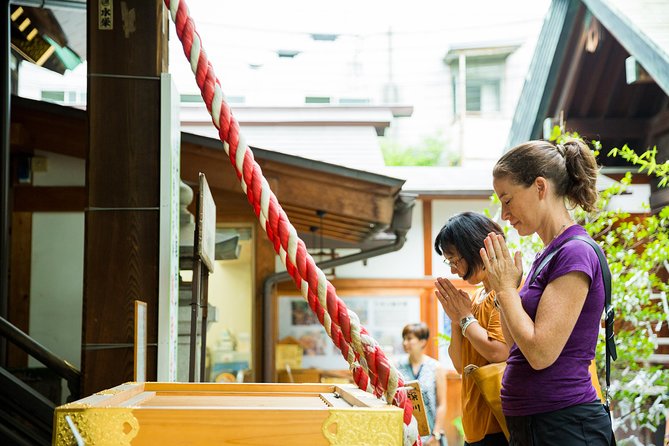
If you need a Japanese kitchen tool, the route may include a stop at a shop selling cooking equipment. This is a useful addition for cooks who want a practical souvenir instead of another decorative item.
The tour also passes through Tsukiji Uogashi, a smaller wholesale market area with many kinds of fresh fish. The planned visit lasts about 30 minutes. It gives you a closer look at the trade side of Tsukiji, though it is not the same as the former inner market.
There is an important scheduling catch. Tsukiji Uogashi is closed on Wednesdays, Sundays, and other market holidays. On those days, some planned samples, including Japanese omelette, fish cake, and fruit, cannot be served because the relevant shops are closed.
That means the day of the week affects the experience more than you might expect. If you have a choice, choose a day when the wholesale area is open and the full range of stalls is operating.
The tasting menu, from Wagyu to seafood bowls
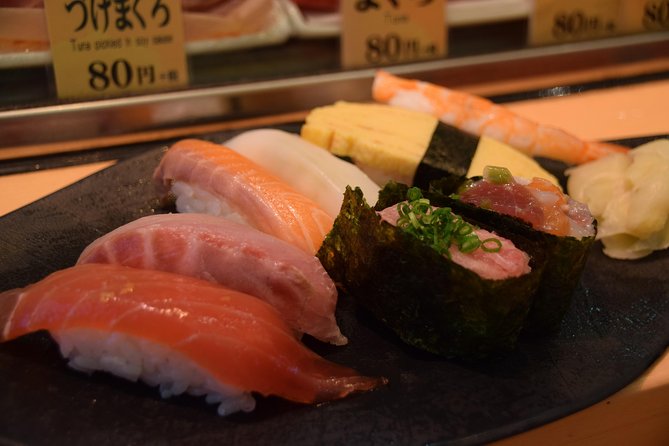
The tasting lineup is broad rather than fixed. You may try high-grade Wagyu beef on a skewer, tuna, fish cakes, Japanese omelette, seasonal fruit, dashi soup, green tea, sushi, or a seafood bowl. The final meal is either sushi or a seafood bowl, depending on the day and time.
This variety is one of the tour’s best features. Even if you already eat sushi, you may discover foods you would not have ordered on your own. Squid and eel sushi have been memorable choices for some people, while others have especially enjoyed tempura or the Wagyu skewer.
The final restaurant stop can be the most substantial food of the morning, but expectations need managing. One person found the meal stop too tourist-oriented, while another praised a sashimi lunch at Moritaya and a sushi preparation demonstration. Your experience will depend on the assigned guide, the restaurant used that day, and the available menu.
You may also watch fish being prepared and, on some routes, make your own sushi. Those activities add value because they turn lunch into a lesson in technique. Still, the description of the tour should not be read as a promise of unlimited food. One critical assessment found the experience closer to looking at and discussing food than to a large food crawl.
I would not arrive starving. Eat a light breakfast if needed, then enjoy the tasting stops without putting pressure on them to provide a full day’s food.
How much value do you get for $99.49?
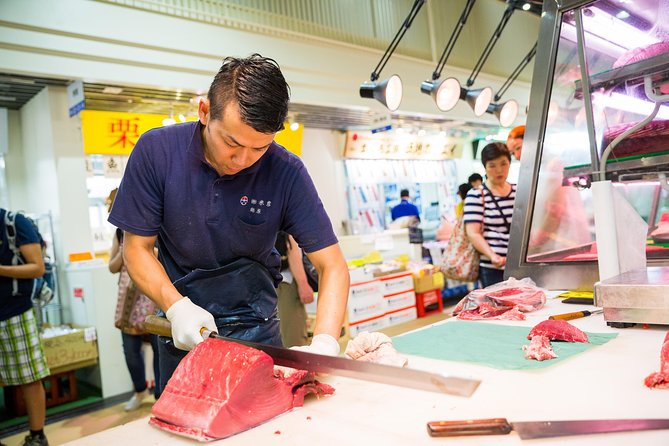
At $99.49 per person, this is not a bargain if you measure the cost only by the number of bites. You can visit Tsukiji independently and buy individual snacks for less.
The value comes from three things: navigation, explanation, and access to a planned range of tastings. A guide can show you where to look, explain unfamiliar ingredients, handle the route through crowded lanes, and add cultural context that is hard to gain by wandering.
The price makes more sense for a first visit to Tokyo, a food-focused morning, or a traveler who feels unsure ordering seafood in Japan. It also suits anyone who wants to combine eating with history and shopping rather than simply sit down for lunch.
It is less compelling if you are already comfortable at Tsukiji, speak Japanese, or mainly want the lowest-cost way to eat. Independent visitors can spend more time at their favorite stall and choose exactly what they want.
The reported rating of 4.9 from 3,184 reviews, with 97 percent recommending the experience, suggests that most people find the guide-led format worthwhile. I would still read the food restrictions and market closure notes carefully before booking, since a high average score cannot fix a poor match with your interests.
Group size, pace, and guide differences
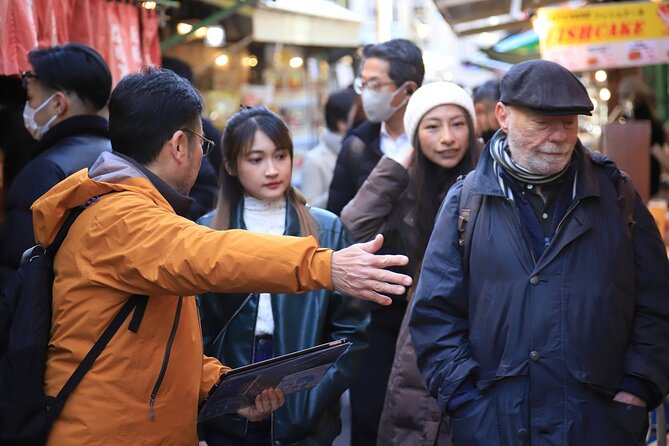
The maximum group size is 20, though some departures are much smaller. A four-person group is easier to hear and move through narrow market lanes than a full group. It also allows more room for shopping or questions.
Guide style is important. Many guides have been praised for being warm, clear, and helpful. Hanako has been valued for steering people toward good food and introducing them to the temple. Sean has been described as informative and fun. Joy has made the walk friendly even for someone practicing very basic Japanese.
But guide quality is not perfectly uniform. Some participants have found a guide too young, slow, or lacking energy. Another person found the explanations hard to follow. Since the tour depends heavily on the individual leading it, keep your expectations realistic. The food and route provide the setting, but the guide shapes the morning.
The walk is suited to people with moderate physical fitness. There is no hotel pickup, and transportation to the temple is your responsibility. The tour ends back at the meeting point, which makes it easy to continue exploring Ginza or the rest of Tsukiji afterward.
Who should book this Tsukiji experience?
I would recommend it to first-time visitors who want a gentle introduction to Japanese seafood and market manners. It is also a good choice for curious eaters who want to try fish cakes, uni, eel, squid, seafood bowls, or ingredients they might skip alone.
It works well for couples and families who want a shared activity at the start of the day. The pace can be adjusted in a small group, and one guide, Mieko, has been praised for setting a comfortable pace for an older parent.
This is not suitable if you cannot eat fish. The provider does not accommodate vegetarian, halal, gluten-free, or allergy-related requests. The minimum drinking age is 20, with another drink offered to anyone younger.
Should you book it?
Book this tour if you want a guided food-and-culture walk, not simply a meal. You will get the most from it if you are willing to try unfamiliar seafood, listen to market stories, and accept that the tastings are samples rather than a giant breakfast.
Skip it if you mainly want the old wholesale auction, need strict dietary accommodations, or prefer to choose every dish yourself. For everyone else, $99.49 buys a useful introduction to Tsukiji, especially when the guide is as good as Kiyo, Shoko, Masa, Yuki, or Naz. Cancel at least 24 hours before the start for a full refund, and arrive early at the main gate.
FAQ
Where does the tour meet?
The meeting point is the main gate of Tsukiji Honganji Temple at 3-chōme-15-1 Tsukiji, Chuo City, Tokyo 104-8435, Japan.
Does the tour meet at the front or back of the temple?
Meet at the front, main gate of Tsukiji Honganji Temple. Some map directions lead to the back side, so check your route carefully.
How long does the tour last?
The tour lasts approximately three hours.
What food is included?
Lunch and snacks are included. Possible tastings include Wagyu beef, tuna, fish cakes, Japanese omelette, seasonal fruit, dashi soup, green tea, and sushi or a seafood bowl.
Will the final meal be sushi or a seafood bowl?
The meal depends on the day and time. The tour provides either sushi or a seafood bowl.
Is the old inner wholesale fish market included?
The tour visits the outer Tsukiji Market and Tsukiji Uogashi. The former inner wholesale fish market is now located elsewhere.
Is Tsukiji Uogashi open every day?
No. Tsukiji Uogashi is closed on Wednesdays, Sundays, and other market holidays.
What should I wear?
Wear comfortable walking shoes because the experience is mainly a walking tour.
Can the tour accommodate vegetarian or allergy-related requests?
No. Vegetarian, halal, gluten-free, and allergy-related requests cannot be accommodated. You must be able to eat fish to join.
What is the cancellation policy?
You can cancel at least 24 hours before the start time for a full refund. Cancellations, changes, and late arrivals within 24 hours are not refundable.
More Fish Market Walks in Tokyo
- Tokyo Sushi Making Class in Tsukiji with Professional Chef
★ 5.0 · 1,177 reviews - Tsukiji Fish Market: Street Food & Culture Walking Tour
★ 5.0 · 669 reviews - Tsukiji Fish Market Small-Group Food Walking Tour
★ 5.0 · 621 reviews - Tokyo: Tsukiji Fish Market Sushi Making Class with Pro Chef
★ 4.9 · 506 reviews
More Walking Tours in Tokyo
- Tokyo: Imperial Palace and Shogun Historical Walking Tour
★ 5.0 · 2,251 reviews - Tokyo: Shinjuku Local Bar and Izakaya Guided Walking Tour
★ 4.9 · 1,794 reviews - Tokyo: Asakusa Walking Tour with Sensoji Temple Visit
★ 4.8 · 1,583 reviews - Tokyo Castle & Imperial PalaceーShogun Walking Tour
★ 4.7 · 1,068 reviews
Just added around Tokyo
- Kawagoe Japanese Food Tour : Unagi Kaiseki and Sake near Tokyo★ 5.0 · 30 reviews
- Kawagoe 4hr Private Tour with Licensed Guide (Kawagoe Dep)★ 5.0 · 13 reviews
- Little EDO Sushi Making workshop in Kawagoe★ 5.0 · 18 reviews
- 【R34】Tokyo:Private Daikoku tour in Modified R34★ 4.9 · 92 reviews
- :Tokyo,Shibuya/ Pro Photography in Kimono / English-Friendly★ 5.0 · 26 reviews
- Tokyo:Celebrate Unique Japanese New Year Tradition Festivity★ 3.9 · 20 reviews
- Tokyo: Allstar Food Tour★ 4.7 · 29 reviews
- Tokyo: West-Side Cycling and Food Tour with Guide★ 5.0 · 37 reviews
Fish Market Tours, compared.
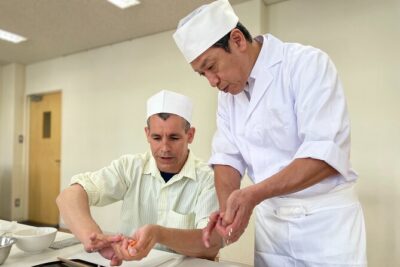
Tokyo Sushi Making Class in Tsukiji with Professional Chef
Our verdict →

Wakayama Cat Train, Seafood market, Hot Springs Tour
Our verdict →
Awesome Private Tour: Tsukiji, Asakusa, Shinjuku, Shibuya
Our verdict →Browse the lists this tour appears in