
Reviewed · TEMPLES & SHRINES
Inside of Fushimi Inari – exploring and lunch with locals
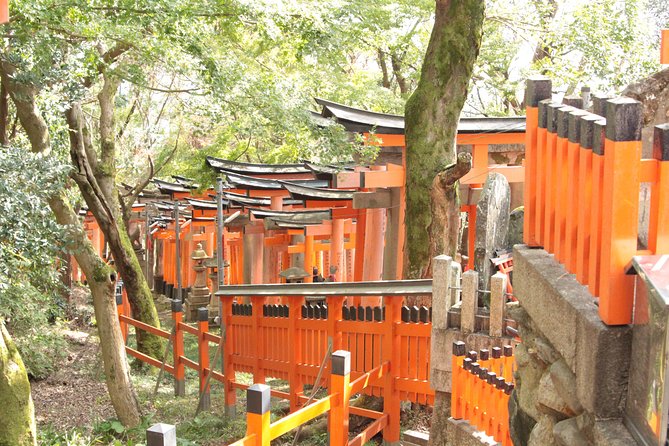
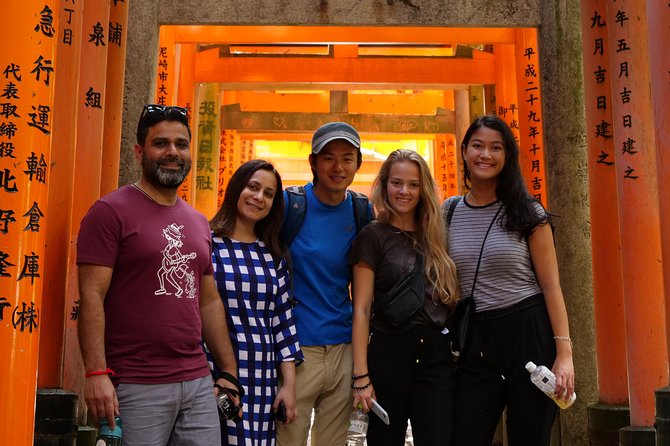
Fushimi Inari is famous for its endless red torii gates, but the best part of this experience is what happens beyond the first crowded stretch. Your English-speaking guide leads you into bamboo and cedar woods, past worship stones, a waterfall, a local factory, and quieter photo spots that most quick visits miss. Ko, Go, Kenji, Yuya, and Taishi are among the guides who lead this walk.
I like the clear local focus and the sensible pace. You get context about Shinto and the shrine, then a real meal of soba and inari sushi rather than a rushed snack near the entrance. The main consideration is simple: this is a hike, with stairs and an uphill route to the 233-meter summit, so comfortable shoes matter.
Key points to know before booking
- Quieter routes beyond the torii gates: Walk through bamboo and cedar forest, with time at less crowded shrines and photo stops.
- A 233-meter summit visit: The uphill section takes about 20 minutes, with stairs and changes in pace.
- A local tea break: Stop at a mountain hut for hot tea and a salted boiled egg.
- A traditional soba lunch: The meal includes Japanese noodle soba and fried sweet sushi called inari sushi.
- Small-group guiding: Groups are limited to 10, making questions and a flexible walking pace easier.
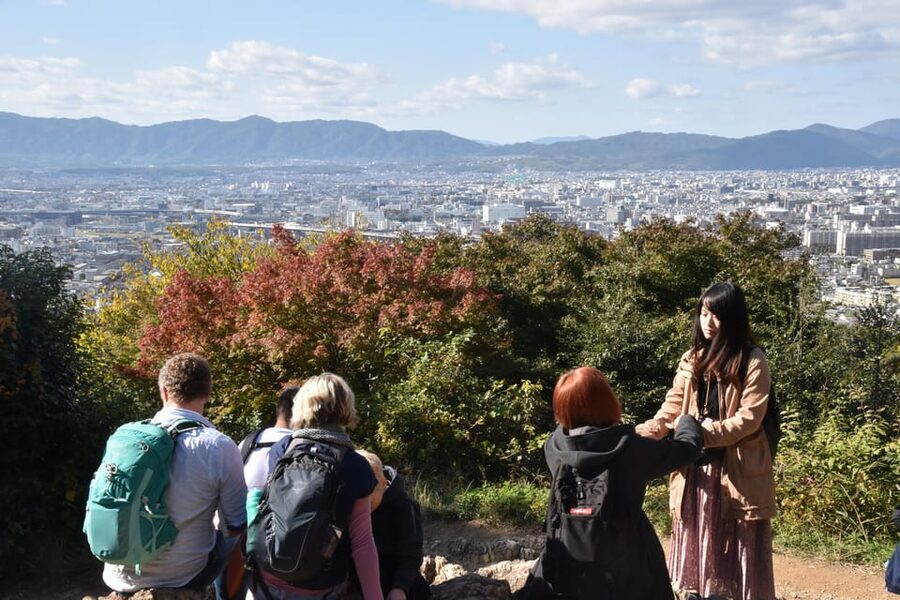
- A useful Kyoto viewpoint: Enjoy a panorama of Kyoto city before heading down for less crowded paths and photographs.
Why this Fushimi Inari walk feels different
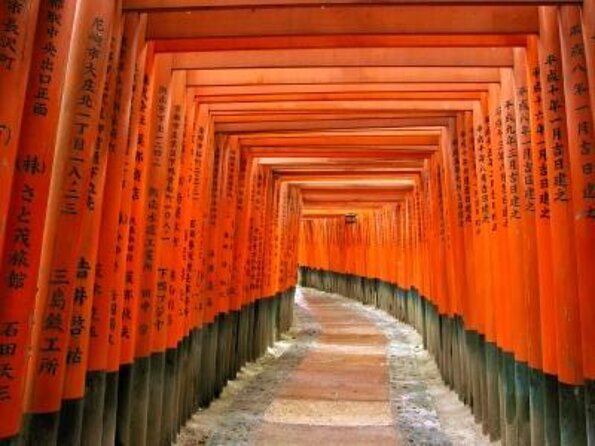
The first red gates at Fushimi Inari are one of Kyoto’s most photographed sights. They are also where many short visits end. This experience uses the famous gates as an introduction, then takes you farther into the mountain shrine complex.
That change matters. Near the entrance, you are looking up at rows of vermilion torii and trying to take a clear photograph between other people. Farther along, the mood becomes quieter. Bamboo and cedar replace much of the urban noise, and your guide can explain why the shrine is important, how its worship traditions work, and what the gates represent.
You are not simply walking through a scenic tunnel. You are learning how Fushimi Inari functions as a religious site, with worship stones, smaller holy places, waterfalls, and summit shrines woven into the forest route. The local viewpoint and lunch also give the four-hour walk a useful rhythm.
More Temple & Shrine Tours in Kyoto
- Kyoto: Fushimi Inari, Kinkakuji, Bamboo Grove 1 Day Bus Tour
★ 4.8 · 4,316 reviews - Kyoto: Tea Ceremony in a Traditional Tea House in Kiyomizu
★ 4.9 · 3,519 reviews - Kyoto: Tea Ceremony Ju-An at Jotokuji Temple
★ 4.9 · 3,207 reviews
Meeting beneath the Great Torii
The meeting point is the stone pillar at the first Great Torii, directly across from the JR Inari Station exit. If you arrive by the Keihan line, Fushimi-Inari Station is about a 10-minute walk away.
This is a practical meeting place because the shrine entrance is easy to recognize, but give yourself enough time to locate the correct stone pillar. The activity finishes at the same spot, so you do not need to work out a new pickup point after lunch.
The group is limited to 10 people. That is small enough for a guide to answer questions and keep an eye on walking speed, without the cost of a private tour. Guides such as Go and Kenji have been praised for giving clear explanations and useful Kyoto suggestions beyond the shrine itself. Taishi has also led groups with an assistant, which can be helpful on a walk with different fitness levels.
Starting with the shrine and thousands of gates
The opening section covers the main shrine and the long lines of red torii. Your guide explains their cultural background and the tradition behind them, giving you more than a photo stop.
Fushimi Inari is dedicated to Inari, a Shinto deity associated with rice, prosperity, and business. The shrine’s torii were donated by individuals, families, and companies, which is why the gates carry names and dates on their backs. A guide can point out details that are easy to miss when you are focused on getting through the crowd.
You will also have time to see the main shrine area before moving into the forest. This is a good arrangement. You get the famous sight first, but the experience does not leave you trapped in the busiest part of the complex for the whole morning or afternoon.
At some points, you may also see local craftsmanship connected to the shrine. One especially memorable possibility is watching a torii maker carve a gate column. That type of encounter gives the visit a direct link to the people who maintain the visual world you came to see. It should be treated as an added possibility rather than the central promise of the tour.
Bamboo, cedar, worship stones, and a waterfall
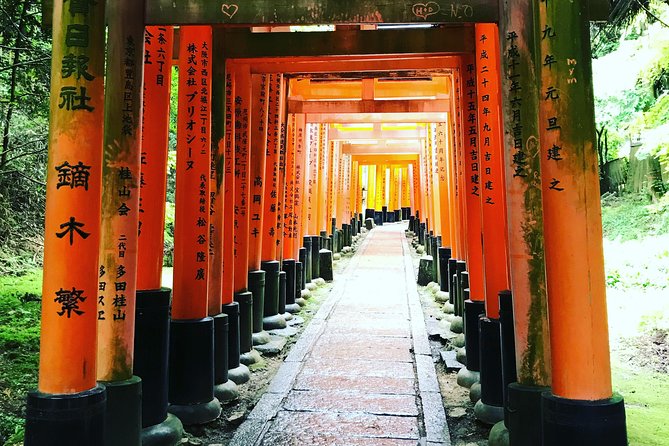
The forest route is the heart of the experience. It is described as easy walking, but easy does not mean flat. You will go up and down stairs, and the full outing includes an uphill section to the summit.
The bamboo and cedar setting changes the feel of the visit. You are still within a major Kyoto attraction, but the trees soften the noise and offer shade. Your guide takes you to authentic holy spots, including worship stones and a waterfall. These places help explain that Fushimi Inari is not only a line of gates. It is a mountain worship site with many points of devotion.
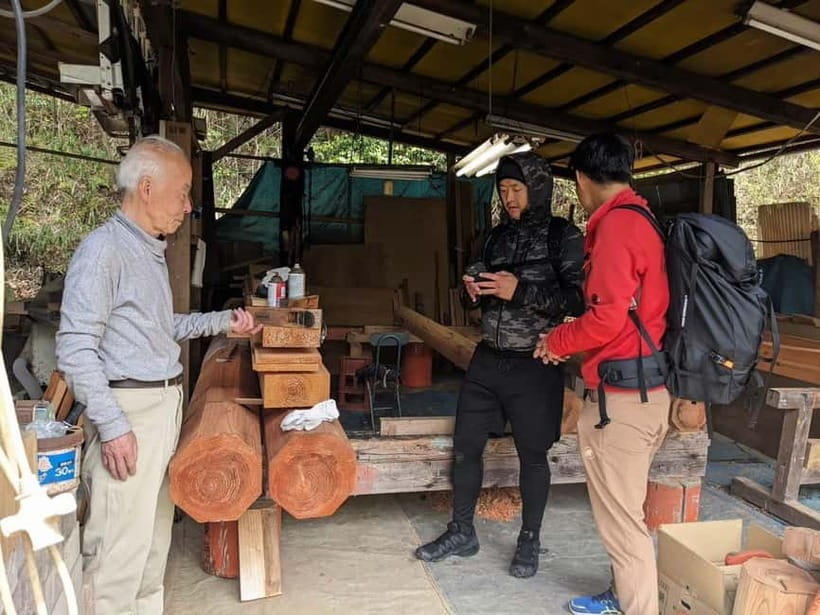
The route can also include a local factory. This is an unusual detail and one of the reasons the experience feels more connected to the neighborhood than a standard shrine walk. You may meet local people along the way, and the guides make space for conversation rather than rushing from one landmark to the next.
Your walking speed affects the schedule. That is worth keeping in mind if you have a train reservation, dinner booking, or another timed activity afterward. The group is encouraged to move at a casual pace, with breaks, but this is still a three-hour hiking section rather than a short stroll.
Same trip, a completely different kind of day:
- PERFECT KYOTO 1-Day Bus Tour
★ 5.0 · 13,518 reviews - Kyoto Geisha Walking Tour: Gion District & Hidden Gems
★ 4.7 · 3,273 reviews - Kyoto: Gion Magical Night Walking Tour with Geisha Trivia
★ 4.9 · 2,393 reviews - Kyoto: 45-Minute Tea Ceremony Lesson Experience
★ 4.3 · 2,378 reviews
The 20-minute climb to the summit shrine
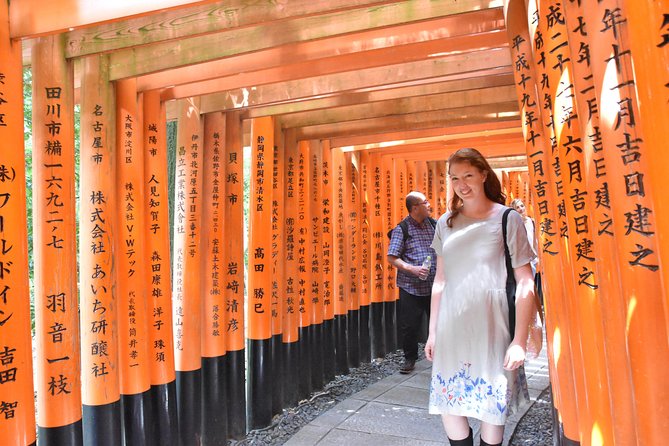
The summit route rises to 233 meters. The uphill stretch takes about 20 minutes, though your exact time will depend on your pace and the group’s pace.
You do not need to treat this as a race. The useful part of having a guide is that you can stop for questions, photos, and short rests while still following a clear route. The stairs are organized, but comfortable shoes are important, especially if the stone or steps feel tiring after several hours.
At the summit shrine, your guide shows you around and explains the site. The summit is not the highest mountain view in Japan, but it gives the Fushimi Inari visit a sense of completion. You have followed the gates upward, passed through the forest, and reached the upper shrine instead of turning around after the first popular section.
For many people, this is the most active part of the experience. If you are comfortable with moderate walking and stairs, it should be manageable. If you dislike hills or need a completely level route, this is the main reason to choose another activity.
Photo stops away from the main crowd
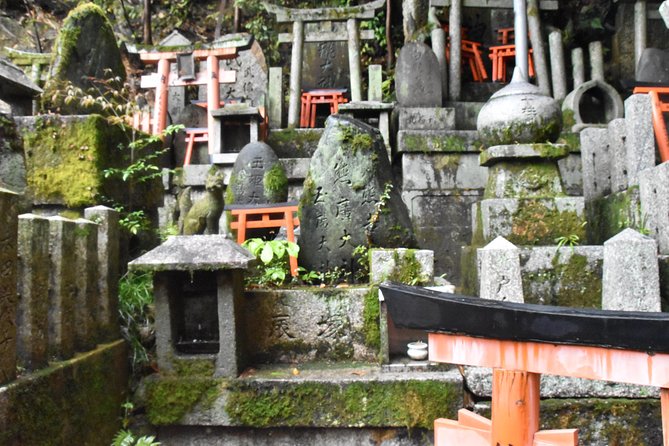
On the way down, the guide points out photogenic places that are usually less crowded. This is one of the strongest practical reasons to join with a local guide.
At Fushimi Inari, the famous torii corridor can be hard to photograph clearly. A guide who knows alternative paths can save you time and help you focus on composition instead of simply following the largest group. You may find better views of the gates, forest, and shrine details away from the most obvious stopping points.
The photo section also gives you a different pace for the descent. Rather than treating the downhill walk as a return trip, you have a reason to pause and look around. Bring a hands-free backpack so your hands remain free for stairs, walking poles if you use them, and photography.
Tea, a boiled egg, and Kyoto from above
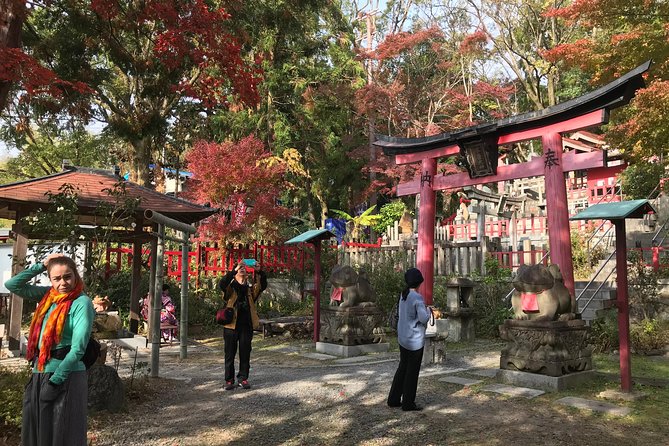
The mountain hut stop is a small detail, but it improves the walk. You receive Japanese hot tea and a boiled egg with salt, and vegan options are available for the snack.
This is not a full meal, and it is not meant to be. It is a useful break before or after the summit section, depending on the timing. The tea gives you a chance to rest while taking in the view, and the egg provides a little substance during the hike.
You also get a panorama of Kyoto city from the viewpoint. The city view puts the shrine’s wooded mountain setting into perspective. After spending time among gates and trees, you can look back toward the wider city before continuing down.
The included food and drink add real value to the price. You are not paying only for an explanation at the entrance. You receive a mountain refreshment, guiding for four hours, access to quieter routes, and a sit-down local lunch.
Soba and inari sushi at a traditional restaurant
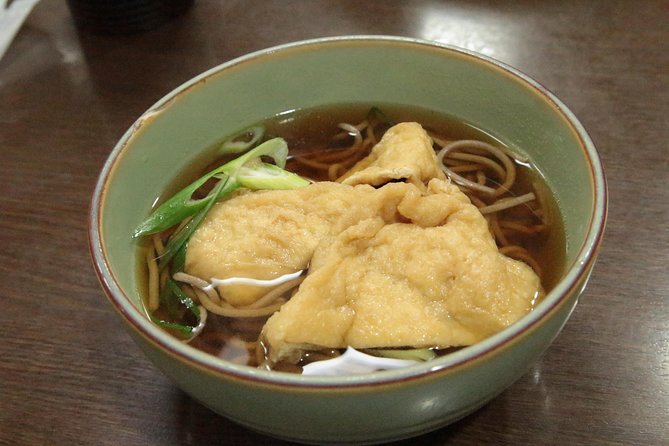
Lunch is Japanese noodle soba and inari sushi. The soba is served at a traditional local restaurant, and the inari sushi is a fitting choice near Fushimi Inari because it is made with sweet fried tofu pouches.
The meal lasts about 30 minutes. That is long enough to sit down and eat, but it is not an extended food tour. Drinks at the restaurant are not included, so budget for those separately if you want something beyond the included tea.
Dietary needs can be accommodated, including vegan and vegetarian options, but you must tell the operator in advance. This is important. Do not wait until you are seated to mention a restriction. The included snack also has vegan options, but advance notice remains the sensible choice.
Lunch gives the tour a more local shape. You are not simply finishing at a gate and searching for food while tired from the stairs. The meal is built into the experience, and it offers a chance to ask your guide about other places to eat in Kyoto. Kenji and Go, for example, have offered restaurant suggestions for the rest of a stay.
What the $67 price really covers
At $67 per person, this is good value if you want more than the standard Fushimi Inari photo stop. The price includes a four-hour English-guided experience, the shrine and forest walk, summit visit, photo stops, tea, a boiled egg, soba lunch, and inari sushi.
The small group also matters. A group of up to 10 is large enough to keep the price below a private tour while still allowing direct conversation. You are paying for local route knowledge as much as for the food.
The value is weaker if you planned to walk through Fushimi Inari on your own and only wanted a quick look at the lower gates. The shrine itself is free to visit, and independent visitors can explore at no cost beyond food and transport. This activity earns its price through interpretation, quieter routes, the mountain break, local contact, and the meal.
Free cancellation up to 24 hours before the start and reserve-now, pay-later booking make it easier to fit into a changing Kyoto schedule. Starting times vary, so check availability for your date.
Who should book this experience
I would choose this for a first or second visit to Fushimi Inari when you want to understand the site rather than simply photograph it. It also suits you if crowded paths make you uneasy, since the route includes quieter forest sections and less crowded photo spots.
It is a good match for people who enjoy a moderate walk, local food, and short cultural explanations. The small group is useful for families with older children, couples, solo visitors, and anyone who prefers asking questions without a large crowd around the guide.
You should think twice if you want a flat sightseeing route, dislike stairs, or have only a narrow time window. The schedule changes with walking speed, and the hiking portion takes about three hours. You should also wear comfortable clothing and shoes, and bring a hands-free backpack.
Final verdict: a better way to see Fushimi Inari
Book this tour if you want the red gates plus the quieter mountain that lies behind them. The strongest features are the local routes, the summit shrine, the Kyoto viewpoint, the tea and egg break, and a proper soba lunch.
Skip it if your plan is only to see the first torii corridor for an hour. But if you have four hours and can handle stairs, this experience gives you a fuller picture of Fushimi Inari, with useful cultural context and a meal that makes the outing feel connected to Kyoto rather than built around a single photograph.
FAQ
How long does the Fushimi Inari experience last?
The experience lasts four hours. About three hours are set aside for hiking, with roughly 30 minutes for lunch and time for the tea break, views, explanations, and photo stops.
Where do I meet the guide?
Meet at the stone pillar beside the first Great Torii, across from the JR Inari Station exit. The tour finishes at the same location.
How far is the meeting point from Fushimi-Inari Station on the Keihan line?
The meeting point is about a 10-minute walk from Fushimi-Inari Station on the Keihan line.
Is the tour conducted in English?
Yes. The tour has a live English-speaking guide.
How large is the group?
The group is limited to 10 participants.
Does the route reach the summit of Fushimi Inari?
Yes. The route goes to the summit shrine at 233 meters. The uphill route takes about 20 minutes, depending on walking speed.
Is this a difficult hike?
The paths are well organized and the pace is casual, but you will walk up and down stairs. Comfortable clothes and shoes are recommended, and the full hiking section lasts about three hours.
What food is included?
Lunch includes Japanese noodle soba and inari sushi. The mountain tea break includes Japanese hot tea and a salted boiled egg.
Are vegan, vegetarian, or allergy-friendly options available?
Yes. Options are available for vegan diets, vegetarian diets, allergies, and other dietary restrictions. Tell the operator in advance.
Are drinks at the lunch restaurant included?
No. Drinks at the lunch restaurant are not included. The included drink is Japanese hot tea at the mountain hut.
Can I cancel for a full refund?
You can cancel up to 24 hours in advance for a full refund.
Just added around Kyoto
- Sekka Cotton Furoshiki Class★ 5.0 · 19 reviews
- Kyoto Sword Experience – includes Museum Ticket/Ninja Experience★ 4.5 · 149 reviews
- Scenic Green Tea Fields of Hidden Kyoto & Local Tea Exp (Private)★ 5.0 · 32 reviews
- Secret Eastern Kyoto Biking Adventure★ 5.0 · 44 reviews
- Private Sake Tasting in Central Kyoto with Sake Sommelier★ 5.0 · 32 reviews
- Samurai School in Kyoto: Samurai for a Day★ 5.0 · 202 reviews
- SHIRAKAWA Japanese Culture Experiences with private English staff★ 5.0 · 16 reviews
- A Privately Guided Photoshoot in Beautiful Kyoto by a Pro★ 5.0 · 18 reviews
Temples & Shrines, compared.

Tea Ceremony in a Traditional Tea House in Kiyomizu
Our verdict →

Meiji Shrine, Asakusa, Skytree Bus Tour and Cruise
Our verdict →
Fushimi Inari Hidden Hiking Tour (Private Option Available)
Our verdict →
Osaka/Kyoto:Kinkakuji,Arashiyama,FushimiInariShrine,NaraPark
Our verdict →
Nikko: Kegon Falls, Lake Chuzenji & Toshogu Temple
Our verdict →
Kamakura & Enoshima Day Trip including Temple Tickets
Our verdict →Browse the lists this tour appears in