
Reviewed · FISH MARKET TOURS
Tokyo: Tsukiji Fish Market Food and Walking tour
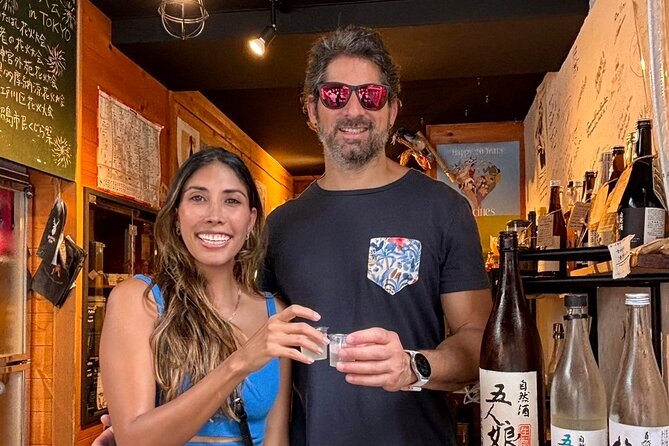
Tsukiji is easiest to enjoy when someone else helps you read the signs, choose the stalls, and keep you moving through the crowds. This two-hour food walk lets you pick only the dishes you want, from seafood and sushi to fruit, tamagoyaki, fried fish cakes, and wagyu beef.
I like the flexible pace and the small maximum of 10 people. I also like that guides such as Rie, Haydn, Jim, Minori, and Sayaka do more than point at food. They explain ingredients, shopping habits, and local customs. The main catch is simple: food is not included, and the opening temple visit may feel like time taken from the market if your priority is eating.
Key points to know before you book
- Choose your own food: There is no fixed tasting menu, so you pay only for the dishes you want.
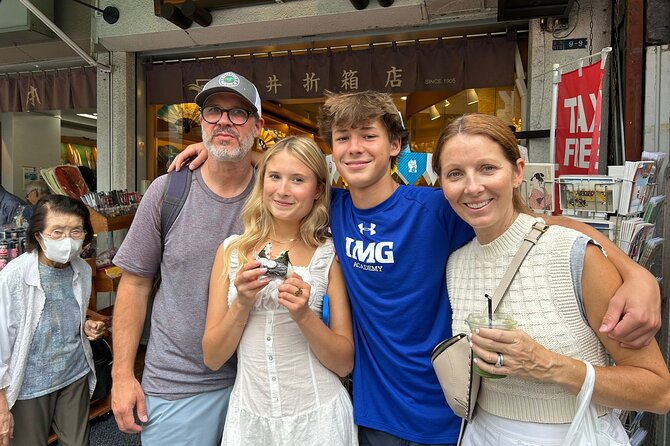
- A guide makes Tsukiji easier: The market can be confusing, and guides help you find stalls without wandering at random.
- The temple comes first: You spend about 30 minutes at Tsukiji Hongwanji Temple before reaching the food market.
- Bring Japanese yen: Food and drinks cost extra, and cash is needed for purchases. Around ¥10,000 gives you useful spending room.
- Small groups help: The tour accepts no more than 10 people, which makes it easier to ask questions and agree on what to try.
- It ends where it starts: The meeting point is the Starbucks near Tsukiji Station.
Why a guide helps at Tsukiji
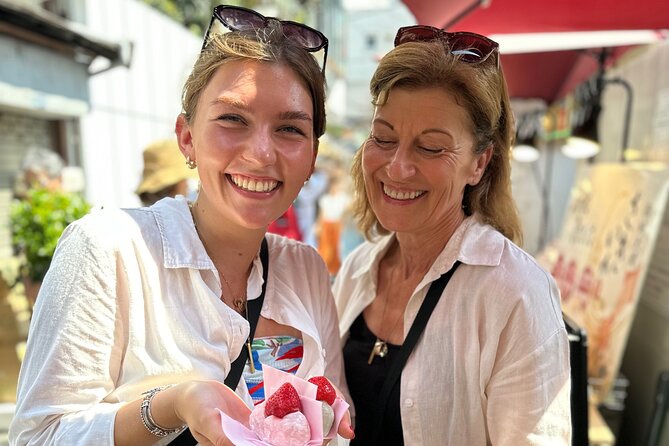
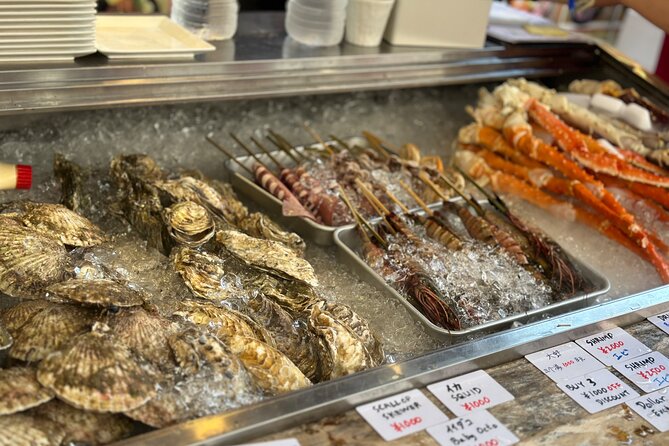
Tsukiji can look simple on a map, but the market area spreads across many lanes, counters, and small shops. You may see seafood, produce, Japanese snacks, kitchen goods, and prepared food within a few minutes of one another. The hard part is knowing what deserves your time and how to order without slowing the flow of people around you.
That is where this tour earns its modest price. You get a local Japanese English-speaking guide who can explain what you are looking at and suggest where to spend your money. Guides have included Rie, Haydn, Jim Allen, Nicolas, Minori, Sayaka, Shino, Yayoi, and Joe. Your guide will vary, but the strongest experiences come from guides who know the stalls and adjust the walk to the group.
I like the absence of a set menu. A fixed tasting list sounds convenient, but it often leaves you paying for food you do not want. Here, you can skip sea urchin, try eel, choose sushi, or spend more on fruit and an omelet instead. You remain in control of both your appetite and your bill.
This setup also works well for families and mixed groups. One person can try raw seafood while another chooses a cooked snack. You might want to taste a little of everything, or you might prefer one carefully chosen dish. The guide can help either way.
More Market Tours in Tokyo
- Tokyo Tsukiji Fish Market Food and Culture Walking Tour
★ 5.0 · 3,184 reviews - Tokyo: Tsukiji Fish Market Guided Walking Tour
★ 4.9 · 1,397 reviews - Tsukiji Fish Market Guided Tour and Sushi Making with Pro Chef
★ 5.0 · 775 reviews
Starting at Tsukiji Hongwanji Temple
The walk begins at Tsukiji Hongwanji Temple, about a 30-minute stop. The temple is included in the admission, and its unusual architecture gives you a quick change of pace before the market.
This is not a random detour. It provides a little context for the neighborhood and gives the guide a calm place to explain local customs, history, and the area around Tsukiji. Haydn, for example, received praise for making the temple stop interesting before leading the group toward the food stalls. Other guides have also used the temple to introduce Japanese culture before the eating begins.
Still, this first stop will not suit everyone. If you booked the walk mainly to eat, 30 minutes at a temple may seem long. One guest felt the group could have skipped it and gone straight to the market. I would choose this tour for the temple as well as the food, but I would choose a market-only walk if every minute needs to focus on stalls.
The meeting point is Starbucks Coffee near Tsukiji Station, at 2-chome 12-8 in Chuo City. Give yourself enough time to find the café and guide. The activity returns to the same meeting point, so you do not need to plan a separate pickup at the end.
Entering Tsukiji Fish Market
The main market portion lasts about an hour. This is where the guide helps turn a crowded food area into a manageable walk.
Tsukiji is famous for its fish trade and its past tuna auctions. The tour uses that setting to explain how seafood and other ingredients fit into Japanese cooking. You may learn about items used for sushi, local dishes, and everyday meals while walking from one food counter to another.
The experience is not a formal market lecture. It is a moving, eating tour. You will stop at places that offer something appealing, listen to an explanation, decide if you want to buy, and continue. The pace depends partly on the group. That flexibility is useful, but it also means the exact food stops are not fixed in advance.
Guides have helped people try foods they might not have selected alone. Rie encouraged one group to sample sea urchin and eel, both of which turned out to be popular choices. Other meals included sushi, wagyu beef, fresh seafood, Japanese omelets, fruit, and fried fish cakes.
You do not need to order every item. In fact, you should not feel pressured to do so. The tour works best when you treat the guide as a food translator and local scout, not as someone handing you a compulsory list of tastings.
The market can be crowded, so expect to walk and stand. This is not a seated meal. You may eat at small counters or while moving between shops, depending on the stall and the group. Wear comfortable shoes, keep your belongings close, and avoid arriving with a large breakfast if you want to sample several items.
Tsukiji Jogai Market and the food stalls
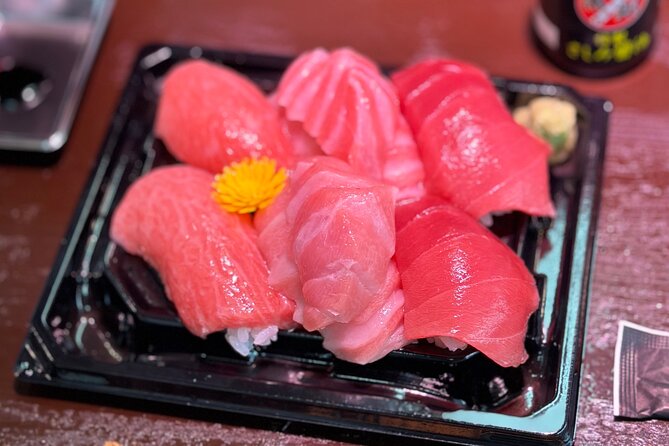
The final 30 minutes take place in Tsukiji Jogai Market, the outer market area packed with seafood shops, food counters, and small stores. This is likely to be the most appealing part for anyone who wants Japanese street food and market atmosphere.
The word flexible matters here. You can show the guide what catches your eye, ask about unfamiliar ingredients, and decide where to spend your remaining budget. The guide can also steer you away from poor-value purchases. Haydn was specifically praised for pointing out what seemed worth the money, while Rie helped people find similar products at lower prices instead of paying tourist-level prices.
That advice can make a bigger difference than the $30 tour fee. Markets often contain excellent food beside expensive food. Without help, you may buy the first attractive item you see, then discover a better choice a few steps later. A guide who knows the vendors can help you spend carefully.
The 30-minute schedule is short, so do not expect to inspect every lane. If you become absorbed in one shop, you may need to keep moving. The tour is designed as an introduction, not a full morning of independent shopping.
You will also want to keep your food expectations realistic. The tour includes access to the market areas, but it does not include a meal or any tasting allowance. Every sushi plate, fruit portion, snack, or drink comes from your own wallet.
More Walking Tours in Tokyo
- Tokyo: Imperial Palace and Shogun Historical Walking Tour
★ 5.0 · 2,251 reviews - Tokyo: Shinjuku Local Bar and Izakaya Guided Walking Tour
★ 4.9 · 1,794 reviews - Tokyo: Asakusa Walking Tour with Sensoji Temple Visit
★ 4.8 · 1,583 reviews - Tokyo Castle & Imperial PalaceーShogun Walking Tour
★ 4.7 · 1,068 reviews
What the ¥30 price really covers
At $30 per person, the tour is reasonably priced for a small guided walk in central Tokyo. The price covers the English-speaking guide, the temple and market visits, and help navigating an area that can be difficult to read at first glance.
It does not cover food. This is the most important budget detail. One practical suggestion is to carry around ¥10,000 in cash for market purchases. You may spend less, especially if you choose only a few tastings, but having enough yen lets you make decisions based on appetite rather than cash limits.
The flexible food arrangement can make the tour cheaper than a fixed tasting experience. If you want a full meal, however, your total cost will rise above the advertised price. Sushi, wagyu beef, premium seafood, and several small snacks can add up quickly.
I see the value in paying for direction rather than for a preselected plate. The guide can help you compare prices, explain ingredients, and avoid stalls that do not suit your tastes. If you are already comfortable ordering in Japanese and have plenty of time to explore on your own, you may prefer to skip the guide and spend the full budget on food.
The guides make the biggest difference
The tour is built around people, so the guide affects the quality of the morning. The strongest guide experiences described by the available feedback share a few traits: clear English, patience, good market relationships, and an ability to adjust to the group.
Rie has been especially effective with food choices and market navigation. She has encouraged cautious eaters to try eel and sea urchin, while also pointing out places where similar goods cost less. Haydn has been praised for his explanations at the temple and for guiding groups through the crowded market without stress.
Jim Allen brings a cultural angle and has been singled out for his unusual perspective on Japan. Minori has combined food suggestions with explanations of Japanese history and customs. Sayaka has been described as funny and kind, while Shino has used her cooking background to explain ingredients and make good use of the limited time.
These names are useful when reading recent availability, but you cannot count on a particular person unless the booking gives you that option. The overall quality can vary. One group found the tour poorly organized and felt it offered too little information about the market itself. That is a fair warning: this is a casual walking and tasting experience, not a specialist seafood seminar.
Who will enjoy this food walk most
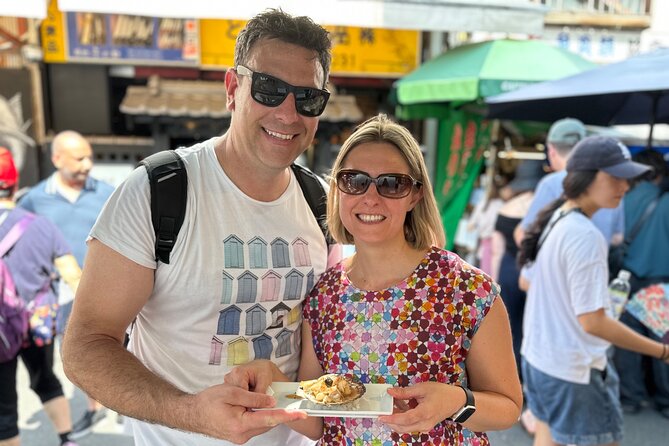
I would recommend it to a first-time visitor who wants to see Tsukiji but does not know where to begin. You get a quick introduction to the temple, a guided route through the market, and the freedom to choose your own food.
It also suits:
- Solo visitors who want company while trying unfamiliar dishes.
- Families who need a flexible choice of cooked and raw foods.
- Food-focused visitors who want help finding sushi, seafood, fruit, omelets, and snacks.
- People short on time who want a two-hour orientation instead of a long independent visit.
- Cautious eaters who want explanations before ordering something new.
I would hesitate to recommend it to someone who wants a long, detailed account of seafood auctions or market operations. The tour gives you some history and culture, but the focus is on walking, choosing, and eating.
It may also disappoint you if you expect all food to be included. The $30 fee is for the guide and market access, not a complete meal.
Timing, group size, and practical comfort
The tour lasts about two hours, divided into roughly 30 minutes at the temple, one hour at Tsukiji Fish Market, and 30 minutes at Tsukiji Jogai Market. That is enough time to get your bearings and sample several items, but not enough for a relaxed look at every shop.
The maximum group size is 10. That is small enough for questions and group decisions, though the market itself may still feel crowded. A smaller group can move more easily, especially when buying food at narrow counters.
Most people can take part, and service animals are allowed. The walk is near public transportation. You should expect standing and walking, but the experience is described as not especially strenuous.
Bring cash. The food stalls may not accept cards, and the advertised tour price does not cover purchases. Also remember that the group must keep to a shared schedule. If you stop to examine every product, you may hold up the walk.
You receive confirmation at booking, and free cancellation is available up to 24 hours before the start time. Changes or cancellations inside that window are not accepted for a refund.
Is the Tsukiji tour worth booking?
I would book this tour if you want an easy first look at Tsukiji and value a guide who can help you choose food. The best part is not simply getting into the market. It is having someone point out what an item is, explain how it fits Japanese cooking, and help you avoid spending blindly.
Bring around ¥10,000, arrive ready to walk and stand, and treat the menu as your own decision. You can try a little of everything or concentrate on the foods that interest you most.
Skip it if you want a market-only route with no temple stop, a detailed seafood-industry lecture, or a meal included in the price. For everyone else, the combination of small-group guidance, flexible eating, and a return to the same meeting point makes this a practical introduction to one of Tokyo’s best-known food areas.
FAQ
How long does the Tsukiji food tour last?
The tour lasts approximately two hours.
What places does the tour visit?
It visits Tsukiji Hongwanji Temple, Tsukiji Fish Market, and Tsukiji Jogai Market.
Is food included in the tour price?
No. Food and drinks are not included. You choose and pay for any dishes you want to eat.
How much does the tour cost?
The listed price is $30 per person.
How much cash should I bring for food?
A practical suggestion from the tour information is to bring around ¥10,000 for food purchases. You may spend less if you choose only a few items.
What foods might I try?
Possible foods include fresh seafood, sushi ingredients, fruit, Japanese omelets, fried fish cakes, eel, sea urchin, and wagyu beef.
Where does the tour begin?
It begins at Starbucks Coffee near Tsukiji Station, at Japan, 104-0045 Tokyo, Chuo City, Tsukiji, 2-chome 12-8, on the first floor of the Taiko Building.
Where does the tour end?
The activity ends back at the meeting point.
How large is the group?
The tour has a maximum of 10 participants.
More Food & Drink in Tokyo
- Tokyo: Shinjuku Food Tour (13 Dishes at 4 Local Eateries)
★ 5.0 · 6,603 reviews - Tokyo: Shinjuku Food Tour (15 Dishes and 4 Eateries)
★ 4.9 · 2,033 reviews - Best of Shinjuku: Izakaya Food Tour (4 Stops, 14+ Tastings)
★ 5.0 · 1,863 reviews - Eat and Drink Like a Local: Tokyo Ueno Food Tour-Taverns&Ramen
★ 5.0 · 957 reviews
More Fish Market Walks in Tokyo
- Tokyo Sushi Making Class in Tsukiji with Professional Chef
★ 5.0 · 1,177 reviews - Tokyo: Tsukiji Fish Market Food and Culture Walking Tour
★ 4.7 · 757 reviews - Tsukiji Fish Market: Street Food & Culture Walking Tour
★ 5.0 · 669 reviews - Tsukiji Fish Market Small-Group Food Walking Tour
★ 5.0 · 621 reviews
Just added around Tokyo
- Kawagoe Japanese Food Tour : Unagi Kaiseki and Sake near Tokyo★ 5.0 · 30 reviews
- Kawagoe 4hr Private Tour with Licensed Guide (Kawagoe Dep)★ 5.0 · 13 reviews
- Little EDO Sushi Making workshop in Kawagoe★ 5.0 · 18 reviews
- 【R34】Tokyo:Private Daikoku tour in Modified R34★ 4.9 · 92 reviews
- :Tokyo,Shibuya/ Pro Photography in Kimono / English-Friendly★ 5.0 · 26 reviews
- Tokyo:Celebrate Unique Japanese New Year Tradition Festivity★ 3.9 · 20 reviews
- Tokyo: Allstar Food Tour★ 4.7 · 29 reviews
- Tokyo: West-Side Cycling and Food Tour with Guide★ 5.0 · 37 reviews
Fish Market Tours, compared.
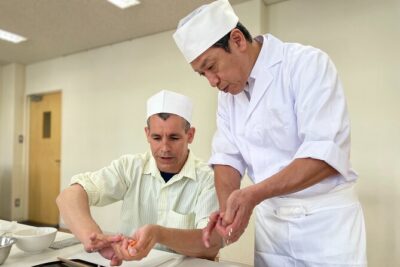
Tokyo Sushi Making Class in Tsukiji with Professional Chef
Our verdict →

Wakayama Cat Train, Seafood market, Hot Springs Tour
Our verdict →
Awesome Private Tour: Tsukiji, Asakusa, Shinjuku, Shibuya
Our verdict →Browse the lists this tour appears in