
Reviewed · HISTORICAL TOURS
Nagasaki WW2 History and Culture Tour
Nagasaki’s wartime story reaches far beyond the Atomic Bomb Museum. This private day with guide Shannon Lefebvre links the city’s peace sites with little-known military remains, a sake brewery, Hasami ceramics, a shrine, and the fast-moving waters at Saikai Bridge. You get a much broader sense of Nagasaki than a museum visit alone can provide.
I like the small private format, which lets your group spend more time at places that catch your interest. I also like the practical inclusions: lunch, water, other drinks, private air-conditioned transport, WiFi, and admission to the Atomic Bomb Museum and Mount Inasa Observation Deck. The main drawback is the long day and wide route. Seven to nine hours in a vehicle can feel demanding, and the non-refundable booking requires good weather.
Key points to know before booking
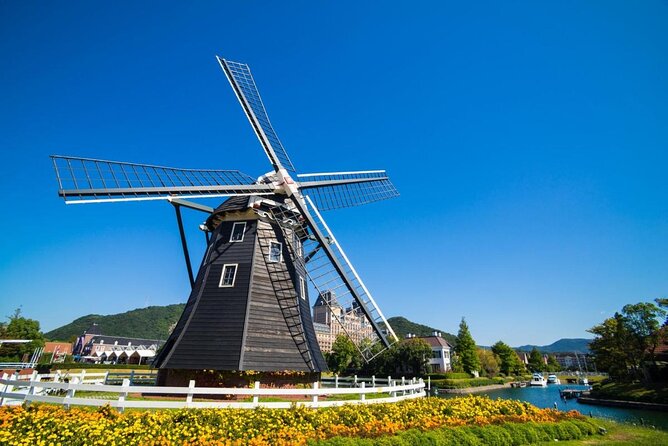
- See wartime sites most visitors miss: Hario Radio Tower and Katashima Torpedo Base Ruin add serious historical weight beyond the city center.
- Pair difficult history with daily culture: Hasami ceramics, Umegae Sake Brewery, and Sohonzan Shrine give the day a wider view of Nagasaki life.
- A true private tour: Your group of up to three has the vehicle and guide to itself.
- Meals and drinks are handled: Lunch may be served on the go or as a picnic, with still and sparkling water plus alcoholic and nonalcoholic beverages provided at certain times.
- Two major admissions are included: You do not pay extra for the Atomic Bomb Museum or Inasayama Observation Deck.
- Plan for weather: The experience requires good weather, so the operator offers another date or a full refund if poor conditions force cancellation.
A full day that connects Nagasaki’s past and present
This is not a simple city sightseeing circuit. The route moves through Nagasaki Prefecture, so you see how the region’s wartime role, religious traditions, craft industries, food, and scenery fit together.
That broad approach is the tour’s strongest quality. The Atomic Bomb Museum gives you the central historical account, but the radio towers, air-raid shelter, and torpedo base show how the war reached into smaller communities. Then the shrine, brewery, ceramics center, and mountain view remind you that Nagasaki is not defined only by its tragedy.
Shannon’s role matters here. The day includes places that can be hard to find alone, including the Hario transmission site and Katashima’s former military training facilities. Previous groups also included two local Nagasaki residents who had not visited some of the stops, which tells you something about how far this route goes beyond the standard city circuit.
Because this is a private tour for up to three people, you can ask questions as you go and adjust the pace within the day’s limits. That is useful at a subject as heavy as wartime Nagasaki. You may want more time at the museum, or you may need a quiet break after it. A private guide can respond more easily than a large group tour.
More Historical Tours in Nagasaki:
- Taste Local Life: Nagasaki’s Historical Street Walking Tour
★ 5.0 · 27 reviews - World Heritage Shirakawa-go and Experience Tours from Kanazawa
★ 5.0 · 4,049 reviews - Tokyo: Imperial Palace and Shogun Historical Walking Tour
★ 5.0 · 2,251 reviews
Sohonzan Shrine begins the day on a quiet note
The first stop is Sohonzan Shrine, marked by a very large torii gate. The scale signals that this is not a minor neighborhood shrine, and the site offers a calm start before the day turns toward wartime history.
You can expect about 30 minutes here, with no admission charge. This is a good early stop because it introduces the religious and cultural side of Nagasaki before the more difficult memorial sites. It also gives you room to settle into the vehicle, meet Shannon, and begin asking questions.
Do not expect a long temple-style visit with a formal program. The value is in the setting and the contrast it creates with the rest of the day. If your main goal is only World War II history, this may feel like a detour. For anyone who wants a fuller picture of Nagasaki, it earns its place.
Saikai Bridge and the waters of Hario Strait
At Saikai Bridge, the subject shifts from war and religion to nature. Hario Strait is known for some of Japan’s fastest-flowing currents, created as seawater moves between Omura Bay and the narrow passage. Tidal changes produce whirlpools, so conditions shape what you see.
The stop lasts about 30 minutes and is free. It is a useful outdoor pause between historical locations, though the scenery will depend on the weather and tide. You should not expect the same view every time.
The bridge also helps explain why this part of Nagasaki mattered as a maritime setting. Even without a long formal explanation, the narrow waterway and strong current make the area feel far removed from the city center. Bring water and a jacket if the day is cool or windy, although bottled still and sparkling water are provided throughout the tour.
Hario Radio Tower and the wartime message
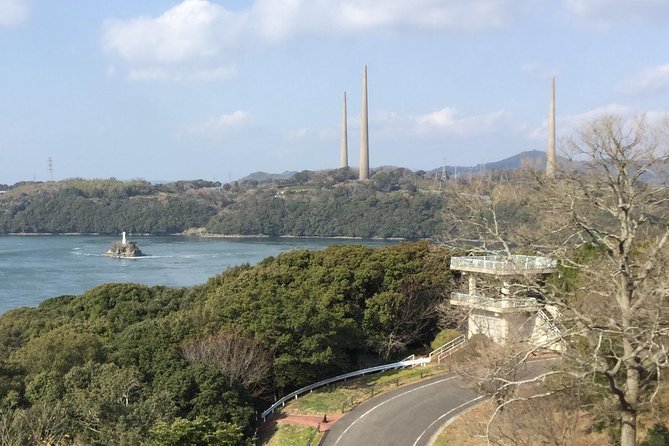
The Hario Transmission Towers are one of the most unusual stops. These towers are tied to the message sent by officials to proceed with the attack on Pearl Harbor, giving the site a direct link to the opening of the Pacific War.
You spend roughly 30 minutes here, and admission is free. The appeal is not a polished museum display. It is the physical presence of a working communications site connected to a major event. That can make the history feel more immediate than a text panel alone.
This stop is especially useful if you have already seen the Atomic Bomb Museum and want to understand the wider chain of events surrounding the war. At the same time, you should know that the experience may be more about the location and Shannon’s explanation than a large collection of exhibits. Ask questions if you want more context.
A few more Nagasaki half-days worth comparing
- Nagasaki: Private Walking Tour with a Local
★ 4.7 · 79 reviews - Nagasaki Full-Day Private Tour with Government-Licensed Guide
★ 5.0 · 66 reviews - Nagasaki Half-Day Private Tour with Government-Licensed Guide
★ 5.0 · 53 reviews - Visit Gunkanjima Island (Battleship Island) in Nagasaki
★ 4.0 · 32 reviews
Umegae Sake Brewery adds local flavor
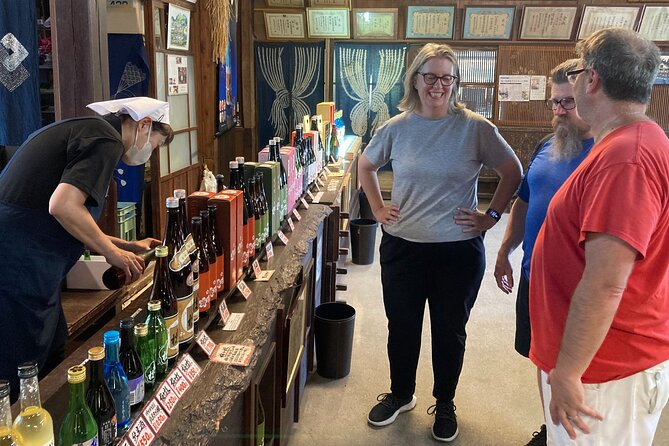
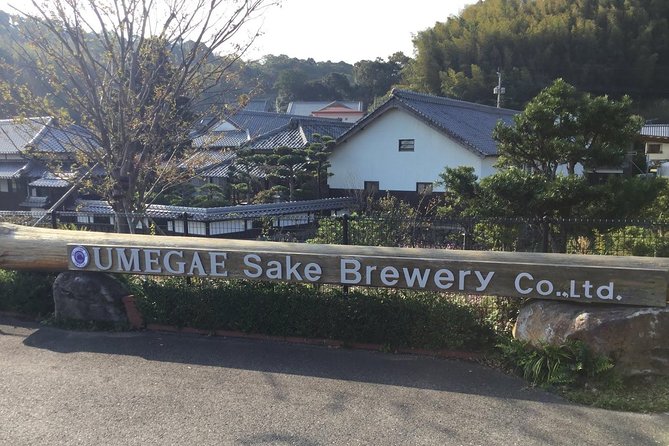
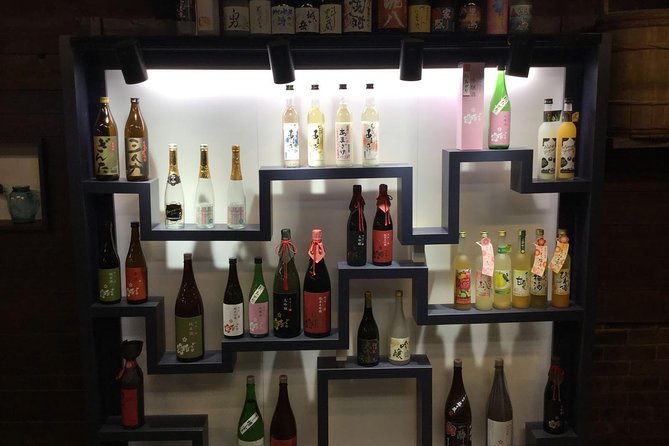
Umegae Sake Brewery changes the mood again. After the solemn wartime locations, a brewery gives you a look at a long-standing Japanese food and drink tradition. Alcoholic and nonalcoholic beverages are included at certain points during the day, so this is one of the natural places to discuss sake.
The visit is planned for about 30 minutes and has no separate admission charge. It is not presented as a long tasting class, so you should keep your expectations measured. Its value lies in seeing a working cultural tradition included in a day that could otherwise feel relentlessly serious.
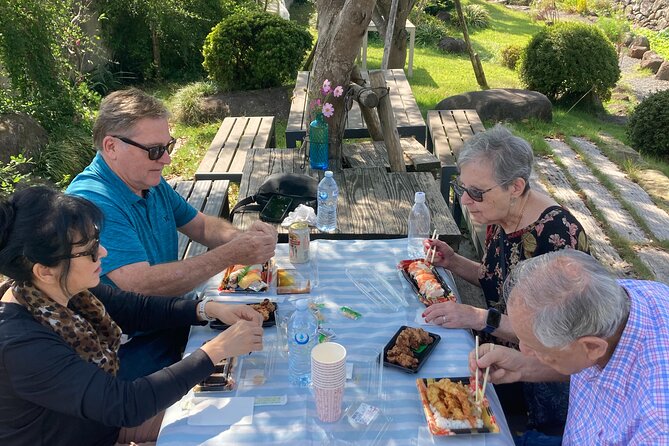
This is also where the tour’s food and drink arrangements make sense. Depending on the weather and time, lunch may be eaten on the go or as a picnic. A previous group enjoyed ramen and Nagasaki’s famous champon before continuing to the ceramics area. The exact meal setup can vary, but you will not need to organize lunch separately.
Mukyudo shows the civilian side of the war
Mukyudo was an air-raid shelter for the former Miyamura Elementary and Junior High School. Its distinctive feature is that both male and female students used the shelter, making it a reminder of how war affected children and schools, not just soldiers and government facilities.
You have about 20 minutes here. That is a short visit, but the site does not need a full afternoon to make its point. It adds a human scale to the military history and helps connect the larger events to ordinary residents.
This stop may be difficult for some people, especially when paired with the museum later in the day. The private format helps because you are not being pushed through with a large crowd, but the schedule still includes several stops. If you need a quiet moment, tell Shannon.
Katashima Torpedo Base Ruin brings the history into view
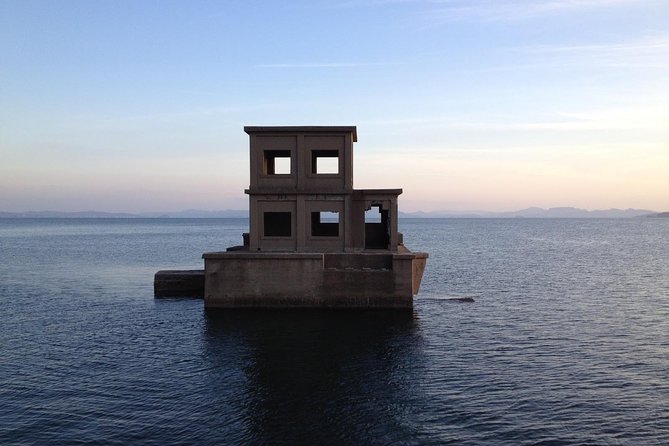
Katashima is among the most compelling stops for people interested in military history. The former torpedo base includes an empty building that served as training facilities. The site is not polished for tourism, and locating it may involve some uncertainty, but that rough quality is part of its impact.
You spend about 30 minutes here, with no admission charge. Instead of a tidy exhibit, you encounter a former military place with little built-in interpretation. Shannon’s guidance is important because the meaning of the building may not be obvious from the structure alone.
This stop is not ideal for anyone who wants a highly organized museum visit at every stage. It is better suited to you if you value original sites, incomplete remains, and the chance to picture how wartime preparation worked away from the main city. The route has included wrong turns in the past, so flexibility is sensible.
Hasami ceramics offer a welcome change of pace
Hasami is known for Japanese ceramics and porcelain. The ceramics museum displays Hasami ware and gives you a chance to shift from destruction and military planning to skilled making and everyday design.
The stop lasts about 30 minutes. Ceramic fans could easily want longer, especially if you enjoy looking closely at small pieces or browsing for items to take home. One group found the area so engaging that they wished they could have stayed for hours.
The timing is both a strength and a limitation. Thirty minutes keeps the full-day route moving, but it may feel brief if you have a serious interest in pottery. Tell Shannon if ceramics are a priority when discussing the day. Even for casual visitors, the stop helps show how Nagasaki’s cultural identity includes practical craft, not only memorial sites.
Nagasaki Peace Park asks for reflection
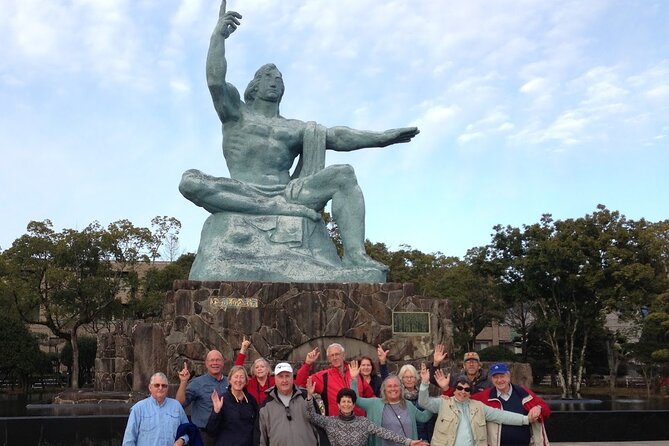
Nagasaki Peace Park is a calm place to walk and think about the atomic bombing. It is intentionally different from the museum. Here, open space and memorials give you room to process what you have seen and prepare for the exhibits inside.
The visit lasts about 30 minutes and is free. You will likely get more from it if you do not rush to take photographs and leave. The park is a place for quiet attention, and Shannon can help explain its place in the city’s message of peace.
Because the park comes before the Atomic Bomb Museum, the order works well. You first encounter the public memorial setting, then move indoors to the personal accounts and objects. If you are visiting Nagasaki for only one day, these two stops together are essential.
The Atomic Bomb Museum is the emotional center
The Atomic Bomb Museum is the most demanding stop on the route. Admission is included, and the planned visit lasts about 35 minutes. The exhibits and photographs are graphic, and the accounts of the bombing can be upsetting.
You should not treat this as a quick photo stop. The museum explains the human cost of the atomic bombing through personal stories, objects, images, and historical material. Some people may need more time than the schedule allows, while others may find 35 minutes emotionally sufficient.
The museum is also where the day’s earlier stops gain extra weight. The air-raid shelter, military communications site, and torpedo base are not isolated curiosities. Together, they place Nagasaki within the wider machinery of World War II, while the museum centers the people who suffered its final stage.
If you are traveling with children or anyone sensitive to graphic material, think carefully about the visit. The tour is not designed to soften the subject. Its strength is its directness, but that directness is also the main consideration.
Mount Inasa closes the day with a wide view
The final stop is the Inasayama Observation Deck. Admission is included, and the scheduled visit takes about 20 minutes. From Mount Inasa, you get a broad view over Nagasaki, which provides a useful pause after the museum.
The daytime view is impressive, but the nighttime view is generally considered the stronger experience. Since this tour lasts about seven to nine hours and the timing depends on the rest of the route, you should confirm what kind of light you are likely to have on your date. Do not book this tour solely for a night view unless the timing is clear.
Still, the deck works well as a closing point. You look back over the city rather than ending inside a memorial. The view does not erase the day’s history, but it places Nagasaki in the present and gives you a calm final moment.
What the $656.88 group price really buys
At $656.88 for up to three people, this is an expensive day if you are comparing only admission prices. Most stops are free, and only the Atomic Bomb Museum and Inasayama Observation Deck have included admission fees.
The value comes from the reach of the route and the private transport. You get an air-conditioned vehicle, WiFi, bottled still and sparkling water, lunch, selected alcoholic and nonalcoholic drinks, and a guide who can take you between scattered sites. Splitting the price among three people makes the cost more reasonable than paying it alone.
I would also compare it with the cost of arranging this route independently. The hard part is not just transport. It is finding the lesser-known wartime locations, connecting them in one day, and understanding what you are seeing. If you want only Peace Park and the Atomic Bomb Museum, this tour is more than you need. If you want the wider prefectural story, the private format has a stronger case.
The tour is recommended by all recorded ratings and has a 4.9 score from 19 ratings. That is encouraging, though the sample is not large. The most consistently praised qualities are Shannon’s personal guidance, the unusual stops, the good range of interests, and the way he keeps the day positive even when the weather turns wet.
Who should book this Nagasaki day?
I would choose this tour if you have one full day, want history beyond the main memorials, and prefer a private vehicle to piecing together several outlying sites. It suits couples, families, or a small group of friends who can share the cost and who want to ask questions freely.
It is also a good fit for people with mixed interests. One person can care about the war sites, another about ceramics, another about food and scenery. The route has enough variety to keep the day from becoming a single long museum visit.
I would hesitate if you dislike long drives, need a slow schedule, or want to spend several hours at one major museum. I would also think twice if your date has uncertain weather, since the experience depends on good conditions and the booking is non-refundable for personal cancellations or changes.
Should you book the Nagasaki WW2 History and Culture Tour?
Book it if you want a wide, serious, and personal look at Nagasaki, not just the famous atomic bomb memorials. The strongest parts are the hard-to-find wartime sites, Shannon’s local guidance, the private transport, and the mix of history with sake, ceramics, shrine culture, and scenery.
Skip it if your priority is a short city tour or a low-cost visit to Peace Park and the museum alone. For the right group, though, this is a productive full day that shows both what Nagasaki endured and how its culture continues beyond that past.
FAQ
How long does the Nagasaki WW2 History and Culture Tour last?
The tour lasts approximately 7 to 9 hours.
How many people can join the private tour?
The tour is private and can include up to three people. Only your group participates.
Is pickup available?
Yes. Pickup is offered.
Are the Atomic Bomb Museum and Inasayama Observation Deck included?
Yes. Admission to both the Atomic Bomb Museum and Inasayama Observation Deck is included.
Is lunch provided?
Yes. Lunch is provided either as an on-the-go meal or a sit-down picnic, depending on the weather and time available.
Are drinks included?
Yes. Still and sparkling bottled water are provided throughout the day. Alcoholic and nonalcoholic beverages are also provided at certain times.
What happens if bad weather cancels the tour?
If poor weather causes the tour to be canceled, you are offered a different date or a full refund. The experience is otherwise non-refundable and cannot be changed for personal cancellation or amendment requests.
Just added around Nagasaki
- Nagasaki: Private Walking Tour with a Local★ 4.7 · 79 reviews
- Nagasaki: Private Tour with Local Guide★ 4.8 · 18 reviews
- Tour Nagasaki or Fukuoka in Privacy and Comfort.★ 5.0 · 17 reviews
- Nagasaki Street Food Adventure: Private Walking Tour with a Local★ 5.0 · 26 reviews
- Nagasaki Private Tour with a Local – Highlights & Hidden Gems★ 5.0 · 24 reviews
- Nagasaki Private Customizable Half Day Tour★ 5.0 · 16 reviews
- Nagasaki Full-Day Private Tour with Government-Licensed Guide★ 5.0 · 66 reviews
- Nagasaki Full Day Tour with Licensed Guide and Vehicle★ 5.0 · 27 reviews
Historical Tours, compared.
Imperial Palace and Shogun Historical Walking Tour
Our verdict →
World Heritage Kyoto & Nara Uji Authentic Matcha Experience
Our verdict →
Kyoto Gion: 2-Hour Geisha Culture & History Walking Tour
Our verdict →
Hiroshima Historical Walking Tour – Why A-Bomb was Dropped
Our verdict →
Yanaka Walking Tour: Historic and Traditional District of Tokyo
Our verdict →
Shinjuku Historical Walking Tour & Secret Backstreets
Our verdict →
Mt. Fuji Heritage Tour: Traditional Villages, Lakes & Shrine
Our verdict →Browse the lists this tour appears in