
Reviewed · NAGASAKI TOURS
Nagasaki Private Customizable Half Day Tour
The best thing about this Nagasaki tour is that you choose the shape of the day. You can give priority to the Atomic Bomb Museum and Peace Park, ask for churches and old trading districts, or mix history with Chinatown and a city viewpoint. I like the private format, and I like that the guide plans around sights you have already seen. The drawback is time: four hours usually allows only two or three attractions, so you must choose carefully.
I also like the choice of public transportation or a private vehicle, since taking Nagasaki’s tram or other local transport can help you understand the city. Guides Yuki Kato and Satoshi Nishimura are specifically named in past feedback, with Yuki praised for careful preparation and tailored planning. At $203.80 per person, this is a serious spend, so it makes the most sense when your group values personal planning and efficient sightseeing.
Key points at a glance
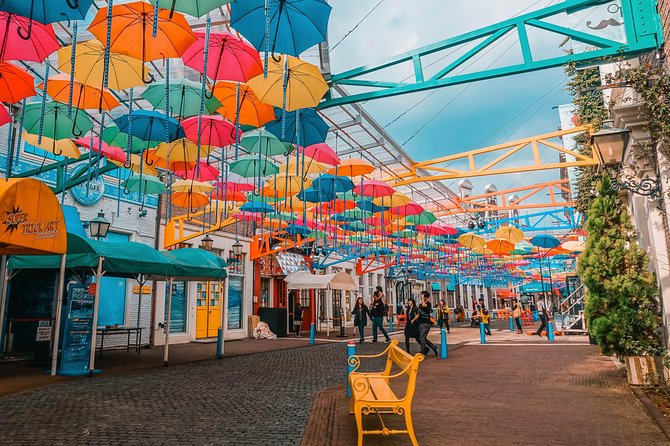
- Your interests shape the route: Select from peace history, Christian heritage, Chinese culture, art, gardens, temples, food, nature, and city views.
- Only two or three sights fit: A four-hour morning tour is focused, not a citywide checklist.
- The Peace Park area is a strong use of time: The Atomic Bomb Museum, hypocenter, and memorial sites can form a thoughtful half-day theme.
- Local transport can be part of the experience: You may use public transportation or a private vehicle, depending on your booking.
- Hotel pickup and drop-off are included: The listed meeting point is Nagasaki Station, with the activity ending back there unless arrangements say otherwise.
- Book early for the best planning: The operator recommends about three months ahead, and the average booking lead time is 77 days.
Why a custom four-hour route works well in Nagasaki
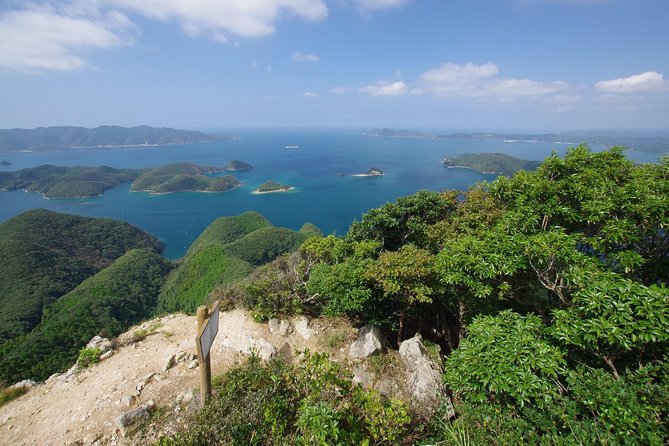
Nagasaki is not a city you should rush through with a long list of disconnected stops. Its appeal comes from the way several stories overlap: Japan’s contact with Europe, the survival of Christianity, Chinese influence, industrial trade, and the lasting mark of the 1945 atomic bombing.
A private half-day gives you a guide who can connect those subjects instead of leaving you to piece them together alone. You complete a form after booking, listing your interests, must-see places, and sights you have already visited. The operator then prepares a route and handles reservations or bookings when needed.
That planning matters because the city’s sights are spread across different areas. A route centered on the Peace Park and atomic-bomb sites has a different rhythm from one built around Dejima, Chinatown, Meganebashi Bridge, and Dutch Slope. Trying to combine every theme in four hours would leave you hurrying from one place to the next.
The format suits a first visit, but it can also work well if you have already seen the major sights. You can tell the planner what to skip and ask for a more local or less familiar route. The tour is private, so your group does not need to match another party’s walking speed, interests, or emotional pace.
More Custom Private Tours in Nagasaki:
- Tokyo Customized Private Tour (Must See Places in 1 Day)
★ 5.0 · 1,499 reviews - Mount Fuji Full-Day Private Tour from Tokyo (Customizable)
★ 4.9 · 1,470 reviews - Private Custom Tour: Tokyo in a Day
★ 5.0 · 1,432 reviews
Starting at Nagasaki Station at 9 a.m.
The listed start is 9 a.m. at Nagasaki Station, with the tour ending back at the meeting point. Hotel pickup and drop-off are included, so confirm the exact starting arrangement when you book. You should arrive at least 10 minutes early.
Nagasaki’s morning start is useful for cruise passengers and anyone with a free first half of the day. It leaves the afternoon open for additional sightseeing, lunch, shopping, or a return to a place that deserves more time.
You need to be punctual. The guide waits for up to 30 minutes after the scheduled start, after which the tour can be canceled. You receive the guide’s phone number before the tour, which is useful if you have trouble finding the meeting point.
Transportation within the city is included. The operator may arrange public transportation or a private vehicle based on your booking. Public transport can make the outing feel more connected to everyday Nagasaki, while a vehicle may be the better choice if your group wants to reduce walking or move between several hillside locations.
The Peace Park and atomic-bomb sites
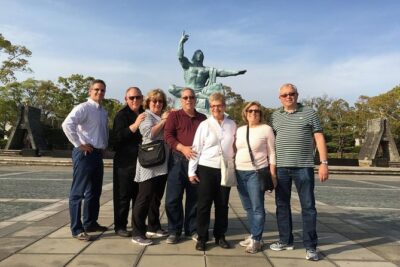
For many people, the most meaningful use of four hours is a route through Nagasaki’s peace sites. The Peace Park, Atomic Bomb Museum, atomic-bomb hypocenter, and related memorial locations can be treated as one connected subject rather than separate photo stops.
The museum and memorial areas ask for quiet attention. A guide can help you place what you see in context and decide how much time to give each site. I would tell the planner in advance if this is your main reason for visiting, since the subject deserves more than a quick stop between unrelated attractions.
The hypocenter is a particularly important part of the visit. It marks the location connected with the bombing of August 9, 1945, while the nearby memorial areas focus on the people affected and the broader call for peace. The experience can be emotionally heavy, so a private guide is helpful because you can set the pace and ask questions without feeling pushed along by a large group.
One itinerary used by a previous party included the Shiroyama National School Building, the Peace Park, and the atomic-bomb hypocenter. That combination shows how a custom route can move beyond the main museum and include a site with a more specific local connection.
I would not pair every major historic district with the Peace Park in the same four hours. The subject needs time, and the distance between areas can eat into your visit. If peace history is your priority, make it the center of the plan.
Oura Church and Nagasaki’s Christian past
Oura Church is a strong choice if you want to understand Nagasaki’s connection with Christianity. It is one of Japan’s oldest Christian churches and is recognized as a UNESCO World Heritage Site.
The church adds a different layer to the city. Nagasaki was one of Japan’s key points of contact with foreign traders and missionaries, and Christian communities endured long periods of pressure and secrecy. A guide can help explain why a church in this city carries such weight.
You should tell the planner if you want Oura Church included rather than assuming it will automatically fit. The tour promises two or three attractions, and a single church visit can become part of a wider route through Dutch Slope or other foreign-influence sites.
This stop is best for people who prefer architecture, religion, and social history to a long museum visit. It may be less suitable if your main aim is food, gardens, or a full morning at the atomic-bomb museum.
A few more Nagasaki half-days worth comparing
- Nagasaki: Private Walking Tour with a Local
★ 4.7 · 79 reviews - Nagasaki Full-Day Private Tour with Government-Licensed Guide
★ 5.0 · 66 reviews - Nagasaki Half-Day Private Tour with Government-Licensed Guide
★ 5.0 · 53 reviews - Visit Gunkanjima Island (Battleship Island) in Nagasaki
★ 4.0 · 32 reviews
Dejima, Dutch Slope, and the old port connection
Dejima was a small artificial island used as a Dutch trading post from the 17th through the 19th century. During Japan’s period of restricted foreign contact, it was an important point of exchange between Japan and the outside world.
A visit here helps explain why Nagasaki developed a different character from many other Japanese cities. Trade brought new goods, ideas, technology, and cultural influence, even when contact was tightly controlled.
Dutch Slope adds another related stop. Its name comes from the foreign residents and Western-style buildings associated with the area. The route is especially appealing if you enjoy old neighborhoods and the visible traces of international contact.
The practical caution is that Dejima, Dutch Slope, Oura Church, and the city’s other historic districts can easily fill the entire half-day. That is not a flaw if this is your chosen theme. It only becomes a problem when you also want the Peace Park, Chinatown, a museum, and a mountain view.
Chinatown, Meganebashi Bridge, and city character
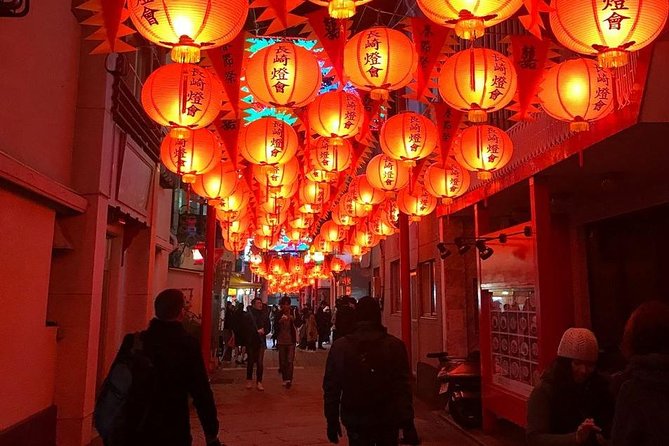
Nagasaki Chinatown is one of Japan’s oldest Chinatowns and has had a strong effect on the city’s food and culture. It is a sensible choice if you want to add lunch or a food-focused stop to a history tour.
Food is not included in the tour price, and meals and drinks are your responsibility unless specifically arranged. Still, a guide can help you fit a meal into the short schedule and point you toward the part of the district that best matches your plans. Ask in advance if you want restaurant arrangements, since reservations take planning.
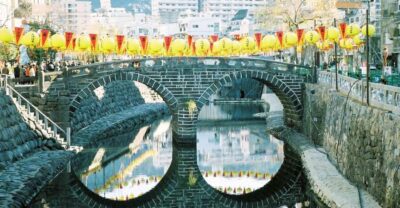
Meganebashi Bridge crosses the Nakashima River and is one of Nagasaki’s recognizable landmarks. Its name refers to the spectacle created by the bridge and its reflection in the water. It is a good short stop for photographs and a pleasant change of pace after a museum or memorial.
One successful route combined the atomic-bomb sites, Meganebashi Bridge, Chinatown, and a tram ride. That is a useful model if you want a day with serious history, local transport, a landmark, and food. Just remember that adding a meal reduces the time available for another major attraction.
Museums, temples, and Chinese influence
The Nagasaki Prefectural Art Museum offers Japanese and Western paintings, sculpture, and ceramics. It is the right pick if you want culture with less emotional weight than the atomic-bomb sites or less walking than a historic-district route.
The Nagasaki Museum of History and Culture covers the prefecture’s past through artifacts, documents, and multimedia displays. It can give you a broad introduction to the city, though a four-hour plan may not allow enough time for both this museum and several other major stops.
Sofukuji is a Zen Buddhist temple founded in the 14th century by a Chinese monk. Its connection with Chinese Zen Buddhism makes it a natural partner for Chinatown or the Confucian shrine.
The Confucian shrine dates from the 17th century and honors Confucius. It provides another window into Chinese influence in Nagasaki, and it works well for anyone interested in religion, education, architecture, or the city’s long trading links.
These sites are not interchangeable. The art museum suits a focused cultural visit. The history museum offers a wider overview. Sofukuji and the Confucian shrine give you religious and architectural context. Tell the planner what kind of visit you prefer rather than simply asking for culture.
Views, flowers, and Gunkanjima
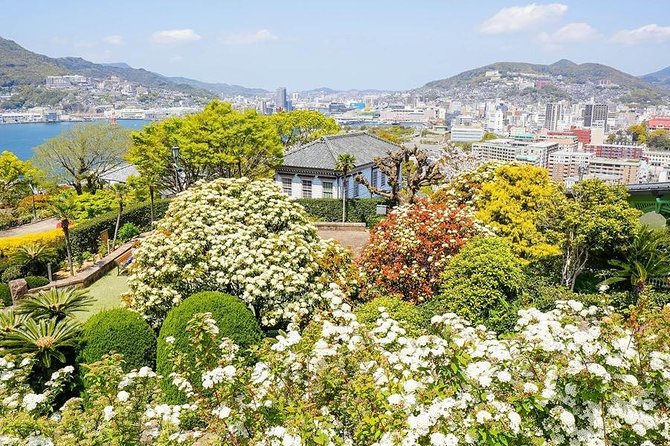
A city-view stop can change the tone of the tour. The listed viewpoint is known for broad views and is particularly appealing around sunrise or sunset. Since this tour begins at 9 a.m., ask whether the timing and route make a viewpoint practical during your date.
The flower attraction, known for tulips in spring, is another possible choice for a lighter outing. It suits you if gardens and seasonal displays matter more than museums. Check the exact venue and seasonal conditions through the operator before assuming the flowers will be at their best.
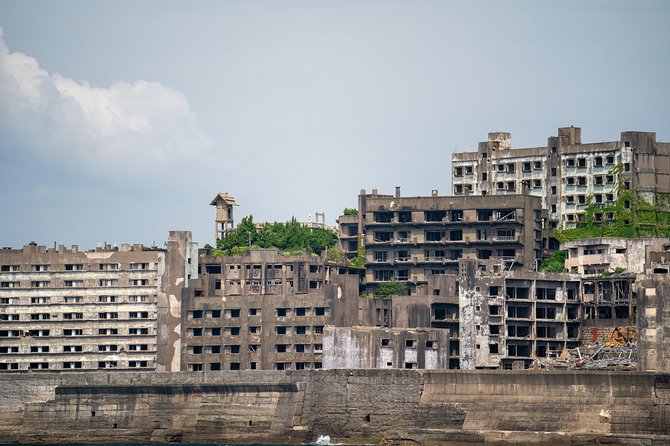
Gunkanjima, or Hashima Island, is known for abandoned industrial ruins and its former mining community. The island was deserted after the mines closed in the 1970s, giving it a stark and unusual appearance.
Here I would ask a direct planning question. The tour lasts about four hours and includes transportation within the city only, while Gunkanjima is an offshore destination with its own access needs. It may appear among the possible interests, but do not assume it can be added to this half-day city tour. Ask the operator whether it is available within your date, timing, and transportation limits.
What the $203.80 price really buys
At $203.80 per person, this is not a budget sightseeing option. You are paying for a private guide, planning time, transportation within the city, hotel pickup and drop-off, and help with reservations or bookings made on your behalf.
The value improves when you are traveling as a small group with clear priorities. A group discount may also apply, though the amount is not specified. If you simply want to see one famous attraction and can manage the route yourself, the price may be hard to justify.
The price makes more sense in several situations:
- You have only one morning in Nagasaki.
- You want a route built around a specific subject.
- You are visiting from a cruise and need careful timing.
- You prefer a private vehicle or personal help with public transport.
- You want to avoid repeating sights you have already seen.
- You need an English-speaking guide to explain sensitive history.
The strongest value is the preparation. The operator begins arranging the route after receiving your form, and the guide can shape the morning around your stated priorities. That is more useful than a generic route when your time is short.
Booking early and handling changes
The operator recommends booking about three months ahead, or at least one month before your visit. That fits the average booking lead time of 77 days. Restaurant and venue requests need extra time, and requests made within seven days may not be possible.
After booking, you should receive a Nagasaki form within 48 hours. Complete it accurately at least seven days before the tour. List your preferred themes, must-see sights, places you have already visited, mobility needs you want to discuss, and any restaurant or activity requests.
Pay close attention to the cancellation terms. The supplied conditions describe fees of 25 percent when canceled within 30 days, 50 percent within 21 days, and 100 percent within 14 days. The experience is also described as non-refundable and unchangeable, so you should confirm the final terms at checkout and treat the booking as firm once the custom itinerary is prepared.
Optional activities, entrance fees, meals, drinks, and gratuities are not included unless specifically stated. Bring a payment method for those costs, and dress for the weather.
Who should book this Nagasaki tour?
I would choose this tour if I had a short stay, a cruise stop, or a clear subject I wanted to explore properly. It is especially useful for a private group divided between peace history, Christian heritage, Chinese culture, or local food.
I would also consider it for a return visit. The form lets you name places you have already seen, which gives the planner a chance to avoid repeating the standard route.
I would skip it if I wanted a cheap, independent morning or if I had enough time to plan Nagasaki myself. The $203.80 price is high for four hours, and the tour cannot cover every attraction on the list. It is a planning-and-guidance service, not a bargain transport pass.
FAQ
Where does the tour start?
The listed meeting point is Nagasaki Station, at 1 Onouemachi, Nagasaki, 850-0058, Japan. Hotel pickup and drop-off are included, so confirm the exact pickup arrangement when booking.
What time does the tour begin?
The stated start time is 9 a.m. You should arrive at least 10 minutes before the scheduled meeting time.
How long does the experience last?
The tour lasts approximately four hours.
How many attractions can I visit?
The tour is designed to cover two or three attractions within the four-hour period.
Is the tour private?
Yes. Only your group participates in this activity.
Is transportation included?
Transportation within Nagasaki city is included. Depending on the booking, this may be public transportation or a private vehicle.
Is an English-speaking guide provided?
Yes. An English-speaking professional guide is included. Guides named in past feedback include Yuki Kato and Satoshi Nishimura.
Are meals and entrance fees included?
Meals, food, drinks, optional tours, optional activities, and related fees for you or the guide are not included unless specifically stated.
How far ahead should I book?
The operator recommends booking about three months ahead, or at least one month before travel. Requests made within seven days may not be possible to arrange.
Should you book it?
Book this Nagasaki custom tour if you want a carefully planned morning and are willing to pay for private guidance. Give the planner a clear theme, such as the Peace Park and atomic-bomb sites, Dejima and Christian heritage, or Chinatown and Chinese religious sites.
I would not try to squeeze every attraction into the form. Choose two or three priorities, mention what you have already seen, and ask early about transport, reservations, and any site that may fall outside the city. With realistic expectations, this tour can turn four limited hours into a focused and personal introduction to Nagasaki.
Just added around Nagasaki
- Nagasaki Half-Day Private Tour with Government-Licensed Guide★ 5.0 · 53 reviews
- Taste Local Life: Nagasaki’s Historical Street Walking Tour★ 5.0 · 27 reviews
- Visit Gunkanjima Island (Battleship Island) in Nagasaki★ 4.0 · 32 reviews
- Nagasaki: Private Walking Tour with a Local★ 4.7 · 79 reviews
- Nagasaki: Private Tour with Local Guide★ 4.8 · 18 reviews
- Tour Nagasaki or Fukuoka in Privacy and Comfort.★ 5.0 · 17 reviews
- Nagasaki Street Food Adventure: Private Walking Tour with a Local★ 5.0 · 26 reviews
- Nagasaki Private Tour with a Local – Highlights & Hidden Gems★ 5.0 · 24 reviews
Nagasaki Tours, compared.
Visit Gunkanjima Island (Battleship Island) in Nagasaki
Our verdict →
Browse the lists this tour appears in