
Reviewed · NAGASAKI TOURS
Nagasaki Full Day Tour with Licensed Guide and Vehicle
Nagasaki is one of Japan’s most layered cities, and this private tour lets you choose which layers matter most. You can pair the Atomic Bomb Museum and Peace Park with Dejima and Glover Garden, or focus on Chinese temples, Christian heritage, and city views. Guides such as Rikako, Yoshi, Hiromi, and Norah bring local knowledge and, in some cases, personal family stories about Nagasaki’s wartime past.
I like the private vehicle, which saves time on Nagasaki’s hills and helps you fit more into six hours. I also like the guide’s flexibility: you select three or four places rather than being pushed through a fixed route. The main drawback is the price, $598.53 for up to two people, with entrance fees and lunch extra.
Key points to know before booking
- Choose three or four sights: The long list of possible stops is a menu, not a promise that you will visit them all.
- Private guide and car: Only your group participates, with a licensed local English-speaking guide and driver.
- Strong for cruise calls: Pickup is offered, and the vehicle makes a short port visit much easier to manage.
- Serious historical content: The Peace Park, Atomic Bomb Museum, Urakami Cathedral, and Twenty-Six Martyrs Monument require time and thought.
- Entrance fees are extra: Most paid attractions are not included, so budget for admission on top of the tour price.
- Six hours goes quickly: A well-planned route matters more than trying to check every place on the list.
Why a private car makes sense in hilly Nagasaki
Nagasaki is not a flat, compact sightseeing town. Important places are spread between the port, hillside neighborhoods, temple districts, and the northern area around the atomic bomb hypocenter. A private vehicle gives you a practical way to connect them without spending much of your day figuring out transfers.
The guide and driver can also help shape the day around your interests. Past guides have included Rikako, Yoshi, Hiromi, Yoko, Fumiko, Norah, and Minnie. The exact person assigned to you can vary, but the strongest experiences described by customers came from guides who adjusted the pace, suggested an extra stop when time allowed, and explained why each site mattered.
This is not a small-group bus tour. Only your party joins, and the advertised price is for a group of up to two. If you are traveling with more people, confirm the correct booking arrangement before paying. The terms say that separate reservations cannot be combined into one larger group.
The vehicle is especially useful if you are arriving by cruise ship. Several customers used the tour during a port call and valued being collected at the Nagasaki cruise terminal, then returned with a clear sense of timing. You should still give the operator your ship schedule and allow a sensible cushion before departure.
More Full-Day Tours in Nagasaki:
- Nagasaki Full-Day Private Tour with Government-Licensed Guide
★ 5.0 · 66 reviews - From Tokyo: Mount Fuji Full-Day Sightseeing Trip
★ 4.5 · 4,970 reviews - Mount Fuji Full-Day Private Tour from Tokyo (Customizable)
★ 4.9 · 1,470 reviews
Mount Inasa gives you Nagasaki at a glance
Mount Inasa rises 333 meters near the city center. The observation deck offers a broad view over Nagasaki, its harbor, and the surrounding hills. It is a useful first stop because you can see how the city fits together before exploring it at street level.
The summit can be reached by ropeway, bus, or car. Since this tour includes a private vehicle, the stop can be convenient, but confirm the exact access plan with your guide. The listed visit is only 20 minutes, so this is mainly a quick viewpoint rather than a long mountain outing.
The stop has no admission fee listed. Weather matters, especially if you are hoping for a clear view. The mountain is also known for its night views, but a six-hour daytime tour may not be timed for them.
Glover Garden and Oura Church explain Nagasaki’s foreign connections
Glover Garden is an open-air museum on a hillside where several former foreign residents lived. Its historic houses and views toward the port help explain Nagasaki’s role after Japan opened to foreign trade. The setting is pleasant, but it is not simply a stroll through old buildings. The site shows how foreign merchants lived and how the port changed the city.
Plan about an hour here, longer than at most other stops. Admission is not included. The hillside setting means you should be comfortable with some walking and uneven or sloping ground.
Nearby Catholic Oura Church adds another part of Nagasaki’s story. Built in 1864 by a French missionary for foreign merchants, it reflects the city’s Christian connections during the late Edo period. It is listed as a 20-minute stop, so your guide may treat it as a focused visit rather than a long architectural tour.
Glover Garden and Oura Church make a sensible pair. If you are most interested in the city’s foreign residents, port trade, and Christian history, ask your guide to build the day around these two sites.
Dejima turns international history into a physical place
Dejima was a man-made island created in 1636 to separate Portuguese residents from the Japanese population and restrict missionary activity. Later, it became associated with Dutch trade during Japan’s long period of limited foreign contact.
Today, Dejima helps you picture how controlled international exchange worked in practice. The 50-minute visit is long enough to make it a major stop, not just a photo opportunity. Admission is extra.
I would pair Dejima with Glover Garden if you want to understand Nagasaki as Japan’s gateway to foreign commerce. The two sites show different sides of the same story: Dejima focuses on regulated trade and contact, while Glover Garden shows the later foreign merchant community on the hills above the port.
A few more Nagasaki half-days worth comparing
- Nagasaki: Private Walking Tour with a Local
★ 4.7 · 79 reviews - Nagasaki Half-Day Private Tour with Government-Licensed Guide
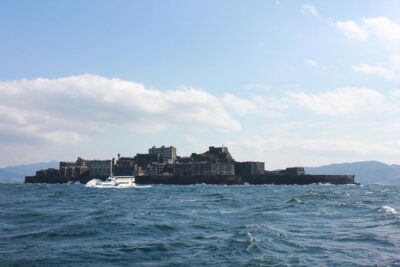
★ 5.0 · 53 reviews - Visit Gunkanjima Island (Battleship Island) in Nagasaki
★ 4.0 · 32 reviews - Taste Local Life: Nagasaki’s Historical Street Walking Tour
★ 5.0 · 27 reviews
Sofukuji and Kofukuji show Nagasaki’s Chinese heritage
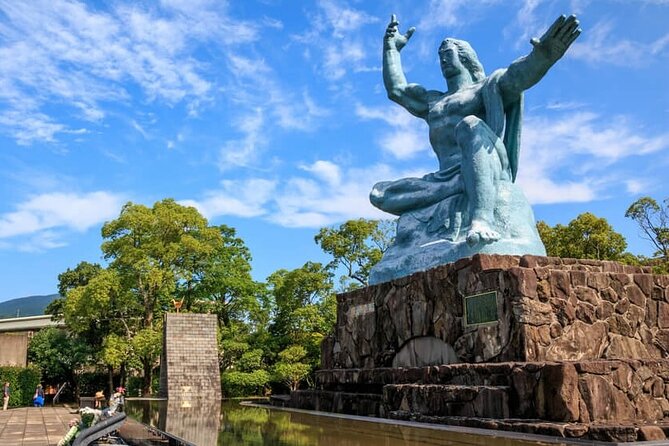
Sofukuji Temple was built in 1629 for Nagasaki’s Chinese residents and belongs to the Obaku school of Zen Buddhism. Its Chinese architectural style makes it visually different from many temples you may see elsewhere in Japan. The planned visit is about 20 minutes, with admission extra.
Kofukuji is the oldest and one of the most important Chinese-founded temples in Nagasaki. It is in the Teramachi, or Temple Town, district and is closely tied to the development of Obaku Zen. The listed visit is also 20 minutes.
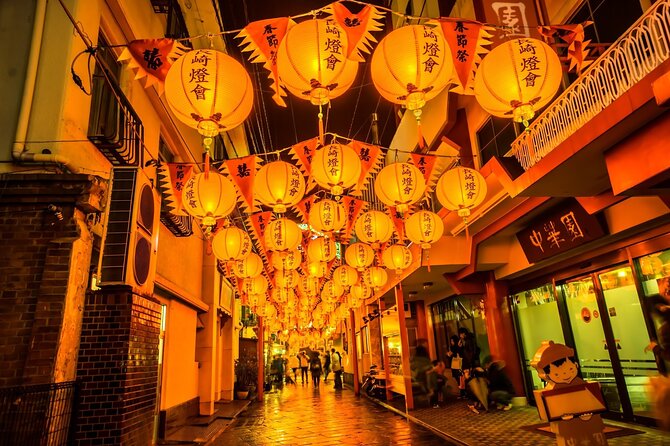
These temples are a good choice if you want a quieter side of Nagasaki. They also work well for anyone who has already seen major memorial sites in other Japanese cities and wants a stronger look at the city’s Chinese connections. Hiromi has particularly recommended Kofukuji and Spectacles Bridge together, creating a route that mixes temple history with an easy downtown landmark.
Do not expect a long meditation session at each temple within the standard six-hour plan. Twenty minutes is enough for an introduction, photographs, and questions, but not a detailed study of every building.
The Confucian Temple adds another cultural layer
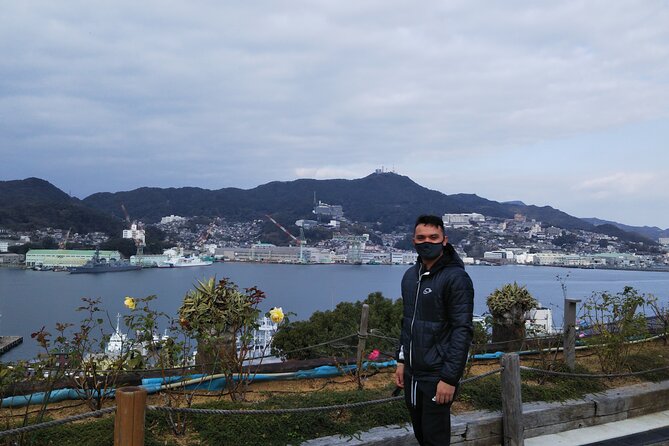
Nagasaki Confucius Shrine is one of only a small number of Confucian shrines in Japan. It was built in 1893 by Nagasaki’s Chinese community and includes a Chinese museum devoted to successive generations.
The stop is listed at 15 minutes, making it one of the quickest visits. Admission is extra. It is best for a visitor who wants to compare Chinese religious, educational, and community influence with the Chinese-founded Buddhist temples.
If you choose Sofukuji, Kofukuji, and the Confucian Temple, the day will have a clear theme. That route may be more satisfying than trying to squeeze in a little of everything.
Peace Park and the Atomic Bomb Museum deserve unhurried attention
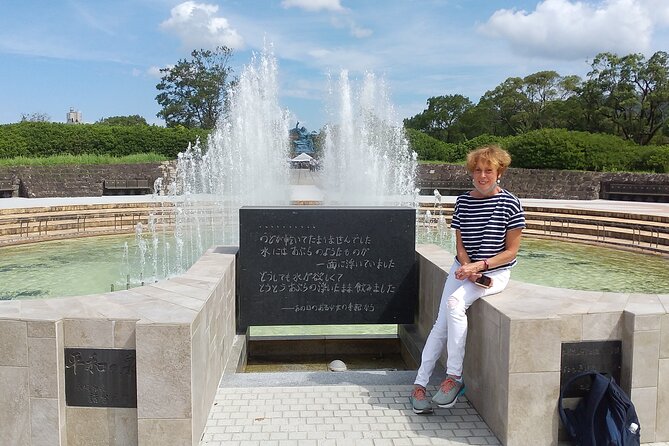
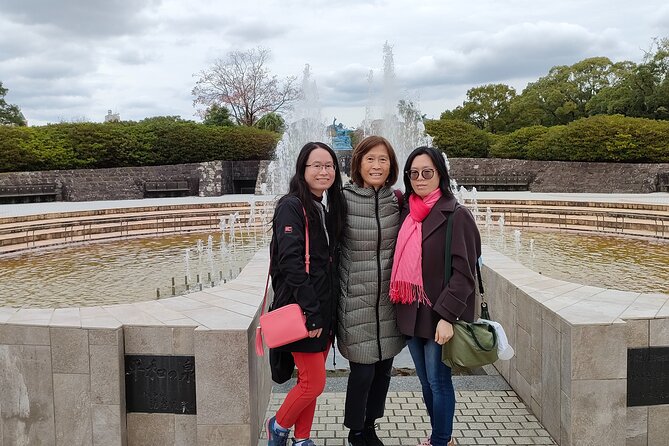
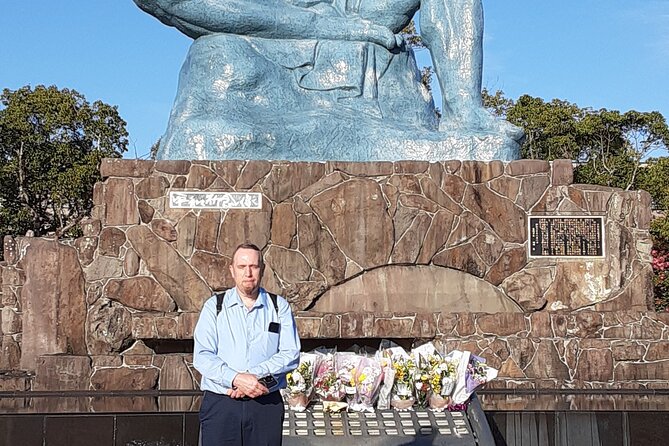
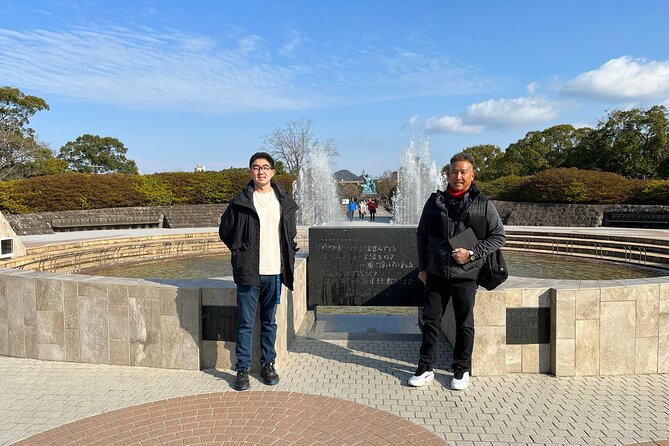
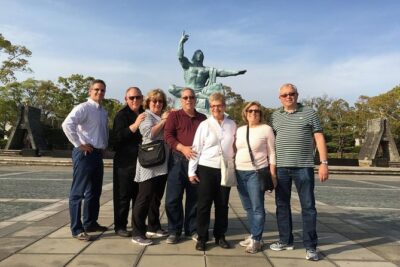
Nagasaki Peace Park was built near the atomic bomb’s hypocenter. Its central Peace Statue and memorial spaces focus on remembrance and the hope for peace. The listed visit is 15 minutes and admission is free, but I would ask for more time if this is one of your main reasons for booking the tour.
The Atomic Bomb Museum documents the bombing of August 9, 1945, the destruction that followed, and Nagasaki’s recovery. The planned stop is also listed at 15 minutes, with admission extra. That is enough for a brief orientation, but not enough for many people to read the exhibits carefully.
Several guides have given this part of the tour special care. Yoshi, for example, has shared family history connected with the bombing, including the survival of her father when others at his company died. That kind of personal connection can add meaning, but it can also make the visit emotionally heavy. Go in prepared to slow down and ask for time if you need it.
You can also visit Urakami Cathedral nearby. The present red-brick church is a working Catholic cathedral with a tragic past. It is listed as a 20-minute stop and admission is not included. The cathedral, Peace Park, and Atomic Bomb Museum form the most natural route for understanding the bombing, its human cost, and Nagasaki’s religious history.
The Twenty-Six Martyrs and Dutch Slope offer different stories
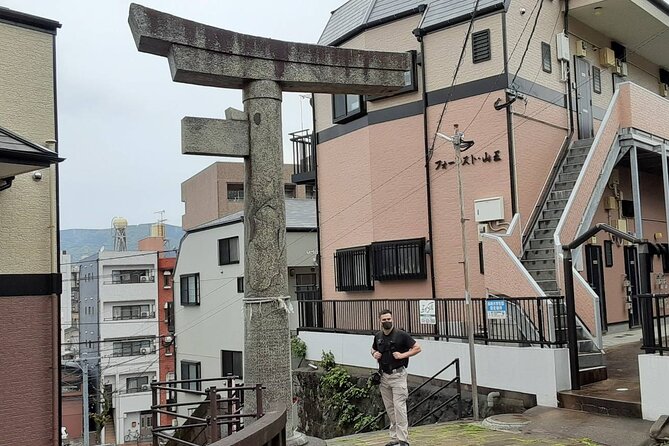
The Twenty-Six Christian Martyrs Monument and adjacent museum honor the Christians executed in Nagasaki on February 5, 1597. The planned visit is 20 minutes, with admission extra. This is an important stop if you want to understand the persecution of Christianity in Japan and the risks faced by early Christian communities.
The Dutch Slope is a stone-paved street where many foreign traders lived after Nagasaki opened to foreign trade in 1859. No timing is provided for this stop, so it may be used as a short walk or an added look during a nearby route. The slope is not a major museum visit. Its value is seeing how the old foreign settlement occupied the city’s hills.
These sites suit a history-focused day, but they cover very different periods. The Twenty-Six Martyrs Monument concerns early Christianity, while the Dutch Slope belongs to the later foreign-trade era. Your guide can help prevent the day from becoming a disconnected list of dates.
Spectacles Bridge and the Art Museum make useful lighter stops
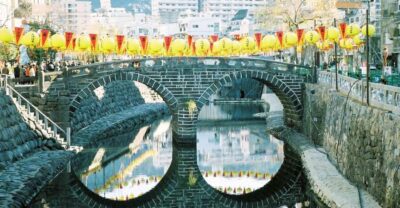
Meganebashi, or Spectacles Bridge, is the best known of the stone bridges crossing the Nakashima River. Its name comes from the shape formed by the bridge and its reflection in the water. The stop is listed at 15 minutes and is free.
It is a simple, photogenic break between museums and temples. Hiromi has paired it with Kofukuji, and that combination makes sense because both are in the central part of the city and can be visited without turning the day into a major climb.
The Nagasaki Prefectural Art Museum sits by the port in a modern, spacious complex designed by a noted architect. The planned stop is 20 minutes, with admission extra. The museum is a good choice if you need a change from war history and religious sites, though a short visit will only give you a sample of its collections.
How to build the best six-hour route
You can choose three or four sites from the full list. That limit is important. The list includes 14 possible stops, and even short visits add up quickly once driving, parking, walking, and questions are included.
Here are practical combinations:
For first-time visitors: Mount Inasa, Glover Garden, Dejima, and Spectacles Bridge. This gives you a view, foreign history, port culture, and a central landmark.
For serious history: Peace Park, Atomic Bomb Museum, Urakami Cathedral, and the Twenty-Six Martyrs Monument. Tell the guide that you want time for the museum rather than a fast checklist.
For Chinese heritage: Sofukuji, Kofukuji, the Confucian Temple, and Dejima. This route links Chinese community life with Nagasaki’s international trade.
For a cruise port visit: Pick two major sites and one or two short stops. Glover Garden, Dejima, and Mount Inasa may work better than four museums, especially if your ship has a firm departure time.
The tour has enough flexibility that you can request a different site. One customer added the Penguin Aquarium, and another group visited the aquarium, Suwa Shrine, and Fukusaiji Temple. Those additions are not part of the standard list, so you must ask in advance and understand that the guide may need to adjust the route.
Price, inclusions, and the real value
At $598.53 for up to two people, this is an expensive half-day experience. The price covers a licensed local English-speaking guide, a private vehicle, pickup, and a customized visit to three or four sites. It does not cover lunch, entrance fees, or personal expenses.
The value comes from time and control. If you are in Nagasaki for only one day, a private car can prevent missed connections and reduce the effort of moving between distant areas. A good guide also gives context that you will not get from a quick photograph and a signboard.
Still, admission costs can add up. Glover Garden, Dejima, the Atomic Bomb Museum, Oura Church, the museums, and the temples may charge separately. The terms specifically say that guide entry fees are covered only for sights listed among the included choices, while your own admission costs remain extra. Ask for a rough entrance-fee estimate before the day begins. One customer was disappointed by this point, so it is worth clarifying.
The tour is strongest for two people who value a private pace, have limited time, or want help with difficult historical subjects. If you are happy using local transport and reading sites on your own, the cost may be hard to justify.
Practical details for families and cancellations
Most people can participate, and service animals are allowed. A limited number of car seats and booster seats are available, but rear-facing seats are not offered. Contact the operator directly if you need a child seat.
Confirmation is provided at booking. Free cancellation is available up to 24 hours before the experience begins. Changes or cancellations inside that 24-hour window are not accepted or refunded, and the cut-off uses local Nagasaki time.
The tour is private, but only one reservation is allowed per group. Do not assume you can book two slots and ask the operator to combine them.
Should you book this Nagasaki tour?
Book it if you want a personal introduction to Nagasaki, especially during a cruise stop or a short stay. The best part is not simply the car. It is the chance to ask questions, shift the pace, and choose between the city’s major themes: international trade, Chinese heritage, Christianity, or the atomic bombing and peace movement.
I would contact the operator before booking with your preferred three or four stops, the time available in port, expected entrance costs, and any mobility or child-seat needs. Choose fewer sites if the Atomic Bomb Museum matters most. Choose a broad mix if you want a first look at the city.
Skip it if you are traveling on a tight budget or prefer to explore independently. For two people who want efficient transport, local explanation, and a route built around personal interests, the price can make sense. The strongest guides, including Rikako, Yoshi, Hiromi, Yoko, Fumiko, Norah, and Minnie, have helped make this flexible format feel personal rather than packaged.
FAQ
How long does the Nagasaki tour last?
The tour lasts approximately six hours.
How many attractions can I choose?
You can choose three or four sites from the available list. The full list is not a promise that every stop will be visited.
Is transportation included?
Yes. The experience includes a private vehicle and pickup is offered.
Are entrance fees included?
No. Entrance fees, lunch, and personal expenses are not included. Your guide’s entry fees are covered only for sights listed among the included choices.
Is the tour private?
Yes. Only your group participates, and separate reservations cannot be combined into one larger group.
What is the cancellation policy?
You can cancel up to 24 hours before the start time for a full refund. Cancellations or changes made less than 24 hours before the experience are not accepted or refunded.
Just added around Nagasaki
- Nagasaki WW2 History and Culture Tour★ 5.0 · 19 reviews
- Nagasaki Private Customizable Half Day Tour★ 5.0 · 16 reviews
- Nagasaki Full-Day Private Tour with Government-Licensed Guide★ 5.0 · 66 reviews
- Semi Private Guided Tour of Nagasaki.★ 5.0 · 17 reviews
- Nagasaki Half-Day Private Tour with Government-Licensed Guide★ 5.0 · 53 reviews
- Taste Local Life: Nagasaki’s Historical Street Walking Tour★ 5.0 · 27 reviews
- Visit Gunkanjima Island (Battleship Island) in Nagasaki★ 4.0 · 32 reviews
- Nagasaki: Private Walking Tour with a Local★ 4.7 · 79 reviews
Nagasaki Tours, compared.
Visit Gunkanjima Island (Battleship Island) in Nagasaki
Our verdict →
Browse the lists this tour appears in