
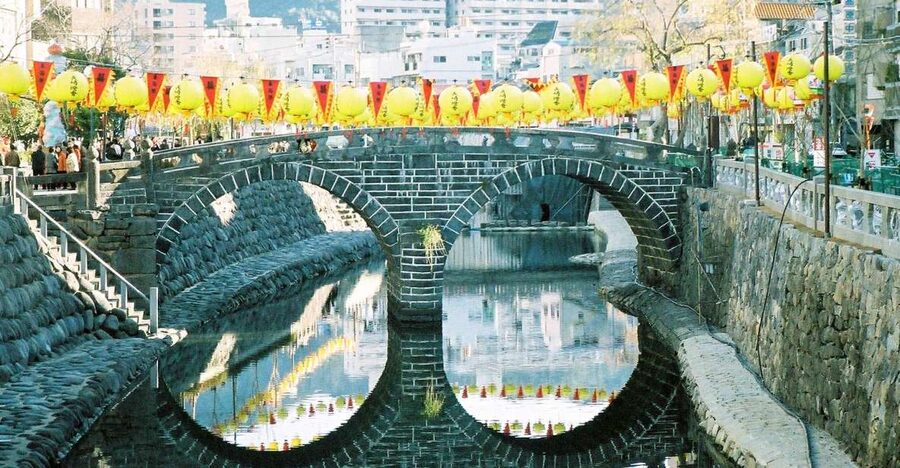
Reviewed · WALKING TOURS
Nagasaki: Private Walking Tour with a Local
Nagasaki is a city best understood through its contrasts: a solemn Peace Park, old foreign-trade districts, hillside views, streetcars, cafés, and everyday neighborhoods. This private walking tour gives you a local guide rather than a fixed script, so you can focus on the parts of Nagasaki that matter most to you.
I like the freedom to ask for major sights, food stops, or quieter corners, and I like that guides such as Yuki, Senyo, and Masaaki have adjusted routes for cruise schedules and changing interests. The main caution is simple: you need to help shape the day, since the tour offers no standard route and does not include admission fees, meals, or local transport.
Key points
- A genuinely private route: Your guide works with your interests, pace, and questions instead of leading a preset group.
- Strong coverage of Nagasaki’s major sights: Past routes have included the Atomic Bomb Museum, Peace Park, Dejima, and the Nagasaki Ropeway.
- Useful local advice: Guides can point you toward places to eat, shop, wander, and continue exploring after the tour.
- Good for cruise passengers: Pickup can be arranged near the city center, and some guides have met visitors at the cruise terminal.
- Flexible transport choices: Walking can be combined with public transportation or taxis, though you pay those costs separately.
- A guide-dependent experience: The best results come when you share your priorities before the meeting.
A private introduction to Nagasaki, not a fixed sightseeing march
At $82 per person, this tour sits above the price of a standard group walk, but you are paying for privacy and flexibility. The guide can spend more time on what interests you, adjust the pace for your group, and answer questions without waiting for twenty other people.
The tour lasts from three to six hours. That is a wide range, and it matters. Three hours can give you a useful first look at one part of Nagasaki. Six hours gives you room to link major sights with local neighborhoods, food advice, and a second area of town.
You can arrive with a plan, a list of questions, or almost nothing prepared. I would still send your main wishes ahead of time. The strongest outings seem to come when the guide knows that you want peace memorial sites, food, architecture, shopping, or less familiar corners before the day begins.
The guide speaks English, and the experience is for your private group only. Children younger than three join free, while children from three to twelve receive a 50 percent discount. Since this is a walking tour, comfortable shoes are not a minor detail.
More Walking Tours in Nagasaki:
- Taste Local Life: Nagasaki’s Historical Street Walking Tour
★ 5.0 · 27 reviews - Nagasaki Street Food Adventure: Private Walking Tour with a Local
★ 5.0 · 26 reviews - Kyoto Geisha Walking Tour: Gion District & Hidden Gems
★ 4.7 · 3,273 reviews
Starting near the Atomic Bomb Museum or another central meeting point
You can select from listed pickup options including the Statue of Dr. Sun Yat-sen, Umeya Shōkichi and Toku, and the Nagasaki Atomic Bomb Museum. The broader arrangement is flexible: your Lokafyer can meet you at a preferred location in or near central Nagasaki, including a hotel, landmark, or café.
That flexibility helps if you are arriving by ship, staying in town, or already exploring the center. One past route included a cruise terminal pickup, but you should confirm your exact meeting place in advance rather than assume every port pickup is automatic.
Starting at the Atomic Bomb Museum area makes sense if this is your first visit and you want to understand Nagasaki’s wartime story immediately. Starting elsewhere may work better if you have already visited the memorial sites or want to focus on food, shopping, or the city’s international past.
The meeting point is not just a logistical detail. Nagasaki has several areas spread across hills and valleys, and a well-chosen start can save time. Tell the guide where you are staying, how long you have, and any mobility concerns before the walk.
The Atomic Bomb Museum and Peace Park
For many people, the most important part of the day will be the Atomic Bomb Museum and Peace Park. The museum deals with the atomic bombing and its consequences, while Peace Park offers a more open setting for reflection.
A private guide can be especially useful here because the subject is difficult and details may be hard to process while you are navigating an unfamiliar city. Senyo has led visitors through the museum and Peace Park with a strong focus on the historical significance of both sites. Masaaki has also combined these stops with other major sights during a three-hour route.
Keep in mind that museum admission is not included. If you ask the guide to enter an attraction with you, you must cover the guide’s admission as well. That extra cost is easy to overlook when comparing the tour price, so include it in your budget.
These memorial sites deserve time and care. If you want a quick photo stop, say so clearly. If you want space to read and reflect, tell your guide that too. The private format makes this kind of adjustment possible.
Dejima and Nagasaki’s international story
Dejima gives the tour a different tone. It connects Nagasaki with the period when overseas trade and foreign contact were tightly controlled in Japan. A past route paired the Atomic Bomb Museum and Peace Park with a tram ride to Dejima, giving the day both twentieth-century wartime history and an older story of international exchange.
Dejima can work well for visitors who want more than memorial sites. It also helps explain why Nagasaki developed a different character from many other Japanese cities. Ask your guide to connect the places rather than treating each one as an isolated stop.
Entrance fees are not included here either. The guide may suggest the stop based on your interests, but you remain responsible for admission. If you are watching costs, you can ask for exterior views, neighborhood walking, or free sights instead.
A few more Nagasaki half-days worth comparing
- Nagasaki Full-Day Private Tour with Government-Licensed Guide
★ 5.0 · 66 reviews - Nagasaki Half-Day Private Tour with Government-Licensed Guide
★ 5.0 · 53 reviews - Visit Gunkanjima Island (Battleship Island) in Nagasaki
★ 4.0 · 32 reviews - Nagasaki Full Day Tour with Licensed Guide and Vehicle
★ 5.0 · 27 reviews
The Nagasaki Ropeway and views from above
The Nagasaki Ropeway has appeared on a three-hour custom route alongside the Atomic Bomb Museum and Peace Park. The ride adds a scenic break to a day that may otherwise focus heavily on history and city streets.
The provided details do not promise a particular length of stay at the ropeway or guarantee that every guide will include it. Treat it as an option to request, not a fixed part of the tour. Ask about timing, weather, transport, and any ticket costs when you plan the route.
This is also where the private format helps. You can decide if you want to trade a longer museum visit for city views, or keep the focus on central neighborhoods. A guide who understands your priorities can help make that choice without forcing the same schedule on every group.
Local cafés, food stops, and places tourists may miss
The most appealing part of this experience may be what happens between the headline sights. Guides have taken visitors to favorite food spots, cafés, seafood restaurants, and less obvious places that are difficult to identify from a quick online search.
One custom route included an especially well-liked lunch stop. Another included an authentic Japanese seafood restaurant during a change of plans in Sasebo. Those examples show the value of asking for food help directly, particularly if you want a local meal rather than a restaurant chosen only for convenience.
Meals and drinks are not included, so you pay for anything you order. That is a drawback for anyone seeking an all-inclusive outing, but it also leaves you free to set the budget and choose the kind of meal you want.
You can also ask for shopping advice, quiet cafés, street art, or local corners. The tour description suggests personal stories and neighborhood conversations rather than a recital of dates. That can make the city feel more understandable, but it also means the quality depends on the individual Lokafyer.
What the guides do especially well
The strongest pattern across the guide team is personal attention. Yuki has built routes around unusual local places, communicated before the tour, and balanced requested sights with her own favorite parts of Nagasaki. She has also handled multi-language communication and detailed planning.
Senyo has received particular praise for explaining the Atomic Bomb Museum and Peace Park. Masaaki has helped visitors understand both the sites and the practical business of getting around. Suniff has shared personal stories and local enthusiasm, while Jun has adapted quickly when a group needed to reach a destination and return to a ship.
You should not expect every guide to offer the same style. Some are likely to focus on conversation and personal stories. Others may prepare a more structured route. One lower-rated experience still described a friendly, personable English-speaking guide, but raised a fair concern: a private guide should offer some suggested sights instead of asking the visitor to design everything.
That is the key question to settle before booking. Ask the guide to suggest a route based on your interests, not simply to wait for you to name every stop. If you are a first-time visitor, say that you want both the must-see places and one or two less familiar stops.
Walking, trams, taxis, and the real cost
The base price covers the local guide and customized private walk. It does not cover local transport, attraction admission, meals, drinks, personal expenses, or optional activities.
That structure can be good value if you mostly walk and use the guide for orientation. It becomes more expensive if you add several paid sights, taxis, ropeway tickets, and lunch. Ask for a rough route before you begin so you know how much time will be spent walking and how much may require transport.
The experience can include public transportation or taxis when needed. One guide was willing to balance walking with both options, which is useful in a city where distances and slopes can affect your energy. Still, transport costs are yours, and the tour should not be treated as a vehicle-based sightseeing excursion.
Three hours suits a tight schedule, including some cruise passengers. Six hours is better if you want to combine memorial sites, Dejima, views, food, and local advice without rushing.
Who will get the most from this tour
I would recommend this experience to a first-time visitor who wants help getting oriented quickly. A good guide can explain how to move around the city, point out places for the rest of your stay, and prevent you from spending half a day working out the basics.
It also suits repeat visitors who have already seen the major sights and want a more personal route. Ask for a neighborhood walk, favorite café, local shopping advice, or places with fewer visitors.
Families can benefit from the flexible pace and private setting. You can adjust the day when young children need a break, though the tour remains a walking experience and may require transport between areas.
Cruise passengers are another natural fit. A guide can meet you at an agreed location, help keep the route focused, and offer advice for the hours after the tour. Confirm the meeting point and return timing before booking, especially if your ship schedule is tight.
This may not be ideal if you want a polished lecture, a fixed list of stops, or all admission and transport costs bundled into one price. It is also less suitable if you prefer to explore alone and already know Nagasaki well.
Practical planning before you book
Send three things before the tour: your must-see sights, your food or shopping interests, and your limits on walking. Add your arrival details if you are coming by cruise ship.
Ask the guide to recommend a starting point and a simple route. You can then decide if the day should center on the Atomic Bomb Museum and Peace Park, include Dejima, add the Ropeway, or focus on local streets and food.
Wear comfortable shoes and carry enough money for admissions, transport, and meals. If you want the guide inside a paid attraction, budget for the guide’s ticket too.
Cancellation is free up to 24 hours before the start time, and you can request a specific tour time. The activity is wheelchair accessible, but because routes and streets vary, discuss your needs in advance so the guide can plan appropriately.
Should you book the Nagasaki private walking tour?
Book it if you want a flexible local introduction rather than a standard sightseeing route. The strongest reasons are the private format, the ability to combine major sites with food and neighborhood advice, and the guide team’s record of adapting to real needs, including cruise schedules and unexpected changes.
Before paying, send a clear request for a suggested itinerary. That solves the main weakness of the format. At $82 per person, the tour offers good value for a couple, family, or small group that wants personal attention, but less value if you expect a fixed route with every cost included.
For a first visit, I would ask for the Atomic Bomb Museum and Peace Park, then add either Dejima, the Ropeway, or a local food stop depending on your time. For a repeat visit, skip the obvious list and ask the guide to show you favorite cafés, shops, and corners you would not easily find alone.
FAQ
How long does the Nagasaki private walking tour last?
The tour lasts between 3 and 6 hours. You can check available starting times and request a specific time.
What is included in the price?
The price includes a local English-speaking guide, called a Lokafyer, and a customized private walking tour.
Are entrance fees included?
No. Attraction admission is separate. If you want the guide to enter an attraction with you, you also need to pay the guide’s admission.
Is local transportation included?
No. Public transportation, taxis, and other local transport costs are not included. The route can combine walking with public transport or taxis when needed.
Where can the guide meet me?
The guide can meet you at a preferred location in or near central Nagasaki, such as your hotel, a landmark, or a café. The listed meeting options include the Statue of Dr. Sun Yat-sen, Umeya Shōkichi and Toku, and the Nagasaki Atomic Bomb Museum.
Can cruise passengers use this tour?
Yes. Pickup can be arranged at a preferred location, and a past tour included pickup at a cruise terminal. Confirm the exact meeting place and timing in advance.
Is the tour suitable for children?
Children under three years old join free. Children from three to twelve receive a 50 percent discount.
Is the tour wheelchair accessible?
Yes, the activity is listed as wheelchair accessible. Since this is a walking tour with a flexible route, discuss your requirements with the guide before the tour.
Can I cancel the tour?
Yes. You can cancel up to 24 hours in advance for a full refund.
Just added around Nagasaki
- Nagasaki: Private Tour with Local Guide★ 4.8 · 18 reviews
- Tour Nagasaki or Fukuoka in Privacy and Comfort.★ 5.0 · 17 reviews
- Nagasaki Street Food Adventure: Private Walking Tour with a Local★ 5.0 · 26 reviews
- Nagasaki Private Tour with a Local – Highlights & Hidden Gems★ 5.0 · 24 reviews
- Nagasaki WW2 History and Culture Tour★ 5.0 · 19 reviews
- Nagasaki Private Customizable Half Day Tour★ 5.0 · 16 reviews
- Nagasaki Full-Day Private Tour with Government-Licensed Guide★ 5.0 · 66 reviews
- Nagasaki Full Day Tour with Licensed Guide and Vehicle★ 5.0 · 27 reviews
Walking Tours, compared.

Kyoto Geisha Walking Tour: Gion District & Hidden Gems
Our verdict →
Imperial Palace and Shogun Historical Walking Tour
Our verdict →
Shinjuku Local Bar and Izakaya Guided Walking Tour
Our verdict →

Nishiki Market Brunch Walking Tour (7 Tastings + Brunch)
Our verdict →
Kyoto Arashiyama Walking Tour: Bamboo, Monkeys, Gardens & Secrets
Our verdict →
Tokyo Castle & Imperial PalaceーShogun Walking Tour
Our verdict →Browse the lists this tour appears in