
Reviewed · WORKSHOPS
Sekka Cotton Furoshiki Class
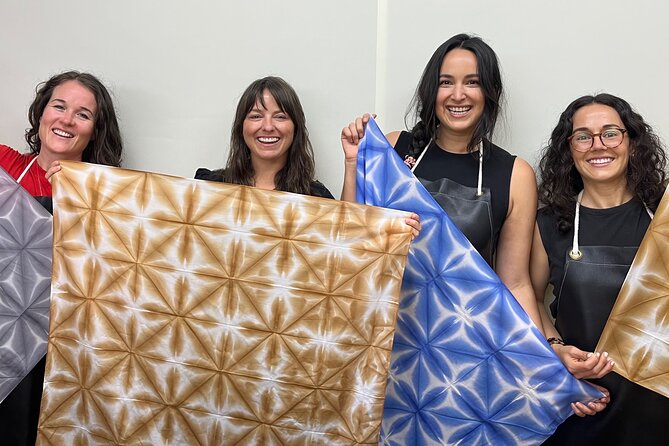
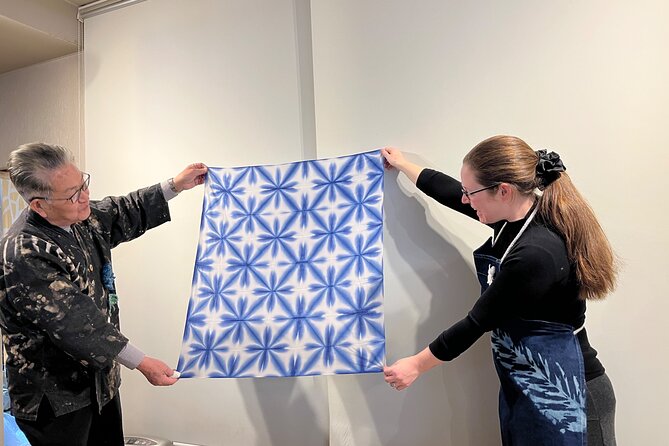
The best part of this Kyoto class is the reveal. You fold the cloth, clamp it between two boards, and dye it. When the fabric opens, the sekka shibori pattern appears. It is a simple process, but the result is a useful handmade souvenir, not another trinket for the bottom of your suitcase.
I like the private format, since your party gets the instructor’s attention and can ask questions at its own pace. I also like the two-part design: first you make the furoshiki, then you use the drying time to see the museum’s textile art and tools.
The main consideration is that the hands-on work is quite standardized. The class usually lasts 30 to 60 minutes, and the folding and dyeing can feel quick if you want a long, open-ended craft workshop.
Key points at a glance
- An 86 by 89 cm cotton furoshiki: You make a full-size wrapping cloth rather than a small test piece.
- A private class for your party: The activity is not shared with other groups.
- Sekka shibori in clear steps: Choose a color, fold the fabric, clamp it between boards, and dye it.
- A built-in museum visit: Your cloth dries for about 30 minutes while you see displays of art, tools, and samples.
- A strong family activity: The straightforward process works well for mixed ages and groups.
- A practical Kyoto keepsake: The finished furoshiki can wrap gifts, clothing, or other items at home.
Folding Kyoto into a Furoshiki
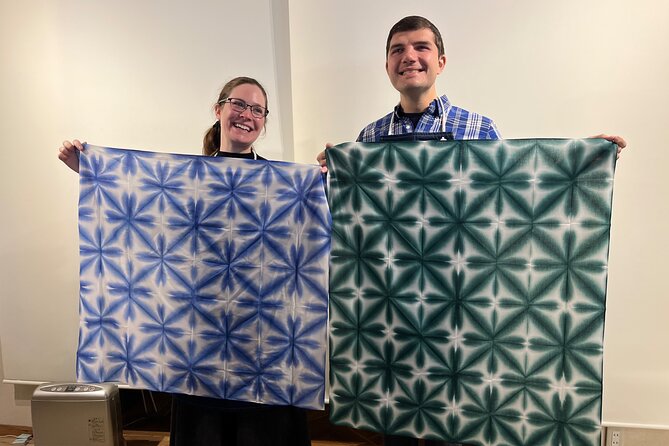
Furoshiki are traditional Japanese wrapping cloths. They are practical, attractive, and easy to pack, which makes this a smarter souvenir than something fragile or bulky. The cloth you make measures about 86 by 89 centimeters, large enough to feel like a real household item rather than a classroom sample.
The class takes place at the Kyoto Shibori Museum, at 135-5 Shikiamichō in Nakagyo Ward. You meet there and finish there. The location is near public transportation, so it fits neatly into a day spent around central Kyoto.
You are not signing up for a large group demonstration. This is a private activity for your own party. That matters most if you have children, older family members, or people who want to ask questions without holding up a room full of strangers.
The experience is also a useful change of pace from temple visits. Kyoto can become a parade of gates, gardens, and polished wooden halls. Here, you work with your hands and leave with something that records the visit in a personal way.
A few more Kyoto half-days worth comparing
- PERFECT KYOTO 1-Day Bus Tour
★ 5.0 · 13,518 reviews - Kyoto: Fushimi Inari, Kinkakuji, Bamboo Grove 1 Day Bus Tour
★ 4.8 · 4,316 reviews - Kyoto: Tea Ceremony in a Traditional Tea House in Kiyomizu
★ 4.9 · 3,519 reviews
The Sekka Shibori Method, Step by Step
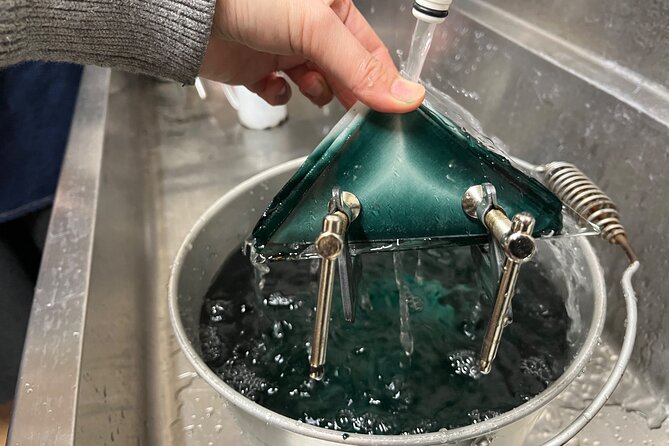
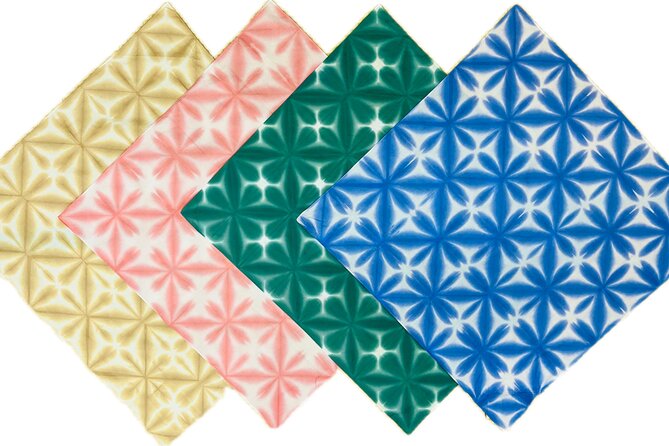
The process begins with a choice of color. The available information does not list the full color range, so you should not expect every possible shade. Still, choosing a color gives you a small creative decision before the more precise folding begins.
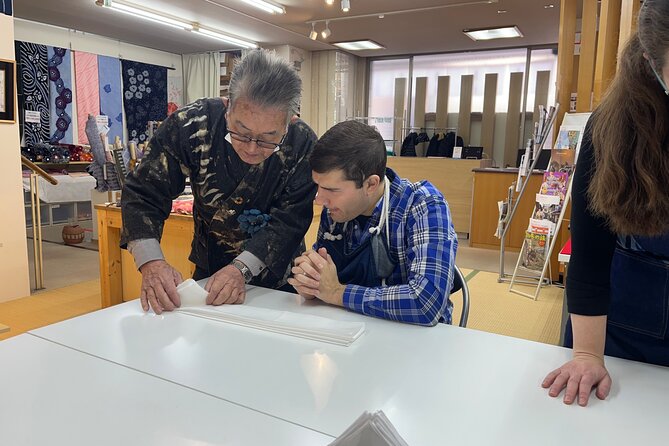
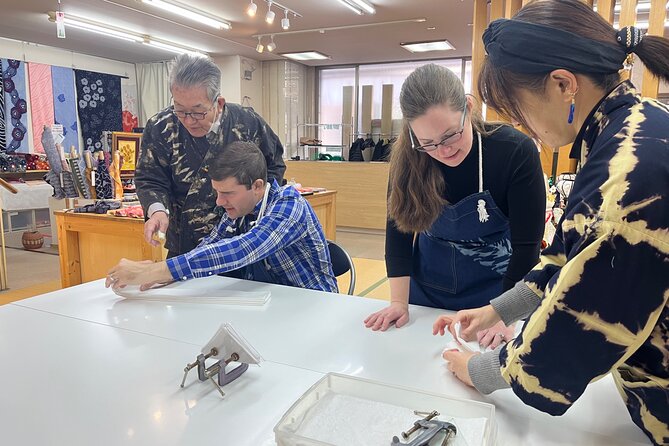
Your teacher shows you how to fold the fabric in a particular way. This is not a free-form design session. The folds are part of the method, and the final pattern depends on placing the cloth correctly.
Next, you put the folded fabric between two boards. The boards hold the fabric in place while it is dyed. That clamping stage is what makes the design controlled and repeatable, rather than a random splash of color.
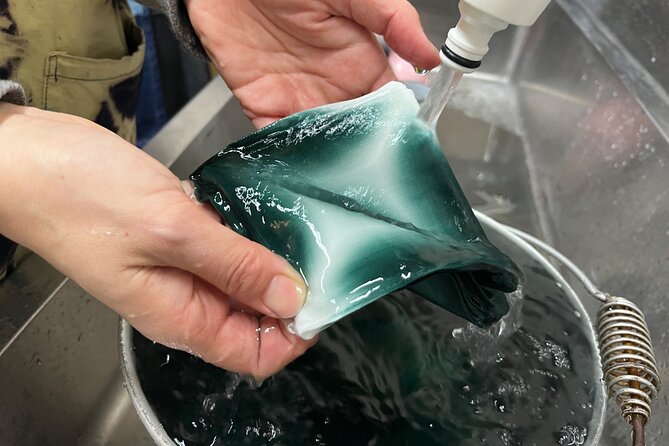
The dyeing itself is fairly quick. You will not spend hours mixing colors, sketching patterns, or stitching the cloth by hand. That simplicity makes the class approachable, especially for families and anyone who would rather make something than sit through a long technical lesson.
Once the dye has been applied, the cloth needs about 30 minutes to dry. The finished pattern is the payoff. Opening the folds reveals how the color traveled through the fabric, creating the geometric effect associated with the sekka shibori method.
This is a guided craft, not an advanced artisan course. If you already work with textiles, you may find the activity too controlled. If you are new to Japanese dyeing, the clear structure is a benefit. You get a finished result without needing years of practice.
Why the Drying Time Improves the Visit
A less thoughtful class would leave you sitting around while the cloth dries. This one uses that half hour well. You can browse the museum’s art pieces, tools, and fabric samples while the dye sets.
The museum displays help explain that shibori is more than a pretty blue-and-white pattern. The techniques used in Japanese textile work can involve folding, binding, clamping, and other ways of controlling dye. Here, you see examples and tools that give context to the small activity you have just completed.
One particularly notable display is a large exhibition of shibori fabrics made by 50 artisans over 50 years. It gives the craft a sense of scale and patience. Your furoshiki may take less than an hour, but the museum shows what can happen when textile skill is practiced across decades.
The museum also uses an educational video. Together with the displays, it gives you more to look at while the cloth dries and helps explain the place of shibori in kimono making and Japanese textile traditions.
I would allow yourself time to look closely instead of treating the museum as a waiting room. Study the samples, compare the patterns, and look at the tools. The class is short, but the museum adds substance to it.
A Private Class That Works for Families
The private setup is one of the strongest features. Only your party participates, so the pace can suit your group. You do not need to worry about strangers finishing early or a child needing extra help while the instructor moves on.
The activity has also worked well for families with teenagers. Folding and dyeing give everyone a task, and the finished cloth provides a shared reminder of the visit. It is a good choice when your group wants an activity that feels creative but does not require advanced skill.
The class is also family-friendly because the steps are direct. Choose a color, fold the cloth, secure it, and dye it. The simplicity is useful for younger participants, though adults seeking a complex workshop may wish for more freedom.
English-speaking support is available among the staff, and the instructors take time to explain the folding and dyeing process. The class is individual rather than crowded, which makes it easier to ask about the craft, the museum displays, or how the pattern is formed.
The experience suits a mixed group particularly well. One person can focus on the visual design, another on the mechanics, and someone else can simply enjoy making a Kyoto souvenir. You do not all need the same level of interest to have a good time.
More Hands-On Experiences in Kyoto:
- Kyoto: 45-Minute Tea Ceremony Lesson Experience
★ 4.3 · 2,378 reviews - Ramen Cooking Class at Ramen Factory in Kyoto
★ 5.0 · 1,937 reviews - Kyoto : Chopsticks Making Workshop in Gion with Engraving Option
★ 5.0 · 958 reviews - Kyoto: Samurai Sword Class by Experts in Traditional Arts
★ 4.9 · 657 reviews
What You Actually Take Home
The finished item is a cotton furoshiki measuring approximately 86 by 89 centimeters. That size gives you several practical uses at home. You can wrap a present, carry clothing, cover an object, or display the cloth as a textile souvenir.
Because you make the pattern yourself, it has more meaning than a mass-produced purchase. It is not a museum masterpiece, and the design is partly shaped by the fixed method. Still, the cloth carries the memory of your time in Kyoto in a way a standard souvenir often does not.
The process also teaches you to notice the work behind patterned fabric. Once you have folded and clamped the cloth, you will look at shibori displays differently. The patterns stop being merely decorative. You begin to see the role of pressure, folds, and dye movement.
The cotton material is practical and easier to care for than a delicate art textile. The supplied information calls it a cotton furoshiki, though one description also uses the phrase silk cotton. If the exact fabric matters to you, confirm it with the museum when booking.
The Museum Shop and Extra Spending
The museum shop sells shibori items, fabrics, souvenirs, and other textile goods. You do not need to buy anything beyond the class, but you may want to budget extra money if you like Japanese fabric arts.
The shop is useful after the museum visit because you have just learned how shibori patterns are made. You can compare your own cloth with finished goods and see the difference between a short beginner activity and work made for sale.
This is also where the cost can rise. The class price is about $43.35 per person, and the shop offers attractive pieces that may tempt you. I would decide in advance whether you are only making the furoshiki or also shopping for additional textiles.
At $43.35, the class is reasonably priced for a private activity that includes instruction, materials, a full-size cloth, and access to the museum displays during the drying period. It is not the cheapest one-hour activity in Kyoto, but the value improves if you care about the museum visit and want a finished item you will actually use.
If you judge the price only by the amount of hands-on dyeing, it may feel high. The active craft portion is short and straightforward. If you count the private lesson, the fabric, the finished souvenir, and the museum exhibition, the price makes more sense.
Timing Your Visit in Kyoto
The class lasts about one hour, though individual sessions usually take between 30 and 60 minutes. The difference depends on how quickly your party works and how much time you spend with the museum displays.
The 30-minute drying period is important when planning the rest of your day. Do not schedule a temple reservation or train departure immediately afterward. The cloth needs time to dry, and the museum visit is part of the experience rather than an optional extra.
This class works well as a compact stop between other central Kyoto sights. Since the museum is near public transportation, you can build it into a day without giving up an entire afternoon. Still, allow enough time to complete the craft calmly and see the exhibition properly.
The activity is booked, on average, 19 days ahead. That is a useful planning signal, especially if your Kyoto dates are fixed or you are traveling during a busy season. Booking early also helps you fit a private time slot into a crowded itinerary.
Confirmation is provided when you book, and the ticket is mobile. You can show the ticket on your phone rather than carrying a printed voucher.
Who Will Like This Most
I would recommend this class to you if you want a short, hands-on experience with a clear result. It is especially suitable for:
- Families with children or teenagers
- Couples looking for a shared activity
- First-time visitors curious about Japanese textile crafts
- Anyone wanting a useful souvenir made during the trip
- People who prefer a private lesson to a large group workshop
- Visitors who enjoy small museums and demonstrations
It may be less satisfying if you want to design your own pattern from scratch. The folding method is taught step by step, and the dyeing portion is standardized. You have some choice, especially with color, but not unlimited artistic control.
It is also not the right pick if you need a long class that fills half a day. This is a compact experience. Its strength is that it gives you a taste of shibori without demanding a major time commitment.
Practical Details Before You Book
The meeting point is Kyoto Shibori Museum, 135-5 Shikiamichō, Nakagyo Ward, Kyoto, 604-8261, Japan. The activity ends back at the same location.
Most people can participate, and the experience is near public transportation. The supplied information does not give detailed accessibility notes, so contact the provider if your party has specific mobility or other access needs.
Free cancellation is available if you cancel at least 24 hours before the start time. Changes or cancellations made within 24 hours are not accepted for a refund. The cut-off follows local Kyoto time, so check the time carefully if you are booking from abroad.
The provider is Kyoto Shibori Museum. The class is offered as a private activity, and only your group takes part.
Should You Book the Sekka Cotton Furoshiki Class?
Book it if you want a personal Kyoto souvenir, a short craft session, and a small museum visit in one stop. The private format, helpful instruction, and full-size cotton furoshiki give the experience more value than a simple make-and-take activity.
Go in with the right expectations. You are learning a traditional technique in a controlled beginner format, not training as a textile artisan. The hands-on work may feel brief, but the museum, the fabric displays, and the finished cloth round out the visit.
For families, couples, and craft-curious visitors, I think the $43.35 price is fair. If you want a long, highly creative workshop, choose something more advanced. If you want to make something attractive, learn the basics of sekka shibori, and leave Kyoto with a useful reminder, this is an easy class to add to your plans.
FAQ
Where does the Sekka Cotton Furoshiki Class take place?
It takes place at the Kyoto Shibori Museum, located at 135-5 Shikiamichō, Nakagyo Ward, Kyoto, 604-8261, Japan.
How long does the class last?
The class takes approximately one hour. Individual sessions usually last between 30 and 60 minutes.
What will I make?
You will dye an approximately 86 by 89 cm cotton furoshiki, a Japanese wrapping cloth.
What is the sekka shibori process?
You choose a color, fold the fabric in a specific way, place it between two boards, and dye it. The folds and boards help create the final pattern.
Is the activity private?
Yes. This is a private activity, and only your party participates.
What happens while the fabric dries?
The fabric dries for about 30 minutes. During that time, you can see shibori art pieces, tools, and samples in the museum.
Is the museum visit included?
Yes. You can explore the Kyoto Shibori Museum during the drying period, including its textile displays and educational material.
Is the class suitable for most people?
Most people can participate, and the activity is described as family-friendly. It is also near public transportation.
Can I cancel for a full refund?
Yes, if you cancel at least 24 hours before the experience start time. Cancellations or changes made less than 24 hours before the start time are not refunded.
Just added around Kyoto
- Kyoto Sword Experience – includes Museum Ticket/Ninja Experience★ 4.5 · 149 reviews
- Scenic Green Tea Fields of Hidden Kyoto & Local Tea Exp (Private)★ 5.0 · 32 reviews
- Secret Eastern Kyoto Biking Adventure★ 5.0 · 44 reviews
- Private Sake Tasting in Central Kyoto with Sake Sommelier★ 5.0 · 32 reviews
- Samurai School in Kyoto: Samurai for a Day★ 5.0 · 202 reviews
- SHIRAKAWA Japanese Culture Experiences with private English staff★ 5.0 · 16 reviews
- A Privately Guided Photoshoot in Beautiful Kyoto by a Pro★ 5.0 · 18 reviews
- Samurai Performance and Casual Experience: Kyoto Ticket★ 4.5 · 115 reviews
Workshops, compared.
Sushi Making Tokyo Roll and Authentic Japanese Sushi Class
Our verdict →
Ninja 1-hour Hands-on Lesson by Japanese master in Kyoto -Entry
Our verdict →
Browse the lists this tour appears in