
Reviewed · GEISHA & MAIKO EXPERIENCES
Authentic Maiko Experience&Kyoto Dinner (Free drink) at Noh Stage
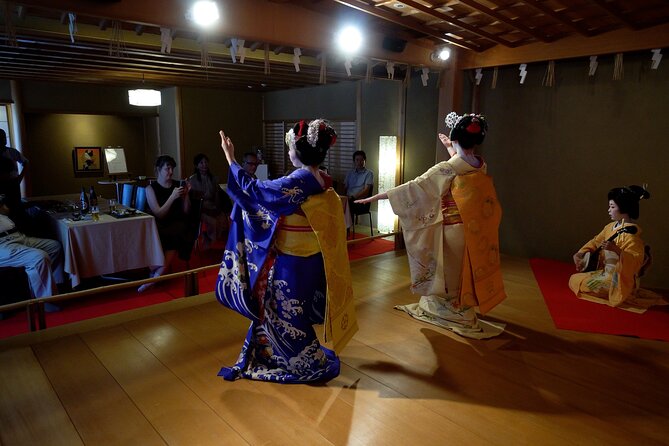
The best part of this Kyoto evening is the chance to meet a maiko face to face, not simply watch one perform from a distant stage. You’ll see dance accompanied by live shamisen, then move into conversation, questions, photographs, and traditional ozashiki games. It feels closer to a small cultural gathering than a theater show.
I like two things especially: the setting on a Noh stage gives the evening real ceremony, and the Kyoto-certified interpreter helps turn a polite exchange into a useful conversation. The dinner, live music, and two hours of included drinks also make the $150 price easier to understand.
The main consideration is timing. This is a compact, organized evening with up to 20 people, so it will not offer the quiet privacy of a private tea-house appointment. You’ll also need socks or tabi to step onto the stage, and bare feet are not allowed.
Key points at a glance
- Live maiko dance on a Noh stage: Watch more than one performance with live shamisen accompaniment.
- Conversation beyond the photo: Ask questions about the maiko, her kimono, kanzashi hair ornaments, and daily traditions.
- Ozashiki games: Take part in playful traditional games on the same stage where the music and dance take place.
- Dinner and drinks included: Enjoy a Japanese meal and unlimited drinks during the two-hour program.
- Small group format: The experience accepts between two and 20 participants, keeping the setting more personal than a large theater show.
- Easy cultural access: A Kyoto-certified interpreter guide helps bridge the language gap during introductions and questions.
A maiko evening with more than a stage show
Many Kyoto visitors hope to see a maiko, but a short public performance can leave you with little sense of the person behind the makeup, kimono, and dance. This experience gives you a fuller evening. You watch formal dance, then have time to speak, ask questions, take photos, and play games.
That change of pace matters. The dance shows the discipline and grace of the tradition. The conversation gives you a chance to understand details that are easy to miss from the audience, such as the meaning of the kimono, the design of the kanzashi, and the etiquette of the setting.
The program is presented as an authentic ozashiki-style evening rather than a simplified tourist performance. You should still understand that this is a cultural program prepared for international visitors, not a private invitation into an ordinary Kyoto teahouse. That distinction is useful. The evening offers access to customs that are normally difficult to encounter, while keeping the schedule clear and manageable.
The experience takes place at Okazaki-an, at 9165 Okazaki Enshoji-cho in Kyoto’s Sakyo Ward. It is near public transportation, and the program ends where it begins. You do not need to arrange private transportation as part of the booking, but you are responsible for reaching the venue from your accommodation.
More Dinner Experiences in Kyoto
- Kyoto Gion Cultural Walk & Geisha Show with Dining Options
★ 5.0 · 518 reviews - Kyoto Gion Cultural Walk & Geisha Show with Dining Options
★ 5.0 · 483 reviews - Dinner with Maiko in a Traditional Kyoto Style Restaurant Tour
★ 5.0 · 175 reviews
Arriving before 6 p.m. in Okazaki
Doors open at 5:50 p.m., with the main program beginning at 6 p.m. If you arrive early, you can wait in the first-floor café area before going upstairs.
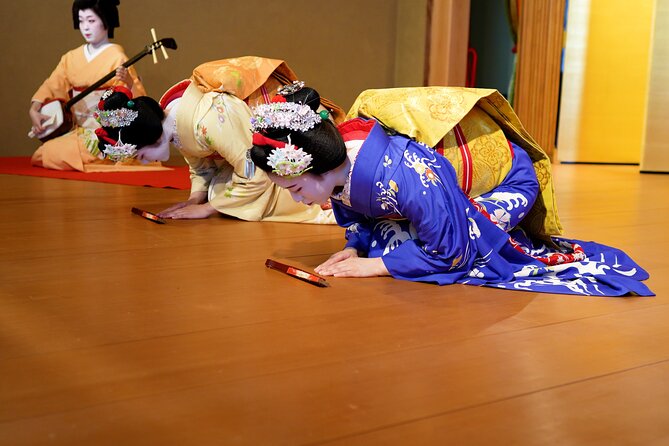
The gathering takes place on the second floor of the Noh stage. Plan to arrive with socks or tabi already on. Bare feet are not permitted, and you cannot eat or drink during the initial photo time on the stage. These rules may sound small, but they protect the formality and cleanliness of the performance space.
The Noh stage is one of the evening’s strongest details. Instead of sitting in a standard restaurant room, you enter a setting designed for traditional performance. That gives the dance more focus and makes the photographs feel more distinctive than a quick picture beside a hotel backdrop.
You should also leave oversize luggage behind. It is not included in the activity, and a traditional stage is not the place for large suitcases or bulky bags.
Free photos before the welcome toast
The schedule begins with free photo time on the Noh stage. This is a useful chance to take in the room before the meal and performance begin, though eating and drinking are not allowed during this part.
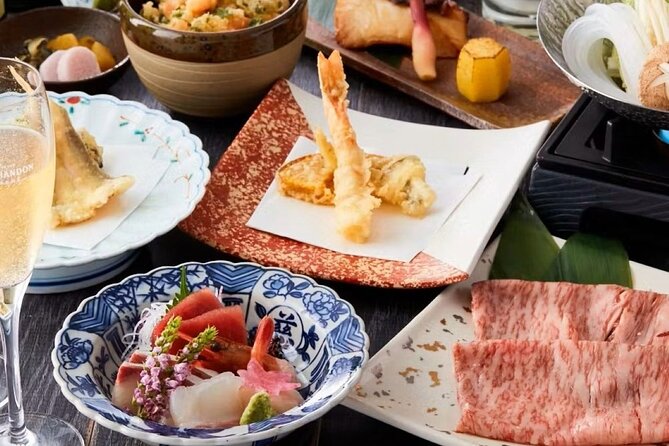
After the opening, you’ll have a welcome toast and dinner. Drinks are included for the full two-hour period, which adds value for anyone comparing this with a short maiko photo session. The provided information describes the meal as Kyoto traditional food and kaiseki-style cuisine, with a presentation suited to the evening’s formal setting.
Kaiseki is not simply a large plate of food. The appeal is usually in the careful presentation, seasonal feel, and sequence of small dishes. The exact menu is not specified, so you should not book this expecting a particular dish or a fixed menu. You can expect the meal to be part of the cultural setting rather than an unrelated dinner served beside a show.
The dinner also gives you a natural way to settle into the evening. You are not rushed from one photo opportunity to the next. Food, conversation, music, and performance share the same program.
Live shamisen and the first maiko dance
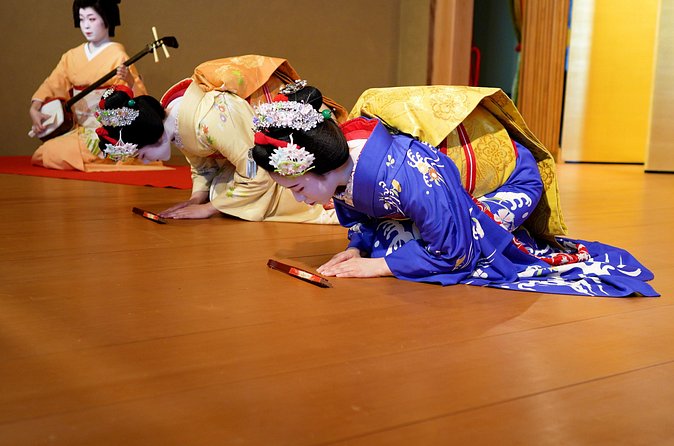
The maiko enters with the jikata, the musician who plays the shamisen. The live instrument is important. Recorded music can provide atmosphere, but a live shamisen connects the performer and musician in the room and lets you notice the timing of the dance more clearly.
You’ll watch the maiko dance on the Noh stage, accompanied by live shamisen. The evening includes multiple dance performances, not just one brief appearance. That gives you a better sense of the controlled gestures, posture, and restraint involved in this art.
Do not expect a fast, crowd-pleasing stage act. The appeal lies in precision, quiet expression, and the formal beauty of the movement. If you prefer high-energy entertainment, the pace may feel slow. If you want to see how much meaning can be carried through a small gesture, this is one of the program’s best parts.
The performance also benefits from the smaller format. With a maximum of 20 people, you are not lost in a large hall. Still, the group size means your view and conversation time will depend partly on where you sit and how many people attend that evening.
More Geisha Experiences in Kyoto:
- Kyoto Geisha Walking Tour: Gion District & Hidden Gems
★ 4.7 · 3,273 reviews - Kyoto: Gion Magical Night Walking Tour with Geisha Trivia
★ 4.9 · 2,393 reviews - Kyoto: Gion Geisha District Walking Tour – Stories of Geisha
★ 4.7 · 2,187 reviews - Best of Kyoto: Gion, Geisha, Pagodas & Cobblestones
★ 4.9 · 2,058 reviews
Introductions, kimono details, and useful questions
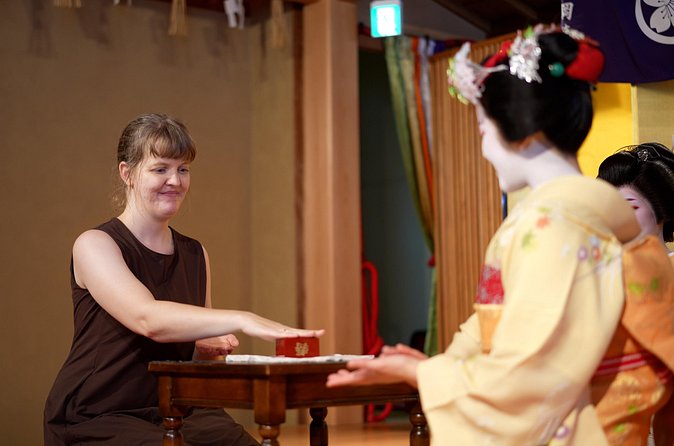
After the dance, the maiko and participants introduce themselves. This is when the evening becomes more personal. You can learn about the person in front of you rather than treating the visit as a performance only.
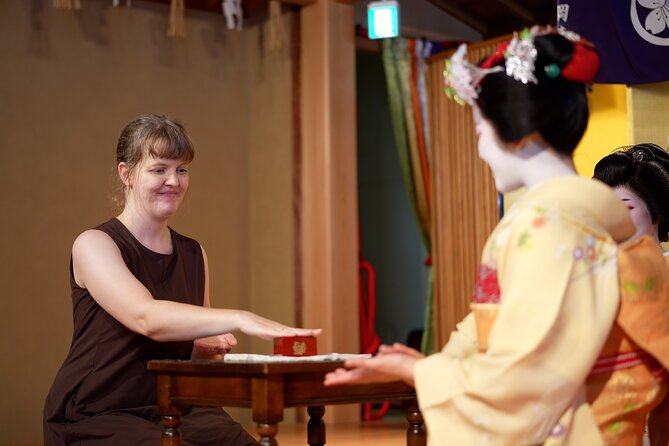
A Kyoto-certified interpreter guide supports the exchange. This is especially valuable because questions about training, dress, customs, and work can lose their meaning when translated word for word. The interpreter helps keep the conversation moving and makes it easier for you to ask follow-up questions.
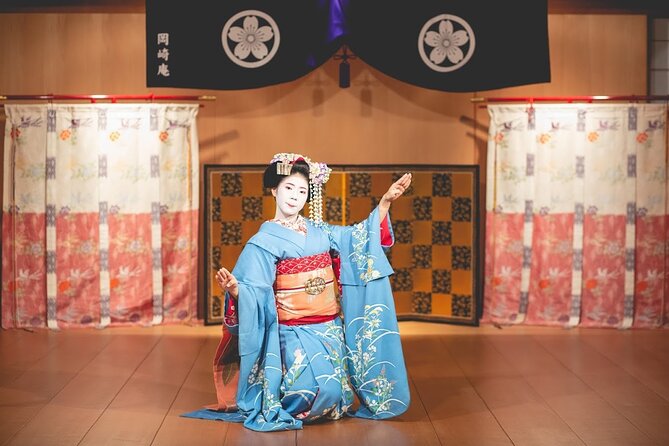
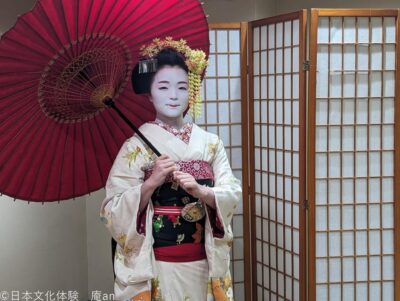
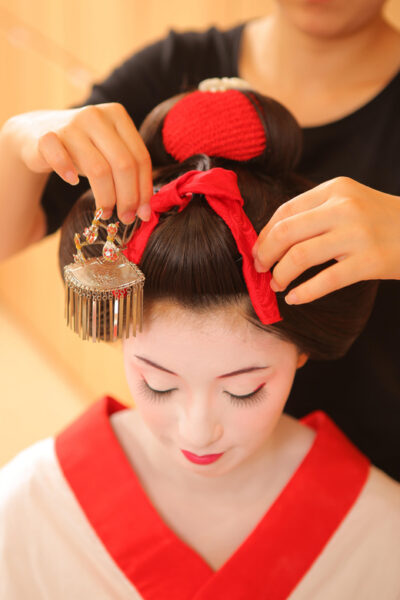
There is also a presentation about the maiko’s kimono and kanzashi. The hair ornaments are not just decoration, and the clothing is not merely a costume for photographs. In a traditional setting, these details carry information about season, age, status, and occasion. The program gives you a chance to ask about those details directly.
You should make a short list of questions before arriving. Ask about the elements you can see: the hair ornaments, the layers of the kimono, the dance, the shamisen, or the difference between maiko and geiko. A prepared question can lead to a much better exchange than a simple request for a pose.
The two-shot photo without losing the human connection
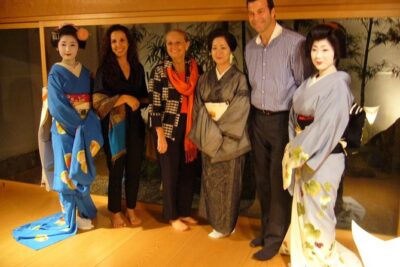
The program includes a two-shot photo with the maiko on the Noh stage. This is more meaningful after the performance and conversation, because you have already seen the setting as a place of art rather than a photo booth.
Photo time is likely to be organized so that everyone gets a turn. With a maximum of 20 participants, you may need to wait briefly while others take their photographs. Keep your request simple and follow the staff’s direction. The setting and clothing already provide plenty of visual interest.
One especially memorable detail described for this experience is a small present given by the maiko on at least one occasion. You should not assume that a gift is guaranteed every time, since it is not listed as an included feature. Still, the possibility shows how the evening can contain personal touches beyond the formal schedule.
Ozashiki games with music and laughter
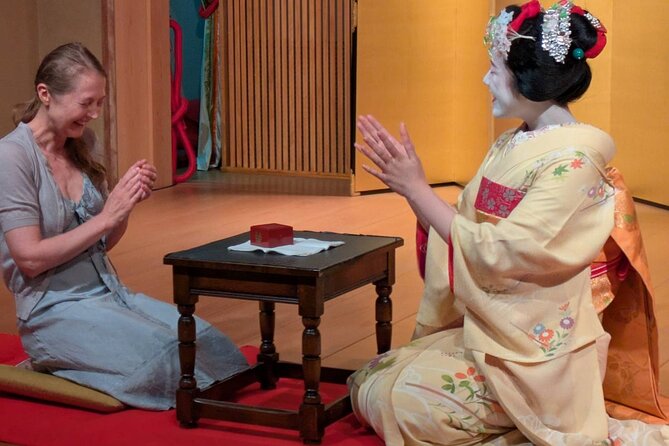
The final major part of the program is the ozashiki game experience. These traditional games are playful and social, often relying on quick reactions, simple rules, and a willingness to join in. You do not need to be an expert. The point is participation.
The games take place on the Noh stage and are enlivened by live shamisen. This is where the formal mood relaxes. You may have spent the earlier part of the evening watching careful dance and listening to explanations. The games let you interact in a more spontaneous way.
This section is particularly useful if you are nervous about speaking with the maiko. Conversation can feel intimidating at first, especially across a language barrier. A game gives you a shared activity, making the contact feel more natural.
The games also help explain why this is not simply a dinner with a short performance attached. The experience is built around several kinds of contact: watching, listening, asking, photographing, eating, and playing.
Does the $150 price offer fair value?
At $150, this is not a budget evening. You are paying for more than dinner. The price includes a maiko encounter, multiple dances, live shamisen, interpreter support, conversation, a two-shot photo, ozashiki games, dinner, and unlimited drinks for two hours.
That package can be good value if meeting a maiko is one of your main Kyoto goals. Arranging comparable access independently would be difficult, particularly if you want both performance and conversation in an appropriate setting. The interpreter also matters. Without language support, you might see a lovely dance but miss much of the explanation and question time.
The value is weaker if you mainly want a quick photograph or a long, elaborate kaiseki dinner. This is a fixed two-hour cultural program, not a full restaurant evening. The menu details are not specified, and the group may include as many as 20 people.
Group discounts may help if you are booking with companions. The experience requires at least two participants, so it is not designed as a solo booking. Mobile tickets also make arrival simpler, though you still need to check your route to Okazaki-an and arrive ready for the 6 p.m. start.
Who will enjoy this most?
I would recommend this evening to you if you want a direct introduction to Kyoto’s maiko culture but do not have access to a private ozashiki gathering. It works well for first-time visitors who want context, not just photographs.
It is also a strong choice for couples, families with an interest in Japanese culture, and small groups who want a shared evening. The program offers enough variety to hold attention: dance, food, questions, photos, music, and games.
You may want to choose something else if you dislike scheduled group activities or prefer to explore at your own pace. The program follows a clear timetable, and the group can reach 20 people. It also may not suit anyone who wants a long, quiet dinner with little interaction.
Most people can participate, according to the activity details, and the venue is near public transportation. No special fitness is required. The main practical limits are the ban on bare feet, the lack of space for oversize luggage, and the need to reach the venue independently.
Practical details before you book
The activity lasts about two hours, from 6 p.m. to 8 p.m. Doors open at 5:50 p.m. The meeting point and end point are both Okazaki-an, 9165 Okazaki Enshoji-cho, Sakyo Ward, Kyoto, postal code 606-8344.
Confirmation is provided when you book, and mobile tickets are available. Free cancellation applies if you cancel at least 24 hours before the start time. Cancellations or changes made within 24 hours are not accepted for a refund.
Wear socks or tabi. This is the most important clothing tip. You should also arrive without oversize luggage and allow enough time to find the venue before the 6 p.m. start.
The activity is offered by 舞妓さんと楽しむ京都の四季. Individual guide names are not provided, but a Kyoto-certified interpreter guide is part of the program.
Should you book this maiko experience?
Book it if you want an intimate, well-structured introduction to maiko culture with real interaction. The live shamisen, Noh stage, conversation, and games give the evening more depth than a short dance show, while the meal and included drinks make the price easier to justify.
Think twice if you want a private appointment, a completely unscheduled evening, or a detailed menu chosen in advance. For most visitors who see Kyoto as more than temples and shopping, this is a memorable way to spend two hours, especially if you arrive curious, prepared with questions, and ready to take part.
FAQ
Where does the maiko experience take place?
It takes place at Okazaki-an, 9165 Okazaki Enshoji-cho, Sakyo Ward, Kyoto, 606-8344. The main program is held on the second floor of a Noh stage.
What time does the activity begin and end?
Doors open at 5:50 p.m. The program begins at 6 p.m. and ends at about 8 p.m.
Is dinner included?
Yes. Meals and drinks are included. The experience features Kyoto traditional food and kaiseki-style cuisine.
Are drinks included?
Yes. Drinks are included for the two-hour program, with unlimited drinks listed among the experience features.
Can I take a photo with the maiko?
Yes. The program includes a two-shot photo with the maiko on the Noh stage. There is also free photo time on the stage before the program begins.
Do I need to wear socks?
Yes. Socks or tabi are required for the Noh stage. Bare feet are not allowed.
How many people can join, and can I cancel?
The activity requires a minimum of two participants and accepts a maximum of 20 people. You can cancel for a full refund up to 24 hours before the start time. Cancellations within 24 hours are not refundable.
Just added around Kyoto
- Sekka Cotton Furoshiki Class★ 5.0 · 19 reviews
- Kyoto Sword Experience – includes Museum Ticket/Ninja Experience★ 4.5 · 149 reviews
- Scenic Green Tea Fields of Hidden Kyoto & Local Tea Exp (Private)★ 5.0 · 32 reviews
- Secret Eastern Kyoto Biking Adventure★ 5.0 · 44 reviews
- Private Sake Tasting in Central Kyoto with Sake Sommelier★ 5.0 · 32 reviews
- Samurai School in Kyoto: Samurai for a Day★ 5.0 · 202 reviews
- SHIRAKAWA Japanese Culture Experiences with private English staff★ 5.0 · 16 reviews
- A Privately Guided Photoshoot in Beautiful Kyoto by a Pro★ 5.0 · 18 reviews
Geisha & Maiko Experiences, compared.
Kyoto Geisha Walking Tour: Gion District & Hidden Gems
Our verdict →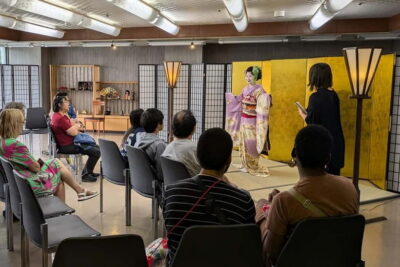
Dinner with Maiko in a Traditional Kyoto Style Restaurant Tour
Our verdict →
Browse the lists this tour appears in