
Reviewed · WALKING TOURS
Kyoto Early Riser Platinum One-Day Walking Tour
Kyoto’s biggest sights are spread across the city, and this early-start private tour tackles several of them in one long day. You’ll walk beneath the red torii gates at Fushimi Inari, see the Golden Pavilion, visit Arashiyama’s bamboo forest, and finish with food and shopping at Nishiki Market.
I like the personal format, since your guide can adjust the pace and point out small details along the way. I also like the mix of famous sights and less showy places, especially Kitano Tenmangu and the nearby Kamishichiken geisha district. The catch is the amount of transit and walking. Kyoto’s buses and trains can be crowded, and the sightseeing time may feel rushed if you want to linger.
Key points to know
- Early start: Begin from Kyoto Station before the day’s heat and largest crowds build.
- Six distinct stops: See Fushimi Inari, the bamboo forest, Kinkakuji, Kitano Tenmangu, Kamishichiken, and Nishiki Market.
- Private attention: Only your group participates, with guides such as Gigi, Fuji-san, Seiya, or Meg.
- Transport is extra: Budget ¥1,700 per person for public transportation, plus a ¥500 admission fee.
- A full day on foot: Expect an active eight-hour outing with repeated transfers between distant parts of Kyoto.
- Best for first visits: This works well when you want a broad introduction rather than a slow look at one neighborhood.
A fast, useful introduction to Kyoto
This tour gives you a wide sweep of Kyoto in about eight hours. It is not a slow temple walk or a food tour. Instead, it links major cultural sights from the city’s eastern, northern, western, and central areas.
That broad reach is the main reason to book it. In a single day, you can see places that would otherwise require careful planning across several days. You also have a guide beside you to explain what you are seeing, help with the day’s movement, and adjust the schedule when possible.
The early start matters. Fushimi Inari and the bamboo forest are famous for their photographs, and both can feel much less comfortable once the crowds arrive. Starting early also helps in warmer weather, when Kyoto’s long walks can become tiring.
You meet at the Kyoto Station Building and return to the same meeting point at the end. Since the tour is private, you are not sharing the day with a large group, though the attractions themselves are open to everyone and may still be busy.
More Walking Tours in Kyoto
- Kyoto Geisha Walking Tour: Gion District & Hidden Gems
★ 4.7 · 3,273 reviews - Kyoto: Gion Magical Night Walking Tour with Geisha Trivia
★ 4.9 · 2,393 reviews - Kyoto: Gion Geisha District Walking Tour – Stories of Geisha
★ 4.7 · 2,187 reviews
Fushimi Inari’s red torii gates
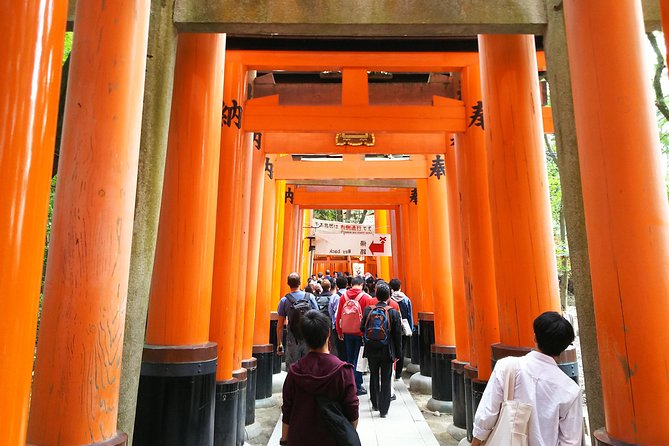
The first stop is Fushimi Inari-taisha Shrine, one of Kyoto’s most recognizable sights. Its orange-red torii gates form long passages up the wooded slopes behind the shrine.
The gates were offered by worshippers in thanks for good fortune received from the deity enshrined here. That gives the famous rows of torii a human meaning beyond their strong visual appeal. Your guide can help you notice the inscriptions and explain how the shrine fits into Japanese religious life.
The planned visit lasts about an hour. That is enough to walk through a section of the gates and take in the atmosphere, but it is not enough for a long climb through the entire shrine complex. If you have seen photographs of seemingly endless torii, remember that the full route extends much farther than most short visits.
Wear comfortable shoes from the start. The day has only just begun, but Fushimi Inari sets the tone for the amount of walking ahead.
Arashiyama’s bamboo forest
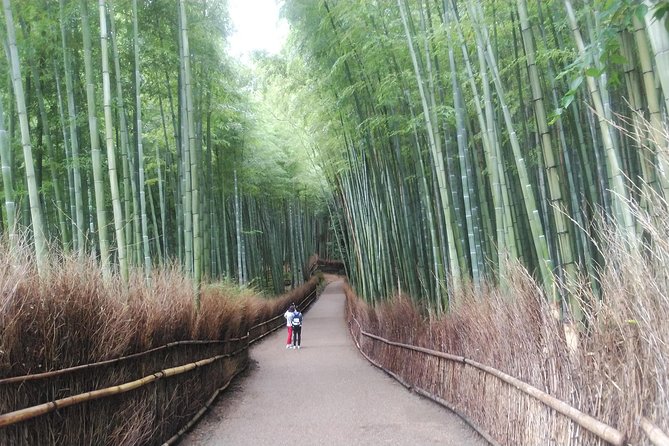
From Fushimi Inari, the tour continues to Bamboo Forest Street in Arashiyama. Tall bamboo rises on both sides of the path, creating a cool, green corridor where light filters through the leaves.
The planned stop is about 70 minutes. That gives you time for photographs and a walk through the main section, though you should not expect a quiet private forest. The path is one of Kyoto’s best-known sights, so your early start is useful here.
The bamboo itself is only part of the appeal. Listen for the creaking trunks and the soft movement of the leaves in the breeze. Those small sounds are easy to miss when you are focused on taking pictures, but they help explain why this place feels different from an ordinary city park.
One point deserves attention: the supplied tour information notes that the bamboo area may deserve more time. If Arashiyama is high on your personal list, this is the stop most likely to leave you wanting longer. The tour gives you an introduction, not a full exploration of the district.
Kinkakuji and the Golden Pavilion
Kinkakuji, the Golden Pavilion, is the day’s most immediately striking temple sight. The building’s gilded exterior reflects in the pond, making it one of Kyoto’s easiest places to recognize in a photograph.
The temple is tied to Zen and samurai culture, and your guide can give the famous building more context than a quick picture stop alone. The visit lasts about 50 minutes, which is generally enough to follow the visitor route, see the pavilion from the main viewpoints, and take photographs.
Admission is not included. The listed fee is ¥500 per person, so keep that amount in your budget. The tour information identifies this as the paid entry during the day.
Kinkakuji is very popular. That does not make it disposable, but it does mean the experience is built around viewing the pavilion rather than finding a quiet corner for private reflection. Your guide can help you use the time well and explain what you are seeing before you move on.
Same trip, a completely different kind of day:
- PERFECT KYOTO 1-Day Bus Tour
★ 5.0 · 13,518 reviews - Kyoto: Fushimi Inari, Kinkakuji, Bamboo Grove 1 Day Bus Tour
★ 4.8 · 4,316 reviews - Kyoto: Tea Ceremony in a Traditional Tea House in Kiyomizu
★ 4.9 · 3,519 reviews - Kyoto: Tea Ceremony Ju-An at Jotokuji Temple
★ 4.9 · 3,207 reviews
Kitano Tenmangu’s quieter change of pace
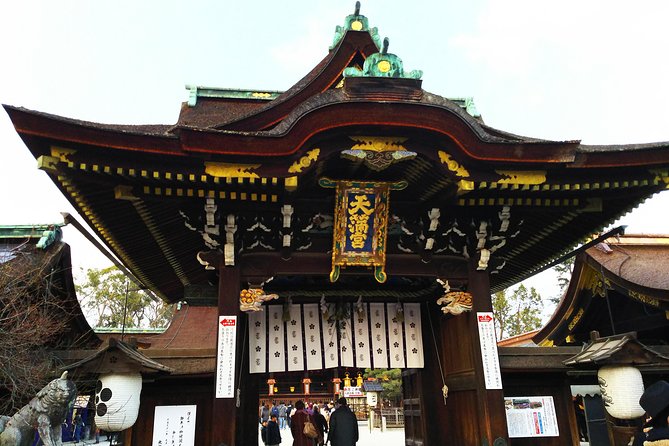
Kitano Tenmangu Shrine offers a different mood after the Golden Pavilion. Built in 945, it honors Sugawara no Michizane, a figure associated with learning and academic success.
Students come here to pray before examinations, so the shrine gives you a look at a living religious custom, not only an old building. The visit lasts about 30 minutes, making it a short but worthwhile stop.
I like this part of the route because it breaks up the famous-photo sequence. Fushimi Inari, the bamboo forest, and Kinkakuji are all instantly recognizable. Kitano Tenmangu asks you to pay closer attention to the purpose of the shrine and the people who use it.
There is no admission charge listed for this stop. It also sits next to Kamishichiken, so the route connects two nearby sights without treating them as unrelated attractions.
Kamishichiken and Kyoto’s geisha districts
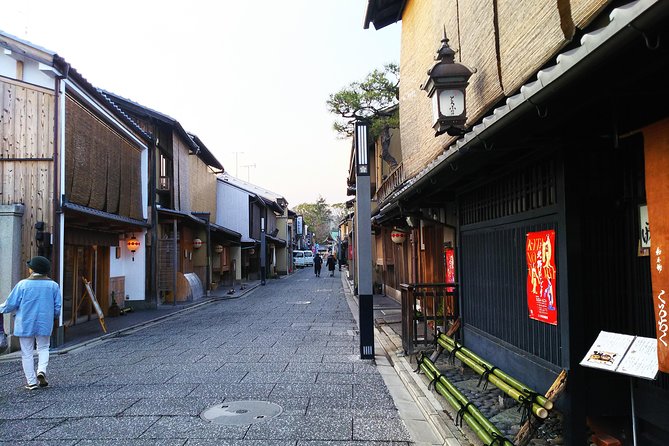
Kamishichiken is one of Kyoto’s five hanamachi, or geisha districts. It is located beside Kitano Tenmangu and has fewer geisha houses and geiko and maiko than some of the city’s better-known districts.
The planned visit lasts about 25 minutes. This is a brief orientation, not a performance or a guarantee of seeing geiko or maiko. That distinction matters. You are walking through a traditional district and learning about its role, not buying admission to a show.
The shorter visit can work well for first-time visitors who want context without spending a large part of the day in one area. Your guide can point out the setting and explain the difference between the district and the public shrine next door.
Please treat this area with care. It is a working neighborhood, not simply a photo set. The tour provides an introduction, so use the time to look around respectfully rather than expecting a staged encounter.
Nishiki Market for food and shopping
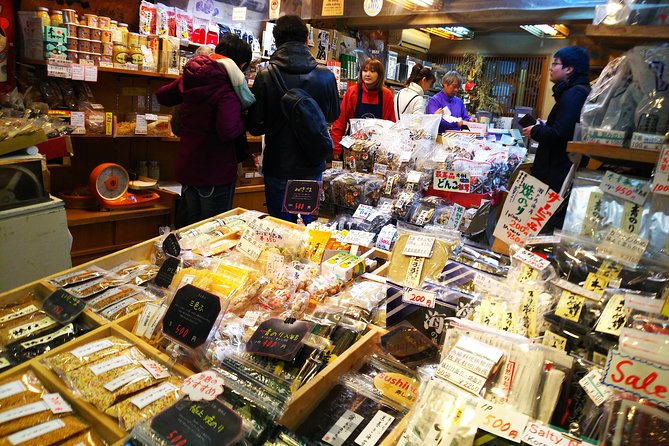
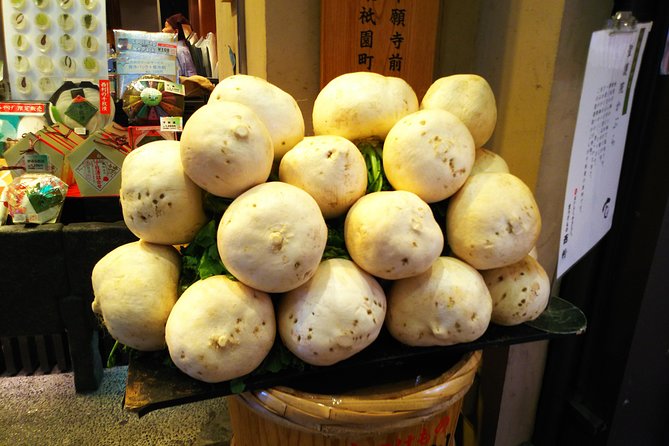
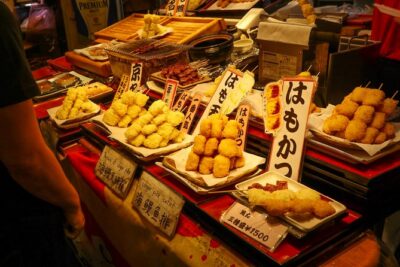
The final listed stop is Nishiki Market, a long shopping street that has served Kyoto for about 400 years. Around 126 shops line the roughly 390-meter market, selling Kyoto vegetables, pickles, and other foods.
The planned stop is 40 minutes. That is enough for a first walk through the market and some tasting, but it is short if you want to browse every stall or sit down for a long meal. If food is one of your main reasons for booking, ask your guide early how lunch or tastings will fit into the schedule.
This is one place where the guide’s personal knowledge can add real value. Gigi is described as arranging a well-liked lunch and adapting the day to personal interests. Other guides, including Fuji-san and Seiya, are described as recommending scenic places and a good local lunch spot.
The market can feel crowded, and the narrow street makes it hard to stop wherever you wish. Stay aware of other shoppers and keep your group together. You may find that a few well-chosen tastes are more satisfying than trying to cover the entire market.
What the private format really gives you
The private format is the strongest feature of this experience. Only your group participates, so you are not waiting for a large party at every gate or trying to hear a guide over a crowd.
That does not mean the day is fully custom-made. The advertised route has six planned stops, and the distance between them requires public transportation. Still, a private guide can adjust the rhythm within those limits. You may spend more time on a shrine detail, move along when your group is tired, or ask for a lunch stop that suits your interests.
The guides named in the supplied material include Gigi, Fuji-san, Seiya, and Meg. Gigi is noted for taking photographs and making extra effort to match the day to the group’s interests. Fuji-san is described as explaining the important details and adding scenic places. Seiya is associated with using buses and the subway as part of the experience, allowing you to see more of Kyoto’s neighborhoods between sights. Meg is noted for answering questions and even bringing hand warmers on a cold morning.
Those details suggest that the quality of your day depends heavily on the person guiding it. You should expect interpretation, practical help, and local suggestions, not just a person leading you from gate to gate.
The price, extra costs, and overall value
The listed price is $130.79 per person. For a private eight-hour day in Kyoto, that can be fair if you value planning help and personal attention.
The base price does not cover everything. Add ¥500 per person for the listed admission fee and ¥1,700 per person for public transportation. Lunch is also not identified as included, so plan to pay for food separately.
That makes the real cost higher than the headline price. Still, you are paying for a full day with a professional guide and a route that links distant parts of Kyoto. If you would otherwise spend hours planning transit, finding each entrance, and working out what the sights mean, the service may justify the added cost.
The value is weaker if you already know Kyoto well or prefer to choose your own pace. You could spend a full day in one area and avoid repeated transfers. The tour earns its price through breadth and guidance, not through long stays at each attraction.
Group discounts are available, which may improve the per-person value for a larger private party. Since the activity is private, ask for the current group pricing before booking if you are not traveling alone.
Transit, walking, and the pace of the day
You should approach this as an active day. The route involves shrine paths, temple grounds, market streets, station movement, and public transportation. The supplied details describe quite a bit of walking, and that is the most important practical warning.
Public transport costs extra and can take meaningful time. Kyoto’s attractions are not arranged in one tidy row, so the group moves between separate districts. One unhappy experience with the tour centered on excessive transport and connections that felt tedious, along with the need to carry or use a transit card such as Suica.
That criticism is useful even if the route suits you. This is not a tour where every minute is spent looking at temples. Some of the eight hours will go toward getting there. You gain range, but you give up depth.
Wear supportive shoes and keep your belongings light. A stroller is not suitable, although the activity is listed as accessible for people with limited mobility and limited eyesight. Most people can participate, but the amount of walking means you should consider your own stamina before booking.
Who should book this Kyoto day
I would recommend this tour to a first-time visitor who wants to see Kyoto’s major cultural sights in one organized day. It is especially useful if you have limited time, want a private guide, and prefer explanations to a self-guided checklist.
It also suits families or small groups with different interests. A private guide can respond when one person wants more cultural detail, another wants photographs, or the group needs a short pause.
I would be more cautious if you want a slow visit to Arashiyama, a long lunch, or extended time inside each shrine. The route covers a lot, but it does so by keeping each stop fairly short.
The tour is also weather dependent. Free cancellation is available up to 24 hours before the start time, and a poor-weather cancellation offers another date or a full refund. Changes made within 24 hours are not accepted, so watch the local cut-off time.
Should you book this tour?
Book it if you want breadth, a private guide, and an early start more than a leisurely pace. You will see several of Kyoto’s best-known sights, learn how they fit into Japanese culture, and avoid having to build the whole route yourself.
Skip it if you dislike public transportation, want to stay in one neighborhood, or need long, unhurried visits. For the right person, the tour is a practical first look at Kyoto. Just budget for the extra transport and admission costs, wear good shoes, and accept that the city’s famous sights come with some crowds and time spent in transit.
FAQ
Where does the tour start?
The tour starts at the Kyoto Station Building, at 901 Higashishiokōjichō, Shimogyo Ward, Kyoto, 600-8216, Japan.
Where does the tour end?
The activity ends back at the meeting point at Kyoto Station Building.
How long does the tour last?
The tour lasts approximately eight hours.
Is this a private tour?
Yes. Only your group participates in the activity.
What is included in the price?
A professional guide is included.
Are admission tickets included?
No. The listed admission fee is ¥500 per person.
Is public transportation included?
No. Public transportation costs ¥1,700 per person.
Which sights are included?
The route includes Fushimi Inari-taisha Shrine, Bamboo Forest Street, Kinkakuji Temple, Kitano Tenmangu Shrine, Kamishichiken Kaburenjo Theatre, and Nishiki Market.
How much walking is involved?
Quite a bit of walking is involved, including time at shrines, temples, market streets, and public transportation connections.
Can I cancel for a full refund?
Yes, if you cancel at least 24 hours before the experience start time. Cancellations made less than 24 hours before the start time are not refunded.
Just added around Kyoto
- Sekka Cotton Furoshiki Class★ 5.0 · 19 reviews
- Secret Eastern Kyoto Biking Adventure★ 5.0 · 44 reviews
- Kyoto Sword Experience – includes Museum Ticket/Ninja Experience★ 4.5 · 149 reviews
- Scenic Green Tea Fields of Hidden Kyoto & Local Tea Exp (Private)★ 5.0 · 32 reviews
- Private Sake Tasting in Central Kyoto with Sake Sommelier★ 5.0 · 32 reviews
- Samurai School in Kyoto: Samurai for a Day★ 5.0 · 202 reviews
- SHIRAKAWA Japanese Culture Experiences with private English staff★ 5.0 · 16 reviews
- A Privately Guided Photoshoot in Beautiful Kyoto by a Pro★ 5.0 · 18 reviews
Walking Tours, compared.

Kyoto Geisha Walking Tour: Gion District & Hidden Gems
Our verdict →
Imperial Palace and Shogun Historical Walking Tour
Our verdict →
Shinjuku Local Bar and Izakaya Guided Walking Tour
Our verdict →

Nishiki Market Brunch Walking Tour (7 Tastings + Brunch)
Our verdict →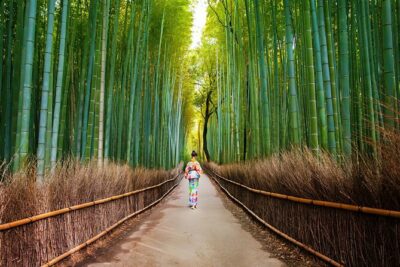
Kyoto Arashiyama Walking Tour: Bamboo, Monkeys, Gardens & Secrets
Our verdict →
Tokyo Castle & Imperial PalaceーShogun Walking Tour
Our verdict →Browse the lists this tour appears in