
Reviewed · TEMPLES & SHRINES
Kyoto Early Bird English Tour: Fushimi-Inari and Arashiyama
Kyoto’s famous sights are much easier to enjoy before the day gets going. This early tour takes you from Kyoto Station to Fushimi Inari and Arashiyama while the paths are still relatively calm, giving you a better chance at clear photos and a quieter look at two very busy places.
I like the small maximum group of eight and the practical help with Kyoto’s trains. I also like the mix of shrine, bamboo grove, Zen temple, and river bridge. The catch is cost: at $96.83, you pay a premium for guidance, and the ¥390 transport fee is extra.
Key points at a glance
- Early start: Reach Fushimi Inari and Arashiyama before the main daytime crowds arrive.
- Small group: The maximum is eight people, allowing more contact with guides such as Vincent, Hiro, Caleb, Eri, and Haruka.
- Four contrasting stops: See a Shinto shrine, bamboo forest, Zen temple, and historic bridge in one morning.
- Public transport included in the experience, not the price: Your guide leads the way, but you pay ¥390 per person for transportation.
- Photo-friendly timing: The early hour helps with pictures, and several guides are praised for taking photos.
- Fast Kyoto introduction: The four to five hour route works well if you have only one day or want an orientation before exploring alone.
Why the early hour matters at Fushimi Inari
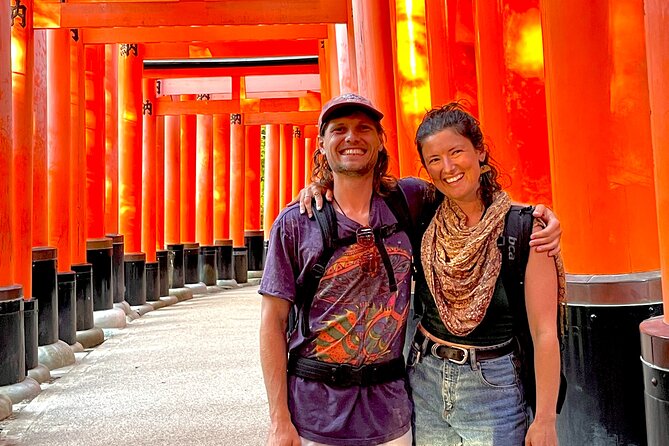
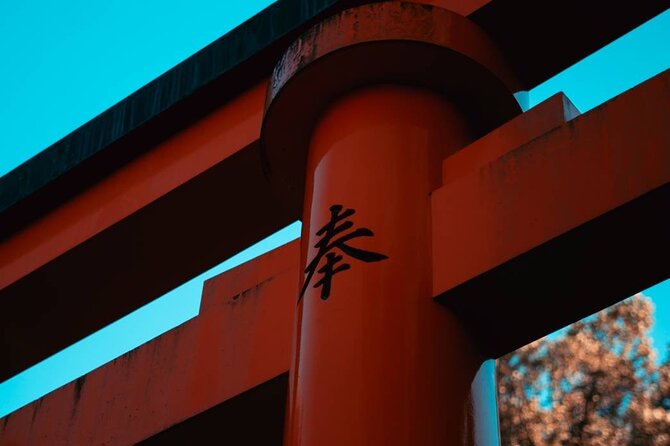
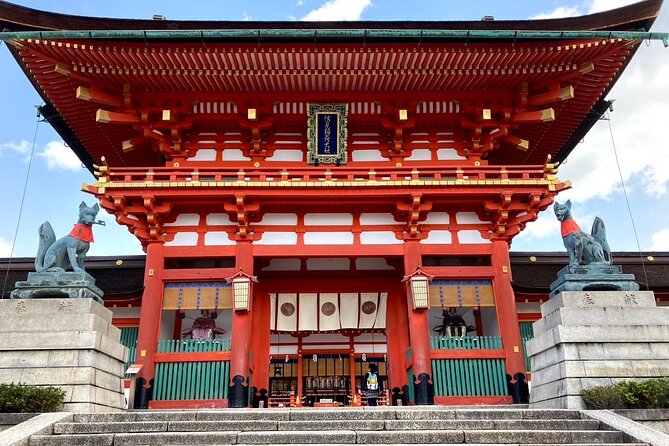
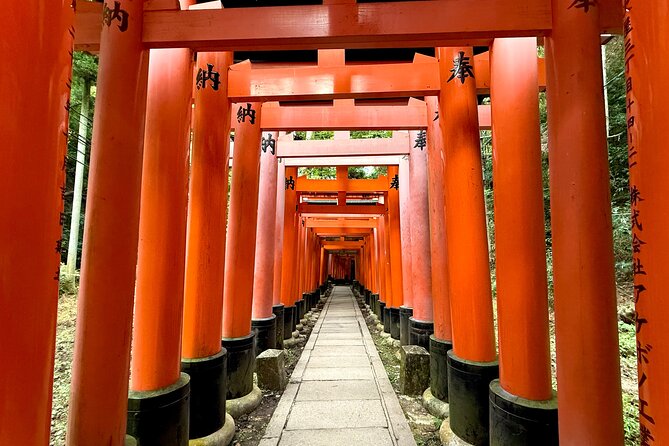
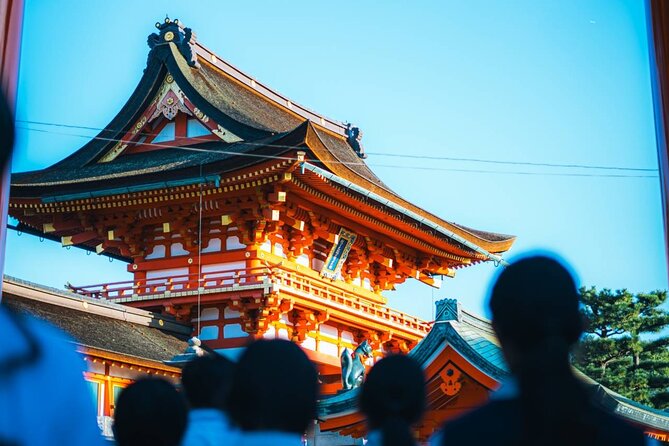
Fushimi Inari-taisha is one of Kyoto’s most recognizable sights, with thousands of orange-red torii gates climbing the wooded slopes of Mount Inari. During the middle of the day, the lower paths can become packed. Starting early gives you a calmer first look and makes the narrow passages easier to handle.
The visit lasts about 90 minutes. That is enough time to walk through the main gate area, pass beneath rows of torii, hear about the shrine’s role, and get a feel for the uphill route. It is not enough for a long hike to every upper section of Mount Inari, so set your expectations accordingly.
I like having a guide here because Fushimi Inari can feel like an endless series of gates without some context. An English-speaking guide can explain the meaning of the shrine, the role of Inari worship, and the small fox figures connected with the site. The exact depth of the talk depends on your guide, but names repeatedly praised for clear and engaging explanations include Vincent, Hiro, Caleb, and Eri.
The early timing also helps with the heat. Kyoto summers can be hot and humid, and the path includes uphill walking. One useful rhythm is to focus on the lower shrine and the most photogenic gate sections rather than treating the stop as a full mountain hike.
Admission to Fushimi Inari is free. You should still allow room in your morning for a few pauses, since the group stops for photos and explanations rather than racing through.
More Temple & Shrine Tours in Kyoto
- Kyoto: Fushimi Inari, Kinkakuji, Bamboo Grove 1 Day Bus Tour
★ 4.8 · 4,316 reviews - Kyoto: Tea Ceremony in a Traditional Tea House in Kiyomizu
★ 4.9 · 3,519 reviews - Kyoto: Tea Ceremony Ju-An at Jotokuji Temple
★ 4.9 · 3,207 reviews
Arashiyama Bamboo Forest before the crowds
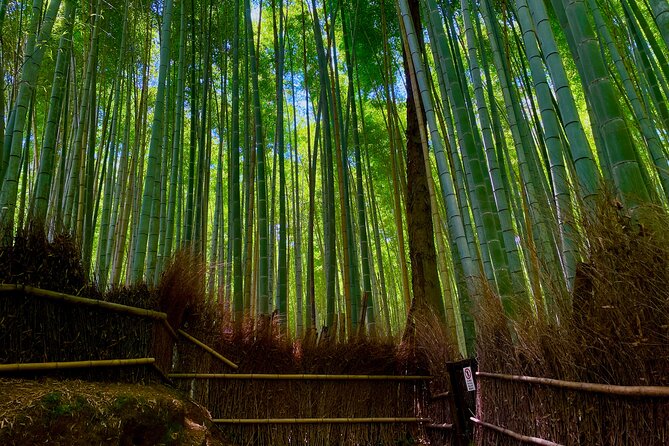
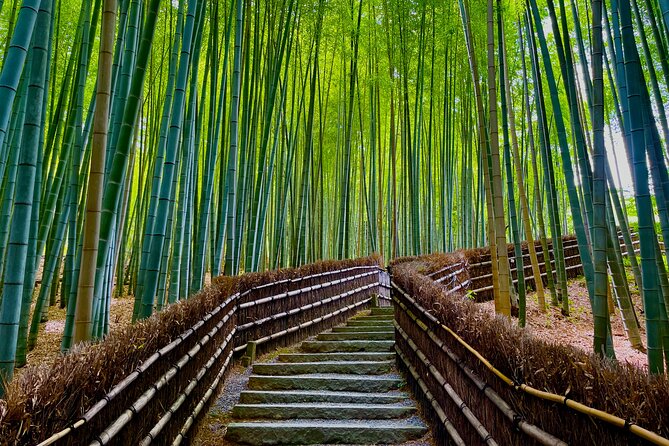
The bamboo forest is the tour’s other headline stop. You spend about an hour on Bamboo Forest Street, walking among tall bamboo stalks that form a narrow green corridor above the path. It is a simple sight, but the scale and sound make it memorable when the walkway is not crowded.
The early start is especially useful here. The path is often one of Kyoto’s most photographed spots, and the difference between arriving early and arriving later can be substantial. You may not have the walkway to yourself, but you have a better chance of seeing the grove without a solid stream of people in every photo.
I would treat this stop as a short scenic walk, not a long nature outing. The bamboo section itself is limited, and the hour also needs to cover orientation and pictures. Guides such as Haruka and Hiro are praised for helping with photo spots, while Vincent is noted for taking personal photos and helping solo visitors capture the moment.
There is no admission charge for the bamboo forest. Wear shoes that are comfortable for walking, since this tour combines several stops and uses public transportation between areas.
Tenryu-ji adds meaning to Arashiyama
Tenryu-ji Temple gives the Arashiyama visit more depth. This UNESCO World Heritage site is known for its Zen garden and views toward the surrounding mountains. After the visual simplicity of the bamboo grove, the temple offers a more composed setting, with carefully arranged gardens and architecture tied to Zen practice.
The scheduled visit is about an hour. That gives you time to see the main areas at a measured pace, hear about the temple, and look closely at the garden rather than simply checking off another stop.
The supplied information contains a small pricing inconsistency: the itinerary says the Tenryu-ji admission is not included, while the included section says the admission fee is included. Confirm the current arrangement before departure so you know if any temple payment is needed. The tour price itself is listed as $96.83 per person.
This stop is important for understanding why the tour is more than a photo run. Fushimi Inari gives you a Shinto shrine and a mountain path. Tenryu-ji shows a Zen temple and garden tradition. Seeing both in one morning gives you useful contrast, even though the time at each site is limited.
If your main goal is a long temple visit or extended garden photography, you may want to return to Tenryu-ji independently. The tour provides an introduction, not an unhurried half-day stay.
Togetsukyo Bridge and the final Arashiyama view
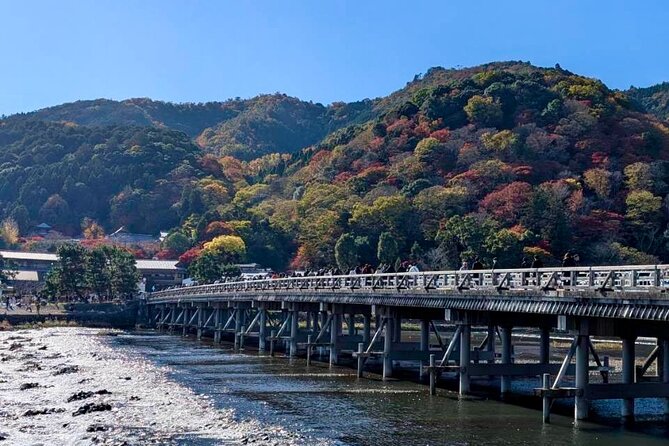
The last stop is Togetsukyo Bridge, meaning Moon Crossing Bridge. The current structure dates from 1934, while the bridge has much older roots reaching back to the Heian Period. It crosses the Katsura River and provides a broad view of Arashiyama’s riverfront and hills.
The stop lasts about 15 minutes, so think of it as a quick viewpoint and orientation rather than a full riverside walk. Your guide can point out the bridge, explain its place in the district, and help you frame a final photo.
I appreciate this brief stop because it changes the mood. After the enclosed bamboo paths and temple garden, the river opens up the view. The short visit also keeps the morning moving, which matters when the whole route is designed to finish in about four to five hours.
Same trip, a completely different kind of day:
- PERFECT KYOTO 1-Day Bus Tour
★ 5.0 · 13,518 reviews - Kyoto Geisha Walking Tour: Gion District & Hidden Gems
★ 4.7 · 3,273 reviews - Kyoto: Gion Magical Night Walking Tour with Geisha Trivia
★ 4.9 · 2,393 reviews - Kyoto: 45-Minute Tea Ceremony Lesson Experience
★ 4.3 · 2,378 reviews
What the small group really gives you
The group is capped at eight people. That is small enough for you to ask questions without raising your voice, stay near the guide on station platforms, and get help with pictures or route details.
Several guides are named in the supplied material. Vincent is repeatedly described as friendly, attentive, and good at explaining Kyoto’s culture and history. Hiro is praised for humor, enthusiasm, photo help, and strong site knowledge. Caleb is noted for clear instructions, a good command of historical and cultural topics, and keeping the group moving on hot days.
Eri is described as fun and well informed, while Haruka is praised for taking photos. Cade receives credit for clear pre-tour instructions, keeping people on track, and allowing enough time for pictures. Your guide will vary, so you should not book solely because you hope for one particular person.
The small group does not turn this into a private tour. You still follow a set route and share the guide’s attention. But compared with a large coach outing, the format should feel more personal and easier to manage.
The train portion is useful, but budget for it
Transportation is one of the less obvious parts of this experience. The tour begins at the 7-Eleven Heart-In store at Kyoto Station’s Central Entrance and uses public transportation to reach the sights. The listed transportation fee is ¥390 per person, and it is not included in the tour price.
That extra cost is modest in yen, but it matters because the headline price is already close to $100. Read the final booking details carefully so you are not surprised at the station.
The upside is practical. Kyoto’s rail and station system can be confusing on a first visit, especially when you are trying to reach two separate sightseeing districts early in the morning. A guide can lead you through the transfers, keep the group together, and remove some of the stress.
One person found the train travel enjoyable as part of the local experience. Another felt the tour was too expensive because the same route could be done independently. Both views are fair. You are paying less for admission and more for time saved, explanations, and navigation.
Is $96.83 a fair price?
The value depends on how comfortable you are exploring Kyoto alone. Fushimi Inari and the bamboo forest do not require admission, and the route can be visited independently for much less than $96.83. If you are confident with Japanese trains, comfortable researching the sites, and happy to manage your own timing, the tour is not the cheapest option.
I see stronger value for a first visit, a short Kyoto stay, solo visitors who want help with photos, and families that would rather follow a guide than manage several train movements. One family specifically appreciated the guide’s attention with a six-year-old child, and another group valued help reaching several major sights in a single morning.
The price also buys efficiency. You see four well-known places in four to five hours, with little wasted time between them. That can be worthwhile if you have only one day in Kyoto or need to fit other plans into the afternoon.
The weak point is that the schedule is brisk. You do not get unlimited time at any stop, and you may want to return to Fushimi Inari or Tenryu-ji later for a slower visit. If you prefer wandering without a clock, an independent plan may suit you better.
Who should book this Kyoto morning tour?
I would consider this tour a good fit if you:
- Have a short stay in Kyoto and want a fast introduction to major sights.
- Prefer an English-speaking guide to explain religious and cultural details.
- Want help using public transportation.
- Care about getting photos before the worst crowds arrive.
- Like small groups rather than large bus tours.
- Are traveling with family and want someone else to keep the route organized.
I would think twice if you want a full climb of Mount Inari, a long visit inside Tenryu-ji, or plenty of unplanned time. The early start also requires discipline. You need to reach the Kyoto Station meeting point on time, and the meeting instructions matter. One group missed the initial gathering despite receiving clear directions, so check the location carefully before bed.
There is no hotel pickup or drop-off. The activity ends back at the meeting point, which is convenient for returning to your hotel or continuing elsewhere from Kyoto Station.
The tour is generally suitable for most people, but you should be ready for walking, stairs, and an uphill section at Fushimi Inari. Weather matters too. Rain can reduce crowds, but it also makes the paths less comfortable, so dress for the forecast.
My verdict on the early Kyoto route
I like this tour most as an efficient first morning in Kyoto. The early schedule is the real selling point, and the small group makes the train connections, cultural explanations, and photo stops easier than handling everything alone.
The biggest caution is value. You can visit the main sights independently for less, and the ¥390 transport fee is extra. The Tenryu-ji admission wording should also be confirmed before booking.
Book it if your time is tight, you want a guide, or you would rather spend your morning seeing Kyoto than studying train routes. Skip it if you enjoy planning independently and want to linger. At 99 percent recommended with a 5 rating from 198 ratings, it has a strong record, but the one clear criticism is useful: the experience is not the bargain choice. It is a convenience and orientation tour, with an excellent early start.
FAQ
How long does the Kyoto Early Bird English Tour last?
The tour lasts approximately four to five hours.
Where does the tour begin?
It begins at the 7-Eleven Heart-In store at the Central Entrance of JR Kyoto Station.
Where does the tour end?
The activity ends back at the meeting point.
Which places are visited?
The route includes Fushimi Inari-taisha Shrine, Arashiyama Bamboo Forest, Tenryu-ji Temple, and Togetsukyo Bridge.
Is transportation included in the tour price?
No. The listed transportation fee is ¥390 per person.
Is hotel pickup or drop-off provided?
No. Hotel pickup and drop-off are not included.
How large is the group?
The activity has a maximum of eight travelers.
Is Tenryu-ji admission included?
The included information says the Tenryu-ji admission fee is included, but another part of the tour information says admission is not included. Confirm the current policy when booking.
Can I cancel for a full refund?
Yes. You can cancel at least 24 hours before the experience start time for a full refund. Cancellations or changes made less than 24 hours before the start time are not accepted for a refund.
Just added around Kyoto
- Sekka Cotton Furoshiki Class★ 5.0 · 19 reviews
- Kyoto Sword Experience – includes Museum Ticket/Ninja Experience★ 4.5 · 149 reviews
- Scenic Green Tea Fields of Hidden Kyoto & Local Tea Exp (Private)★ 5.0 · 32 reviews
- Secret Eastern Kyoto Biking Adventure★ 5.0 · 44 reviews
- Private Sake Tasting in Central Kyoto with Sake Sommelier★ 5.0 · 32 reviews
- Samurai School in Kyoto: Samurai for a Day★ 5.0 · 202 reviews
- A Privately Guided Photoshoot in Beautiful Kyoto by a Pro★ 5.0 · 18 reviews
- Samurai Performance and Casual Experience: Kyoto Ticket★ 4.5 · 115 reviews
Temples & Shrines, compared.

Tea Ceremony in a Traditional Tea House in Kiyomizu
Our verdict →
Meiji Shrine, Asakusa, Skytree Bus Tour and Cruise
Our verdict →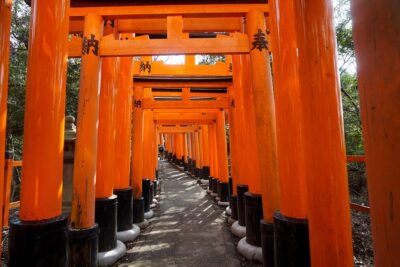
Fushimi Inari Hidden Hiking Tour (Private Option Available)
Our verdict →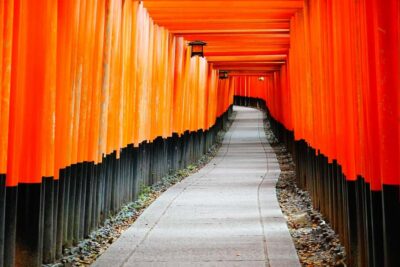
Osaka/Kyoto:Kinkakuji,Arashiyama,FushimiInariShrine,NaraPark
Our verdict →
Nikko: Kegon Falls, Lake Chuzenji & Toshogu Temple
Our verdict →
Kamakura & Enoshima Day Trip including Temple Tickets
Our verdict →Browse the lists this tour appears in