
Reviewed · TEMPLES & SHRINES
Kyoto: Nijo, Kinkaku-ji, Arashiyama, Kiyomizu & Fushimi Inari
Kyoto packs an astonishing number of major sights into a small area, and this 10-hour-45-minute bus tour gives you a practical way to see five of them in one day. You’ll walk through Arashiyama’s bamboo, photograph Kinkaku-ji’s Golden Pavilion, hear the wooden floors of Nijo Castle, look across Kyoto from Kiyomizu-dera, and follow the red gates at Fushimi Inari.
I like the early 7:00 a.m. departure, which gives you a better chance of enjoying Arashiyama before the biggest crowds. I also like the choice of packages: you can pay less and handle admissions yourself, or add tickets and lunch for a simpler day. The main drawback is the pace. Five famous sites in one day means plenty of walking, and the bilingual commentary may feel repetitive or hard to follow for some English speakers.
Key points to know before booking
- Five major Kyoto sights in one circuit: Arashiyama, Kinkaku-ji, Nijo Castle, Kiyomizu-dera, and Fushimi Inari all fit into one very full day.
- A 7:00 a.m. start matters: Early access at Arashiyama is one of the tour’s best practical advantages.
- Admissions depend on your package: Kinkaku-ji, Nijo Castle, and Kiyomizu-dera are not included in every option.
- English and Spanish commentary share the day: This suits mixed-language groups but may reduce the amount of English explanation.
- The group can reach 30 people: The guide-led format is social and efficient, but it is not a private or slow-paced visit.
- Summer heat can be serious: Bring water, wear good walking shoes, and expect a sweaty day in hot weather.
Five Kyoto icons before dinner
The appeal here is simple: you get a broad first look at Kyoto without having to build a complicated route through several train lines and bus connections. The day begins at Hotel Keihan Kyoto Grande, close to Kyoto Station, and ends back at the same meeting point.
That convenience has real value. Kyoto’s major sights are spread across different parts of the city. Arashiyama is in the west, Fushimi Inari is in the southeast, and Kiyomizu-dera sits on the eastern hills. A private visitor trying to link all five independently would need to watch the clock closely.
The tradeoff is that this is an introduction, not a leisurely study of Kyoto. You get set blocks of free time at each place, plus commentary on the road. If you want long temple visits, quiet garden time, or a relaxed lunch, this schedule will feel tight.
The price is listed at $51.80 per person, which is reasonable for a full day of transport and guiding, especially if you are in Kyoto for a short stay. Check the exact option before paying. Some packages include admission to Kinkaku-ji, Nijo Castle, and Kiyomizu-dera, while others do not. Lunch is included only with the Premium option.
More Temple & Shrine Tours in Kyoto
- Kyoto: Fushimi Inari, Kinkakuji, Bamboo Grove 1 Day Bus Tour
★ 4.8 · 4,316 reviews - Kyoto: Tea Ceremony in a Traditional Tea House in Kiyomizu
★ 4.9 · 3,519 reviews - Kyoto: Tea Ceremony Ju-An at Jotokuji Temple
★ 4.9 · 3,207 reviews
Arashiyama Bamboo Grove at 7:40 a.m.
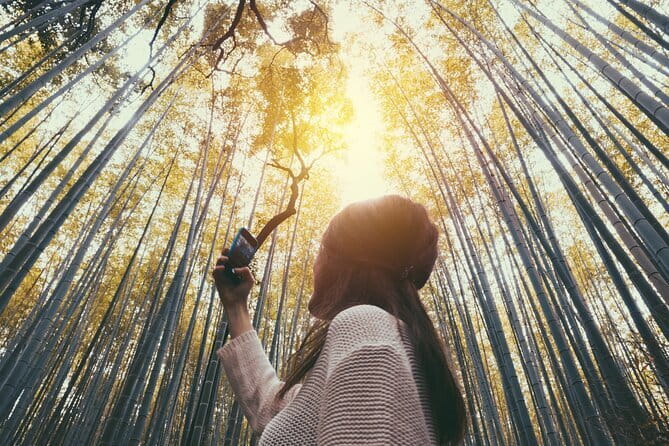
The bus ride from the starting point to Arashiyama takes about 40 minutes. The first walking stop lasts roughly 1 hour and 20 minutes, with early access intended to place you in the bamboo grove before the day reaches its busiest point.
The grove is famous for its tall bamboo stalks and narrow walking paths. It is a strong first stop because the scenery is immediate and easy to appreciate. You do not need a long explanation to understand why the place is special: you simply walk beneath the bamboo and look up.
Set your expectations correctly. The bamboo path itself is not a full tour of the Arashiyama district. The supplied schedule gives you time for the grove, but not an open-ended morning to explore every nearby temple, garden, or riverside street. One poor experience described the stop as underwhelming because other temples were not open at that early hour. That is useful to know: this tour’s early start is designed around the bamboo grove, not a complete Arashiyama visit.
Wear shoes that can handle uneven walking and keep your group close to the guide. One complaint involved a guide moving ahead after a participant asked for a repeat. That is not the standard you should expect, but it is a reason to confirm meeting points and speak up quickly if you cannot hear.
Kinkaku-ji and the Golden Pavilion
After Arashiyama, the bus takes about 30 minutes to Kinkaku-ji, also known as the Golden Pavilion. The planned stop is about 45 minutes.
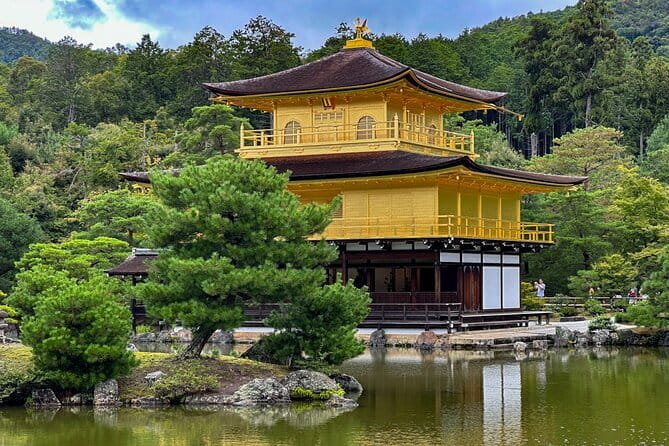
Kinkaku-ji is one of Kyoto’s most recognizable sights. Its gold-covered upper stories reflect over a pond, with carefully arranged gardens around the path. The visit is largely about the view and the setting rather than an extended interior tour.
Admission is not included in every package. If you choose an option without attraction tickets, you will need a valid ticket to enter. Since the stop is short, having admission arranged in advance can save time at the gate. If your package includes it, check the booking details rather than assuming every option covers the temple.
Forty-five minutes is enough for the main walk and photographs, but it is not much time for lingering. You will want to stay aware of the group’s departure time. This is one of the places where the bus format helps and limits you at the same time: you avoid working out transport, but you cannot simply stay for another hour if the reflection on the pond has caught your eye.
Nijo Castle and its famous floors
The next ride takes you to Nijo Castle. The scheduled visit lasts about 1 hour and 30 minutes, giving you more time than at Kinkaku-ji.
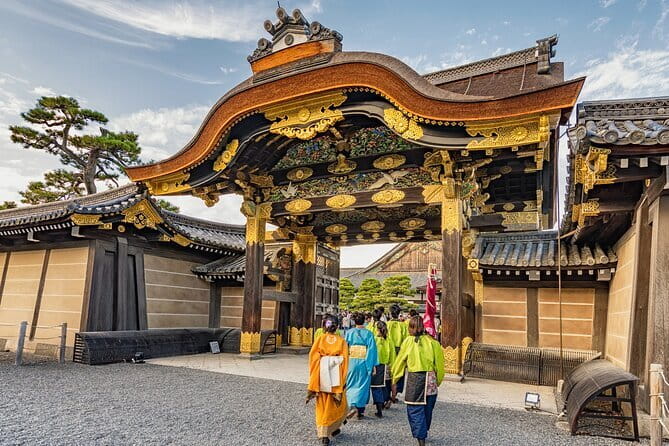
Nijo Castle is a UNESCO World Heritage site known for its architecture and gardens. The most memorable feature for many people is the so-called nightingale floor. Its boards make a chirping sound underfoot, a clever security feature from the castle’s shogun-era past. The interiors and garden spaces give the day a different feel from the open bamboo grove and bright Golden Pavilion.
Admission is again package-dependent. Confirm that your selection includes the castle if you do not want to arrange a ticket separately.
An hour and a half is a useful amount of time here. You can move through the principal castle areas, see the gardens, and listen to the guide’s explanation without needing to sprint. Still, the overall day remains active. If your morning has already been hot or crowded, Nijo Castle is a good place to slow your walking pace and take a short rest when the schedule permits.
Same trip, a completely different kind of day:
- PERFECT KYOTO 1-Day Bus Tour
★ 5.0 · 13,518 reviews - Kyoto Geisha Walking Tour: Gion District & Hidden Gems
★ 4.7 · 3,273 reviews - Kyoto: Gion Magical Night Walking Tour with Geisha Trivia
★ 4.9 · 2,393 reviews - Kyoto: 45-Minute Tea Ceremony Lesson Experience
★ 4.3 · 2,378 reviews
Kiyomizu-dera on Kyoto’s eastern hills
The ride to Kiyomizu-dera takes about 30 minutes, followed by a scheduled stay of roughly 2 hours and 30 minutes. This is the longest stop of the day and one of the most substantial.
Kiyomizu-dera is perched on a hillside above Kyoto, with broad views over the city. Its wooden stage and temple buildings make it one of Kyoto’s signature sights. The approach is also part of the experience, with a busy uphill route leading toward the temple area.
The long time block is helpful because Kiyomizu-dera is not a quick roadside photo stop. You have time to see the temple, take in the view, and explore the surrounding area at a reasonable pace. It is also a natural point to think about food, drinks, and shade, especially in summer.
The drawback is physical effort. Kiyomizu-dera involves uphill walking and crowded pedestrian routes. One particularly hot-day complaint raised sensible concerns about water, rest breaks, and avoiding strenuous walking in extreme heat. Take that seriously. Carry water, use the available free time intelligently, and do not treat the listed 2 hours and 30 minutes as a command to walk continuously.
Admission to Kiyomizu-dera is included only in selected packages. If you choose the basic option, check how you will obtain your ticket and allow enough time for the entrance process.
Fushimi Inari and the red torii gates
The final major stop is Fushimi Inari Taisha, reached after another ride of about 30 minutes. You have roughly 1 hour and 30 minutes here.
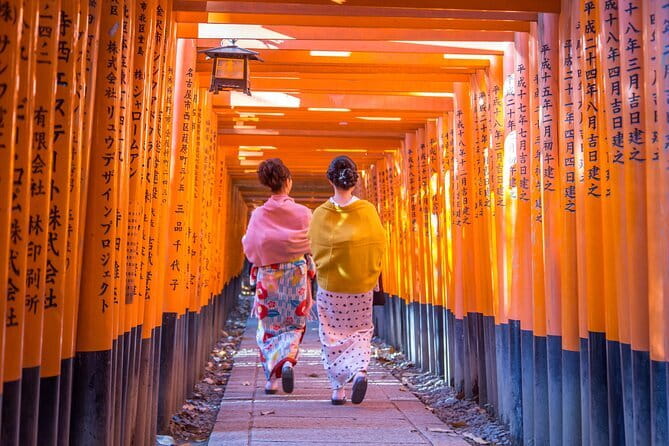
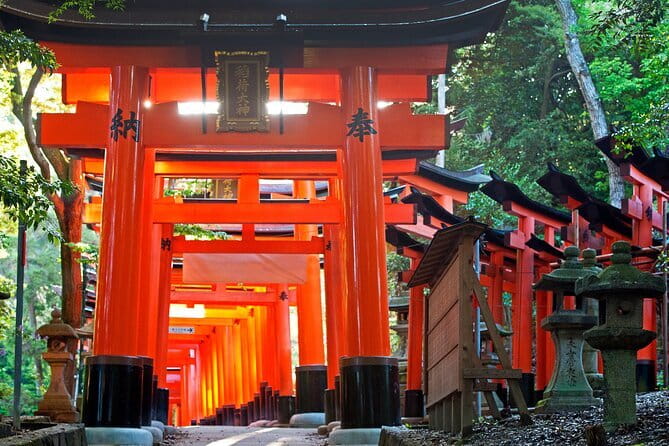
Fushimi Inari is famous for its thousands of vermilion torii gates, which form a pathway up Mount Inari. The gates create one of Kyoto’s most striking photo scenes, and the shrine grounds are free to enter. That makes this an especially good final stop because you can enjoy the central experience without another admission charge.
You need to choose how far to walk. The full mountain route takes much longer than the 1 hour and 30 minutes assigned here, so most people will use this stop to explore part of the gate path and return to the meeting point on time. Do not let the first dramatic section tempt you into walking too far. The bus cannot wait for a late return.
Fushimi Inari also gives you a final burst of energy after a long day. The torii path includes stairs and uphill walking, so your legs may feel the schedule by this point. Comfortable shoes matter more here than at almost any other stop.
What the bilingual guide adds

The guide’s role is more than announcing the next stop. The tour includes English and Spanish commentary during the day, along with explanations of Kyoto’s sights and history. Several guides have been praised for balancing useful information with free time, and named guides such as Ángeles, Cesar, Paula, Alan, and Pastor received especially warm recognition for their energy and organization.
That human element is one of the tour’s strongest features. A good guide can help you understand why a site matters, point out what to watch for, and keep a large group moving through a packed schedule. The driver also matters on a day with several long transfers.
You should understand the language format before booking. English and Spanish are delivered on the same tour, so the commentary may be repeated in both languages. Some English-speaking participants found this tiring or had trouble following the guide’s English. If detailed English commentary is your top priority, a single-language tour may suit you better.
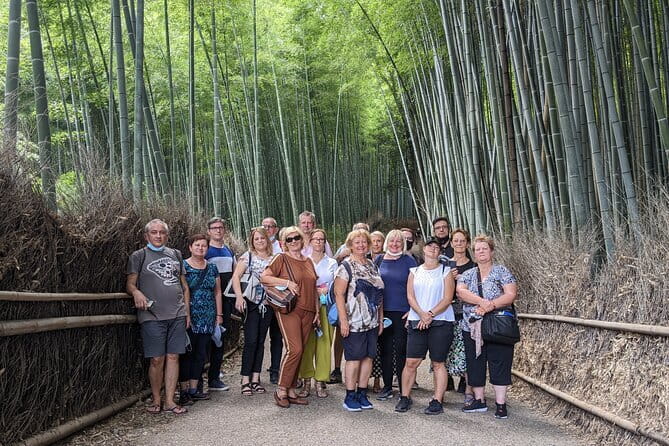
The group size can reach 30 people. That is small enough for a guide-led outing to function well, but large enough that you may need to stay alert and keep track of the meeting point. Ask for a repeat if you miss something, and do not wait until the last minute to find the bus.
Lunch, tickets, and the real price
The advertised price of $51.80 is best understood as the starting point, not automatically the final cost. The basic experience includes transportation from the meeting point and bilingual guiding, while attraction tickets and lunch depend on the package you select.
The Premium option includes lunch. Other options may include admission to the Golden Pavilion, Nijo Castle, and Kiyomizu-dera, or leave those costs to you. Read the package name and inclusions carefully before booking. A lower headline price may look attractive, but adding three admission fees and a meal later can change the value.
I like having the choice because different people want different levels of planning. If you are comfortable buying tickets and choosing your own food, the lower-priced option can make sense. If you want one payment and fewer decisions during a packed day, the ticket-inclusive or Premium option may be worth the extra cost.
Lunch planning deserves attention. One negative experience specifically called for more organized restaurant arrangements, while other accounts praised the efficient flow of the day. Since the exact meal arrangements are not detailed here, check what the Premium lunch includes and when it is served. Do not assume it will be a long, relaxed restaurant break.
How hard is this 10-hour-45-minute day?
The tour starts at 7:00 a.m. and returns after a full day of sightseeing. The approximate ride times add up, but the walking is what will shape your experience.
You will walk through the bamboo grove, temple grounds, castle areas, hillside streets, and torii gates. Kiyomizu-dera and Fushimi Inari are the most demanding sections because of slopes and stairs. Hot weather can make the same route feel much harder.
Most people can participate, but you should be realistic about the schedule. Bring water, sun protection, and shoes made for extended walking. If you need frequent long breaks, dislike group timing, or want to stop for detailed photography at every site, this is probably too ambitious.
Weather, traffic, road closures, and other conditions can change the order or timing. That flexibility is normal for a road-based Kyoto tour, but you should avoid booking an important evening commitment too close to the advertised return.
Who will get the most from this tour?
This is a strong fit if you have only one day in Kyoto, are staying near the city center, or want help connecting sights that are spread across town. It also suits people who prefer a guide and bus to a day of route planning.
It works well as a first look. You will see enough to decide which places deserve a longer return visit. For example, you may discover that Nijo Castle deserves more time, or that Fushimi Inari’s mountain path is worth revisiting early on another morning.
I would be more cautious if you have several days in Kyoto and prefer a slow, local rhythm. You can visit these places independently with more freedom, and you can avoid bilingual commentary by choosing a single-language experience. Families with very young children should also think about the long day, heat, walking, and group schedule. One account specifically found that children’s noise made the guide difficult to hear, though that is not a standard feature of every departure.
Free cancellation is available when you cancel at least 24 hours before the start time. Changes or cancellations inside that window are not accepted for a refund.
Should you book this Kyoto bus tour?
Book it if your priority is coverage and convenience. For about $51.80 before any package upgrades, you can connect five of Kyoto’s best-known sights without piecing together the route yourself. The early Arashiyama visit, return to the original meeting point, and mix of guided explanation and free time add real practical value.
Skip it if your priority is a quiet pace, extensive temple visits, or uninterrupted English commentary. The day is long, the walking is real, and bilingual guiding may not suit everyone.
My call: this is a good-value overview for a first Kyoto visit or a short stay. Choose the ticket and lunch option only after checking exactly what it includes, carry water, and treat the schedule as a fast introduction rather than the final word on Kyoto.
FAQ
Where does the tour start?
It starts at Hotel Keihan Kyoto Grande, at 31 Higashikujō Nishisannōchō in Kyoto’s Minami Ward, near Kyoto Station.
What time does the tour begin?
The scheduled start time is 7:00 a.m.
How long does the tour last?
The approximate duration is 10 hours and 45 minutes.
Where does the tour end?
The tour returns to the original meeting point at Hotel Keihan Kyoto Grande.
Which attractions are visited?
The route includes Arashiyama Bamboo Grove, Kinkaku-ji, Nijo Castle, Kiyomizu-dera, and Fushimi Inari Taisha Shrine.
Are attraction tickets included?
Tickets depend on the option selected. Admission to Kinkaku-ji, Nijo Castle, and Kiyomizu-dera is included only with selected packages.
Is lunch included?
Lunch is included only in the Premium option. It is not included in every package.
Is the tour offered in English?
The guide provides bilingual English and Spanish commentary. The maximum group size is 30 people.
Just added around Kyoto
- Sekka Cotton Furoshiki Class★ 5.0 · 19 reviews
- Kyoto Sword Experience – includes Museum Ticket/Ninja Experience★ 4.5 · 149 reviews
- Scenic Green Tea Fields of Hidden Kyoto & Local Tea Exp (Private)★ 5.0 · 32 reviews
- Secret Eastern Kyoto Biking Adventure★ 5.0 · 44 reviews
- Private Sake Tasting in Central Kyoto with Sake Sommelier★ 5.0 · 32 reviews
- Samurai School in Kyoto: Samurai for a Day★ 5.0 · 202 reviews
- SHIRAKAWA Japanese Culture Experiences with private English staff★ 5.0 · 16 reviews
- A Privately Guided Photoshoot in Beautiful Kyoto by a Pro★ 5.0 · 18 reviews
Temples & Shrines, compared.

Tea Ceremony in a Traditional Tea House in Kiyomizu
Our verdict →
Meiji Shrine, Asakusa, Skytree Bus Tour and Cruise
Our verdict →
Fushimi Inari Hidden Hiking Tour (Private Option Available)
Our verdict →
Osaka/Kyoto:Kinkakuji,Arashiyama,FushimiInariShrine,NaraPark
Our verdict →
Nikko: Kegon Falls, Lake Chuzenji & Toshogu Temple
Our verdict →
Kamakura & Enoshima Day Trip including Temple Tickets
Our verdict →Browse the lists this tour appears in