

Reviewed · WORKSHOPS
Kyo-arashi Shibori Scarf Class
The best part of this Kyoto activity is the reveal. You fold and bind a long silk scarf, dye it in a color you choose, then open the fabric to see the pattern created by your own hands. Kyo-arashi shibori looks intricate, but the class breaks it into clear steps, so you do not need craft experience.
I like the personal souvenir and the compact format. You leave with a 70-inch silk scarf rather than a generic shop purchase, and the 30-to-60-minute class fits neatly into a busy Kyoto day. I also like that museum admission and a chance to try on a shibori kimono are included.
The main consideration is the age rule: the minimum age is 12, and adult pricing applies to everyone. The activity is also brief, so it suits you if you want a hands-on introduction rather than a long, technical workshop.
Key points at a glance

- Your scarf is genuinely personalized: You choose the dye color and create the pattern through folding, binding, and compression.
- The finished piece is generous in size: The silk scarf measures about 70 by 17 inches, or 180 by 44 centimeters.
- The process is guided step by step: You wrap fabric around a pipe, wind string around it, compress the folds, dye the cloth, and then open it.
- Museum time fills the drying period: You can view shibori displays and try on a kimono while your scarf dries.
- The class is private to your group: This makes the short lesson feel more focused and personal.
- It is easy to fit into an itinerary: Multiple start times, public transportation nearby, and mobile tickets keep the planning simple.
Why this short Kyoto craft class works

Kyoto is full of beautiful things to look at, but many cultural activities leave you as a spectator. This one gives you a clear job to do. You handle the fabric, make decisions about color, and watch a pattern appear from folds that seemed quite ordinary a few minutes earlier.
That hands-on element matters. Shibori is a Japanese resist-dyeing craft, meaning parts of the cloth are protected from the dye so they remain lighter. The kyo-arashi method used here involves folding the fabric, wrapping it around a pipe, and binding it tightly with string before dyeing.
You are not expected to arrive with sewing skills or a background in Japanese textiles. The instructor demonstrates the method and stays with you through the process. English guidance is available, and the class is generally conducted for your own group rather than combined with a large crowd.
The experience has received a perfect rating from the 16 reviews provided, with every rating recommending it. The praise is especially consistent in three areas: the friendly staff, the clear instruction, and the satisfaction of getting beautiful results on a first attempt. One review specifically thanks Nina, so you may encounter her during your visit, though the available information does not identify the full teaching team.
A few more Kyoto half-days worth comparing
- PERFECT KYOTO 1-Day Bus Tour
★ 5.0 · 13,518 reviews - Kyoto: Fushimi Inari, Kinkakuji, Bamboo Grove 1 Day Bus Tour
★ 4.8 · 4,316 reviews - Kyoto: Tea Ceremony in a Traditional Tea House in Kiyomizu
★ 4.9 · 3,519 reviews
Inside the Kyoto Shibori Museum
The activity takes place at the Kyoto Shibori Museum at 135-5 Shikiamicho in Nakagyo Ward. The museum is near public transportation, and the activity begins and ends at the same meeting point.
The museum setting gives the workshop useful context. You are not simply dyeing cloth at a craft table without explanation. You can see shibori work and then try a related technique yourself. That connection helps you understand why small choices in folding and binding can produce bold patterns.
The museum visit also gives the class a second layer. If your companion prefers looking to making, or if you finish your part quickly, there are displays to see while the scarf dries. The gift shop is another useful stop, especially if you want to compare your handmade piece with finished shibori items.
The museum is not a substitute for a major art museum, and the workshop remains the main reason to come. Still, the included admission makes the visit feel better balanced than a class that sends you away immediately after the dyeing.
Folding, wrapping, and binding the silk
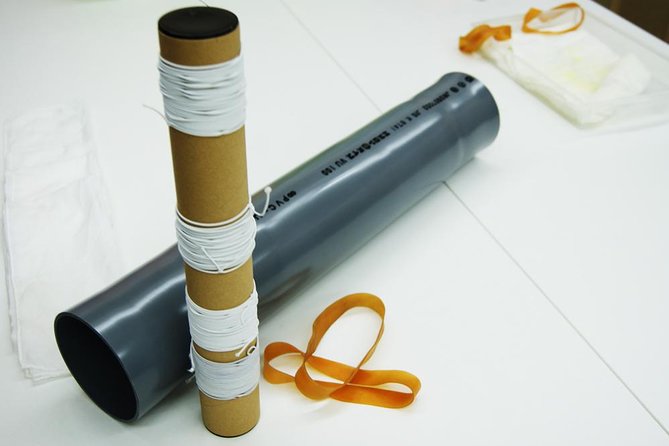
Your work begins with a long silk scarf measuring about 180 centimeters by 44 centimeters. That is a practical size for wearing, and it gives the pattern enough room to develop across the fabric.
The instructor first shows you how to fold the cloth in a particular way. This is the stage where careful listening helps. The final design comes from how the fabric is arranged before the dye touches it, so rushing through the folds could affect the result.
Next, you wrap the folded fabric around a pipe. String is wound around the pipe and the fabric is pushed or compressed toward one end. This creates tightly gathered areas where the dye cannot reach evenly.
The method is simple to describe but fun to perform. You can see the scarf change from a flat piece of silk into a compact, bound form. At that point, the final pattern is still hidden, which adds a little suspense without turning the class into a high-pressure task.
A professional instructor supervises the work. The staff have been praised for being attentive, accommodating, and able to explain the process in English. That is important here because the binding stage is the part most likely to confuse a first-time participant.
Choosing your color and revealing the pattern
Once the scarf is bound, you choose your preferred color for the dye. The supplied information does not list the available colors, so you should expect to choose from what is offered on the day rather than assume every shade is available.
The dyeing itself is only one step, but it is the moment when your personal choice becomes visible in the finished piece. A pale color will give you a different effect from a darker one, though the exact result depends on the folds and the way the dye reaches the cloth.
After dyeing, the string comes off. The fabric is rolled with a towel and pressed, then unfolded so you can see the pattern. This reveal is the emotional high point of the class. You have watched every stage, so the scarf feels more personal than a purchase made from a shelf.
The process also leaves room for surprise. Shibori is controlled, but it is not perfectly predictable. Two people following the same general method can produce different results because of small changes in folding, binding, and dye coverage.
The finished scarf is a useful souvenir rather than a tiny craft sample. It is large enough to wear, display, or give as a gift. Pack it with care after the class, since the fabric may still need attention while it dries.
More Hands-On Experiences in Kyoto:
- Kyoto: 45-Minute Tea Ceremony Lesson Experience
★ 4.3 · 2,378 reviews - Ramen Cooking Class at Ramen Factory in Kyoto
★ 5.0 · 1,937 reviews - Kyoto : Chopsticks Making Workshop in Gion with Engraving Option
★ 5.0 · 958 reviews - Kyoto: Samurai Sword Class by Experts in Traditional Arts
★ 4.9 · 657 reviews
What happens while your scarf dries

The drying period is built into the visit rather than treated as dead time. You are free to browse the museum displays and try on a shibori kimono.
The kimono opportunity adds something you cannot get from the scarf lesson alone. You can see how textile pattern works on a full garment, not just on a narrow accessory. It also creates a natural photo moment, though the available details do not specify how long you may wear it or whether an assistant dresses you.
Use this time at an easy pace. Look closely at the examples in the museum, visit the gift shop, and let the scarf finish drying. The class lasts approximately 30 to 60 minutes, but the exact length may depend on how quickly your group works and how long the museum portion takes.
There is no need to plan a separate major attraction around this stop. Instead, it works well as a short cultural appointment between sightseeing in central Kyoto. Since you return to the meeting point at the end, you do not have to arrange a different pickup location.
How much value do you get for $50.30?

At $50.30 per person, this is not the cheapest souvenir activity in Kyoto. The price makes more sense when you count the elements together: professional instruction, the silk scarf, dyeing materials, museum admission, and the kimono experience.
The scarf is the strongest part of the value. You are not paying only for an hour of entertainment. You are taking home a large, wearable item that you helped design. The class also gives you a simple introduction to a Japanese textile tradition that would be difficult to try without guidance.
The private format improves the value for couples, families with eligible children, and small groups. You can ask questions and work at your own pace instead of waiting behind a large class. That said, the minimum age is 12, so families with younger children cannot assume everyone can take part.
For a visitor who wants a polished, hands-on activity, the cost is reasonable. If you are mainly looking for a low-cost museum visit, the price may feel high. The workshop is the reason to book, with the museum serving as a useful addition.
Who will enjoy this most?
I would recommend this class to you if you like making things, want a souvenir with a personal story, or need a short activity that does not consume half a day. It also suits people who enjoy Japanese culture but prefer doing something to simply reading display labels.
Families can do well here, provided every participant is at least 12. Several reviews describe children enjoying the process, but the stated minimum age still applies, and adult pricing applies to all ages.
The class is also a good choice for a mixed group. One person can focus on the scarf while another spends more time with the museum displays or gift shop. The activity does not require everyone to have the same level of interest in textile craft.
You may want to skip it if you dislike projects with an uncertain final result. The instructor guides the method, but you cannot fully control the pattern. You should also pass if you want an advanced textile course with a long explanation of dye chemistry or several techniques. This is a short, friendly introduction.
Timing, transport, and practical details
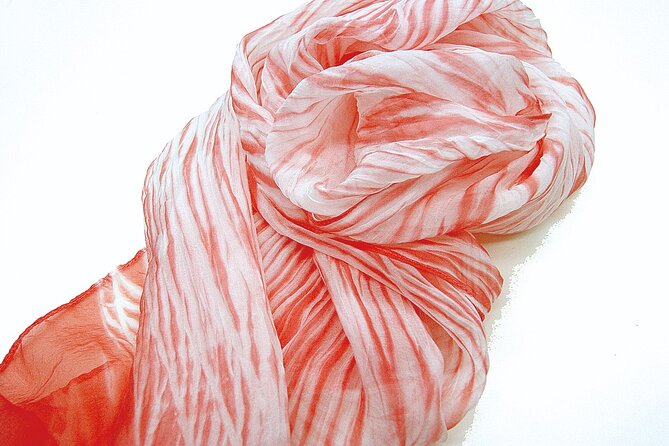
Multiple start times make it easier to place the class between other Kyoto plans. The activity is usually booked about 23 days ahead, which suggests you should reserve before your trip if your schedule is fixed.
A mobile ticket is provided, so you can keep the booking on your phone. Confirmation is received at the time of booking. The meeting point is the Kyoto Shibori Museum, and the activity ends there as well.
The museum is near public transportation. Two car parking spaces and bicycle parking spaces are available, but capacity is very limited. Public transportation is the safer choice if you do not want to depend on a small parking supply.
Most people can participate, and the activity is private to your group. The information does not describe specific wheelchair access or other detailed accessibility arrangements, so contact the provider before booking if you need an accommodation beyond ordinary participation.
You can cancel for a full refund if you do so at least 24 hours before the start time. Changes or cancellations made less than 24 hours in advance are not accepted for a refund, and the cut-off follows local Kyoto time.
Should you book the kyo-arashi scarf class?
Book it if you want a short, personal Kyoto activity with a finished souvenir at the end. The strongest reasons are the attentive English instruction, the private setting, the large silk scarf, and the satisfying moment when you unfold the fabric.
The museum and kimono portion make the visit feel fuller, but the scarf is the deciding factor. If you want to try a traditional craft without committing to a long workshop, this is a smart fit. Reserve ahead if you need a particular start time, and remember the minimum age of 12.
Skip it if you prefer passive sightseeing, need the lowest possible price, or want a highly technical textile course. For most visitors who value a meaningful object made during the trip, the $50.30 cost is justified by the instruction, materials, museum entry, and personal result.
FAQ
Where does the kyo-arashi shibori scarf class take place?
The class takes place at the Kyoto Shibori Museum, located at 135-5 Shikiamicho, Nakagyo Ward, Kyoto, Japan. The activity ends back at the same meeting point.
How long does the class last?
The class takes approximately 30 minutes to 1 hour. The exact length can depend on the pace of the individual class.
What size scarf will I make?
You will make a silk scarf measuring approximately 70 inches by 17 inches, or 180 centimeters by 44 centimeters.
What does the class include besides scarf making?
The price includes admission to the Kyoto Shibori Museum and an opportunity to try on a shibori kimono. You can also browse the museum displays while your scarf dries.
What is the minimum age for this activity?
The minimum age is 12. Adult pricing applies to all ages.
Can I cancel for a full refund?
Yes. You must cancel at least 24 hours before the experience start time for a full refund. Cancellations or changes made less than 24 hours before the start time are not accepted.
Just added around Kyoto
- Sekka Cotton Furoshiki Class★ 5.0 · 19 reviews
- Kyoto Sword Experience – includes Museum Ticket/Ninja Experience★ 4.5 · 149 reviews
- Scenic Green Tea Fields of Hidden Kyoto & Local Tea Exp (Private)★ 5.0 · 32 reviews
- Secret Eastern Kyoto Biking Adventure★ 5.0 · 44 reviews
- Private Sake Tasting in Central Kyoto with Sake Sommelier★ 5.0 · 32 reviews
- Samurai School in Kyoto: Samurai for a Day★ 5.0 · 202 reviews
- SHIRAKAWA Japanese Culture Experiences with private English staff★ 5.0 · 16 reviews
- A Privately Guided Photoshoot in Beautiful Kyoto by a Pro★ 5.0 · 18 reviews
Workshops, compared.
Sushi Making Tokyo Roll and Authentic Japanese Sushi Class
Our verdict →
Ninja 1-hour Hands-on Lesson by Japanese master in Kyoto -Entry
Our verdict →
Browse the lists this tour appears in