
Reviewed · WALKING TOURS
Private & Custom KYOTO Walking Tour – your Travel Companion
Kyoto is not short on famous sights. It is short on time. This private tour lets you build a day around the places you care about, with a guide handling directions, public transport, photos, and basic communication. I especially like the one-group format and the chance to ask for a mix of temples, food, old streets, and local culture instead of following a fixed bus route. I also like that guides such as Jinshi, Dalivanh, Karl, Rio, and Femin have been praised for patience, flexibility, and help with transport.
The catch is that this is a travel companion service, not a guaranteed expert-led cultural tour. Guide quality can vary, and some past bookings involved replacement guides or guides with limited knowledge of Kyoto. The price is reasonable for five people, but entrance fees, meals, and transportation are extra, and the long list of possible stops is far too much for one relaxed day.
Key points to know before booking
- A private day for up to five people: You do not share the guide with strangers, and the pace can be shaped around your group.
- A flexible Kyoto menu: Possible stops include Kinkakuji, Kiyomizu-dera, Fushimi Inari, Arashiyama, Gion, Nishiki Market, and Nijo Castle.
- Eight hours requires firm choices: Seeing every listed attraction would mean racing from one side of Kyoto to another.
- The guide can handle practical chores: Expect help with directions, tickets, restaurant calls, photos, and communication.
- Public transport is part of the planning: Private transportation is not included, so routes may use trains, buses, and walking.
- Guide experience is not fully consistent: Some guides have earned strong praise, while other bookings raised concerns about local knowledge and preparation.
A private Kyoto day built around your priorities
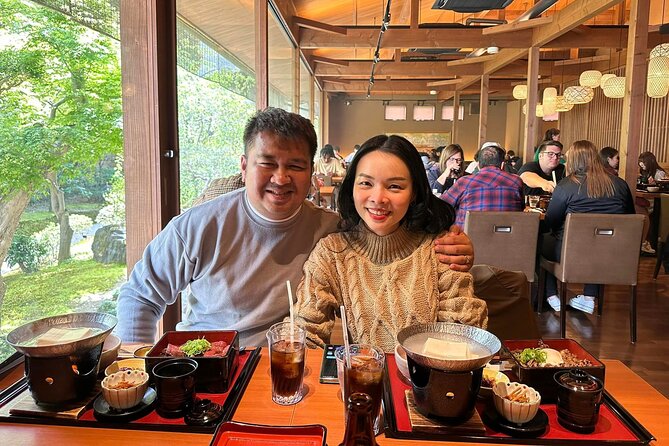
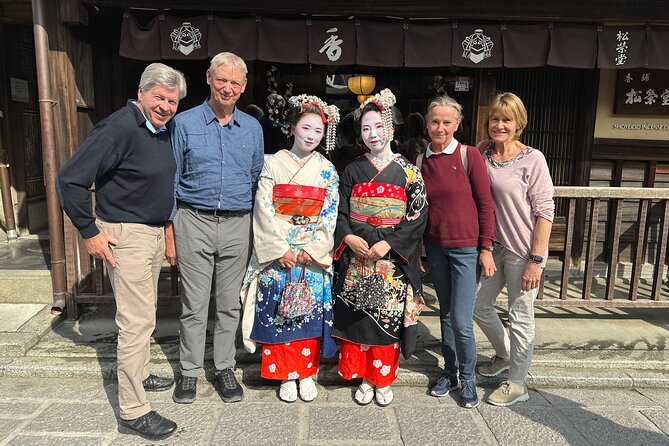
The best way to think about this experience is as a flexible day with a local companion. You tell the guide what matters most, then work out a practical route. That could mean major temples, old lanes, food stops, gardens, shopping, or a first look at Kyoto’s geisha district.
You can also ask for help before and during the day. The guide may assist with planning, ticket arrangements, restaurant bookings, taking group photos, and communicating with vendors. That practical support matters in Kyoto, where several major sights are spread across different parts of the city.
The tour lasts about eight hours and is private for your group of up to five. If five people share the $265.82 cost, the guide fee works out to about $53 per person. For a full day of personal attention, that is fair. For one or two people, the per-person price is much higher, so you should decide how much you value help with transport and planning.
More Walking Tours in Kyoto
- Kyoto Geisha Walking Tour: Gion District & Hidden Gems
★ 4.7 · 3,273 reviews - Kyoto: Gion Magical Night Walking Tour with Geisha Trivia
★ 4.9 · 2,393 reviews - Kyoto: Gion Geisha District Walking Tour – Stories of Geisha
★ 4.7 · 2,187 reviews
Kinkakuji and Kiyomizu-dera: Kyoto’s headline temples
Kinkakuji, the Golden Pavilion, is an obvious first choice. The gold-covered temple reflects in its pond, and the setting includes carefully arranged gardens. The temple began as a retirement villa for shogun Ashikaga Yoshimitsu before becoming a Zen temple.
The scheduled stop is about 30 minutes, with admission extra. That is enough for the main view and a quick walk through the grounds, but not enough for a slow visit. If Kinkakuji is high on your list, tell your guide early. You may want to protect more time here rather than treating it as a quick photo stop.
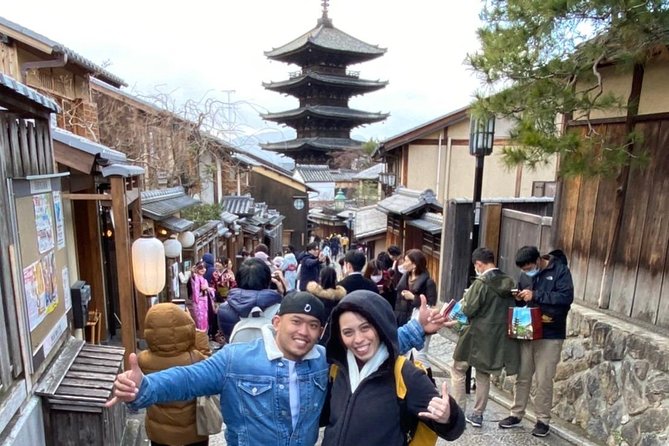
Kiyomizu-dera gives you a different kind of temple visit. Its wooden stage projects from the main hall above the hillside, creating one of Kyoto’s best-known views. The setting also connects naturally with the old streets of Higashiyama.
The planned visit is about 45 minutes, and admission is not included. In practice, Kiyomizu-dera and the nearby Sannenzaka and Ninenzaka lanes work well as one eastern Kyoto section. Wear comfortable shoes. The area includes slopes, steps, and busy pedestrian streets.
Sannenzaka, Ninenzaka, and Yasaka Shrine
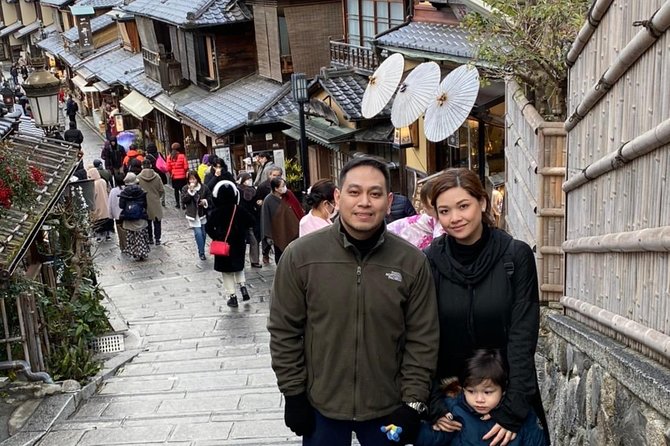
Sannenzaka and Ninenzaka are preserved historic districts with traditional-looking buildings, small shops, and places to stop for food or souvenirs. Their appeal is not one single monument. It is the feeling of walking through an older Kyoto street pattern between major temples.
The visit is listed at 45 minutes and admission is free. That time can disappear quickly if you browse shops or stop for snacks. If you want photos and shopping, ask your guide to protect this time rather than treating it as a short passage between attractions.
Yasaka Shrine, also called Gion Shrine, sits near the Gion area. It is linked with the Gion Matsuri, held each July and described as Japan’s most famous festival. The suggested stop is about 30 minutes, and admission is not listed as an added cost.
The shrine makes sense with Kiyomizu-dera, the old lanes, and Gion. It does not make much sense as a separate cross-city trip. A good guide should group nearby eastern Kyoto sights so you spend less of your day changing direction.
Fushimi Inari’s torii gates
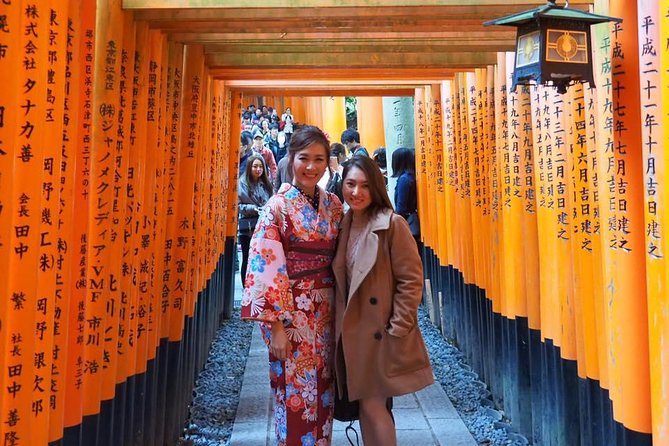
Fushimi Inari-taisha is famous for its long paths of vermilion torii gates behind the main shrine buildings. It is one of Kyoto’s most recognizable sights, and the gates create a very different experience from the open pond and garden views at Kinkakuji.
The planned visit here is only 15 minutes. That is enough for a quick look near the entrance, but not for a substantial walk along the torii paths. Be realistic about what you want. If the gates are a top priority, ask for more time and remove another stop.
This is one of the clearest examples of the tour’s flexibility being useful. A fixed list may show Fushimi Inari on paper, but your actual day needs to reflect your interests. A short stop is fine for a first glimpse. It is not enough if you want to walk well into the shrine route.
Same trip, a completely different kind of day:
- PERFECT KYOTO 1-Day Bus Tour
★ 5.0 · 13,518 reviews - Kyoto: Fushimi Inari, Kinkakuji, Bamboo Grove 1 Day Bus Tour
★ 4.8 · 4,316 reviews - Kyoto: Tea Ceremony in a Traditional Tea House in Kiyomizu
★ 4.9 · 3,519 reviews - Kyoto: Tea Ceremony Ju-An at Jotokuji Temple
★ 4.9 · 3,207 reviews
Arashiyama and the bamboo grove
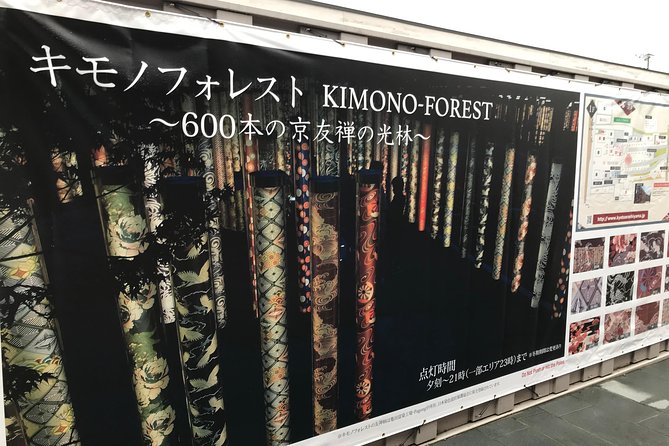
Arashiyama is one of Kyoto’s best-known sightseeing districts, with temples, shrines, and the famous bamboo grove. The suggested visit lasts one hour and may include the Bamboo Forest and Tenryuji Temple.
Tenryuji is one of Kyoto’s major Zen temples, founded in 1339. Combining it with the bamboo grove gives you a pleasant western Kyoto block, but one hour is still tight. You will need to choose between a quick look at several places and a slower visit to one or two.
Arashiyama is on the opposite side of the city from many eastern Kyoto sights. If you combine it with Fushimi Inari, Kiyomizu-dera, and Ginkakuji in one day, transport will eat into your sightseeing time. I would ask the guide to create either an eastern and central Kyoto day or a western Kyoto day with Arashiyama as the anchor.
Nishiki Market, Gion, and Kyoto’s everyday side
Nishiki Market is a narrow, five-block shopping street known as Kyoto’s kitchen. It has more than 100 shops and restaurants, so it is a useful place to add food and browsing to a temple-heavy day.
The suggested stop is 40 minutes and admission is free. That gives you time to walk through the market, but not necessarily time for a leisurely meal and extensive shopping. The market can be a good request for a group that wants more than monuments.
Gion is Kyoto’s famous geisha district, with traditional streets and teahouse architecture. The planned stop is 30 minutes and admission is free. A guide can help you understand the area’s role in Kyoto, but you should treat it as a living neighborhood, not a stage set. Walk politely, follow local rules, and do not assume that seeing a geisha is part of the experience.
Nishiki Market and Gion also give the day a useful change of pace. After several temples, you can eat, browse, and see how Kyoto presents its food and traditional arts.
Ginkakuji, Sanjusangendo, and the Imperial Palace
Ginkakuji, the Silver Pavilion, was built by Ashikaga Yoshimitsu’s grandson several decades after Kinkakuji. Despite its name, it is not simply a silver version of the Golden Pavilion. The grounds and garden are the main reason to visit.
The stop is listed at 30 minutes, with admission extra. Ginkakuji is in northern Higashiyama, so pairing it with Eikando or nearby temple areas is more sensible than crossing the city repeatedly.
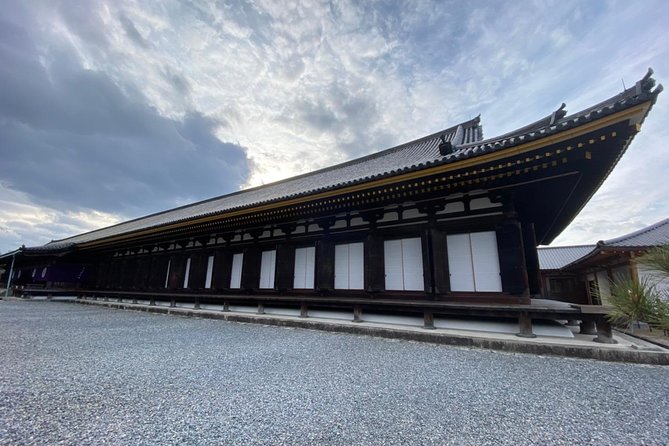
Sanjusangendo is known for its 1,001 statues of Kannon, the goddess of mercy. The temple offers a very different visual experience from the open-air shrines and garden paths. The planned stop is 30 minutes, and admission is not included.
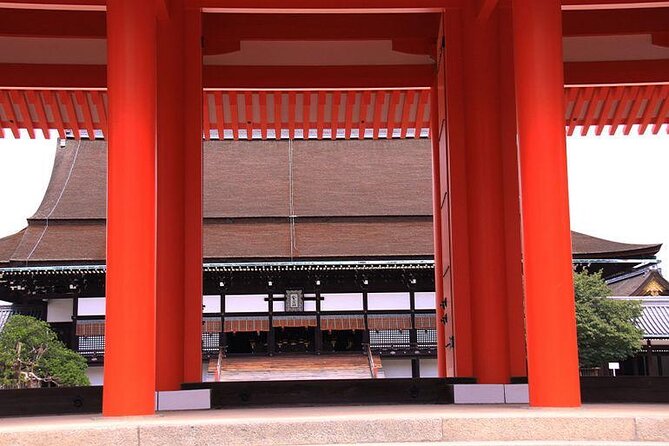
The Kyoto Imperial Palace was the residence of Japan’s Imperial Family until 1868, when the emperor and capital moved to Tokyo. The palace sits in a spacious park, and the visit is listed at 30 minutes with free admission. It works well for a central Kyoto route, especially if your group wants imperial history and broad grounds rather than another hillside temple.
Nijo Castle and Eikando
Nijo Castle was built in 1603 as the Kyoto residence of Tokugawa Ieyasu, the first shogun of the Edo period. His grandson completed the palace buildings 23 years later. The castle gives your day a political and architectural counterpoint to Kyoto’s Buddhist and Shinto sites.
The suggested visit lasts 45 minutes, and admission is extra. It is a strong choice for anyone interested in shogun-era Japan, but it may be too much if your main goal is gardens, food, or old neighborhoods.
Eikando, formally Zenrinji Temple, belongs to the Jodo sect of Buddhism. It is especially famous for autumn color and sits just north of Nanzenji. The visit is listed at 45 minutes, with admission not included.
Eikando is best treated as a seasonal or atmosphere-driven choice. If your day falls during autumn, it may deserve priority. Otherwise, compare it with the other temples you want to see and avoid collecting too many similar stops.
What the guide can and cannot do for you
The guide’s role is broad. You can expect help with navigation, planning, tickets, photos, restaurant bookings, and communication with local vendors. This is valuable if you are nervous about public transportation or do not want to spend your day reading maps.
Past guide experiences have varied. Jinshi received warm praise for a full day covering temples, shrines, gardens, and food. Dalivanh was praised for adapting to a personal list and navigating buses and trains from an Airbnb. Femin was appreciated for answering a child’s questions, while Rio was described as patient with older visitors. Karl was used for a mix of temples, shrines, culture, and local interests.
At the same time, the guide is not always a seasoned professional historian. One booking involved a last-minute replacement after the original guide became ill. Other bookings raised serious concerns about preparation, directions, and knowledge of Kyoto. The overall rating is 3.9 from 23 ratings, which tells me to set expectations carefully.
Before the tour, send a short list of your priorities and ask who will guide you. If your group wants detailed temple history, say so directly. If you mainly need a patient companion and help getting around, this format may suit you better.
Transport, meals, admission fees, and timing
Private transportation is not included. The price also excludes entrance fees, meals, accommodation, and other personal costs. The guide can help with transport planning, but you should budget separately for trains, buses, taxis if used, meals, and temple admissions.
The meeting and ending point is the same meeting point. Pickup is offered, and the activity runs daily from 6:00 AM to 10:00 PM during the stated operating period. The booking confirmation is received at the time of booking, and the tour is near public transportation.
The biggest planning issue is distance. Kinkakuji, Fushimi Inari, Arashiyama, Ginkakuji, and Kiyomizu-dera are not clustered together. The 13 possible stops are best viewed as a menu, not a promise that you will see them all.
For a comfortable eight-hour day, I would pick three major sights, one old-street area, and either Nishiki Market or Gion. If your group is energetic and willing to move often, you can add more. If you are traveling with older adults or children, fewer stops will make the day more enjoyable.
Who should book this Kyoto companion?
I would consider this tour if you want a private day but do not want to plan every train, bus, and walking connection yourself. It is especially useful for a first visit, a family group, a small party with mixed interests, or anyone who wants help taking photos and handling basic communication.
It also works well if you are arriving from a cruise and have limited time. One past booking involved seniors on a short visit, and the guide’s patience was important. Still, a short port-style day makes the need for a tight route even greater.
I would be more cautious if your main goal is expert-level interpretation at every temple. The guide may be excellent, but the experience does not promise a specific level of formal training. Ask questions before booking and make your desired sightseeing style clear.
The cancellation terms are strict: the experience is non-refundable and cannot be changed for any reason. Only book once your date, group size, and priorities are firm.
Should you book this private Kyoto day?
Book it if you value personal help more than a fixed, specialist-led program. The private format, flexible route, and assistance with transport and communication can save time and reduce stress. The price is sensible for a full group of five, especially when you want a guide focused only on your party.
I would not book it expecting to visit every listed sight or receive the same level of expertise from every guide. Choose a short priority list, confirm the guide arrangement, and accept that entrance fees and transport cost extra. Done that way, this can be a practical way to get your bearings and see Kyoto on your own terms.
FAQ
How long does the private Kyoto tour last?
The tour lasts approximately eight hours.
How many people can join the tour?
The private tour is for one group of up to five people.
Is pickup available?
Yes. Pickup is offered, and the activity ends back at the meeting point.
Is private transportation included?
No. Private transportation is not included. The guide can assist with itinerary planning and navigation, including public transportation.
Are entrance fees included?
No. Entrance fees are not included. Several listed temples and castles require separate admission fees.
Are meals included?
No. Breakfast, lunch, dinner, and other meals are not included.
Which Kyoto sights may be visited?
Possible stops include Kinkakuji, Kiyomizu-dera, Sannenzaka and Ninenzaka, Yasaka Shrine, Fushimi Inari, Arashiyama, Nishiki Market, Gion, Ginkakuji, Sanjusangendo, the Kyoto Imperial Palace, Nijo Castle, and Eikando.
Can the itinerary be personalized?
Yes. The tour is designed around a personalized itinerary, so you can shape the day around your interests and discuss which sights to visit.
Can the guide help with restaurant bookings and tickets?
Yes. Assistance with booking restaurants and tickets is included as part of the guide’s support.
What are the operating hours?
The activity is listed as operating Monday through Sunday from 6:00 AM to 10:00 PM during the stated operating period.
Just added around Kyoto
- Sekka Cotton Furoshiki Class★ 5.0 · 19 reviews
- Kyoto Sword Experience – includes Museum Ticket/Ninja Experience★ 4.5 · 149 reviews
- Scenic Green Tea Fields of Hidden Kyoto & Local Tea Exp (Private)★ 5.0 · 32 reviews
- Secret Eastern Kyoto Biking Adventure★ 5.0 · 44 reviews
- Private Sake Tasting in Central Kyoto with Sake Sommelier★ 5.0 · 32 reviews
- Samurai School in Kyoto: Samurai for a Day★ 5.0 · 202 reviews
- SHIRAKAWA Japanese Culture Experiences with private English staff★ 5.0 · 16 reviews
- A Privately Guided Photoshoot in Beautiful Kyoto by a Pro★ 5.0 · 18 reviews
Walking Tours, compared.

Kyoto Geisha Walking Tour: Gion District & Hidden Gems
Our verdict →
Imperial Palace and Shogun Historical Walking Tour
Our verdict →
Shinjuku Local Bar and Izakaya Guided Walking Tour
Our verdict →

Nishiki Market Brunch Walking Tour (7 Tastings + Brunch)
Our verdict →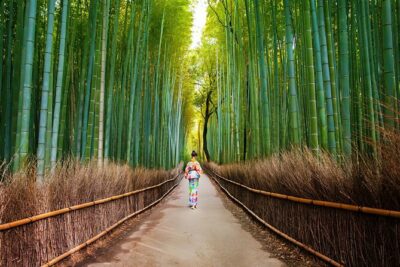
Kyoto Arashiyama Walking Tour: Bamboo, Monkeys, Gardens & Secrets
Our verdict →
Tokyo Castle & Imperial PalaceーShogun Walking Tour
Our verdict →Browse the lists this tour appears in