
Reviewed · TEMPLES & SHRINES
Inside of Fushimi Inari – exploring and lunch with locals
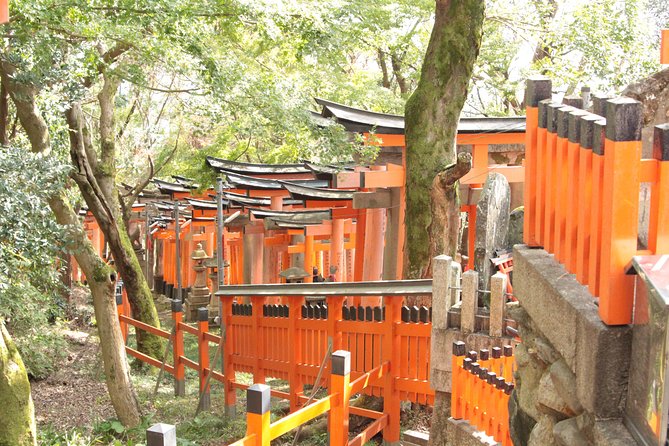
Fushimi Inari is famous for its endless red torii gates, but the best part of this tour is the quieter route beyond the main crush. You’ll walk through bamboo and cedar forest, visit lesser-seen sacred spots, and climb to the summit with a guide who explains what you’re seeing. I especially like the gate factory visit and the included soba lunch, two details that make this more than a standard shrine walk.
I also like the personal pace. Guides Go, Satsuki, and Ko have each been praised for clear explanations, friendly help, and taking the group away from the busiest paths. The main caution is the climb: there are steep stairs, and the tour requires moderate fitness. Also confirm the group size when booking, since the information gives both six and twelve as the maximum.
Key points to know
- The route goes beyond the famous torii: You’ll visit bamboo and cedar paths, worship stones, a waterfall, a gate factory, and the summit shrine.
- The summit is 233 meters high: The final forest climb takes about 20 minutes and includes steep stairs.
- Lunch is part of the plan: A soba noodle meal is included, along with a Japanese tea and boiled egg break.
- The guide shapes the day: Go, Satsuki, and Ko are named guides associated with friendly pacing and useful cultural explanations.
- It is a small-group outing: The advertised limits differ, with one section stating six people and another stating twelve, so ask for the current maximum.
- You return to the starting point: The tour begins and ends near the Great Torii in Fushimi.
Beyond the famous red gates
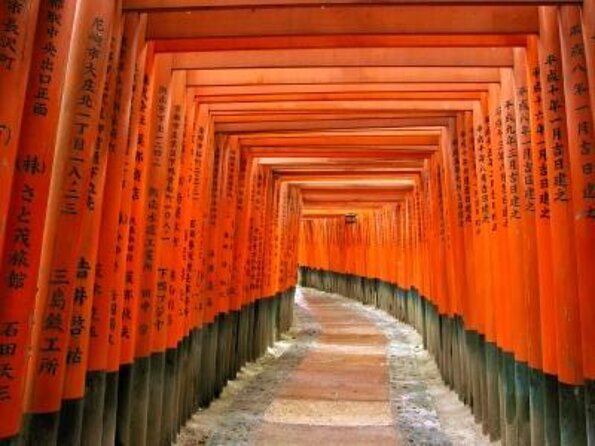
Most people come to Fushimi Inari-taisha for one image: a tunnel of orange-red torii gates climbing Mount Inari. That sight is worth seeing, but it can also be crowded and noisy, especially around the main shrine and lower gates. This tour uses the famous route as a starting point, then turns toward the quieter side of the mountain.
That change matters. You still get the essential Fushimi Inari sights, but you also see places that are easy to miss when you simply follow the main path uphill. A guide helps connect the pieces: the shrine’s symbols, the meaning of the gates, the worship stones, and the mountain’s role in local religious practice.
I like this approach because it gives you context without turning the morning into a lecture. You walk, stop, listen, and continue. The setting does much of the work.
The tour lasts about four hours, including the hike and lunch. That is long enough to reach the summit and see more than the lower shrine grounds, but short enough to fit into a day of sightseeing in Kyoto. Since the activity begins and ends at the Great Torii, you do not need to arrange a separate return transfer.
More Temple & Shrine Tours in Kyoto
- Kyoto: Fushimi Inari, Kinkakuji, Bamboo Grove 1 Day Bus Tour
★ 4.8 · 4,316 reviews - Kyoto: Tea Ceremony in a Traditional Tea House in Kiyomizu
★ 4.9 · 3,519 reviews - Kyoto: Tea Ceremony Ju-An at Jotokuji Temple
★ 4.9 · 3,207 reviews
Starting at Fushimi Inari-taisha Shrine
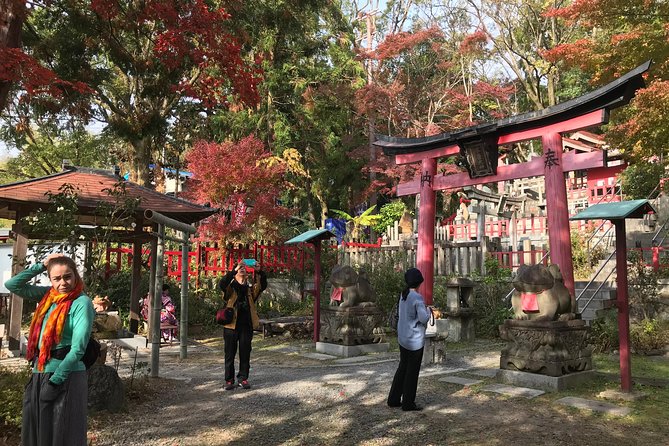
The opening section covers the main shrine and the first run of torii gates. This is where you get oriented to Fushimi Inari, one of Kyoto’s most important and recognizable religious sites.
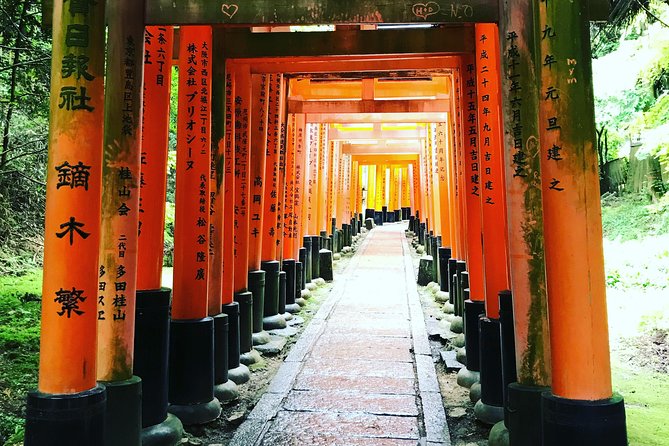
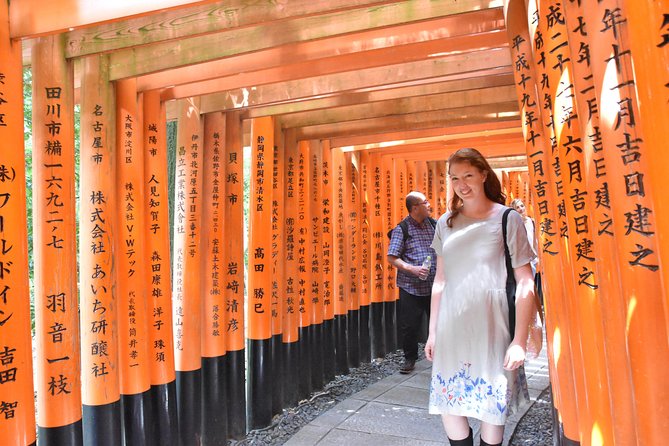
Your guide explains the shrine’s history and cultural background, as well as the significance of the red gates. The torii are donated in connection with prayers and gratitude, and their sheer number helps explain why the mountain feels so distinctive. You are not just walking through a photogenic tunnel. You are moving through a working sacred site.
This first portion can be the busiest part of the outing. You may need to share the path with many other people, particularly near the entrance and lower gates. The payoff is that your guide can point out what deserves your attention before taking you away from the main flow.
If you want photographs of the classic torii corridor, use this early stretch for them. Later, the route becomes more about forest, mountain air, small shrines, and views than about collecting the perfect gate picture.
Quiet paths through bamboo and cedar
The tour then follows an alternative route through bamboo and cedar forest. This is the point where the outing changes character. Instead of moving through a packed line of gates, you walk along peaceful forest paths and visit local sacred sites.
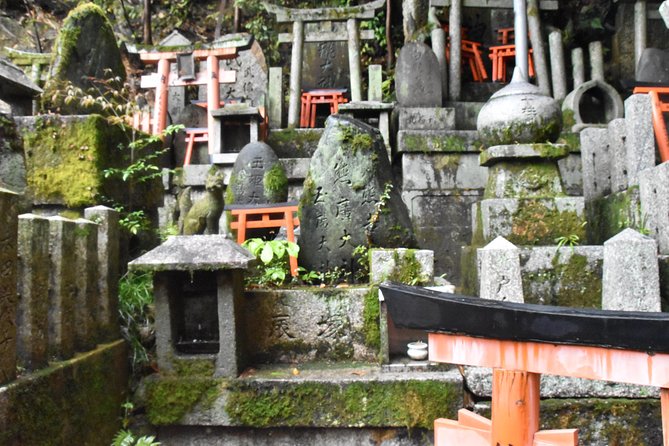
The route includes worship stones and a waterfall. These are modest places, not grand monuments, but that is part of their appeal. They show you how religious practice is spread through the mountain, away from the main shrine buildings and the most photographed gates.
The bamboo and cedar setting also gives you a more natural walk. You still need to climb, but the surroundings feel calmer and less urban. I would think of this as a forest hike with a strong cultural focus, rather than a sightseeing stroll with a little walking added on.
The guide is especially useful here. Without explanation, a stone or small worship spot may look like an ordinary feature of the trail. With context, you understand why it matters and how it fits into Fushimi Inari’s wider spiritual setting.
A look at the gate factory
The gate factory is one of the tour’s most unusual stops. Fushimi Inari is identified around the world with rows of bright torii, but the gates do not simply appear on the mountain. Seeing a place connected with their production gives you a practical look at the work behind the shrine’s most famous feature.
This stop also breaks up the climb. You are not rushing from one photo point to another. Instead, you get a glimpse of a local craft and a reminder that the shrine is part of a living community.
The supplied information does not give a long description of the factory visit, so you should expect a brief stop rather than a full workshop session. Still, it is a distinctive addition, and it helps explain the physical presence of the gates in a way that photographs cannot.
Same trip, a completely different kind of day:
- PERFECT KYOTO 1-Day Bus Tour
★ 5.0 · 13,518 reviews - Kyoto Geisha Walking Tour: Gion District & Hidden Gems
★ 4.7 · 3,273 reviews - Kyoto: Gion Magical Night Walking Tour with Geisha Trivia
★ 4.9 · 2,393 reviews - Kyoto: 45-Minute Tea Ceremony Lesson Experience
★ 4.3 · 2,378 reviews
The final 20-minute climb to the summit
The summit section is the most demanding part of the outing. The route climbs through the forest to the summit shrine, which sits at about 233 meters. The final climb takes around 20 minutes, but the total effort is greater than that figure suggests because the route includes stairs and uphill walking earlier as well.
Several people have praised guides for adjusting the pace to suit the group. That is important here. A good walking guide does not treat the summit as a race, and the named guides Go, Satsuki, and Ko have been associated with patient pacing and clear explanations.
Still, do not book this as an easy city walk. One especially useful warning is that the stairs can be steep and more challenging than expected. If you have trouble with uphill walking or stairs, the physical demands may outweigh the cultural benefits.
At the summit shrine, you have time to look around and, if you wish, pray. The tour gives you a chance to understand the summit as a sacred destination, not simply the endpoint of a hike. You should also expect the views to improve as you gain height, with a broader look toward Kyoto from the mountain.
Soba, Japanese tea, and a boiled egg
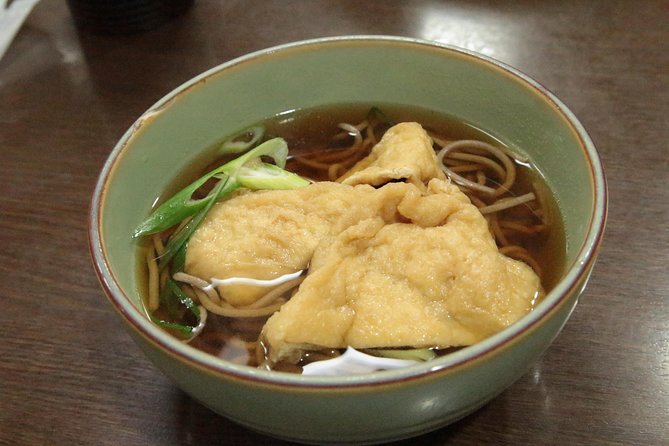
Food is included, which adds real value to a four-hour hike. The meal is soba noodles, a sensible choice for a walking tour because it is familiar, filling, and closely associated with Japanese everyday dining.
The tour also includes a break with Japanese tea and a boiled egg. This is a small detail, but it gives the day a pleasant rhythm. You walk, stop, eat, and continue rather than pushing uphill without a pause.
Dietary needs can be accommodated in several cases. Vegetarian, halal-friendly, and gluten-free food are listed as available. You should communicate your needs when booking rather than waiting until the meeting point, since the exact substitute meal is not specified.
Do not expect a restaurant-focused tour. Lunch supports the walk rather than serving as the main event. If you want a long, elaborate meal, this is not the right format. If you like the convenience of having food arranged during an active morning, it is a strong advantage.
What the guides add
The guide is central to the quality of this outing. Fushimi Inari is easy to visit independently, but it is harder to understand the less obvious sites and find a quieter route without local help.
Go has been praised for adjusting his pace to the group while giving informative, friendly explanations. Satsuki has been singled out for leading people away from the crowds and through small shrines and forest paths. Ko has been associated with thoughtful explanations of the mountain and its history, along with a route that offers a more local view of Kyoto.
Guide assignments can change, so you should not assume one particular person will lead your departure unless the booking confirms it. The useful point is the style of guiding: expect cultural explanation, help with the route, and an effort to keep the pace manageable.
There is one practical issue to handle carefully. A missed meeting has been reported, with disagreement about whether the guide and group found each other. The provider said the guide arrived early, wore a noticeable red cap, and waited at the location. To avoid a repeat, arrive early, stand clearly at the Great Torii, and check all meeting instructions and messages before leaving your hotel.
Group size, price, and value
The cost is $72.26 per person. That is not the cheapest way to see Fushimi Inari, since the shrine itself does not require an expensive sightseeing ticket. The value comes from the guide, the alternative route, the cultural explanation, the meal, and the time saved finding the less obvious parts of the mountain.
The group-size information needs clarification. One part describes a maximum of twelve participants, while another states a maximum of six. Six would feel notably more personal, while twelve is still a reasonably manageable group for a guided walk. Ask the provider which limit applies to your date.
I think the price makes the most sense if you want more than the standard torii-gate photo stop. A self-guided visit can cover the main shrine for little money, but it may not include the gate factory, waterfall, worship stones, summit guidance, tea, egg, and soba lunch.
The booking pattern also matters. This outing is booked an average of 80 days ahead, which suggests that popular dates can fill early. If your Kyoto schedule is fixed, reserve in advance rather than assuming you can arrange it at the last minute.
Fitness, weather, and what to bring
You need moderate physical fitness for this tour. The climb includes forest paths, stairs, and a final uphill section to the summit. The descriptions are clear that the walk can be more strenuous than expected, especially for anyone who struggles with steep stairs.
Wear shoes suitable for walking uphill. Comfortable clothing will help, since the tour lasts about four hours and includes a climb rather than a flat shrine visit. The supplied details do not specify equipment or clothing requirements, so keep your preparation simple and practical.
Weather matters. The outing requires good weather, and poor conditions can lead to a new date or a full refund. That is sensible for a forest hike with stairs and a waterfall area, but it means you should leave some flexibility in your Kyoto schedule if possible.
The meeting point is the Great Torii at 68 Fukakusa Yabunouchicho in Fushimi Ward, Kyoto. It is near public transportation, and the tour ends back at that same meeting point. Give yourself time to find the correct gate area and identify the guide before the start.
Who should book this Fushimi Inari walk
I would choose this tour if you have already seen Kyoto’s major temples and want a more active, less predictable morning. It also suits first-time visitors who want the famous red gates but prefer to understand the mountain instead of simply walking to the most crowded photo point and leaving.
It is a good match for you if:
- You enjoy walking and can manage steep stairs.
- You want a guide to explain religious customs and local sights.
- You like small-group outings rather than large bus tours.
- You want lunch included during a half-day activity.
- You are curious about the parts of Fushimi Inari beyond the main torii route.
I would hesitate if you want a flat, easy outing, a long restaurant meal, or complete control over your pace. The group may be as large as twelve, and the route is designed around reaching the summit, so you cannot treat it as a casual lower-shrine visit.
Should you book it?
Book this tour if the main appeal of Fushimi Inari for you is the mountain itself, not only the red gates. The quiet forest route, waterfall, worship stones, gate factory, summit shrine, and included soba give you a fuller morning than a basic shrine visit.
Skip it if you are not comfortable with steep stairs or if you want to explore entirely on your own. Before paying, confirm the current group limit, guide meeting instructions, and dietary arrangements. For an active visitor who wants local context and a practical four-hour plan, the $72.26 price is reasonable.
FAQ
How long does the Fushimi Inari tour last?
The tour lasts approximately four hours, including the hike, sightseeing, breaks, and soba lunch.
Where does the tour begin?
It begins at the Great Torii in Fushimi, at 68 Fukakusa Yabunouchicho, Fushimi Ward, Kyoto.
Where does the tour end?
The tour ends back at the meeting point near the Great Torii.
Is lunch included?
Yes. A soba noodle lunch is included, along with a Japanese tea and boiled egg break.
Does the tour reach the summit?
Yes. The route climbs to the summit shrine, which is about 233 meters high. The final forest climb takes approximately 20 minutes.
How difficult is the walk?
You should have moderate physical fitness. The route includes uphill walking and steep stairs, and the walk may be more challenging than expected.
Does the tour visit the famous red torii gates?
Yes. You visit the main shrine and the well-known rows of red torii gates before following an alternative route through the mountain.
What other places are included?
The route includes bamboo and cedar forest paths, worship stones, a waterfall, a gate factory, and the summit shrine.
Can vegetarian, halal-friendly, or gluten-free food be provided?
Yes. Vegetarian, halal-friendly, and gluten-free food are listed as available. Arrange this in advance.
What happens if the weather is poor?
If the tour is canceled because of poor weather, you can receive a different date or a full refund. You can also cancel for a full refund up to 24 hours before the start time.
Just added around Kyoto
- Sekka Cotton Furoshiki Class★ 5.0 · 19 reviews
- Kyoto Sword Experience – includes Museum Ticket/Ninja Experience★ 4.5 · 149 reviews
- Scenic Green Tea Fields of Hidden Kyoto & Local Tea Exp (Private)★ 5.0 · 32 reviews
- Secret Eastern Kyoto Biking Adventure★ 5.0 · 44 reviews
- Private Sake Tasting in Central Kyoto with Sake Sommelier★ 5.0 · 32 reviews
- Samurai School in Kyoto: Samurai for a Day★ 5.0 · 202 reviews
- Samurai Performance and Casual Experience: Kyoto Ticket★ 4.5 · 115 reviews
- SHIRAKAWA Japanese Culture Experiences with private English staff★ 5.0 · 16 reviews
Temples & Shrines, compared.

Tea Ceremony in a Traditional Tea House in Kiyomizu
Our verdict →

Meiji Shrine, Asakusa, Skytree Bus Tour and Cruise
Our verdict →
Fushimi Inari Hidden Hiking Tour (Private Option Available)
Our verdict →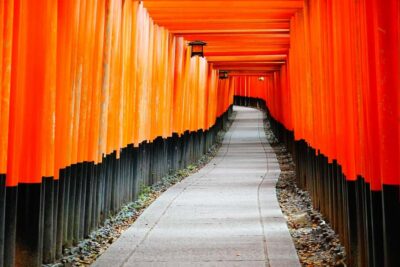
Osaka/Kyoto:Kinkakuji,Arashiyama,FushimiInariShrine,NaraPark
Our verdict →
Nikko: Kegon Falls, Lake Chuzenji & Toshogu Temple
Our verdict →
Kamakura & Enoshima Day Trip including Temple Tickets
Our verdict →Browse the lists this tour appears in