
Reviewed · WORKSHOPS
Itajime Shibori Scarf Class
Itajime shibori turns a small piece of cloth, a few folds, and carefully placed dye into a scarf with a pattern you cannot fully predict. That reveal is the fun part. At Kyoto’s Shibori Museum, you get a practical lesson in one of Japan’s oldest dyeing methods, then leave with a handmade souvenir rather than another shop-bought trinket.
I like the hands-on format and the kind, patient instruction, especially for children and first-time crafters. The museum visit adds real value, too: you can see fine shibori work and learn how much skill lies behind the simple-looking activity. The main consideration is finding the classroom, which is on the second floor and not well marked from the street.
Key points to know before booking
- Choose your fabric and colors: You create a scarf using Japanese fabrics and traditional shibori tools.
- Expect a short, focused class: The activity takes about 30 to 60 minutes, with museum time included.
- See the finished work while it dries: The second-floor exhibition gives you something worthwhile to do after dyeing.
- Good for families: The minimum age is 6, and adult pricing applies to every age.
- Small-group attention: The class accepts no more than 10 people, and some sessions offer very personal help.
- Take home a useful souvenir: Your scarf is the result of your own choices, folds, and dye pattern.
What itajime shibori means in practice
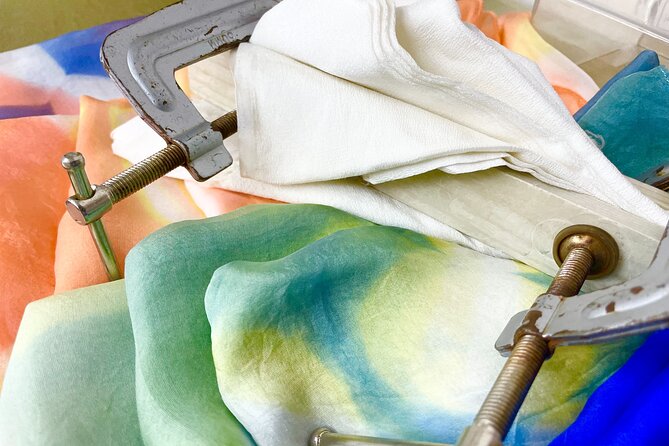
Shibori is a Japanese resist-dyeing craft. Fabric is folded, clamped, tied, stitched, or shaped before dye is applied. The protected sections resist the color, leaving patterns when the fabric is opened.
This class focuses on itajime shibori, a folding and clamping method. You work with cloth, shape it, select colors, and apply the dye with guidance from the staff. The process is simple enough for a beginner, but the result still has the pleasing uncertainty of handmade work.
That matters because you are not simply watching a demonstration. You make decisions throughout the class. The folds affect the pattern, the color choices affect the mood, and the final opening of the scarf provides a small moment of suspense. You may have a design in mind, but shibori rarely gives you a perfectly controlled result.
I think this is a good cultural activity for anyone who wants more than a quick photograph or a short explanation of Japanese tradition. You get a basic lesson in a craft that has been used for kimono fabric and other textiles, then produce something you can use or give away.
A few more Kyoto half-days worth comparing
- PERFECT KYOTO 1-Day Bus Tour
★ 5.0 · 13,518 reviews - Kyoto: Fushimi Inari, Kinkakuji, Bamboo Grove 1 Day Bus Tour
★ 4.8 · 4,316 reviews - Kyoto: Tea Ceremony in a Traditional Tea House in Kiyomizu
★ 4.9 · 3,519 reviews
Starting at the Kyoto Shibori Museum

The experience takes place at the Kyoto Shibori Museum, where the activity and exhibition are combined. The museum is near public transportation, and one review notes that it is about a two-minute walk from Nijo Castle. That makes this easy to pair with a major Kyoto sight if you are planning your day around central Kyoto.
The street entrance may require a little attention. The classroom is on the second floor, and signage from the street is not especially clear. I would allow a few extra minutes to locate the entrance rather than arriving at the last second.
Once inside, the small setting works in your favor. The maximum group size is 10, and the staff can give close help when you need it. Several participants received one-on-one guidance, and instructor June is specifically praised for being patient and kind. Kenji and the museum staff are also described as taking time to explain the process and answer questions.
Do not expect a large commercial workshop with a fast production line. The appeal is the personal scale. The staff wants you to understand what you are doing, not simply move you through a series of steps.
Choosing fabric, colors, and a pattern
The class begins with choices. You select from Japanese fabrics and decide which colors appeal to you. The precise selection available can vary, so you should think of this as a guided craft session rather than a fixed menu of designs.
The staff then explains how to fold and arrange the fabric. This is where the method becomes clear. Small changes in the way you fold or clamp the cloth can create different shapes once the dye reaches the exposed sections.
You do not need to be an artist. That point comes through strongly in the experience. People who describe themselves as uncreative still enjoyed the class, and teenagers took to it as well. The instructor’s role is important here. Clear directions take the pressure off, while the handmade process leaves room for personal choices.
Families should find the format manageable. The minimum age is 6, though younger children may need more help with folding and following the steps. Adult pricing applies to all ages, so check the total cost carefully when booking for a family.
The scarf-making process takes 30 to 60 minutes
The active class lasts approximately 30 minutes to one hour. The exact length may depend on how quickly your group works and how much explanation you want.
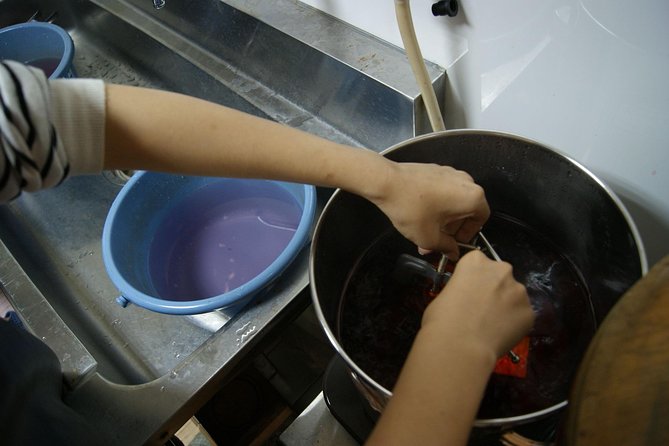
You fold the fabric, arrange it for the itajime pattern, and dye it with staff guidance. The method is hands-on, but it is not physically demanding. This makes it a useful rainy-day plan, a break from temple visits, or a calm activity after a busy morning.
The best part comes when the folded scarf is opened. The pattern appears as the resist sections are revealed, and your finished design will reflect both your choices and the natural variation of the dyeing process. Several people specifically enjoyed this grand reveal.
Afterward, the scarf needs time to dry. Rather than leaving you waiting in a bare classroom, the museum gives you a reason to continue the visit. You can see the exhibition upstairs, watch a film about the process, ask questions, and browse the displays. By the time you finish, the scarf can be dried and packaged for you to take home.
The timing is practical for a packed Kyoto schedule. At roughly one hour, it does not take over an entire day. Still, I would not book it back-to-back with a reservation that begins immediately afterward. The stated duration is approximate, and the museum portion is worth allowing time to enjoy.
More Hands-On Experiences in Kyoto:
- Kyoto: 45-Minute Tea Ceremony Lesson Experience
★ 4.3 · 2,378 reviews - Ramen Cooking Class at Ramen Factory in Kyoto
★ 5.0 · 1,937 reviews - Kyoto : Chopsticks Making Workshop in Gion with Engraving Option
★ 5.0 · 958 reviews - Kyoto: Samurai Sword Class by Experts in Traditional Arts
★ 4.9 · 657 reviews
Why the museum visit adds real value

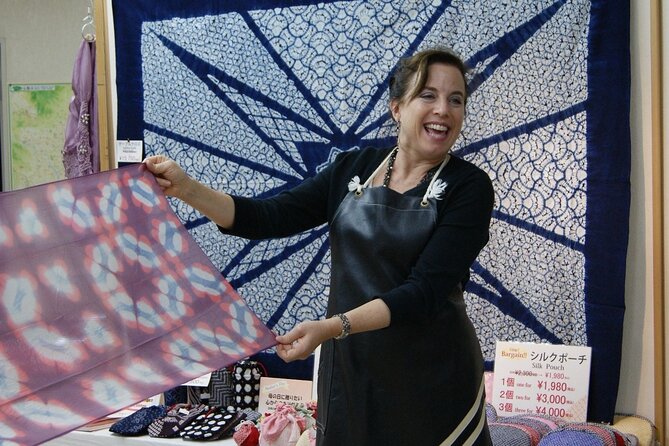
The craft class would be pleasant on its own, but the museum helps explain why shibori is more than Japanese tie-dye. Upstairs, you can see intricate examples of the art and learn about the time and precision involved in producing kimono textiles and other works.
The display includes impressive shibori pieces, and some sessions include a film showing how the craft is made. This changes the way you look at your own scarf. A simple folded pattern begins to make more sense when you see elaborate examples created by skilled artisans.
You may also learn about the variety of shibori techniques and the construction of kimono fabrics. The activity does not turn you into an expert in an hour, but it gives you a useful starting point. You will understand why handmade shibori can require such careful work.
This is also where the experience feels more connected to Kyoto. You are not just making a colorful object in a generic craft room. You are learning inside a museum devoted to the textile tradition, with staff who have a personal connection to the craft. One account describes the museum founder’s family links to shibori, including a grandfather who was a master. That family connection helps give the visit a human scale.
What you take home

Your scarf is the obvious souvenir, but the personal connection is what gives it value. You chose the fabric and colors, made the folds, and watched the pattern appear. No two handmade results will be exactly alike.
At $43.60 per person, the price is reasonable if you value both the class and the museum visit. You are paying for instruction, materials, a finished Japanese textile, and admission to an exhibition rather than for a basic retail scarf. The value is strongest when you plan to use the museum time and want a cultural activity with something physical to show for it.
Some people made more than one scarf, though that may depend on the session and the time available. Do not assume that extra pieces are included. The confirmed offering is a scarf-making experience with your finished item taken home afterward.
A few thoughtful touches can make the souvenir feel even more special. One child received a certificate after completing the scarf, and the staff has been known to add personal finishing touches. These details are not guaranteed for every booking, but they reflect the warm, personal style of the place.
Who will enjoy this Kyoto activity most
I would recommend this class to:
- Families with children age 6 and up: The process is practical and easy to follow with help.
- Couples and friends: You can compare colors and patterns, then see how different the results are.
- Solo visitors: The small setting and personal instruction work well if you are booking alone.
- Craft fans: You get a real introduction to a traditional textile method, not just a decorative souvenir.
- Visitors wanting a slower hour: The class offers a peaceful change from Kyoto’s crowded temple routes.
- Anyone seeking a useful souvenir: The scarf has a story behind it and can be worn or displayed.
It may be less appealing if you want a long workshop with advanced technique. The class is introductory and short. You will learn the basic process, not complete a master-level textile project.
It is also not ideal if you dislike uncertainty in creative work. The finished pattern depends on how the cloth is folded and dyed, so the result may not match your original plan. That is part of the craft, but perfectionists should expect some surprises.
Planning the visit around Nijo Castle
The museum’s location makes it easy to combine with Nijo Castle, which is described as about a two-minute walk away. You could visit the castle first, take a break for the scarf class, and then spend time with the exhibition while your piece dries.
That pairing gives your day a good rhythm. Nijo Castle offers grand architecture and historic rooms, while the museum provides a closer look at Japanese textile craft. The two experiences feel different without requiring a long trip across Kyoto.
The museum is also near public transportation. Two car parking spaces and bicycle parking spaces are available, but the capacity is very limited. I would not build a driving plan around the available parking. Public transportation is the safer choice, especially in central Kyoto.
The activity uses a mobile ticket, and confirmation is provided at booking. Keep the ticket easy to access on your phone. Since the entrance can be slightly hard to spot, having the booking information ready may help you confirm that you are in the right place.
Practical limits and cancellation terms
Most people can take part, and the minimum age is 6. Adult pricing applies to all ages, so children do not receive a separate child rate under the stated terms.
The maximum group size is 10, but the experience can feel even smaller when staff provide individual help. That personal attention is one of the strongest reasons to choose this workshop over a larger craft class.
Free cancellation is available if you cancel at least 24 hours before the start time. Cancellations made within 24 hours are not refunded, and changes during that period are not accepted. The cut-off follows local Kyoto time.
Is the Itajime Shibori Scarf Class worth booking?
Yes, I would book it if you want a compact cultural activity with a handmade result. The strongest combination is the patient instruction, the satisfying scarf reveal, and the museum exhibition that explains the skill behind the craft.
The $43.60 price makes the most sense when you treat this as both a workshop and a museum visit. It is especially good for families, solo visitors, and anyone tired of collecting mass-produced souvenirs. Just allow time to find the second-floor classroom, and do not expect an advanced textile course.
If you have room in your Kyoto schedule for one quiet, creative hour near Nijo Castle, this is a sensible choice. You leave with a scarf, a better understanding of shibori, and a souvenir tied to something you actually did.
FAQ
How long does the Itajime Shibori Scarf Class take?
The activity lasts approximately 30 minutes to one hour. You can also spend time viewing the museum exhibition while your scarf dries.
Where does the class take place?
The class takes place at the Kyoto Shibori Museum in Kyoto, Japan. The classroom is on the second floor.
What is the minimum age?
The minimum age is 6. Adult pricing applies to all ages.
How many people can join the activity?
The maximum group size is 10 people.
Is museum admission included?
Yes. Admission to the Kyoto Shibori Museum is included, and the museum visit forms part of the experience.
Can I cancel for a full refund?
Yes, if you cancel at least 24 hours before the experience start time. Cancellations within 24 hours are not refunded, and changes during that period are not accepted.
Just added around Kyoto
- Sekka Cotton Furoshiki Class★ 5.0 · 19 reviews
- Kyoto Sword Experience – includes Museum Ticket/Ninja Experience★ 4.5 · 149 reviews
- Scenic Green Tea Fields of Hidden Kyoto & Local Tea Exp (Private)★ 5.0 · 32 reviews
- Secret Eastern Kyoto Biking Adventure★ 5.0 · 44 reviews
- Private Sake Tasting in Central Kyoto with Sake Sommelier★ 5.0 · 32 reviews
- Samurai School in Kyoto: Samurai for a Day★ 5.0 · 202 reviews
- SHIRAKAWA Japanese Culture Experiences with private English staff★ 5.0 · 16 reviews
- A Privately Guided Photoshoot in Beautiful Kyoto by a Pro★ 5.0 · 18 reviews
Workshops, compared.
Sushi Making Tokyo Roll and Authentic Japanese Sushi Class
Our verdict →
Ninja 1-hour Hands-on Lesson by Japanese master in Kyoto -Entry
Our verdict →
Browse the lists this tour appears in