
Reviewed · WALKING TOURS
Kyoto Gion Walking Tour for First Time Visitors
Gion is much easier to understand when someone points out what you would otherwise walk past. This two-hour tour links teahouse-lined lanes, Zen temples, shrines, and old Kyoto streets into one useful first look at the city.
I like the small maximum of 15 people and the route’s range. You get the stories and map help that solo wandering often lacks, then finish at Yasaka Shrine, a handy spot for continuing your Kyoto day. One consideration: the walk includes several historic streets and temple areas, so comfortable shoes and reasonable weather matter.
Key points at a glance
- Six major stops in about two hours: Gion, Kennin-ji, Yasui-Konpiragu, Yasaka Pagoda, Ninenzaka, and Yasaka Shrine.
- Guide Jay may lead the walk: His clear English, maps, photos, and willingness to answer questions earned especially strong praise.
- A small group capped at 15: This keeps the walk more personal than a large city tour.
- A useful first-day orientation: You learn where Gion and Higashiyama fit together before exploring on your own.
- Free admission listed at every stop: The $20 price mainly pays for guiding, local context, and navigation.
- Mobile ticket and free cancellation: You can cancel up to 24 hours before the start for a full refund, subject to the weather policy.
Why this Gion walk works for a first day
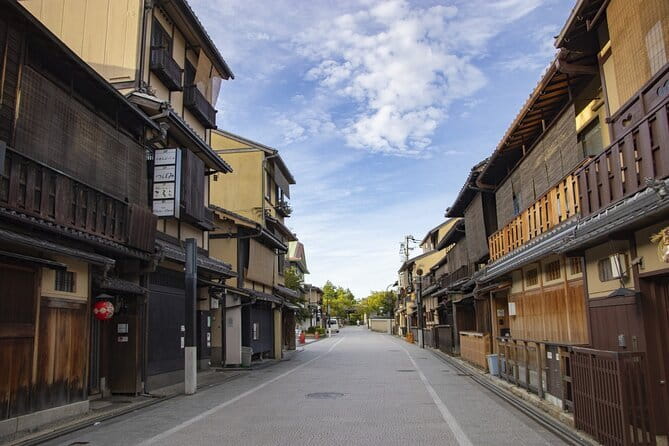
Gion can look simple on a map, yet its streets hold several different sides of Kyoto. You have traditional wooden machiya houses, formal Shinto shrines, Zen Buddhist temple grounds, narrow lanes, and famous photo spots packed into a relatively small area.
That makes a guided walk useful. Instead of spending your first hours checking directions, you can focus on the details around you. The guide supplies the background for places you pass, explains the cultural setting, and helps connect one stop to the next.
I especially like the route because it does not stop at the most famous view in Gion. You see Yasaka Shrine and the well-known streets around it, but you also visit Kennin-ji and Yasui-Konpiragu. Those additions give the walk more substance than a quick stroll through the teahouse district.
The tour is priced at $20 per person. That is a modest cost for roughly two hours with an in-person guide, especially if this is your first time in Kyoto and you want a quick orientation before visiting major sights on your own. The tradeoff is that the tour does not include snacks, and the listed schedule gives only short stop times, so this is an overview rather than a slow temple visit.
The experience has a 4.9 rating from 37 reviews, with 97 percent recommending it. Those numbers do not guarantee that every guide or group will be identical, but they do point to a consistently well-received format.
More Walking Tours in Kyoto
- Kyoto Geisha Walking Tour: Gion District & Hidden Gems
★ 4.7 · 3,273 reviews - Kyoto: Gion Magical Night Walking Tour with Geisha Trivia
★ 4.9 · 2,393 reviews - Kyoto: Gion Geisha District Walking Tour – Stories of Geisha
★ 4.7 · 2,187 reviews
Meeting near Gion’s traditional streets
The walk begins at Kyoto Tourist Lounge Gion, at 557-4 Komatsu Cho, near Pare Gion. You receive confirmation when you book, and the mobile ticket should make it easier to keep your booking available on your phone.
The start point puts you close to Gion’s old streets, so the tour begins in the right setting rather than with a long transfer from a distant neighborhood. The end point is Yasaka Shrine at 625 Gionmachi Kitagawa.
That start-to-finish arrangement is practical. You do not return to the original meeting point, but you finish near one of Kyoto’s major shrines and can continue exploring from there. Since the tour is near public transportation, you should have a straightforward connection before or after the walk, though the supplied details do not specify a particular train or bus stop.
The group can include up to 15 people. That is small enough for questions to be possible, though it is not a private tour. If you want one-on-one attention throughout, you would need a different format. For most first-time visitors, this group size offers a sensible balance between personal guidance and a low price.
Gion: wooden houses, teahouses, and local orientation
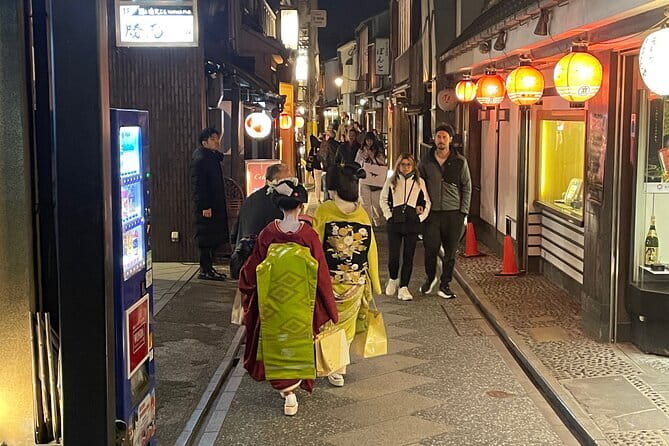
The first stop is Gion, with about 20 minutes set aside. This is Kyoto’s best-known geisha district, marked by preserved wooden machiya townhouses, traditional teahouses, and cobblestone streets.
A guide matters here because the area is easy to reduce to pretty facades and photo opportunities. The tour provides context for the streets and places you pass, helping you see Gion as a working historic district rather than simply a backdrop.
You should expect the guide to explain the cultural heritage of the area while pointing out places you might overlook when following a map. The supplied feedback gives Jay particular credit for using maps and pictures to make his explanations clearer. His map interest may sound like a small detail, but it is useful in Gion, where short lanes can make the neighborhood feel confusing.
This is also the point where you get your bearings. Pay attention to how the route connects Gion with the nearby temples and Higashiyama streets. That mental map will help later if you return on your own.
Gion is likely to be the most visually crowded part of the walk, particularly around its famous lanes. The tour is not designed to provide long quiet pauses here. You will get an introduction, then move on to the next places.
Kennin-ji: Kyoto’s Zen side
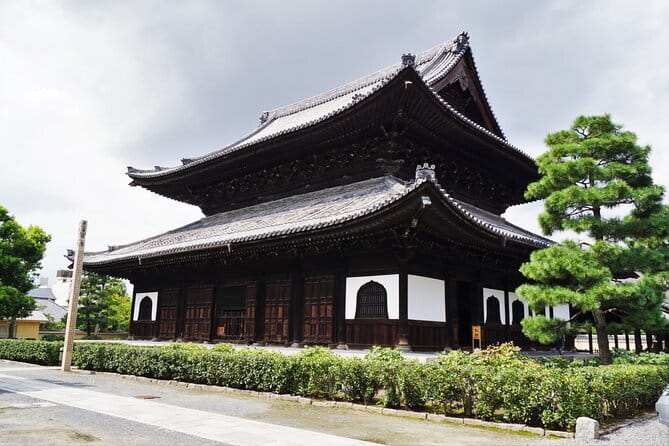
Kennin-ji receives about 15 minutes. Founded in 1202 by the monk Eisai, it is one of Kyoto’s oldest Zen Buddhist temples and is linked with the introduction of Zen Buddhism and tea culture to Japan.
This stop changes the mood of the walk. Gion’s streets are outward-facing and full of visual detail, while Kennin-ji offers a calmer temple setting. Even with a short visit, the temple helps show that the Gion area is not only about teahouses and traditional storefronts.
The time allocation is important. Fifteen minutes is enough for an explanation and a look around, but not enough for a long, unhurried temple visit. I would treat this as an introduction that helps you decide if you want to return later with more time.
No admission charge is listed for the stop, and all fees and taxes are included in the tour price. The tour does not promise an extended interior visit or a detailed presentation of every temple feature, so keep your expectations focused on orientation and cultural context.
Same trip, a completely different kind of day:
- PERFECT KYOTO 1-Day Bus Tour
★ 5.0 · 13,518 reviews - Kyoto: Fushimi Inari, Kinkakuji, Bamboo Grove 1 Day Bus Tour
★ 4.8 · 4,316 reviews - Kyoto: Tea Ceremony in a Traditional Tea House in Kiyomizu
★ 4.9 · 3,519 reviews - Kyoto: Tea Ceremony Ju-An at Jotokuji Temple
★ 4.9 · 3,207 reviews
Yasui-Konpiragu and its unusual stone

The next stop, Yasui-Konpiragu, takes about 15 minutes. This small Shinto shrine sits near Gion and is known for its enkiri and enmusubi stone.
The shrine’s central idea concerns relationships and ties. The stone is associated with cutting unwanted connections and forming or strengthening desired ones. That gives this stop a different character from the larger, more famous shrines on the route.
I like this inclusion because it shows you a less obvious piece of Kyoto. The stop is not just another large gate and courtyard. It introduces a local religious practice with a memorable physical focal point, making it easier to remember after the walk.
Again, the short timing means you are getting the meaning and setting rather than a full devotional visit. Listen closely to the explanation, since the significance of the stone is the main reason this small shrine appears on the route.
Yasaka Pagoda: a quick look at Hōkan-ji
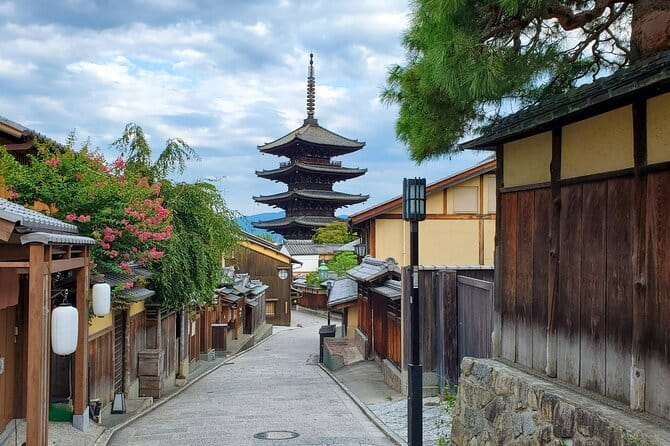
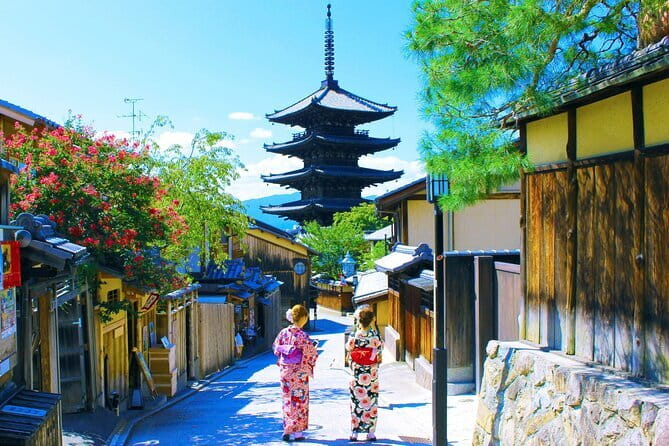
Hōkan-ji Temple, better known as Yasaka Pagoda, receives about 10 minutes. Its five-story pagoda is one of the most recognizable sights in Kyoto, rising above the traditional streets of Higashiyama.
This is the route’s strongest classic Kyoto view. The pagoda gives you a clear sense of how the old streets and religious buildings fit together visually. Ten minutes should allow time for the guide’s explanation and a look at the surrounding setting, but it is not a long temple exploration.
The tour description does not promise entry into the pagoda, so plan to appreciate it from the outside unless your guide tells you otherwise. That is not necessarily a problem. The value here is the setting and the explanation, especially for a first visit.
This area can be busy, and the streets are historic rather than flat, modern sidewalks. Stay aware of the group and wear shoes that feel secure on stone-paved routes.
Ninenzaka: Kyoto’s famous slope
Ninenzaka is a 10-minute stop on a gently sloping, stone-paved street in Higashiyama. It is known for preserved traditional architecture and its connection to the Kiyomizu-dera area.
The street is attractive, but it is also one of the places where the tour’s short schedule may feel limiting. You can see the character of the slope and understand its place in the neighborhood, yet you will not have much time for browsing or lingering.
That is why I would not treat this walk as a shopping tour. The goal is to learn the layout and story of the area, then return later if you want a slower look at shops, food, or architecture.
Ninenzaka also gives you a good chance to take photographs, but be considerate on the narrow street. Keep moving with the group and follow the guide’s instructions, particularly if other people are using the route.
Yasaka Shrine: a useful finish
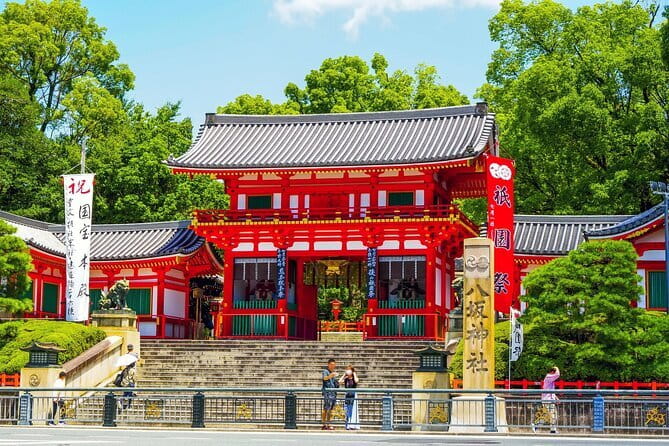
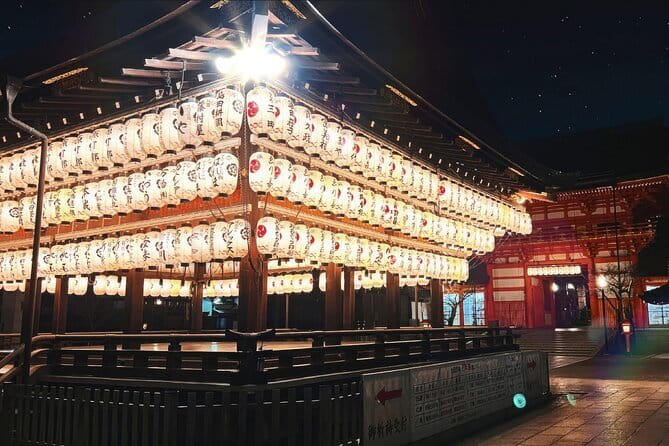
The final stop is Yasaka Shrine, with about 10 minutes planned. Also known as Gion Shrine, it is one of Kyoto’s major Shinto shrines and is known for its vermilion gates and lanterns.
Ending here makes practical sense. The shrine is an important destination in its own right, and it is a good place to continue your day after the tour ends. You can use what you learned during the walk to explore more independently, instead of ending in a random side street.
The short stop should cover the main setting and significance, but it will not replace a full visit. If Yasaka Shrine interests you, stay after the group finishes and look around at your own pace. The tour gives you the introduction, while your extra time can supply the quiet details.
Because the route ends here, check your plans before booking. If you have a timed reservation elsewhere immediately afterward, allow extra time for the walk to finish and for the group to move between stops.
What the guide adds to the experience
The strongest part of this tour is the guide’s interpretation. The walk is not simply a list of landmarks. Its purpose is to explain what you are seeing and point out places that a first-time visitor could miss.
Jay is the guide specifically named in the supplied feedback. He was praised for clear English, useful maps, supporting pictures, and an ability to answer questions. One particularly helpful detail is his apparent willingness to make time for questions instead of rushing through a fixed speech.
Guide quality can vary from one departure to another, so I would not assume Jay leads every date. Still, his approach gives you a useful picture of what the experience aims to provide: practical explanations, visual aids, and enough interaction to make the history and culture easier to follow.
If you enjoy asking questions, this format should suit you. If you prefer to walk silently and stop only for photographs, the commentary may feel like more than you need. The tour earns its $20 mainly through the guide, so make use of that human element.
The route, pace, and physical demands
The listed stop times add up to about 80 minutes, while the full tour lasts about two hours. The remaining time is likely used for walking between the stops, explanations along the way, and managing the group.
That makes the pace moderate but purposeful. You should expect a moving tour rather than long seated breaks. The route includes cobblestones, stone-paved streets, and a slope at Ninenzaka, so comfortable footwear is a sensible choice.
The experience requires good weather. If poor weather cancels the tour, you are offered another date or a full refund. The cancellation policy also allows a full refund when you cancel at least 24 hours before the start time. Changes or cancellations inside that 24-hour window are not accepted and are not refunded.
Most people can participate, and service animals are allowed. The supplied details do not give a specific accessibility assessment for every street, temple approach, or slope, so contact the provider before booking if you have mobility concerns.
Who should book this $20 Kyoto walk
I would recommend this tour most strongly to first-time Kyoto visitors who want to understand Gion quickly. It gives you a map in your head, a basic cultural framework, and a list of places worth revisiting.
It also suits anyone who likes history explained in plain language rather than read from a guidebook. Jay’s use of maps and pictures, when he leads, is especially helpful if you learn better by seeing where places sit in relation to one another.
The walk may be less suitable if you want extensive time inside temples, a food tasting, or a private guide. Snacks are not included, and the route does not promise lengthy stops or shopping time.
At $20, I see good value for the amount of ground covered and the number of important sites connected. You are paying for direction, interpretation, and a small group, not for entrance-heavy sightseeing or a full-day cultural program.
Should you book the Kyoto Gion Walking Tour?
Book it if you are new to Kyoto, want a compact introduction to Gion and Higashiyama, and value a guide who can explain what you are seeing. The combination of Gion, Kennin-ji, Yasui-Konpiragu, Yasaka Pagoda, Ninenzaka, and Yasaka Shrine gives you more variety than a simple neighborhood stroll.
I would choose it early in a Kyoto stay, then use the ending at Yasaka Shrine as a launch point for further exploring. Just remember that the tour moves at a group pace, the temple visits are brief, snacks are not included, and weather can affect the schedule.
For $20 and a maximum of 15 people, this is a sensible first look at one of Kyoto’s most important districts.
FAQ
How long is the Kyoto Gion walking tour?
The tour lasts approximately two hours.
How much does the tour cost?
The price is $20 per person.
What places does the tour visit?
The route includes Gion, Kennin-ji Temple, Yasui-Konpiragu, Hōkan-ji Temple, also called Yasaka Pagoda, Ninenzaka, and Yasaka Shrine.
Where does the tour start and finish?
The walk starts at Kyoto Tourist Lounge Gion, 557-4 Komatsu Cho, and ends at Yasaka Shrine, 625 Gionmachi Kitagawa.
How many people can join the tour?
The maximum group size is 15 travelers.
What happens if I need to cancel?
You can receive a full refund if you cancel at least 24 hours before the experience start time. Cancellations or changes made less than 24 hours in advance are not refunded or accepted. If poor weather causes the tour to be canceled, you are offered another date or a full refund.
Just added around Kyoto
- Sekka Cotton Furoshiki Class★ 5.0 · 19 reviews
- Kyoto Sword Experience – includes Museum Ticket/Ninja Experience★ 4.5 · 149 reviews
- Scenic Green Tea Fields of Hidden Kyoto & Local Tea Exp (Private)★ 5.0 · 32 reviews
- Secret Eastern Kyoto Biking Adventure★ 5.0 · 44 reviews
- Private Sake Tasting in Central Kyoto with Sake Sommelier★ 5.0 · 32 reviews
- Samurai School in Kyoto: Samurai for a Day★ 5.0 · 202 reviews
- SHIRAKAWA Japanese Culture Experiences with private English staff★ 5.0 · 16 reviews
- A Privately Guided Photoshoot in Beautiful Kyoto by a Pro★ 5.0 · 18 reviews
Walking Tours, compared.

Kyoto Geisha Walking Tour: Gion District & Hidden Gems
Our verdict →
Imperial Palace and Shogun Historical Walking Tour
Our verdict →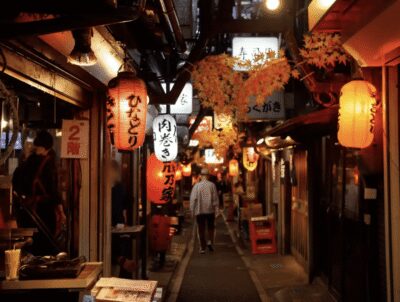
Shinjuku Local Bar and Izakaya Guided Walking Tour
Our verdict →

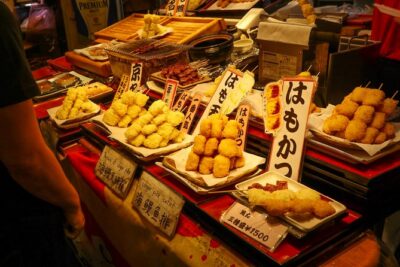
Nishiki Market Brunch Walking Tour (7 Tastings + Brunch)
Our verdict →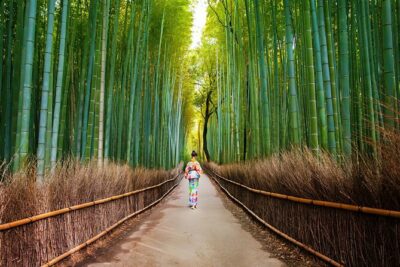
Kyoto Arashiyama Walking Tour: Bamboo, Monkeys, Gardens & Secrets
Our verdict →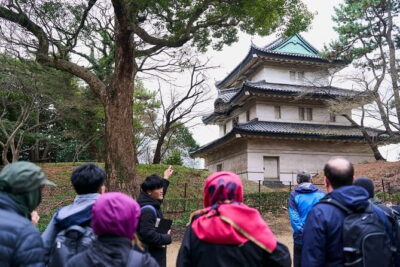
Tokyo Castle & Imperial PalaceーShogun Walking Tour
Our verdict →Browse the lists this tour appears in